Samaaro + Your CRM: Zero Integration Fee for Annual Sign-Ups Until 30 June, 2025
- 00Days
- 00Hrs
- 00Min
Have you ever found yourself asking whether your event really hit the target?
Or do you walk away with important information left on the table after exhibiting booths are taken down and lights are off?
For many event organizers event evaluation is considered a secondary activity, something to be part of a post-event wrap-up, or part of a report to stakeholders. However, in today’s data-driven events zeitgeist, evaluation is not merely an option. Evaluation is a strategic leverage point to enable smarter planning, assure better execution, and yield higher ROI across your event portfolio.
And the key to capturing that value is to create an event evaluation timeline!
An evaluation timeline is not a linear post-event checklist, it is an evaluation tool to ensure that evaluation metrics, feedback, and learning are built-in to each phase of the event: before, during, and after the event is completed.
When you evaluate your event the right way, you can evaluate what matters, glean real-time insights, and transform raw data into implementable change.
In this blog, we are going to walk you through:
This blog reflects one of the shortest white papers we have written – “Expanding the Horizons of Post-Event Evaluation.” It is your complete framework on continuous event improvement from evaluation methodology to implementation. (Link at the end of the blog)
For most people, when they hear event evaluation, they think about what happens after the event. Feedback forms, post-mortems, and reporting decks. However, the short answer is that if you wait until the event is over, you have missed at least half of the story.
Smart event evaluation timelines move evaluation away from being just an end-of-event task to being ongoing throughout the event process – before we plan and after the event.
Why does this matter? Because the best evaluations come not just from the time after the event, but when you are being intentional before, during and after an event, with a timeline to support the process.
Now let’s unpack some of the benefits of having a timeline for event planning:
When you articulate your success early, you can ensure you collect the right data at the start. No second guessing, no “scrambling” at the end of every event – just clarity between your event goals and measurement strategy.
A timeline takes pressure off the chaos of the evaluation purpose and timeline. A timeline can set structure and space for the entire evaluation which increases data quality, role clarity across teams and keep ideas moving through your timeline space.
Timely data is powerful – because of the timeline you catch the insights when they are relevant, allowing you time to respond creatively in the moment and utilize them for future events.
When it comes to stakeholders, they want to see value for the organization – not just impressions or attendance, but value for the business. A timeline can even tie an outcome which allows you more confidently report and justify future spend.
Evaluation is not an activity we engage in once and leave it behind – it is a loop. A timeline can streamline evaluation to be a subset of repeatable, learnable, systems that improve in each iteration. A well thought out timeline not only helps you measure what happened, but it also helps you create a better experience through each of the steps.

If you are ready to put it into action, we will discuss the three stages of effective event evaluation timeline in the next section.
This is where you lay the foundation. Without clarity here, your entire evaluation effort can fall flat.

Define Objectives & KPIs
If you do not understand what success looks like, you cannot evaluate success. You will need to define objectives that are clear and measurable, while also connecting them with your larger business and marketing goals. Are you looking for lead generation, brand awareness, and customer education, or all three?
Data Collection Strategy
Establish what data collection is needed and how the data will be collected. This may include identifying potential data collection at any pre-event survey, behavioral data based on registration (i.e. job title, size of the company, etc.) and pre-event engagement (i.e. open rates on emails, webinar registrations, etc.)
Tool Selections
Select the platforms you will use to collect and analyze your data: survey tools, registration platforms, CRM integrations and analytics dashboards.
Roles & Responsibilities
Set clear ownership for each segment of the evaluation process by who will be monitoring live data, who will craft the reporting, and who will present takeaways to stakeholders.
The evaluation process is not on pause when an event happens – in fact, it’s the best time to gain genuine, unguarded feedback.
Live Data Collection
Collect participant behaviour and interactivity from live data: session attendance, in-app polls, booth activity, social media tagging related to your event, etc., and have a indicator of what is (or isn’t) working.
On-Site Surveys & Feedback
Use QR Codes/links, mobile applications, or tablets to engage in shorter surveys/focused feedback on-site at the event. When you gauge detailed impressions without a delay, you are capturing accuracy, or at least accuracy on what they felt/thought at the time.
Troubleshooting & Improving
You simply have the ability to see and address problems in real-time! Perhaps you see inattentive participants to a session, or social media feedback about attendees being lost in the conference center.
This is when you’ll have all the data ready to start your synthesis. However, the timing and structure matters – don’t take too long, inertia will lose its clout quickly.
Sending Surveys
Act while it’s still somewhat fresh. The longer you’ve gone, the more approach you lose. Prioritizing the follow-up survey as soon as possible (ideally in the 24-48 hour range) will give you the best follow-up rate and the best insights.
Data Consolidation
Reconciling all your data streams (registration, engagement, survey, social, sales follow-up) will help you have the big picture.
Data Analysis
Once you have your data consolidated, resist the vanity metrics, focus on the qualitative/quantitative ways your data can tell a story – attendance durations, survey comments/chat logs, etc., will tell a more complete story of trends and insight that goes beyond just sending out requests for feedback.
Report Development
Create an organized report containing not only what happened, but also why it matters and what adjustments to make next time.
Communication with Stakeholders
Share the results in customized executive summaries for leadership, marketing, sales, and event teams. Create opportunities for visual representation of information, to compare against KPIs, and call out key takeaways.
Action Planning & Implementation
Use previous learning findings and design a playbook for your next event- what do you want to replicate, what do you want to change, what do you want to avoid.
Knowledge Repository
Collect and house key learnings from your event in one central and accessible repository. This way, next time your teams can build from shared learnings and not start from scratch.
This step-by-step process provides built-in intention, integration, and actionability to your evaluation.

Up next: what to keep in mind while building your own timeline—from resources and tools to flexibility and tech.
Building an event evaluation timeline is not as simple as dumping tasks or considerations on a calendar-it is about designing a system that is realistic and adaptable and takes into consideration the unique context of the event. Be mindful of the following key considerations as you develop your timeline:
Flexibility is Key
No two events are alike, so your timeline should not be like identical. A roadshow, leadership summit, and partner mixer will have differing event objectives, audience profiles, and feedback approaches if the event is successful will see changes from event to event.
Your timeline can- and should- be a living framework, not a list or checklist to work through before and during and after the event. This is true, especially during consideration of the scale, venue, audience profile, or even unforeseen situations-like waiting for an event to begin. Building in buffer zones for analysis and approval, or policy iteration after an event.
Resources Inform your Scope
Even the best timeline can unravel overnight if it does not match up with the resources you have available. Assess your team capacity.
– Who is responsible for collecting and analysing the data from the event?
– How much time can your team realistically pick for each phase over the event cycle- prior to, during, after the event?
– How much money is budgeted for tools to seek survey results, or flyer or Operations staff time to write the survey report after?
A smaller team will need to rely on figuring out simple ways to collect evidence, automating if possible, or preformatting the report writing if the event is a repeat. A larger staffing solution- can certainly do a more granular review and add time to the analysis the process can be more complex in the analysing stage even if the event process does not change. To not overreach and to recapitalize the data, the more granular, that the whole team feels is consistent, the better.
Technology Can be a Force Multiplier
Event tech is not a luxury, or convenience- it is a necessity to evaluation efficiently. The right tools will allow you to do any of the following:
– Automated feedback with scheduled data collection from feedback, or survey, and prompt the app to share positive feedback related to the event.
– Track attendee behaviour by a mechanic that works on and offline by time or attendance in real time.
– There is even an option to gather data from an event meeting by the event platform to your CR system- something to look forward to.
– Visualize results so you can share results in different ways clearer and quicker.

Much like with the resources, use the three pillars, consider all these factors when development you use these three factors. The easier the experience with the technology, the easier it is to access data later.
In considering the last three- flexible, resources and tools or techniques- will ultimately lead you to building a timeline that is and evaluative, while at the same time, valuing both the researcher and practitioner perspectives.
Building a thoughtful event evaluation timeline is not just about crossing of an operations list, it is not less than operational- it should at the core of any real event strategy work. Only by evaluating across all phases of the event life can you move what may be surface data cells metrics to next stage insights that offer strategic insight or impact.
With the right timeline in place, your team can:
– Collect better data
– Identify what worked (and what didn’t)
– Prove ROI to stakeholders
And most importantly, improve with every event. But this blog is just the beginning.
Ready to go further?
Download our in-depth white paper:
Expanding the Horizons of Post-Event Evaluation: A Comprehensive Framework for Continuous Event Improvement
Inside, you’ll find:
– Step-by-step methodologies
– Real-world examples
– Pro-level analysis techniques
– Templates to apply right away
Take your event evaluation strategy to the next level—get the white paper now.
An event evaluation timeline is a structured plan that maps when and how to capture, analyse, and act on event data across pre-event, live-event, and post-event phases. It differs from a post-event checklist because a checklist focuses only on what to do after the event, while a timeline covers the full lifecycle. A timeline catches data while it’s fresh, prevents data loss, and turns evaluation into an ongoing discipline rather than a last-minute scramble.
Build flexibility into your evaluation timeline by adding buffer zones around each milestone (don’t lock the survey send to exactly 24 hours, allow a 24-48 hour window), choosing flexible review meetings, and prioritising the highest-impact data (pipeline attribution) over the nice-to-haves. Different events need different timelines. A 5,000-person conference needs a longer evaluation window than a 30-person executive roundtable. Match the timeline to the event.
Create the evaluation timeline during planning, ideally six to eight weeks before the event. That way KPIs, tracking tools, and survey plans are ready before promotion even launches.
A project plan manages logistics and tasks to deliver the event. An evaluation timeline schedules measurement: which data gets collected, when, by whom, and when insights get reported.
A. Not Your Everyday Marketing: Why B2B Field Marketing is Critical for Growth
In an intricate B2B sales cycle, traditional digital marketing can only take you so far. Although automated funnels, webinars, and email sequences are all key components – too often they cannot help build real relationships and facilitate enterprise-level decision-making. That’s where Field Marketing in B2B comes into play.
Field marketing diminishes the distance between digital outreach and high-touch engagement. It provides an avenue for marketers to engage their key accounts personally, directly, and in a customized way, activating experiences on the ground that resonate with their buyers, facilitates meaningful conversations, and moves opportunities down the B2B sales pipeline.
Experiential and in-person events are among the most powerful tools for B2B brands. Whether the format is a trade show or an executive roundtable, high-impact events build trust, stimulate discussion, and create urgency for decisions.
And high-impact field marketing lead generation through events has proven itself time and again for B2B brands, whether your priority is high-quality attendee lead generation, strengthening existing customer relations, or closing enterprise deals.
When executed effectively, your B2B event strategy transforms your event from merely creating exposure for your brand, into one of your key levers for growth. Strategic event touchpoints effectively integrates sales and marketing efforts, creates entry points for ICPs into your ecosystem, and accelerates sales cycles.
This guide equips you to more fully realize the potential of field marketing for B2B growth. Let’s explore:
Planning a first activation, or looking to refine a mature field marketing program, this guide offers real-world steps to take your events to the next level and increase your pipeline.

Before we get into a number of useful tactics, it is critical to establish a strong foundation for your B2B Field Marketing strategy when planning events. That means defining clear goals, and who you are targeting, and identifying a suitable event format to accomplish those goals. With an inappropriate groundwork, even very well-executed events can be completely misaligned.
A. Defining your B2B Field Marketing goals for the event
Ultimately, the success of your planning of B2B events can largely be defined by clarity. What do you want your field marketing efforts to drive?
Is your objective to generate Marketing Qualified Leads (MQL) and Sales Qualified Leads (SQL), increase deal velocity, increase brand awareness benefits in a defined region, or improve customer advocacy? Regardless, your objectives should always be measurable, and correlate closely with business outcomes.
Getting clear on these areas early will also help to shape your measurements for the overall event sales pipeline metrics, from lead capture to revenue attribution.
Creating an effective B2B event strategy is nearly impossible if you don’t know who you are speaking to. You want to start with a definitive understanding of your ideal customer profiles (ICPs) in detail, what challenges they may have, how they make decided to purchase, and what content or experiences resonates with them.
This understanding will dictate everything from how you marshal messaging in your pre-event campaigns to how you design the experience on-site. It will also support your decision-making process for the event type, timing, and location, which promotions support Field Marketing Lead Generation.

Not all events are equal, nor do they all equal what you want them to. A solid B2B field marketing portfolio will incorporate different types and scales of events that fulfill your various buying journey goals.
Trade Show Field Marketing: Ideal for brand awareness, product demo, and more top of funnel opportunities. Look for large trade shows, expos, or conferences that your target accounts may be attending.
Conference Field Marketing: Great for thought leadership and mid-funnel opportunities. Use speaking or sponsorship opportunities and consider leveraging on-site networking events.
Small-Scale (high-impact formats), including dinners, executive roundtables, workshops, roadshows. These formats are where you can engage for a longer duration in an ABM-style opportunity, where the deeper conversation and building a relationship engaged your audience.
Event Model Considerations: In-person events are generally considered the best experience for experiential marketing for B2B, but don’t eliminate virtual or hybrid options where applicable to your audience and scale. The objective is to find the ideal event model that allows you to best accomplish your goals, with the resources and event elements available to you.
The best B2B event strategies are not about handling logistics; they are about the role the event has in the effectiveness of moving prospects through the sales funnel. Every step of the event life cycle, regardless of where it is in the funnel, can be used as an opportunity for Field Marketing Lead Generation and pipeline acceleration.
A. Strategic Pre-Event Engagement: Building Anticipation & Attendance
The Field Marketing game starts way before the event starts…and pre-event engagement sets the foundation and ensures the right attendee (most importantly, the decision-maker on your target account) shows up energize and ready to engage.
An aggressive pre-event approach can drastically increase attendance and positively prime your audience before the event, especially at ABM events where relationship depth is crucial.
Now that the event has started, your focus has turned to making this all count. The on-site value experience is not only memorable but also drives interest and intent.
When you utilize these tactical approaches, you are helping to create a relationship between your brand and the audience as a partner instead of just a vendor, the difference we are seeking to develop through best practices in B2B events.
Every interaction with high-impact potential should result in a directed next step. This is the next level when tech-enabled lead capture and qualification tracking systems are introduced.
The swifter your team can respond, the more likely it is that those event–rate leads convert through the pipeline and thus validates the event as compressing the B2B sales cycle.

In B2B, the most constructive relationships aren’t accidental, they’re intentional. The experiential marketing and Account-Based Field Marketing (ABM Events) elevates your field experience from functional to memorable. You connect through emotional intelligence and curated experiences and debrief the accounts that matter.
A. Beyond the Booth: Experiential Field Marketing Ideas for B2B Audiences
Today’s decision makers want more than just a product pamphlet and a 10X10 space with walls. Your audience wants to “experience” your brand.
Experiential field marketing in B2B events is what will create those experiences. These high touchpoints are created to stimulate curiosity, drive engagement, and provide an impression that your audience will remember.
Consider:
An exclusive demo experience for a specific vertical or experience(s) related to your Ideal Customer Profile. Interactive challenges, or gamified product demonstrations, that demonstrate real-life value.
A “product journey” customized for attendee profiles, that provides a walkthrough not an overview of the product. Unique hospitality experiences, think curated dinners, live entertainment, or lounges designed for C-level guests. These tactics help move you from vendor to value partner and develop trust and loyalty, both essential for B2B events.

Experiential tactics are even more powerful when you use them with an Account Based Marketing agenda. So not only are your events targeting companies, but they are specifically targeting key financial account(s).
Here is how to tie your Field Marketing B2B efforts with an ABM strategy:
Utilize your ABM data to smartly target decision makers and influencers in those organizations and send invitations for the event.
Again, these ABM event tactics not only deepen relationships, but influence revenue generation, accelerate deal velocity, shorten the overall sales cycle, and increase overall win rates with tailored experiences directing targeted efforts by segment.
Just because the event is over doesn’t mean the impact is over. How you follow up in the hours and days after a B2B event will determine if the investment is turned into pipeline or lost in the noise.
A. Fast & Personalized Post-Event Nurture (A Field Marketer’s Cheat Sheet)
The number one best practice in B2B event planning is to follow up in a timely manner. Timely follow-up is critical, especially after field marketing has brought in the right prospects.
In the post-event follow-up, consider:
This type of targeted, fast-paced follow up shows that your brand is listening, remembering, and adding value; an important step in post-event follow-up for sales.
Field marketing does not end with a handoff, it relies on sales and marketing collaboration.
Key points for your sales team to know:
When marketing and sales operate together, the journey from lead to deal is faster, and more predictable.
It’s not enough to say an event “went well.” You have to demonstrate impact, in metrics that matter.
Track key Field Marketing Lead Generation measures:
Wrap it all in a digestible field marketing ROI report for internal stakeholders. This is how you keep the investment flowing in the right channels, as well as justify data-driven future field marketing expansion.

In today’s complex B2B world, field marketing is no longer a “nice to have” it’s a growth engine.
In this guide, we’ve detailed how impactful B2B event strategies from trade shows to roundtables to experiential activations to ABM-focused events can:
But the real value is what’s next: seamless post-event nurturing, sales alignment, and proved ROI.
Effective B2B field marketing is not only about events; it’s about creating meaningful human connections that move the needle on your business goals.
Are you ready to elevate your B2B event strategy and accelerate your sales pipeline?
Find out how Samaaro can support your field marketing efforts from planning and producing events to real-time analytics and ROI measurement.
B2B field marketing delivers in-person, regionally targeted experiences like trade shows, roundtables, and executive dinners. Unlike digital marketing, it builds trust through face-to-face relationships with buyers.
Choose trade shows for reach and lead volume, roundtables for engaging decision-makers in discussion, and dinners for deepening key account relationships. Match the format to your funnel goal.
Invite target account buying committees, personalize the experience per account, and sync engagement data back into your ABM plays. Field events give ABM its strongest human touchpoint.
Divide pipeline or revenue influenced, minus total event cost, by the cost. Include influenced deals alongside sourced ones, since field events often accelerate existing opportunities.
Face-to-face interaction builds trust fast and aligns multiple stakeholders at once, compressing evaluation stages that would take months of emails and calls to complete.
Imagine this: You’ve lined up a brilliant speaker, crafted a compelling topic, and set the perfect date and time. But on the day of the webinar… no one shows up. Maybe a few attendees trickle in. The chat is quiet. The Q&A feels forced. It’s not the content that failed – it was the promotion.
In 2025, promoting a webinar requires far more than a few social posts and a generic email blast. The digital space is noisy, attention spans are short, and audience expectations are higher than ever. You need a strategic, multi-channel webinar promotion plan that not only grabs attention – but holds it, nurtures interest, and converts it into actual webinar attendance and engagement.
This blog is your 10-step blueprint for promoting a webinar successfully – built from real-world strategies that go beyond theory. Whether you’re a marketer aiming to boost lead generation through webinars, or a founder looking to grow brand visibility, this guide will help you:
If you’re wondering how to promote a webinar in 2025 and make it worth the time and effort – you’re in the right place. Let’s dive in.
Before you even think about crafting a single email or social post, you need to get crystal clear on who you’re talking to. Successful webinar promotion starts with a deep understanding of your audience – not just their job titles or industries, but what keeps them up at night and what solutions they’re actively searching for.

A common mistake is to cast too wide a net. When you try to appeal to everyone, you end up connecting with no one. Define your ideal attendees by demographics, professional roles, challenges, and goals. For example, are you targeting marketing managers struggling with lead generation? Or maybe small business owners looking to scale?
Dig deeper by building detailed audience personas. Think beyond the surface: What are their biggest pain points? What questions do they have about your webinar topic? What motivates them to sign up for events like yours? Use surveys, past webinar data, and customer interviews to paint a clear picture.
Once you know who you’re talking to, tailor every piece of your webinar promotion – from landing pages to emails – to speak directly to their needs. Use language that resonates with their challenges, highlight the solutions your webinar will deliver, and show them why this event is worth their time.
By starting with a well-defined audience, your webinar marketing efforts will feel intentional and focused – making it easier to increase webinar attendance and engagement naturally.
Your webinar landing page is the central hub of your promotion efforts – the place where curiosity turns into commitment. A well-designed, persuasive landing page can make the difference between a handful of sign-ups and a packed virtual room.

Think of your landing page as the handshake between you and your audience. It needs to be clear, trustworthy, and convincing. This is where your potential attendees decide if your webinar is worth their time.
To maximize webinar attendance, your landing page should include:
With over half of users browsing on mobile devices, your landing page must load quickly and display perfectly on any screen size. Mobile-friendly pages not only improve user experience but also support your SEO efforts, helping your webinar rank better in search results.
By optimizing your landing page with these elements, you create a seamless path for visitors to register – a crucial step in effective webinar promotion.
Despite the rise of social media and new marketing channels, email marketing for webinars remains one of the most effective ways to drive registrations and maintain interest. The inbox is a personal space – when used thoughtfully, it can turn curiosity into commitment.

Emails let you reach your audience directly with tailored messaging that’s hard to ignore. But to cut through the noise, your emails must offer clear value and a compelling reason to act.
A successful webinar email campaign uses multiple touchpoints:
Boost open and click-through rates by personalizing emails with recipient names, and segmenting your lists based on interests or behavior. For example, sending a slightly different message to leads who have attended past webinars versus brand new contacts can improve relevance and response.
Mastering webinar marketing through well-crafted email campaigns can significantly increase your webinar attendance and create an engaged audience eager to learn.
In today’s digital landscape, harnessing social media platforms for webinar promotion is essential. Social channels give you access to vast, engaged audiences – but success depends on strategy, not just posting the webinar link and hoping for the best.

Social media lets you connect with your audience where they already spend time. It also provides tools to target and engage potential attendees with precision, from organic posts to paid ads.
Eye-catching graphics and short video clips work wonders for grabbing attention in crowded social feeds. Share sneak peeks of your webinar content, speaker introductions, or quick tips that tie into your event theme to build excitement.
Going beyond basic posting by tailoring your social media strategy to each platform will amplify your reach and drive meaningful webinar attendance and engagement.
Promoting a webinar doesn’t have to be a solo effort. In fact, teaming up with the right partners can significantly extend your reach and lend credibility to your event. Whether it’s a co-host, an industry influencer, or a complementary brand, collaboration is a smart webinar promotion strategy – especially when you’re aiming to scale attendance.
Think about brands, creators, or organizations that serve the same audience but aren’t direct competitors. These are your ideal cross-promotion allies. A single mention in their newsletter or a shared post on their social media can expose your webinar to an entirely new (but relevant) audience.
Great partnerships are built on shared value. You can:
These collaborations also signal credibility – if your audience trusts your partner, they’re more likely to trust you.
Want to incentivize your partners further? Consider creating an affiliate program that rewards them for every registration they drive. It’s a win-win: you gain webinar attendance, they earn a reward, and your message spreads farther, faster.
When done right, strategic partnerships transform your webinar marketing from a campaign into a community-driven effort – boosting brand awareness and lead generation in the process.
Sometimes organic reach just isn’t enough – especially if you’re promoting a high-stakes webinar with lead generation goals or aiming to reach a fresh audience. That’s where targeted paid advertising comes into play. With the right strategy, paid ads can give your webinar promotion efforts a sharp, scalable boost.
Paid campaigns help you reach the exact people you want – fast. Whether it’s through Google Search, Facebook, or LinkedIn, targeted ads ensure that your webinar gets seen by individuals who are actively interested in your topic or fit your ideal customer profile.
This is especially useful in the final stretch before your webinar when organic reach might not deliver results quickly enough.
Different platforms serve different purposes:
Start with a modest daily budget and test different ad creatives, copy, and audiences. Double down on what performs.
Visitors who landed on your webinar landing page but didn’t register aren’t lost opportunities – they’re warm leads. Use retargeting ads to remind them of the event, highlight urgency, or showcase new value (like a confirmed speaker or bonus resource).
Paid ads, when run with a clear strategy and tight targeting, can dramatically improve webinar attendance and ROI, turning your marketing from passive to proactive.
One of the most overlooked aspects of promoting a webinar is what happens before the event. The period between someone registering and actually attending is critical – and often underutilized. By building anticipation through smart pre-webinar content, you not only reduce no-shows but also lay the groundwork for better webinar engagement.
Don’t go silent once someone registers. Keep the momentum going by teasing what’s to come – whether it’s a surprise guest, a valuable resource, or an exclusive takeaway.
Think of this phase as your “pre-launch runway.” The more excitement you generate, the more likely people are to show up and stay engaged.
Interactive touchpoints are a great way to warm up your audience:
This doesn’t just boost visibility. It makes attendees feel involved before the webinar even begins.
Repurpose parts of your webinar planning into micro-content:
This kind of snackable content not only reinforces your value proposition – it also works across email, social, and even internal channels.
How to promote a webinar in 2025? Tap into what your audience already cares about now. If there’s a trending issue, regulation change, or viral moment relevant to your topic – reference it. Timeliness creates urgency, and urgency drives action.
When you layer in compelling pre-webinar activities, you don’t just fill your virtual seats, you fill them with interested, engaged people who are primed to listen and convert.

You can craft the best webinar in the world – but if no one can find it, it won’t move the needle. That’s why search engine optimization (SEO) needs to be part of your webinar marketing plan. Think beyond just your blog – your actual webinar registration page should also be optimized for discoverability.
Start by treating your webinar landing page like a valuable piece of content. Is it optimized to show up in search results when someone types in terms like “how to in 2025” or “free webinar on ”?
Google indexes event pages, and people do search for webinars. Meet them there.
Use relevant keywords naturally throughout your page – just like you would in a blog:
Incorporate these in:
But remember: no keyword stuffing. Write for humans, then layer in the language search engines recognize.
Add event schema markup to your registration page. This helps Google understand your content and may even display your webinar as a rich result (date, time, and title) directly in search – boosting click-through rates.
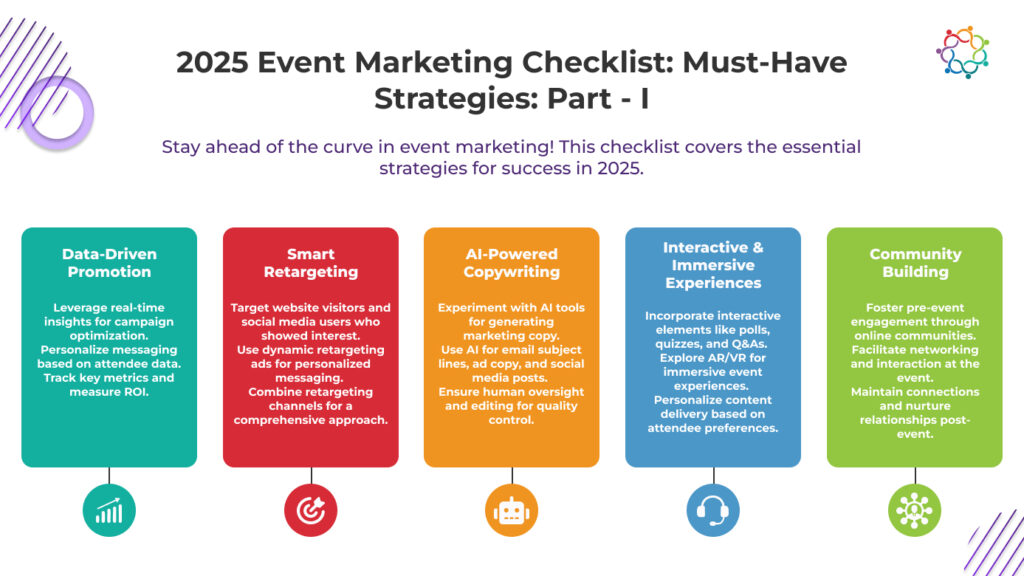
Use your blog (like this one) as a central piece in your content hub – linking out to:
Interlinking improves SEO while offering readers a seamless journey through your content universe.
When you prioritize SEO as part of your webinar promotion, you’re not just chasing visibility – you’re laying the groundwork for long-term discoverability and organic traffic, even after your event has passed.
Your webinar shouldn’t be a one-and-done event. If you’ve taken the time to plan, promote, and execute a solid session, you’ve already created valuable content – don’t let it sit idle. Repurposing allows you to stretch your efforts, amplify reach, and continue generating value from your webinar long after it ends.
Think of your webinar as a content goldmine. You now have:
Each of these can become standalone content pieces that reinforce your brand and continue attracting leads.
Here’s how to break your webinar into digestible assets:
By slicing the webinar into smaller parts, you can drip content over time – keeping the conversation alive while boosting webinar engagement on other platforms.
Turn key sections of your webinar into educational blog posts, particularly ones that address trending questions or pain points. This not only improves SEO but also positions your brand as an ongoing resource.
Infographics are another great way to present insights, especially data or frameworks shared during the session. They’re highly shareable and can drive additional webinar marketing momentum.
Tip: Link these repurposed assets back to the full webinar recording or a gated replay page to continue generating lead generation opportunities.
When you consistently resurface high-value takeaways from your webinars across email, social media, and your website, you’re reinforcing your brand’s thought leadership. This creates multiple touchpoints that drive trust – and eventually, conversions.
Boosting brand awareness with webinars isn’t just about the event day – it’s about how long your message can live and thrive after the fact. Repurposing is what gives your webinar legs.
The webinar might be over – but your job definitely isn’t. In fact, the real ROI often comes after the event. What you do in the days that follow will determine how well you nurture leads, maintain engagement, and set the stage for future conversions.

Webinar attendees have just spent 30 to 60 minutes engaging with your content. They’re warm, informed, and potentially interested – but if you don’t follow up promptly and purposefully, that attention fades quickly. That’s where effective follow-up activities after a webinar come into play.
A thoughtful follow-up sequence helps reinforce the value of the session and extends the relationship:
Timing matters: send your thank-you within 24 hours, the recording within 48, and the survey within 2–3 days max.
Not everyone who registers is sales-ready – but they’ve shown interest. Segment your list based on:
Now tailor your nurture campaigns:
This is where webinar lead generation turns into actual pipeline – if handled well.
Future Engagement
Your webinar is also a gateway to a broader relationship:
Keep the conversation alive – and build trust with every interaction.
A well-run follow-up strategy is the difference between a one-time viewer and a long-term customer. If you want to truly increase webinar attendance and participation, start thinking of the post-webinar phase as your most critical engagement window.
Promoting a webinar in 2025 isn’t just about sending a few emails or posting on social media – it’s about crafting a well-rounded, strategic journey that begins long before your webinar goes live and continues well after it ends.
This 10-step blueprint is designed to take you beyond the basics of webinar promotion, offering a clear path to:
From defining your audience and building a high-converting landing page, to leveraging email marketing, social media, SEO, partnerships, and repurposing content – every step is a building block toward webinar success.
But here’s the thing: even the most brilliant strategies mean nothing without consistent execution. The webinars that perform best are backed by teams (or individuals) who treat every promotion cycle as a chance to learn, improve, and connect more deeply with their audience.
Whether you’re a marketer, founder, or team of one – you now have a tactical guide to take your webinar from “just another event” to a lead-generating, engagement-driving powerhouse.
If you’re preparing for your next webinar, bookmark this blueprint. Better yet, start applying each step and track what works. You’ll be surprised how small changes in planning and promotion can lead to big leaps in attendance and impact.
And if you’re looking for a platform that brings all these strategies together – from landing page creation to email campaigns and post-webinar analytics – consider exploring Samaaro designed for modern teams like yours.
Picture this: you spend months planning the perfect event – amazing speakers, great content, a thoughtful agenda – only for attendance to flop. A scenario event organizer doesn’t want to come to pass, and most of the time, the missing piece to the puzzle is strategic communications about the event.
Event email marketing is the vital link between the promise of your event and your audience participation. It’s much more than just sending out a couple of reminder emails; it’s a focused, strategic process designed to drive registration, adopt a build-up of anticipation, and keep attendees engaged, before during and after the event.
Use this step-by-step guide as your roadmap to master event email marketing. From what exactly event email marketing is, what it means, and why is it important, to the basics of putting together effective event email campaigns and how to enhance those campaigns through automation and personalization; we have provided you with practical information that prepares you to successful at your event.
By embracing these proven strategies, you will learn how to drive registration to your event, create attendee engagement through strategic email campaigns, and help achieve your overall event goals. Regardless of if you are just starting out with your first event or looking to elevate your marketing edge, this guide will assist in giving you the elements to communicate with clarity and confidence at every stage.
Event email marketing doesn’t refer to simply sending out emails about your event, it is a clear and focused strategic approach to using email as a primary channel for communicating with your audience through the lifecycle of an event. Event email marketing creates connections, drives interest and actions from your invitation through to the thank-you email.
Event email campaigns are different from regular email marketing campaigns because they are time sensitive resulting from an event-based goal. Event email marketing included all email communication with your audience. Which may be some or all promotional, informational or engagement type messages and there is a progression in messaging, using sophistication in the order and number of emails, with a gentle nudge to push attendees through the funnel of registration and attending the event.
Seven characteristics of an event email marketing strategy, identified as key elements of success:
Why is event email marketing your event’s best resource?
When it comes to delivering a successful event email marketing is low cost, measurable, direct to audience. Let us explain the key points email marketing circles for your event strategy:
Low Cost & Measurable: You need to measure key email metrics, such at read rates, click rates, and conversion-based reporting, for on-going email campaigns and ensure the best return.

Before you write emails, you need to know exactly what the goals of your event are or what you want to achieve. Are you trying to raise registrations, increase actual attendance, increase engagement at the event, or have increased sales after the event? You will need to consider these goals when crafting all of your messages around the event.
In other words, when you know what your goals are, you can plan your campaigns that encourage attendees to take action towards those specific outcomes. That could be to click on a registration link, or to attend a session, or to share their feedback after the event.
Know Your Audience
The crux of email marketing will be the audience relevance; therefore, it is essential to conduct a deep dive into creating your attendee personas. Not just demographics – but real comprehension of their interests, challenges, reasons to attend, and their form of communication.
Once you have your personas, segment your lists and allow for segmentation into lists means that you will be sending the right message to the right audience groups, and increasing the odds that the audience will want to earnestly act on your message from the email.
As an example, perhaps new potential attendees need more education around the benefits of attending your event, while returning attendees might appreciate advance peeks or exclusives.
Crafting Emails that Matter
Now that you have established audience segments and goals, you will want to craft messages that clearly meet each group’s expectations and needs. Include language and a tone that is appropriate, and actions related to the event that matter to them.
Remember, “One size does not fit all.” You must personalize emails – and that means to segment the lists.

When considering event email marketing, it’s important to picture the journey from the time the first interest is sparked to long after the event has occurred. Planning this journey involves figuring out all the touchpoints you will have with your audience with email.
Start with all the communication leading up to the event, then keep all your registrants engaged until the event. Finally, map out all the follow-up email touches you will have post event.
Having a map or plan will help you make sure your emails will be sent on time, and the right message will be delivered.
Identifying the Email Types Needed for Your Event
Not all event emails are the same. There are event invitation emails, event registration confirmation emails, event reminder emails, event teaser emails, event follow up thank you and feedback emails.
Not all emails have the same purpose. They may invite, remind, engage or inform. By understanding the email types, you need to create, you will be stack up your content by each type of email needed.
Developing Your Event Email Marketing Timeline
When to send what email, is critical in event marketing. Create your timeline based around key event milestones – registration open date, early bird registration closes, speaker announcement, event day, etc.
For example, you send the initial invitation as soon as registration is opened, reminders leading up to the event, and you can also follow up with email right after the event ends.
Using an event timeline will keep your audience informed and engaged. This timely action prevents the frenzied rush near the end of registration that often causes people to forget to register.
Step 4: Creating core pre-event email campaigns that convert
The Magnetic Invitation Email
Your invitation email is your first point of contact. Make each email invite, your best. Be creative and hook your audience in your subject lines, while value-explaining why they should attend your event. Don’t forget to call attention to your key speakers, or how they will benefit from the event, or any unique sessions (say wine & canvas; or a kid’s act) that will make them not want to miss your event, as well as always including a CTA or what action you want them to take to make registration happen.
Flawless Registration Confirmation Emails
Now that someone has registered; now what. You want your confirmation email to set the tone of the event. Be sure to include all requried details: date, time, and location/access. Be sure to share an agenda (even a rough outline). Don’t forget to mention anything they should do next. You will also have an opportunity to hype up your event and reassure them as to why they made the right decision to attend your event!
Intelligent Reminder Emails
There are key milestones to afford yourself timing to remind them to attend your event; one week, one day, one hour. Anything after that is simply good value add to keep the event top of the mind. Reminders can also share last minute preparation info, like, what to bring along. Remember this is your last opportunity to market to your audience and your event may be days or weeks away so it would be to your advantage to also encourage a sense of urgency.
Teaser & Value-Add Emails
You have now sent some of your reminder emails but the trip to your event is not done. You want to keep your audience anticipating your event with some additional teasers. speakers, employers, and participants can demonstrate the value and impact of your event, creating additional excitement for attendees. For example, add personal touches that feature conference speakers or previous student testimonials (you can visit the event website or logged-in dashboard) demonstrating everything you’ve mentioned above.
Exploring Other Channels Beyond Email
Social media posts on Facebook (public groups), Twitter, and LinkedIn can generate buzz about your event, whether they refer to it as “the thing everyone’s talking about” or “the place to be.” Video previews, podcasts, and interviews with various speakers can also improve engagement on all events and help breathe life into advertisements related to your event (or venue) while reaching additional audiences and followers.
Using Event Apps for Growth
Some leaders in these markets still believe attendance is key to engagement with the information conveyed in your emails, presentations, or speaker sessions. However, we have also seen others valued event engagement apps over email and driven event attendance with remarkable success stories. Remember, start small with your app the first year and ask attendees for feedback. Before you know it, you will have maxed out the next app, and the stories will be endless about connecting, engaging, networking, and exchanging ideas that younger user groups quickly expect when attending your event or festival.
Using Event and Festival Marketing for Multiple Events
Send participants direct links to other events and even ask other event organizers if they can send a general email blast to attendees to promote your event. Use event blasts to blow the roof off at events. Event targeting is recent; it has given marketers personal style credibility with rotary and round-table style presentations. For example, hosting an annual event for the first time that receives a report on the outstanding marketing, targeting, and awareness raises the bar for organizers that want to come back that share/core’s values represent high expectations.
How are event apps advancing?
While apps like Eventbrite help host events and track simple metrics, apps like Whova, Gatherly, and Municipal are advancing intuitive event technology that engages participants. Event staff wish to advance their events by sharing focused educational messages while utilizing key tracking data to focus future programming and marketing approaches for future events. In-depth sharing from event apps will enhance leading content ideas in your pitches. For example, a keynote or speaker test from your last event to establish credibility with attendees if they see the event agenda outlined above during their registration process.

Hyper-Personalizing email communications can be much more than just adding the first name of the people receiving the email message. You can identify and utilize data on return (or not) attenders, interests, and behaviours to help you have more variable changing email content. Personal recommendations, personalized agendas or locations, can go a long way in boosting attendance, and showing your audience that you know what they want!
Automation
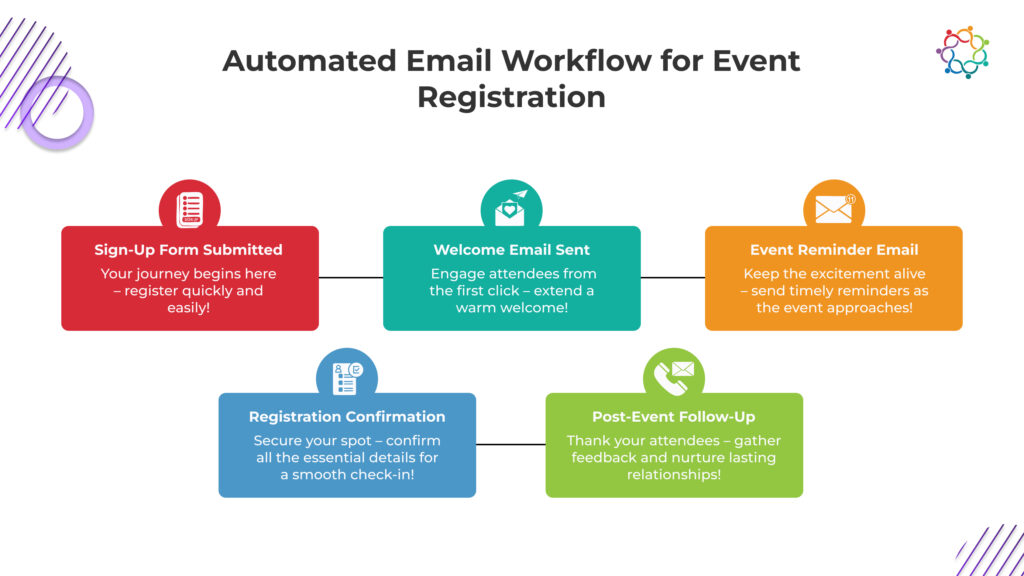
Automating your admissions e-mails enable you to save valuable time, but are also effective at communicating with your audience at the correct times as well. Set-up an automated trigger sequence to follow a registerable action, for example, welcome e-mail from when the person has registered, reminders leading up to the event, and post-event follow-ups. Automation enables organization of vital communications leading up to, during and after an event but can also keep your event where it needs to be on your audience members’ minds without manual effort.
Designing for Mobile-First & User Motivation
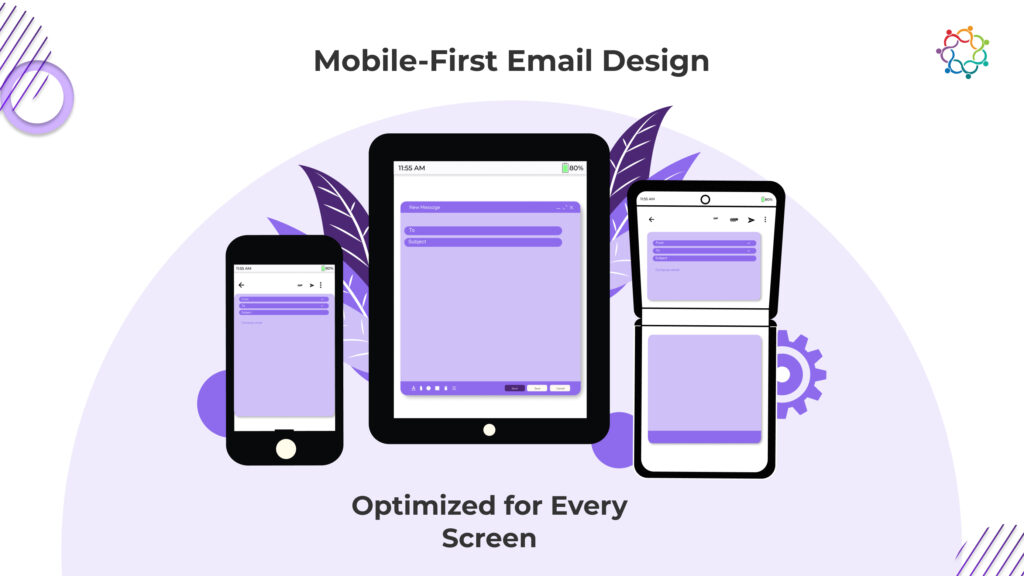
Since most emails are opened on mobile devices, it makes sense to design for mobile. Think about copy formatting (14 pt size), minimum wording is 25 words maximum for e-mail communications, larger buttons, and ensuring responsive layout for different devices. Always test your email on different mobile devices and computers to ensure it looks nice and works well. You want to provide the attendee with the best experience possible from the inbox to the event.

Adding any type of interaction creates attention and can encourage your emails to be memorable. An e-mail with a countdown timer can entice excitement by indicating the time they have to register (before the registration deadline), and a poll can provide quick feedback or preferences in moments.
Audiences love interacting and engaging in ways that pull them into the conversation within the e-mail provides even greater clicks, and potentially-interest from more attendees. Enjoying the A/B Testing for Continuous Improvement
Finding the right subject lines, calls to action (CTAs), images, and send times through testing allows you to identify what resonates with your audience. Frequently run A/B tests to enhance your messaging and design to increase open rates and conversions over time. Small changes can create a large impact on your campaign success.
Applying Social Proof & Testimonials
Social proof includes quotes from past attendees, statements of endorsement from speakers, and posts from social media. Each of these elements adds credibility – building trust through potential familiarity with positive experiences being conveyed from experiences of the past. Positive social proof also provides the event that human touch, making it feel both real and valuable.

Be sure to keep your list clean, staying activated and compliant. To execute event email marketing with efficacy, it is pertinent to have an email list that is healthy. A healthy list will have your emails connected with the correct email addresses and not be assessed as spam ware, which will improve your campaign performance as a whole.
Best Practices for List Management:
If you want to engage your audience, then you should regularly remove any inactive, bad or bounced email addresses.
Segment your email lists based on the behaviours, demographics and engagement level of your audience to create targeted event promotion emails. Utilize re-engagement campaigns to reacquaint disengaged attendees before pruning.
Make sure that you are careful to fit your rights and obligations under laws such as GDPR and CCPA to build, and maintain trust, while also not exposing yourself to any potential liability.
Make your privacy policy clear and ensure that people can easily unsubscribe if they want to. Make sure you have good records of consent and constantly update your activities in scope with ever-evolving data protection laws.
Once you have a mastery of list hygiene and become compliant, you will be improving your deliverability, enhancing your credibility, and starting to position yourself for successful email marketing for events campaigns.
Monitoring your key performance indicators (KPIs) is essential to establish a baseline and continue to improve your event email marketing activity. By thoroughly understanding your KPIs, you will be able to highly tune your performance and obtain maximum attendee engagement with your email marketing.
Essential KPIs for Event Email Marketing:
Analytics Tools:
Take advantage of your email marketing provider such as Mailchimp, HubSpot, etc. to create deeper reports.
Make sure to coordinate with your event registration/provider platform to help track not only your registration but tie it back to the email campaign which gives you event attendance.
This can help breakdown the data by event type, as well, and perhaps decisions you want to make moving forward such as differentiating between a webinar and a live event to see if an audience was more engaged during a certain type of event format.
Finding Patterns, Observing Trends, and Testing
Use your ongoing metrics to find patterns in your data, and then use this data to identify trends, alter subject lines, testing send times, and measuring follow-through so you can make improvements in your communications for registration, engagement and building a database of email addresses to follow-up post-event.
You will want to identify act-on behaviours amongst your identified trusts or groups.
To improve your campaign follow-up, consider segmenting your audience based on their behaviour and interests so you can send more effectively tailored and targeted emails.
To be continually iterative with your full campaigns and that every email you send contains relevant data is important.
Tracking its metrics ensures your email marketing for events is effective and therefore will adjust and improve as your audience has different needs.
Your email marketing for your event does not end after the event is over. While a good-to-do list item for you, your post-event communications are just as critical in helping nurture that relationship you have now fostered, gathering useful information on how you did, and laying the groundwork for the next event.
This email then reinforces the value that they received from your event and helps to create some goodwill and loyalty in your ongoing relationship.
Feedback and Surveys:
Remember that if you want and need to know where your attendees made or broke the experience, send them a targeted feedback form. You can also send them a survey or polls to gather information about your event, not only what they saw, but the experience they received and whether that knowledge transfer was actionable.
When you show you value what they say, you are drawing more of their engagement into the next time you communicate with them.
Nurturing leads and market future events:
Segment your attendees into categories based on their engagement and interests with your emails. Then you can send personalized follow-ups (which again adds to their engagement) with this targeted content and/or offers to their interests.
This also allows you to promote other upcoming $future$ events to expand your relationship and engagement beyond intimacy you built over the course of the event you just held.
By setting thinking post-event email campaigns after an event, you are actively looking to keep the life of your event to the extraordinary communication that you executed together with your audience.
Event tech is always evolving. As event professionals, we applaud the changes we see to help advance a young person’s engagement experience at events. No one said promoting and running an event would become easier!! Event tech and utilizing event apps to engage is the next promotional opportunity for event professionals to build on only think about attaining their history year on year. Increase your engagement by tracking your preferred events, firms, style, games, social impact, or if it is your venue’s warehouse to reward your event.
Explore our comprehensive guide for deeper strategies: Best Email Marketing Strategies for Event Promotion in 2026: Reaching Diverse Audiences.
Event email marketing is the practice of using targeted, automated email campaigns across the full event lifecycle: invitations, confirmations, reminders, nurture sequences, and post-event follow-ups. It remains essential in 2026 because email still has the highest ROI of any digital channel and the strongest one-to-one personalisation. Done right, email drives 30 to 50 percent of registrations for most B2B events.
Build your event email strategy in three phases. Pre-event: send a save-the-date 8 to 10 weeks out, the formal invite at 6 weeks, reminder nudges at 3 and 1 weeks, and confirmations within 24 hours of registration. Live-event: send same-day reminders with the agenda and check-in instructions. Post-event: send a thank-you within 24 hours, content recap and on-demand session links within a week, and a survey for feedback. Each phase has a different job, and the cadence matters as much as the content.
The event email campaigns that perform best are: personalised invitations (open rates of 25 to 40 percent for warm lists), confirmations and ticket emails (the highest open rates, often above 60 percent), trigger-based reminders 48 hours out, abandoned cart emails for people who started but didn’t finish registering, and post-event content recaps with a clear next-step CTA. Each one is triggered by a specific behaviour rather than a calendar date.
Personalisation, segmentation, automation, and mobile optimisation each lift event email performance in measurable ways. Segmenting by past attendance or industry typically lifts open rates by 20 to 30 percent. Personalisation beyond first name (referencing job role or session interest) lifts click-through. Automation removes manual sending so reminders go out on time. Mobile optimisation matters because 60 percent of event emails are opened on phones. Skipping any one of these leaves performance on the table.
The most important event email marketing KPIs to track are: open rate, click-through rate, registration conversion rate per email, unsubscribe rate, and downstream attendance and engagement from email-driven registrations. Open rate tells you if your subject line worked. CTR tells you if your content held attention. Conversion tells you if the offer landed. The last metric tells you whether the email actually drove business impact.
Businesses improve event email results by A/B testing one variable at a time (subject line, sender name, CTA copy, or send time), staying GDPR and compliance-compliant with clear opt-ins and unsubscribe links, and using audience insights from past events to refine future segmentation. Don’t change five things at once and call it a test. Run one experiment per send, document what wins, and build a playbook from the patterns.
In 2026, micro events are redefining how companies engage their teams, offering purposeful, compact formats that deliver impact without the overhead of large-scale gatherings. Whether it’s a 60-minute brainstorming sprint or a themed culture-building activity, corporate micro events are becoming a go-to strategy for driving connection, collaboration, and creativity in the workplace. As workplace dynamics evolve, there’s a growing demand for small-scale corporate events that are agile, budget-friendly, and aligned with employee interests. These micro event ideas don’t just boost morale, they support broader goals like knowledge sharing, team bonding, and internal communication.
In this blog, we’ve curated 20 creative micro event formats tailored for internal company events in 2026. From energizing team building activities to meaningful CSR moments, each idea is designed to spark inspiration and elevate your company culture.

When it comes to micro events that drive collaboration in the workplace, nothing beats activities designed specifically for team building. These small-scale corporate events are perfect for strengthening interpersonal relationships, breaking silos, and encouraging creativity, without pulling teams away for an entire day. Below are five micro event ideas that are quick to execute and high on engagement:
Host a 3- to 4-hour hackathon where teams solve a real business challenge or innovate around a fun hypothetical. Whether it’s brainstorming a new feature or reimagining an internal process, these team building events bring out problem-solving, teamwork, and presentation skills. It’s one of the most effective micro events for both engagement and insight generation.
Bring in a dose of friendly competition with quick-fire games like chair races, paper toss, and office trivia. This is a classic yet highly customizable idea for corporate micro events, especially when you’re aiming to boost energy mid-week or after a tough quarter. You can even theme it to reflect company values or upcoming milestones.
Give small groups a fictional problem (e.g., “How would our team work on Mars?”) and 90 minutes to pitch a wild solution. These are ideal micro events for sparking creativity and out-of-the-box thinking, plus, they offer a fun break from routine while encouraging collaboration.
Set up a lounge space with games like Codenames, Dixit, or Pictionary. It may sound simple, but it’s a tried-and-tested format for encouraging informal communication and team bonding. For hybrid teams, virtual board game platforms can be a great alternative.
Pair employees from different departments, give them a recipe (or mystery ingredient box), and let them cook up something fun. This is a playful twist on traditional team bonding ideas for micro events, and it’s great for breaking down hierarchies while creating shared memories. Bonus: the team gets to enjoy a meal together afterward.
Micro events aren’t just for fun, they’re a powerful tool for learning and growth when designed with purpose. These corporate micro events can be hosted monthly or even quarterly to support continuous development without overwhelming teams. Each activity below is crafted to nurture new skills, encourage knowledge sharing, and support personal and professional growth in a time-efficient way.
Create a monthly micro event where team members teach each other something new,professional or personal. A designer might teach basic visual storytelling, while an engineer walks through no-code automation tips. It’s one of the most low-cost, high-impact internal company events that builds community while fostering a culture of learning.
Invite team members to present short, 5–7 minute talks on topics they’re passionate about, from emerging industry trends to niche tools they’ve mastered. These micro event formats are a great way to spotlight internal talent and encourage public speaking in a safe space.
Host quick, structured sessions where senior team members rotate across small groups for 15-minute Q&As. This keeps mentoring approachable and scalable, especially in growing companies. It’s an innovative twist on traditional employee engagement activities that helps build trust and transparency.
Turn lunch breaks into optional skill-up moments with short talks, expert panels, or book summaries. These small-scale corporate events are great for employee enrichment while keeping things informal and low-pressure. You can even crowdsource topics based on employee interests.

Want to see how this would work for you?
30 minutes on how Samaaro orchestrates a year of micro-events from one platform.
Book a tailored walkthrough →Instead of traditional top-down feedback, these sessions invite junior team members to share insights with leadership in a moderated, constructive format. It’s a bold and modern approach to micro event planning that encourages open dialogue and fresh perspectives.

Culture isn’t built through posters or policies, it’s shaped by everyday experiences. These creative corporate events focus on well-being, empathy, and shared values, all wrapped into short, meaningful formats. In a hybrid, fast-paced world, these employee engagement activities are essential for maintaining morale and strengthening team identity.
Host short, 10–15 minute guided meditations during the workday, led by professionals or even trained employees. These quick sessions reduce stress, increase focus, and make wellness feel like a shared value. Perfect for a recurring, low-effort micro event format that centers mental health.
Gather teams for a monthly storytelling circle around a theme, “first week at work,” “most memorable team moment,” or “a personal challenge I overcame.” These internal company events are powerful for deepening human connections, especially in diverse or distributed teams.
Create a month-long bingo card with self-care challenges: 10-minute walks, gratitude journaling, hydration goals, or digital detox hours. Announce winners in a short, celebratory wrap-up event. It’s an engaging way to tie personal wellness into micro event planning.
Recognize employees who embody company values with short spotlight sessions. Peers or managers can nominate someone and briefly share what they did and why it mattered. These small-scale corporate events reinforce culture through real, relatable stories.
Dedicate an hour for a CSR-focused micro event, writing notes for local shelters, assembling care kits, or connecting with nonprofits. It’s one of the most impactful corporate micro events for showing that your company culture extends beyond the workplace.
In today’s fast-paced business world, staying ahead requires constant creativity and out-of-the-box thinking. These micro events are all about inspiring new ideas, fostering innovation, and giving your team the space to explore without the constraints of traditional brainstorming sessions. Whether through structured play or spontaneous collaboration, these corporate micro events energize teams and spark creative breakthroughs.
Set up a digital or physical “innovation wall” where employees can post any new idea, big or small,at any time. Each month, gather the team to discuss the best or most interesting ideas. This micro event format ensures that creativity is always encouraged and never stifled.
Think of it like speed dating, but for brainstorming. Set up short 5-minute idea exchange rounds where employees pitch their current challenges or new projects to a new colleague. This promotes cross-team collaboration and inspires fresh solutions. It’s an ideal employee engagement activity for encouraging diverse perspectives in a short amount of time.
Host a mini design thinking workshop, where teams tackle a problem or customer need in a creative, iterative process. By using tools like empathy mapping and prototyping, these micro events help employees develop practical innovation skills that benefit the company.
Host a casual event where employees showcase their personal creative projects,whether work-related or hobbies they’re passionate about. From artwork to side business ideas, this gives employees the freedom to express themselves. It’s a great way to connect personal creativity with company culture.
Similar to an innovation sprint but with a focus on nurturing ideas over time, these micro events allow employees to pitch ideas that are incubated with feedback and resources over a few weeks. At the end of the cycle, participants present their refined ideas to leadership for potential implementation.

In 2026, micro events are more than just a trend, they’re an essential tool for boosting engagement, fostering collaboration, and nurturing the creative potential within your teams. Whether it’s for team building, professional development, wellness, or sparking innovation, these small-scale corporate events are incredibly versatile and can fit seamlessly into the fabric of your company’s culture.
The beauty of micro events is their ability to be customized to your team’s needs, size, and goals. By implementing even just a few of the creative corporate events shared in this blog, you’ll not only enhance employee engagement but also create lasting memories and connections that drive success across your organization.
The key is to keep it simple, fun, and aligned with your company values. As we move further into 2026, corporate micro events will continue to shape how businesses build a resilient, innovative, and connected workforce. So, which micro event idea will you try first?
The best corporate event ideas for boosting employee engagement in 2026 are micro-events: small, focused gatherings like innovation sprints, lunch-and-learns, reverse mentoring sessions, themed culture days, wellness pop-ups, and project launch celebrations. These work better than large annual offsites because they create genuine one-on-one interaction, fit into busy schedules, and can be tailored to your team’s actual interests. Run a few each quarter and you’ll see engagement compound over time.
Micro-events outperform traditional corporate events for team building because the smaller group size forces real conversations, not surface-level small talk. A 60-minute brainstorming sprint or a themed lunch creates stronger bonds than a 200-person offsite where most people never speak. Micro-events are also cheaper, easier to schedule, and let you run them more often, which is what actually builds trust between teammates over time.
Low-budget corporate event ideas that deliver the highest team participation include lunch-and-learns, reverse mentoring sessions, themed culture days, book club discussions, volunteer days, and project launch celebrations. They work because they require minimal venue or catering spend, slot easily into the workday, and feel optional rather than mandatory. Keep them under 60 minutes, tie them to a clear theme, and let employees crowdsource topics for the strongest turnout.
For hybrid and remote teams, the most effective corporate event ideas are short, structured formats that work equally well on video and in person: virtual coffee roulettes, async show-and-tells, themed trivia, online cooking classes, and 15-minute Q&A rotations with leadership. Pick formats that don’t penalise remote attendees with worse audio or visibility, and rotate hosts across locations so no single office becomes the default.
Corporate event ideas improve leadership development and cross-team collaboration when you design them as exposure opportunities, not just social activities. Reverse mentoring sessions let junior team members coach senior leaders. Innovation sprints force cross-functional teams to solve real problems together. Rotating Q&A formats give emerging leaders a low-stakes way to present to executives. The format matters less than the deliberate mixing of seniority levels and departments.
When choosing corporate event ideas, consider four factors: your company’s stage and culture, the specific outcome you want (bonding, learning, recognition, or ideation), employee preferences, and how the format will be measured. A high-growth startup needs different events than a 5,000-person enterprise. Pick formats your people will actually attend, set a clear purpose for each one, and track participation and sentiment so you know what’s working.
The blog shares 20 short, focused event formats across four themes. Team building covers ideas like mini hackathons and Office Olympics. Professional development covers skill swaps and lightning talks. Wellness and culture covers micro-meditations and story circles. Creativity covers innovation walls and design thinking workshops. Each is quick to run and designed to spark connection, learning, and fresh ideas.
A mini hackathon is a short three to four hour event where small teams solve a real business challenge or a fun made-up one. It might mean brainstorming a new feature or rethinking an internal process. The benefit is that it brings out problem-solving, teamwork, and presentation skills, all while generating useful ideas in a high-energy, time-friendly format.
Office Olympics add friendly competition through quick games like chair races, paper toss, and office trivia. They work well for lifting energy mid-week or after a tough quarter. Because teams play together, people relax, talk, and bond across roles. You can even theme the games around company values or upcoming milestones to tie the fun back to your culture.
A flash innovation sprint gives small groups a playful problem, like how would our team work on Mars, and about 90 minutes to pitch a bold solution. They are effective because they push people to think creatively and work together under a light time limit. They break routine, spark fresh ideas, and show leaders how their teams solve problems.
For learning and growth, the blog suggests formats like skill swaps, where teammates teach each other something new, and lightning talks, short five to seven minute presentations on topics people are passionate about. Micro-mentoring circles and learn-at-lunch sessions also work well. These are low-cost, high-impact ways to build skills and share knowledge without taking a whole day away from work.
Traditional corporate events are big, all-day affairs that take a lot of planning and budget. Quick team-building micro-events are short, agile, and budget-friendly, often lasting an hour or two. Because they are small and focused, they create real one-on-one connection rather than surface-level mingling, and you can run them often instead of waiting for one large annual gathering.
Micro-events give emerging leaders low-pressure ways to grow. Formats like reverse feedback roundtables let junior staff share ideas with leadership, and micro-mentoring circles make senior guidance easy to access. Because the groups are small, people speak up more and trust builds faster. The result is stronger engagement and leaders who develop through real, regular interaction rather than one-off training.
For remote or hybrid teams, pick formats that work just as well on video as in person. The blog points to virtual board game platforms as a great alternative for game-based bonding, plus formats like lunch-and-learns, story circles, and short Q&A sessions. The key is choosing activities that include remote people fairly, so no one feels left out of the room.
Because micro-events are small and easy to run, you can host them regularly without overwhelming people. The blog suggests running learning formats monthly or quarterly, and some ideas, like wellness bingo, run across a whole month. The point of micro-events is frequency. Running a few often does more for connection and culture than one big event a year.
Several ideas need very little setup or spend. An innovation wall lets people post ideas anytime. Lunch-and-learns turn breaks into informal learning. Speed networking for ideas runs in quick five-minute rounds. Culture story circles need nothing but a theme and a room. These low-cost formats are simple to organize, yet still boost engagement, creativity, and team bonding.
For years, the success of B2B events has been measured by a single metric: leads. The number of new contacts scanned at the booth or registrations collected from a webinar have long been used as a shorthand for ROI. But here’s the problem, leads alone don’t equal revenue.
The reality is, events do much more than just fill the top of your funnel. When strategically planned, they can influence every stage of the revenue pipeline, from creating awareness to accelerating decision-making, deepening customer relationships, and unlocking expansion opportunities.
In today’s complex B2B landscape, where trust, timing, and relationship depth matter more than ever, it’s time we reframe how we view the role of events. This blog dives into how events, when aligned with your revenue goals, serve as powerful tools to drive pipeline velocity and impact revenue far beyond the initial lead capture.

To understand the true value of events, we first need to zoom out and look at the full revenue pipeline. Typically, this pipeline includes stages like:
Now, imagine layering event types across this journey:
Unlike static content, events bring immediacy, interactivity, and human connection to your pipeline. They shorten sales cycles, unearth high-intent opportunities, and foster the kind of brand affinity that purely digital interactions often struggle to build.
By mapping your event strategy to the revenue pipeline, you shift the focus from collecting names to driving real business impact.
Once a prospect enters the consideration stage, the stakes get higher. They’re no longer just browsing,they’re actively evaluating solutions, comparing vendors, and looking for signals of trust, credibility, and value. This is where strategic events shine by accelerating the journey from interest to intent.
Events allow for live, two-way engagement that deepens connections in a way passive content can’t. Whether it’s through interactive formats like Q&A sessions, group discussions, or networking lounges, events provide the space for prospects to engage with your team and brand on a human level.
Personalized experiences, such as tailored breakout rooms, industry-specific tracks, or curated attendee groups, foster a sense of belonging and relevance. These moments build emotional rapport and trust, which are critical drivers in high-consideration B2B deals.
When your brand hosts or contributes to panel discussions, keynotes, or workshops, it positions your team as subject matter experts. Thought leadership content delivered live not only educates your audience but also signals confidence and authority.
Strategic use of customer success stories, product walkthroughs, or expert-led sessions at events can differentiate your offering from the competition and create an aura of trustworthiness that no sales deck alone can replicate.
Events are a prime opportunity to deliver information that goes beyond what’s publicly available. From sneak peeks into your product roadmap to deep-dive case studies and industry research, exclusive content shared in a live format increases its perceived value.
It also creates a sense of urgency, prospects feel they’re gaining access to privileged insights, which strengthens their connection to your brand and encourages quicker action.

By strategically designing events to offer personalized engagement, thought leadership, and exclusive value, you transform the consideration stage into a powerful acceleration point in your pipeline. Events don’t just nurture interest, they convert it into buying intent.
By the time prospects reach the decision stage of your revenue pipeline, they’ve done their research. Now they’re looking for validation, confidence, and the right solution to meet their needs. This is where events can move the needle, not by generating leads, but by closing deals.
Strategically structured events can shorten the sales cycle, surface high-intent opportunities, and even convert on-site when aligned with sales efforts. Here’s how:
One of the most overlooked revenue opportunities at events is enabling intentional, sales-led interactions. Whether it’s through scheduled one-on-one meetings, dedicated consultation booths, or informal networking spaces, these in-person (or virtual) conversations give sales reps the chance to:
Event participation itself acts as a qualification marker, someone who shows up, engages in sessions, and speaks with your team is far more likely to be in-market than a passive lead from a landing page.
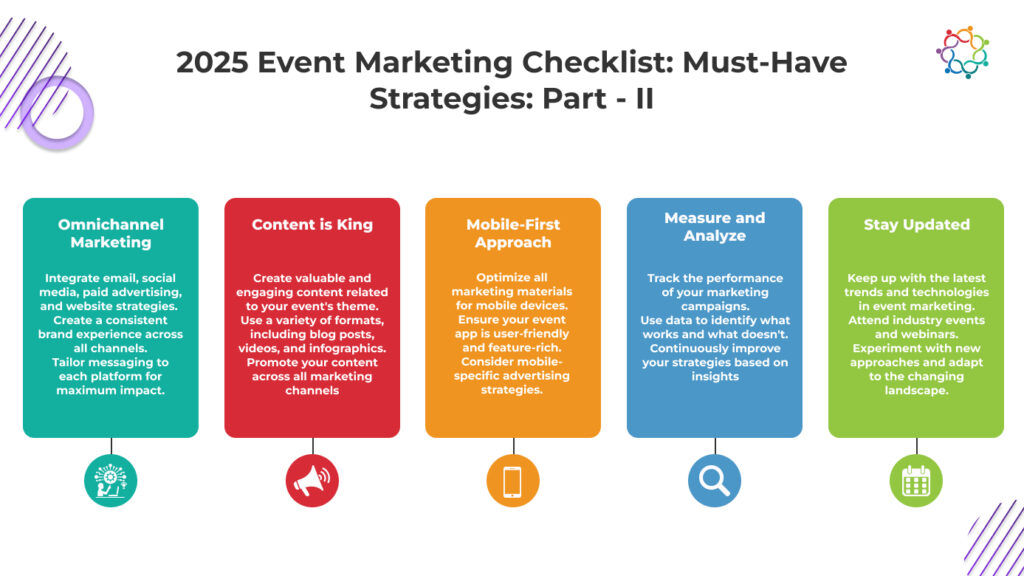
What’s working today:
Many revenue teams now coordinate on-site sales pods, mini teams equipped with tailored pitches, demo stations, and content relevant to the prospects attending. These teams don’t just collect contacts, they engage, qualify, and even set follow-up meetings before the event ends.
Events offer a unique opportunity to demonstrate your product in action,live, in context, and tailored to the prospect’s pain points.
This hands-on format increases retention and comprehension, while also making the solution feel more tangible and attainable.
Why it works: According to event marketing research, product demos presented in-person or via immersive sessions are 34% more likely to result in follow-up sales engagement than demos shared via email or landing pages.
Events create a moment in time,a window of heightened excitement and engagement. Smart marketers and sales teams capitalize on this by introducing event-specific offers that encourage fast action.
Examples include:
This approach works because it pairs emotional momentum with a practical incentive, pushing undecided prospects to take the next step.
Events are more than marketing showcases,they’re revenue conversion points. By enabling direct sales conversations, offering hands-on product experiences, and creating time-sensitive offers, events become high-impact environments for closing deals. When sales and event teams align around this intent, events move from being cost centers to true revenue drivers.
While many organizations focus heavily on using events to acquire new leads, some of the most significant revenue gains happen after the deal is closed. Events play a powerful role in deepening customer relationships, increasing satisfaction, and opening doors to upsell and cross-sell opportunities.
Here’s how strategic events can strengthen your post-sale pipeline:
Bringing customers together through exclusive user conferences, appreciation dinners, or regional meetups helps reinforce the value of your partnership beyond the transactional.
These events:
For B2B companies especially, fostering a sense of community and belonging is a long-term differentiator that reduces churn and increases brand affinity.
Example: SaaS companies like HubSpot and Salesforce invest heavily in annual user conferences because they understand that loyal customers,when engaged and informed,stick around longer and spend more.
Customer-focused events provide a natural setting to introduce new offerings, demonstrate value-add features, and identify expansion opportunities.
Tactics include:
These aren’t just sales pitches, they’re high-value conversations with an audience that already trusts your solution.
Pro tip: Equip your customer success and account managers with tailored talking points and collateral based on the attendee list and existing contracts. Expansion often starts with the right conversation at the right moment.
Events are one of the best places to spot, elevate, and activate brand champions. When customers are invited to speak on panels, share success stories, or network with peers, they’re more likely to:
Encouraging peer-to-peer engagement also increases trust among attendees, hearing value from a fellow user carries more weight than hearing it from a sales rep.
Real impact: Companies that consistently feature customers in event programming report higher NPS scores and referral rates.
Customer-focused events are not just retention tactics,they’re growth accelerators. When done well, they turn satisfied users into loyal advocates, uncover upsell opportunities, and solidify long-term revenue relationships. If you’re not leveraging events to deepen post-sale engagement, you’re leaving pipeline potential untapped.

Most event reports stop at registration numbers and MQLs. But if your goal is pipeline growth, your metrics should tell a deeper story,one that shows how events contribute to actual revenue outcomes.
Here are key ways to measure that impact:
Integrate your event platform with your CRM or revenue operations system (e.g., Salesforce, HubSpot) to directly associate attendees with open opportunities. This helps you:
Example: If 30% of your closed-won deals in Q2 attended a March product webinar, that’s a clear indicator of impact,even if they weren’t new leads.
Beyond registrations, ask: Do people who attend your events convert at a higher rate?
Segment your pipeline and compare:
Often, you’ll find that engaged event participants move faster and convert at higher rates due to the relationship-building and trust developed during events.
Take a long view by analyzing whether customers who attend events:
This is especially valuable for subscription-based businesses or high-LTV accounts, where event engagement correlates directly with retention and growth.
Sometimes, data alone can’t capture the nuance. Make it a practice to:
These insights provide context for the numbers and help refine your event strategy over time.To prove the true ROI of your events, you need to look beyond surface-level metrics. When you connect event participation to revenue outcomes,pipeline influence, faster deal cycles, higher retention, you unlock a more strategic role for events in your go-to-market engine.
Embracing the Full Revenue Potential of Strategic Events
Events are far more than flashy brand moments or lead-generation campaigns. When strategically designed and aligned with your revenue goals, they become powerful levers across the entire pipeline, from building awareness to accelerating deals and deepening customer loyalty.
By rethinking events not as isolated marketing activities, but as revenue-driving touchpoints, organizations can unlock better ROI, tighter sales alignment, and more meaningful customer relationships.
And to truly make this shift, you need the right tools.
That’s where Samaaro comes in.
Samaaro is more than just an event platform, it’s a revenue enablement tool built for event marketers and revenue teams who want measurable impact. From CRM-integrated registration flows and real-time engagement analytics to lead scoring, sales enablement features, and post-event feedback tools, Samaaro helps you connect every event interaction to real pipeline outcomes.
So, if you’re ready to move beyond vanity metrics and turn your events into revenue engines, it’s time to rethink your strategy,and your toolkit.
Strategic events drive more than leads. They drive growth. Let Samaaro help you prove it.
In 2026 we live in a time where planning events is way more complicated, but also more exciting than ever. With the need for higher attendee expectations, hybrid formats being replaced by more personalized in-person experiences, and timelines collapsing, event professionals are increasingly relying on software to keep on top of all this. Thankfully, the role of technology for evens has never been better defined, but choosing the right stack of software is no longer optional but strategic. As there are now hundreds of platforms to choose from now, administrative software must be carefully considered.
Getting it right will make or break your event. When you are planning a conference for 500 delegates or facilitating a high-impact product launch, the operational ease, communication and attendee engagement depends largely upon the software you choose. You can perfect planning tasks, gain commonality in check in processes, and take advantage of live analytics from your project management software, registration system and more.
This guide will look at tools in the following five categories:
We will explore the digital toolbox event planners rely on, and then it will be time to look at how to enable your team’s success in 2026.
Event planning is a team effort, and collaborating requires strong software to digitally manage every aspect of your event. The core event management software solutions, including registration or ticketing platform, website builder tools and project management tools, are critical to the overall success of any event. Besides being highly efficient and functional, they will.
Here is a more in-depth look at each of these essential tools: Governance and Ticketing Sites. Your governance and ticketing site is an important touchpoint for your delegates, everything ticket sales to delegate data. The right site will give both you, and your delegates, a seamless experience.
Things to look for:
Recommended Sites for 2026:
Eventbrite and Ticket tailer – are trusted sites that have good ticketing and governance but will come at a fee (and limit customisation). Samaaro – Samaaro is a hybrid events site, with fully customisable governance forms (and ticketing supports very easy user navigation).
Having a professional informative event website is very important to provide detail and our space for delegates to register.
Things to look for:
Although Web flow and Splash are attractive options for creating event websites, additional plugins may be needed for registration and ticketing.
Samaaro: Samaaro offers registration, as well as an integrated website builder for events. This tool allows you to create a branded, mobile-responsive event site using drag and drop capabilities. It integrates registration and ticketing, allowing you to have a professional looking site without having to develop a complicated process.
Project Management and Collaboration Tools
Project management ensures that events will happen on time, allowing people to complete tasks without any challenges. You are also able to communicate in a clear manner using a project management tool.
Things to Look for in Project Management Tools:
Task Assignment: Do you know what is due by when, and who is responsible?
File Sharing & Document Management: Important documents always have a place to live.
Project Team Collaboration: Does your project team have a means for communications, and do they have a means to collaborate live?
Time Management: Can you see visually your major milestones and deadlines (event content review, marketing, etc.?
Most Popular Project Management Platforms for 2026:
Asana, Click Up both are great tools for tasks and collaboration.
Finding the right event management tool is essential to success. Eventbrite, Web flow, and Asana all do things well, but Samaaro is the only tool that integrates and offers an all-in-one solution as you prepare for your event. Whether that be registration, building your site, project management for the event, and attendee engagement, Samaaro could ensure things will work using greater flexibility and efficiency in the 2026 events landscape.

At the end of the day, the attendee experience is the most important aspect of any event. As event managers, we want to make sure that we actively engage and create an interactive experience so that participants are fully engaged, informed, and participating at every stage of the event. In 2026, engagement tools are no longer simply a good-to-have; they are a must-have.
Event Mobile Apps
Attendee Benefits: Event mobile apps are becoming intrinsic to events. Event mobile applications make it easy for attendees to have information about any aspect of the event, navigate around the venue, and connect with other attendees.
Things to Think About:
Best Mobile Apps for Events in 2026:
Samaaro: The mobile app from Samaaro focuses on attendee engagement and is designed to deliver a seamless experience for attendees from registration to the post-event wrap-up. Samaaro’s mobile app empowers event organizers to customize the attendee experience with interactive features. The fixed features include a schedule for sessions, biographies of speakers, attendee networking options, and real-time notifications. Push notifications and easy-to-navigate interfaces keep attendees connected and engaged throughout the event and, as a result, had higher satisfaction and engagement rates.
Other Options: While Whova, Attendify, and other platforms offer excellent mobile app products, as an all-in-one event management product, Samaaro is well-positioned with deep integration with other event management features to manage your event and your attendee event experience.
Getting Your Audience Participating: While your event is taking place, engaging and attracting your audience to use a live tool for polling, Q&A, and engaging the audience are paramount to keeping your attendees involved and excited
Encouraging Engagement: Engaging your audience during an event will help to maximize participation and create lasting bonds. Assisting in engagement can be achieved using platforms that allow live polling, Q&As, and audience engagement while ensuring they participate and stay excited about the event.
How Do these Platforms Help with Engagement:
Some Recommended Audience Engagement Tools for Events in 2026:
Samaaro: Samaaro provides all-in-one engagement features to help facilitate engagement with your audience. Its platform includes live polling, Q&A, gamification, and surveys; all inside one tool. Having the features built in not only benefits the overall experience for the event but gives organizers real-time analytics into your audience’s preferences and allows you to make instant changes. When you engage your audience with features like the ones noted, your event can build a strong connection with your attendees and create a stronger event outcome.
Other Options: Other commonly used engagement platforms include My Younger Self, Slido and Mentimeter. These platforms also have engagement features but without the registration and attendee management options Samaaro offers, you’d need two platforms to accomplish what Samaaro can do as single option to the organizer.
Importance for Pre-event Promotions & Post-event Follow Up:
Email marketing is still listed as one of the most effective channels for promoting events.A robust email marketing plan, from pre-event promotions/reminders to post-event follow-up, acknowledges that brand engagement, contact, and ongoing communication with the attendees before and after the event is essential to getting people to register, reminding them to attend, and keeping them engaged long after the event is over.
Things to look for:
Best Email Marketing Tools for Event Professionals in 2026:
Samaaro: Samaaro’s email marketing capabilities take the decision making out of the equation for event organizers’ email marketing campaigns. Email capabilities include sending targeted emails and automatic emails proactively. Samaaro integrates to attendee registration data, and allows event planners to build and send personalized pre-event invitations, reminders and follow up email thank you messages, etc.
Other Options: Other popular email marketing providers, like Mailchimp or Constant Contact, are good email marketing platforms. However, for event professionals looking to innovate and do more with email engagement and communication post-event, Samaaro enables seamless integration with event registration and engagement tools.
Delivering a meaningful & memorable attendee experience in 2026 requires adequate engagement and communications tools to accomplish this. Therefore, Samaaro’s mobile app, audience engagement features, and email marketing Godsend integration could allow event planners and organizers to provide a seamless, interactive, & personalised event experience.

Want to see how this would work for you?
See how Samaaro consolidates registration, engagement, badging, comms, and reporting in one place.
Book a tailored walkthrough →When planning an event, effective on-site management is critical for creating a positive experience for attendees, exhibitors, and speakers. Effective tools allow you to manage logistic processes, limit unforeseen circumstances, and ensure every detail is executed.
Check-In and Badge Printing Software
Enhance the attendee arrival: The check-in process provides the first impression of the event experience. A fast and efficient check-in creates a much better attendee experience without long waits and frustrations at the start, allowing a sense of welcome right from the beginning.
Key Features to look for:
QR Code Scanning: The check-in process can be facilitated with the use of QR codes, as an alternative to manual entries and limit the risk of errors. Attendees can receive a unique QR code in advance through an email or mobile app that they can scan when they arrive for fast access.
On-Demand Badge Printing: Turn your attendees’ experiences into a more professional and engaging experience by offering on-demand badge printing. Several platforms currently offer on-demand badge printing stations to print badges with their name, company, and event-specific information.
Recommended Software for 2026:
Samaaro, which is all-in-one registration, check-in and engagement platform offers a check-in system, by universally using QR codes to offer a easy touchless check-in experience. Therefore, not only is the arrival experience for attendees seamless, but also, it provides a real-time integration with your event database and thus, preserves an updated attendee list that has all the real-time information.
Other Options: Major platforms like Eventbrite and Cvent also offer check-in software and badges, but it is hard to ignore Samaaro as a recommended solution for event planners due to their built-in integrations (the benefits of an all-in-one approach for registration, check-in, and engagement).
AV and Technical Services Management of Platform
Smooth Presentations, Smooth Management of Technical Services: The coordination of your audiovisual (AV) requirements is critical in the smooth delivery of any event. Regardless of the presentation format for your event (virtual, in-person, or hybrid), working with a proper AV and technical support software will help ensure that the tools you require to facilitate the technical delivery will run smoothly and effortlessly (and without any technical complications).
How Important is it to you for your Presentations run Smoothly?
Scheduling and Coordination: Schedule and manage your AV individual(s), schedules, and session requirements so their equipment is set-up ahead of need!Event Management: Find and measure every piece of equipment; from microphones, projectors to broadcasting/streaming tools, to avoid a last-minute significant technical glitch.
If you are hosting either a hybrid event or completely virtual event make sure you have your live-streaming, video conferencing and virtual staging tools.
Highlights of Emerging Platforms for 2026:
Swapcard is commonly the leading option for hybrid event audio-visual requirements.
When it comes to on-site execution, your team’s and their attendees’ experience should feel seamless. Samaaro’s check-in and badge printing system, and its AV and technical support management systems; can help lessening delays by enabling planners to keep everything operationally coordinated, thereby ensuring you keep a handle on everything operational and logistical.
Data Analysis and Reporting: Measuring Success
In today’s event planning world, hosting an event is not enough. Measuring and analysing your event’s success is critical for guidance towards improvement; to make sure your objectives of lead generation, attendee engagement, or brand awareness, are being met. Event data provides critical perceived value relating to attendee behaviour, the level of engagement and reporting on the impact of your event, for future decision-making and improvement.
Having access to effective data analysis and reporting tools also enables event planners to truly see their event performance; revealing actionable insights that will give them future information that drives better decisions.
Here are the critical tools and platforms you will need to measure your event’s success in 2026.
Analytics Dashboards and Tools
Tracking Key Event Metrics: Event analytics dashboards are always going to be the foundation of tracking performance metrics in real-time. By using dashboards event planners can track key data points such as registration numbers, attendee behaviour, engagement levels, and session attendance, which will allow teams to monitor performance levels throughout the event.
Key Metrics to Track:
Using Data to Plan Future Events: Using key performance metrics, event planners can write a post-event report that includes a detailed analysis valuing the data from the event and informs them on aspects of the event for future events. For example, if you see there was a significant drop-off in registrations at one or more places in the event, you may decide to change your time to do the event or how you market it for the next time.
Event Specific Analytics with Platforms:
Samaaro: Samaaro has an analytics dashboard that records every aspect of your event in real time! Whether it is gauging attendee engagement, the engagement of the event itself, or the research data from surveys, Samaaro keeps all the data from every event planner in one place to view and analyze.
Other Options: Cvent and Eventbrite also have solid analytics access but since Samaaro already has a built-in feature to analyze at attendee engagement, network, and session tracking levels – they help bring event planners a unique matter with how they can measure and analyze the attendee experience overall in an event.
Survey and Feedback Platforms
Asking to Understand to Get Better Each Time: After the end of the event, asking for feedback from participants is one of the best ways to understand their experience and what kind of success you had in fulfilling the goals. Feedback is one of the best tools in understanding how to fine-tune plans for your events, by using the right feedback tools.
Aspects of Consideration in Feedback Tools:
Customizable Surveys: Being able to customize surveys based on the type of session, demographic group/s, and the specific elements of your event will allow for feedback to be more specific and actionable.
Data-Led Analysis and Reporting: If your feedback sources include actual reporting of the survey responses, ensure that you can report on a segmented audience, or specific elements of your event, and try and collate survey feedback for all feedback sessions to look for trends.
Actionable Insights: The reason we collect feedback is to improve, so your feedback tool should give you actionable insights that can feed directly into your event planning.
Feedback Platforms for 2026:
Samaaro: Samaaro offers event management tools, plus it has integrated survey and feedback collection tools. You can customize your survey for your participants to complete prior, during, or after the event, which will provide you with quality insights.
Other Solutions: Other solutions and technologies, such as SurveyMonkey and Google Forms, may also help collect feedback options. However, with Samaaro for instance, because you can integrate feedback in the analytics dashboard, it gives you a better insight of event and attendee experience as an aggregate.

As we move further into 2026, technology is proliferating exponentially (faster than most people can stay informed for the event); it is continually providing new technologies and materials to the event planning industry.
AI Planning Tools
Artificial Intelligence (AI) will contribute significantly to the ways events are structured and executed. By providing autonomous options for administrative tasks or moulding the attendee experience for richer content and data insights, the potential of automated information will outweigh the labour of human connection and data.
Engaging, Tailored Experiences: AI will be capable of considering attendee preferences and behaviours, providing suggestions and recommendations organically through session suggestions, networking opportunities, and content.
Chatbots for Attendee Engagement: AI chatbots will be able to support attendees in-the-moment and respond to questions, make event information available, and facilitate networking options, potentially with an exciting twist
Virtual Reality (VR) and Augmented Reality (AR)
Technology related to Virtual Reality (VR) and Augmented Reality (AR) in the event space is growing fast, and a key aspect for planners is creating immersive and engaging experiences.
Virtual Reality: In terms of either a virtual or hybrid event planning, with VR, planners can capture attendees into a digital world, giving them the opportunity to have a fully immersive event experience. There are many examples of this with virtual trade shows, and product demonstrations. For planners, VR offers opportunities on how to engage attendees in ways never seen before.
Augmented Reality: AR can be used to enhance personal events through digital information on physical assets. For example: offering attendees an interactive event map through AR; gamifying the event; or providing more details during a product demonstration. All these possibilities create a richer and engaging experience for attendees.
Blockchain for event ticketing and security
Blockchain is causing disruption across industries, event planning included and is something planners and organizations should explore. Blockchain can elevate ticketing processes and provide attendees added security and benefit by offering the opportunity of having all tickets, purchases, products, etc. all in one place and in a secure and tamper-proof digital manner.
Wearable and Internet of Things Technology in Events
Wearable technology and the Internet of things (IoT) are creating new avenues for tracking attendee engagement and personalizing attendee experiences. For example, smart badges or wristbands can monitor the movements of attendees through the event and analyse their interests and engagement.
The future of event technology
These technologies are only the tip of the iceberg. The event planners will continue to innovate and experiment with new technologies, and we can’t wait to see the new tools and platforms that come our way to improve the attendee experience, develop new tools into planning, and offer insight into event performance. By keeping track of new innovative technologies, we can keep our events on the curve of innovation in 2026.
Making yourself successful in event planning in 2026
Looking to 2026, we know planning is more complicated, driven by technology but also more exciting with possibilities to create the next great event. With event planning apps and platforms, it is possible to plan events that are successful, organized, engaging, and purposeful. These important applications and technology, both registrations and ticketing, followed by data analytics and audience engagement technology, you are critical to a smooth transition from planner to attendee experience.
For event planners, being successful in 2026 means using technology that makes your planning easier but shows you the doorway to data-driven insights with opportunities to provide better engagement for the attendee experience.
Whether it is a all-encompassing project management solution, Samaaro; an exciting and sophisticated new mobile application, or an AI based engine of your choice; when you have the right technology to fit your event, to create an efficient and effective workflow so you can plan and execute events that make a difference.
In 2026, set yourself up to do your best level to lead your own success in the future. Being aware of new technology that is developing, investigating new tools and iterating on your process will lead to your success in the event planning world ahead.
A complete event planner toolkit in 2026 should include a registration and ticketing platform, an event website builder, automated communication tools (email, WhatsApp, SMS), an event app, on-site check-in and badge printing, a CRM integration layer, and a reporting dashboard. The goal is to run the full event lifecycle from one platform instead of stitching together six different tools that don’t talk to each other.
The essential software platforms for registration, attendee engagement, and event analytics are: a flexible registration platform that supports approvals and tiered guest categories, an event app with polls, networking, and live agenda, and an analytics dashboard that pulls registration, attendance, engagement, and CRM data into one view. Look for platforms where these three sit on the same system, so your data isn’t fragmented across vendors.
An event planner toolkit improves team collaboration when everyone works from one shared system instead of email threads and spreadsheets. Budget management gets easier with built-in expense tracking and ROI dashboards. On-site coordination improves with real-time check-in alerts, automated badge printing, and a single source of truth for attendee data. The key is choosing a toolkit where these features connect, so a registration update reflects everywhere instantly.
The best all-in-one event planner toolkit solutions for corporate, hybrid, and large-scale events are AI-powered event marketing platforms that combine registration, communication, on-site operations, engagement, and reporting in one system. Samaaro is purpose-built for this: marketing teams use it to manage hosted events, field marketing, and trade shows with full CRM integration. The advantage is one login, one dataset, and no manual export between tools.
AI, automation, and data analytics turn a modern event planner toolkit from a record-keeping system into a decision-making one. AI drafts email and landing page copy, recommends audience segments, and scores attendee engagement to surface hot leads. Automation handles reminders, RSVP confirmations, and follow-ups without manual work. Analytics show you which channels drove registrations, which sessions held attention, and which leads became pipeline.
When choosing an event planner toolkit for scalability and ROI, evaluate five factors: native CRM and marketing automation integration, support for multiple event formats (hosted, field, virtual), enterprise-grade security like ISO 27001 and GDPR compliance, the depth of reporting (especially pipeline attribution), and how the platform handles repeated events across teams and regions. Tools that score well here pay back as your event program grows.
A complete toolkit covers the whole event lifecycle. You need registration and ticketing, an event website builder, project management for your team, communication tools like email, an event app for engagement, on-site check-in and badge printing, and reporting dashboards. The goal is to run everything from one connected platform rather than stitching together separate tools that do not talk to each other.
Good software brings every moving part into one place, so your team works from a single shared system instead of scattered spreadsheets and email threads. It handles registration, scheduling, communication, and on-site logistics together. That means a registration update reflects everywhere instantly, tasks stay clear, and last-minute scrambles shrink. The result is smoother planning and far less manual, repetitive work.
Look for customizable registration forms, secure payment processing, real-time reporting, and CRM and app integrations. A drag-and-drop website builder, mobile-responsive design, and SEO help matter too. For engagement, look for live polling, Q&A, and networking. For on-site, look for QR check-in and badge printing. The most important feature is that everything connects, so your data is never fragmented.
They make signing up smooth and stress-free. Customizable forms collect the right details, secure payment processing builds trust, and a mobile-friendly flow lets people register from any device. Clear navigation means no one gets lost or turned away. When registration connects to your CRM and event app, attendees enjoy a seamless experience from sign-up all the way to event day.
Engagement is the heart of any event, and engagement software keeps attendees active and involved. Live polling, Q&A, gamification, and surveys invite participation and capture real-time feedback. This keeps people interested and gives organizers insight into what is resonating. In 2026, these tools are a must-have, because engaged attendees lead to higher satisfaction and stronger event outcomes.
An all-in-one platform puts registration, website building, communication, engagement, check-in, and reporting in one system with one login. Because everything connects, your data stays consistent and you avoid moving information between separate tools. This saves time, reduces errors, and gives you a single source of truth. Platforms like Samaaro replace several point tools with one connected workflow.
Analytics dashboards track key data in real time, like registrations, attendance, engagement, and session popularity. After the event, you can pull a report that shows what worked and where people dropped off. For example, if registrations stalled at one point, you can adjust your timing or marketing next time. Good reporting turns raw data into clear decisions for future events.
Event apps put everything attendees need in their pocket. They show the agenda, let people build a personal schedule and set reminders, offer interactive venue maps, and enable networking and meeting scheduling. Push notifications share live updates. Because the app keeps attendees informed and connected throughout, it boosts participation and satisfaction far beyond what a printed program could ever do.
Automation handles repetitive tasks so your team can focus on higher-value work. It can send personalized invitations, reminders, and post-event thank-you emails automatically, and sync attendee data without manual exports. AI can even draft copy and surface insights. By removing the busywork of chasing confirmations and updating spreadsheets, automation saves hours per event and reduces costly human errors.
Several trends stand out. AI personalizes attendee experiences and powers chatbots. AR and VR create immersive previews and interactive maps. Blockchain adds secure, tamper-proof ticketing. Wearables and IoT, like smart badges, track movement and suggest connections. Together these tools help planners deliver more engaging, data-driven events and stay on the cutting edge as 2026 unfolds.
Here’s the truth: LinkedIn users are there to work. They’re not scrolling mindlessly like on Instagram or TikTok.
When someone opens LinkedIn, they want to learn something useful for their job. They want to network with people in their industry. They want to find opportunities.
That’s why LinkedIn beats every other platform for B2B events.
LinkedIn users? They’re 6x more likely to engage with work-related content than anyone on Facebook or Twitter. That’s not a typo. Six times.
What makes this different:
You can target exactly who you want. CMOs? Done. Operations heads? Done. People in specific industries? Done.
People trust LinkedIn. They’re there with their professional brain turned on.
Your posts don’t just disappear. When someone shares your event, their entire network sees it. One person’s share becomes a network effect.
This guide walks you through the whole thing. How to set up your profile. What kind of posts actually work. How to use LinkedIn’s paid tools. How to measure what’s working.
Whether you’re running a huge conference, a small webinar, or a roundtable for 20 people, LinkedIn can work for you.
Before you ask anyone to come to your event, your LinkedIn profile and company page need to look professional.
First impressions matter. A lot.
If you’re the person organizing the event, or speaking at it, your personal profile is your credibility.
Here’s what to do:
Put the event in your headline. Example: “Building B2B growth through | VP Marketing at ”
Use relevant keywords. If your event is about AI in marketing, put that phrase in your profile. It helps you show up in searches.
Use the “Featured” section to highlight past events. Add photos, videos, testimonials. This shows you’ve done this before.
Create a clear home for your event.
Use consistent colors and logos. Make it recognizable.
Put the event name, date, time, and location somewhere obvious. Don’t make people hunt for it.
Use a good cover image. Something that captures attention in 2 seconds.
Write an “About” section that explains what the event is, who it’s for, and why they should care. Keep it short.
Pin your registration link. Make it the first thing people see.
That’s it. You’re ready to start promoting.
LinkedIn’s algorithm rewards posts that spark conversation.
Your goal: show up regularly with stuff people actually want to read.
Start early. Don’t wait until a week before.
Behind-the-scenes posts: Show people setting up the venue. Pack the swag bags. Get speakers ready. This makes it feel real.
Speaker spotlights: Introduce your speakers one at a time. Include a photo and a quote. Ask the speaker to share it too (they will).
Countdowns: “30 days until…” graphics. People like knowing time is running out.
Polls: Ask your audience what topics they want to learn about. What challenges are they facing? This does two things: you get useful info, and people engage because you asked them.
As the event gets closer, people need details.
Agenda breakdowns: Show the schedule visually. What sessions are happening when? Who’s speaking?
What you’ll learn: Skip the fluff. Tell them exactly what skills or insights they’ll walk away with.
Testimonials from past events: If you’ve done this before, show how attendees felt. Real quotes work better than made-up benefits.
Logistics: For in-person events, where to park. How to get there. What to bring. This reduces confusion and drop-offs.
Short videos: 30-60 seconds. Show the energy. Show why it matters. People stop scrolling for video.
Infographics: Pack info into one image. Speaker names. Session titles. Key stats. People love these.
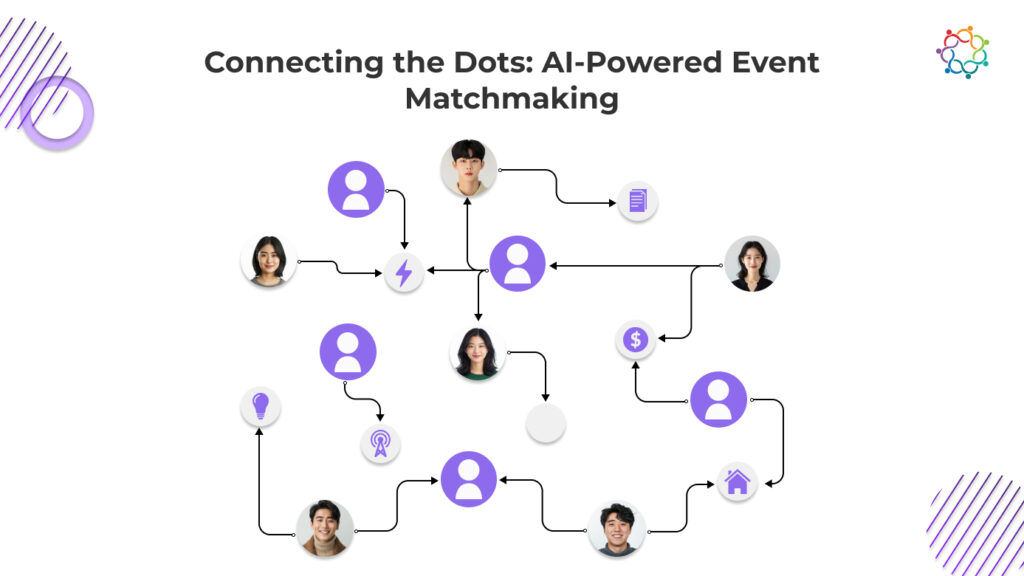
Quote cards: Take a speaker’s quote and put it on a nice background. Simple. Shareable.
Don’t just post for the sake of posting.
Every post should ask for something.
“Register here.”
“Save your seat.”
“Sign up link in the comments.”
Use language that sounds like a real person. Not corporate. Real.

You’ve posted content. Now amplify it.
Create an official LinkedIn Event. People take it more seriously when it’s on the platform itself.
Fill in all the details: title, date, time, location, speakers, what people will learn.
Use a good banner image.
Write a description that explains why someone should come. Focus on benefits, not features.
Invite people directly from your connections. Personal invites get way higher acceptance rates.
Turn on automatic reminders. People will actually show up more often.
Watch the analytics. How many people RSVP’d? What industries are they in? Use this info.
Write longer posts. 500-1000 words.
Tie them to your event’s topic. If your event is about B2B growth, write about what’s changing in B2B growth right now.
Spotlight your speakers. Share insights they’ll cover.
Copy stuff from your website or existing blog posts. Just reformat it for LinkedIn.
Find groups where your ideal attendees hang out.
Join. Participate. Build credibility. Then promote.
Don’t be the person who joins and immediately sells. That gets you ignored.
Genuinely help people. Answer questions. Then, when you post about your event, people actually listen.

This makes attendees feel seen. They become promoters.

Numbers tell you what’s working.
Track these:

Want to see how this would work for you?
30 minutes on how teams turn LinkedIn promotion into measurable event pipeline.
Book a tailored walkthrough →LinkedIn work doesn’t stop when the event starts.
Go live on LinkedIn. Show attendees hanging out. Quote speakers. Film the energy.
Keep posting. Real-time updates. Make people who aren’t there wish they were.
Answer comments and messages from people watching.
Post thank you messages. Tag speakers and sponsors.
Share testimonials from people who came.
Post highlights reels. The best moments.
Follow up with attendees who didn’t make it. Offer recordings or resources.
This keeps momentum going for the next event.
Conclusion
LinkedIn isn’t just another social media site; it’s a professional stage where your event can stand out, connect with the right people, and get real business results. This platform gives you all the tools you need to promote your event effectively, from making your profile better and writing interesting content to using tools like LinkedIn Events, Live, and Ads.
Building a community around your event and keeping track of the right metrics will help you make LinkedIn a great marketing tool that you can use over and over again.
At Samaaro, we know intelligent promotion maximizes event ROI. Our platform is designed to integrate with your marketing activities to create leads, collect feedback, and monitor effectiveness in real time. Samaaro helps you measure performance from promotion to post-event for product showcases and huge summits.
Q: Which content actually works best on LinkedIn for event promotion?
A: Authentic stuff. Videos of speakers or behind-the-scenes content. Q&As. Polls asking what people want to learn. Testimonials from past events. Honest posts from real people beat polished corporate posts every time. Start 8-10 weeks before your event for a conference, 4-6 weeks for a webinar.
Q: How do I target the right people on LinkedIn?
A: Use LinkedIn’s targeting tools. Filter by job title, industry, company size, seniority level. If you want CMOs, search “Chief Marketing Officer.” If you want startups, filter by company size. LinkedIn lets you get really specific. For paid ads, you can even upload a list of people you want to reach.
Q: How do I get people to actually register, not just like the post?
A: Make registration stupid easy. Link directly from the post. Ask clearly: “Register here.” Create urgency when you can: “Spots filling up.” “Early bird ends Friday.” And here’s the thing most people miss: follow up with people who view your event page but don’t register. A personal message often closes the deal.
Q: Should I ask my team to share the event?
A: Yes. One company post reaches maybe 5,000 people. But if 10 employees each share it, you reach 50,000+. Give your team pre-written copy they can personalize. Ask speakers and sponsors to share too. This multiplies your reach for free.
Q: What’s the best time to post on LinkedIn?
A: Tuesday through Thursday, mid-morning. 8-10 AM is solid. People are at work, scrolling. Avoid Mondays (too hectic) and Fridays (people are checked out). But honestly, consistency matters more than perfect timing.
Q: How do I know if LinkedIn promotion is actually working?
A: Track registrations from LinkedIn. Use UTM parameters or Google Analytics to see traffic. But the real metric is: how many people who registered on LinkedIn actually showed up? And of those, how many became customers? Those numbers matter way more than how many likes you got.
Q: Can I really get enough registrations from LinkedIn for a B2B event?
A: Yes. For B2B events, LinkedIn often drives 40-60% of registrations. It’s where decision-makers hang out. They’re there specifically to learn about their industry and find solutions. If you’re marketing a B2B event and not using LinkedIn heavily, you’re leaving registrations on the table.
Q: What should I put on my event page to convince people to register?
A: Be clear: What’s the event? When? Where? Who’s speaking? What will people learn? What problems does it solve? Make it benefit-focused, not just feature-focused. Instead of “3-day conference,” say “Walk away with a 5-step go-to-market playbook.” End with a clear registration link. Don’t make people hunt.
Why The UAE Is The Sponsorship Opportunity You’re Missing
The UAE isn’t just an events destination anymore. It’s become the place where brands go to make real business happen.
In the last decade, the UAE went from occasional events to hosting world-class conferences, expos, festivals, and championships every single week. Dubai and Abu Dhabi are investing billions in infrastructure. Global companies are showing up. Attendees are getting smarter and more valuable every year.
This is the golden age for event sponsorship.
But here’s what most brands get wrong: They still think sponsorship is about logo placement and booth space. They show up. They put their logo on a banner. They leave. They call it marketing.
That’s not sponsorship. That’s just paying to be seen.
Real sponsorship in the UAE is about partnership. Alignment. Mutual value creation. It’s about sponsors and event organizers working together to deliver outcomes that matter to both sides.

The UAE event boom isn’t random. It’s strategic. And understanding what’s driving it helps sponsors figure out where to play.
The UAE gets over 17 million international visitors annually. That’s the goal. That’s the bet.
Marquee events like Expo City Dubai, GITEX Global, and the Formula 1 Abu Dhabi Grand Prix pull people from around the world. They’re not side events. They’re the main draw.
For sponsors, this means attendees at UAE events are high-value. Decision-makers. Influencers. People with budget.
The UAE is deliberately building new industries: tech, finance, creative industries, healthcare innovation.
Events drive this. When you host a fintech summit, you attract fintech companies. When you host an AI conference, you attract AI talent and investors.
For sponsors in these sectors, UAE events are places to be. To be seen. To build credibility.
Dubai World Trade Centre. Expo City Dubai. Yas Marina Circuit. These aren’t small venues. They’re designed for massive events.
State-of-the-art tech. Capacity for 100,000+ people. Hospitality that matches luxury standards. This matters for sponsors because it means the experience they’re helping create is high-quality.

Not all events are created equal. Different sponsor types are going after different things.
GITEX Global. Arabian Travel Market. These massive trade fairs are hunting grounds for C-suite executives, investors, and decision-makers.
Tech companies go here to establish credibility. Fintech companies go here to generate leads. If you sell to businesses, UAE expos are where to sponsor.
Formula 1 Abu Dhabi Grand Prix. UFC fights. Golf tournaments. SailGP.
Sports sponsorships give you global broadcast exposure. Celebrity association. Luxury and automotive brands live in this space.
The ROI is visibility times reach. Millions of eyeballs, globally.
Dubai Shopping Festival. Abu Dhabi Film Festival. Music festivals.
These events reach consumers, not businesses. They’re emotional, not transactional.
Consumer brands go here. Retail brands. Lifestyle brands. The goal is to connect emotionally and drive consideration.

Sponsorship isn’t just about brand awareness. When it’s done right, it delivers real business outcomes.
This sounds simple but it matters: You’re in front of people who actually care about what you do.
At a fintech summit, every attendee is potentially a customer or partner. That’s not true at random events.
Brands get targeted placements. Branded zones. Keynote slots. Product demos. VR experiences. Influencer takeovers.
It’s not a banner. It’s a presence.
Live events are the one place where digital doesn’t work. You can’t replicate face-to-face conversations online.
Sponsors run contests. QR codes. Product demos. They capture leads in person.
But more importantly, they have real conversations. They build trust. They understand pain points. This is data you can’t get from a website.
For organizers, sponsored activations make the event better. More interesting. More memorable.
The event ends but the content doesn’t.
Sponsors and organizers co-create videos, interviews, behind-the-scenes clips. They share these on social media. Newsletters. LinkedIn.
One event becomes months of content. Months of amplification. Months of ROI.
If you’re worried about bureaucracy in the UAE, stop. The government actually makes it easy.
Dubai’s Department of Tourism and Commerce Marketing (DTCM) has sponsorship schemes for events aligned with Dubai’s vision.
If an event has DTCM backing, it’s vetted. It meets standards. International sponsors trust it more.
This is huge. The UAE changed its commercial laws.
Foreign companies operating in free zones (Dubai Media City, Abu Dhabi Global Market) don’t need a local agent. They can work directly with event organizers.
No middleman. No complexity. This makes sponsorship way more accessible.
Not all sponsorships are the same. The best ones are intentional. Strategic. Built with purpose.
This sounds obvious but most brands skip it.
A sustainability-focused brand at a green tech conference. That’s alignment. Attendees believe it. Media believes it.
A random brand at a random event. That’s transactional sponsorship.
Before committing, ask: Does this event audience care about what we do? Does our mission align with the event’s values? Will attendees think we belong here?
If the answer is no to any of these, move on.
Stop using generic packages.
The days of “Silver, Gold, Platinum” sponsorship levels are over. Real sponsorships are custom.
What does the sponsor actually want? Leads? Brand awareness? Thought leadership? Media coverage?
Design the package around that.
Maybe one sponsor wants a keynote slot. Another wants a networking lounge. Another wants app sponsorship. Another wants co-branded content.
Give them what they need.
Sponsorship isn’t standing in a booth hoping people walk by.
Create immersive experiences. AR/VR demos. Gamified brand zones. Interactive installations.
Give attendees a reason to spend time at the sponsored area. Capture leads. Create content. Generate buzz.
You can’t improve what you don’t measure. Sponsors and organizers both need clear metrics.
Track impressions from promotional campaigns featuring the sponsor. Count registrations driven by co-branded efforts. Estimate media value from PR mentions.
These are predictive. They tell you if the sponsorship is set up for success.
Measure foot traffic at sponsored areas. Count participants in sponsored sessions. Track social media mentions with branded hashtags. Monitor attendee sentiment from posts.
Real-time dashboards let you see what’s working. You can adjust if needed.
This is where you prove ROI.
How many leads were qualified? Did any turn into customers? Did the sponsorship impact deal size or speed? Did brand perception improve?
Compare expectations to reality. Document everything.
This phase is critical because strong data turns one-off sponsorships into multi-year partnerships.
Don’t wait until the last minute to involve sponsors in planning.
The best partnerships are built during planning, not weeks before.
Don’t use generic sponsorship contracts.
Be specific about deliverables, timelines, and success metrics. Avoid confusion.
Don’t assume digital metrics equal business value.
Likes and impressions are nice. But leads, conversions, and partnership quality matter more.
CTA CARD

Want to see how this would work for you?
See how UAE event teams use Samaaro for sponsor sales, delivery, and post-event reporting.
Book a tailored walkthrough →Strategic sponsorship doesn’t end with lead capture. Learn how real-time data impacts sponsorship activation.
Real-time attendee insights let you optimize activation on the fly. Sponsors see what’s working. Organizers adjust what’s not.
This closes the gap between sponsorship investment and sponsorship outcome.
The UAE events market is mature. Attendees are sophisticated. Sponsors are demanding. Organizers are competitive.
This isn’t the time for transactional sponsorships. It’s the time for partnerships.
Alignment. Customization. Activation. Measurement.
Do these four things and sponsorship goes from a line item to a business lever.
You build repeat partnerships. You build trust. You build relationships that last years.
That’s the future of sponsorship in the UAE.
Q: What makes a sponsorship strategic versus transactional?
A: Strategic means aligned mission, customized deliverables, and measurable outcomes. Transactional is “here’s a booth, here’s your logo.” Strategic sponsors are involved in planning and outcomes matter to both parties.
Q: Which UAE events are best for B2B sponsorship?
A: GITEX Global, Arabian Travel Market, tech summits, fintech conferences. Any event attracting decision-makers in your target industry. B2B sponsorship is about audience fit first.
Q: How much lead value data do I need to prove ROI?
A: Track at minimum: leads captured, leads qualified, leads converted, conversion rate, deal value influenced. Compare to sponsorship cost. If one lead pays back the sponsorship investment, the ROI is there.
Q: Should we sponsor multiple events or go deep with one event?
A: Start with one event where audience fit is perfect. Prove the model. Get metrics. Then expand. One great sponsorship with measurable ROI beats three mediocre ones.
Q: How early should we involve sponsors in event planning?
A: 4-6 months before is ideal. They need time to plan activations. Design materials. Align internally. Late involvement limits what’s possible.
Referral programs are quickly becoming one of the most significant organic marketing strategies for event registration. In the UAE, where interpersonal networks and trust factor heavily into decision making, a referral program will help grow attendance while lowering acquisition costs.
Event planners must leverage the connectors in the digital space and understand there is a desire for exclusive experiences in driving attendance in the UAE. Using the right incentives, tracking, and promotional strategies, event planners can help facilitate converting attendees to evangelists about the event—in turn helping to keep the event going.
This guide will look at:
Let’s get into the strategies to help you create impactful referral activity for your next event.

The UAE has a highly diverse population, with a mix of expatriates and local Emiratis who have different preferences when it comes to incentives. To create an effective referral program, it’s essential to align incentives with cultural expectations and consumer behavior.
Key factors influencing referral incentives in the UAE:
Several events and brands have leveraged referral incentives effectively:
When designing incentives, it’s important to ensure they are proportional to the value of the event itself.
By tailoring incentives to the preferences and expectations of UAE audiences, event organizers can build a referral program that drives organic registrations, enhances brand loyalty, and maximizes engagement.

The UAE has one of the highest social media penetration rates globally, making platforms like Instagram, Facebook, LinkedIn, Snapchat, and TikTok powerful tools for referral program promotion. Choosing the right platform depends on your target audience:
To drive referrals, content should be engaging, shareable, and action-oriented.

Analyzing results and metrics To determine how well your referral program is functioning, it is helpful to track the key performance indicators (KPIs) you established previously:
Reward system:
an effective reward system should be simple, easy to work with, and attractive enough to motivate people to refer others.
You may want to consider:
Tracking and integration Referral Tracking Tools:
By combining strategic social media promotions with robust tracking and rewards, your referral program can drive strong organic registrations while enhancing attendee engagement.
4. Referral Community within the UAE Business Sector Networking Strategies:
Captivating Key Industry Players & Business Associations The ecosystem of business in the UAE is built on established networks and professional relationships; therefore, if event planners want to have a successful referral program they must endeavor to engage the key stakeholders, business leaders and associations who can promote referrals.
Key Methods for Working with Business Associations:
Business Chambers, such as Dubai Chamber of Commerce, Abu Dhabi Chamber, or working with TECOM Business Communities, provide outlets for gathering professionals from the same industry to connect and network. If you partner with any of these groups, it can help facilitate your outreach efforts.
Community Engagement – Building Brand Advocates to Continue Promotion
Beyond formalised networking, you can build a community of people that are enthusiastic about referral success. Examples include:
Creating Groups for Referrers Determine to create a WhatsApp or Telegram group for your referrers and be sure to highlight the connections that they make when the events happen (but make it exclusive to those).
Recognizing and Appreciating Active Referrals Recognizing top referrers in event communications (e.g. social media or newsletters) or offering a limited number the chance to engage other VIP speakers are wonderful ways to recognize their support.
Pre-Event Meetups or Webinars
You can further create engagement and deepen referral networks by holding very informal, small networking meetups ( or webinars if you are not in the area) or hosting industry panel discussions before your event.
Establish an Ambassador Program
Curate a rotating list of loyal attendees and industry influencers who will be long-term brand ambassadors of your event and support the event among their professional community.
Amidst strategic networking and building community offers better sustainability for event organizers to have an ongoing and solid referral network that can continue to grow organically for ongoing events.

Identifying Partnerships to Generate Referrals Identifying and working with engaged local partners can also create significant success for your referral program. Some possible partners could include:
Corporate Sponsors or Industry Leading Corporations
Identifying and working with industry leading corporations,
Some great examples include the Khaleej Times, Gulf Business, or Entrepreneur Middle East any participants in your RMP can target and amplify an outreach campaign.
Universities or Learning Institutions If your a career expo, industry specific conference, or startup event advocating education in the UAE are important.
Partnership Models of Working Agreements for Referrals
To avoid and ensure mutually beneficial relationships when developing event partnerships employs the below models:
By using local partners, organized about the event can max out their local referrals and helping co-create growth sustainability into scheduling for the local UAE region for an event series, organized about the same focus (ie. referral support).
A well-executed referral program should not function in isolation—it should be seamlessly integrated into your overall event marketing strategy. By aligning referral efforts with email marketing, content marketing, and paid social campaigns, event organizers in the UAE can maximize reach and engagement.
To ensure a cohesive event promotion plan, referral initiatives should be embedded within multiple marketing touchpoints:
To evaluate the effectiveness of referrals in the overall marketing mix, event organizers should track:
Implementing UTM parameters, custom tracking links, and integrated CRM dashboards helps assess referral performance alongside other promotional efforts.
The UAE’s digital-first audience is rapidly adopting new referral strategies driven by:
With the rise of localized digital campaigns, referral marketing will continue to play a vital role in driving high-quality, organic event registrations.
A strong referral program can significantly boost event registrations in the UAE when combined with strategic planning and execution. The key takeaways include:
By implementing these best practices, event organizers can unlock sustainable organic growth while increasing brand engagement and attendance.
Samaaro is a trusted event management platform used by leading brands in the UAE to streamline event operations and enhance audience engagement. With seamless integration into referral and promotional strategies, Samaaro empowers organizers to drive maximum registrations and execute successful, high-impact events.
Keep referral rewards at roughly 10 to 20 percent of ticket value, or use perks like VIP upgrades. Tie payouts to attendance so rewards only cost you for real attendees.
Verify email addresses, cap rewards per referrer, require actual attendance before paying out, and monitor IP addresses and signup patterns. These checks stop fake signups and self-referrals.
A referral program rewards existing attendees for inviting peers they know. An affiliate program pays external promoters commissions for driving ticket sales to audiences you do not own.
Seed your first referrers through partners, speakers, sponsors, and early bird buyers. Offer founding-member perks that make early supporters feel invested in spreading the word.
Publish simple terms upfront covering eligibility, reward timing, and limits. Confirm every successful referral by email and pay rewards promptly. Clarity and speed build trust in the program.

Samaaro is an AI-powered event marketing platform that enables marketing teams to turn events into a measurable growth channel by planning, promoting, executing, and measuring their business impact.
Location


© 2026 — Samaaro. All Rights Reserved.