Samaaro + Your CRM: Zero Integration Fee for Annual Sign-Ups Until 30 June, 2025
- 00Days
- 00Hrs
- 00Min
In the ever-evolving world of marketing, events have become more than just gatherings; they’re pivotal touchpoints for engaging audiences, building brand awareness, and driving business growth. At the helm of these events is the event director—a professional whose role has shifted from logistical overseer to a strategic partner in marketing success.
Event directors are no longer confined to managing timelines and budgets. They are integral to crafting experiences that align with marketing objectives and amplify a brand’s message. Here’s a closer look at their responsibilities, challenges, and best practices to excel in this critical role.
Today’s event directors operate at the intersection of strategy, creativity, and execution. Their work directly impacts marketing outcomes, making them indispensable collaborators for marketing teams.

An event director’s journey begins with strategic collaboration.
Budgeting is a cornerstone of successful event planning.
A seamless event depends on reliable partners.
Effective event execution relies on cohesive teams.
Attention to detail is key to flawless execution.
Anticipating and addressing risks ensures event success.
The event director’s work doesn’t end when the lights go out.
Event directors must strike a balance between creating unique, memorable experiences and adhering to budgetary and logistical realities.
From marketing teams and clients to vendors and attendees, event directors juggle diverse expectations and ensure alignment among all parties.
Even the most meticulously planned events can face unforeseen hurdles, requiring quick thinking and adaptability.
Event directors must continuously evolve by adopting new technologies, trends, and best practices to stay competitive and relevant.

Clear communication ensures alignment and minimizes misunderstandings.
Using data to guide decisions enhances event outcomes.
Strong professional relationships are the backbone of successful events.
Staying ahead of the curve requires ongoing professional development.
Event directors rely on powerful tools to streamline planning and enhance impact. Samaaro, an all-in-one event marketing platform, provides solutions tailored to event professionals’ needs. From managing attendee data to tracking event performance, Samaaro empowers directors to focus on creating exceptional experiences.
The event director’s role is no longer limited to logistics; it’s a strategic position that drives marketing success. By mastering responsibilities, navigating challenges, and implementing best practices, event directors can create impactful events that align with business goals.
If you’re ready to elevate your event strategy, let Samaaro be your trusted partner. Book a demo or start your free trial today, and discover how Samaaro can help you achieve marketing success through exceptional events.
Most event director roles expect five or more years in event management, plus budget ownership, vendor negotiation, team leadership, and growing fluency in marketing data and strategy.
Coordinators execute tasks, planners design individual events, and directors own the strategy: budgets, teams, vendor relationships, risk, and the business outcomes events must deliver.
Track pipeline influenced, event ROI, cost per qualified lead, attendee satisfaction, and repeat attendance. Strategic value shows in business results, not just flawless logistics.
Assign a lead per function: logistics, marketing, content, registration and technology, plus sponsor and vendor liaisons, all reporting to the event director for a mid-sized corporate event.
Adopt an end-to-end event platform covering registration, engagement, and CRM sync, with real-time analytics dashboards. Data-driven decisions need connected systems, not scattered spreadsheets.
When the event is over, the dust has settled, and it is time to do the real work of evaluating how the event went. Was it a success in the eyes of the attendee? Did we generate valuable leads? Was what we received worth the investment? The answers are all in the metrics. When it comes to measuring the success of an event, it’s not just measuring the metrics. Rather, measuring events is about finding meaningful insights that will guide your future strategy.
Here is your useful guide to measuring the metrics that matter, how to measure the metrics, and what to do with the metrics to achieve better outcomes in event marketing.
Why Measuring Event Success Matters
Measuring your event metrics is much more than just proving the ROI of events, it helps you:
– Understand what worked: Identify positive aspects of your event so you can duplicate them for later events.
– Identify challenges: Find opportunities for growth to mitigate challenges for future events.
– Make data-driven decisions: Develop future strategy with real data and not based on assumptions or guesses.
– Prove value: Provide evidence of events value to stakeholders and substantiate for your event investment.
Key Metrics to Measure Event Performance

1. Attendance and Engagement Engagement metrics measures how well your event landed with attendees:
Total Attendee: A metric that demonstrates the reach of your event. If you have a goal of 300 attendees, compare the number of attendees to your previous event’s and strive for number indicates your events success.
Session Attendees: Tracking which sessions had the most attendees with indicate a preference in topics or speakers that had put on engaging talks or topics.
Time Spent: The longer attendees stay at your event, the more value they perceived of your offering. Use this as an indication of success.
Social Media Engagement: Track mentions, shares, hashtags and likes in social media channels. Strong engagement demonstrates that attendees were interested in being a part of the event and share their experience.
2. Lead Generation and Conversion
For many events, leads are the end goal at the end of the process. Use these measures to understand lead quality and conversion rates.
Leads generated: Count how many leads you captured at the event. This includes booth traffic, badge scans or information filled out during the event.
Lead quality: Not all leads are created equal. Segment leads by job role, size of company, purchasing authority or other factors that lets you focus on leads that are worth pursuing.
Conversion rate: This measure is the percentage of leads that engaged further down the sales funnel, meeting scheduled, demo completed, sale identified, etc.
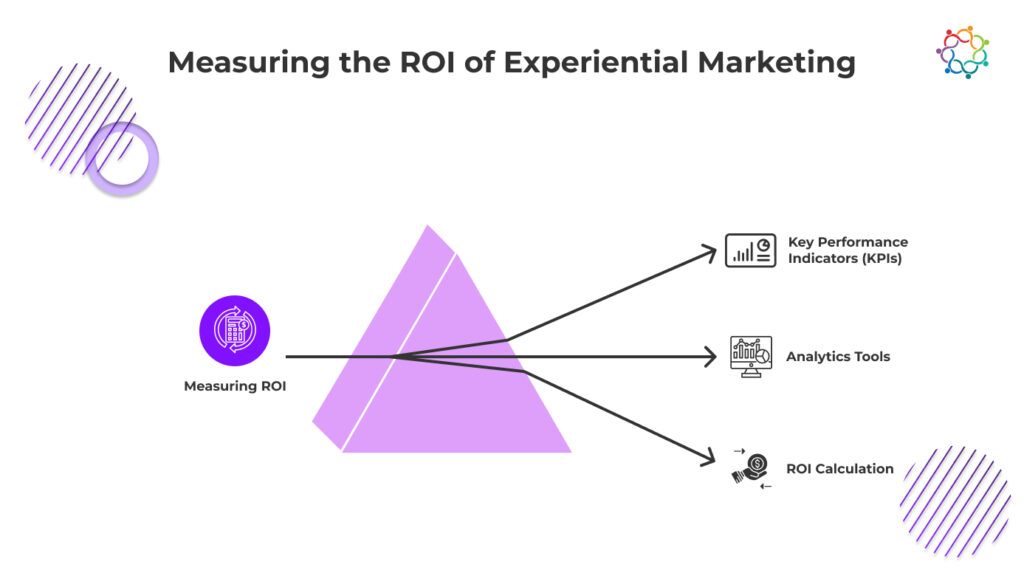
3. Return on Investment (ROI)
ROI as a measure is one of the most important for proving value in your event.
Calculate ROI: Take total revenue generated and subtract total cost of the event, then divide by total event cost. Multiply by 100 to get the percentage.
Intangible returns: ROI is not just financial. Consider one value-add is brand awareness increased and/or strengthened customer relationships or increased employee team morale.
4. Net Promoter Score (NPS)
NPS is a popular measure of customer satisfaction and loyalty.
Measure satisfaction: Ask attendees ‘How likely to you recommend this event to someone else on a scale of 0-10?’
Analyzing Feedback: Assess the reasons for the scores to understand what thrilled participants as well as what could have improved.
Tools for Collecting and Analyzing Event Data
To track these metrics effectively, you’ll need the right tools.
1. Event Management Software
Event Marketing platforms, like Samaaro, provide an easy way to track attendance, session participation and lead generation real-time.
2. Analytics Tools
Google Analytics: Track website traffic and conversions related to your event.
Social Media Analytics: Measure social media reach and engagement using platform-specific insights or tools like Hootsuite.
Survey Tools: Use tools like SurveyMonkey to collect post-event feedback and calculate NPS.
3. CRM Software
Customer Relationship Management (CRM) software helps to manage leads and track your leads. CRMs that are compatible with your event management software have an integrated flow of data for follow up and reporting.

Want to see how this would work for you?
30 minutes inside Samaaro's dashboard, configured around the metrics your CMO actually reads.
Book a tailored walkthrough →Best Practices for Measuring Event Success

1. Set Clear Objectives
Prior to your event, you should set clear and specific goals such as the following:
– Increase attendance by 20%, from the previous year.
– Generate 200 qualified leads.
– Achieve a Net Promoter Score (NPS) of 80% or above.
2. Choose the Right Metrics
Always evaluate the metrics in relation to your goals. If lead generation is your main priority, then you will want to track metrics such as lead volumes, quality of leads or conversion rates.
3. Collect Accurate Data
Ensure that your collection of data is dependent on reliable methods. Attendee activity – tracking tools like QR code scanners, RFID badges, and event apps will guarantee you a verifiable recent history of the event.
4. Analyze Data Effectively
Post-event analyse the data to determine trends and insights. For example:
– What session had the highest attendance?
– Demographically, was there a large percentage of engagement?
– Which marketing channel had the highest number of registrations?
5. Continuously Improve
Use the takeaway in your data to enhance your next event, for example if your attendees enjoyed a speaker or format, use that again for the next event and be sure to improve upon any logistical issues.
Elevate Your Metrics Game with Samaaro
Measuring your event performance is easier when you have the right partner. Samaaro event marketing platform provides powerful analytics tools to track attendance, engagement and lead generation.
Samaaro integrates with your CRM and enables you to follow through with leads and report to stakeholders ultimately assessing the return on your investment.
Conclusion
Events are a large investment, therefore measuring for success or success through metrics is key to maximizing your return. When you focus on the appropriate metrics, such as attendance, engagement, perceived lead quality and ROI, then it will uncover actionable insights that drive continual improvements.
Data driven decision making might be a buzz phrase, but it’s the one skill that will allow for your events to be impactful but relevant for your business goals.
Are you ready to enhance your event marketing strategy? Try Samaaro for an improved flow for data collection and usability to drive actionable next steps. Book a demo or start your free trial today and see how metrics can drive your event success.
Attendance metrics tell you who showed up. Engagement metrics tell you what they did once they were there. An event can have high attendance but low engagement (people wander out of sessions, ignore the app, skip networking) which usually means content or format problems. The two together give you a real picture. Attendance alone is misleading.
The connection between metrics and ROI is causal: event ROI is a function of attendance quality (who came), engagement depth (what they did), lead conversion (which became opportunities), and revenue attributed (which closed). If you only measure the first step, you get a guess. If you measure the full chain through CRM integration, you get a defensible ROI number that holds up in front of a CFO.
Events provide unparalleled opportunities for your sales team to connect with prospects, present products, and make sales. However, just showing up is not enough! You are expected to prepare to be successful, and getting your sales team prepared with the tools, training, and support they need to maximize their impact at the event is the key to success. And this is where sales enablement really matters.
By aligning preparation, technology, and strategy together you can prepare your sales team to turn any interaction into meaningful engagement opportunity. To help you with your successful sales enablement at the event, this ultimate guide has everything you need to prepare your team for success.
Sales enablement is more than just training, it’s about preparing your team with the tools and strategies to be successful. When your team is at events, where possibilities to take customers from ideas to a sale are limited in time and conclusive thought sales enablement becomes essential. It ensures your sales team is:
Informed: Familiar with everything product-related, what your competitors are doing, and what other trends are appearing in the marketplace.
Prepared: Provided with the tools, content, and strategy to handle whatever your customers attempted on their current experience.
Aligned: All your sales team members are on the same page regarding your event goal and what will or will not work for your business.
The result is a team that is confident and agile enough to capitalize on every customer conversation and opportunity at an event.

Preparation is the foundation of sales success. Equipping your team before the event ensures they arrive ready to deliver.
Events can be chaotic, but with proper on-site support, your sales team can remain focused and effective.
The event has not concluded when the doors close, what happens following it is equally significant. Effective follow-up moves the relationships built during the event into actual sales.

Define what success looks like for your sales team at the event.
Evaluate your team’s performance and the overall impact of the event.
Gather feedback from your sales team and attendees to identify areas for improvement.
Encourage your sales team to work together and share insights.
Sales enablement doesn’t have to be overwhelming. Tools like Samaaro, an event marketing platform, simplify the process by providing centralized resources and seamless integration with your sales workflow. From pre-event preparation to post-event follow-up, Samaaro empowers your sales team to succeed.
Event-based sales enablement is about more than just preparing your team; it is important to give your team everything it needs to be performing at its best at every opportunity. By putting a priority on training, tools and ongoing support, you will build a sales team that produces high-quality and quantity of performance.
When equipped with the right strategies and resources, your sales team can foster long-term relationships, create high-quality leads and drive successful event results.
Are you ready to rethink sales enablement? The solutions from Samaaro are designed to help elevate both event marketing as well as invest into sales teams. Play around with the demos or simply request a free trial to see how Samaaro can help with your event strategy.
Creating effective marketing materials is vital if you wish to have a successful event marketing campaign, as event marketing materials hook people into and entice them to engage with your content. The above event marketing materials include email invitations, printable flyer invitations, registration pages, and/or confirmation pages (after attendees register).
In this article, we’ll address how to create event marketing materials that transfer value to your audience and entice them to attend via compelling designs(aesthetics) and messaging.
In today’s competitive landscape, you need materials that are not only pretty, but that stand out in terms of value and messaging. The best marketing materials do the following:
– Articulate the value proposition of your event;
– Create a sense of urgency to register or attend;
– Promote brand recognition and then instil trust for your brand; &
– Build an anticipated audience that ultimately builds excitement and generates attendance.
Event marketing materials are often the first interaction a potential attendee has with your event. And, while you only get one chance to make a first impression, it always goes a long way.

The messaging is the most important part of any good marketing material. Not everyone reads the entire page, because people are busy, so make sure to articulate your point, clearly, and succinctly.
– Identify Key Benefits: What benefit or offering will attendees receive from making the time to attend your event? Whether the audience regularly participates in your event or is attending for the first time, instil the factor of value – make the audience want to attend the event regardless.
– Call to Actions (CTA): Encourage the audience to take the next step – whether it is register, visit the website, or follow your tagged event page on social media.
– Keeping it Simple: Do not try to share too much information and overwhelm. Just cut to the chase and direct them to a website or a landing page that provides a lengthy description.
We are visual beings, and stunning design is one way to help create a memorable piece of marketing material.
People love stories; they help engage your audience in a way nothing else can. Craft the story to engage your audience.

Email invitations are still one of the best ways to promote an event; however, email is an extremely busy place and getting someone’s attention in a moment of scrolling is not easy.
Social media is a great method to get people to buzz about your event. Make sure your graphics visually drive engagement through social.
Even if digital media outsources print material. Print still matters especially for more local events or high touch audience.
1. Know Your Audience
Effective marketing begins with understanding who you are speaking with. knowing where preferences are lie, pain prints reside or what they want to gain from the experience is equally important.
2. Test and revise
Don’t take your first draft as the final version. A/B Test different designs for graphics, headlines or CTAs to adjust your final materials that reflect your audience’s preference.
3. Measure Your Results
Follow up on how each part as it pertains to marketing your event works. Many times you are looking for open rates, engagement on social media or QR codes per material more generalized you can refine your next campaign!
4. Stay Consistent
Consistency with branding across marketing materials creates a complete and professional look that is simply consistent and can create trust overtime with your audience.
Engaging event marketing materials are the foundation of high-powered event marketing. When your event materials contain clear messaging, a strong visual, and an element of storytelling, your audience has no choice but to engage with your content.
Whether that is sending out evites, sharing in social or putting together print materials. As your creating always consider your audience and the process of when you select designs, materials, branding etc.
Get started today, book a demo or free trial today and let Samaaro assist with a easy process in creating impact marketing materials!
Go digital-first for reach, tracking, and lower cost. Add print selectively for on-site impact, VIP invitations, and audiences that respond better to physical materials.
Effective subject lines are short, specific, and benefit-driven, often with urgency or personalization. Something like Your seat closes Friday outperforms generic event announcements.
Test one variable at a time, such as the headline, image, or call to action, on a small audience segment. Then roll the winning creative out to everyone else.
Watch click-through rate, landing page conversion, registrations per channel, and cost per registration. These metrics show whether your materials persuade people to act, not just look.
Launch a full event marketing campaign six to eight weeks before the event. Large conferences deserve even longer runways to build awareness and early registrations.
In the fast-paced world of event marketing, success often hinges on your ability to deliver seamless, engaging experiences. Event apps have become indispensable tools for achieving this, transforming how marketers plan, execute, and analyze their events. These apps not only simplify event logistics but also elevate the attendee experience by fostering engagement and personalizing interactions.
If you’re not yet leveraging an event app, it’s time to reconsider. Let’s dive into the essential features that every marketer should look for when choosing the right event app.
Event apps have evolved far beyond basic scheduling tools. They’re now comprehensive platforms designed to connect people, streamline processes, and generate actionable insights. With the right event app, marketers can:
In short, a well-designed event app empowers marketers to focus on what truly matters—creating memorable and impactful events.

The features you choose in an event app can significantly impact your event’s success. Here are the must-have functionalities to consider:
The registration process sets the tone for your event. A smooth and intuitive system can leave a positive first impression while capturing critical attendee data.
An agenda builder is one of the most impactful ways to personalize the attendee experience.
Networking is a cornerstone of any successful event, and your app should facilitate meaningful connections.
Lead generation is a top priority for many marketers, and the right app can simplify this process.
To gauge the success of your event, analytics are indispensable.

While the core features above are essential, here are a few additional functionalities that can add even more value to your event app:
Encourage participation and engagement with challenges, leaderboards, and rewards. Gamification can make the event experience more enjoyable while driving attendee interactions.
Capture real-time feedback by incorporating live polls and surveys into your sessions. Use this data to adjust programming on the fly or to enhance future events.
Ensure attendees stay informed with timely updates, reminders, and alerts. Whether it’s announcing a change in schedule or promoting a sponsor, push notifications are a direct line to your audience.
Allow attendees to interact with speakers in real time through live Q&A sessions. This feature boosts engagement and makes sessions more dynamic.
With so many event apps on the market, selecting the right one can feel overwhelming. Here’s what to consider:
Ensure the app has all the essential features your event requires, from registration and agenda building to analytics and networking tools.
The app should be intuitive and easy to navigate, both for attendees and event organizers. A clunky interface can detract from the overall experience.
Look for apps that integrate seamlessly with your existing tools, such as CRM platforms, marketing automation software, and payment gateways.
Choose an app that fits within your budget while delivering maximum value. Don’t compromise on essential features for the sake of cost savings.
Samaaro is one such platform that stands out in the crowded marketplace. It offers a suite of features tailored to marketers’ needs, ensuring a seamless event experience from start to finish.
Event apps are no longer optional in today’s marketing landscape—they’re a necessity. From simplifying event management to enhancing attendee engagement, these apps have become indispensable tools for modern marketers.
By leveraging features like personalized agendas, real-time analytics, and robust networking tools, you can create events that resonate deeply with your audience and deliver measurable results.
Ready to take your event marketing to the next level? With Samaaro, you’ll have access to cutting-edge tools designed to streamline your processes and maximize ROI. Book a demo or start your free trial today, and discover how Samaaro can help you create unforgettable event experiences.
Event marketing has evolved dramatically over the years, moving from intuition-driven decisions to strategies deeply rooted in data. In today’s competitive landscape, where every interaction counts, leveraging event data can transform your campaigns and deliver measurable success. From improving attendee experiences to optimizing lead generation, data empowers marketers to make smarter, more impactful decisions.
Let’s explore how data-driven event marketing can unlock new levels of success and why collecting, analyzing, and using event data should be at the heart of your strategy.
Data is the backbone of modern event marketing. It helps answer critical questions: Who are your attendees? What did they enjoy? What didn’t resonate? More importantly, it provides actionable insights that can shape future events, ensuring they are more engaging and impactful.
When used effectively, data can:
In short, data turns guesswork into certainty, giving marketers the tools they need to continuously refine and elevate their events.

To fully harness the power of data, it’s essential to focus on the right metrics. These key data points will provide a comprehensive understanding of your event’s performance:
Understanding who your attendees are is the foundation of data-driven event marketing. Collect information such as:
This data allows you to tailor content, sessions, and activities to meet the needs of your audience.
Engagement metrics reveal how attendees interacted with your event. Track:
These insights highlight which aspects of your event resonated most with your audience.
One of the primary goals of most events is to generate high-quality leads. Key metrics include:
By understanding the quality of leads generated, you can assess the event’s impact on your business goals.
Direct feedback from attendees is invaluable. Surveys can provide insights into:
Attendee feedback helps refine future events and ensure you’re meeting their expectations.

Data collection is as much about the method as it is about the metrics. Using the right tools and techniques ensures accuracy and completeness:
Registration is often the first point of contact with attendees, making it a prime opportunity to gather data. Use forms to collect basic demographic information and preferences. Customize fields to capture details relevant to your event objectives.
Events provide numerous opportunities for on-site data collection, such as:
Send surveys via email or use online tools to collect post-event feedback. Keep surveys concise and focused to maximize response rates.
Track event-related hashtags, brand mentions, and attendee sentiment on social media platforms. This not only provides engagement metrics but also gives insights into how your event was perceived.
Collecting data is only the first step. The real value lies in analyzing it to uncover actionable insights.
Dive into the data to understand your attendees better:
By identifying trends, you can refine your event strategies to align with audience preferences.
Event marketing is an investment, and data helps you measure its return. Calculate:
Understanding ROI demonstrates the event’s value to stakeholders and secures buy-in for future initiatives.
Use data to segment attendees based on their behavior, preferences, and demographics. This allows you to create targeted marketing campaigns and personalize communications, increasing the likelihood of conversions.

The insights gained from analyzing event data should directly influence your future event planning and marketing strategies:
Use attendee feedback and engagement data to improve logistics, from venue selection to session timing. Tailor your speaker lineup and content based on what resonated most with attendees.
Refine your lead capture strategies based on data insights. For instance, if QR codes outperformed manual forms, prioritize their use. Nurture leads more effectively by segmenting them based on quality and behavior.
Data-driven insights allow you to evaluate the performance of your marketing campaigns. Track which channels drove the most registrations and adjust your budget accordingly.
Data-driven event marketing is no longer optional—it’s essential. By collecting the right data, analyzing it effectively, and using insights to refine your strategies, you can create events that not only meet but exceed expectations.
Samaaro is designed to help you unlock the full potential of data-driven event marketing. With advanced data collection, analysis tools, and a seamless user experience, Samaaro makes it easy to measure success and optimize your efforts.
Ready to take your event marketing to the next level? Book a demo or start your free trial of Samaaro today, and discover how data can transform your events into unforgettable experiences.
Demographics describe who your attendees are: role, industry, company size, and location. Engagement data shows what they actually do: sessions joined, polls answered, and content downloaded.
RFID delivers the most accurate passive tracking but costs more. QR codes offer the best balance of accuracy and affordability. Mobile apps depend heavily on attendee adoption rates.
A 20 to 30 percent response rate is typical for post-event surveys. Short forms, mobile-friendly design, and small incentives can push response rates noticeably higher.
Divide total event cost by the number of qualified leads captured. In 2026, segment cost per lead by lead quality tier for a truer measure of efficiency.
A unified platform like Samaaro keeps registration, engagement, and CRM data connected in one system. Every touchpoint feeds a single attendee record, eliminating manual exports and mismatched reports.
Event marketing has entered a new era, where human connection and cutting-edge technology work in tandem to create truly transformative experiences. After years of rapid evolution, the resurgence of in-person events signals a profound shift in how we connect, communicate, and cultivate relationships. But in this new landscape, it’s not just about gathering people in a room; it’s about creating meaningful, memorable interactions.
This blend of human connection and data-driven insights is reshaping event marketing as we know it. Marketers are leveraging advanced tools to better understand their audiences while never losing sight of the power of face-to-face interactions. Let’s explore how these forces are shaping the future of event marketing and why they’re essential to your strategy.
At its core, event marketing has always been about people. The conversations, the handshakes, the shared laughter—all of these moments create bonds that can’t be replicated elsewhere. Human connection is the heart of every great event.
Even in today’s tech-savvy world, there’s something irreplaceable about meeting in person. Body language, tone of voice, and spontaneous discussions foster a sense of trust and understanding that digital communication simply can’t match. Whether it’s building rapport with potential clients or deepening relationships with existing partners, face-to-face interactions lay the foundation for long-lasting connections.
Events have the power to bring people together around shared goals, interests, or challenges. For businesses, this sense of community is invaluable. Attendees don’t just walk away with knowledge—they leave feeling a sense of belonging. And that’s what builds brand loyalty. By designing spaces and activities that encourage interaction, you create an environment where relationships can flourish naturally.
Great events don’t just inform; they engage the senses. From the aroma of fresh coffee to the buzz of a live performance, in-person events captivate attendees in ways that stick with them long after they leave. Sensory engagement leaves a lasting impression, turning your event into more than just a meeting—it becomes an experience.

While human connection is at the heart of events, data is the brain. The ability to collect, analyze, and act on data has revolutionized event marketing, enabling businesses to create highly personalized and impactful experiences.
The first step in data-driven event marketing is identifying the metrics that matter most. Are you measuring attendance, engagement levels, or lead conversions? Perhaps ROI is your focus. With the right tools, collecting this data is easier than ever. Event technologies like mobile apps and check-in kiosks provide real-time insights, capturing everything from session participation to booth visits.
Once collected, this data becomes a goldmine for analysis. Patterns emerge, helping you understand what worked and what didn’t. Did a particular keynote draw more attendees than others? Was a certain booth more popular? With these insights, you can refine your approach for future events.
Today’s attendees expect more than cookie-cutter experiences—they want events tailored to their preferences. This is where data becomes invaluable. By analyzing attendee interests and behaviors, you can deliver personalized content, recommend sessions, or even suggest networking opportunities.
Imagine sending an attendee a custom agenda based on their industry or job role. Or suggesting breakout sessions that align with their professional goals. These small touches create a sense of value and make attendees feel seen and understood.
The work doesn’t stop when the event ends. Post-event analysis is critical to understanding your success and identifying areas for improvement. Attendee feedback, engagement metrics, and ROI calculations all come into play here.
Was your registration process smooth? Did attendees find the sessions valuable? Use these insights to continuously refine your strategy, ensuring each event is better than the last.

Technology is no longer an add-on for events; it’s a driving force behind their success. From streamlining operations to enhancing the attendee experience, the right tools can make all the difference.
Mobile apps have become indispensable in event marketing. They allow attendees to customize their schedules, receive real-time notifications, and even network with others—all at their fingertips. For organizers, apps provide a seamless way to collect data and deliver a more personalized experience.
Platforms like Samaaro take this a step further by enabling personalized agendas, helping attendees discover relevant sessions and activities effortlessly. These tools don’t just enhance convenience—they elevate the entire event experience.
Gone are the days of long registration lines and cumbersome processes. QR codes have streamlined check-ins, allowing attendees to breeze through with just a scan. Beyond registration, QR codes can also be used to capture leads, provide session access, and enable contactless sharing of information.
Efficient check-ins set the tone for the rest of the event. Onsite check-in tools not only speed up the process but also collect valuable data about attendees. This information can be used to personalize interactions, ensuring each guest feels welcomed and valued.
Artificial intelligence is transforming event marketing in exciting ways. Predictive analytics help organizers anticipate attendee needs, from room capacities to content preferences. Chatbots provide real-time support, answering questions and guiding attendees through the event. These technologies make events smarter, smoother, and more engaging.
The future of event marketing is all about balance—merging the timeless power of human connection with the precision of data-driven insights and technological innovation. By focusing on building relationships, creating memorable experiences, and leveraging the latest tools, marketers can deliver events that leave a lasting impact.
Samaaro stands at the forefront of this evolution, offering a comprehensive platform that combines personalization, engagement, and data analytics. Whether it’s streamlining operations, enhancing attendee experiences, or maximizing ROI, Samaaro empowers businesses to make every event a success.
Ready to elevate your event marketing strategy? Book a demo or start your free trial of Samaaro today, and experience the future of event marketing firsthand.
In today’s fast-paced digital landscape, businesses are constantly looking for innovative ways to improve their event ROI. Event technology, or event tech, has emerged as a game-changer, helping companies streamline operations, engage attendees, and most importantly, generate high-quality leads. But how exactly does event tech make this possible?
By leveraging advanced tools and features, event tech helps you not just collect leads, but also qualify and nurture them more effectively. Whether it’s through automated lead capture or personalized follow-ups, integrating event tech into your strategy can transform the way you connect with your audience.
Event technology refers to tools and platforms designed to streamline every aspect of event planning and execution, from registrations to post-event follow-ups. For lead generation, event tech acts as a bridge between attendees and businesses, ensuring that every interaction is meaningful and measurable.
Using event tech doesn’t just simplify the process; it enhances the quality of leads collected. Attendees’ preferences, behaviors, and interactions are tracked, providing invaluable data for personalized follow-ups. As a result, businesses can focus their efforts on nurturing high-potential leads, maximizing their return on investment (ROI).

Let’s explore some event tech features that can transform your lead generation strategy:
Event apps are the Swiss Army knife of event tech. They offer multiple functionalities, all geared towards improving attendee experience and lead capture.
First impressions matter, and check-in kiosks set the tone for a seamless experience.
Interactive displays are not just eye-catching; they’re also incredibly effective at engaging attendees.

Collecting leads is just the beginning. The real magic happens when you use event data to nurture those leads into loyal customers.
To effectively nurture leads, you need to know as much as possible about them.
Generic follow-ups are a thing of the past. Today’s consumers expect tailored experiences.
Not all leads are created equal, and lead scoring helps you prioritize.
Efficiency is key in lead nurturing, and CRM integrations are your secret weapon.
Technology is only as effective as the strategy behind it. Here are some actionable tips to ensure you’re making the most of your event tech:
Location matters. Position your booths in high-traffic areas to maximize visibility. Think about the attendee flow and ensure your booth is easily accessible.
Draw attendees in with interactive displays, live demos, or mini-games. These not only create memorable experiences but also provide natural opportunities for lead capture.
Whether it’s “Sign Up for Exclusive Updates” or “Book a Demo Today,” your CTAs should be concise and enticing. Offering incentives like discounts or free resources can sweeten the deal.
The event might be over, but the lead generation process isn’t.
Event technology has become a cornerstone of successful lead generation, enabling businesses to collect high-quality data, nurture relationships, and convert opportunities into long-term growth. It’s no longer just about hosting events—it’s about creating memorable, data-driven experiences that leave a lasting impact.
Samaaro, as a leading event marketing platform, empowers you to do just that. With its suite of innovative features—seamless CRM integrations, interactive engagement tools, real-time analytics, and personalized communication capabilities—Samaaro helps you maximize your event’s potential while simplifying the process.
Why settle for average when you can create exceptional? Take the first step toward revolutionizing your event marketing strategy. Book a demo or start your free trial of Samaaro today, and discover how effortless lead generation and enhanced engagement can transform your business.
The world of real estate is evolving at an unprecedented pace, and technology has been a driving force behind this transformation. From property tours to predictive analytics for investment decisions, the industry is rapidly embracing cutting-edge tools to enhance its marketing strategies. One area where technology is making a particularly significant impact is in event marketing. As real estate events become more complex, there’s an increasing need for smarter, data-driven strategies. Enter AI and machine learning—two powerful technologies that are poised to revolutionize how real estate professionals approach event marketing.
By harnessing the capabilities of AI and machine learning, real estate professionals can create more effective, personalized, and data-driven event marketing campaigns. These technologies allow for the automation of mundane tasks, deeper insights into attendee behavior, and highly targeted marketing efforts, all of which can dramatically improve the success of real estate events.
Understanding AI and Machine Learning
Before diving into how AI and machine learning can reshape real estate event marketing, let’s quickly define these technologies.
In real estate event marketing, these technologies are applied to enhance personalization, streamline event planning, and predict outcomes—all while providing real-time insights that can optimize the entire event lifecycle.
AI-Powered Event Planning and Management

Event planning can be a challenging, time-consuming process, but AI simplifies it by offering data-driven insights that can optimize every aspect of the event.
1. Predictive Analytics
One of the most powerful ways AI can transform real estate event marketing is through predictive analytics. By analyzing past event data, AI can forecast attendee behavior and preferences. For instance, it can predict which sessions attendees are most likely to attend, what type of content will resonate with different groups, or even which speakers or exhibitors will draw the most interest. These insights allow real estate professionals to plan events more strategically, ensuring that they allocate resources effectively and optimize event schedules.
Predictive analytics can also forecast demand for specific event activities or product showcases, helping organizers to better manage logistics and resources in advance.
2. Automated Event Marketing
AI can automate many aspects of event marketing, making it easier for organizers to reach their target audience at scale. Personalized email campaigns, for instance, can be crafted based on individual preferences, behaviors, and demographics, ensuring that each attendee receives tailored content that speaks directly to their needs.
In addition to email marketing, AI can dynamically generate content for event websites and social media channels. Whether it’s adjusting event descriptions, updating speaker bios, or sharing targeted ads, AI ensures that the content resonates with the right audience at the right time.
3. Real-Time Event Insights
During an event, it’s crucial to stay on top of how attendees are engaging with different sessions, speakers, and experiences. AI provides real-time insights into attendee sentiment, engagement levels, and behavior. With tools that track social media mentions, survey responses, and event app interactions, AI can help organizers understand how attendees are feeling at any given moment. This data can be used to make on-the-spot adjustments to improve attendee experiences—whether it’s tweaking a session’s content or adding more networking opportunities based on attendee interest.
Leveraging Machine Learning for Personalized Event Experiences

Machine learning further enhances personalization by analyzing attendee data to create more targeted and meaningful experiences. Through advanced algorithms, real estate professionals can offer customized event journeys for each participant, making every interaction feel unique and highly relevant.
1. Attendee Segmentation
Machine learning can process large amounts of data to identify specific audience segments based on demographics, preferences, and behaviors. Whether you’re targeting first-time homebuyers, seasoned investors, or luxury real estate enthusiasts, machine learning can help you segment attendees in a way that ensures each group receives the most relevant content.
By understanding attendee motivations and interests, event organizers can offer tailored event experiences that resonate deeply with each segment, increasing overall engagement and satisfaction.
2. Personalized Recommendations
Machine learning can also make personalized recommendations for attendees. Imagine an event app that suggests relevant sessions, speakers, or networking opportunities based on each attendee’s preferences or past behavior. With machine learning, you can offer real-time recommendations that guide participants to the most valuable experiences.
This level of personalization can significantly improve attendee satisfaction, as people feel their time is well-spent, and their individual needs are met.
3. Dynamic Content Delivery
Machine learning algorithms can adapt content delivery to suit individual preferences. For example, during a virtual or hybrid event, the platform can tailor session formats—whether video, text, or interactive elements—based on attendee preferences. By doing so, attendees are more likely to engage with the content, leading to a more impactful event experience.
The Role of Event Technology Platforms
While AI and machine learning offer significant potential, leveraging these technologies effectively requires a powerful event technology platform. Event management and marketing platforms play a crucial role in integrating AI and machine learning tools to streamline event planning, enhance engagement, and measure event performance.
1. Samaaro: A Comprehensive Event Marketing Solution
Samaaro is an all-in-one event marketing that integrates both AI and machine learning capabilities. It offers real estate professionals a comprehensive solution for planning, executing, and optimizing their events—from the early planning stages to post-event analytics.
Samaaro leverages AI-powered tools for predictive analytics, real-time event insights, and personalized content delivery, making it easier for real estate organizers to connect with their audiences in meaningful ways. Additionally, the platform offers advanced event marketing tools that allow you to segment attendees, automate email campaigns, and generate dynamic content for your website and social media.
Beyond event marketing, Samaaro also serves as an event management platform, streamlining everything from registration and attendee management to on-site operations and post-event analysis. This holistic approach ensures that every aspect of your real estate event is optimized for success.
2. Event Management and Marketing Integration
Samaaro’s seamless integration of event management and marketing tools provides a unified approach to real estate event success. It allows you to manage your entire event lifecycle in one platform—saving time, reducing complexity, and enhancing overall event performance. Samaaro ensures your audience receives a personalized, engaging experience, while providing you with the insights and tools you need to drive ROI.
Conclusion
The integration of AI and machine learning into real estate event marketing represents a transformative opportunity for the industry. These technologies enable personalized experiences, predictive insights, and data-driven decisions that enhance the overall success of real estate events. By adopting these tools, real estate professionals can create more impactful and efficient marketing campaigns, ultimately driving greater engagement and ROI.
Samaaro is at the forefront of this transformation, offering a comprehensive platform that combines both event marketing and event technology to optimize the entire event lifecycle. Ready to take your real estate events to the next level? Try a free trial or book a demo with Samaaro to discover how our AI-powered platform can help you optimize event marketing, engage attendees more effectively, and measure your event success in real-time.
Continuing Medical Education (CME) plays a crucial role in ensuring that healthcare professionals stay updated with the latest medical advancements and enhance their clinical skills. However, as the healthcare sector faces budget constraints and increasing demand for effective professional development, the need for cost-effective and impactful CME events has never been greater. Whether in-person, virtual, or hybrid, healthcare organizations must optimize the return on investment (ROI) of their CME events to ensure they deliver meaningful value for both attendees and the organization itself.
By implementing strategic planning and leveraging advanced technology, healthcare organizations can maximize the ROI of their CME events, ensuring that every dollar spent results in measurable benefits. Here’s how you can achieve that.

ROI is not just about the financial outcome of an event—it’s about the long-term benefits that CME events bring to healthcare professionals, the organization, and even patient care. Key metrics to assess CME event success include:
While measuring ROI for CME events is essential, it comes with its challenges. Traditional methods often focus on quantitative outcomes, such as the number of attendees or the immediate feedback received, but these alone fail to capture the full impact of the event. The real ROI is seen when you track how attendees apply the knowledge gained to improve patient care or advance their careers.
To truly optimize CME event ROI, healthcare organizations must adopt a strategic approach from the outset. Here are a few key strategies:
Understanding the target audience’s needs is the foundation of any successful CME event. By conducting surveys or interviews before the event, healthcare organizations can identify the specific learning goals of attendees and align the content with their professional development requirements. This personalized approach ensures that the event will be relevant and impactful for each participant.
Allocating resources effectively is crucial to ensuring a high ROI. Identifying cost-saving strategies, such as leveraging in-house expertise or partnering with sponsors, can help minimize expenses. Efficiently managing budgets also involves focusing on the areas that will have the highest impact—whether it’s quality speakers, interactive content, or effective event technology.
Choosing the right event format (in-person or hybrid) can significantly affect your ROI. In-person events offer networking opportunities and hands-on learning but come with higher costs. Hybrid events, on the other hand, can offer greater accessibility and scalability, though they require sophisticated technology to engage attendees effectively. The right format should be selected based on your objectives, target audience, and available resources.
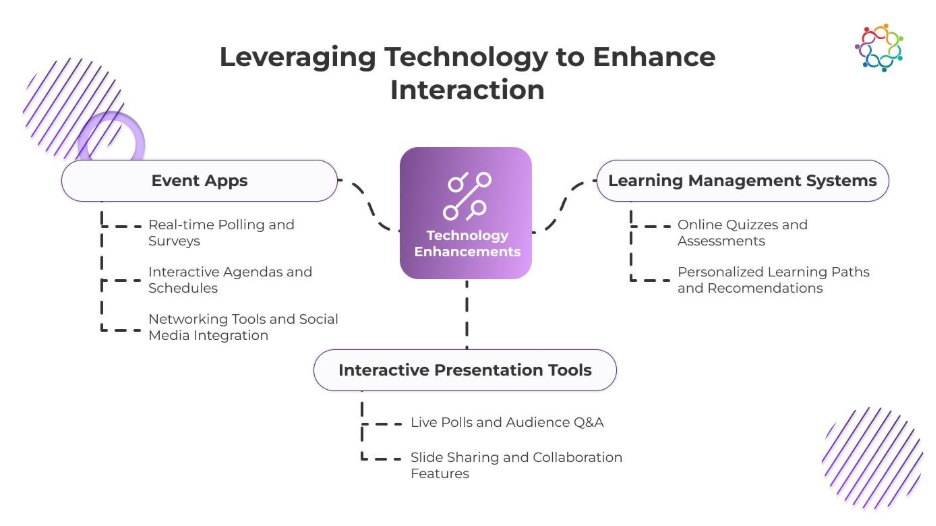
Technological tools like Event Management Software, Learning Management Systems (LMS), play a vital role in optimizing event ROI. These tools streamline event management, improve engagement, and enable personalized learning paths for attendees.

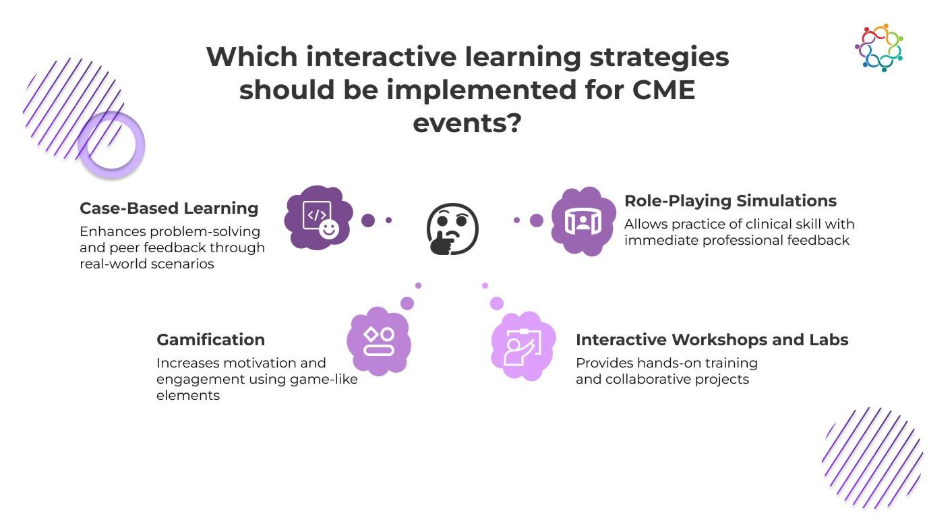
Active participation is key to ensuring knowledge retention and maximizing the ROI of any CME event. Healthcare organizations can boost engagement by offering a variety of interactive elements:
Case studies, group discussions, and hands-on workshops enable attendees to apply what they’ve learned in a practical, real-world context. Additionally, incorporating gamification elements such as quizzes, leaderboards, and challenges helps maintain engagement and incentivizes learning.
One-size-fits-all training sessions rarely work in healthcare. By tailoring the content to individual needs, such as offering on-demand content and self-paced learning options, organizations ensure that every participant can engage in a way that suits them best.
The learning doesn’t stop when the event ends. Offering post-event resources, continuing education opportunities, and networking can extend the impact of the CME event and ensure long-term engagement. Follow-up surveys are an effective way to measure attendee satisfaction, gather feedback, and identify areas for improvement.
To truly understand the effectiveness of CME events, healthcare organizations must track a combination of pre- and post-event metrics:
A baseline assessment helps measure attendees’ knowledge and skills before the event. This sets a benchmark for measuring knowledge retention and behavioral change.
After the event, knowledge retention tests, behavioral change surveys, and attendee satisfaction surveys provide crucial insights into how well the event achieved its objectives.
Tracking long-term outcomes, such as career advancements and improvements in patient care, can help organizations evaluate the true impact of their CME events. This analysis is vital for refining future event strategies.
Using a specialized event marketing platform like Samaaro is essential for optimizing CME event ROI. Samaaro provides the tools necessary to streamline the entire event process, from planning to post-event analysis.
Optimizing the ROI of CME events requires a strategic approach that incorporates effective planning, personalized learning experiences, and the right technology. By focusing on key performance metrics such as attendee satisfaction, knowledge retention, and long-term impact, healthcare organizations can ensure that their CME events deliver substantial value to participants and the organization.
As the healthcare industry continues to prioritize professional development, embracing technology and tools like Samaaro can significantly enhance the value of CME events. Ready to take your CME events to the next level? Try a free trial or book a demo with Samaaro to discover how our platform can help optimize your CME event ROI and create lasting impact.

Samaaro is an AI-powered event marketing platform that enables marketing teams to turn events into a measurable growth channel by planning, promoting, executing, and measuring their business impact.
Location


© 2026 — Samaaro. All Rights Reserved.