Samaaro + Your CRM: Zero Integration Fee for Annual Sign-Ups Until 30 June, 2025
- 00Days
- 00Hrs
- 00Min
Getting people to register for an event is just the beginning. The real challenge is keeping them engaged and ensuring they actually attend. Many registrants lose interest due to lack of communication, unclear event value, or competing priorities.
Event nurturing is the process of keeping attendees engaged, excited, and committed leading up to the event. With strategic engagement, personalized communication, and the right technology, organizers can significantly reduce no-show rates and increase participation.
This blog explores why event nurturing is essential, how to segment and personalize attendee engagement, and the best tactics to keep registrants engaged until event day.

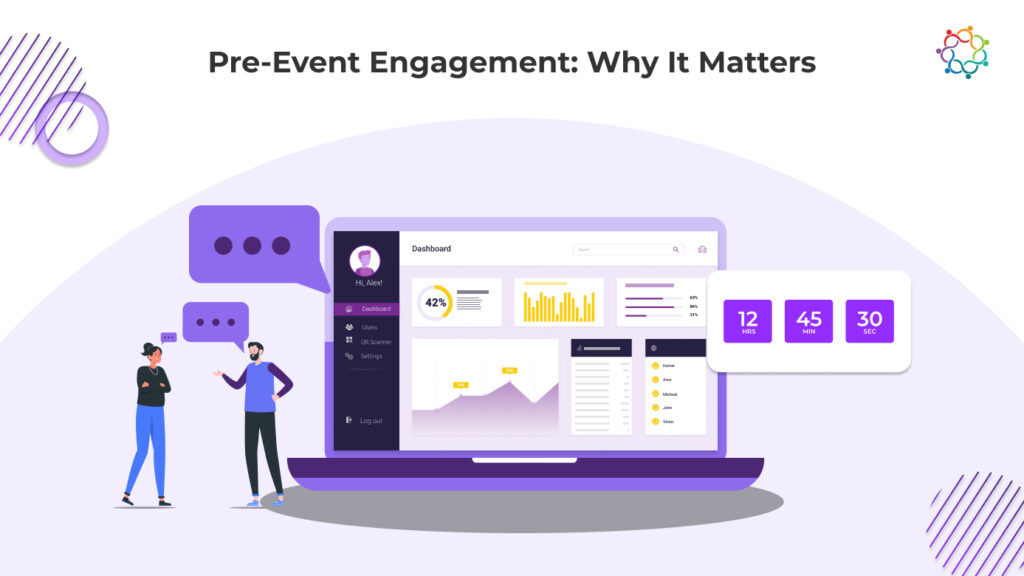
A successful event doesn’t begin on the day it takes place—it starts from the moment attendees register. Keeping registrants engaged before the event ensures they remain excited, prepared, and committed. Without continuous engagement, there’s a higher chance of drop-offs and reduced participation.
Many registrants drop off due to lack of interaction after signing up. Engaged attendees, on the other hand, feel more invested in the event and are more likely to show up.
Excitement drives attendance. Creating a sense of anticipation through exclusive sneak peeks, speaker announcements, and pre-event activities ensures attendees look forward to the event.
Frequent communication that highlights key sessions, exclusive content, and networking opportunities reinforces why the event is worth attending.
Pre-event networking opportunities, interactive content, and behind-the-scenes insights help attendees feel connected before the event even starts.
AI-powered engagement tools can track attendee interest levels and send targeted content based on behavior. Event apps, chatbots, and analytics dashboards help tailor engagement strategies effectively.

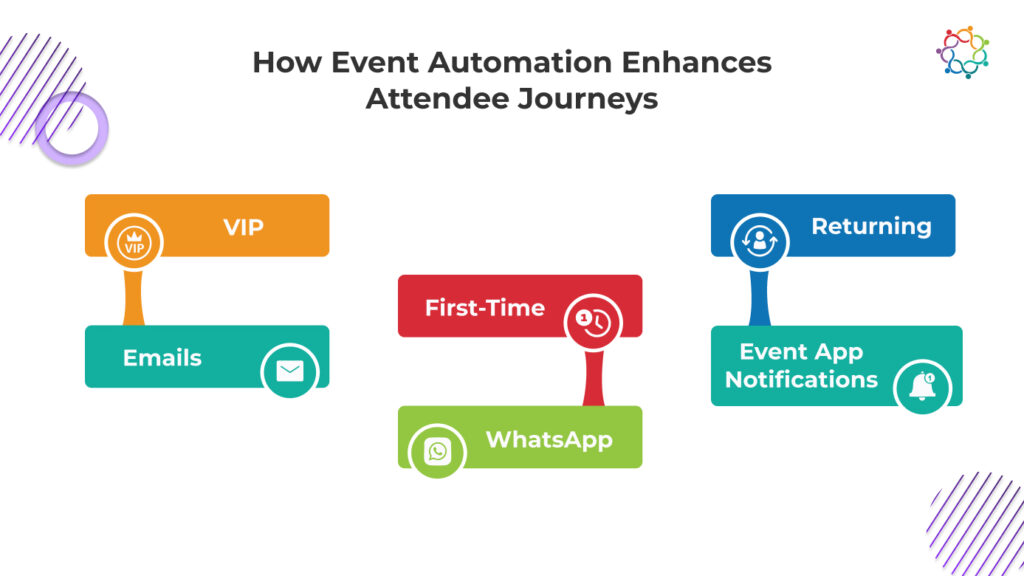
Every attendee has different expectations and interests when registering for an event. By leveraging automation and segmentation, organizers can provide a more personalized and engaging experience that caters to these individual needs.
Not all attendees are the same. By segmenting registrants based on interests, registration type, and past interactions, organizers can personalize content and outreach.

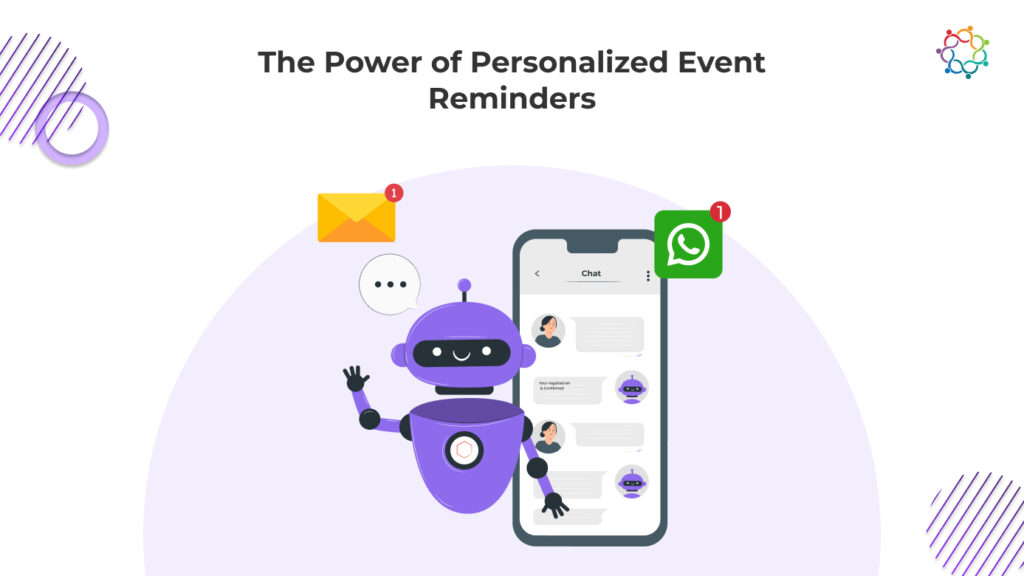
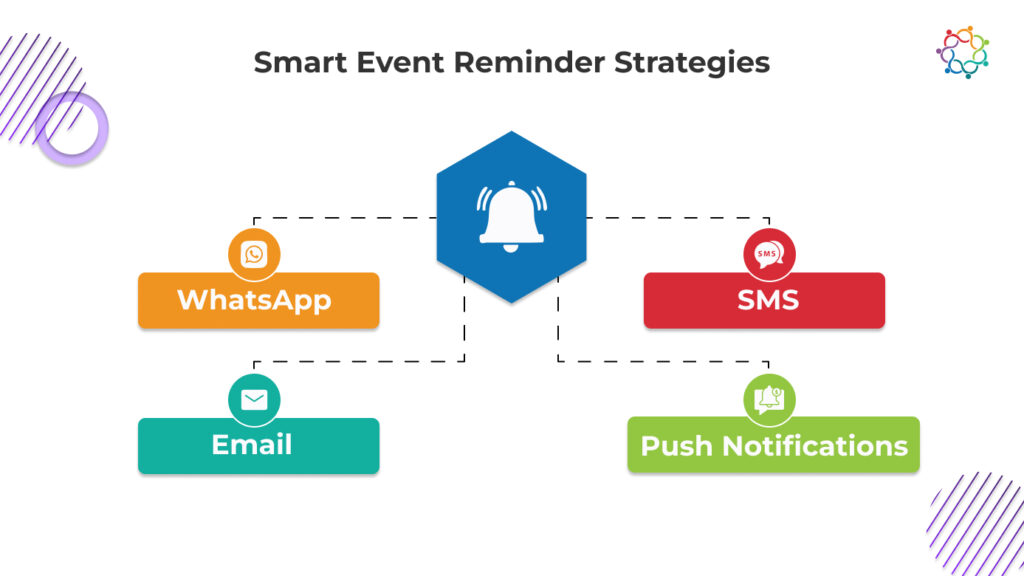
Once attendees register for an event, maintaining their interest and ensuring they don’t forget about it is crucial. A well-crafted reminder strategy goes beyond generic emails—it should be timely, interactive, and personalized to create a sense of anticipation. By leveraging multiple communication channels such as WhatsApp, AI-driven messaging, and engaging email sequences, organizers can keep attendees informed and excited about the event.
WhatsApp has become a powerful tool for real-time engagement. Unlike emails, WhatsApp messages have significantly higher open rates, making them ideal for sending reminders. Event organizers can use WhatsApp to provide quick RSVP confirmations, share direct links to the event platform, and even allow two-way communication where attendees can ask last-minute questions. Automated reminders sent via WhatsApp can also include countdowns, key session updates, and venue details to keep attendees prepared.
Emails remain a vital part of event nurturing when done strategically. Instead of sending generic reminders, a structured drip campaign can provide attendees with valuable insights leading up to the event. Personalized email sequences can include:
By offering engaging content rather than just reminders, emails become an exciting part of the event journey rather than an obligation.
Artificial intelligence can help refine event nurturing by sending reminders based on attendee behavior. AI-driven reminders can:
These smart, data-driven interactions ensure that reminders feel natural and relevant rather than intrusive.
Instead of plain text messages, interactive reminders can add an element of fun and engagement. Countdown GIFs, interactive polls, and sneak peeks into the event’s biggest highlights can make reminders feel more exciting. Offering exclusive content, such as behind-the-scenes footage or early access to event perks, can further enhance engagement and encourage attendance.
By implementing a multi-channel, personalized approach to reminders, event organizers can ensure registrants remain engaged, well-informed, and excited right up until the event day.
Keeping registrants engaged after they sign up is crucial to ensuring they attend. A well-planned engagement strategy can create excitement, build anticipation, and foster connections even before the event starts. Organizers should focus on delivering interactive content, exclusive insights, and personalized experiences to keep attendees interested and involved.
Keeping registrants engaged from the moment they sign up until event day requires a mix of personalized engagement, automation, and interactive strategies. Through AI-powered reminders, gamified participation, and exclusive pre-event activities, event organizers can significantly improve attendance rates.
Samaaro’s event marketing platform is designed to streamline this process with features such as:
Ready to maximize event engagement? Explore how Samaaro can help today!
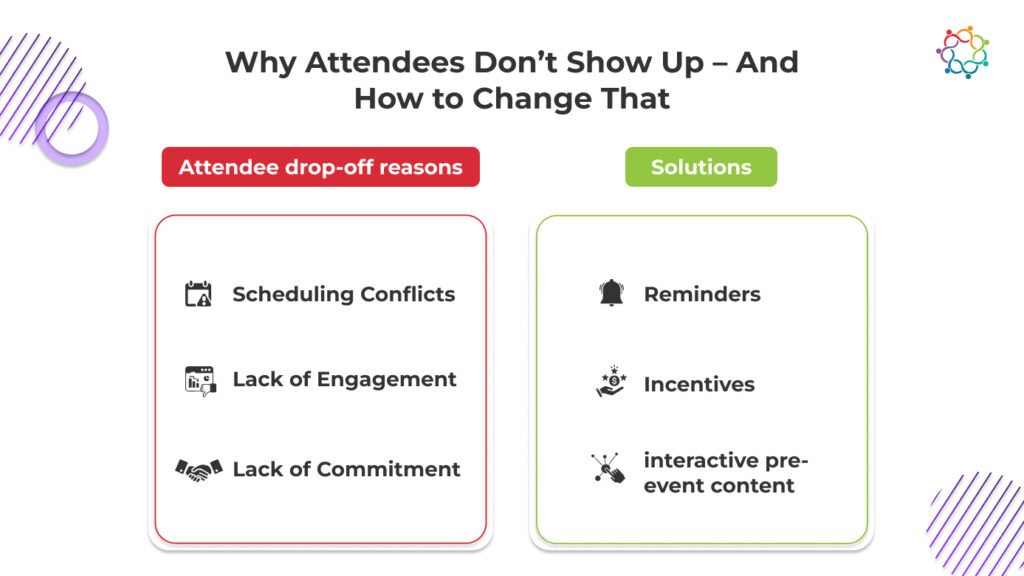
A confirmed registration isn’t the same thing as a seat filled. Plenty of organizers hit their sign-up target and still watch a chunk of the room stay empty, scheduling conflicts, forgotten dates, or a registrant who just never felt invested in the first place. Closing that gap between clicking “register” through a solid ticketing and registration flow and actually showing up takes deliberate engagement, not just a confirmation email and a countdown timer. The strategies below cover the full arc: why people drop off, how to remind them without getting ignored, and what keeps them engaged once they’ve actually walked in.

Lack of Emotional Commitment
Free events see the highest no-show rates because nothing was risked to register. Tiered ticketing with early-confirmation perks, or a small refundable deposit returned at check-in, gives people a reason to actually show up rather than a reservation they can quietly abandon at zero cost.
Scheduling Conflicts and Forgetfulness
A calendar integration that blocks the time automatically beats a reminder email sitting unread in an inbox. Offering a recording or hybrid option also catches people who can’t make the live slot but still want the content, converting what would have been a no-show into at least a viewer.
Lack of Perceived Value
If someone doesn’t see enough reason to attend live, they skip it. Personalized promotion tied to actual interests, plus real testimonials from past attendees, does more to convince someone than a generic agenda blast that reads the same for every recipient regardless of what they actually care about.
Competing Events and Overloaded Schedules
Professionals juggling multiple invitations prioritize the one that feels worth their calendar slot. Exclusive networking, a VIP meet-and-greet, or a closed-door session gives your event a specific reason to win that competition, something a generic keynote lineup rarely does on its own.

Personalized Reminders
A reminder tied to what someone actually engaged with, a specific speaker’s content, a session they clicked into, lands better than a generic “see you tomorrow” sent identically to the entire list.
Multi-Channel Outreach
Email alone gets ignored. Layering in automated SMS and app notifications, plus a countdown on social and a pre-event live Q&A, catches people across the channels they actually check day to day, instead of betting everything on an inbox that’s already flooded.
Speakers and Influencers
A short personal video from a speaker, or a bit of behind-the-scenes hype from someone with an audience, carries more weight than another reminder from the organizer’s own account, since it reads as a genuine nudge rather than another piece of marketing.
Gamification and Incentives
Pre-Event Engagement
Points for engaging with content or sharing event updates, plus a simple leaderboard, turn passive registration into something people actually participate in before the day even arrives, which keeps the event top of mind in the weeks leading up to it.
Attendance Incentives
Early arrivals earning VIP access, and QR-based check-in unlocking a small perk or digital badge, both give people a reason to actually be on time rather than drifting in whenever suits them.
Gamified Networking
Icebreaker challenges and a leaderboard tracking real connections made turn networking, usually the part people dread most, into something with its own momentum, and a bit of competitive framing gets people talking to strangers faster than an open bar ever could.

Live Assistance and Updates
A chatbot handling real-time questions and an app pushing live agenda changes keep attendees oriented without needing to flag down staff for every small thing, which matters most in the first hour when people are still figuring out the layout.
Surprise Elements
A flash contest tied to live Q&A participation, or an unannounced guest appearance, keeps energy up past the opening keynote, when attention naturally starts to drift toward phones and side conversations.
Fast, Personal Check-In
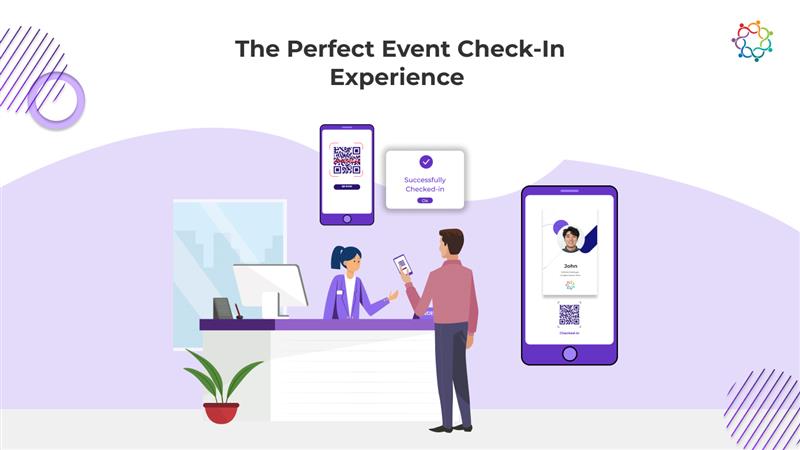
A touchless QR check-in paired with a welcome screen showing someone’s name and suggested sessions turns the first two minutes into a good impression instead of a bottleneck, and that first impression tends to color how engaged someone stays for the rest of the day.
Keeping Attendees for Future Events
A genuine thank-you with a recap video, exclusive access to recordings and slides for people who actually attended, and early or discounted access to the next event all give attendees a reason to register again instead of letting the relationship go cold after one event. The people who showed up once are the cheapest audience to bring back, if the follow-up actually gives them something.
Getting someone to click “register” is the easy part. Getting them to actually show up takes addressing the real reasons people drop off, layering reminders across more than one channel, and making the day itself worth showing up for. None of this requires reinventing the event, it requires treating the gap between registration and attendance as a real problem instead of an acceptable loss, and measuring it with the same seriousness as the registration number itself.
Curious what this looks like for your next event? Book a demo with Samaaro today.
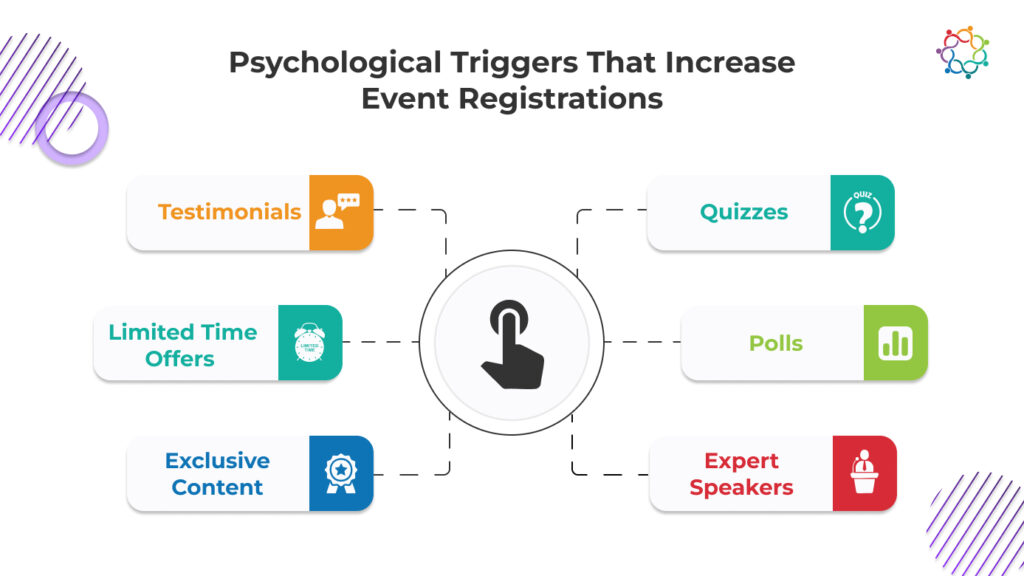
Event marketing isn’t just promotion. It’s psychology. Two events can look equally strong on paper, same speaker quality, same venue, same price, and still get very different registration numbers. Something else decides which one people actually act on.
This piece walks through those triggers, how to build real FOMO with event technology, where data analytics actually helps, and how to run a marketing effort across more than one channel. None of it replaces a genuinely good event. It just makes sure the right people hear about it and act.

A handful of principles explain most of what moves someone from curious to registered.
1. Social Proof
Nobody wants to be the first one in the room. Testimonials, attendee-shared content, and a name people recognize on the speaker list all do the same job: they tell a hesitant registrant that other people already made this call. A live registration counter on the landing page makes that visible in real time.
2. Reciprocity
Give something away before you ask for anything. A free whitepaper, an early look at what a keynote speaker will cover, a VIP slot reserved for the first hundred sign-ups, these all put the audience slightly in your debt. The value doesn’t need to be large. Timing matters more than size here.
3. Scarcity and Urgency
A deadline changes behavior. Early-bird pricing, a visible countdown, a perk that disappears after a set number of sign-ups, all of it pushes someone off the fence. None of it works if the actual registration process takes five minutes and three broken form fields to complete. Urgency gets someone to click. A clean flow is what gets them to finish.
4. Authority and Trust
People follow credibility more than they follow marketing copy. A well-known speaker, a sponsor people already trust, a case study from a past event that actually delivered, these do more convincing than any adjective in the invitation email.
5. Commitment and Consistency
Small yes build toward a big one. A quiz about the event topic. A newsletter sign-up. A short preview session two weeks out. Someone who’s already said yes three small times finds the fourth, actual registration, an easy step rather than a cold decision.

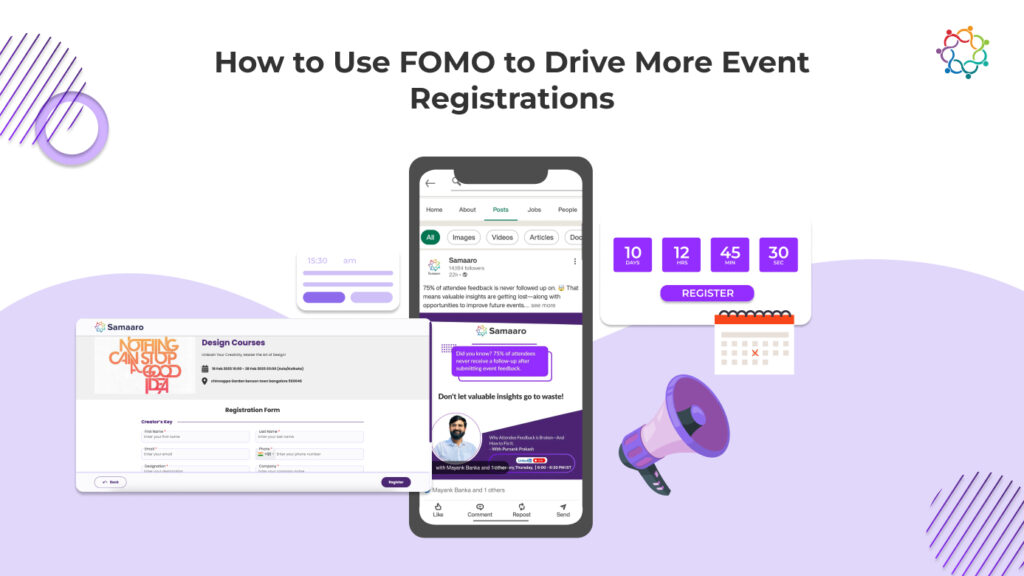
Fear of missing out is real, and event technology can build it without feeling like a manipulation tactic.
1. Live Attendee Counts
A running total on the registration page works the same way a packed restaurant does. Nobody wants to eat at the empty one next door.
2. Exclusive Access and VIP Perks
Gated sessions and invite-only content signal that not everyone gets in the same way. That distinction is what makes exclusivity feel real instead of decorative.
3. Limited Seating Notifications
“Only 10 seats left” does something a plain registration button can’t. It forces a decision on someone who was planning to think about it later.
4. Social Media Engagement
Personalized highlight clips and live Q&A content keep an event in front of people in the days before it happens, instead of going quiet between the announcement and the day itself.
5. Event Hashtags and UGC
Past attendees posting under a dedicated hashtag builds credibility that no paid ad can buy, because the audience knows nobody paid them to say it.

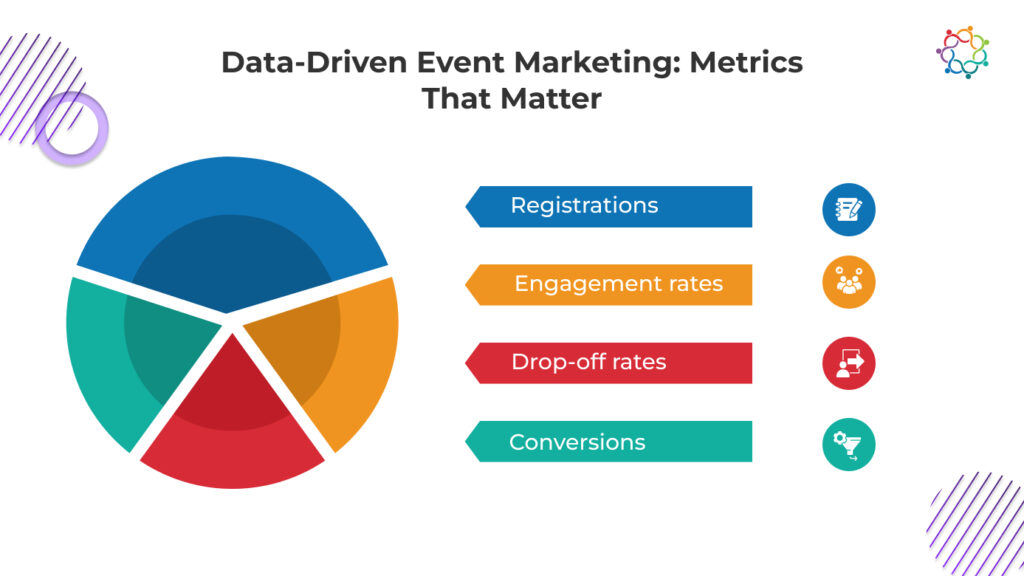
Instinct gets you started. Numbers tell you whether you were actually right.
1. Understanding Audience Behavior
Where people drop off in the registration funnel tells you more than any survey. That’s the exact point where something is broken, confusing, or just too slow.
2. A/B Testing Campaigns
Two subject lines. Two CTA buttons. Two landing page layouts. Whichever one wins isn’t a guess anymore, it’s a number you can defend in a budget meeting.
3. Personalized Event Journeys
AI-driven recommendations route content based on what someone’s actually clicked on, not a generic path built for an average attendee who doesn’t exist.
4. Measuring Engagement Metrics
Heatmaps and dwell time show which section of a page people actually read and which one they scrolled past in half a second.
5. Predictive Analytics
Forecasting turnout ahead of time means staffing and budget decisions get made on a real estimate instead of a hopeful one. Event management software that tracks this across events makes each forecast a little sharper than the last.

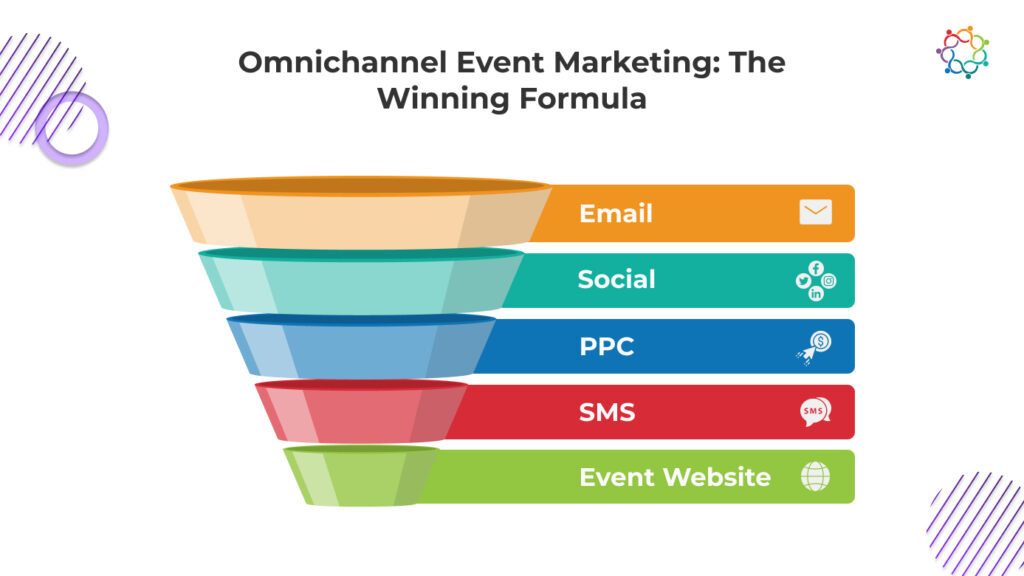
One channel alone leaves registrations on the table, no matter how good that one channel is.
1. Email Marketing
Segmented lists and drip sequences outperform a single blast sent to everyone at once. Automated event communications keep that sequence firing on schedule without someone manually queuing every send.
2. Social Media Marketing
Organic content earns trust. Paid promotion, LinkedIn ads especially for B2B, extends reach past whoever already follows the account. An influencer mention adds a kind of credibility a brand’s own post can’t generate on its own.
3. PPC and Retargeting
Google Ads and pixel retargeting bring back the visitor who almost registered and then closed the tab. Ad creative gets refined against what’s actually converting, not what tested well in a meeting.
4. SMS and WhatsApp Marketing
These have absurdly high open rates. That makes them the right channel for a reminder going out the morning of the event, when an email would sit unread.
5. Event Website and Blog
An SEO-optimized landing page and blog content that answers real attendee questions bring in traffic nobody had to pay for, and that traffic tends to convert well because it arrived already curious.
None of these pieces work in isolation as well as they work together. Social proof gets someone to look. Urgency gets them to act. Data tells you whether either one actually worked.
A platform built for event marketing puts all of it in one place, tracking engagement, automating the outreach, and personalizing the journey without five separate tools that were never built to talk to each other.
Curious what this looks like for your next campaign? Book a demo with Samaaro today.
A good ad and a well-timed email used to be enough to fill a venue. That era is over. Attention is scarcer now, competition is louder, and getting someone to actually notice your event takes more than a generic push, no matter how polished the copy is.
So what actually cuts through in 2025? This piece looks past the obvious tactics into strategies built on AI, real data, and social media used with intent, not just volume. None of it requires a bigger budget, just a sharper read on where attention actually goes before someone decides to register.
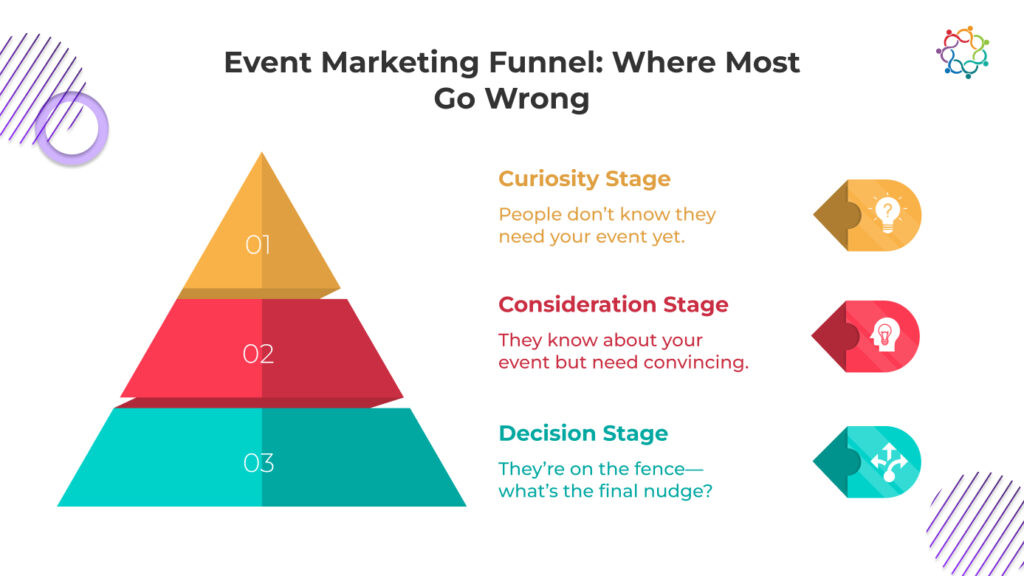
Most event marketers spend their energy at the bottom of the funnel, last-minute discounts, urgent CTAs, a countdown timer. Awareness starts much earlier than that, and getting the early stage right is what determines how hard the late stage has to work.
There are really three stages here. In the Curiosity Stage, your audience doesn’t even know they want this event yet. In Consideration, they’ve heard of it but aren’t convinced it’s for them. In the Decision Stage, they’re sitting on the fence, waiting for one final nudge.
A strategy built around nurturing curiosity and building credibility gets someone to conversion far more reliably than a generic promotion campaign ever does.

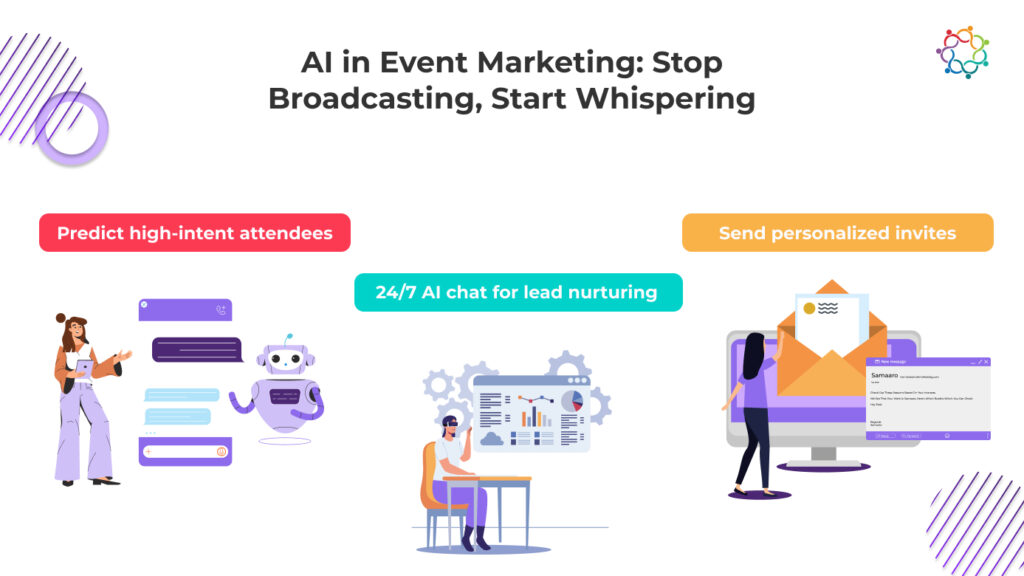
Most event promotion still works like a megaphone. People respond to something that feels like a one-on-one conversation instead.
AI changes a few specific things here. It can predict who’s actually likely to register based on past behavior, so effort goes toward high-intent people instead of a broad list that mostly ignores the invite. It enables messaging tailored to what someone actually cares about, rather than one invite sent to everyone regardless of role or interest. And a chatbot can answer questions and nurture a lead around the clock, without pulling a team member off other work every time someone has a question at an odd hour.
A generic “Register Now” blast treats a CMO and a product manager the same way. AI segmentation doesn’t: the CMO gets an invite built around networking with industry leaders, while the product manager sees content about product showcases specifically.

A countdown post and a hope for the best doesn’t move registrations anymore. Social media works when it starts a conversation, not when it just announces something.
A few approaches actually work in 2025. Letting an influencer weave the event into their own content organically, a behind-the-scenes look, a genuine reason they’re excited, beats a paid promo post by a wide margin, since audiences can tell the difference between a genuine mention and a sponsored one. A live feed showing real-time registrations, “Sarah from New York just signed up,” builds both credibility and a bit of FOMO. Interactive polls tied to the event’s actual topic get people feeling involved before they’ve even registered.
An event about AI in marketing might run a poll asking what people struggle with most, personalization, scaling content, ethics, and then actually shape sessions around what the responses show.

Engagement doesn’t start when the event opens its doors. It starts the moment someone first interacts with the brand at all.
A few tactics work well here. Showing a potential attendee who else is registering with shared interests creates an immediate reason to sign up, since seeing a peer already on the list carries more weight than any marketing copy could. A pre-event leaderboard that rewards sharing or engagement gamifies something that used to be entirely passive. A short quiz, “which session is right for you,” makes the decision to register feel personal instead of arbitrary.
A B2B marketing summit could run a quiz that recommends three specific sessions based on someone’s answers. That’s a far more compelling pitch than a flat agenda listing every session equally.
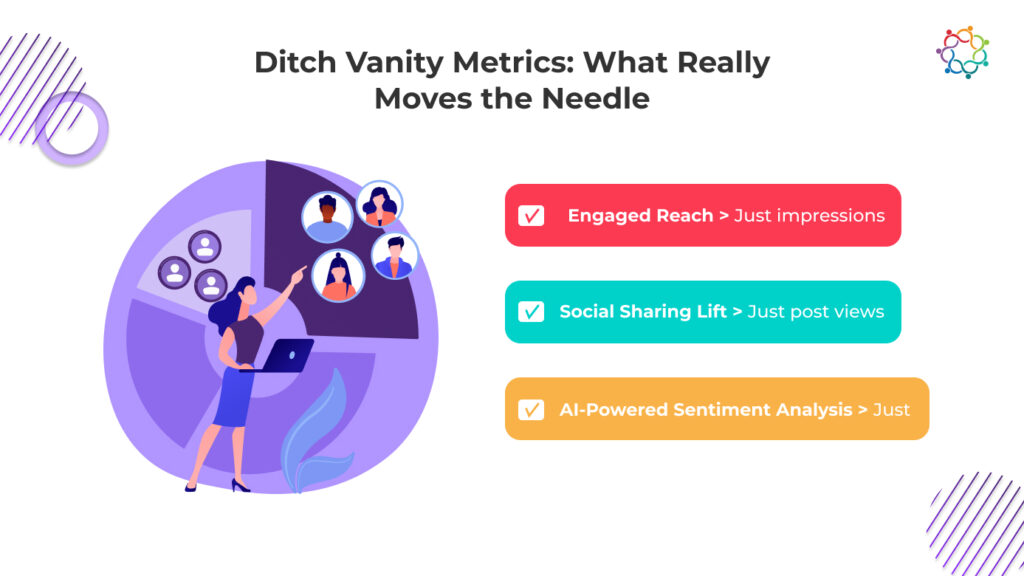
Impressions and click counts feel like progress, but they mean nothing if they don’t lead to a registration. A few metrics actually correlate with real outcomes.
Engaged reach matters more than raw reach, how many people actually interacted, not just saw the post. Social sharing lift tracks the increase in organic mentions of the event. Website behavior, time on the registration page, heatmaps, drop-off points, shows where interest turns into hesitation. Sentiment analysis reads the actual tone of conversations happening about the event across social platforms, which is a very different signal than a raw mention count.
If 50,000 people visit an event page and only 500 register, the gap between those numbers is the real story, not the traffic count itself. AI-driven analysis of that drop-off can point to unclear messaging, a weak CTA, or a ticketing structure that’s quietly turning people away before they finish the form.
Awareness in 2025 isn’t about volume. It’s about being specific, relevant, and willing to act on what the data actually shows.
Event management software built around this kind of targeting, audience insight, social amplification, interactive engagement, turns event promotion into something personal rather than generic. Whether the goal is refining the funnel, using AI for sharper targeting, or building real social engagement, the right platform gives a team the toolkit to actually pull it off.
Curious what this looks like for your next event? Book a demo with Samaaro today.
Engaged employees show up differently, they’re more motivated, they stick around longer, and it tends to show in the work itself. Keeping that engagement up is genuinely hard in a fast-moving workplace, though, and the usual answer, one big annual party, doesn’t do much for the other 364 days. A single holiday event can be memorable, but it can’t carry the weight of an entire year’s worth of recognition and connection on its own.
Micro-events fill that gap. These are small, focused gatherings built around a specific moment rather than a calendar obligation, and they do more for morale, team cohesion, and day-to-day productivity than most people expect from something this size. Because they’re smaller, they’re also cheaper and faster to organize, which means a team can actually run them often enough to matter, instead of saving all the goodwill for one expensive event a year. This piece walks through where micro-events fit into an engagement strategy and how a platform like event management software makes running a steady stream of them actually manageable.

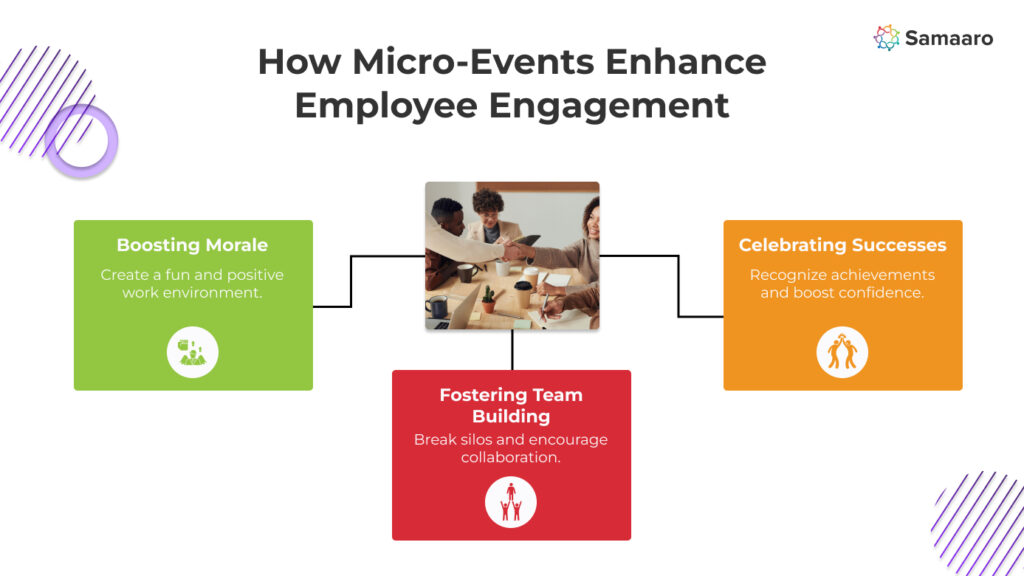
Boosting Morale
A team that feels noticed works differently than one that doesn’t. Micro-events are one of the more direct ways to remind people their effort is actually seen, especially in the middle of a stretch that’s been genuinely stressful.
A few formats that work well here:
Recognition specifically, calling out an individual or a team’s actual contribution rather than a generic “great job everyone,” is what makes these land. Vague praise gets forgotten by lunch, but a specific mention of what someone actually did tends to get repeated to a spouse that evening.
Smaller settings let people actually talk to each other instead of standing near a buffet table at a company-wide event. That’s especially useful for breaking down the silo between departments that otherwise only interact through a shared spreadsheet.
A few formats worth trying:
None of these replace real collaboration on the job, but they build the trust that makes that collaboration easier, and that trust doesn’t show up overnight, it accumulates across several smaller moments like these rather than one big offsite once a year.
Recognizing a milestone, however small, reinforces that the work actually mattered. Skip this step consistently and people stop bothering to mention their wins at all.
A few approaches that hold up:
Consistently celebrating wins, not just the biggest ones, tells people their contribution is worth tracking.

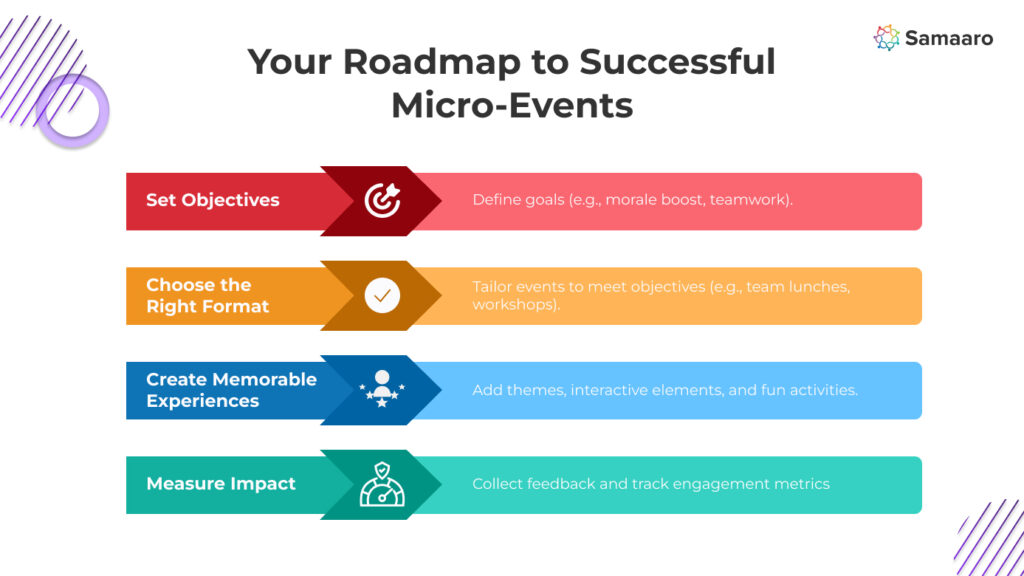
Setting Clear Objectives
Every micro-event needs an actual reason to exist. A team lunch aimed at improving cross-department communication looks different from one that’s just a Friday treat, and being clear about which one you’re running changes how you plan it, right down to who gets invited and what gets said at the start.
Choosing the Right Format
The format should match the goal, not just what’s easiest to book. A workshop or volunteer day fits a team-building goal. A casual appreciation gathering fits a morale goal. Mixing these up usually means the event doesn’t land the way it was supposed to, a team-building goal wrapped in a passive holiday party format rarely produces the connection it was meant to.
Creating a Memorable Experience
Small scale doesn’t mean forgettable. A specific theme, a genuine surprise, or recognition that’s actually personalized rather than copy-pasted from the last event makes people remember it past the following Monday. Even something as simple as referencing an inside joke from the team in the invitation signals that someone put actual thought into it.
Measuring the Impact
Ask people what actually landed and what didn’t, and track attendance and satisfaction alongside it. Samaaro’s analytics pull this into one view instead of chasing feedback across three different forms, which makes it possible to see which format is actually worth repeating, and which one quietly fizzled despite decent attendance.
Micro-events won’t replace a real engagement strategy on their own, but they’re one of the more efficient pieces of it. Small, well-timed gatherings build the kind of connection and recognition that a once-a-year event structurally can’t, at a fraction of the planning effort, and they’re easy enough to run monthly instead of saving the entire budget and goodwill for a single December party.
Samaaro’s event marketing platform handles the planning load, from setting up the event to tracking how it landed, so the format above is actually sustainable to run regularly rather than a one-off. Book a demo
You’ve got a marketing calendar. It says send the welcome email on Monday. Send the reminder on Friday. But people don’t register on your calendar. They register at 11 PM on Tuesday. They abandon their cart on Saturday morning. They show up an hour before the event.
Your calendar emails miss all of it. Trigger-based emails are different. They fire when people actually do something. Not when you planned to send them. When someone registers? Immediate welcome email. When someone abandons their cart? Immediate nudge.
This is the difference between hoping people engage and knowing they will.

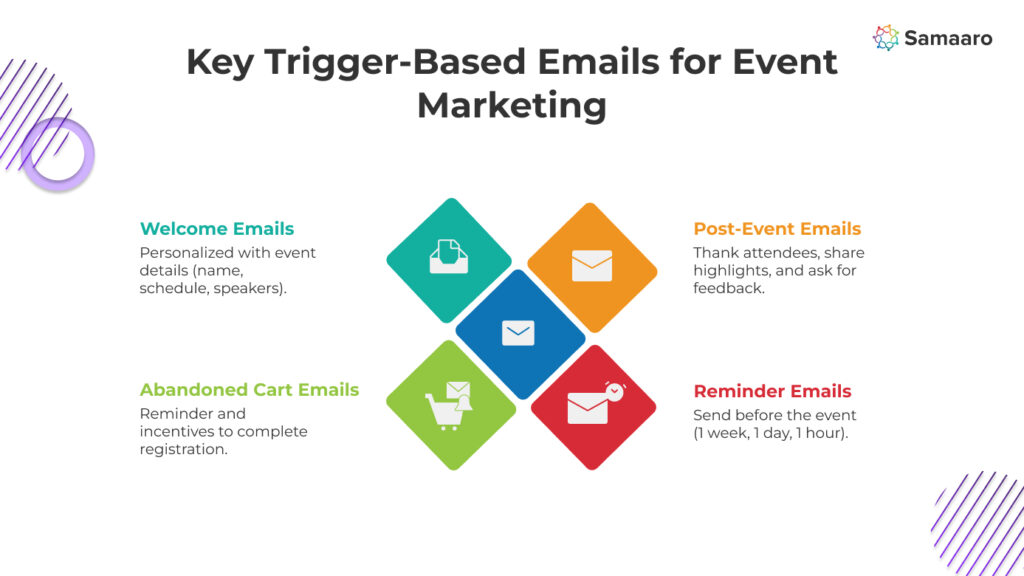
A trigger-based email fires automatically when someone takes a specific action. Registration? Trigger fires. Email goes out. Adds tickets to cart but doesn’t complete? Trigger fires. Reminder email goes out. Event ends? Trigger fires. Thank you email goes out.
It’s not a mass broadcast to everyone at once. It’s a targeted email to one person at the exact moment they’re most likely to care. This changes everything about engagement because timing plus relevance equals results.
The difference is massive. One big email to everyone might get 2% opens. One triggered email to one person at the right moment gets 15-20% opens. That’s the power of trigger-based.

They just registered. They’re excited. This is the moment to capitalize on that excitement and get them invested in the event before they forget about it.
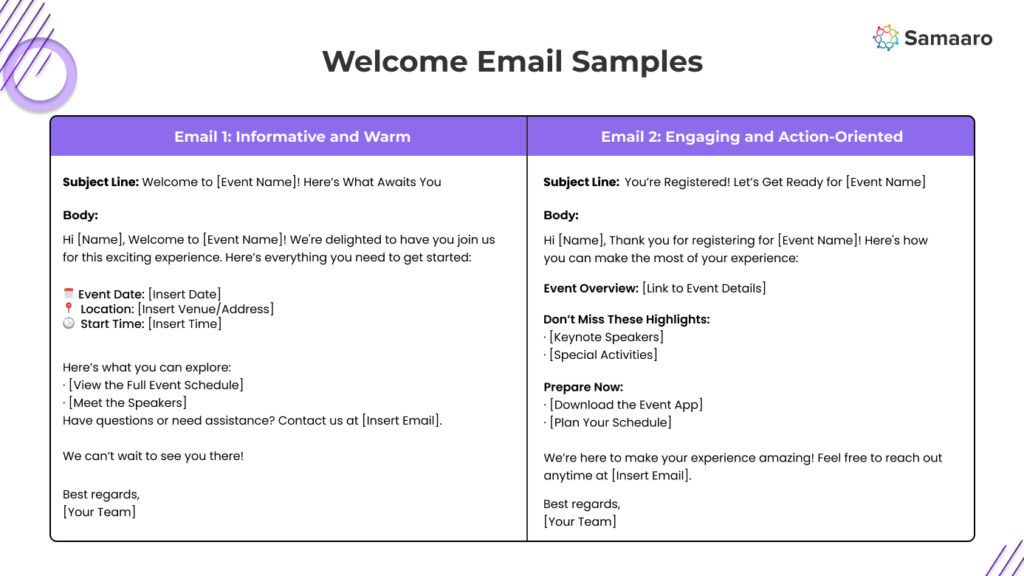
Send them immediately. Not tomorrow. Now. Include their event date, time, location, and what to expect. Give them resources like the session schedule, speaker bios, and preparation tips so they can start planning.
Make them feel like they made the right decision registering. A warm welcome sets the tone for everything that comes next.

Someone starts the registration process. They add tickets to their cart. Then they leave. Maybe they got distracted. Maybe they weren’t sure. Maybe they wanted to think about it.
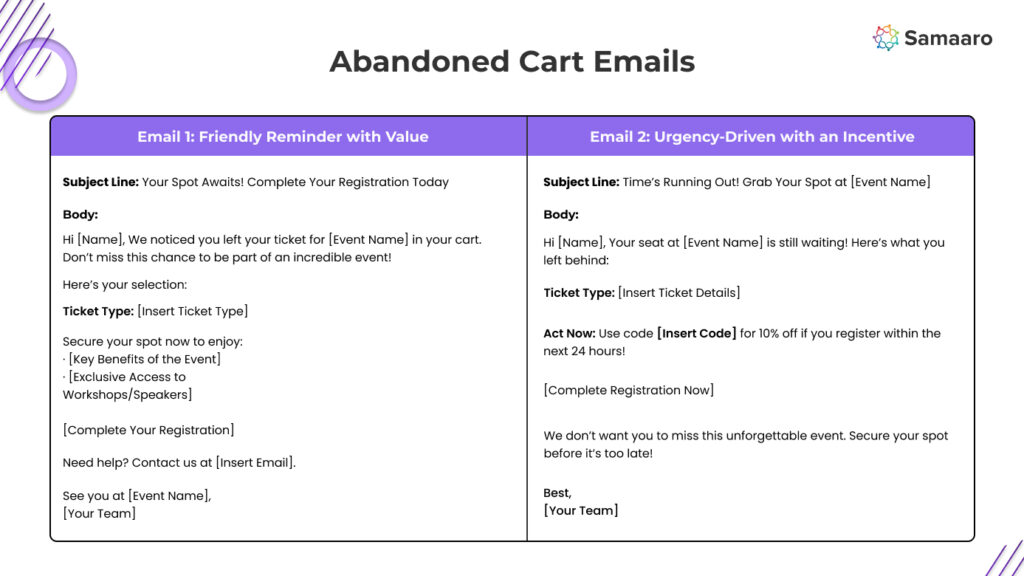
Send them an email within 24 hours. Remind them they left something behind. Not aggressive. Just a friendly nudge that says “Hey, we noticed you started. Want to finish?” Include what they were buying and give them a reason to complete the registration.
Offer something that helps them decide. A small discount. Free access to content. Bonus materials. This recovers 20-30% of abandoned registrations. Three follow-up emails over seven days usually outperform a single send.

People forget. Even people who registered. Especially people who registered. They sign up with the best intentions, then life gets busy and the event slips their mind.
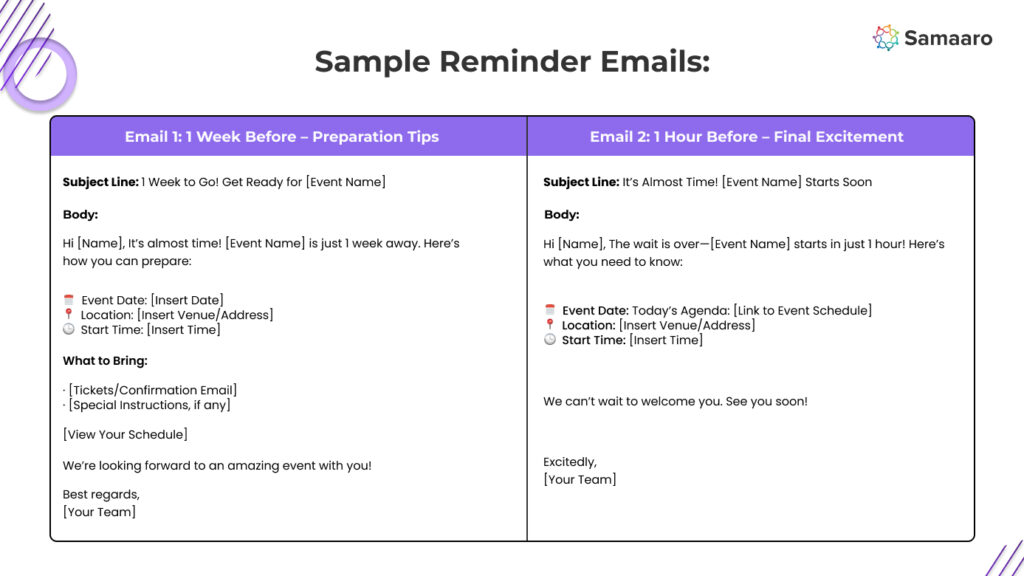
Send reminders at specific intervals. Seven days before for preparation. One day before for logistics. A few hours before for final details. Each one is different and serves a different purpose in getting them ready.
The seven-day email is about what to expect and how to prepare. The one-day email tells them parking, what to bring, when to arrive. The final email focuses on location, timing, and check-in instructions. Reminders cut no-shows by 15-25% because they bring the event back to top of mind.

The event happened. Now what? Many organizers think the work is done. But this is when you build lasting relationships and gather insights for improvement.
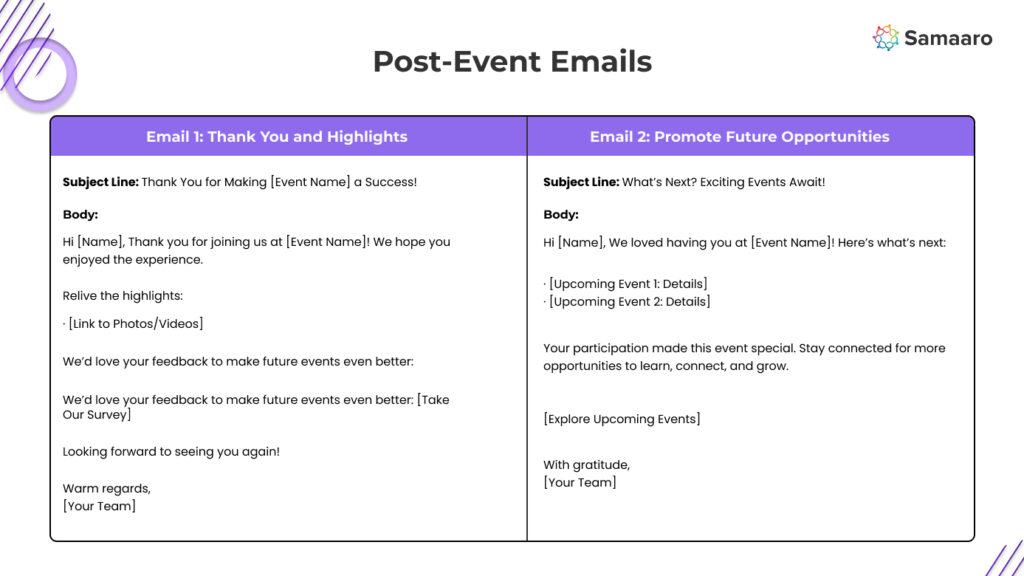
Send a thank you email within 24-48 hours. While it’s still fresh in their mind. Share highlights with links to recordings, photos, and key takeaways. This keeps the momentum going and extends the value of the event beyond the day itself.
Ask for feedback with a short survey. What worked. What didn’t. Mention upcoming events to keep the relationship going. This turns an event into an ongoing relationship, not a one-time transaction.

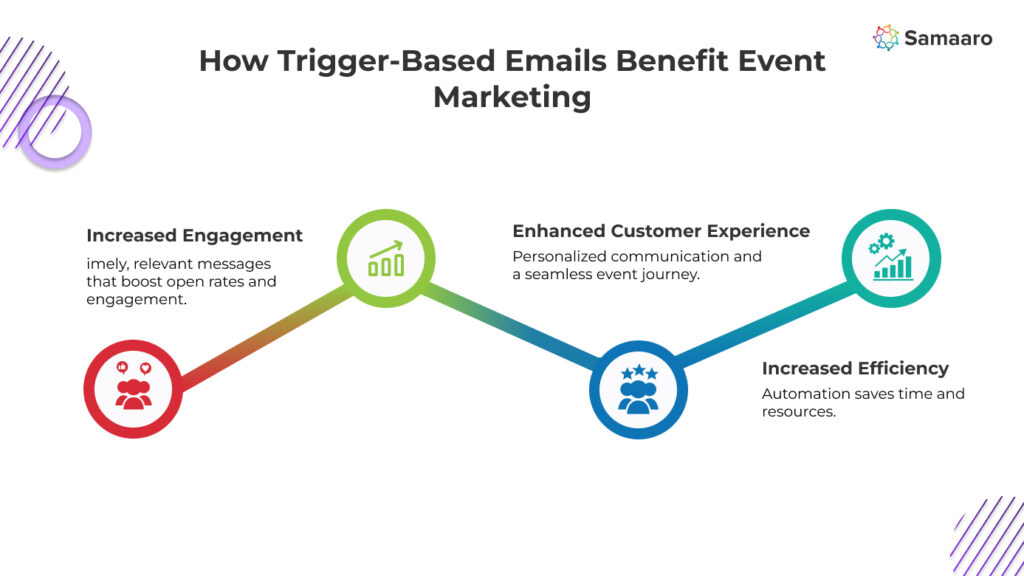
People open emails that feel relevant to them right now. Not some random marketing message from a calendar. A message that responds to something they just did. When someone registers, they want confirmation and information. That welcome email delivers both.
When someone’s cart is abandoned, they might be deciding whether to commit. That nudge email at the right moment helps them tip from “maybe” to “yes.” When an event is tomorrow, they want practical logistics. That reminder email gives them exactly what they need to show up prepared.
When an event is over, they want closure and to feel appreciated. That thank you email provides both. Timing plus relevance equals engagement. This is why triggered emails get 3-5x higher open rates than batch emails.
You need a system that tracks actions. Registration. Cart abandonment. Event attendance. Session participation. When it sees an action, it automatically sends the right email to that person at that exact moment.
Not manual sending. Automatic sending. Once you set it up, it runs forever. You’re building workflows that respond to behavior, not managing spreadsheets and send dates.
This is the future of event marketing. Set it up once and let it work for every attendee while your team focuses on strategy and content instead of manual email sends.
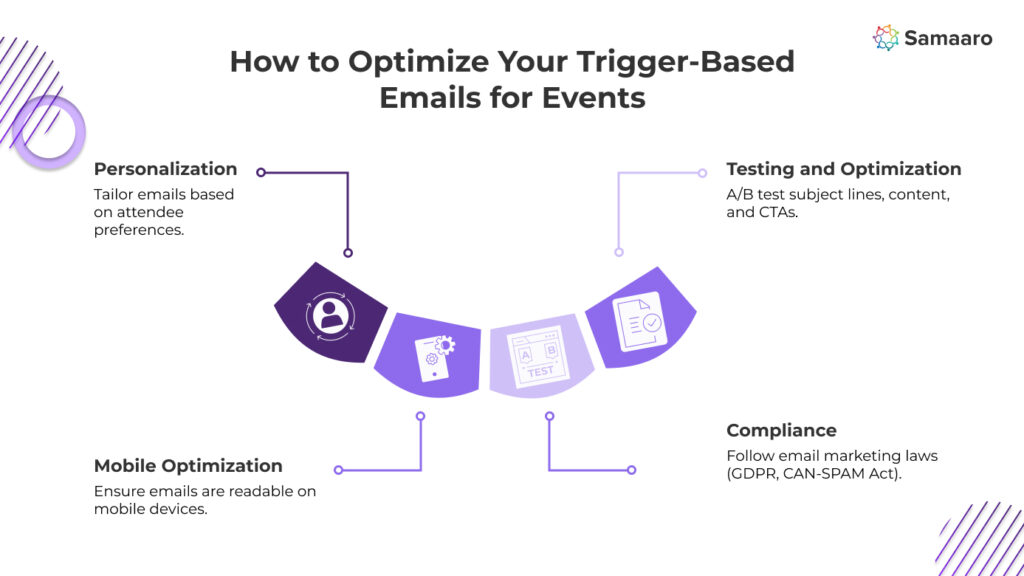
Don’t just use their name. That’s table stakes now and doesn’t move the needle anymore. Reference their ticket type. The sessions they registered for. Their company. What they’ve downloaded before.
Say something like “You registered for the AI track. Here are speakers we think you’ll love in that track based on your interests.” Not generic. Specific to them.
Open rates jump 30-50% when emails feel personally relevant to each person. Deep personalization wins every time over surface-level personalization.
Most people read email on phones. If it’s not readable on mobile, they delete it without reading. This is non-negotiable. Test it on your actual phone. Make buttons big enough to tap without zooming in.
Keep text short. Use one column. Short paragraphs. Avoid images that don’t load on mobile. Simplify ruthlessly.
One readable email on mobile beats one beautiful email on desktop that no one can read on their phone.
Try different subject lines. Different send times. Different CTAs. Document what wins. Build a playbook of what actually resonates with your specific audience.
Say you find that subject lines starting with a question get 40% open rate while statements get 20%. Document that. Use it next time.
Most organizers never test anything. They just send the same way every event. The ones who test consistently beat them by miles.

Include an unsubscribe link. Make sure people actually opted in to your emails. Don’t spam people who didn’t ask to hear from you.
It’s not complicated. Just respect people’s inboxes. Include your company contact information. Be clear about why you’re sending.
Legal compliance matters and so does not burning bridges with your audience. Respect goes both ways.
Companies using trigger-based emails see 3-5x higher open rates than blast emails. That’s not a small difference. That’s game-changing. Abandoned cart emails recover 20-30% of lost registrations just by sending a friendly reminder at the right moment.
Reminder emails cut no-shows by 15-25% because they bring the event back to mind when people get busy. Post-event emails that ask for feedback get 40% response rates because people are still engaged after the event.
These aren’t small numbers. This is significant business impact from emails that actually matter to people.
Your event marketing should respond to what people do. Not what your calendar says. When someone registers, celebrate it immediately. When someone hesitates, nudge them at that moment.
When an event is coming, remind them practically. When it’s over, close the loop. Trigger-based emails do all of this automatically.
Once you set them up, they work forever. This is the future of event email marketing. Not batch and blast. Responsive and relevant.
Connect with Samaaro today, book a demo or start your free trial to experience how our platform can help you craft and send personalized, automated trigger-based emails for your events.
Q: Why would I use trigger-based emails instead of just sending one big email to everyone?
A: Because one big email to everyone goes unread. A triggered email to one person at the right moment gets opened and clicked. Triggered emails get 3-5x higher open rates because timing and relevance matter. Your audience doesn’t care about your calendar. They care about messages that actually apply to them right now.
Q: What action actually triggers each type of email?
A: Welcome emails trigger when someone completes registration. Abandoned cart emails trigger when someone starts registration but doesn’t finish within a few hours. Reminder emails trigger based on countdown windows: seven days before, one day before, same-day morning. Post-event emails trigger automatically when the event ends or when someone attends a session.
Q: How do I actually recover people who started registering but didn’t finish?
A: Send them an email within 24 hours. Not angry. Not pushy. Just “Hey, we noticed you started registering. Want to finish?” Include what they were buying. Give them a reason to complete. A small discount. Free bonus content. Something that tips them from “thinking about it” to “let’s do it.” You’ll recover 20-30% of abandoned carts this way.
Q: When should I send reminders and what should they actually say?
A: Send reminders seven days before, one day before, and a few hours before the event. Seven days before: show the agenda so they can plan. One day before: tell them parking, what to bring, when to arrive. A few hours before: last chance reminders and how to get there. Short and practical. People ignore reminder emails with giant agendas. Give them exactly what they need that day.
Q: How much personalization actually matters in these emails?
A: A lot more than just using someone’s name. Reference their ticket type. The sessions they registered for. Content they’ve downloaded. Their company industry. Open rates jump 30-50% when emails feel personally relevant. Generic personalization (just the name) is now expected, not impressive. Deep personalization wins.
Q: What do I actually need to set up trigger-based emails?
A: You need an email platform that tracks attendee actions and can automatically send emails based on those actions. Something that connects to your registration system and fires emails when someone registers, abandons, or completes. Platforms like Samaaro, HubSpot, or Mailchimp have this. Once you connect them, you set up the workflows once and they run automatically forever.
Promoting events via social media is an important way to engage audiences. Regardless of if you are planning a corporate seminar, a product launch, or a music festival, social media should be part of your promotional toolkit. The reach and possibilities are incredible. With millions and millions of users spending multiple hours each week on social platforms such as Instagram, Facebook, TikTok, Twitter, and LinkedIn, the chances of an event reaching or engaging audiences is truly remarkable.
The advantages of a multi-pronged approach to social media should not go understated in 2026. Each social media platform provides content opportunities to uniquely defined audiences based on both demographics and content consumption preferences. If you have a content strategy that targets the various social media platforms, and specifically treats each platform differently, your event could be organized, fun, and event-worthy, leading to attendance and engagement with your event.

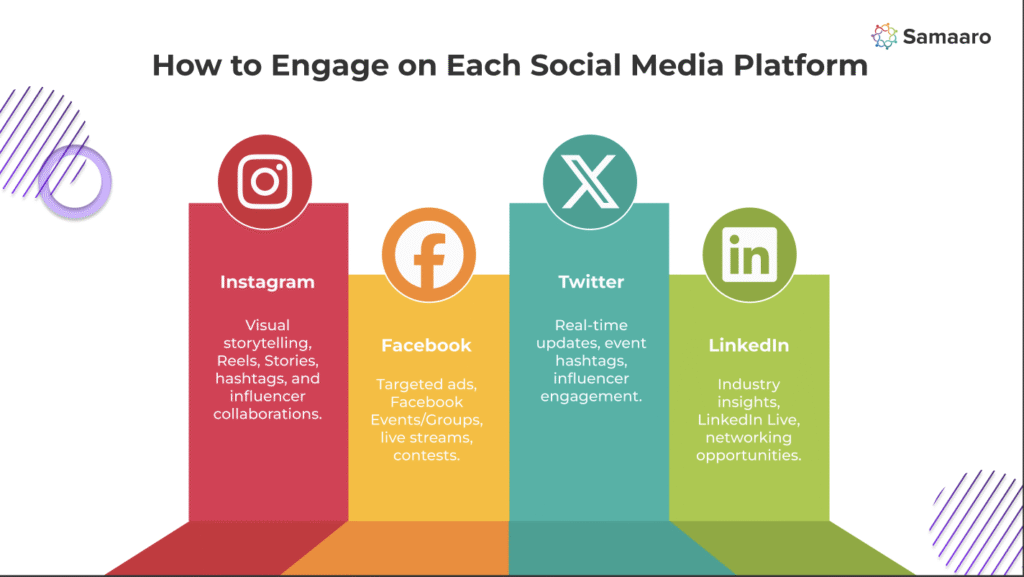
Instagram is the visual frontier. The ideal platform for displaying the pulse of your event by showcasing your unique energy.
Despite the emergence of more focused platforms, Facebook is still the major player among older demographics: according to Pew Research Center’s 2026 Social Media Use survey, 74% of U.S. adults aged 50–64 and 57% of adults aged 65+ now use Facebook. That makes it one of the strongest platforms in 2026 for creating discussions and promoting events to older audiences, with robust targeting options based on interests and profession.
Twitter is an excellent tool for real-time engagement and industry conversation.
The best use of LinkedIn is for professional or industry-focused events such as conferences, workshop offerings, or networking events.

Want to see how this would work for you?
See how Samaaro turns social engagement into event registration data and tracked pipeline.
Book a tailored walkthrough →
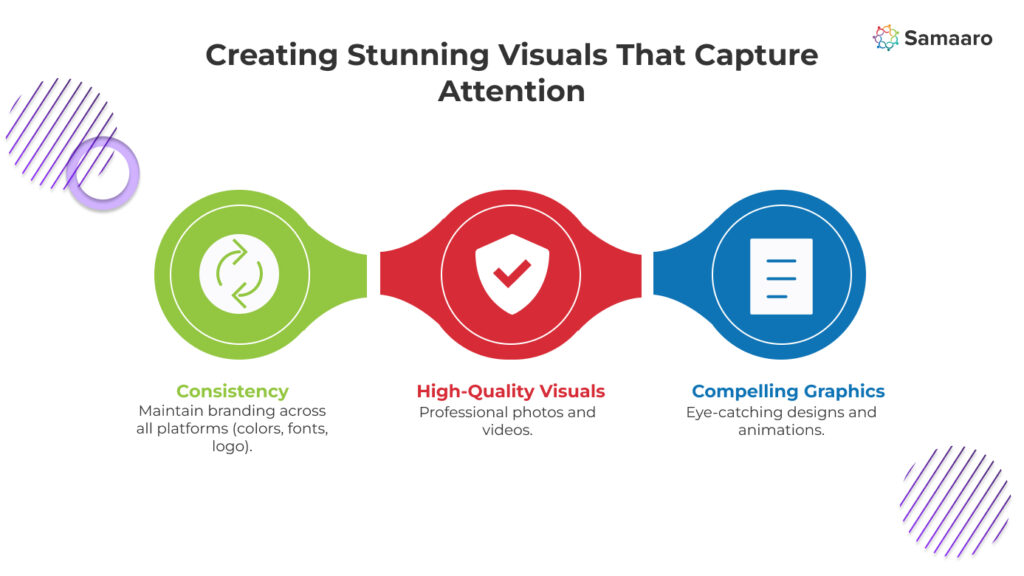
While not every organization will have access to or ability to invest in examples of professional quality visuals, to best achieve quality and expected quality for any/most types of event, Toby-rendered to his target demographics have generally assumed grants but do in offers, promotions of a good quality, strengths.
Event Highlights: Take high-quality pictures of key moments, speaker sessions, panel discussions, and audience interactions.Promotional Videos: Create clips and trailers of your event’s theme, past accomplishments, or what participants can expect.
Behind the Scenes Footage: Show unfiltered behind-the-scenes activity of your staff preparing for the event, it makes your brand human, and it gets people excited.
Live Action Shots: Photos of live activity, like networking or a product demo can help energize and connect with your content.
Visuals can be used to distill complex content and provide a more engaging experience.
Infographics: Use visuals as an effective means of conveying key data, event schedule, attendee demographics, etc.
Countdown Timers: Use countdowns to create urgency and excitement leading up to the event date.
Animated Content: Use animations in your event promotion to spotlight speakers, agenda items, or specials.
Interactive Graphics: You can engage your users with interactive content like polls or quizzes using visual content.
Having a consistent and cohesive visual identity is important for building brand recognition and trust.
Brand Guidelines: Be sure to follow your brand’s color palette, typography, and logo usage guidelines for visual content.
Templates: Use templates for repetitive material, such as event promotions or countdowns, etc. to create consistency.
Cross-Platform Adaptation: Make sure that your visuals are adapted to the platform.
For example:
Captions are your opportunity to help stop the scroll and catch your audience’s attention. An awesome caption does more than draw in viewers, it compels them to engage with your content and act. Here is how to develop great captions for your event promotion:
People love stories, so tell the story of your event. Illustrate your “why”; explain what’s special; or tell them how they remember the past events. For example,
“From a small idea over coffee to a global gathering of innovators; the journey has been amazing to get to #Event2026. Come be part of the story!”
“Last year, attendees made lasting connections and found defining ideas at . Who knows what we have planned for 2026? Come and find out!
Make your audience a part of the conversation with questions of wonder or fun. For example:
“What is one consideration you look for at an unforgettable event? We want to know what you think in the comments!”
“Who’s excited to experience ? Add a? if you’re coming!”
Providing some lightness and personality is a great way to humanize a brand. It makes you relatable. For example:
“Our lineup of speakers this year? Inspiration, innovation, and just the right amount of caffeine.?
“You + = Networking Heaven. See you there?”
Always tell your audience what they should do next. For example:
“Early Bird tickets have launched! Don’t wait. Book your tickets today at .”
“Follow us for live updates and exclusive sneak peeks behind the scenes as we prepare for the big day!”
When it comes to marketing your event, influencer marketing is no stranger to raise visibility and credibility of any event. Choosing the right influencer can positively impact your event attendance or engagement.

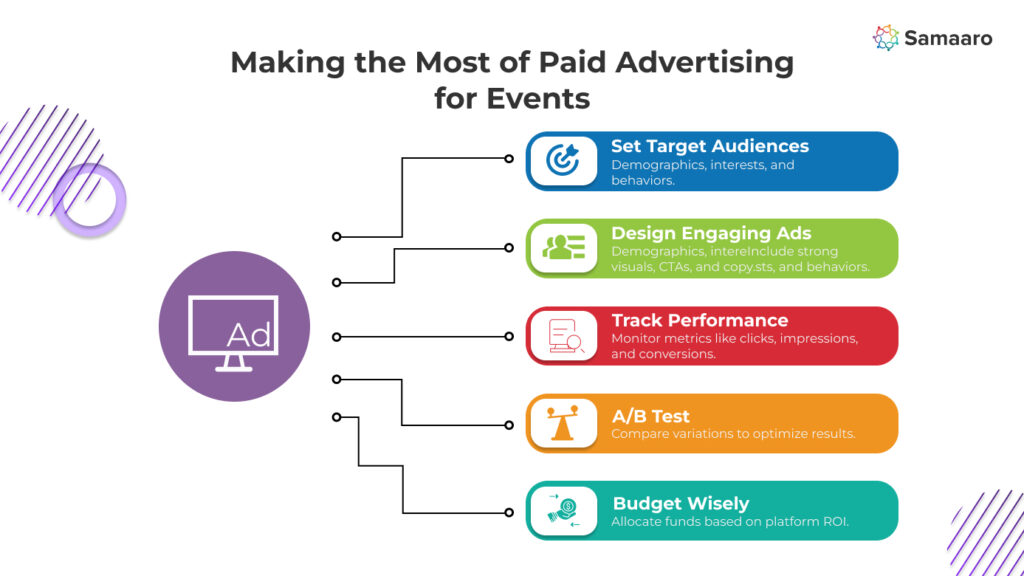
Paid social ads are extremely important when reaching larger audiences beyond your natural or organic audiences. When used effectively and strategically, they can deliver massive ROI and deliver event awareness.
Tailor your ads to the platform of choice:
Consider tracking through monitoring dashboards:
Be sure to keep optimising your ads that are not performing as expected to maximise your ROI.
Implementing more strategies surrounding captions, influencer marketing, and paid advertising will significantly drive the accomplishments of your event social media campaigns. Combining engaging content, influencer partnerships, and paid ads, means that your event will reach success and visibility through social media.
Just remember, social media plans are not static. You should always monitor your campaigns, track performance metrics, and adapt to ensure you continue to succeed. With the right approaches and tools, social media is a powerful medium to make your event truly unforgettable.
Let Samaaro, an AI-enabled event marketing platform, help you design and execute a social media strategy that works for you for your next event. Ask to demo today and start the process of creating impactful events!
To create a social media content strategy that boosts event registrations in 2026, start with a clear content calendar that runs from announcement to event day, treat each platform differently, mix teaser content with speaker spotlights and FOMO posts, and always end with a single clear CTA to register. The strategy works when every post serves a stage in the funnel, not when you post randomly hoping something sticks.
For B2B events like conferences, summits, and webinars, LinkedIn works best because professional users are 6x more likely to engage with industry content. For consumer events, Instagram and Facebook drive higher reach with visual storytelling and event groups. For thought-leadership events, X works well for live commentary. Pick two platforms and execute well rather than spreading thin across five.
The social media content types that drive the highest engagement for events in 2026 are short-form video (15 to 60 seconds), speaker quote graphics, behind-the-scenes clips, attendee testimonials from past editions, countdown posts, and live polls about session preferences. Static announcement posts work too, but video routinely outperforms them by 2 to 4x on engagement and registration clicks.
Event marketers use influencer partnerships to increase visibility by collaborating with both micro and macro influencers who already have your target audience’s attention. Have them announce their attendance, share previews, and post live during the event. Micro-influencers (10K to 100K followers) often convert better than celebrities because their audiences trust them. Give them branded hashtags and content kits to make participation easy.
Best practices for social media captions and CTAs in event marketing: lead with the benefit not the date, keep captions under 150 characters for higher engagement, use one clear CTA per post (Register, Save the date, or Tag a friend), include a branded event hashtag, and avoid generic phrases like ‘Join us’. Tell readers exactly what they’ll gain and exactly what to do next.
Paid social media ads improve event reach and ROI when you layer them on top of organic content. Use precise targeting on LinkedIn (job title, seniority, industry) for B2B events. Use lookalike audiences on Meta for consumer events. Retarget anyone who visited your landing page but didn’t register. Paid ads work best when they amplify content that’s already performing organically, not when they try to do all the work themselves.
LinkedIn works best for corporate and B2B event promotion. Decision-makers are active there, targeting by role and industry is precise, and event content feels native.
A branded event hashtag gathers all conversation in one place, builds community among attendees, extends organic reach, and makes user-generated content easy to find and reshare.
Short video consistently drives the most engagement, followed by behind-the-scenes photos and speaker announcement graphics. Authentic, people-focused visuals outperform polished promotional designs.
Put most paid budget where your audience actually lives, often LinkedIn for B2B events, then reserve a meaningful share for retargeting site visitors and past registrants across platforms.
Track reach, engagement rate, link clicks, registrations through unique tracked links, and cost per registration for each influencer to judge campaign success accurately.
Micro-events are becoming an increasingly common business event in the age of after-event engagement where experiences are recognized as stronger touchpoints for building relationships between brands and audiences. A micro-event is often a viable alternative to a large (and costly) conference or trade show. Micro-events are often smaller events where you can provide more personalization to guests based on their interests, which could promote a deeper connection between a brand and audience.
Micro-events are essentially a smaller way to engage your audience without the headache of planning and arranging for a large audience. Samaaro, an AI-powered event marketing platform provides event-led organizations with the ease to plan, execute, and measure micro-events. In this article, we will explore the advantages of micro-events, as well as, how to plan a micro-event that your guests will remember.

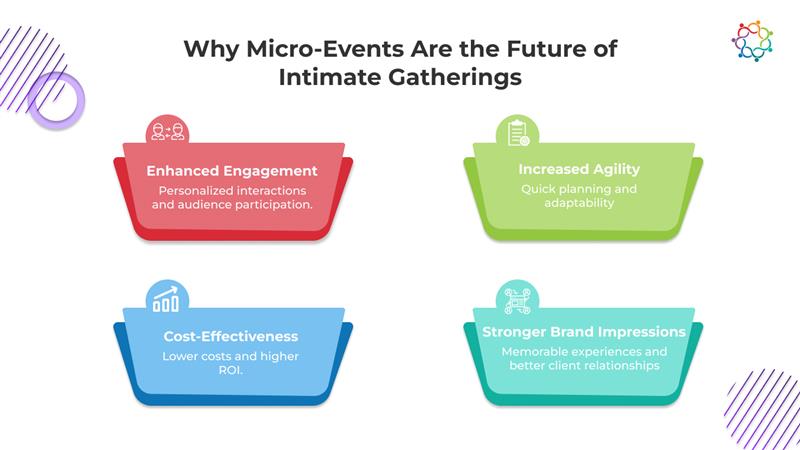
The first major benefit of micro-events is the ease of having better engagement in general. With fewer guests, you have a higher chance of having a genuine one-on-one interaction with attendees. When guests are in a smaller and friendlier atmosphere, they are much more likely to share their opinions, provide meaningful feedback, or engage in discussions either with the host or with other guests that could eventually lead to greater audience involvement and more significant opportunities, partnerships, or larger-scale sales or promotions.
Micro-events often involve a much lower cost compared to a larger conference or trade show. With a more selective guest list, costs related to venue rental, food and beverage, and tabling or event materials can all be lowered. With micro-events, the ability to be more selective with your guest list means your budget can be focused on your highest-value targets and a return on your investment. Using Samaaro’s target marketing and audience segmentation tools, you can be certain that your marketing efforts are directed at the most relevant prospects to maximize your ROI.
Another distinct advantage of micro-events is the enhanced flexibility they come with. Unlike large scale events, which take months of preparation, micro-events can usually be created and executed in a shorter time. A networking dinner? A product demonstration? Micro-events are suitable for smaller groups and both can be arranged to take place faster than the larger event. The smaller scale provides increased flexibility when making decisions and pivoting when necessary.
It’s widely accepted that micro-events offer more opportunities to create lasting brand impressions – because they are more personal and interactive, brands can demonstrate the product or service in a fuller and more engaging context. Attendees have stronger, and greater, connections to the brand, building loyalty and advocacy. Samaaro’s event marketing tools will also help you to create unique experiences that helped to differentiate your brand and leave a lasting impression!

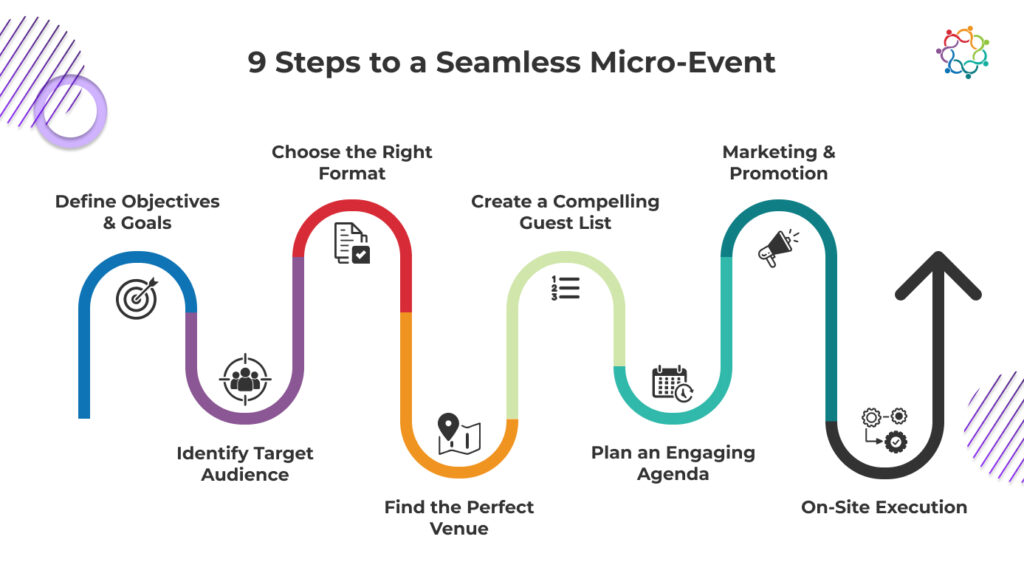
The first step to planning any successful event is to define your objectives. What do you hope to achieve from this micro-event? Each of these micro-events could involve networking opportunities, product launches, team-building events, and client appreciation, but your goals should also fit your business objective. Using the SMART framework of specific, measurable, but achievable, relevant and time-bound goals, let’s prepare some clear outcomes from the event.
Understanding your audience is important for the success of your micro-event. With a smaller audience, you should be more intentional with attendees that participate in your event. Who can benefit from your event? Potential clients? Influencers? Employees? Partners? Samaaro has audience segmentation tools with features that allow you to find the right invitees, people who are going to get the most value with the event.
Micro-events can take on several different forms, like intimate dinners, product demos, appreciation events or networking workshops, and your format should align with your goals. If your goal is to show off a new product, for example, this is best done through a hands-on demonstration, but if you are connecting with a few key clients, a private dinner would be much more appropriate. Samaaro helps you create the right event format for your objectives.
The venue is going to set the tone for your micro-event. Look for some intimate, unconventional venue that matches the spirit and scale of your event! Private residences, galleries, upscale restaurants and boutique hotels all represent good options for micro-events. Samaaro’s venue sourcing tools allow you to find the best fit for your gathering that fits your vision.
Guest lists matter with micro-events. Because the event is small, every person matters. When you are ready to manage your guests, use Samaaro’s CRM integration to manage your guests’ data, personalize your invite, and track RSVPs. It is also important to follow the steps to pick the right people who will add value to the event and align with your perfect attendee profile.
An engaging agenda will ensure your micro-event is a success. With a small group, there is an opportunity to have an agenda that engages and connects the group. You can add interactive events, discussions, or even surprise events. Think about what will engage your audience and create an unforgettable experience. Samrao can even assist in streamlining with tools for scheduling and managing attendance engagement with each event.
Despite being small, micro-events still demand promotional efforts. Indeed, all the communication tools in your marketing toolbox will help get people to attend your micro-event; personalized emails, promotional posts on social media, and emails directly asking to join the event will all entice your target audience. Samaaro has the marketing automation tools to design, set up, and execute well-targeted marketing campaigns to promote your event to new people with maximum exposure and reach. You can easily segment your audience to make sure that your messaging attracts the right attendees.
Event success often rests on executing a perfect event. You need to check-in guests, herd and manage a bunch of heads, direct foot traffic, and everything else should click together seamlessly. Samaaro’s event management product allows you to manage a small event on-site, and once you start, you only have to worry about the logistics for the event to go off without a hitch. Once the micro-event is over, Samaaro allows you to gather real-time feedback from attendees so you can action any improvements for the future.
Follow up after the event to continue to build on any relationships formed. Send your guests a personal email thanking them for attending, sharing some recognized events of the event, and following up with any leads or business opportunities. Samaroo provides analytics tools to gather valuable insights from your micro-event. You can gather your attendee engagement data and their general feedback to adjust and evolve your next engagement.
Micro-events are a great way to establish stronger relationships with potential clients and provide exciting brand experiences. By planning and executing smaller excited gatherings, companies can enhance engagement and brand impressions, while driving higher ROI. Samaaro has all our micro-event products to plan, market, and evaluate your micro-event ensuring there is impact and engagement.
Samaaro is a simple solution that can streamline the entire event process – audience segmentation, sourcing venues, event planning, marketing automation, and post event follow up. Interested in planning your next micro-event? Book a demo of Samaaro today and find out how we can help you plan successful high-impact events.
Micro-events work best with roughly 10 to 50 guests. That range keeps conversations personal and engagement deep while still generating real energy in the room.
B2B companies, luxury brands, startups, and consultancies benefit most. Any business targeting a specific high-value audience gains more from depth of connection than breadth of reach.
Four to eight weeks of planning usually suffices for a micro-event, far less than large conferences. The smaller scale allows agility without sacrificing quality.
Budgets range from a few thousand dollars for a simple gathering to tens of thousands for premium experiences. Venue, catering, and experience quality drive most of the cost.
Measure cost per attendee against meetings booked, deals influenced, and relationship depth. Micro-events win on conversion quality, so judge ROI per relationship rather than by headcount.
HNIs invest in events because they want something. Not just brand exposure. They want meaningful connection with audiences that matter to them. They want to back causes that align with who they are. They want to build legacy.
The question isn’t whether HNIs will sponsor events. The question is: did you understand what they actually want before you asked?
Financial support is obvious. HNIs bring real money. You can execute your vision instead of cutting corners. You can pay speakers. You can build the experience you actually want to create.
But that’s the least valuable thing they bring.
Association matters more. When a prominent HNI shows up, people notice. The event gains credibility instantly. Other sponsors see it and think: this event must be legitimate. Better attendees start showing up. More sponsorship inquiries come in.
HNIs have networks most people never access. Their contacts know other HNIs. Other business leaders. Foundations. Influential people. When an HNI gets involved, doors open you didn’t know existed. Partnerships happen. Future opportunities surface.
Unlike one-time sponsors who show up for the tax write-off, HNIs invest in events they believe in. They come back year after year. They become partners, not just checkbooks.

You can’t attract someone until you know what matters to them. HNIs don’t all want the same thing. But they share patterns.
Event Attendance
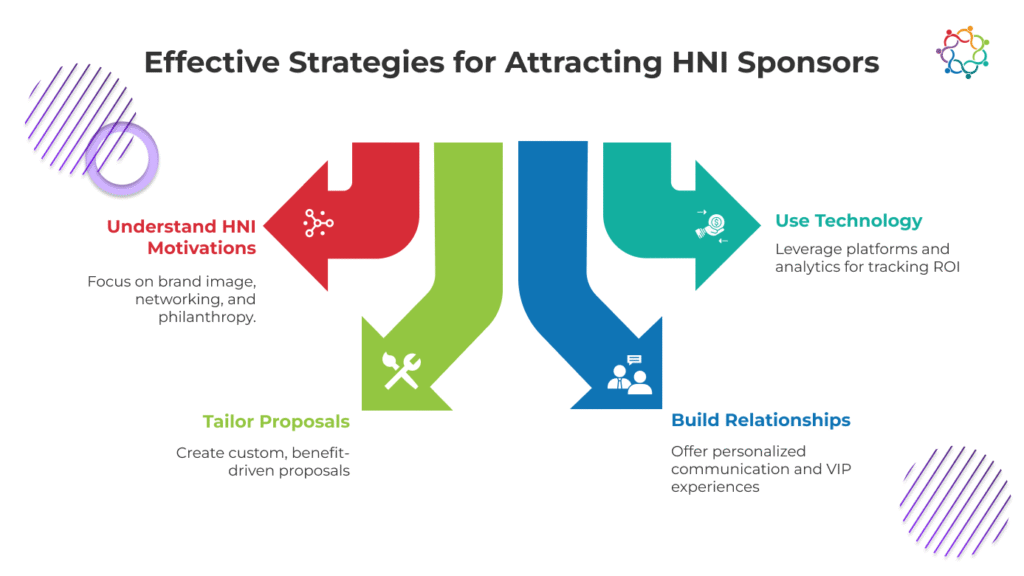
HNIs want to be part of the conversation. Not treated like sponsors who get invited. They want pre-planning involvement. They want their voice heard when you’re designing the event. They want to feel included from the beginning. When you involve them early, they become invested. They care about the outcome because they shaped it.
Award Opportunities
Every sponsor appreciates visibility. But HNIs especially value the chance to sponsor an award. To recognize someone. To highlight an organization doing work they believe in. To put their name alongside excellence. This ties their brand to impact. To leadership. It makes the sponsorship feel meaningful, not transactional.
Philanthropic and Societal Impact
Most HNIs earned money over decades. Now they think about impact. Legacy. What’s the point of wealth if you don’t use it to improve something? Connect your event to causes. Show how it benefits community. Tie it to social change. This is powerful motivation. This is the story HNIs want to be part of.
Tax Benefits
Yes, money matters. Tax deductions matter too. Don’t hide this. HNIs already know sponsorships carry tax advantages. Mention it clearly. Work with their advisors. Structure the sponsorship so it makes sense financially. This isn’t crass. It’s smart business.

Generic sponsorship decks don’t work. HNIs can tell when you copy-pasted the same pitch for five different prospects. They know when you didn’t do your homework.
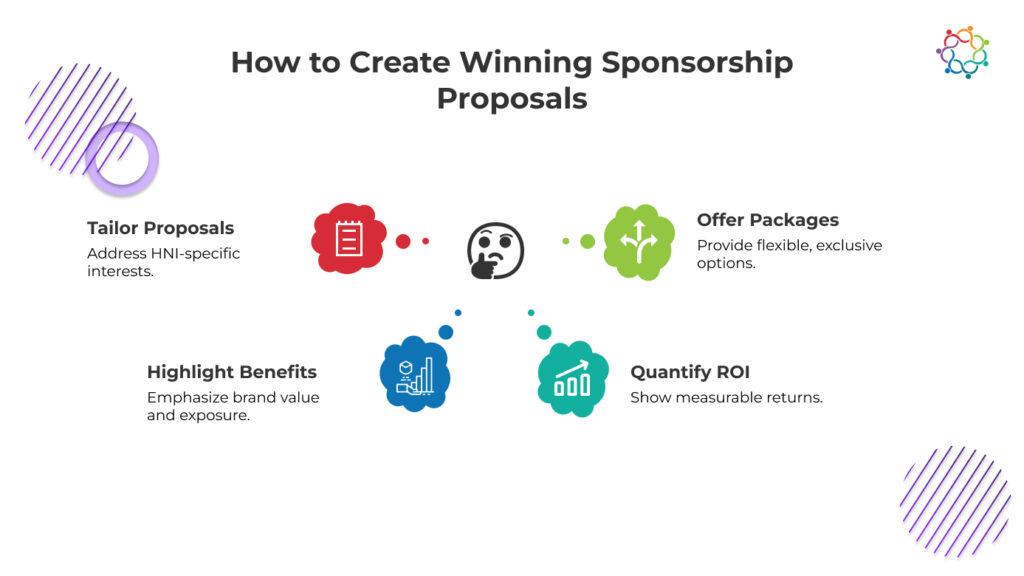
You need custom proposals. Research the specific HNI first. What causes do they support? What boards do they sit on? What does their company care about? What did they write about last year? Build the proposal around them. Show you understand what they value. Show you crafted this specifically for them, not for anyone willing to write a check.
Be explicit about benefits. Don’t assume they know why sponsoring helps them. Tell them. Brand recognition with who? The audience is your target market? Then explain: your audience is 80% CEOs of mid-market tech companies. That’s who sees your brand at this event. Link the benefit directly to their business goals.
HNIs want numbers. Show ROI projections. How many people will see their logo? What social media reach are you expecting? Give them audience demographics that match their target customer. If your event attracts 500 CFOs from Fortune 500 companies, and that’s their exact ICP, say it. Use sponsorship management tools to track deliverables and back claims with data.
Create tiered packages. Don’t offer just one option. Let them choose based on what makes sense for them.
Flexibility is key. If an HNI wants to modify a tier, listen. Maybe they want less VIP access but more award sponsorship opportunity. Maybe they want speaking slot instead of networking time. Let them build the package that works for their goals.
Sponsorship doesn’t end when they sign the contract. That’s when the real work starts.
Communication matters. HNIs have preferences. Some want formal quarterly updates. Some want casual check-ins. Some prefer email. Some want phone calls. Ask them how they like to communicate. Then do that. Respect their style.
Perks matter too. Sponsors expect recognition. But HNIs value exclusivity. Give them things others don’t get. Backstage access. Private dinners with speakers. One-on-one introductions to other HNI sponsors. VIP parking. Exclusive lounge access. Invite them to planning meetings. These small touches say: we value you differently.
After the event, don’t disappear. Send handwritten thank-you notes. Not email. Actual notes. Share event highlights. Include a photo of them at the event. Send a sponsorship impact report showing what their money achieved. Did their sponsored award go to a deserving recipient? Show that. Did their branding reach the audience? Prove it with numbers. Did leads come in? Share those metrics.
The goal is ongoing partnership. Think about how to engage them for future events. What other opportunities exist? Can they sponsor something bigger next year? Can they help recruit other sponsors? Can they mentor the next generation of sponsors? Build for the long term.
Technology handles the boring parts so you can focus on relationships. Use sponsorship management tools to track deliverables. Which promises did you make? Is the logo on the website? Did they get the VIP passes? Did they receive the post-event report? Technology keeps you accountable. It keeps sponsors satisfied.
Real-time analytics matter too. You can show sponsors exactly what happened during the event. How many people saw their brand? Which sponsor activation generated the most engagement? What was the social media reach? Pull data right from the event and share it back to sponsors. Show them their ROI immediately. Don’t make them wait six months for a report.
Use email automation for follow-up. But personalize it. “Hi , here are the 23 leads you generated from the event” hits differently than a generic summary. Segment communications. Platinum sponsors get different updates than Gold sponsors. This shows you’re paying attention.

Want to see how this would work for you?
See how Samaaro generates the granular sponsor ROI reports HNW partners actually want.
Book a tailored walkthrough →Trust breaks when you hide things. Be clear from the start. What will the sponsor get? What’s expected of them? What’s the timeline? What are the costs? Ambiguity kills deals.
Values alignment matters. Make sure the sponsor’s business and values fit with your event and audience. If the sponsor sells predatory lending products and your event is for nonprofit directors, that’s a mismatch. Don’t take the money. Your reputation is worth more.
Deliver on commitments. If you promised logo placement, put the logo everywhere. If you promised networking opportunities, create them. If you promised attendee data, send it. Small promises broken teach sponsors not to trust you next time.
HNI sponsorships aren’t complicated. They’re just intentional. Know what motivates them. Build proposals that speak to those motivations. Treat them as partners, not as ATMs. Give them data showing ROI. Follow up after the event. Build for long-term relationships.
The sponsors who renew are the ones who feel valued. Understood. Like their investment mattered and made a real impact.
That’s how you attract high-net-worth sponsors. And keep them coming back.
Ready to transform your sponsorship strategy? Discover how platforms designed for event success can help you attract and manage HNI sponsors with confidence. Book a demo today and see the difference strategic sponsorship management makes for your events.
How do you identify potential high-net-worth sponsors before approaching them?
Start with research. Look at who sponsors similar events in your industry. Check their company websites. Read their annual reports. Follow them on LinkedIn. See what causes they support. Ask your board members for introductions. HNIs respond to warm referrals, not cold emails. Getting introduced by someone they know increases your chances dramatically.
How should sponsorship tiers be priced for different levels like Platinum, Gold, and Silver?
Price based on value. Platinum includes exclusivity, speaking opportunities, premium branding, and private access. Gold includes visible branding, good access, and public recognition. Silver includes basic recognition and complimentary tickets. Look at what similar events charge. Talk to other event planners. Make sure the value proposition is clear at each level. A sponsor should understand why Platinum costs more than Gold.
What common mistakes cause event planners to lose HNI sponsor interest?
Generic pitches kill deals immediately. So do unclear promises. Unclear ROI expectations destroy trust. Overpromising and underdelivering ends partnerships. Treating sponsors like ATMs instead of partners turns them away. Slow communication frustrates them. Ignore these mistakes and sponsors never come back.
How can event planners measure the success of a sponsorship partnership post-event?
Report against the KPIs you agreed on before the event. How many people saw their logo? How many leads came through their sponsored activity? What was the social media reach? Did you deliver on all promised perks? A strong post-event report wins sponsorship renewals. Weak reporting kills them.
How do you handle a situation where an HNI sponsor’s expectations don’t align with the event’s goals?
Have the conversation early, not after the event. Revisit what they wanted and what’s actually possible. Offer alternative deliverables. Negotiate openly. Protecting the long-term relationship matters more than winning a fight over one event. If they’re unhappy, figure out why and fix it before it becomes a bigger problem.
In event planning, success often hinges on more than just creative ideas and flawless execution—it depends on the quality of partnerships formed along the way. Among these, the relationship with event vendors is critical. Vendors provide the goods and services that turn concepts into reality, from audiovisual equipment and catering to decor and transportation.
Strong vendor relationships not only ensure smooth event execution but also contribute to a higher-quality experience for attendees. Here’s how to build and maintain successful partnerships with event vendors to create memorable events.
Reliable vendors deliver high-quality services on time, minimizing last-minute hiccups and helping maintain the event’s reputation.
A strong relationship fosters open communication, making it easier to collaborate, troubleshoot, and adapt to changes.
Long-term partnerships often lead to cost savings through loyalty discounts, preferential treatment, and efficient workflows.

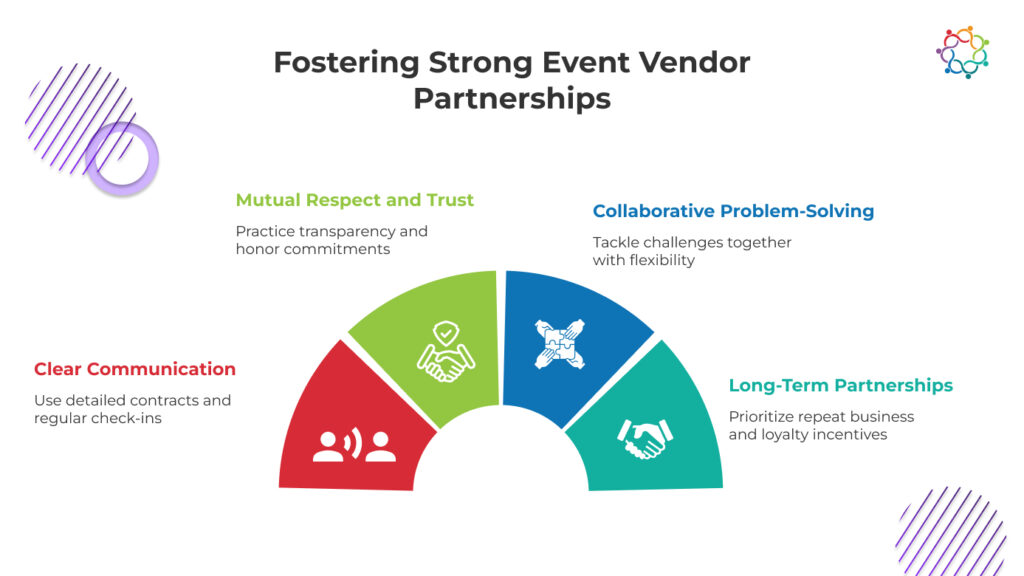
Effective communication is the cornerstone of any successful partnership.
Trust and respect are essential for any enduring partnership.
No event goes entirely according to plan, so being adaptable is key.
Strong, long-term relationships with vendors lead to consistency and trust over time.

Want to see how this would work for you?
See how Samaaro tracks vendor performance, deliverables, and costs across your event calendar.
Book a tailored walkthrough →
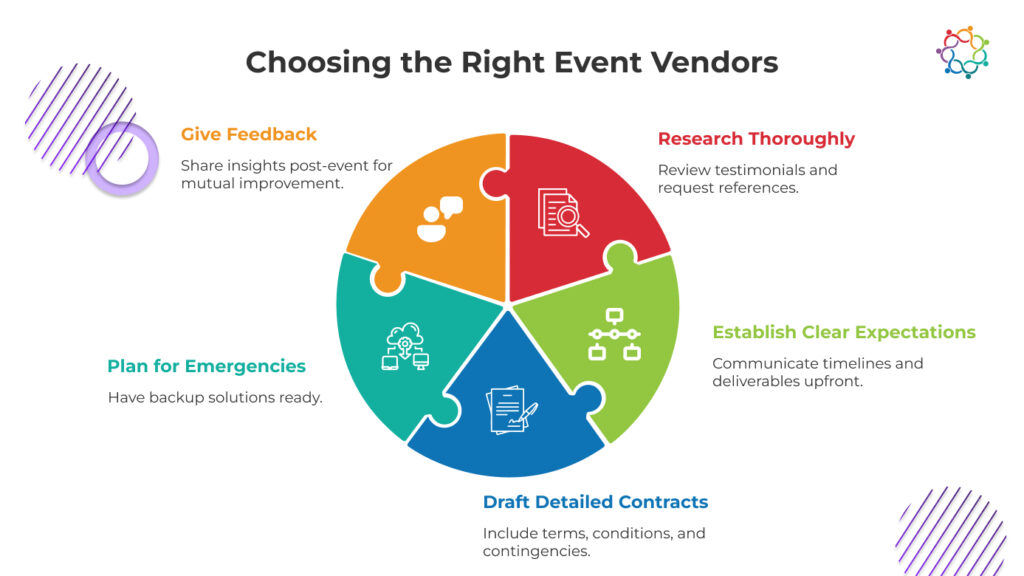
Before committing, research potential vendors to ensure they meet your needs.
A strong contract protects both parties and sets the foundation for a successful partnership. Include details like:
Events can be unpredictable, so always have a backup plan.
After the event, review vendor performance.
Event vendors are more than just service providers—they’re partners in your success. By building strong, respectful relationships, you can ensure seamless collaboration, deliver outstanding events, and foster loyalty that benefits both parties.
If you’re ready to take your event planning to the next level, Samaaro is here to help. Book a demo or start your free trial today, and discover how our platform can empower you to create exceptional events through seamless vendor collaboration.

Samaaro is an AI-powered event marketing platform that enables marketing teams to turn events into a measurable growth channel by planning, promoting, executing, and measuring their business impact.
Location


© 2026 — Samaaro. All Rights Reserved.