Samaaro + Your CRM: Zero Integration Fee for Annual Sign-Ups Until 30 June, 2025
- 00Days
- 00Hrs
- 00Min

In the fast-paced world of event marketing, success often hinges on your ability to deliver seamless, engaging experiences. Event apps have become indispensable tools for achieving this, transforming how marketers plan, execute, and analyze their events. These apps not only simplify event logistics but also elevate the attendee experience by fostering engagement and personalizing interactions.
If you’re not yet leveraging an event app, it’s time to reconsider. Let’s dive into the essential features that every marketer should look for when choosing the right event app.
Event apps have evolved far beyond basic scheduling tools. They’re now comprehensive platforms designed to connect people, streamline processes, and generate actionable insights. With the right event app, marketers can:
In short, a well-designed event app empowers marketers to focus on what truly matters—creating memorable and impactful events.
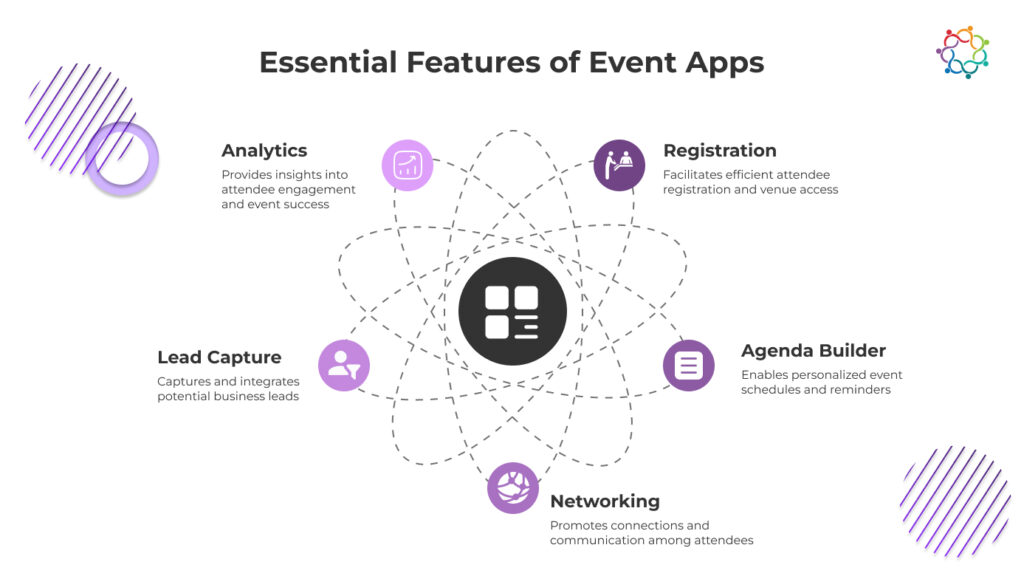
The features you choose in an event app can significantly impact your event’s success. Here are the must-have functionalities to consider:
The registration process sets the tone for your event. A smooth and intuitive system can leave a positive first impression while capturing critical attendee data.
An agenda builder is one of the most impactful ways to personalize the attendee experience.
Networking is a cornerstone of any successful event, and your app should facilitate meaningful connections.
Lead generation is a top priority for many marketers, and the right app can simplify this process.
To gauge the success of your event, analytics are indispensable.
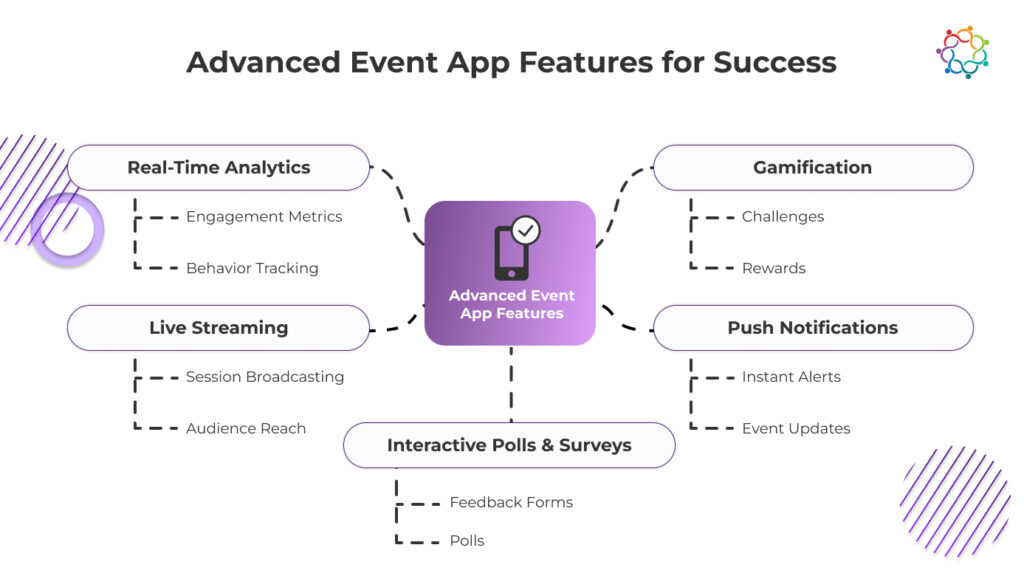
While the core features above are essential, here are a few additional functionalities that can add even more value to your event app:
Encourage participation and engagement with challenges, leaderboards, and rewards. Gamification can make the event experience more enjoyable while driving attendee interactions.
Capture real-time feedback by incorporating live polls and surveys into your sessions. Use this data to adjust programming on the fly or to enhance future events.
Ensure attendees stay informed with timely updates, reminders, and alerts. Whether it’s announcing a change in schedule or promoting a sponsor, push notifications are a direct line to your audience.
Allow attendees to interact with speakers in real time through live Q&A sessions. This feature boosts engagement and makes sessions more dynamic.
With so many event apps on the market, selecting the right one can feel overwhelming. Here’s what to consider:
Ensure the app has all the essential features your event requires, from registration and agenda building to analytics and networking tools.
The app should be intuitive and easy to navigate, both for attendees and event organizers. A clunky interface can detract from the overall experience.
Look for apps that integrate seamlessly with your existing tools, such as CRM platforms, marketing automation software, and payment gateways.
Choose an app that fits within your budget while delivering maximum value. Don’t compromise on essential features for the sake of cost savings.
Samaaro is one such platform that stands out in the crowded marketplace. It offers a suite of features tailored to marketers’ needs, ensuring a seamless event experience from start to finish.
Event apps are no longer optional in today’s marketing landscape—they’re a necessity. From simplifying event management to enhancing attendee engagement, these apps have become indispensable tools for modern marketers.
By leveraging features like personalized agendas, real-time analytics, and robust networking tools, you can create events that resonate deeply with your audience and deliver measurable results.
Ready to take your event marketing to the next level? With Samaaro, you’ll have access to cutting-edge tools designed to streamline your processes and maximize ROI. Book a demo or start your free trial today, and discover how Samaaro can help you create unforgettable event experiences.
Event marketing has evolved dramatically over the years, moving from intuition-driven decisions to strategies deeply rooted in data. In today’s competitive landscape, where every interaction counts, leveraging event data can transform your campaigns and deliver measurable success. From improving attendee experiences to optimizing lead generation, data empowers marketers to make smarter, more impactful decisions.
Let’s explore how data-driven event marketing can unlock new levels of success and why collecting, analyzing, and using event data should be at the heart of your strategy.
Data is the backbone of modern event marketing. It helps answer critical questions: Who are your attendees? What did they enjoy? What didn’t resonate? More importantly, it provides actionable insights that can shape future events, ensuring they are more engaging and impactful.
When used effectively, data can:
In short, data turns guesswork into certainty, giving marketers the tools they need to continuously refine and elevate their events.
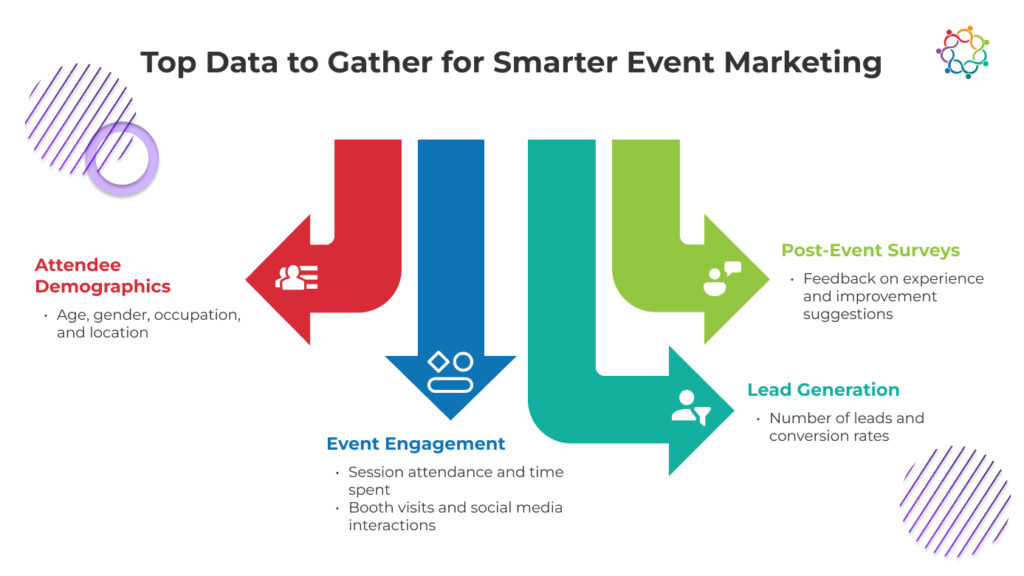
To fully harness the power of data, it’s essential to focus on the right metrics. These key data points will provide a comprehensive understanding of your event’s performance:
Understanding who your attendees are is the foundation of data-driven event marketing. Collect information such as:
This data allows you to tailor content, sessions, and activities to meet the needs of your audience.
Engagement metrics reveal how attendees interacted with your event. Track:
These insights highlight which aspects of your event resonated most with your audience.
One of the primary goals of most events is to generate high-quality leads. Key metrics include:
By understanding the quality of leads generated, you can assess the event’s impact on your business goals.
Direct feedback from attendees is invaluable. Surveys can provide insights into:
Attendee feedback helps refine future events and ensure you’re meeting their expectations.
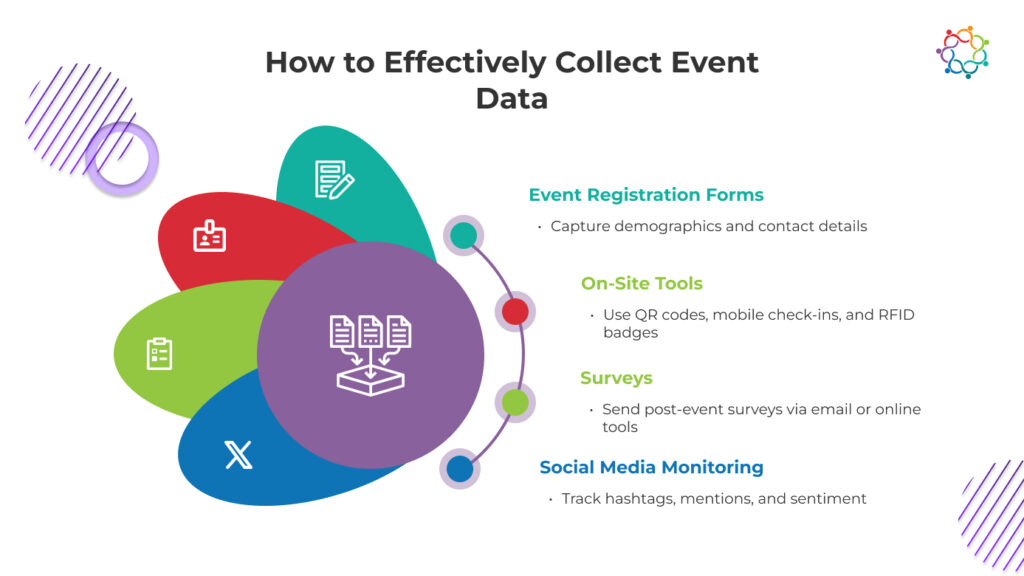
Data collection is as much about the method as it is about the metrics. Using the right tools and techniques ensures accuracy and completeness:
Registration is often the first point of contact with attendees, making it a prime opportunity to gather data. Use forms to collect basic demographic information and preferences. Customize fields to capture details relevant to your event objectives.
Events provide numerous opportunities for on-site data collection, such as:
Send surveys via email or use online tools to collect post-event feedback. Keep surveys concise and focused to maximize response rates.
Track event-related hashtags, brand mentions, and attendee sentiment on social media platforms. This not only provides engagement metrics but also gives insights into how your event was perceived.
Collecting data is only the first step. The real value lies in analyzing it to uncover actionable insights.
Dive into the data to understand your attendees better:
By identifying trends, you can refine your event strategies to align with audience preferences.
Event marketing is an investment, and data helps you measure its return. Calculate:
Understanding ROI demonstrates the event’s value to stakeholders and secures buy-in for future initiatives.
Use data to segment attendees based on their behavior, preferences, and demographics. This allows you to create targeted marketing campaigns and personalize communications, increasing the likelihood of conversions.
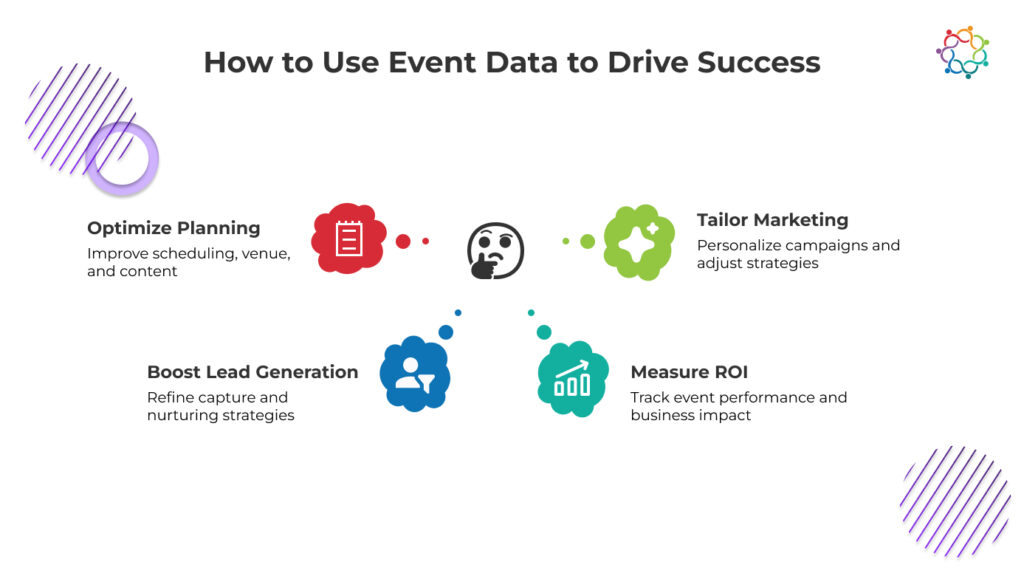
The insights gained from analyzing event data should directly influence your future event planning and marketing strategies:
Use attendee feedback and engagement data to improve logistics, from venue selection to session timing. Tailor your speaker lineup and content based on what resonated most with attendees.
Refine your lead capture strategies based on data insights. For instance, if QR codes outperformed manual forms, prioritize their use. Nurture leads more effectively by segmenting them based on quality and behavior.
Data-driven insights allow you to evaluate the performance of your marketing campaigns. Track which channels drove the most registrations and adjust your budget accordingly.
Data-driven event marketing is no longer optional—it’s essential. By collecting the right data, analyzing it effectively, and using insights to refine your strategies, you can create events that not only meet but exceed expectations.
Samaaro is designed to help you unlock the full potential of data-driven event marketing. With advanced data collection, analysis tools, and a seamless user experience, Samaaro makes it easy to measure success and optimize your efforts.
Ready to take your event marketing to the next level? Book a demo or start your free trial of Samaaro today, and discover how data can transform your events into unforgettable experiences.
Event marketing has entered a new era, where human connection and cutting-edge technology work in tandem to create truly transformative experiences. After years of rapid evolution, the resurgence of in-person events signals a profound shift in how we connect, communicate, and cultivate relationships. But in this new landscape, it’s not just about gathering people in a room; it’s about creating meaningful, memorable interactions.
This blend of human connection and data-driven insights is reshaping event marketing as we know it. Marketers are leveraging advanced tools to better understand their audiences while never losing sight of the power of face-to-face interactions. Let’s explore how these forces are shaping the future of event marketing and why they’re essential to your strategy.
At its core, event marketing has always been about people. The conversations, the handshakes, the shared laughter—all of these moments create bonds that can’t be replicated elsewhere. Human connection is the heart of every great event.
Even in today’s tech-savvy world, there’s something irreplaceable about meeting in person. Body language, tone of voice, and spontaneous discussions foster a sense of trust and understanding that digital communication simply can’t match. Whether it’s building rapport with potential clients or deepening relationships with existing partners, face-to-face interactions lay the foundation for long-lasting connections.
Events have the power to bring people together around shared goals, interests, or challenges. For businesses, this sense of community is invaluable. Attendees don’t just walk away with knowledge—they leave feeling a sense of belonging. And that’s what builds brand loyalty. By designing spaces and activities that encourage interaction, you create an environment where relationships can flourish naturally.
Great events don’t just inform; they engage the senses. From the aroma of fresh coffee to the buzz of a live performance, in-person events captivate attendees in ways that stick with them long after they leave. Sensory engagement leaves a lasting impression, turning your event into more than just a meeting—it becomes an experience.
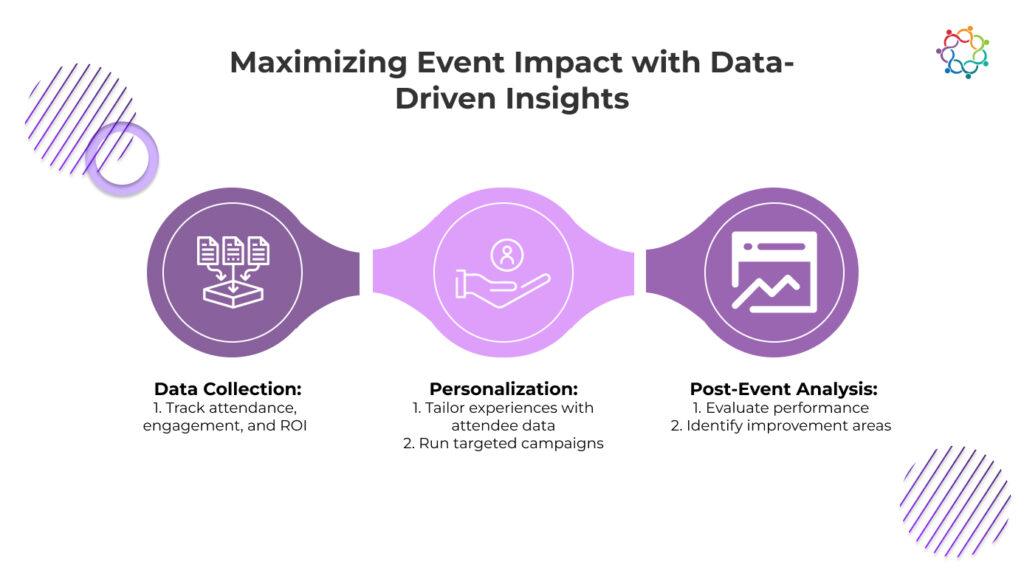
While human connection is at the heart of events, data is the brain. The ability to collect, analyze, and act on data has revolutionized event marketing, enabling businesses to create highly personalized and impactful experiences.
The first step in data-driven event marketing is identifying the metrics that matter most. Are you measuring attendance, engagement levels, or lead conversions? Perhaps ROI is your focus. With the right tools, collecting this data is easier than ever. Event technologies like mobile apps and check-in kiosks provide real-time insights, capturing everything from session participation to booth visits.
Once collected, this data becomes a goldmine for analysis. Patterns emerge, helping you understand what worked and what didn’t. Did a particular keynote draw more attendees than others? Was a certain booth more popular? With these insights, you can refine your approach for future events.
Today’s attendees expect more than cookie-cutter experiences—they want events tailored to their preferences. This is where data becomes invaluable. By analyzing attendee interests and behaviors, you can deliver personalized content, recommend sessions, or even suggest networking opportunities.
Imagine sending an attendee a custom agenda based on their industry or job role. Or suggesting breakout sessions that align with their professional goals. These small touches create a sense of value and make attendees feel seen and understood.
The work doesn’t stop when the event ends. Post-event analysis is critical to understanding your success and identifying areas for improvement. Attendee feedback, engagement metrics, and ROI calculations all come into play here.
Was your registration process smooth? Did attendees find the sessions valuable? Use these insights to continuously refine your strategy, ensuring each event is better than the last.
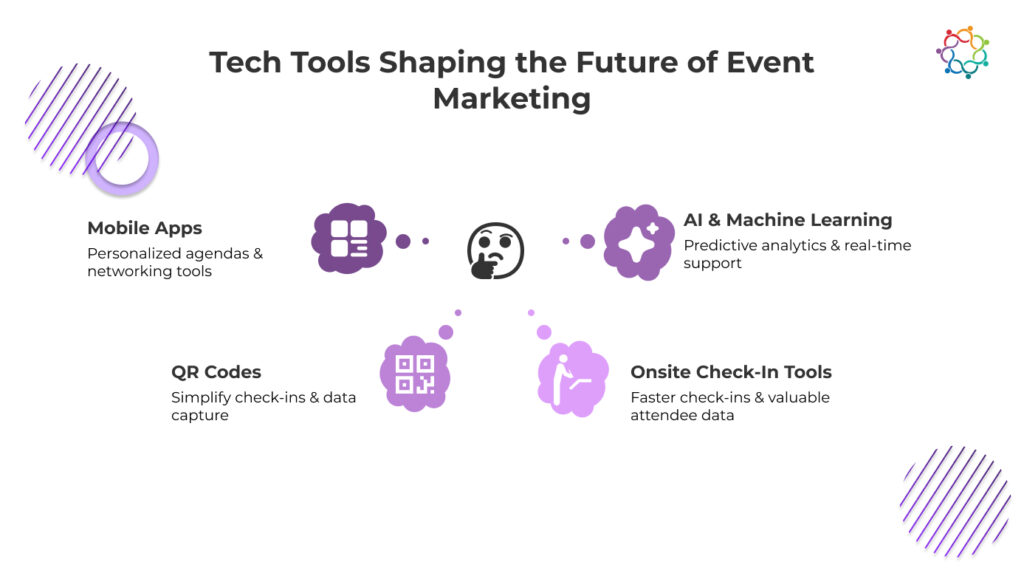
Technology is no longer an add-on for events; it’s a driving force behind their success. From streamlining operations to enhancing the attendee experience, the right tools can make all the difference.
Mobile apps have become indispensable in event marketing. They allow attendees to customize their schedules, receive real-time notifications, and even network with others—all at their fingertips. For organizers, apps provide a seamless way to collect data and deliver a more personalized experience.
Platforms like Samaaro take this a step further by enabling personalized agendas, helping attendees discover relevant sessions and activities effortlessly. These tools don’t just enhance convenience—they elevate the entire event experience.
Gone are the days of long registration lines and cumbersome processes. QR codes have streamlined check-ins, allowing attendees to breeze through with just a scan. Beyond registration, QR codes can also be used to capture leads, provide session access, and enable contactless sharing of information.
Efficient check-ins set the tone for the rest of the event. Onsite check-in tools not only speed up the process but also collect valuable data about attendees. This information can be used to personalize interactions, ensuring each guest feels welcomed and valued.
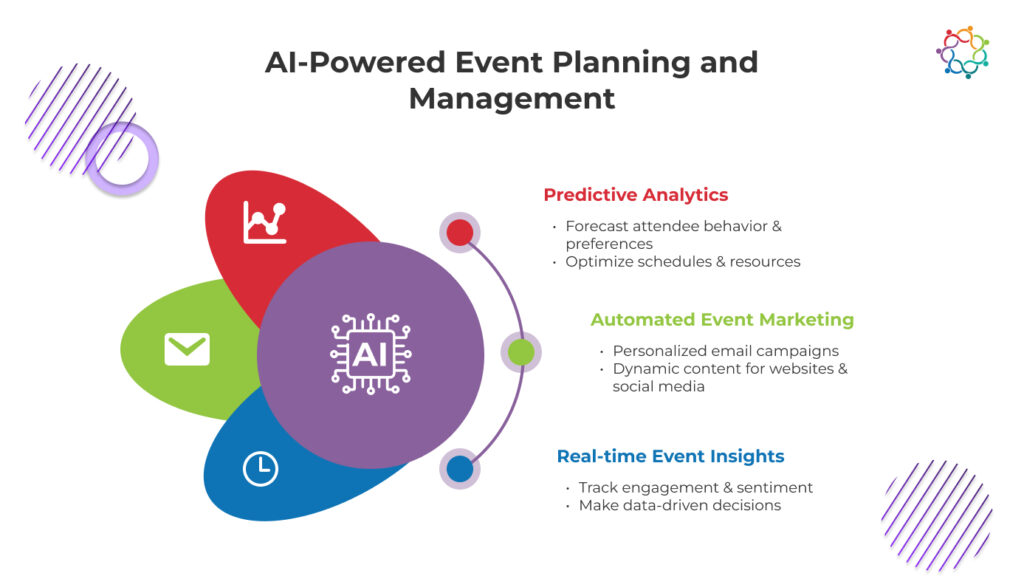
Artificial intelligence is transforming event marketing in exciting ways. Predictive analytics help organizers anticipate attendee needs, from room capacities to content preferences. Chatbots provide real-time support, answering questions and guiding attendees through the event. These technologies make events smarter, smoother, and more engaging.
The future of event marketing is all about balance—merging the timeless power of human connection with the precision of data-driven insights and technological innovation. By focusing on building relationships, creating memorable experiences, and leveraging the latest tools, marketers can deliver events that leave a lasting impact.
Samaaro stands at the forefront of this evolution, offering a comprehensive platform that combines personalization, engagement, and data analytics. Whether it’s streamlining operations, enhancing attendee experiences, or maximizing ROI, Samaaro empowers businesses to make every event a success.
Ready to elevate your event marketing strategy? Book a demo or start your free trial of Samaaro today, and experience the future of event marketing firsthand.
In today’s fast-paced digital landscape, businesses are constantly looking for innovative ways to improve their event ROI. Event technology, or event tech, has emerged as a game-changer, helping companies streamline operations, engage attendees, and most importantly, generate high-quality leads. But how exactly does event tech make this possible?
By leveraging advanced tools and features, event tech helps you not just collect leads, but also qualify and nurture them more effectively. Whether it’s through automated lead capture or personalized follow-ups, integrating event tech into your strategy can transform the way you connect with your audience.
Event technology refers to tools and platforms designed to streamline every aspect of event planning and execution, from registrations to post-event follow-ups. For lead generation, event tech acts as a bridge between attendees and businesses, ensuring that every interaction is meaningful and measurable.
Using event tech doesn’t just simplify the process; it enhances the quality of leads collected. Attendees’ preferences, behaviors, and interactions are tracked, providing invaluable data for personalized follow-ups. As a result, businesses can focus their efforts on nurturing high-potential leads, maximizing their return on investment (ROI).
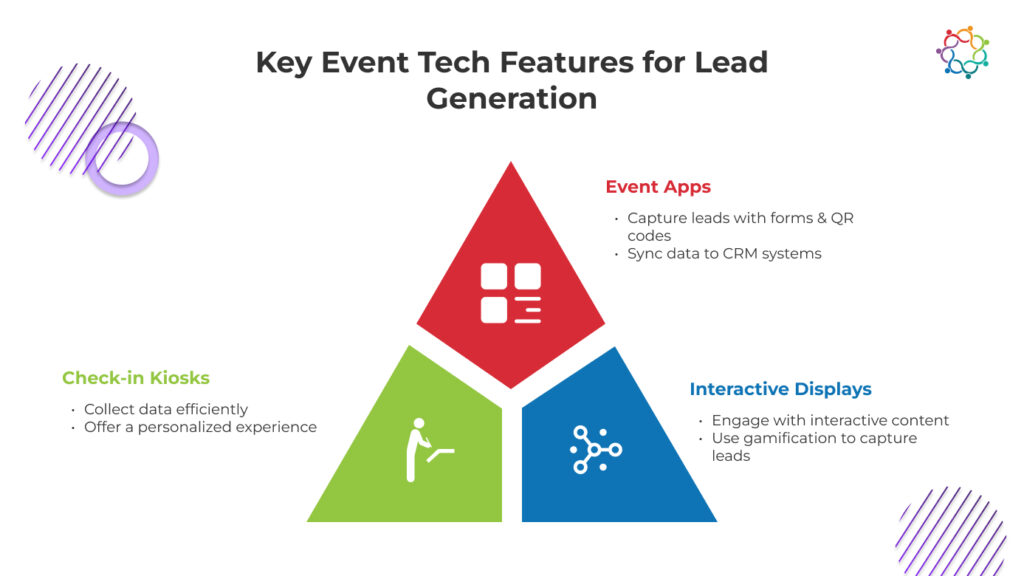
Let’s explore some event tech features that can transform your lead generation strategy:
Event apps are the Swiss Army knife of event tech. They offer multiple functionalities, all geared towards improving attendee experience and lead capture.
First impressions matter, and check-in kiosks set the tone for a seamless experience.
Interactive displays are not just eye-catching; they’re also incredibly effective at engaging attendees.
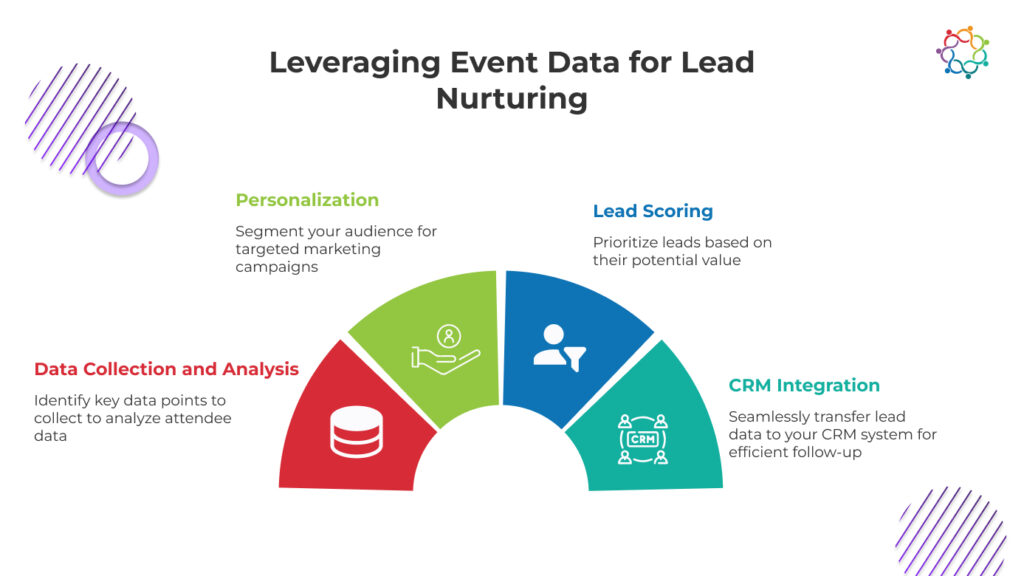
Collecting leads is just the beginning. The real magic happens when you use event data to nurture those leads into loyal customers.
To effectively nurture leads, you need to know as much as possible about them.
Generic follow-ups are a thing of the past. Today’s consumers expect tailored experiences.
Not all leads are created equal, and lead scoring helps you prioritize.
Efficiency is key in lead nurturing, and CRM integrations are your secret weapon.
Technology is only as effective as the strategy behind it. Here are some actionable tips to ensure you’re making the most of your event tech:
Location matters. Position your booths in high-traffic areas to maximize visibility. Think about the attendee flow and ensure your booth is easily accessible.
Draw attendees in with interactive displays, live demos, or mini-games. These not only create memorable experiences but also provide natural opportunities for lead capture.
Whether it’s “Sign Up for Exclusive Updates” or “Book a Demo Today,” your CTAs should be concise and enticing. Offering incentives like discounts or free resources can sweeten the deal.
The event might be over, but the lead generation process isn’t.
Event technology has become a cornerstone of successful lead generation, enabling businesses to collect high-quality data, nurture relationships, and convert opportunities into long-term growth. It’s no longer just about hosting events—it’s about creating memorable, data-driven experiences that leave a lasting impact.
Samaaro, as a leading event marketing platform, empowers you to do just that. With its suite of innovative features—seamless CRM integrations, interactive engagement tools, real-time analytics, and personalized communication capabilities—Samaaro helps you maximize your event’s potential while simplifying the process.
Why settle for average when you can create exceptional? Take the first step toward revolutionizing your event marketing strategy. Book a demo or start your free trial of Samaaro today, and discover how effortless lead generation and enhanced engagement can transform your business.
Continuing Medical Education (CME) plays a crucial role in ensuring that healthcare professionals stay updated with the latest medical advancements and enhance their clinical skills. However, as the healthcare sector faces budget constraints and increasing demand for effective professional development, the need for cost-effective and impactful CME events has never been greater. Whether in-person, virtual, or hybrid, healthcare organizations must optimize the return on investment (ROI) of their CME events to ensure they deliver meaningful value for both attendees and the organization itself.
By implementing strategic planning and leveraging advanced technology, healthcare organizations can maximize the ROI of their CME events, ensuring that every dollar spent results in measurable benefits. Here’s how you can achieve that.
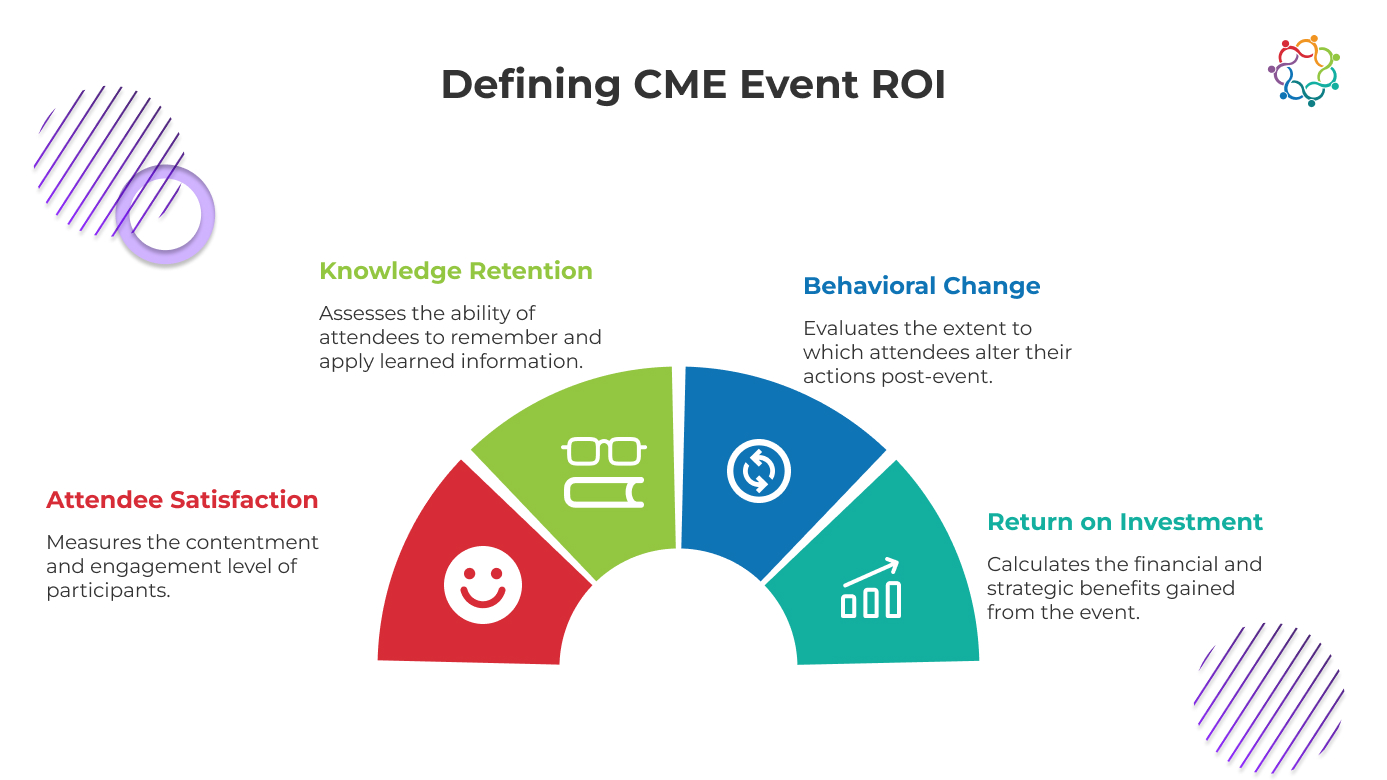
ROI is not just about the financial outcome of an event—it’s about the long-term benefits that CME events bring to healthcare professionals, the organization, and even patient care. Key metrics to assess CME event success include:
While measuring ROI for CME events is essential, it comes with its challenges. Traditional methods often focus on quantitative outcomes, such as the number of attendees or the immediate feedback received, but these alone fail to capture the full impact of the event. The real ROI is seen when you track how attendees apply the knowledge gained to improve patient care or advance their careers.
To truly optimize CME event ROI, healthcare organizations must adopt a strategic approach from the outset. Here are a few key strategies:
Understanding the target audience’s needs is the foundation of any successful CME event. By conducting surveys or interviews before the event, healthcare organizations can identify the specific learning goals of attendees and align the content with their professional development requirements. This personalized approach ensures that the event will be relevant and impactful for each participant.
Allocating resources effectively is crucial to ensuring a high ROI. Identifying cost-saving strategies, such as leveraging in-house expertise or partnering with sponsors, can help minimize expenses. Efficiently managing budgets also involves focusing on the areas that will have the highest impact—whether it’s quality speakers, interactive content, or effective event technology.
Choosing the right event format (in-person or hybrid) can significantly affect your ROI. In-person events offer networking opportunities and hands-on learning but come with higher costs. Hybrid events, on the other hand, can offer greater accessibility and scalability, though they require sophisticated technology to engage attendees effectively. The right format should be selected based on your objectives, target audience, and available resources.
Technological tools like Event Management Software, Learning Management Systems (LMS), play a vital role in optimizing event ROI. These tools streamline event management, improve engagement, and enable personalized learning paths for attendees.
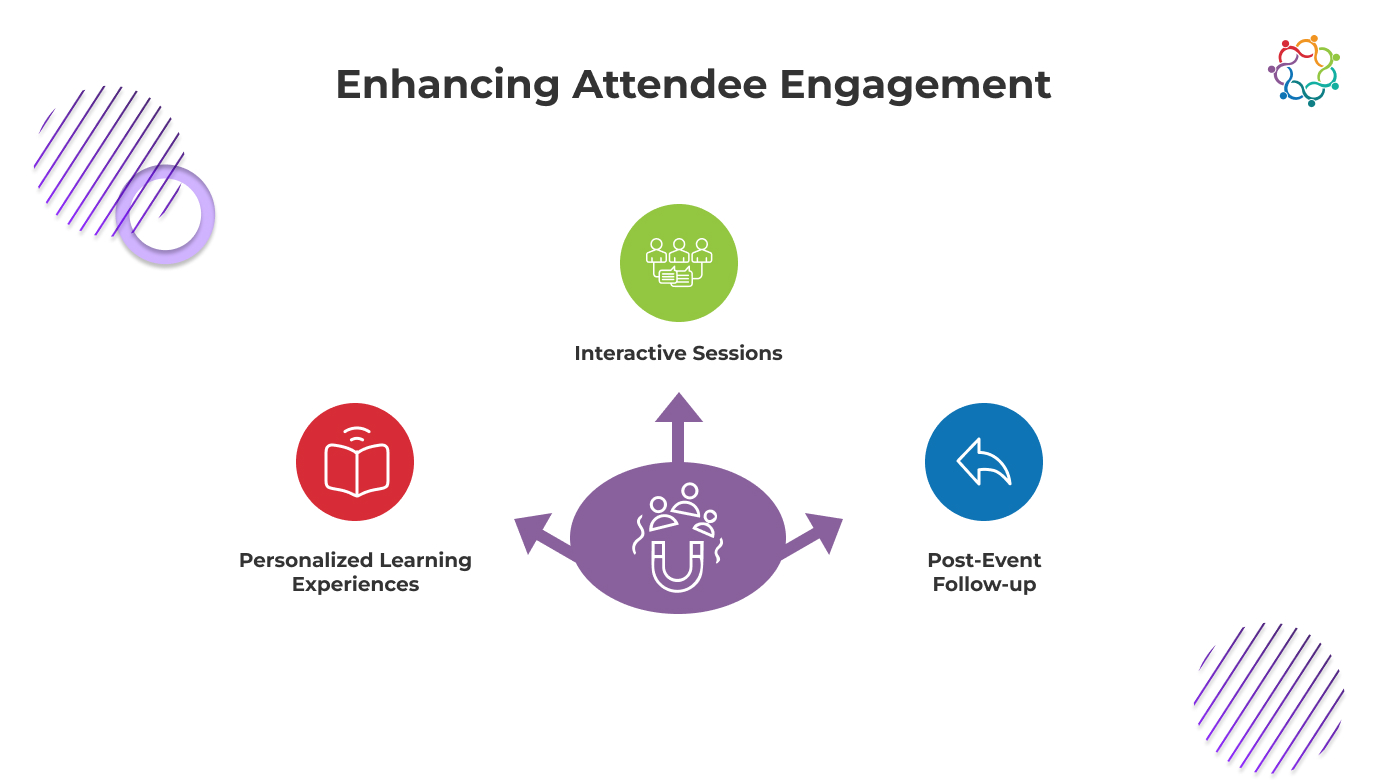
Active participation is key to ensuring knowledge retention and maximizing the ROI of any CME event. Healthcare organizations can boost engagement by offering a variety of interactive elements:
Case studies, group discussions, and hands-on workshops enable attendees to apply what they’ve learned in a practical, real-world context. Additionally, incorporating gamification elements such as quizzes, leaderboards, and challenges helps maintain engagement and incentivizes learning.
One-size-fits-all training sessions rarely work in healthcare. By tailoring the content to individual needs, such as offering on-demand content and self-paced learning options, organizations ensure that every participant can engage in a way that suits them best.
The learning doesn’t stop when the event ends. Offering post-event resources, continuing education opportunities, and networking can extend the impact of the CME event and ensure long-term engagement. Follow-up surveys are an effective way to measure attendee satisfaction, gather feedback, and identify areas for improvement.
To truly understand the effectiveness of CME events, healthcare organizations must track a combination of pre- and post-event metrics:
A baseline assessment helps measure attendees’ knowledge and skills before the event. This sets a benchmark for measuring knowledge retention and behavioral change.
After the event, knowledge retention tests, behavioral change surveys, and attendee satisfaction surveys provide crucial insights into how well the event achieved its objectives.
Tracking long-term outcomes, such as career advancements and improvements in patient care, can help organizations evaluate the true impact of their CME events. This analysis is vital for refining future event strategies.
Using a specialized event marketing platform like Samaaro is essential for optimizing CME event ROI. Samaaro provides the tools necessary to streamline the entire event process, from planning to post-event analysis.
Optimizing the ROI of CME events requires a strategic approach that incorporates effective planning, personalized learning experiences, and the right technology. By focusing on key performance metrics such as attendee satisfaction, knowledge retention, and long-term impact, healthcare organizations can ensure that their CME events deliver substantial value to participants and the organization.
As the healthcare industry continues to prioritize professional development, embracing technology and tools like Samaaro can significantly enhance the value of CME events. Ready to take your CME events to the next level? Try a free trial or book a demo with Samaaro to discover how our platform can help optimize your CME event ROI and create lasting impact.
Continuing Medical Education (CME) events are essential for healthcare professionals, providing opportunities to deepen knowledge, gain new skills, and stay updated on advancements in their field. However, a major challenge in CME is keeping participants actively engaged. Traditional passive learning methods, like lectures, often leave attendees disengaged and struggling to retain the information.
Active learning can be a game-changer here. By introducing interactive elements into CME events, organizers can transform the experience, making it engaging and impactful. Interactive learning strategies are not only proven to boost knowledge retention but also help participants apply new insights more confidently in their practice. With a thoughtful approach, healthcare organizations can create CME events that spark engagement, drive learning, and leave lasting impressions on attendees.
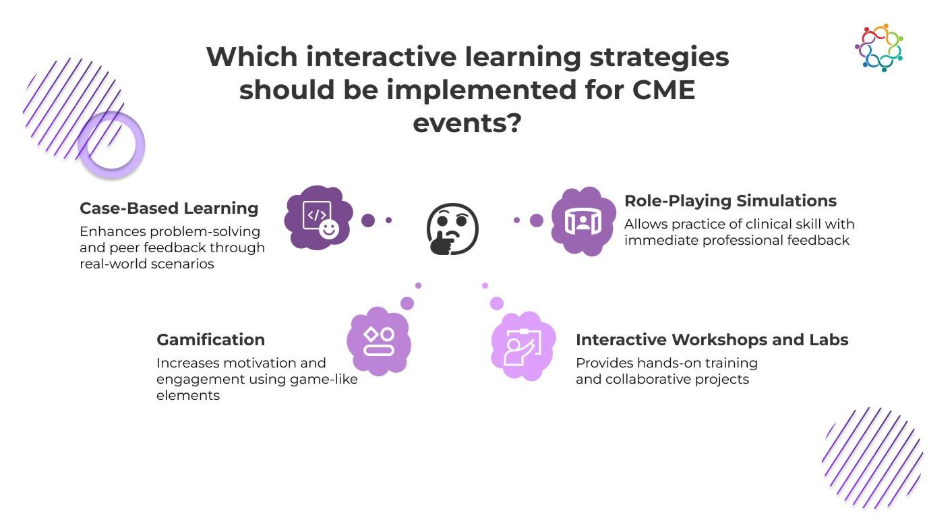
Real-life cases resonate with healthcare professionals because they closely mirror the challenges they face every day. Case-based learning involves diving into real-world scenarios where participants work in groups to solve complex problems. Discussions become lively as people share their insights and strategies, learning from each other in the process.
Beyond just theory, this method emphasizes practical problem-solving skills. Attendees gain feedback from peers and facilitators, helping them see different perspectives and broadening their understanding. Case-based learning makes CME events highly interactive, helping participants connect with content in a way that’s immediately relevant to their work.
In a field where precision and skill matter, role-playing simulations offer an immersive way to practice clinical techniques in a safe environment. Attendees can try out various procedures or handle simulated patient interactions, gaining confidence and expertise with hands-on experience.
Role-playing scenarios also provide immediate feedback from experienced professionals, allowing participants to understand and correct mistakes instantly. These exercises often spark valuable discussions, helping attendees learn not only from the instructors but from each other’s approaches. This type of learning makes CME events memorable and ensures that participants walk away with skills they feel confident applying in real situations.
Introducing game-like elements to CME events adds an element of fun and motivation. Through gamified quizzes, challenges, and leaderboards, attendees are encouraged to engage more actively. The competitive aspect of gamification drives attention and enthusiasm, as participants strive to achieve high scores or complete challenges.
Gamified experiences allow attendees to test their knowledge in a low-stakes environment and receive instant feedback. This strategy keeps participants engaged, makes learning enjoyable, and reinforces key concepts effectively.
Hands-on workshops offer attendees the opportunity to dive deep into specific skills, techniques, or new technologies. These labs are highly collaborative, encouraging group activities where participants can practice together, share insights, and assist each other.
In interactive labs, attendees are not just passive listeners—they’re part of a dynamic learning environment. Working in groups helps build a sense of camaraderie and creates an environment where learning feels like a team effort. Attendees can directly apply what they’ve learned, making it far more likely that they’ll remember and use these skills post-event.
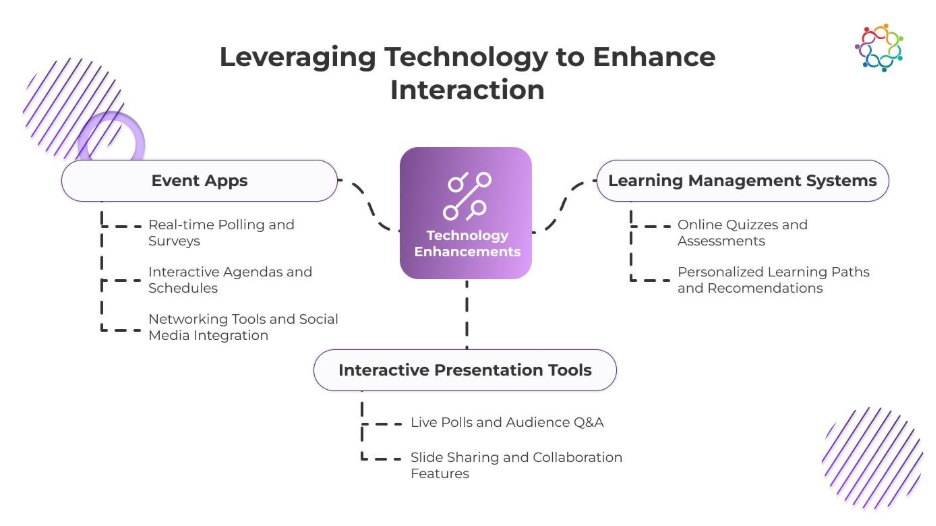
Event apps have transformed the way attendees interact and engage during CME events. With real-time polling, surveys, and Q&A sessions, attendees can provide feedback on sessions instantly. Event apps also enable interactive agendas and networking opportunities, making it easy for attendees to find sessions of interest and connect with peers.
By using event apps like Samaaro, organizers can streamline these interactions, allowing for a seamless experience that enhances engagement without taking away from the event itself.
An LMS allows organizers to offer additional learning resources and assessments online, extending the event’s impact beyond just the event days. Online quizzes and personalized learning paths make learning more structured, ensuring attendees have access to a robust follow-up curriculum. This type of system is invaluable for long-term learning, where attendees can revisit material and strengthen their understanding.
Tools for live polling, Q&A, and collaborative note-taking make presentations far more engaging. Attendees can ask questions in real-time, participate in discussions, and respond to polls to gauge the room’s opinions on various topics. These tools make sessions dynamic and interactive, keeping participants engaged and allowing presenters to adapt based on the audience’s responses.
To gauge the effectiveness of interactive learning strategies, pre- and post-event assessments are invaluable. By comparing attendees’ knowledge and skills before and after the event, organizers can directly measure learning outcomes.
Gathering feedback helps organizers understand how well the interactive elements resonated with attendees. Surveys and evaluations give insight into what worked well and what could be improved. Honest feedback is essential for refining future events and maintaining high standards of attendee satisfaction.
The ultimate goal of CME events is for participants to implement new knowledge and skills in their clinical practice. Tracking how attendees apply what they learned can be done through follow-up surveys or feedback from employers. Behavioral change is a powerful metric that speaks to the true impact of the event.
As CME events evolve, the shift towards interactive learning is redefining the way healthcare professionals engage with content and each other. By incorporating interactive elements, healthcare organizations can foster a learning environment that promotes engagement, enhances knowledge retention, and creates meaningful experiences.
Investing in high-quality CME events isn’t just about meeting educational requirements; it’s about creating learning moments that professionals carry forward in their practice. The future of CME is interactive, immersive, and technology-driven, and event tech platforms like Samaaro make this transformation seamless and effective.
Experience the power of interactive CME events firsthand—sign up for a Free trial or book a demo with Samaaro today to see how experiential learning can elevate your CME event and drive long-lasting engagement.