Samaaro + Your CRM: Zero Integration Fee for Annual Sign-Ups Until 30 June, 2025
- 00Days
- 00Hrs
- 00Min


Hosting events without tracking data is like driving with your eyes closed. You might get there. Probably won’t like how you get there though.
Most planners feel the energy in the room and call it a win. But that feeling means nothing when you need to justify budget to leadership. That’s where data steps in. Data tells the actual story. What worked. What didn’t. Why people came. Whether they’ll come back.
Data-driven event marketing means one thing: making decisions based on numbers, not feelings.
You run an event. You collect data. You analyze what happened. You change what didn’t work. That’s it.
Here’s the difference. A gut instinct says: “That session had low attendance. People weren’t interested.” Data says: “That session had low attendance. It ran from 12-1pm. Everyone was at lunch. We’re moving it to 2pm next time.”
Context changes everything. Without it, you’re just reacting. With it, you’re learning.
Without data, you’re guessing. And guessing gets expensive.
Your boss asks: “Did we hit our ROI target?” Without data, you say: “It felt good.” That doesn’t fly.
Your team asks: “Should we do this event again?” Without data, you don’t know. With data, you can say: “Yes, this event generated 47 qualified leads. Twelve converted. Cost per customer acquisition was $3,400. That’s 30% better than our other channels.”
Numbers make decisions real. They justify budgets. They kill bad ideas before they waste money. They make good ideas even better.
Data shows you four critical things. Whether your investment paid off. How engaged people actually were. What to change for next time. Whether this event moves the needle on your business goals.
You could track hundreds of metrics. Track these instead.
Attendance and Engagement
How many people registered? How many actually showed up? Not the same number usually. Registrations are vanity. Attendance is reality.
But raw numbers hide the real story. Did people stay for the whole event? Thirty minutes? Which sessions got packed? Which ones were empty? A half-empty keynote means something went wrong. Maybe the topic didn’t resonate. Maybe the speaker bombed. Maybe the time slot sucked. You need to know which one.
Engagement goes deeper. Did people ask questions? Visit sponsor booths? Network? Or did they sit in the back and check email? Sitting in the back means they’re not sold on the value. That’s actionable data.
Lead Generation and Quality
Quantity without quality is noise. You captured 200 leads. Great. How many are actually in your ICP? How many have authority to buy? How many are just tire-kickers who wanted free coffee?
Score your leads. A director at a $50M company who asked about pricing is worth more than an intern from a startup. Different leads get different follow-up.
Then measure conversion. You got 200 leads. How many conversations resulted? How many proposals sent? How many deals closed? Trace the line from the event all the way to money in the bank.
Return on Investment
This is the number that matters to CFOs.
Event cost $50K. Leads cost $250 each. One lead converted to a $100K deal. That’s a 2x ROI in year one. But year two, three more deals closed from the same leads. That’s 8x ROI. Make sure you’re tracking long-term.
Don’t just look at direct sales either. Brand awareness has value. Partner relationships have value. Team morale has value. But quantify it somehow. “The event improved brand awareness 15% among our target market.” That’s better than “People seemed to know more about us after.”
Social Media Engagement
Did your event create buzz online? Check mentions. Hashtags. Likes. Shares. If people aren’t talking about it, the event didn’t stick.
Look at sentiment too. Are they saying good things or complaining? “Best conference I’ve been to” hits different than “Long waits and cold coffee.”
Net Promoter Score
Ask attendees one question: “How likely are you to recommend this event to others?” On a scale of 0-10.
Scores of 9-10 are promoters. They’ll tell people to come. Scores of 7-8 are passive. They won’t hurt you or help you. Scores 0-6 are detractors. They’ll tell people not to come.
Your goal is to move detractors into promoters. One simple number tells you if you’re winning or losing.
Attendee Feedback
Numbers tell part of the story. Words tell the rest.
Send a survey. Five questions maximum. “What did you love?” “What fell flat?” “What should we do differently?” Real quotes from real attendees beat any metric. They show you the why behind the numbers. An attendee might say: “The morning sessions were great but the venue was too hot by afternoon.” Now you know to book a better venue or adjust the schedule.
Data only matters if you actually collect it. And you can’t collect it all manually.
Use event management software to track registration and attendance automatically. Who registered? Who checked in? Which sessions got foot traffic? It’s all in there.
Analytics tools show online behavior. Google Analytics tells you where website traffic came from. What pages people visited. How long they stayed. Social platforms show you engagement metrics. Who tagged the event? What hashtags got used?
CRM software tracks leads through the sales pipeline. Lead created at event. Added to nurture sequence. Demo scheduled. Proposal sent. Deal won. Every step tracked. You can see which events generate the best leads by looking at conversion rates.
Use event management and promotion tools to track everything in one place, not spreadsheets scattered across your team.
Having data is worthless if you don’t use it.
Be Clear About Your Goals
Why are you running this event? Lead generation? Thought leadership? Client retention? Revenue? Pick one primary goal. Everything you measure flows from that goal.
If your goal is lead gen, track lead volume and quality. If it’s thought leadership, track brand awareness and media mentions. You can’t be great at measuring everything. Focus on what matters for your goal.
Collect Only What You Need
You could track 50 metrics. You shouldn’t. Track maybe five to seven key metrics that align with your goal.
Tracking too much creates noise. You spend time analyzing data that doesn’t move decisions. Focus on the metrics that actually tell you whether you won or lost.
Use Data to Change
What’s the point of collecting data if you ignore it? If event surveys show attendees hated the venue, book a different venue. If registration page has a 20% drop-off rate at payment, simplify the payment process.
Data isn’t supposed to make you feel better. It’s supposed to make you change.
Measure Event to Event
Every event teaches you something. Your third event should be significantly better than your first. That only happens if you’re using data to improve.
Track the same metrics across all events. Attendance rate. Lead conversion rate. NPS. Now you can see trends. Is attendance declining? That’s a problem to solve. Is lead quality improving? Do more of what’s working.
Events without data measurement are just parties. Events with data measurement are investments.
You track what matters. You see what worked. You change what didn’t. You get better every time.
That’s how you move from “hope the event goes well” to “I know exactly what this event will deliver.”
Ready to build your data strategy? Discover how event marketing and promotion tools work together to track and optimize every metric. Schedule time with us today and see how the right approach transforms your event data into real business outcomes.
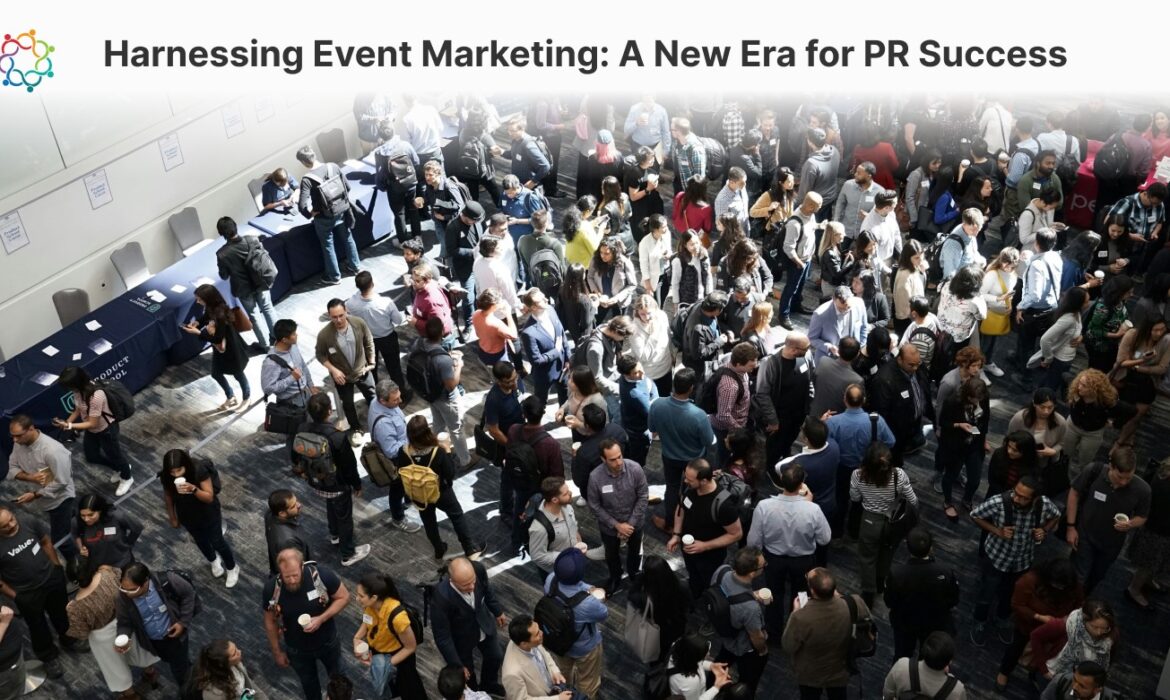
In today’s digital world, traditional PR methods like press releases and paid ads are losing their impact. People are tired of constant brand messages and are becoming more skeptical of polished advertising. They want something real they can experience.
This is where event marketing is becoming a powerful PR tool. Events are no longer just gatherings. They have become immersive experiences that help brands connect with people in a more meaningful way.
From product launches to brand activations, events give audiences a chance to interact with a brand, create memories, and share their experiences. This can build loyalty, generate organic buzz, and turn attendees into brand advocates.
It is no longer just about what a brand says. It is about how it makes people feel.
People Remember Experiences, Not Advertisements
You can send 1,000 press releases. Most get ignored. One event? People talk about it for months.
Why? Because an event is real. People experience your brand with their senses. They feel it. They talk to you. They become advocates instead of just another name on a marketing list.
A press release tells people what you do. An event shows them. Shows them what you actually believe in. Shows them the team. Shows them the product working live.
Two-Way Conversations Actually Happen
Press releases are one-way. You say something. Hope journalists care. Hope customers believe it.
Events are different. You talk. They respond. You listen. You change things based on feedback.
That conversation matters. People trust brands they’ve talked to. Brands they’ve asked questions and got real answers.
One Event Generates Months of Content
Host an event. You get photos. Videos. Attendee quotes. Social media posts from people who showed up. Behind-the-scenes clips. Speaker interviews.
That’s not one moment of PR. That’s months of material you can reuse across email, social media, your website. One event becomes 50 pieces of content.
Attendees share content organically. They post photos. Tag your brand. This user-generated content is worth more than anything your marketing team creates because it comes from real people, not a corporation.
Global Reach Through One Local Event
You host an event in New York. Before, only people who traveled there mattered.
Now? Live stream it. Reach people in 50 countries at the same time. Global partners can join virtually. Media can cover it from anywhere. Your event grows beyond the venue.
That reach compounds. Someone in London watches. Shares with colleagues. Tells their network. One event becomes global buzz.
Visibility Across Every Channel
Media outlets cover events. Journalists attend. Influencers post about them. Industry publications write stories. Your event becomes the story, not something you have to convince people to care about.
This beats press releases because the media chooses to cover it. Not because you asked them to. That choice matters. It signals legitimacy.
One Clear Message Everywhere
At an event, every detail reinforces the same message. Decor. Speakers. Sessions. Activities. Everything points the same direction.
A press release can say one thing. Your website says another. Your ads say something else. Confused audience. Weak message.
Events fix this. Everything aligns. One message. One feeling. One story people leave with.
Use Samaaro’s event marketing and promotion tools to make sure every attendee gets personalized messaging that still reinforces your core story across email, WhatsApp, and the event app.
Investors Get Proof
Investors don’t trust marketing claims. They trust what they see.
Host an event. Investors see real attendees. Real engagement. Real product working. They see data on who came. How long they stayed. What they engaged with.
That’s proof your business works. Data beats a PowerPoint deck.
You Know Exactly Who’s Interested
Press releases reach everyone. You have no idea who actually cares.
Events? You know who attended. What sessions they joined. Which booths they visited. Which questions they asked.
This data tells you who’s a real prospect. Who’s genuinely interested. You can follow up with the right message to the right person.
Your Customers Sell For You
Attendees leave your event and talk about it. They post on LinkedIn. They tell their team. They tell their networks.
This word-of-mouth beats any ad because it comes from a peer, not a company. People listen to peers. They ignore companies.
You give the experience. They do the selling.
Before the Event Starts
Create a hashtag. Promote it. Get influencers involved. Send emails to prospects. Build anticipation.
People should want to attend. Not feel obligated.
During the Event
Live stream key moments. Post photos in real time. Let attendees share what’s happening. Create energy that makes people want to be there, even online.
After the Event Ends
Recaps. Thank yous. Video highlights. Share attendee testimonials. Keep the story alive.
The event itself is one day. The PR from it lasts months if you do this right.
Manually managing all this is impossible for large events. You need tools.
Event platforms handle registration. Check-in. Communication. Analytics. They track who engaged with what. They help you send personalized messages. They measure ROI so you can prove the event worked.
Without these tools, you’re back to guessing whether your event helped. With them, you see exactly what happened. Exactly what worked. Exactly who’s a real prospect.
Microsoft holds Ignite. Thousands of IT professionals show up. Newsrooms cover it. Media writes about it. It becomes essential.
Salesforce holds Dreamforce. Industry leaders speak. Attendees network. Partnerships form. The event becomes where the industry gathers.
Both created community. Both created stories. Both became industry fixtures.
That’s what event marketing does. It moves your brand from “company trying to sell us something” to “place where real things happen.”
Event marketing isn’t a new idea. But it’s finally become the main strategy instead of a side tactic.
If your PR strategy is still press releases and ads, you’re behind. Everyone’s doing that. No one cares.
Events create real engagement. Real stories. Real buzz.
Request a demo from Samaaro to see how to run events that generate actual PR results. Or start with your next event and measure what happens. You’ll see the difference immediately.
How is event marketing different from sending press releases?
Press releases are one announcement you send to journalists hoping they care. Events are real experiences where people interact with your brand directly. People remember experiences. They delete press releases. One event generates more PR impact than 100 press releases ever will.
How does one event create content for months?
During an event you get photos, videos, attendee quotes, social posts, speaker clips, and testimonials. After the event you can reuse all this content in emails, blogs, social media, and ads for months. One event becomes 50 pieces of usable content.
Why does live streaming an event matter for PR?
Live streaming lets people join from anywhere globally. If you’re in New York but people in London watch live, your event reaches 50 countries simultaneously. People watching online can still share and engage, extending your reach beyond the physical venue.
How does content attendees create help your PR more than content you create?
When an attendee posts a photo of your event, people trust it more than when your company posts the same photo. Attendees are real people, not a corporation trying to sell something. Third-party endorsement always beats self-promotion.
How do you keep the PR momentum going after the event ends?
Send thank-you emails. Create video highlights. Share attendee testimonials. Post recaps on social media. Keep using the event hashtag. The event itself is one day but the PR lasts months if you continue the story after it ends.
How do you measure whether an event actually helped your PR?
Track media mentions before and after. Count social media engagement. Measure website traffic spikes. Track leads that mention the event. Measure newsletter signups or follow-ups. Good event software gives you all this data automatically so you can prove the event worked.
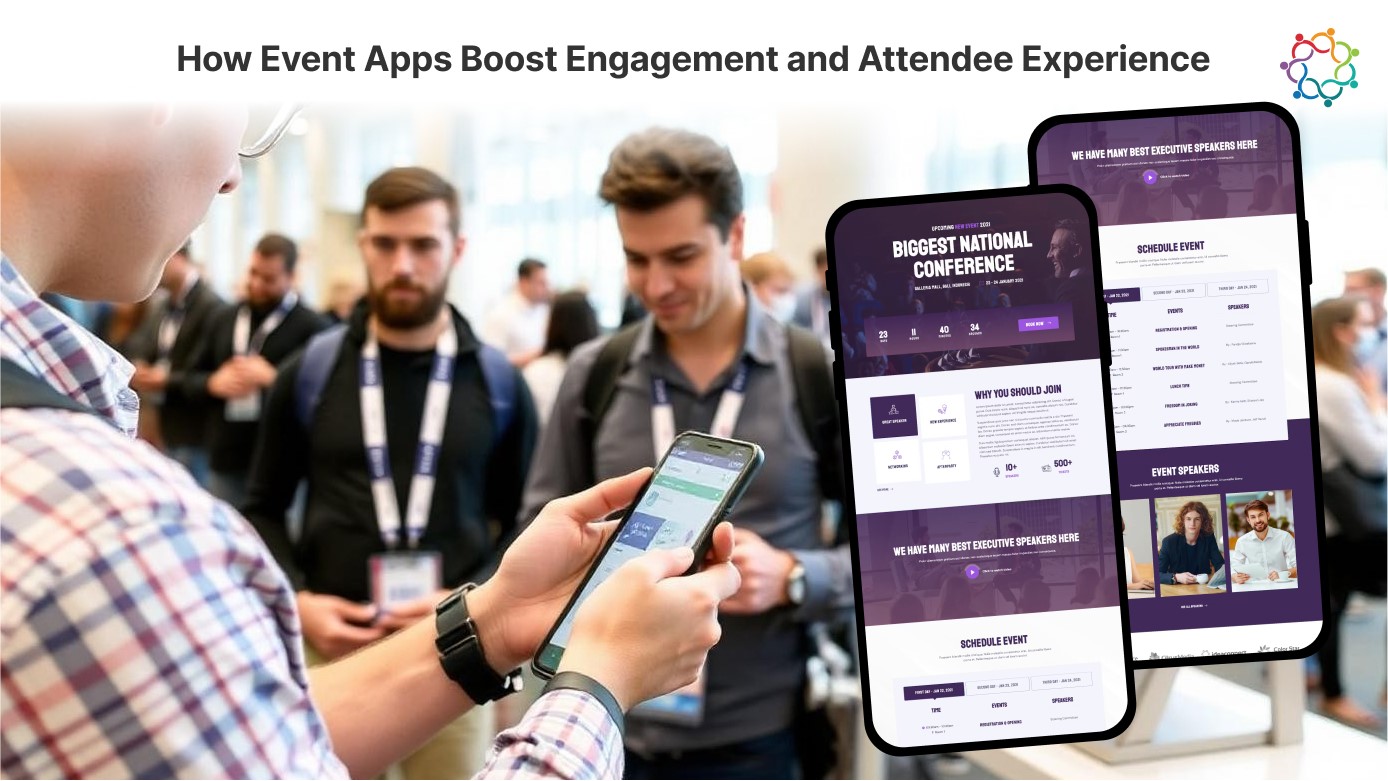
Event apps have come to be an important digital tool for fostering attendee interaction and enhancing the experience of events in today’s digital age. Event apps can enhance the event experience, providing commonality for accessing information and engaging in activities that were not previously possible with documentation and email updates, as well as enabling networking opportunities for attendees.
Finally, we need to create a memorable and engaging experience for attendees in a world of competition, after all, it is important we make it worth their time to attend. Here, we will discuss a few strategies for creating an engaged audience, which resulting in a memorable experience.
Tailored Content and Recommendations
Event apps can capture attendee data: registration data, last point of attendance, session preferences (i.e. topics of interest) and create discoveries and recommendations based on the attendee’s experience. In turn, attendees then receive valid and meaningful content and information based on their information. A good example would be an app creating recommendations for sessions based on attendees’ job title, industry, or previous attendance at events.
Networking and Connection
Event apps have functions to connect attendees to one another, and foster relationships. Attendees can build profiles that include information about their interests, their expertise, and their company. Each attendee profiles allow the attendees to search for other attendees with similar interests or attendees that plan to attend specific sessions. With access to an event app, attendees can start conversations, schedule meetings, and participate in group chats that will assist in networking and forming meaningful relationships.
Providing Time sensitive Updates and Information
An event app can provide time sensitive updates to help keep attendees informed with everything from the event schedule and information about the speakers and sessions changes to important instructions about the event. Just for the convenience of having the most up-to-date and current information, attendees can use an app to maximize their time. An event app can also provide more than time sensitive updates. An event app could also facilitate push notifications to allow for important information or announcements to reach attendees in real time. Another way to maximize the time to keep the attendees focused on the event is for an event app to provide session reminders so attendees can remember when sessions are and plan their time accordingly.
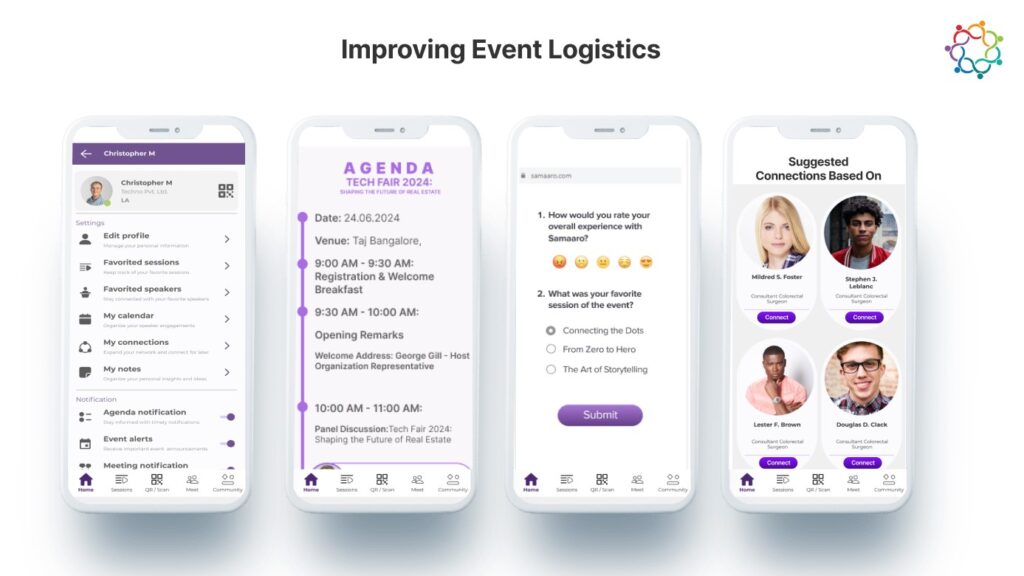
Improving the event logistics will aid in allowing for a seamless event experience and maintaining attendee engagement, happiness and positive overall event atmosphere. When you appropriately plan and make improvements with event logistics like registration, attendee check-in, and managing on-site logistics, lead to decreased stress, creating efficiencies, and contribute to the overall vibe of the event experience for the attendees. In this section, we discuss how optimal event apps can help you improve logistics and more so in a complimentary way to the attendee experience.
Improving Registration/Check-In Process:
Events apps can help maximize efficiencies and provide time savings during the check-in and registration process for attendees, ultimately minimizing wait times for attendees and improving the overall event experience. Instead of attendees registering in person at the event, they could register online with an event app and receive digital badges upon checked-in, confirming they registered properly. This eliminates paperwork and gets the attendees checked in. This enables savings for both attendees and staff while minimizing errors and maximizing efficiency.
Providing Simple Access to Event Schedules and Agendas:
Event apps can provide attendees with clear visibility to schedules, agendas, and even speaker information available in advance. This allows attendees to plan out their time, identify sessions they want to attend and make sure they do not miss events they would prefer to attend. Moreover, event apps can utilize features like interactive maps to assist attendees in finding their way around the venue, and to assist with finding where sessions are occurring.
Providing Contactless Payment and Ticketing:
By providing contactless payment via mobile app functions and ticketing digitally, organizations can not only assist staff and vendors with processing transactions and reducing lines, but it makes it a much more convenient and efficient experience for the attendee, especially in crowded environments. Contactless payments also help to eliminate fraud and improve security.
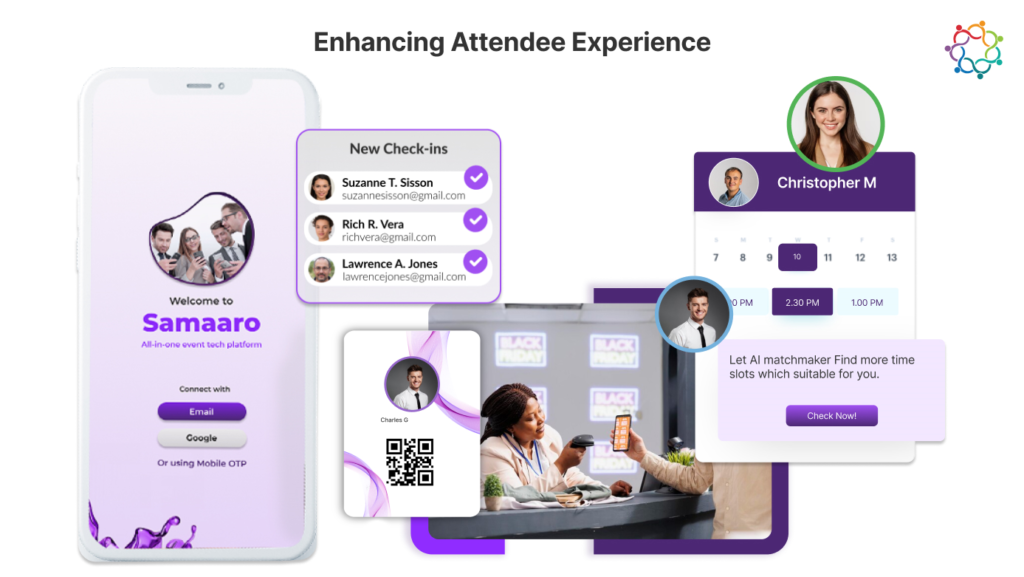
Attendee experience is a crucial aspect of any event’s success, and event apps can maintain attendee satisfaction by providing additional experiences and value in terms of personalized features; they can assist in organizing and providing access to resources and valuable information. By providing services and stakeholder resources, and emphasizing these key themes, we would help to improve overall attendee experience and even yield disciplines of high engagement or long-term re-engagement.
Providing Invaluable Content and Resources:
To improve the experience of attendees, event organizers should consider providing attendees with a resource portal or content that is relevant and unique, in addition to the basic event information. The potential material may include slide presentations and speaker presentations, handouts and additional material, recordings of major sessions, and unique materials which include interviews with speakers and behind-the-scenes content.
Providing a Streamlined and User-Friendly Experience:
A well-designed event app needs to ensure that attending members can access and use it without confusion. Considerations of navigation, branding consistency, mobile optimization, and accessibility are important. A well-developed event app needs to improve the event experience by enabling attending members to quickly find information, easily navigate from section to section in the app, and use the features of the app without hitting obstacles.
Providing Target Layers of Support and Help:
To enhance the overall experience for your attending members and demonstrate good customer service, you can also provide support and help features in your app that can assist attendees, if they have inquiries and/or are experiencing issues while using the app. Use live chat in your app that provides users with immediate help, develop a FAQ that incorporate questions or concerns that came up in previous events, and have accessible contact information for personnel and/or organizers to clarify any questions.
4. Measuring App Effectiveness
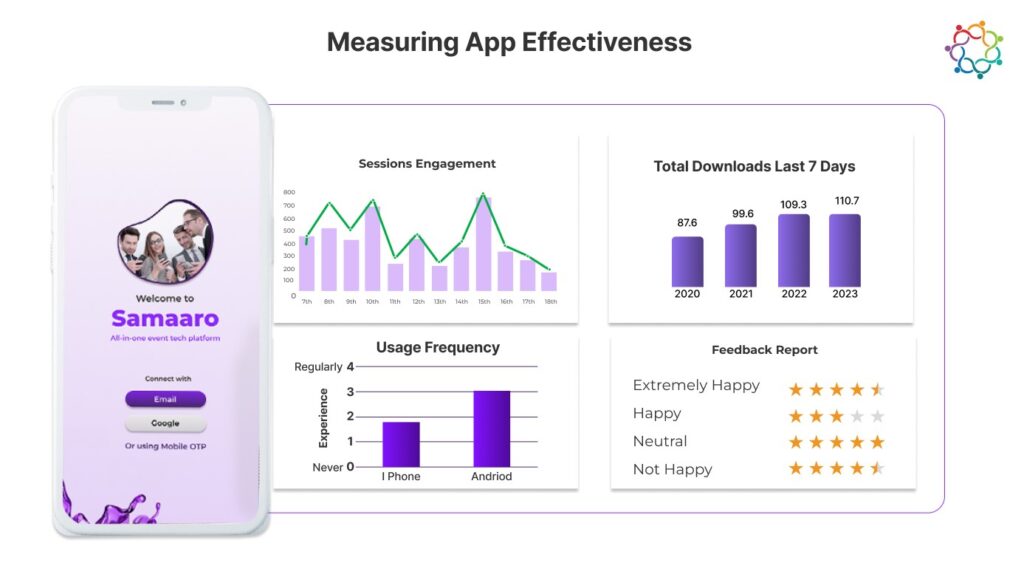
If you want to assess your event app effectiveness, or identify areas for improvement, it is important to capture key metrics and assess usage data. This section covers key metrics to track and offers suggestions for evaluating your app data to ensure you’re on track with event app strategy.
Key Metrics to Track:
To determine the effectiveness of your event app, you should track key metrics that provide data on app usage and event attendee engagement. Metrics help you assess ways that attendees are using the app, areas of improvement, and determine the impact of the app on event outcomes. Examples of some key metrics are app downloads, usage frequency, amount of time spent in the app, user feedback, usage of app features, rate of session attendance, and the amount of networking activity.
Evaluating Data to Optimize App Features:
Using the key metrics you have identified, you can derive insights from them to determine app performance and recognize areas for improvement. Data may help you recommend what content better fits attendees, improve ease of use by fixing difficulty and minimizing navigation, identify impact from usage data to prioritize feature development, and determine the return on investment (ROI) for your app.
Event apps are an integral part of providing engaging attendee experiences and improving attendee experiences overall. Giving personalized content, improving logistics and providing great features are some of the ways an event app can help you provide memorable and successful events. If you follow the best practices suggested in this guide, you can use event apps to successfully enhance your events and develop attendee satisfaction.
Are you ready to enhance your events? Book a demo and start your free trial!
Humans are wired for stories. From ancient cave paintings to modern blockbusters, narratives have the unique ability to tap into our emotions, spark our imaginations, and imprint themselves on our memories. In a world overflowing with content, stories cut through the noise. They make information relatable, spark curiosity, and leave a lasting impression. Event marketing, too, thrives on connection.
Ever attended an event that stayed with you long after the final presentation? Perhaps it wasn’t just the informative content or the impressive venue. Maybe it was the way the event unfolded like a captivating story, weaving together insights, emotions, and a sense of shared purpose. In today’s digital age, bombarded with information overload, stories are the lifeblood of capturing and holding attention. This is where event marketing and storytelling converge, creating a powerful force for forging deeper connections with your target audience.
The Impact of Storytelling
Events provide a platform for interaction, education, and community building. But what truly elevates an event from informative to impactful? Integrating storytelling into your event marketing strategy is the key. By weaving a compelling narrative, you can:
Stories are inherently engaging. They draw audiences in, ignite curiosity, and encourage active participation. People are more likely to remember information presented within a narrative framework.
Stories evoke emotions. By tapping into emotions like excitement, hope, or inspiration, you can create a deeper connection with your audience, generating brand loyalty and trust.
Stories are sticky. Compelling narratives leave a lasting impression, making your event stand out in the crowded event landscape and ensuring the attendees remember your key takeaways long after the event ends.
The Science Behind Storytelling

The power of storytelling in event marketing goes beyond mere entertainment. Neuroscience research reveals that stories trigger specific brain responses, enhancing memory retention and emotional connection. One popular storytelling trick is called the “hero’s journey.” It’s basically a story structure that everyone can understand. It has a clear main character who faces challenges and overcomes them, changing for the better in the process. This kind of story makes people excited about the positive changes your event can bring.
How to Craft a Compelling Story for Your Event
Your event has the potential to be more than just a gathering; it can be a transformative journey. To capture hearts and minds, craft a compelling story that resonates with your audience. Here’s your roadmap:
1. Find Your Core:
Identify the central theme or message you want your event to convey. What problem are you solving? What transformation do you promise?
2. Define Your Characters:
Who are the key players in your event story? The attendees are not just passive observers; they are the heroes of their own event journey. Highlight your speakers as inspiring guides and your organization as a trusted partner in their pursuit of knowledge and growth.
3. Conflict and Transformation:
Every good story has an obstacle to overcome. What challenges will your event address? How will it equip the attendees to overcome these hurdles and achieve their goals?
4. Embrace Authenticity:
The most powerful stories are those that ring true. Don’t fabricate narratives; find the authentic stories within your brand, speakers, and attendees.
5. Build Anticipation:
Tease out your event story through pre-event marketing campaigns. Use social media to share snippets of speaker anecdotes, attendee testimonials, and sneak peeks at the event experience. This will create excitement and a sense of anticipation in your audience.
How to Enhance Your Storytelling

Storytelling isn’t just about sharing information; it’s about creating connections and leaving a lasting impression. Here’s how to elevate your event marketing with the power of narrative:
1. Choose the right storytelling channels:
Where does your target audience spend their time? It is important to tailor your stories to the platform. While on Twitter, keep it concise with visuals and quotes. But on Instagram, showcase the event’s energy with photos and behind-the-scenes glimpses. Meanwhile, use email marketing for personalized narratives highlighting relevant sessions and testimonials for social proof.
2. Practice storytelling:
Successful storytelling takes practice. Start small with social media posts that introduce a problem, your event’s solution, and evoke emotion. Pay attention to captivating stories and find the authentic narratives within your brand, speakers, and attendees. The more you practice, the more comfortable you’ll become in weaving a narrative that resonates with your target audience.
3. Refine your message:
Gather feedback on your storytelling efforts. Ask colleagues, potential attendees, or even past attendees for their impressions. You should know if your stories are clear, engaging, and resonating with your target audience. So, use this feedback to refine your message and ensure your stories are truly captivating.
4. Embrace Measurement:
Track the effectiveness of your storytelling. Analyze the key metrics across different channels, like website traffic, social media engagement, and event registrations, to understand how your stories are impacting your event marketing goals. Find out if your storytelling efforts led to increased brand awareness, higher registration numbers, or more positive attendee feedback. This data will help you refine your storytelling approach and optimize your event marketing campaigns for future events
How to Integrate Storytelling with Marketing Channels
Storytelling is not confined to a single channel. It can be integrated seamlessly across your entire event marketing strategy:
1. Event Descriptions:

Craft a captivating story that breathes life into your event website and promotional materials. Instead of simply listing features, focus on the “whats”:
Paint a picture of the attendee’s journey, from the initial spark of curiosity to the post-event feeling of empowerment. All the while, use evocative language and powerful verbs to create a sense of excitement and anticipation.
2. Social Media Storytelling:
Social media platforms like Twitter and Instagram are perfect for sharing bite-sized stories with captivating visuals. Here are some ways to take full advantage of them:
3. Email Marketing with Flair:
Move beyond generic announcements and craft captivating email sequences that tell the story of your event. Here are some tips:
4. Press Releases and Media Outreach

Use captivating narratives to garner media attention and secure valuable coverage. In fact, tell the story about your event and the impact it aims to create.
Make sure to use engaging language, highlight the unique elements of your event, and offer interview opportunities with key speakers.
5. Storytelling at the Event:
Don’t let the story end with the pre-event hype. Integrate storytelling elements into the event itself:
How to Engage the Audience with Visual Storytelling
While words paint a powerful picture, visuals can truly elevate your event storytelling. Here are some ways to incorporate visual storytelling for impactful event marketing:
Invest in professional photography and videography that captures the essence of your event. Show, don’t tell. Because images and videos can showcase the energy of past events, highlight engaging speakers, and give the potential attendees a sneak peek at the experience that awaits them.
Transform complex information into engaging and easily digestible infographics or data visualizations. This is a fantastic way to present key takeaways from past events or showcase the impact your events aim to create.
Attention spans are short on social media platforms. Therefore, it’s a great idea to use eye-catching graphics, memes, and GIFs and tell your event story in short, visually captivating bursts.
Create a live social media wall at your event where the attendees’ photos and tweets are displayed in real-time. This not only creates a sense of community but also allows you to visually capture the energy and excitement of the ongoing event.
Explore interactive storytelling tools like quizzes, polls, and augmented reality experiences to engage your audience on a deeper level. As a result, it will allow the attendees to actively participate in your event story and create lasting memories.
The Ripple Effect: Storytelling Beyond the Event

The power of storytelling in event marketing extends far beyond the event itself. Here’s how to leverage event narratives to create a lasting impact:
Don’t let the story end with the closing keynote. Share event highlights, speaker insights, and attendee testimonials through blog posts, social media content, and email campaigns. This keeps your audience engaged, maintains brand awareness, and positions you as a thought leader in your industry.
Use your event experiences to build lasting relationships with the attendees. Personalized email sequences that reference their participation and offer valuable post-event resources demonstrate your commitment to their growth. That’s why it is crucial to make the most of the event’s networking opportunities and create connections that extend beyond the event itself.
Events provide a platform for creating a community around your brand. Encourage the attendees to share their event stories on social media, host online forums for ongoing discussions, and organize follow-up events to keep the conversation flowing.
Conclusion
By embracing storytelling, you can transform your event marketing from merely informative to truly impactful. It allows you to connect with your audience on a deeper level, forge emotional connections, and create a lasting impression. So, weave your narrative, craft your message, and captivate your audience with the magic of storytelling.
Ready to elevate your events? Book a demo and start your free trial today!
Events offer amazing opportunities to network, learn, and build relationships, but it can be very challenging nowadays at a rapid-fire pace with many distractions, to involve people in an event. For event planners and event organizers to plan an event for best outcomes, it is important to be thinking about engagement in all three phases of an event; before, during, and after.
In this detailed guide, you will learn engagement practices for event engagement in all three phases, allowing event planners to create experiences that will remain unforgettable in the minds of participants.
Social media is a great way to create excitement before your event. In addition to previews of the event, you can interact with your audience by creating your concepts where they involved. Use polls to get the audience engaged about the event topics and share user-generated content that engages your audience. Use event hashtags to start conversations about the event topic. When you engage discussions with your audiences’ weeks before the event, you build excitement and create a community excitement that not even time can destroy before the event.
Work with event speakers and/or partners to create teaser campaigns. Use video or GIF clips that shows the speakers talking about their sessions and your partners bragging about themselves. Don’t forget to use countdowns carefully, and combine them with exclusive announcements, previews or behind the scene’s content to create gradual excitement every day leading up to the event. Provide Attendees Early Access and/or Incentives
One approach to creating incentive for early registrations is early access to keynote speakers, limited seating seminars or early access to several key events. Also you create a promise of exclusivity and value by registering your audience early and offering some exclusive packages, digital assets or discounted access to partners’ Programs.
It is one of the best ways to be fun and engaging with people leading into and event and promoting engagement – with topical and engaging webinars or panel discussions with your headline speakers – that could be nothing, you could even ask for your audience to submit a question and/or topic beforehand and allow the audience to shape the discussion live. Use all your channels to encourage the streaming of your webinars or consider allowing them to remain available as an on-demand event for those that can’t attend live!
Sending e-DMs about your event is less of an event communication opportunity to both your attendees but not the opportunity to showcase profile stuff about your presenters, session stuff and teaser imagery of the venue and destination. Inevitably could add in a degree of interactivity, such as inquiry buttons, interactive maps, personalized scheduling etc to fill some of the event design type things we were unable to deliver, as we are unable to engage as much virtually.
While delivering engaging sessions is a requirement for content alone, it is very important that you ensure you are providing variety in each type of learning session; interactive demonstrations, roundtables, hands on workshops etc, providing space for participation and feedback, and learning through application to ensure engagement of your audience and successful and unique learning experience. Encouraging participation by attendees
In meetings with an opportunity to ask questions, live polling and live discussions/forums allow attendees to present their own perspectives and questions, and they can be connected, where possible to presenters to enhance the overall experience through interaction, which is important for engagement and personalization.
Consider using different professional gamification elements or elements such as leader boards, scavenger hunts, and interactive activities regarding engagement during the session. This works to provide a reward for the attendees for being engaged participants throughout the event, through points that allow them to redeem exclusive offers or prizes.
Build networking opportunities that align with the interests or industries of the attendees. Many event apps have matching algorithms will be able to provide suggestions and make connections for networking opportunities to facilitate meaningful conversations.
Utilize an event-specific app or platform, this will allow participants to create their own custom schedules and fully participate in live discussions, share ideas, and ask questions in real-time discussions. Ensure the app has interactive maps, live polling and rates for sessions to enhance the experience.
Create email follow-ups to the event that have gratitude and appreciation while embedding personalized highlights based on the interests of each attendee.In addition to enhancing the post-event messaging component, you could also include links to resources, recordings or other relevant materials shared at the event to increase value.
Compose an all-encompassing content plan for post-event messaging. Share behind-the-scenes content, event highlights, keynote presentations, organic testimonials from attendees, and previews to newsletters or social feeds. Bebuild engaging content and offer value with blog recaps, video recaps, infographics, etc.., and increased engagement and reach.
Implement comprehensive post-event surveys, or questionnaires to elicit meaningful feedback about a series of elements and facets of the event, such as programming, networking opportunities, logistics, and attendee satisfaction. Use this feedback for future event improvement.
Provide attendees with access to view recordings from sessions, presentation slides, whitepapers, and the prepared resources initially shared through the event itself to access at their convenience. Provide attendees with a common space, or resource hub, to regroup or refocus their learning after the event.
Begin conversations on social media or relevant online communities about the thematic content at the event. Invite attendees to leverage the ongoing networking opportunities and share their own experiences and key take aways. Force attendees’ engagement with future resources, conversations or unique offerings to continue momentum and connections made on-site.
Event engagement is a cycle of ongoing creativity, personalization and recognizing what the attendees want and need for the experience. With above and Samaaro event organizers can create meaningful experiences, and in person event success.
Start planning your event marketing strategy today and discover the potential to connect with your audience in a meaningful and impactful way. Ready to elevate your events? Book a demo and start your free trial today!
Tradeshows can be a powerful platform for businesses to showcase their products or services, network with industry professionals, and generate leads. However, with thousands of exhibitors vying for attendee attention, it’s essential to avoid common mistakes that can hinder your success. This guide will highlight key pitfalls to watch out for and provide strategies for a successful tradeshow experience.
By investing time and effort into the planning and preparation stages, you can lay the foundation for a memorable and impactful event. Effective planning ensures that all aspects of your tradeshow, from booth design to marketing efforts, are well-executed, maximizing your chances of success. This section will highlight the common mistakes that can hinder your success and how to avoid them.
Failing to promote your tradeshow presence well in advance can have serious consequences. Not only can it lead to low attendance, but it can also limit your ability to connect with potential customers and partners, reduce your return on investment, and miss out on valuable networking opportunities. By starting your pre-event marketing efforts early, you can build anticipation, attract a larger audience, and increase the chances of achieving your desired business goals.
Avoid setting overly ambitious goals for your tradeshow participation. Instead, focus on realistic expectations based on factors such as your company’s size, the industry and target audience, previous tradeshow performance, and the overall event’s reputation and attendance. Setting achievable goals will help you avoid disappointment and focus on making gradual progress towards your objectives.
Failing to prepare your staff with product knowledge, effective communication skills, and customer service training can negatively impact your booth’s success. Ensure your team is equipped to engage with the attendees, answer questions, and address any concerns. Provide them with comprehensive training in product knowledge, sales techniques, customer service, and company culture and values.
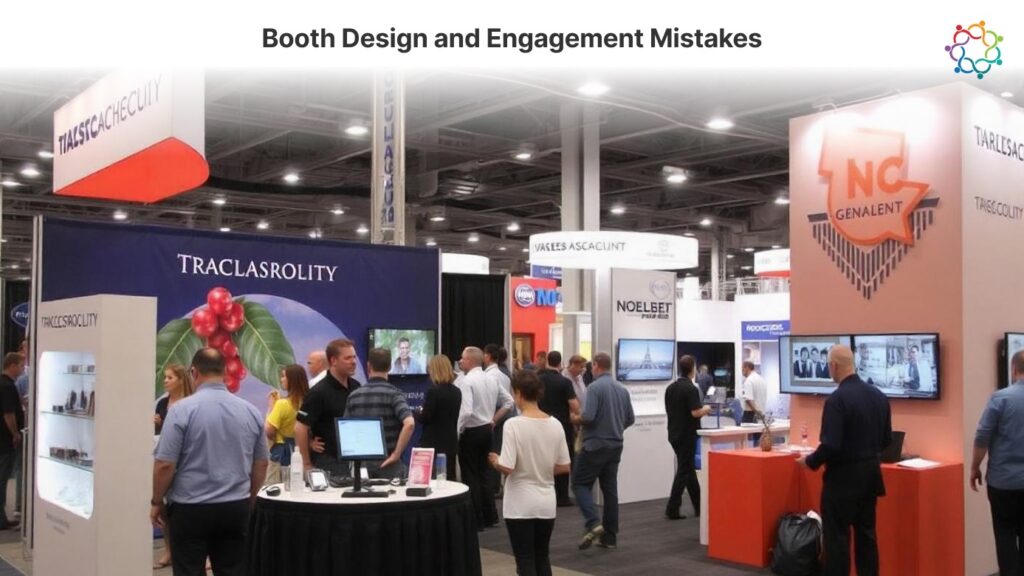
A visually unappealing or poorly organized booth can significantly impact your success at a tradeshow. That’s why it’s important to create a memorable and effective booth to attract attendees, encourage engagement, and create a positive impression of your brand. This section will highlight key pitfalls to watch out for and provide strategies for creating a memorable and effective booth experience.
A lackluster booth design can fail to capture attendee attention and interest. Instead, focus on creating a visually appealing and engaging booth that reflects your brand identity and invites attendees to interact with your products or services. To create a memorable and effective booth, focus on visual appeal, clear signage, efficient layout, interactive elements, consistent branding, comfort and functionality, and accessibility.
Avoid simply setting up a booth and waiting for attendees to come to you. Actively engage attendees by initiating conversations, offering demonstrations, or providing valuable content. By personalizing your interactions and tailoring your approach to each attendee’s needs, you can create a more memorable and impactful tradeshow experience.
Incorporate interactive displays, demonstrations, or activities to make your booth more engaging and memorable. This could include hands-on product demos, interactive games, touchscreen displays, or virtual reality experiences that engage attendees effectively and make your booth stand out.
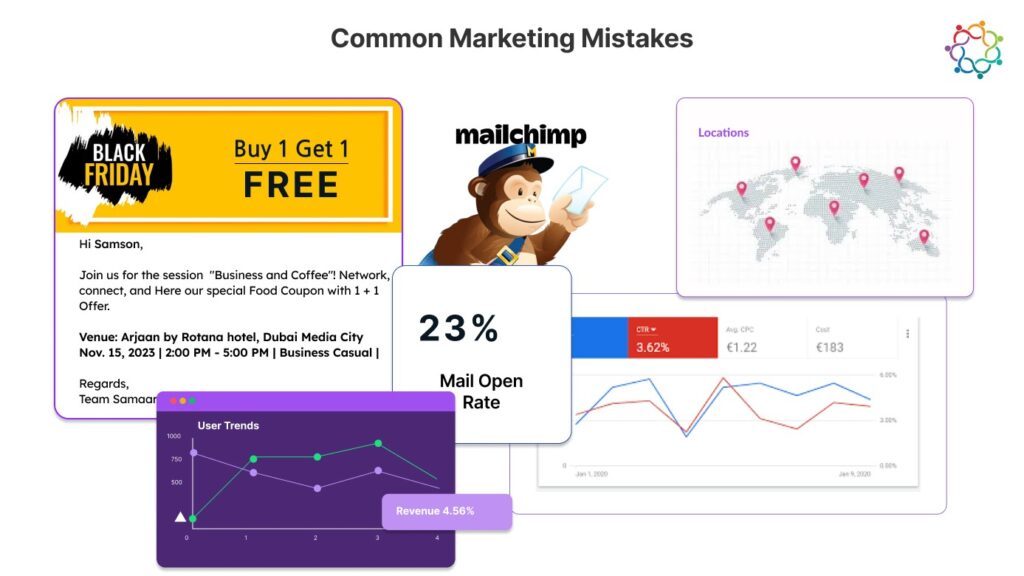
When planning and executing a tradeshow, it’s essential to avoid common marketing mistakes that can hinder your success. By understanding and addressing these pitfalls, you can optimize your efforts and achieve maximum impact. This section will delve into some of the most common marketing mistakes made by tradeshow exhibitors and provide strategies for avoiding them.
While traditional marketing channels can be effective, relying solely on them can limit your reach and engagement. You need to incorporate digital marketing strategies to reach a wider audience, target specific demographics, and track the effectiveness of your efforts.
Leverage social media to build relationships with potential attendees, email marketing to send targeted email campaigns to your existing database, and content marketing to publish valuable content and establish yourself as an industry expert.
Social media platforms offer a powerful way to connect with your target audience, build brand awareness, and generate excitement for your tradeshow presence. Therefore, interact with potential attendees by responding to comments, messages, and questions promptly. Make sure to create engaging content, use relevant hashtags, and offer incentives to maximize your reach and encourage participation.
Without proper tracking and analysis, it’s difficult to assess the effectiveness of your tradeshow marketing efforts. Use analytics tools to monitor key metrics such as website traffic to gauge interest, social media engagement to measure the impact of your social media campaigns, and ROI to track lead generation. This data will help you identify areas for improvement and optimize your future strategies.
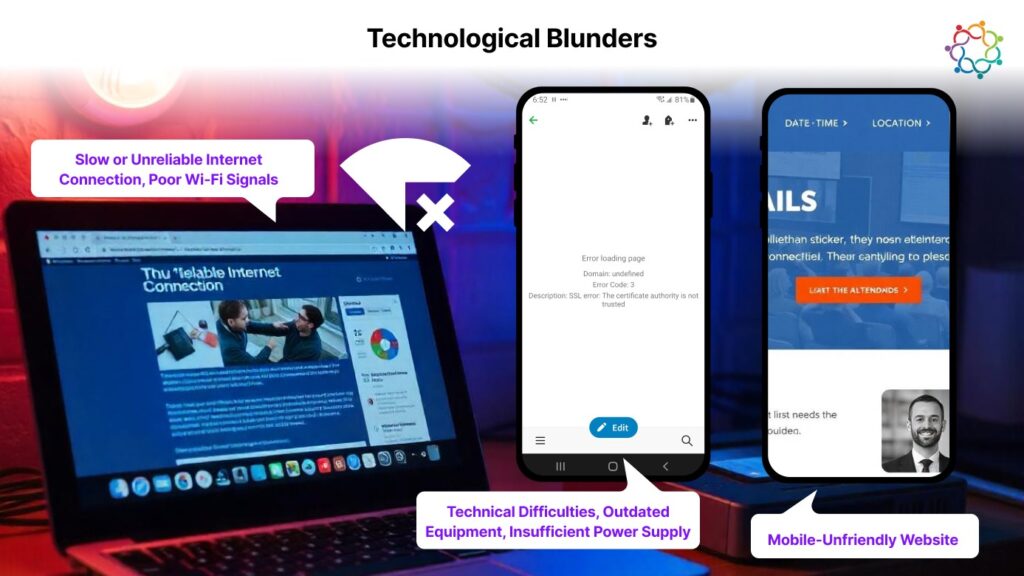
When planning and executing your tradeshow, it’s essential to avoid technological blunders that can disrupt your booth operations, frustrate attendees, and hinder your overall success. This section will highlight common technological mistakes and provide tips for preventing them.
Outdated equipment, insufficient power supply, and network connectivity issues can disrupt your booth operations and frustrate attendees. Ensure your technology is up-to-date and reliable, with adequate power sources and a strong network connection to avoid technical difficulties and provide a smooth event experience.
A slow or unreliable internet connection can cause significant problems at tradeshows. Poor Wi-Fi signals, network congestion, and data usage limits can all lead to delays, frustrations, and disruptions. It’s essential to have a strong and reliable internet connection to ensure smooth operations and a positive attendee experience.
Lack of mobile optimization can hinder your ability to reach and engage with attendees. A website that is not optimized for mobile devices may be difficult to navigate and use on smartphones and tablets, leading to a decrease in engagement and interest. By ensuring your website and marketing materials are mobile-friendly, you can reach a wider audience and provide a better user experience.
Conclusion
By avoiding these common mistakes and implementing effective strategies, you can ensure a successful tradeshow experience and maximize your return on investment. Remember to plan ahead, design a memorable booth, engage with attendees effectively, and leverage technology to enhance your presence. With careful preparation and execution, you can stand out in a crowded tradeshow environment and achieve your business goals. Book a demo and start your free trial today to take your tradeshow strategy to the next level!
Imagine pouring your heart and soul into planning an event, but the impact is unclear. Were your efforts a hit, or a miss? This happens all too often when event organizers fail to track and measure success. But it is possible to overcome this situation. By focusing on Key Performance Indicators (KPIs), you can transform your event from a guessing game into a data-driven triumph.
The challenge for event organizers lies in accurately gauging the impact of their efforts. Did your marketing campaign reach the right audience? Were attendees engaged during the event? Without measurable data, it’s impossible to answer these questions and improve future events.
KPIs are the solutions for these problems. They provide valuable insights into various aspects of your event, allowing you to identify strengths, weaknesses, and areas for improvement.
Tracking KPIs unlocks a treasure trove of benefits. It lets event organizers maximize return on investment (ROI), boost attendee engagement, and plan future events with laser focus. KPIs equip you with the knowledge and power to achieve these goals and more.
In this blog, we’ll explore five essential metrics that will transform your event optimization journey:
KPIs, or Key Performance Indicators, are quantifiable metrics that track your progress towards achieving specific event goals.
SMART Goals
Before diving into KPIs, it’s crucial to establish SMART goals (Specific, Measurable, Achievable, Relevant, and Time-bound). These goals act as a roadmap, guiding you in choosing relevant KPIs to track success. For example, a SMART goal could be “Increase event registration by 20% within the next quarter.” The corresponding KPI would be the “Registration Rate.”
Metrics vs. KPIs
It’s important to distinguish between metrics and KPIs. Metrics are raw data points, like the number of website visitors. KPIs, however, tell a story. By analyzing metrics (e.g., website traffic) and interpreting them through the lens of KPIs (e.g., attendee engagement), you gain valuable insights into your event’s effectiveness.
A. Pre-Event KPIs
The groundwork for a successful event is laid well before the first attendee arrives. Pre-event KPIs offer a crucial window into the effectiveness of your marketing efforts, audience engagement, and overall event readiness.
1. Registration Rate
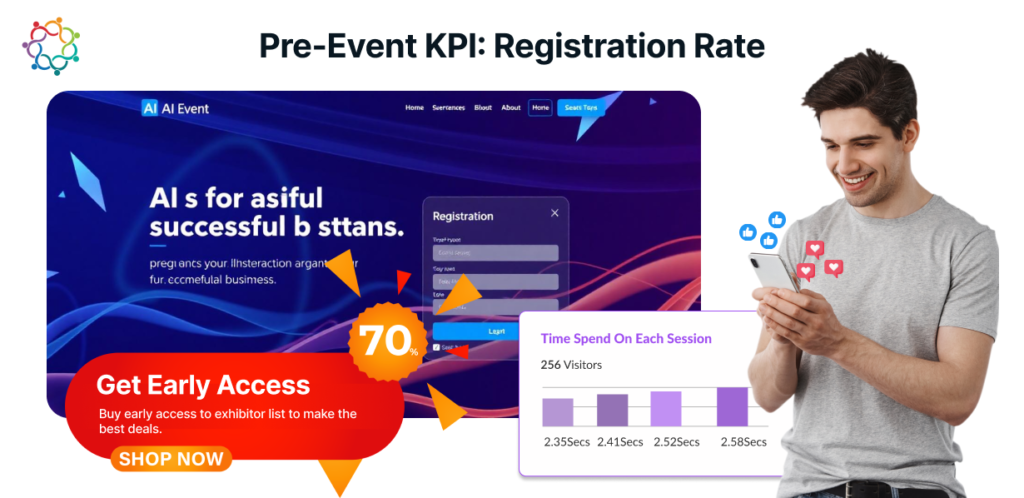
The registration rate simply refers to the percentage of website visitors who convert into registered attendees for your event. Mathematically, it’s calculated as:
Registration Rate = (Number of Registered Attendees) / (Total Number of Unique Website Visitors) x 100
This metric provides a quick snapshot of how well your event website and marketing efforts are enticing visitors to take the next step and commit to attending.
Strategies to Boost Registration Rates
Here are some key strategies to significantly improve your registration rate:
Importance of Registration Data Analysis
Analyzing the registration data goes beyond a simple percentage. By digging deeper, you can gain valuable insights that inform future event planning:
2. Website Traffic and Engagement
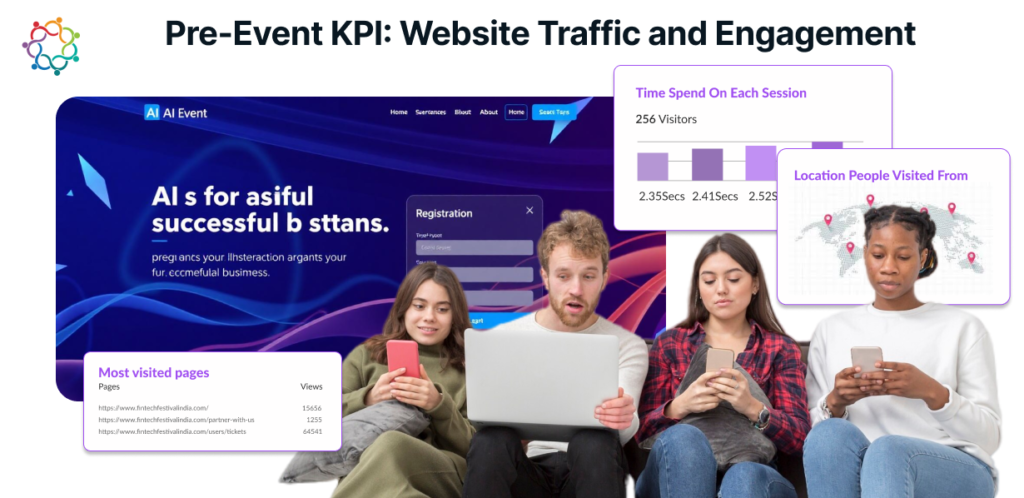
Website traffic and engagement metrics provide a window into how visitors interact with your website, revealing valuable insights into their needs and preferences.
How Engagement Metrics Guide Website Optimization
By analyzing website traffic and engagement data, you gain valuable insights into:
How Website Data Drive Personalized Marketing Efforts
Website data empowers you to personalize your marketing efforts and convert visitors into registered attendees:
B. During-Event KPIs:
During-event KPIs serve as a real-time pulse check on your event’s effectiveness. This allows you to identify areas for improvement on the fly and optimize the event experience in real-time.
3. Event Check-In Rates
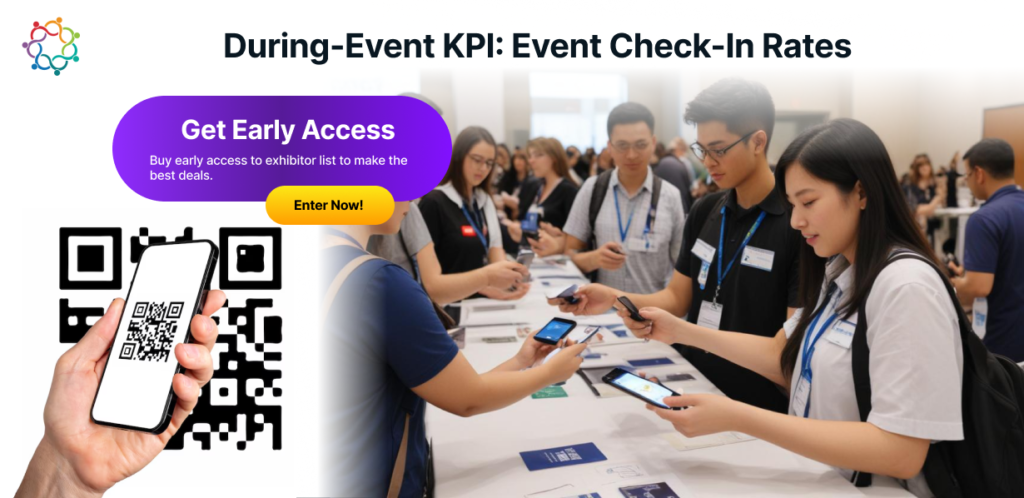
Tracking check-in rates lets you gauge how many registered attendees actually participate in your event. Low check-in rates might indicate logistical issues or last-minute cancellations.
Check-In Improvement Strategies
Low check-in rates can be frustrating for both the attendees and event organizers. Here are some strategies to ensure a smooth and efficient check-in process:
Importance of Check-In Data Analysis
Analyzing check-in data goes beyond raw numbers. By diving deeper, you can identify areas for improvement in future events:
4. Session Attendance and Engagement
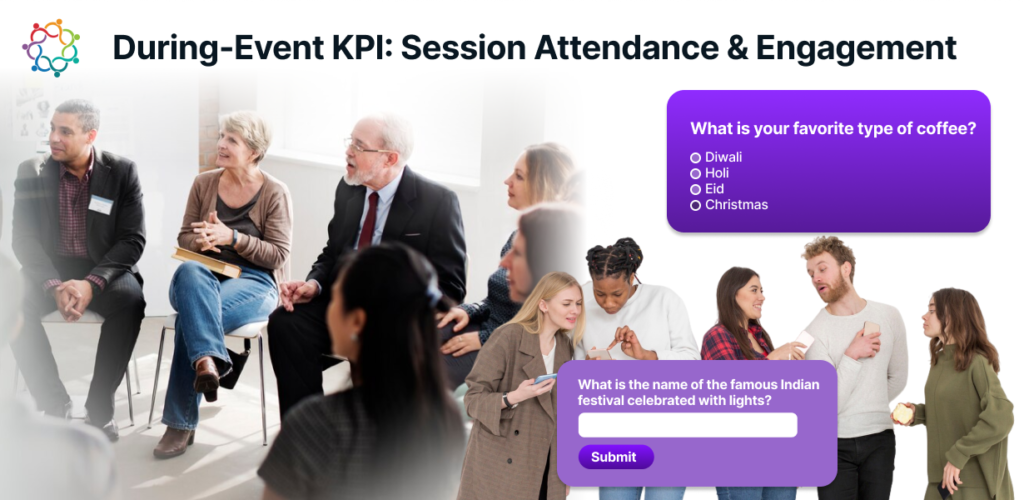
Session attendance rate is the percentage of registered attendees who participate in a particular session. Engagement metrics can include Q&A participation, polling results, and audience interaction during presentations.
Both session attendance and engagement metrics reveal how well your content resonates with the attendees and translates into a stimulating and interactive learning experience.
Strategies to Boost Session Engagement
The key to maximizing session engagement lies in creating a dynamic and interactive learning environment. Here are some strategies to ignite attendee participation:
How Session Data Leads to Content Optimization
Analyzing the session attendance and engagement data provides invaluable insights for future events:
C. Post-Event KPIs
Post-event KPIs offer a retrospective look at your event’s impact and the attendees’ sentiment. These metrics delve beyond simple attendance numbers to reveal the true value your event generated.
5. Attendee Satisfaction
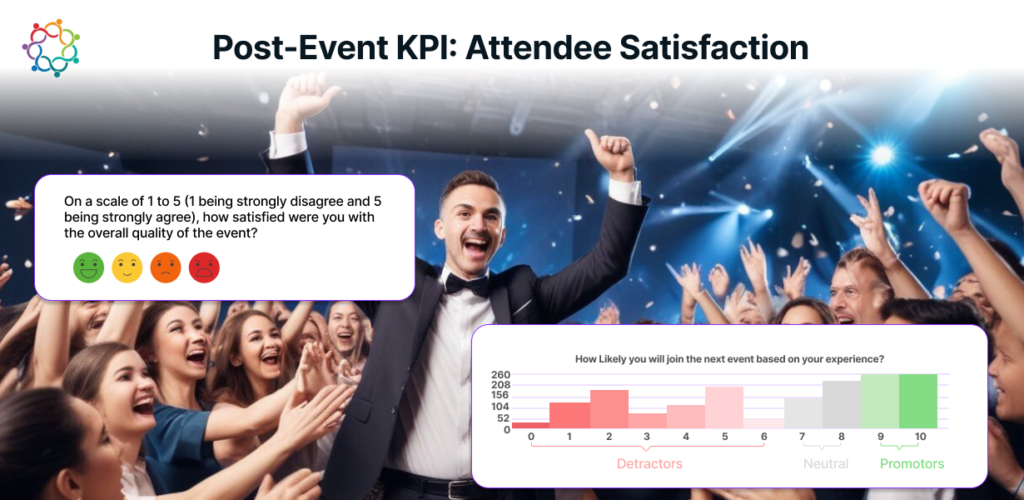
Attendee satisfaction reflects how well you delivered on your promises, created a valuable experience, and nurtured lasting connections with your audience. Measuring the attendee satisfaction goes beyond vanity metrics. It provides invaluable insights that empower you to:
Methods to Capture Feedback
There are several effective methods to gauge attendee satisfaction and gather valuable feedback:
Importance of Feedback Analysis
Analyzing attendee feedback allows you to identify aspects of the event that exceeded expectations and areas that fell short. This feedback serves as a roadmap for refining future events:
How Feedback Assists Event Personalization
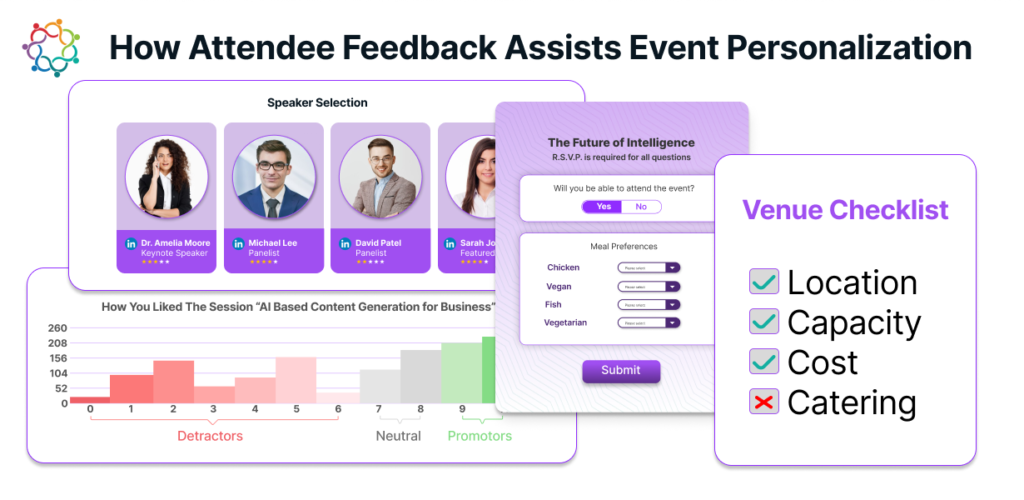
Utilize the attendee feedback to personalize future event experiences and create a more engaging and satisfying experience.
IV. Tools and Resources for Tracking KPIs
The good news is that you don’t have to become a data scientist to track KPIs. Several event management platforms and analytics tools simplify the process. Popular options include Samaaro, Eventbrite Analytics, Cvent, and Bizzabo. These platforms offer features like automated reporting, data visualization tools, and dashboards that make KPI tracking and analysis child’s play.
For budget-conscious event organizers, there are several free or low-cost alternatives. Google Analytics provides valuable website traffic and engagement data, while tools like SurveyMonkey and Typeform can be used to gather attendee feedback through surveys.
V. Conclusion
By embracing KPIs, you can transform your events from one-time occurrences into data-driven success stories. Ready to transform your event optimization journey? Subscribe to our newsletter for more insightful event planning tips and downloadable resources on topics like KPI tracking. Book a demo and start your free trial of Samaaro’s platform to see how data can power your events.
Strategic partnerships can significantly enhance the impact and success of your events. By collaborating with complementary brands, you can expand your reach, tap into new audiences, and create more engaging and memorable experiences. This blog post will guide you through the essential steps to identify and build successful partnerships for your events.
Identifying and selecting compatible brands will let you expand your reach, create more engaging experiences, and achieve your event goals. This section will guide you through the essential steps of identifying the right partners for your event.
To identify the right partners, start by clearly understanding your target audience’s demographics, interests, and needs. This will help you tailor your event to their preferences and attract the most relevant attendees. Next, define your event goals. Are you aiming to increase brand awareness, generate leads, build relationships, or something else? Your goals will guide your partner selection and collaboration strategies.
Identify brands that operate in the same or complementary industries as yours. This will increase the relevance and appeal of the partnership to your target audience. Look for brands that share similar values and mission statements, ensuring a harmonious and productive partnership. Additionally, consider brands that offer complementary products or services to create a more comprehensive and valuable experience for the attendees.
When evaluating potential partners, assess their past collaborations, customer feedback, industry recognition, and online reputation. Look for evidence of successful partnerships, positive reviews, awards, and a strong online presence. This information will help you identify partners that align with your brand and can deliver valuable collaborations.
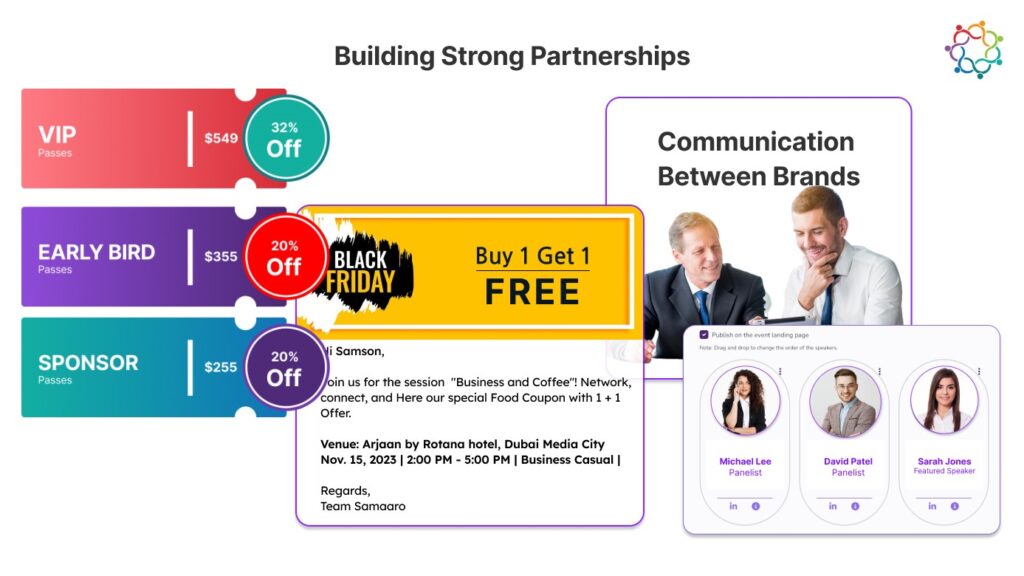
Building strong partnerships with complementary brands allows you to expand your reach, tap into new audiences, and create more engaging and memorable experiences. This section will explore key strategies for building effective partnerships and creating long-term relationships.
To build strong partnerships, it’s essential to establish open and honest communication channels, actively listen to your partners’ needs and concerns, and negotiate in a collaborative and mutually beneficial manner. By generating trust, understanding, and a shared commitment to achieving your goals, you can create lasting partnerships that drive success.
Leverage complementary strengths to create a more powerful impact. Develop a clear understanding of how the partnership will benefit both parties. Ensure that the collaboration aligns with each partner’s strategic objectives and provides value to your target audience.
Utilize the resources and expertise of your partners to enhance your event. For example, collaborate on marketing and promotion by creating joint campaigns and sharing resources. Additionally, invite guest speakers from your partner organizations to share their expertise and insights with attendees. Furthermore, offer exclusive discounts or promotions to attendees who register through your partner’s channels. Finally, cross-promote each other’s events on your respective platforms to reach a wider audience.
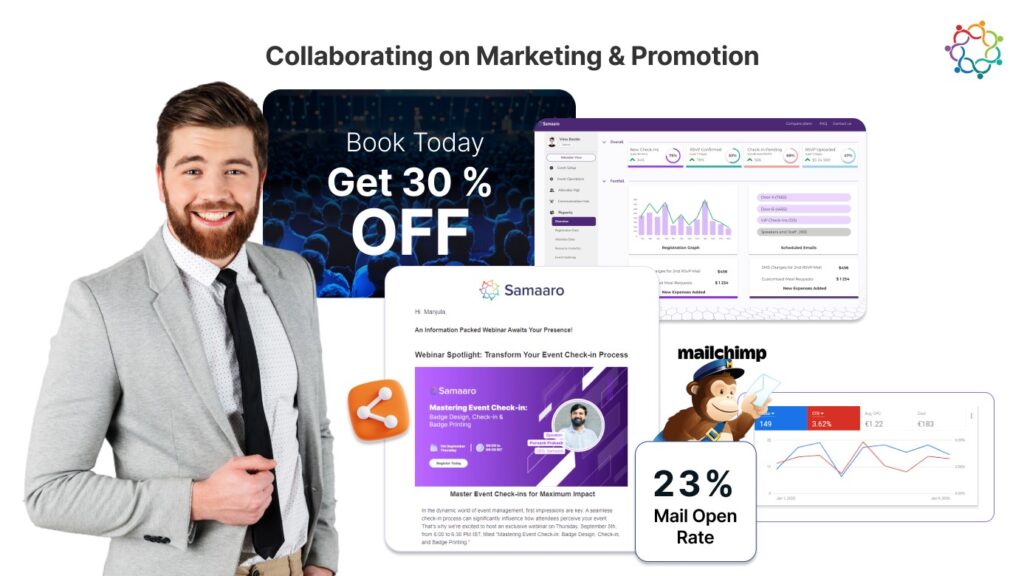
Effectively combining your marketing efforts and resources lets you create more powerful campaigns and reach a wider audience. This section will explore strategies for collaborating on marketing and promotion, including joint campaigns, cross-promotion, and resource sharing.
To maximize your reach and engagement, consider developing joint marketing campaigns with your partner brands. This could involve creating co-branded social media content, shared email marketing campaigns, cross-promotion on websites and newsletters, and joint press releases. By combining your efforts, you can reach a wider audience, generate more interest, and increase the overall impact of your event.
Encourage partners to actively promote the event on their social media platforms, such as Facebook, Twitter, LinkedIn, and Instagram and other channels, such as websites and newsletters. Use relevant hashtags, engage with your audience, and share compelling content to generate excitement and drive registrations.
Collaborating on content creation, sharing best practices, and providing valuable insights can enhance the overall value of your event for the attendees. This could involve sharing industry insights and expertise with the attendees through presentations or panel discussions and collaborating on thought leadership pieces to position yourselves as industry experts.
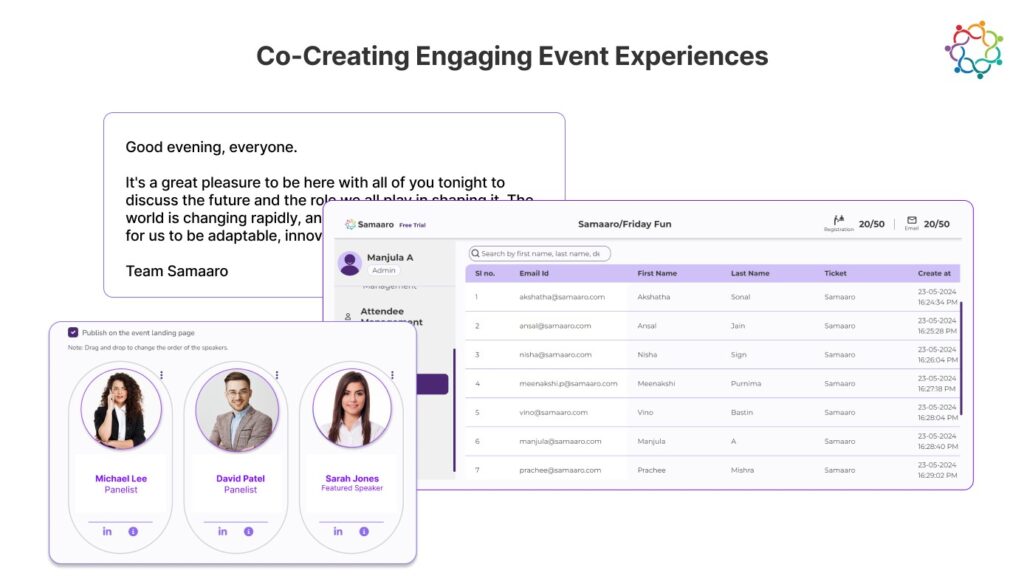
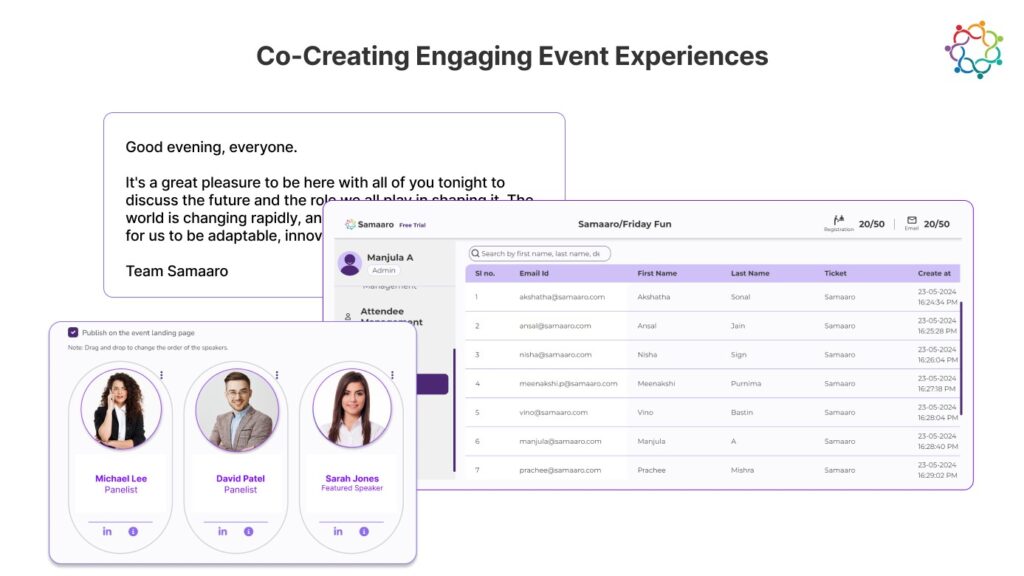
By working together with complementary brands, you can leverage each partner’s unique strengths, resources, and expertise to develop innovative and memorable events. This section will explore strategies for co-creating engaging event experiences that resonate with your target audience and drive positive outcomes.
To create engaging content and activities that resonate with both your brand and your partner’s audience, identify shared interests and topics, collaborate on workshops or panel discussions, and organize networking opportunities. By working together, you can develop a diverse and engaging program that offers value to attendees from both brands.
When selecting speakers, look for individuals with expertise in areas that are relevant to both brands and your target audience. Develop a balanced program that includes a mix of keynote speeches, panel discussions, workshops, and networking opportunities. Ensure that the speakers you choose align with the overall theme and objectives of your event.
To create a truly exceptional event experience, focus on developing a distinctive theme or concept that reflects the partnership and sets your event apart from competitors. Incorporate interactive elements, such as workshops, demos, or games, to engage attendees and make the event more memorable. Allow attendees to personalize their experience by offering choices or customization options, such as selecting specific sessions or workshops. Finally, create a strong visual identity for your event that reflects the partnership and creates a lasting impression.
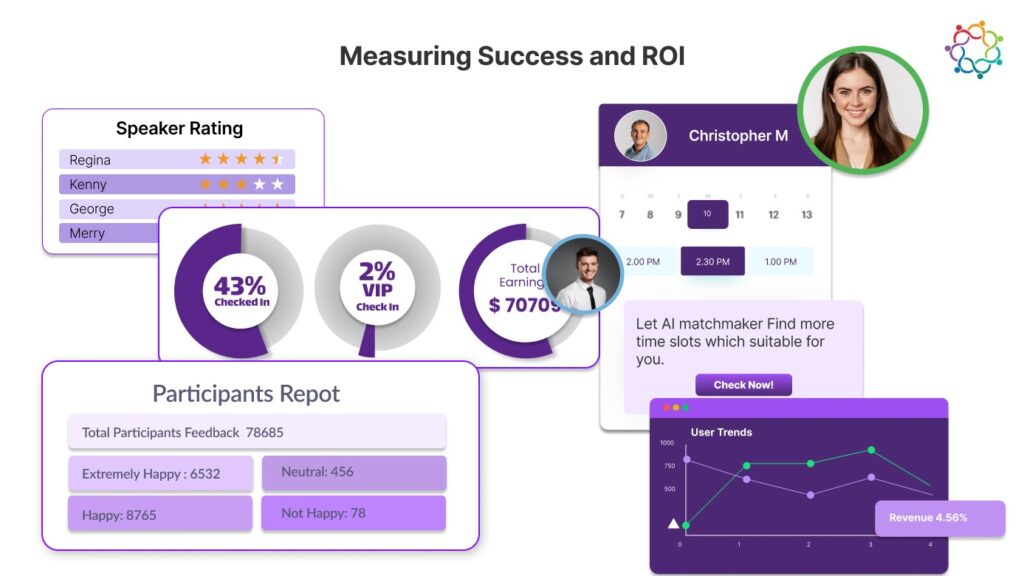
To effectively evaluate the impact of your brand collaborations and ensure they align with your overall business goals, it’s essential to track and analyze key performance indicators (KPIs). By measuring success and return on investment (ROI), you can gain valuable insights into the effectiveness of your partnerships and make data-driven decisions for future collaborations.
Monitor key metrics such as event attendance, lead generation, customer satisfaction, social media engagement, and website traffic to gain a comprehensive understanding of your partnership’s effectiveness. By tracking these metrics, you can identify trends, measure the impact of your partnership on key business objectives, and make data-driven decisions for future collaborations.
Compare event performance with and without partnerships to assess the impact of collaboration on key metrics. Follow this by evaluating brand exposure by measuring the increase in brand awareness and recognition. Then, analyze customer feedback to understand how the partnership enhanced the attendee experience. Finally, calculate ROI by considering factors such as increased revenue, cost savings, and brand exposure.
To calculate ROI, divide the net profit from the partnership by the total cost of the partnership. Consider factors such as increased revenue, cost savings, brand exposure, and customer acquisition costs when calculating the net profit.
Conclusion
By following these steps and building strong partnerships with complementary brands, you can significantly enhance the impact and success of your events. Strategic collaborations can help you reach new audiences, create more engaging experiences, and drive business growth. Remember to focus on building mutually beneficial relationships, effective communication, and collaboration on all aspects of your event planning.
Book a demo or start your free trial of Samaaro’s platform today to see how we can help you elevate your event strategy!
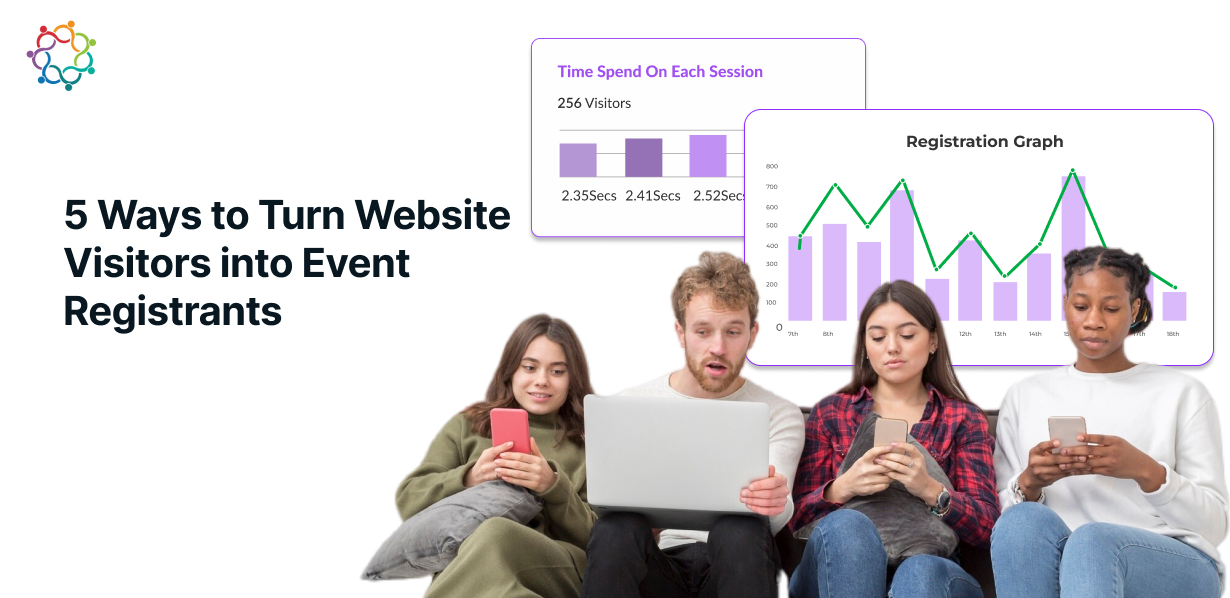
Do you ever feel like your event website is a beautiful, lonely island in the vast digital sea? You’ve poured your heart into crafting the perfect event, but the website visitor numbers just don’t translate into registrations. This scenario is all too common for event organizers. The good news is it doesn’t have to be this way.
Converting website visitors into event registrants is all about website optimization. Think of it as the bridge connecting website traffic to a thriving event. By implementing strategic website optimization techniques, you can dramatically increase the number of attendees and ensure your event is a resounding success. Here, we’ll explore five key strategies to transform your website from a passive brochure into a powerful lead generation machine.
1. Compelling Event Website
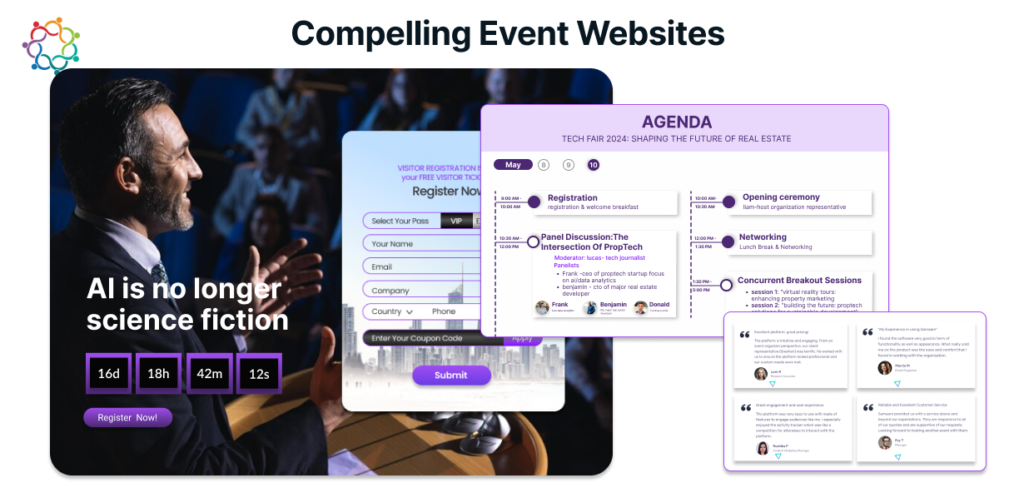
A compelling event website is crucial because it’s your digital first impression and conversion machine. It attracts visitors, informs them clearly, and convinces them to register with enticing visuals, seamless registration, and trust-building elements like testimonials. Without a strong website, your event might be a well-kept secret, missing out on potential attendees.
First Impressions:
When someone lands on your event website, it’s like walking into your event for the first time. Just like a well-decorated venue sets the tone, a visually appealing and user-friendly website design is crucial. Picture crisp, high-resolution images showcasing the event experience, clear and concise event information readily accessible to visitors, and an intuitive navigation system that guides them effortlessly towards registration.
Clarity:
Highlight essential details like date, time, location, and a comprehensive event agenda. Don’t underestimate the power of compelling visuals. Images and videos can paint a thousand words, showcasing the energy and excitement attendees can expect.
Website Layout:
Think of your website layout as a map leading the visitors directly to the registration page. It’s important to streamline the registration process, minimizing unnecessary steps and forms. The visitors shouldn’t feel like they’re navigating a maze. In addition, utilize clear call-to-action (CTA) buttons with action verbs like “Register Now” or “Get Your Tickets.”
Social Proof:
The power of social proof cannot be ignored. So, feature testimonials from past attendees, showcase quotes from renowned speakers, and include engaging speaker bios. These elements build trust and credibility, convincing the visitors that your event is worth attending.
2. Clutter-Free Landing Pages
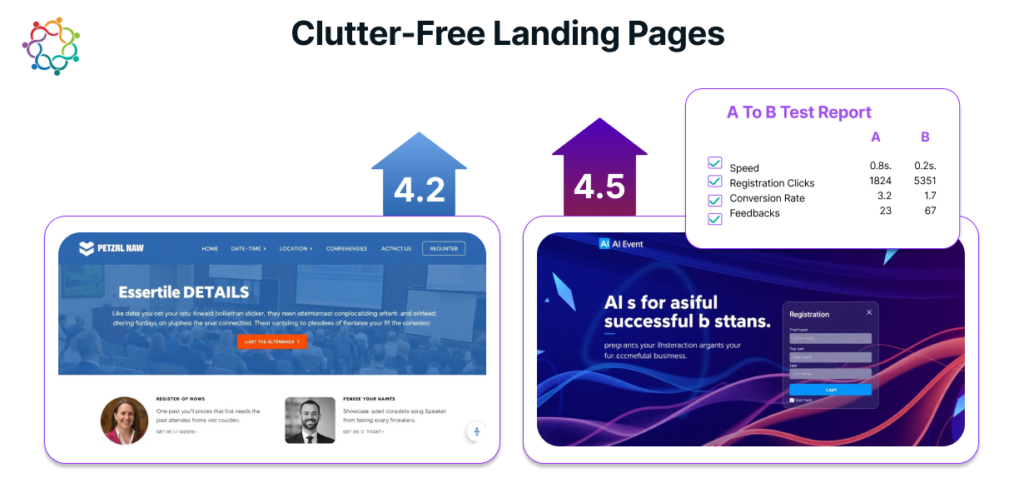
Landing pages are dedicated web pages designed with a singular purpose: capturing registrations. Unlike your main event website, landing pages offer a laser-focused message tailored to specific marketing campaigns or visitor demographics. This targeted approach allows you to deliver highly relevant content and compelling CTAs, in turn maximizing conversion rates.
How to Optimize Landing pages for Conversions
In the fast-paced world of event marketing, every click counts. But how do you turn those website visitors who land on your event page into registered attendees? Let’s dive into the secrets of landing page optimization:
Minimize Distractions:
Landing pages are not the place for navigation menus or additional links. Think of them as a one-way street leading to registration. Therefore, maintain a clean, clutter-free design that guides the visitors effortlessly towards the call to action (CTA) button.
Embrace A/B Testing:
Don’t be afraid to experiment with different landing page elements, such as headlines, call-to-action buttons, and visuals. By comparing different variations, you can identify the most effective combination that drives the highest conversion rates.
Craft Compelling Headlines:
To make a great first impression, craft captivating headlines that grab attention and clearly communicate the benefits of attending your event. Don’t be afraid to be bold and specific. Next, deliver a crystal-clear value proposition. Provide answers to questions such as what problem your event solves and how it will benefit the attendees. Articulate the unique value attendees will gain by registering – knowledge, connections, experiences – that make your event stand out.
3. Content Marketing
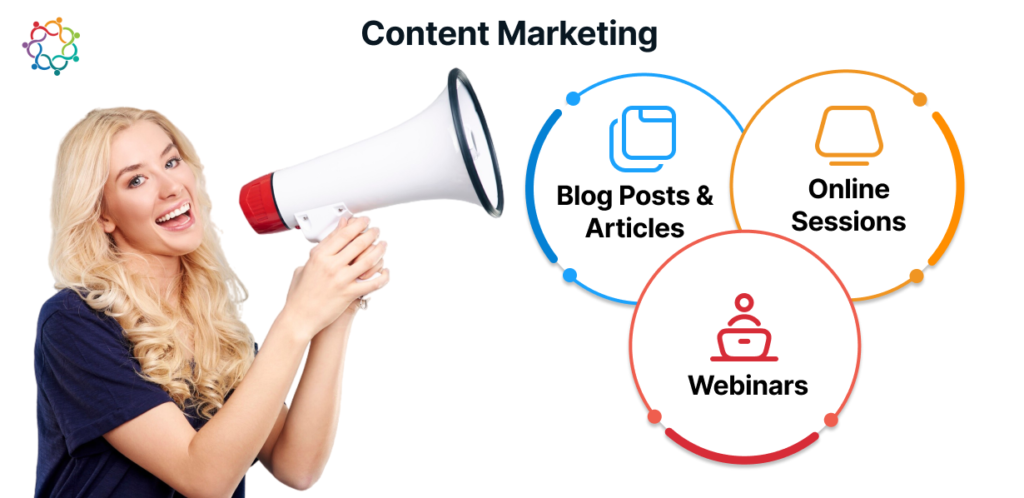
In the digital age, content is king, and event marketing is no exception. Valuable, informative content not only attracts website visitors but also positions you as a thought leader in your industry. This powerful combination is what propels your event towards success.
What Types of Content You Should Publish
Content reigns supreme, but with so many options available today, where do you begin? When it comes to event promotion, the right content mix can be the key to attracting a captive audience and driving registrations. Let’s explore the various content formats:
Blog Posts & Articles:
Consider creating blog posts and articles related to your event theme. These act as magnets, drawing in potential attendees interested in the topics your event explores. Moreover, discuss industry trends, offer expert insights, or dive into specific challenges your event aims to address. By providing valuable content, you establish yourself as a trusted resource, increasing brand awareness and piquing visitor interest in your event.
Webinars & Online Sessions:
Webinars and online sessions are powerful tools to take your content marketing a step further. Hosting pre-event webinars or online sessions allows you to showcase your expertise, go deeper into event themes, and generate excitement for the main event. It is a great opportunity to offer valuable content in exchange for registration and capture valuable leads who are highly interested in the topics your event covers.
How to Promote Your Content & Drive Traffic
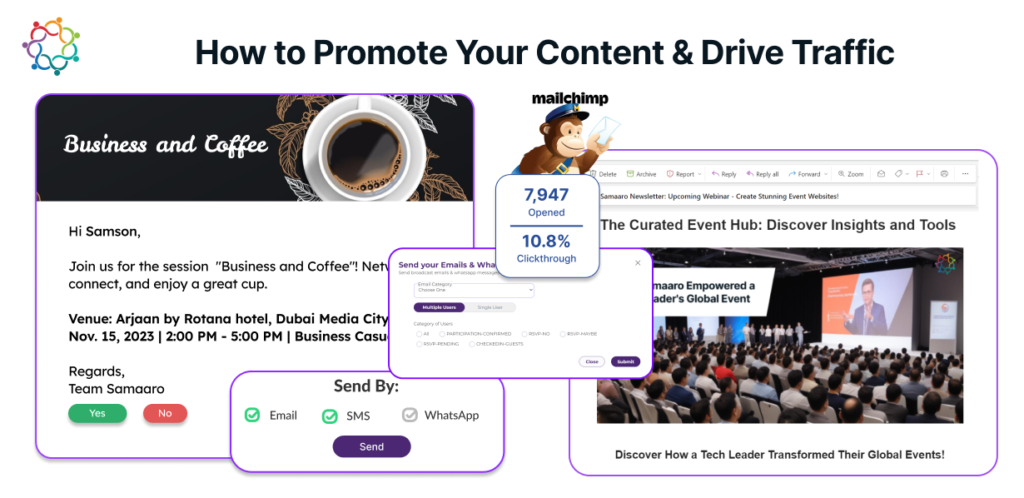
No matter how exceptional your content is, even the most informative blog post or engaging webinar can get lost in the content clutter. To maximize the impact of your content, you need a strategic promotion plan:
SEO:
Optimize your content with search engine optimization (SEO) best practices. This ensures your content appears higher in the search engine results pages, making it more discoverable by potential attendees actively searching for topics related to your event. The more organic traffic you attract, the more website visitors you can convert into registrants.
Social Media:
Don’t let your content languish in the shadows. Utilize social media platforms and email marketing campaigns to strategically promote your content. Share engaging snippets of your blog posts, highlight upcoming webinars, and offer downloadable content related to your event. These efforts drive qualified traffic back to your event website, ultimately converting website visitors into enthusiastic registrants.
By consistently creating high-quality content, you establish yourself as a thought leader in your industry. This builds trust and credibility with potential attendees, making them more likely to register for your event, knowing they’ll gain valuable knowledge and insights from the experience.
4. Lead Capture Strategies
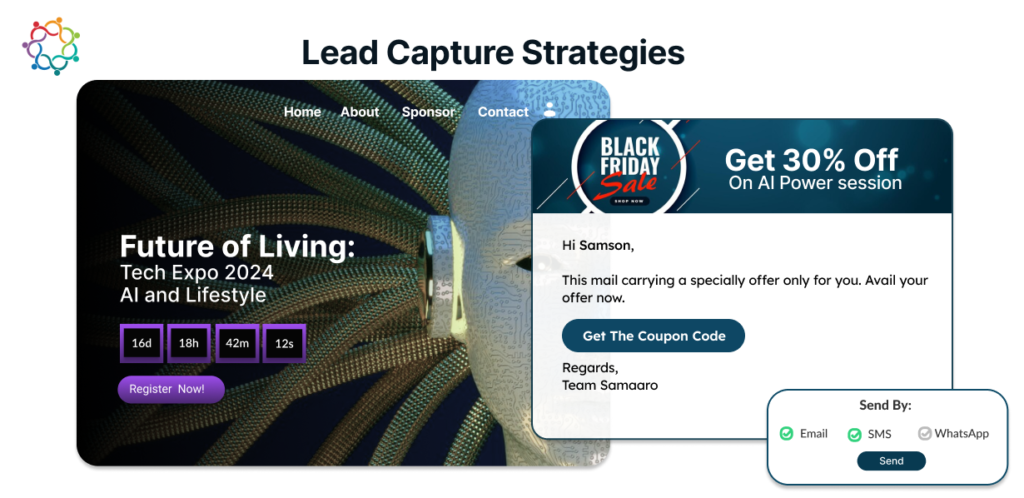
Your event website is abuzz with visitors, but how do you convert that curiosity into registrations? Here’s your answer:
Lead capture forms:
Lead capture forms are the gateway to building your event’s attendee base by transforming website visitors into potential attendees. That’s why it becomes vital to offer valuable downloadable content, like industry white papers or comprehensive event guides, in exchange for email addresses. This provides valuable resources for the potential attendees while giving you the opportunity to nurture leads and ultimately drive registrations.
Pop-ups:
Pop-ups can be an effective tool if used strategically. A well-timed pop-up appearing as a visitor delves deeper into your event details could offer a relevant discount code for early registration or exclusive content related to a specific session. Besides, targeted pop-ups can capture the visitors’ attention and nudge them towards registration, but remember, the key is to avoid being intrusive or creating a negative user experience.
5. Email Marketing
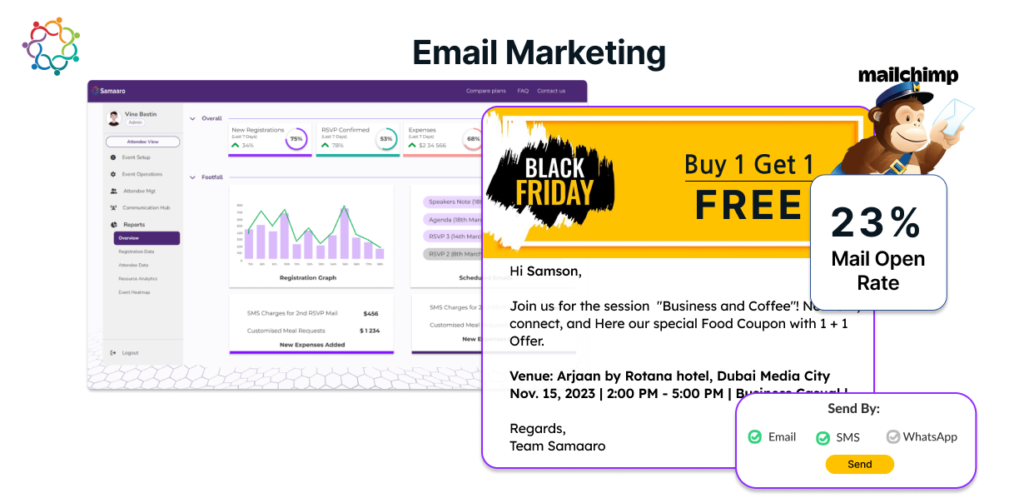
Once you’ve captured those valuable email addresses, it’s time to leverage the power of email marketing. Effective email campaigns are the secret weapon; however, generic blasts won’t cut it. The key lies in crafting targeted emails that resonate with different audience segments.
Segment your email lists based on visitor interests and their stage in the buying journey. For example, someone who just discovered your event might be in the “awareness” stage. Send them an introductory email highlighting the event’s theme and key benefits. Whereas, for visitors who downloaded an event guide (indicating deeper interest), they might be in the “consideration” stage. Send them a targeted email showcasing speaker insights or a specific session relevant to their downloaded content. Finally, for those who haven’t registered yet but have interacted with your website multiple times, they might be nearing the “decision” stage. Send them a compelling email with a limited-time discount or a reminder about the registration deadline.
Don’t spend hours crafting individual emails. Utilize email automation tools to streamline campaign management. These tools allow you to schedule automated email sequences based on visitor behavior and engagement, saving you time and ensuring timely communication.
No matter the email’s purpose, always include clear and compelling calls to action (CTAs). Whether it’s a button prompting them to “Register Now” or a link to learn more about a specific speaker, CTAs guide the visitors towards the desired action, which is, registering for your event.
As the event date approaches, send timely reminder emails. These can highlight the excitement building around the event, showcase the agenda once again, or offer logistical details like venue access information.
Actionable Steps
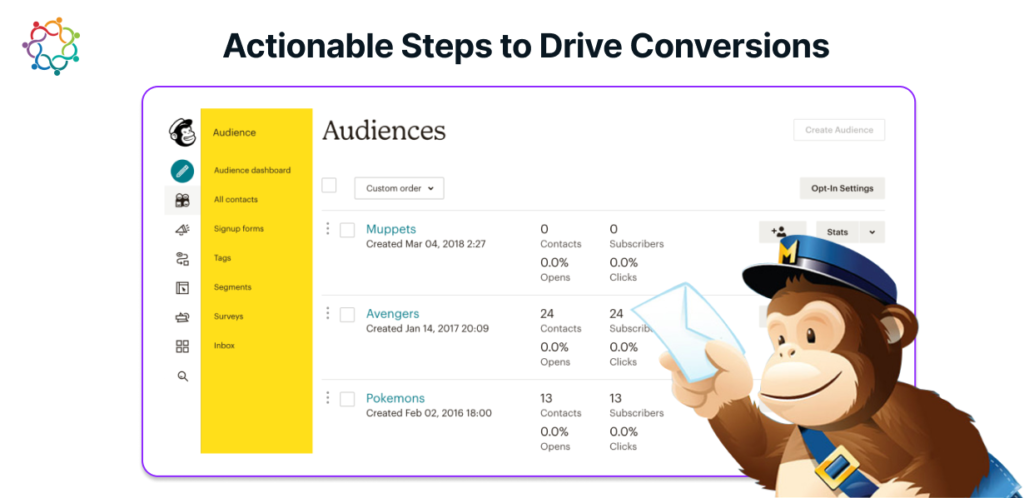
Now that you’ve explored the key strategies for landing page optimization, it’s time for you to act. Here are some practical steps to get you started:
Traffic Analysis:
Not all website visits translate to registrations. Utilize analytics tools to pinpoint where visitors are dropping off in the conversion funnel. Are they leaving the homepage without exploring further? Are they abandoning the registration form halfway through? By identifying these bottlenecks, you can refine your website and landing pages to address the visitors’ pain points and smoothen the path towards registration.
A/B Testing:
Test different headlines, CTAs, and even visual elements like images or videos. In the meantime, track the results and see which combination resonates best with your audience. This ongoing experimentation ensures your landing pages continuously adapt, improve, and drive high conversion rates.
Website Analytics:
Leverage website analytics tools like Google Analytics to gain invaluable insights into the visitors’ behavior. Track key metrics like bounce rate (percentage of visitors leaving after just one page), conversion rates (percentage of visitors who complete the desired action, in this case, registration), and time spent on pages. By analyzing this data, you can identify areas for improvement. For example, a high bounce rate on your landing page might indicate confusing navigation or a lack of clarity in the value your event provides.
Conclusion
Remember, website optimization is an ongoing process. Continuously monitor your results, adapt your approach, and refine your strategies to maximize website conversions and ensure your events are a resounding success.
Ready to take your event marketing to the next level? Subscribe to our newsletter for actionable tips and best practices on how to optimize your website and turn website visitors into enthusiastic event registrants. Simply enter your email address to get started!