Samaaro + Your CRM: Zero Integration Fee for Annual Sign-Ups Until 30 June, 2025
- 00Days
- 00Hrs
- 00Min


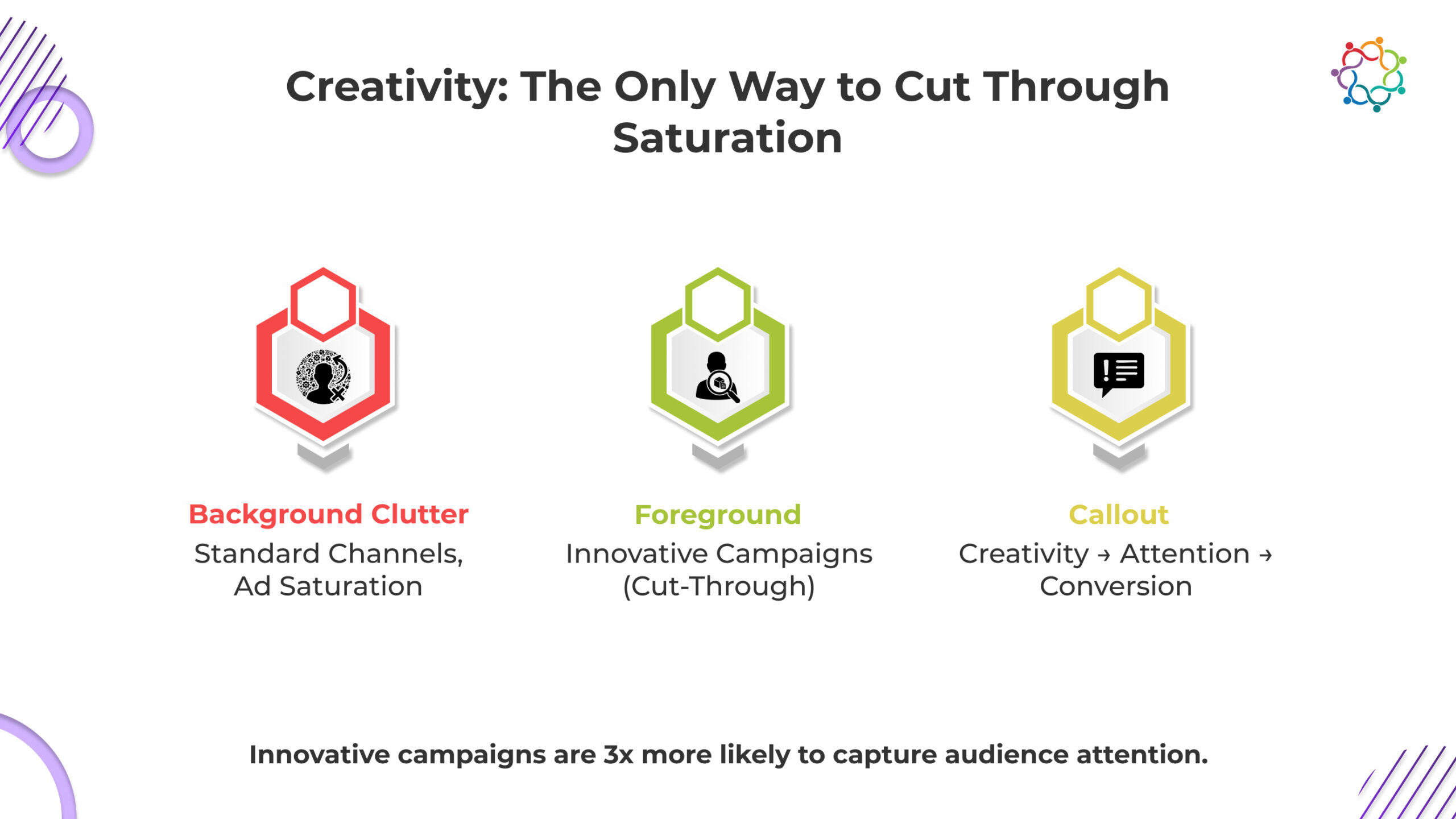
Marketers today face a universal challenge: saturation. The inbox of your audience is filled, their social media feed is a mash-up of advertising, and they either outright ignore, or perceive as mere filler, your standard event promotions (the standard email invite or banner ad).
If your event is to successfully happen in 2026, it can no longer be marketed via standard channels and lone tactics, but requires creative campaigns that compel the audience to act differently by cutting through the noise, creating real excitement, and really thinking of this event as a destination, not just a date on a calendar. Creativity is not just the icing on the cake; it is the engine that generates high intent registrations.
In this article are four examples of real-life event marketing campaigns that are proven to work in a variety of industries, even with strict compliance globally.
To explore these high-impact methods and learn how to transform events into powerful, high-conversion pipelines, read the full guide on Event Marketing 2025: Strategies That Deliver Real Results.

Real Estate has a big challenge to get potential buyers to uphold an expression of interest to attend a property launch. The campaign had to raise anticipation about the launch, as well as convey a sense of exclusivity, even before the event was open for buying.
The Campaign: Instead of simply sending out the typical launch invites, a major developer supplied potential buyers with short, attention-grabbing video teasers in 3D that showcased various areas of the property. The developer used engaging video teasers to replace email sign-ups and interest forms.
The sequences would also appear to be an exclusive series that could be time sensitive; were password protected and could only be viewed a fraction of the final property.
The Result: This campaign generated successful early EOIs or Expressions of Interest, from high value buyers who felt they were already part of an exclusive buyer group, which drastically shortened the sales cycle as attendees arrived pre-sold on the property.
In the highly regulated pharmaceutical and medical education space, the objective isn’t simply attendance; but instead, deep, verifiable engagement for Continuing Medical Education (CME) points.
The Campaign: Prior to a large-scale medical education conference, the sponsoring organization launched a Microlearning Drip campaign – consisting of educational “nudges” prior to the event, with engagement burgeoning throughout. This included short daily quizzes, one-minute videos, and single-slide summaries that were anchored to the course topics. Participation was linked to early certification points.
The Result: The engagement of this seemingly simple campaign ensured that participants entered the conference with a foundational comprehension of the core topics. Increased engagement improved participation rates in the live sessions, but more importantly increased rates of CME completions because the participants were mentally ready and engaged from day one.
Events held by Financial Services (BFSI), particularly those aimed at high net worth or institutional investors, are often built on trust and a perception of exclusivity.
The Campaign: A firm engaged in asset management organized a campaign centered on VIP-Only Investor Previews. Two weeks prior to the event’s flagship summit, the top 20% of the firm’s prospect list received an invitation for a 30-minute preview from one of the firm’s partners. The preview was an exclusive opportunity to see some of the full agenda prior to the summit, as well as to have a curated one-on-one networking session, online, with a senior executive.
The Result: The combination of feeling (or being invited) to an event that was exclusive, and the promise of personal engagement and interaction with a senior executive, significantly built excitement and RSVPs in the target audience of high-value attendees. The invite to this exclusive event provided validation to their importance and value and increased both the quantity and quality of attendees.

While technology events are all about interaction and product demonstration, attendees often feel inundated and skip visiting booths.
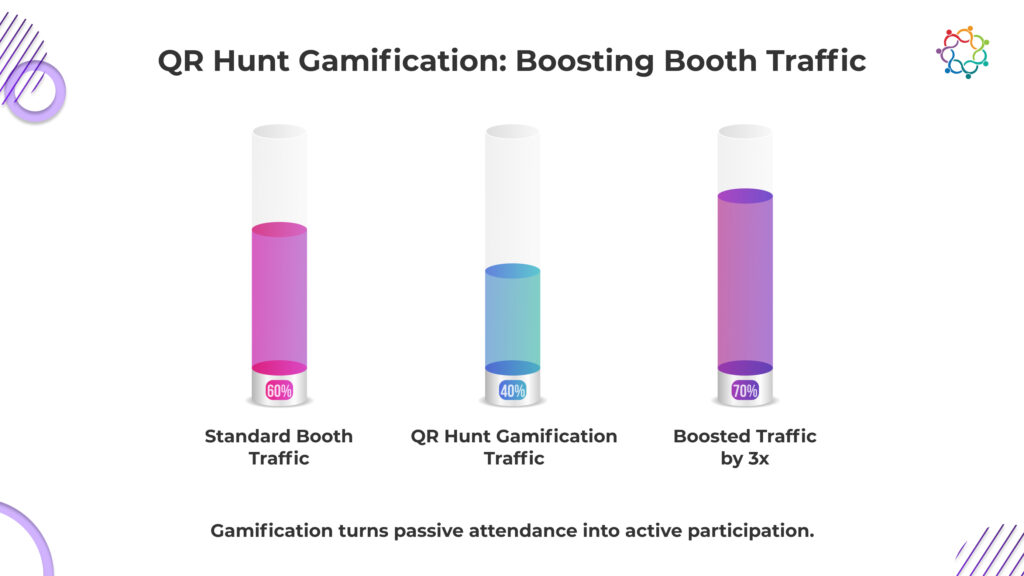
The Campaign: A major tech summit rolled out a platform-based QR Hunt Gamification program. Rather than a traditional scavenger hunt, attendees had to visit certain demo stations and use the event app to scan a .97 QR code. Scanning the QR code exposed new content (deep-dive case study or a discount code) and recorded attendance at that demo.
The Result: With just a simple engaged gamification mechanic for attendees, their booth traffic increased 3x. The process engaged attendees with product teams to turn attendees from passive and distracted visitors to active attendees and could produce verifiable, high intent leads for sales follow-up.
While the industries and tactics differ, these successful campaigns share two universal principles of creative event marketing:
The best event marketing ideas rely on technology that can support sophisticated, multi-touch campaigns. Samaaro provides the tools to execute and measure these creative efforts:
The purpose of reviewing the best event marketing campaigns 2026 has to offer is not to copy them exactly, but to adapt creatively. Take the core mechanics like exclusivity, anticipation, micro-engagement and contextualize them for your audience and brand goals. In the crowded marketing landscape of 2026, the success of your next event will depend on your willingness to be more innovative, personalized, and engaging than your competitors.
Want to design creative campaigns in 2026? Explore Samaaro’s campaign management tools.
The real estate industry used virtual walkthrough teasers by releasing immersive video tours of properties 4 to 6 weeks before the launch event. Prospects who watched the walkthroughs were tagged as high-intent and invited to a closed-door preview. The teasers shortened the sales cycle because by the time the launch event ran, attendees had already seen the property, asked questions, and were ready to discuss terms with sales, rather than starting from cold awareness.
The pharma sector’s microlearning drip campaign sent short, daily learning modules (5 to 10 minutes each) to registered attendees in the 3 weeks before a CME conference. Attendees arrived with context on the core topics, which let session content go deeper. CME completion rates improved because attendees were already engaged with the material, and the conference reinforced learning instead of introducing it cold. Pre-event learning compounds the value of in-event learning.
BFSI firms used VIP-only investor previews with senior executive access because the quality of attendees mattered more than the volume. Inviting top-tier investors to a private session with the CEO before the main event signaled exclusivity, built trust, and gave high-value prospects a reason to attend. The previews boosted both quality (the right investors showed up) and quantity (FOMO drove more registrations from the next tier of invitees).
QR hunt gamification at a tech summit gave attendees a digital scavenger card. They scanned QR codes at each booth to earn points, with prizes for top scores. Booth traffic increased dramatically because attendees had a clear reason to visit each sponsor. Conversion improved because the scanning process captured contact data automatically, and engagement scores rose with each scan. Passive walkers became active, traceable, high-intent leads.
All four creative campaigns share two universal principles: personalisation with exclusivity (treating each attendee group as special, whether through VIP access, tailored content, or curated experiences), and pre-event engagement (warming up the audience well before the registration form opens). These two principles work because they build conviction and intent before the event runs. Without them, the event is asking strangers to spend a day with you on faith.
Event marketers in 2026 can adapt exclusivity, anticipation, and micro-engagement to their own industry by identifying the highest-value attendee segment and giving them an exclusive pre-event experience (preview, private session, or early-access content), building anticipation through staged content drops (speakers, agenda, sneak peeks released weekly), and creating small interactive moments (polls, quizzes, contests) that engage attendees before they arrive.

Samaaro is an AI-powered event marketing platform that enables marketing teams to turn events into a measurable growth channel by planning, promoting, executing, and measuring their business impact.
Location


© 2026 — Samaaro. All Rights Reserved.