Samaaro + Your CRM: Zero Integration Fee for Annual Sign-Ups Until 30 June, 2025
- 00Days
- 00Hrs
- 00Min

Engaged employees show up differently, they’re more motivated, they stick around longer, and it tends to show in the work itself. Keeping that engagement up is genuinely hard in a fast-moving workplace, though, and the usual answer, one big annual party, doesn’t do much for the other 364 days. A single holiday event can be memorable, but it can’t carry the weight of an entire year’s worth of recognition and connection on its own.
Micro-events fill that gap. These are small, focused gatherings built around a specific moment rather than a calendar obligation, and they do more for morale, team cohesion, and day-to-day productivity than most people expect from something this size. Because they’re smaller, they’re also cheaper and faster to organize, which means a team can actually run them often enough to matter, instead of saving all the goodwill for one expensive event a year. This piece walks through where micro-events fit into an engagement strategy and how a platform like event management software makes running a steady stream of them actually manageable.
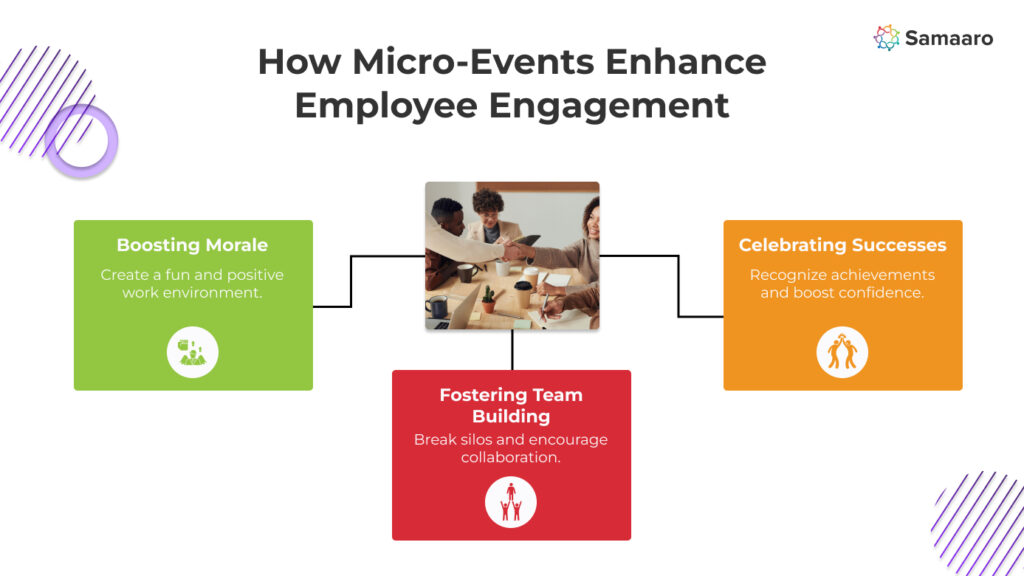
Boosting Morale
A team that feels noticed works differently than one that doesn’t. Micro-events are one of the more direct ways to remind people their effort is actually seen, especially in the middle of a stretch that’s been genuinely stressful.
A few formats that work well here:
Recognition specifically, calling out an individual or a team’s actual contribution rather than a generic “great job everyone,” is what makes these land. Vague praise gets forgotten by lunch, but a specific mention of what someone actually did tends to get repeated to a spouse that evening.
Smaller settings let people actually talk to each other instead of standing near a buffet table at a company-wide event. That’s especially useful for breaking down the silo between departments that otherwise only interact through a shared spreadsheet.
A few formats worth trying:
None of these replace real collaboration on the job, but they build the trust that makes that collaboration easier, and that trust doesn’t show up overnight, it accumulates across several smaller moments like these rather than one big offsite once a year.
Recognizing a milestone, however small, reinforces that the work actually mattered. Skip this step consistently and people stop bothering to mention their wins at all.
A few approaches that hold up:
Consistently celebrating wins, not just the biggest ones, tells people their contribution is worth tracking.
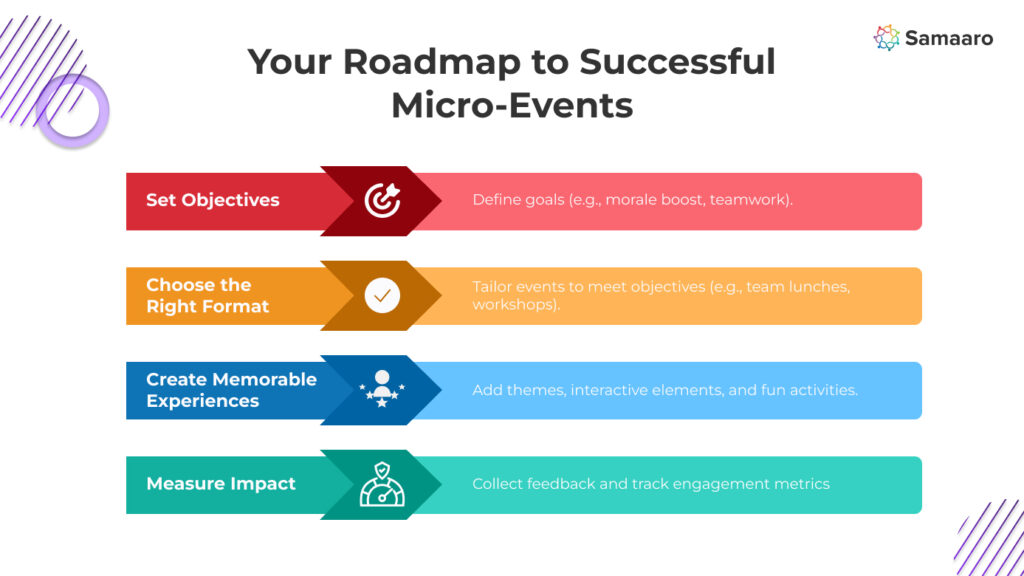
Setting Clear Objectives
Every micro-event needs an actual reason to exist. A team lunch aimed at improving cross-department communication looks different from one that’s just a Friday treat, and being clear about which one you’re running changes how you plan it, right down to who gets invited and what gets said at the start.
Choosing the Right Format
The format should match the goal, not just what’s easiest to book. A workshop or volunteer day fits a team-building goal. A casual appreciation gathering fits a morale goal. Mixing these up usually means the event doesn’t land the way it was supposed to, a team-building goal wrapped in a passive holiday party format rarely produces the connection it was meant to.
Creating a Memorable Experience
Small scale doesn’t mean forgettable. A specific theme, a genuine surprise, or recognition that’s actually personalized rather than copy-pasted from the last event makes people remember it past the following Monday. Even something as simple as referencing an inside joke from the team in the invitation signals that someone put actual thought into it.
Measuring the Impact
Ask people what actually landed and what didn’t, and track attendance and satisfaction alongside it. Samaaro’s analytics pull this into one view instead of chasing feedback across three different forms, which makes it possible to see which format is actually worth repeating, and which one quietly fizzled despite decent attendance.
Micro-events won’t replace a real engagement strategy on their own, but they’re one of the more efficient pieces of it. Small, well-timed gatherings build the kind of connection and recognition that a once-a-year event structurally can’t, at a fraction of the planning effort, and they’re easy enough to run monthly instead of saving the entire budget and goodwill for a single December party.
Samaaro’s event marketing platform handles the planning load, from setting up the event to tracking how it landed, so the format above is actually sustainable to run regularly rather than a one-off. Book a demo