Samaaro + Your CRM: Zero Integration Fee for Annual Sign-Ups Until 30 June, 2025
- 00Days
- 00Hrs
- 00Min

Key Takeaways (TL;DR)
→
Bottom Line:
The real distinction isn’t tools versus platforms, it’s whether events are just run or actually understood.
As events have become more central to marketing strategy, the language around them has gotten vague. Most teams assume any tool used near an event qualifies as an “event platform.” Registration systems, event apps, CRMs, even spreadsheets, all get grouped under the same label.
That grouping made sense when events were purely operational. If the goal was getting people registered and checked in, any tool that supported that workflow felt sufficient. Over time, events moved closer to revenue conversations, showing up in pipeline reviews and account plans. The label expanded. Clarity didn’t.
Using tools around events isn’t the same as having an event marketing platform. The difference isn’t how many tools exist. It’s whether there’s a system actually designed to understand and compound the value events create.
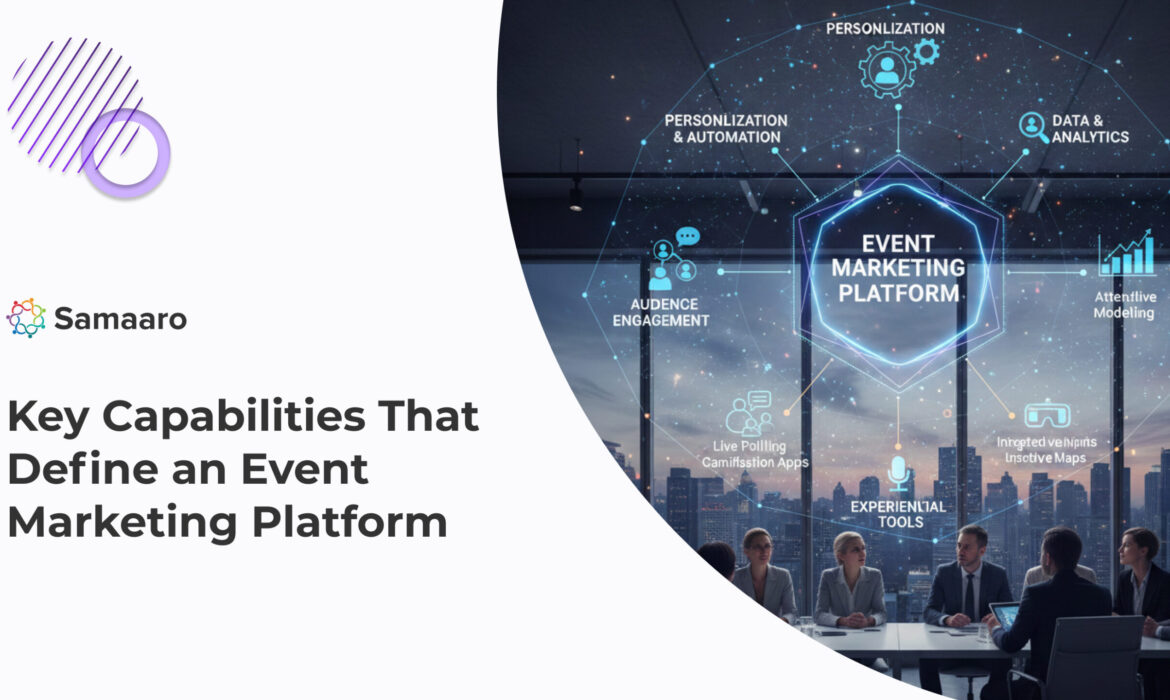
An event marketing platform orchestrates events as a marketing channel, captures the buyer intent those events generate, and translates engagement into usable marketing and revenue intelligence. Its core job isn’t execution, it’s turning event interaction into insight. Where a logistics-focused tool makes sure an event happens, a platform makes sure the event is actually understood, treated as an intentional part of the broader go-to-market motion rather than an isolated task to check off.
At its foundation, this category exists to answer questions execution tools can’t: why people engage, what that engagement signals, and how those signals should shape marketing and revenue decisions.
Most event tools solve one narrow problem well. One handles registration. Another handles check-in. Another tracks attendance. Each is optimized for a single task inside a single event, and they’re genuinely good at that job. What they’re not built to do is preserve context across events or across a buyer’s full journey.
A platform is built with a different scope entirely, connecting multiple events over time and supporting marketing strategy rather than just event execution. The difference is structural: tools help events happen. Platforms help events compound, on the assumption that an event’s real value doesn’t live inside the event itself, it emerges as engagement signals get interpreted, acted on, and compared across programs.
An event doesn’t begin on the day it happens. It begins the moment someone decides to engage. Capturing that intent early means understanding who the event is actually for and why different people choose to show up, going past a basic registration confirmation into segmentation, contextual interest, and real behavioral signals.
Someone attending to evaluate a solution sends a different signal than someone attending to learn about an industry trend. Treating both registrations as identical throws away real insight. A platform preserves that context from the start, because knowing why someone showed up usually matters more than knowing that they did.
Attendance is binary. Engagement isn’t. Events generate rich, moment-based signals through questions, session choices, and shared discussion, all shaped by group dynamics and live interaction. A platform captures both the qualitative and quantitative sides of that, session-level context and interaction depth, without flattening it into a static record the way traditional systems often do.
This capability is what lets a team tell passive presence apart from real participation. Without it, an event can look successful on the surface while staying genuinely opaque about actual buyer interest.
For a lot of teams, an event ends when attendees leave. For a real platform, that’s where the value starts to compound. Events generate insight that should shape follow-up, inform sales conversations, and influence how the next event gets designed, and capturing that takes real structure and continuity.
A platform supports post-event analysis that goes beyond a recap deck, building learning loops that show what resonated and what patterns repeat across events. Nothing disappears once the event ends. It carries forward and refines the next one.
Event ROI often gets reduced to a single number like “event-influenced pipeline,” which describes correlation without explaining actual contribution. A platform approaches this differently, focusing less on whether an event touched a deal and more on how engagement reflects real buyer intent as an opportunity moves forward.
This preserves event context as a deal progresses through the pipeline, letting marketing and revenue teams tell a coherent story about how an event supported momentum or reinforced a decision, rather than producing another report nobody reads.
Most marketing teams run a whole portfolio of events across regions and formats, not isolated one-offs. A platform provides visibility across that portfolio, comparing events meaningfully and spotting which formats consistently create momentum. Without it, events get evaluated in isolation and success becomes subjective, driven by anecdote rather than actual comparison.
Event marketing maturity gets measured across a portfolio, not a calendar. A platform is what lets a team move from one-off assessments to real strategic understanding.
A CRM stays the system of record for revenue, accounts, opportunities, forecasts. An event marketing platform doesn’t replace that. It acts as the system of intent and engagement context instead, enriching the CRM by translating event behavior into structured signals a revenue system can actually use. It doesn’t try to own revenue data or override sales judgment. It complements the CRM rather than competing with it.
The real question for a modern marketing team isn’t “do we have event tools.” It’s whether there’s a system actually designed to understand what those events are doing. As teams get held accountable for real impact, capturing intent and connecting experience to outcome stops being optional.
Event management software built around these five capabilities is what turns event data into something a revenue team can actually act on, instead of a set of disconnected tools that each do one job well and nothing more.
Curious what this looks like for your event program? Book a demo with Samaaro today.