Samaaro + Your CRM: Zero Integration Fee for Annual Sign-Ups Until 30 June, 2025
- 00Days
- 00Hrs
- 00Min

Key Takeaways (TL;DR)
Bottom Line:
Product launch events succeed when attention converts into structured early usage, designed in, not assumed afterward.
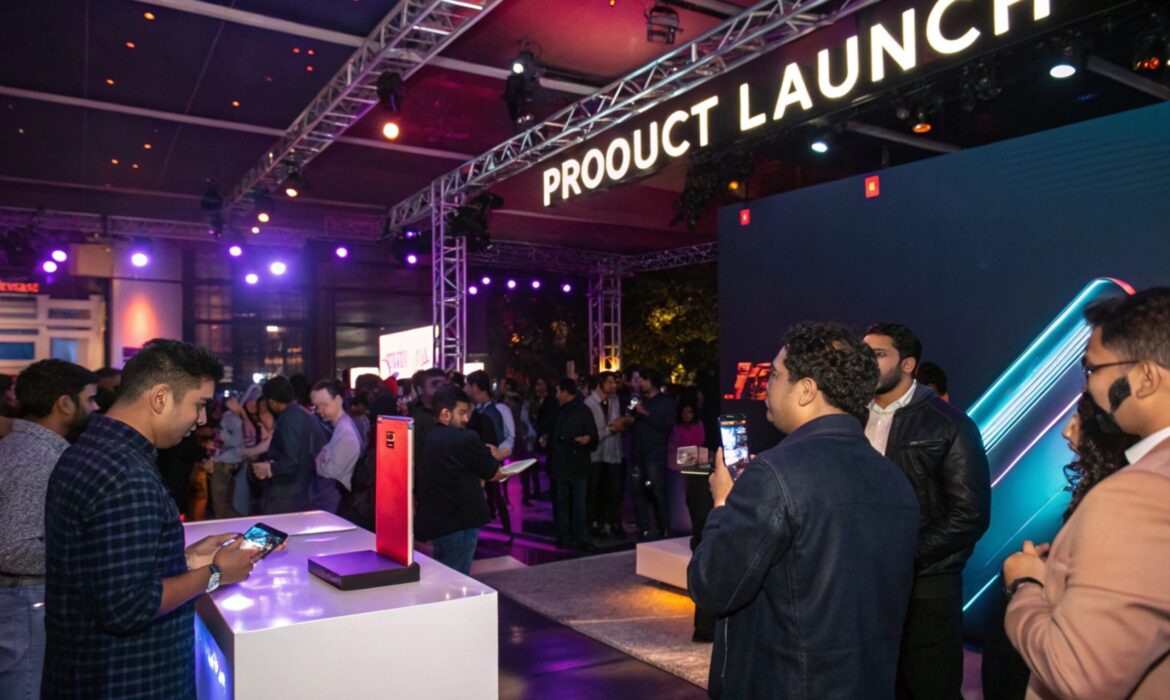
Product launch events get treated as the ultimate proof of a product’s promise. They’re visually polished, timed carefully, and built to generate applause, social shares, and strong registration numbers. The structural problem is simple: attention alone doesn’t create adoption.
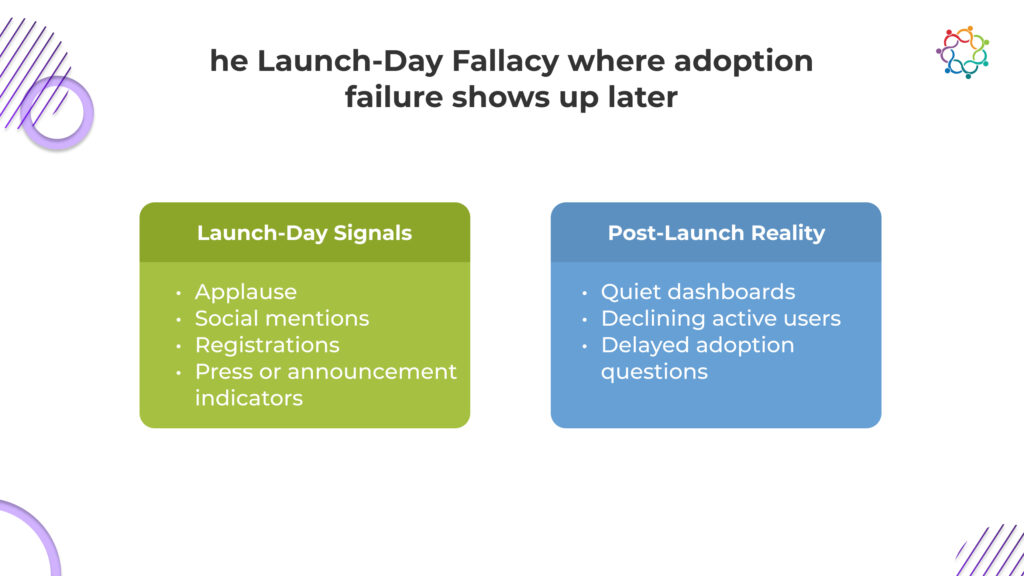
For product marketers and growth leaders, that’s genuinely frustrating. Launch-day applause rarely leads to lasting engagement, and usage often drops sharply once the excitement wears off. The issue isn’t that users fail the product. It’s that the launch fails the users.
This isn’t user apathy. It’s launch design. Attention, messaging, and onboarding get misaligned with how behavior change actually works. A launch event needs to function as the starting point for learning and action, not the peak of the whole effort.

Generating enthusiasm on launch day is surprisingly easy. Almost any product can look revolutionary for a few hours given a well-executed presentation, striking visuals, and solid PR. None of that measures whether anyone will actually use the thing.
The core flaw is assuming visibility equals adoption. Teams treat applause as understanding and awareness as action, but launch events reward immediate attention, not sustained engagement. The chain runs predictably: too much information crammed into too little time reduces what anyone actually retains, weak retention slows down how fast someone gets to a first real use, and that lag is exactly where abandonment sets in.
Most launches succeed as events and fail as adoption systems. The audience leaves excited but without a clear next step, and that’s the moment adoption decay quietly begins.

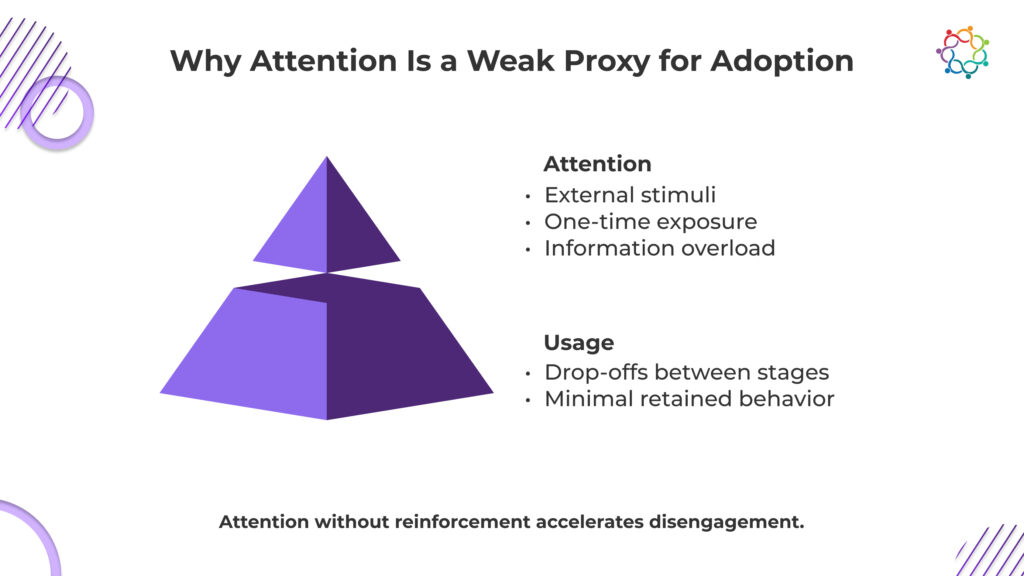
Engagement during a launch doesn’t prove sustained usage. An eye-catching demo gets people to look, listen, and cheer, but none of that guarantees they’ll actually open the product next week. Adoption runs on something different, repeated exposure, real motivation, an actual grasp of the value on offer.
Most launch events cram months of content into a few hours, forcing people to absorb far more than they can hold onto. Attendees leave amazed, not necessarily knowledgeable, and that excitement fades the moment they’re back in their normal routine. Without structured reinforcement afterward, drop-off is close to inevitable.
Attention can’t carry adoption on its own. Real adoption gets earned through guidance and reinforcement, not a single great hour on stage.

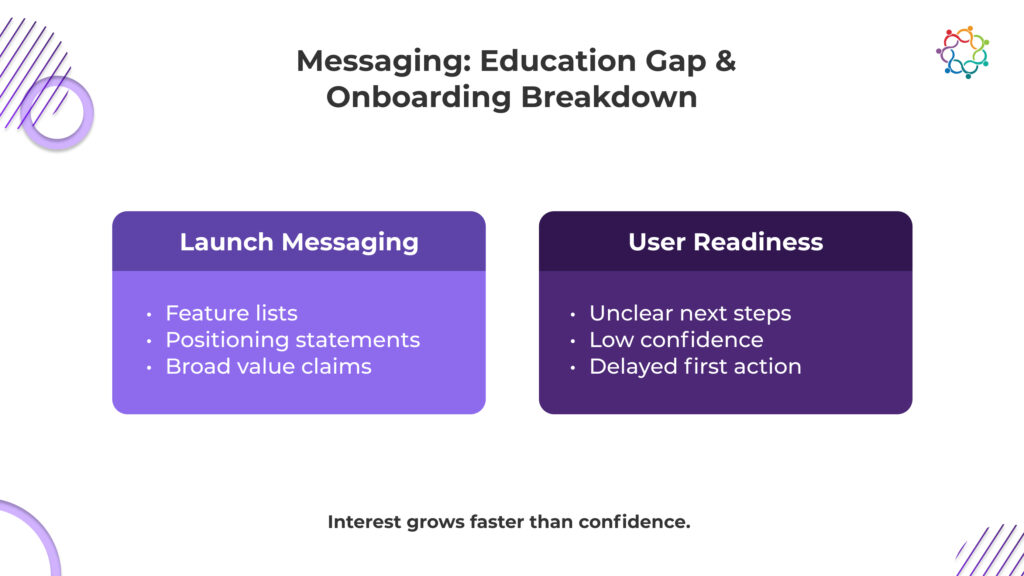
Even well-positioned products struggle after launch because messaging and education get treated as the same thing. They’re not. Messaging creates interest. Education creates the ability to actually use something, and confusing the two is where adoption starts to slow before it’s even begun.
Features Without Context
Launch presentations tend to highlight feature after feature in quick succession. Without knowing when or why to use a given feature, complexity climbs and confidence drops.
Positioning Without Practicality
Strong positioning explains who a product is for and why it matters. It rarely explains how to actually start.
Information Without Retention
Compressing a lot of information into a short session reduces retention on its own, and that weaker retention is exactly what slows someone down once they try to use the product independently.
Interest Without Confidence
Curiosity gets someone to sign up. Confidence is what keeps them using it. Without guided education, early enthusiasm fades into hesitation, and hesitation tends to turn into abandonment.
Adoption only improves once education gets built directly into the launch experience instead of getting pushed to later.
Most launch events prioritize spectacle over readiness. People frequently leave excited but unsure what to do next, and the experience feels disconnected because onboarding usually gets handled separately, often months after the launch itself.
Adoption stays fragile whenever launch and onboarding get split apart like this. Launch events tend to put the reveal ahead of preparation, favoring bold statements over concrete next actions, which leaves people without an obvious way to get value right away. Because onboarding gets treated as reactive instead of proactive, adoption often stalls before it even starts.
That’s not an accident. Adoption has to be deliberately designed. A launch event that ignores onboarding is effectively guaranteeing its own post-event drop-off.

Adoption isn’t a moment of excitement. It’s a behavioral transition, and behavioral transitions don’t happen on stage, they happen through repetition under reduced uncertainty.
A launch event creates awareness and emotional energy. What it doesn’t create is confidence. Once the spotlight fades, users are left with real questions: will this fit into my workflow, what happens if I get stuck. That uncertainty is the actual barrier standing between someone and real adoption.
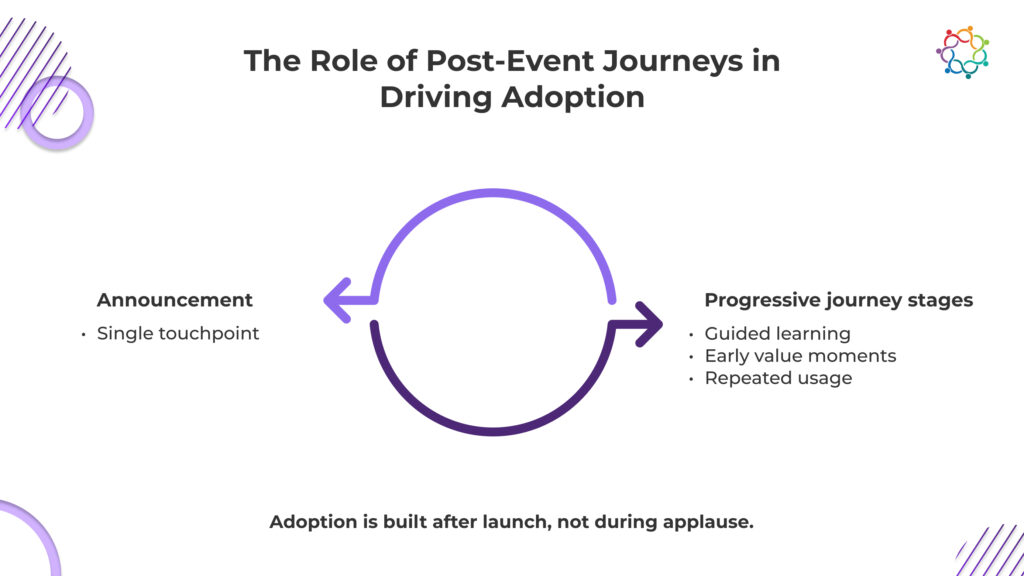
Post-event journeys exist to remove that uncertainty systematically. Spaced reinforcement, follow-up emails, contextual nudges, short webinars, guided in-app prompts, keeps the product present without overwhelming anyone. Each interaction chips away at ambiguity, which makes someone more willing to try something, and trying creates small repetitions that, paired with visible progress, start turning into a habit.
Tracking who activates, who stalls, and where the friction actually sits, especially when that data flows cleanly through your existing integrations instead of sitting in a separate tool, is what lets a team step in before confusion turns into someone quietly walking away.
The uncomfortable truth is that even a high-energy, well-attended launch can’t guarantee adoption on its own. Only a structured, pre-planned post-event journey actually converts awareness into behavior.

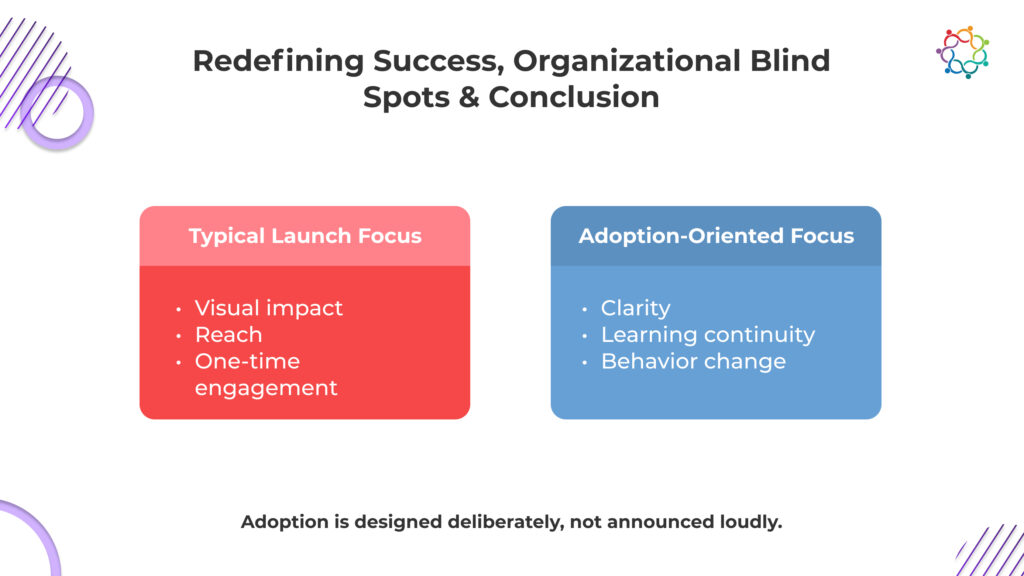
Conventional product launches lean heavily on spectacle, real money spent on announcements, visual polish, and a single big moment that rarely gets revisited. That prioritizes attention over behavior, and applause over adoption.
Successful launches take a different approach. Instead of treating the event as a peak, they treat it as the start of a learning process and a behavior shift. The goal is getting people to act, not just impressing them.
Effective launches translate attention directly into first use. The best events read more like the first chapter of onboarding than the conclusion of a campaign.
Marketing gets rewarded immediately. Product gets judged months later. Nobody actually owns the gap in between.
That disconnect isn’t a small oversight, it’s a structural flaw. Celebrating attention without owning what happens after creates exactly the conditions for disengagement. When nobody owns adoption continuity, that outcome is predictable, not surprising.
Launch-day applause is fleeting. Buzz doesn’t equal usage. A launch that doesn’t make first use easier within the first 24 hours has, functionally, failed at adoption, however well the event itself went.
An event management platform that connects launch-day engagement directly to what happens in the weeks after is what makes that continuity actually possible.
Curious what this looks like for your next launch? Book a demo with Samaaro today.

Samaaro is an AI-powered event marketing platform that enables marketing teams to turn events into a measurable growth channel by planning, promoting, executing, and measuring their business impact.
Location


© 2026 — Samaaro. All Rights Reserved.