Samaaro + Your CRM: Zero Integration Fee for Annual Sign-Ups Until 30 June, 2025
- 00Days
- 00Hrs
- 00Min

Key Takeaways (TL;DR)
1
2
3
→
Bottom Line:
Field marketing fails when influence never translates into measurable pipeline motion, and untraceable impact gets treated as optional.
Field teams execute flawlessly, most of the time. Regional activations and roadshows run on schedule, booths engage the room, and attendance hits target. Then leadership asks about ROI, and the conversation turns defensive.
The problem was never execution. It’s observability. A field event generates real influence through conversations, context, and behavioral signals, and most of that rarely survives the trip from the show floor into a CRM. By the time a pipeline review happens, the influence has diluted, timing gaps blur relevance, and attribution looks weak. Leadership treats the program as optional not because it failed, but because the dashboard never captured what actually happened.
This piece covers exactly where that signal gets lost, and what high-performing teams track instead.
The natural assumption is that better execution means better ROI. A polished booth and flawless logistics should, in theory, drive results. In reality, execution quality mostly improves the experience, not the attribution. A few specific dynamics explain why:
Flawless delivery can’t force revenue attribution on its own. The real challenge was never what happens at the event. It’s what happens after.

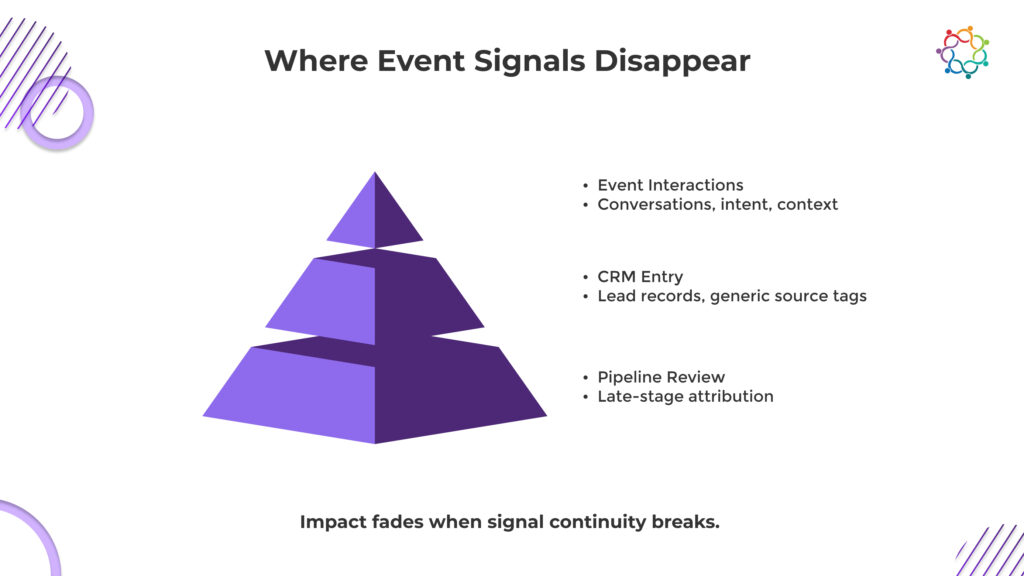
Flawless execution and a skeptical leadership team usually coexist for one reason: the real impact of a field event rarely travels intact from the floor to the pipeline. Conversations, intent, and engagement, the things that actually drive a deal, get flattened into a generic lead or lost outright.
3.1 Field Events Generate Signals, Not Immediate Outcomes
Every conversation, demo, and engagement at an activation produces a behavioral signal: intent, interest, a specific problem surfacing. Those signals point to a future opportunity, they rarely close a deal on the spot. Immediate CRM entry usually strips that nuance down to a generic lead, and whatever impact exists tends to surface later, during a sales conversation or a nurture cycle, not at the moment of capture.
3.2 Signal Loss Between Event and CRM
Once a lead lands in the CRM, context tends to disappear. Notes go generic, urgency fades, and a rich in-person conversation flattens into a numeric entry. A lead captured today might not convert for months, erasing any visible connection back to the original interaction, and that flattened signal makes real influence look intermittent to whoever’s reviewing the pipeline.
3.3 Attribution Happens Too Late
Revenue attribution usually happens at the moment a deal closes, long after the field event that actually influenced it. Traditional attribution models rarely credit an event directly for pipeline creation when the influence was indirect. Field events aren’t ineffective, they’re invisible in the reporting, and that invisibility is exactly what leads leadership to undervalue them.

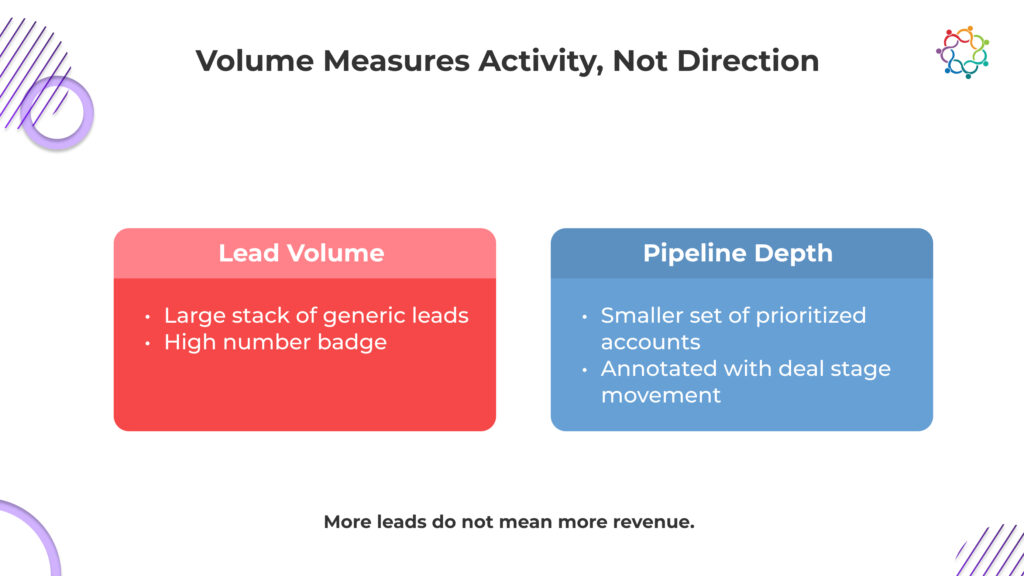
Lead volume is still the most common success metric, and it consistently misrepresents value. Volume shows reach. It says almost nothing about relevance. A flood of low-priority leads can actually erode sales’ trust in the whole program.
Volume-heavy reporting signals to leadership that field events are a checkbox exercise rather than a real revenue input. The critical distinction is simple: volume is activity completed, revenue is strategic influence actually applied.

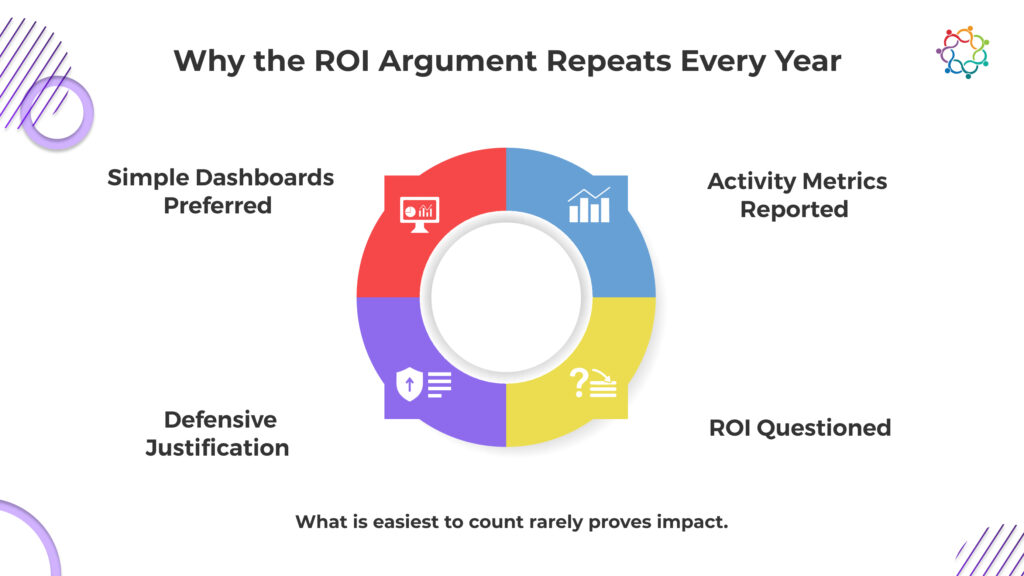
Most teams report what’s easiest to count, not what actually moves revenue. Execution stays visible. Influence doesn’t. Teams that earn real leadership trust track the signals that survive past the event.
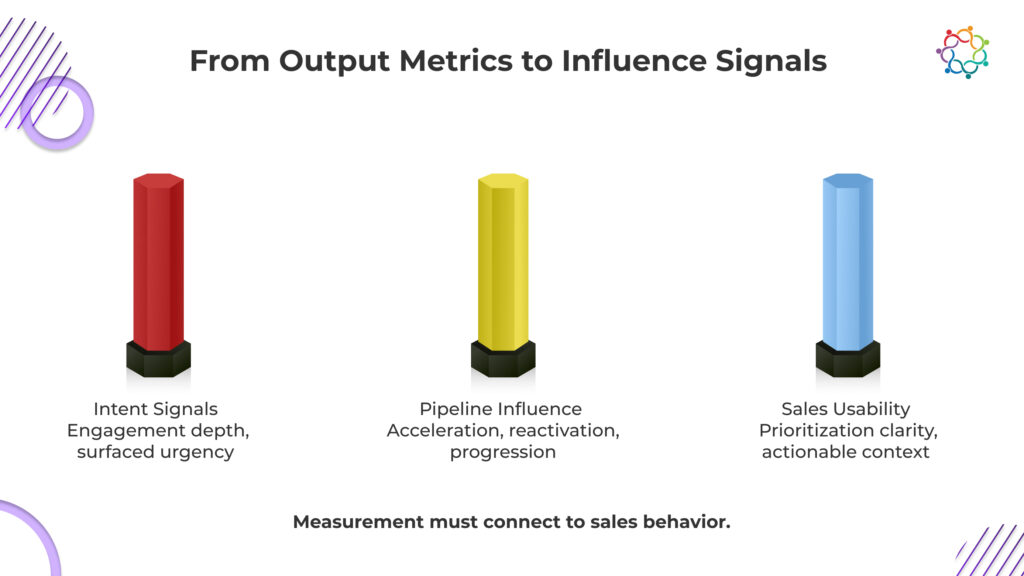
5.1 Intent Signals Over Counts
Badge scans and session attendance aren’t the number that matters. What matters is who engaged deeply, what problem actually surfaced, and where real urgency showed up. Without evidence of that depth, an event stays invisible to leadership no matter how many people walked through it.
5.2 Pipeline Influence, Not Ownership
A field event rarely closes a deal on its own, even though most reports get written as if it should. What high-performing teams track instead is acceleration and reactivation, whether the event actually nudged an opportunity forward. Events are catalysts here, not closers, and the measurement needs to reflect that role honestly.
5.3 Sales Usability of Event Output
If what an event produces doesn’t change how sales prioritizes or follows up, it’s just noise. Real measurement checks whether the intelligence generated actually gets used. Influence that never changes behavior effectively doesn’t exist.

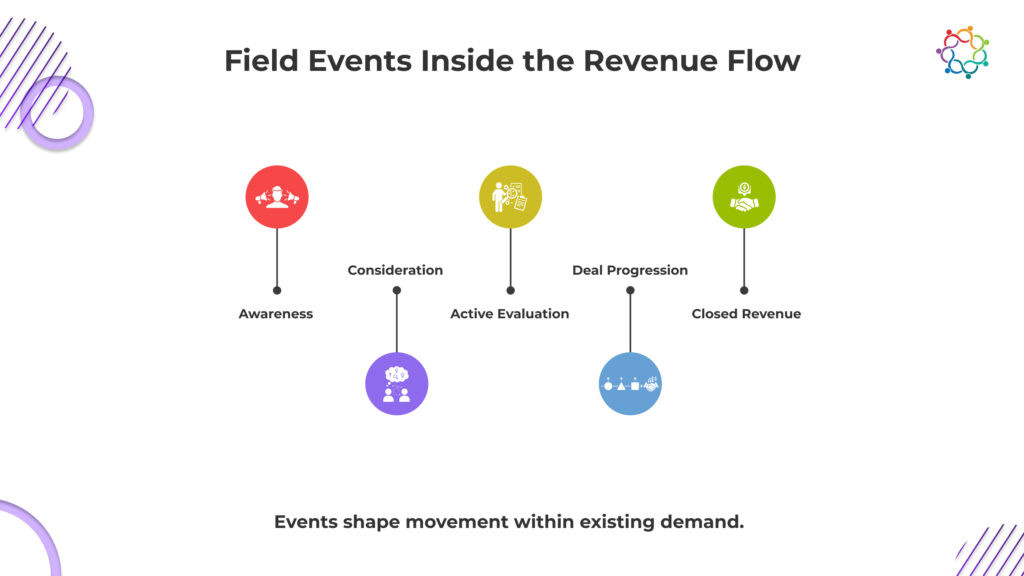
Most field events run in a vacuum, planned and reported as though a deal starts at the booth. It rarely does. Field marketing usually intersects with a buying journey that’s already in motion, influencing a decision rather than starting one from zero.
Ignore that reality in the measurement, and every dashboard makes the program look optional. Leadership sees cost without a clear connection to outcome, and the events end up only as credible as the signal they leave behind in the actual revenue flow.
Field teams execute well and still get questioned, and the reason is structural. Most organizations are built to actively obscure the influence a field event actually has.
The systems and incentives most organizations run on reward what’s easy to measure, not what actually drives revenue. That’s a misaligned metric problem, not a poor execution problem.

Execution alone was never going to resolve the ROI question. A field event generates real influence, and if that signal never survives the trip to sales and the CRM, leadership will keep treating it as optional.
Volume, attendance, and flawless delivery can’t substitute for observable impact. The teams that win this argument track intent, behavioral signals, and pipeline influence, not just activity, and a field event becomes a genuine strategic input only once measurement actually captures what it did.
An event management platform that carries engagement data through to the CRM intact, not flattened into a generic lead, is what actually makes that influence visible.
Book a demo with Samaaro to see what that looks like for your next field program.
1. Why do field marketing events often fail to show measurable ROI despite flawless execution?
Field marketing events fail on measurement, not execution. Without data connecting the event to pipeline, even a flawless event can’t prove ROI, and the budget gets questioned.
2. What is “signal loss” between an event and the CRM system?
Signal loss happens when real buyer signals, conversations, questions, intent cues, never make it into the CRM. They get lost in notebooks, badge scans, and delayed data entry.
3. What is the difference between lead volume and pipeline influence?
Lead volume counts contacts collected. Pipeline influence measures whether those contacts actually moved a real opportunity forward. Volume fills a report. Influence fills a forecast.
4. What are intent signals, and why do they matter more than badge scans?
A demo request, a specific question, an accepted meeting, these show genuine buying interest. A badge scan only proves someone walked past a booth.
5. How can field marketing teams align event measurement with overall revenue motion?
Define shared metrics with sales, sync event data into the CRM quickly, and report on deal influence rather than raw activity. Measurement tied to revenue is what keeps a field program funded.

Samaaro is an AI-powered event marketing platform that enables marketing teams to turn events into a measurable growth channel by planning, promoting, executing, and measuring their business impact.
Location


© 2026 — Samaaro. All Rights Reserved.