Samaaro + Your CRM: Zero Integration Fee for Annual Sign-Ups Until 30 June, 2025
- 00Days
- 00Hrs
- 00Min

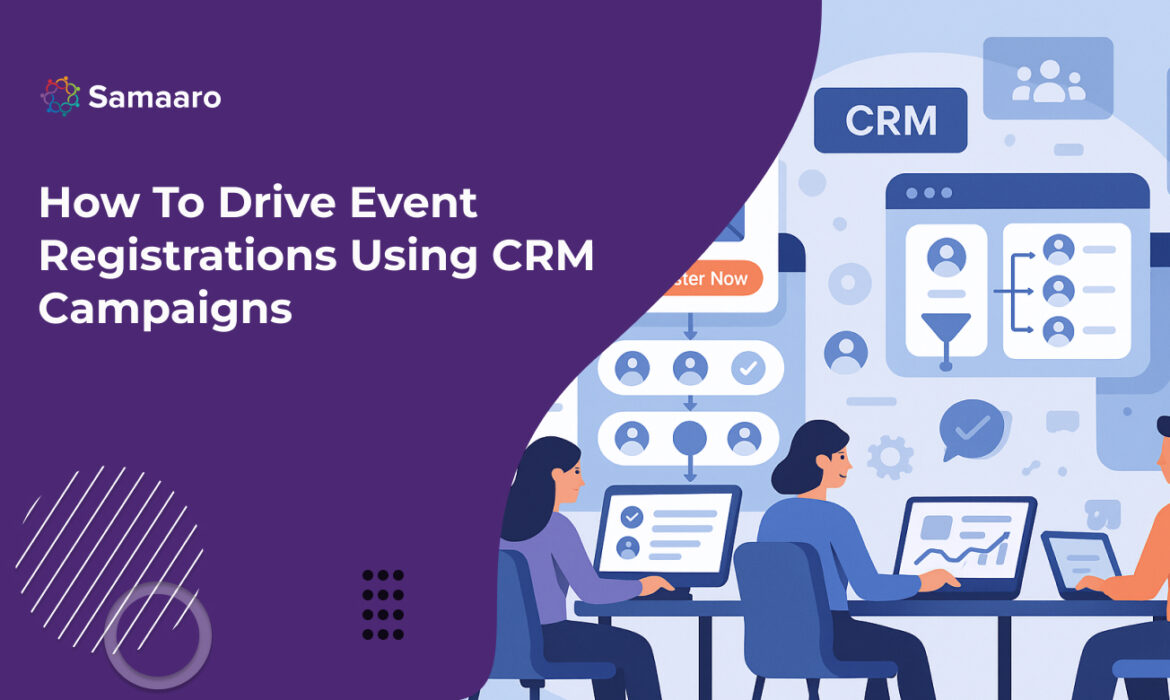
You’ve got names in your CRM. Companies. Job titles. How many emails they’ve opened. Which content they downloaded. What stage they’re at in their buying journey.
Then you run an event.
And you export a list. Upload it somewhere else. Send generic emails to everyone.
It’s like having a map to treasure and ignoring it to dig randomly.
Your CRM already knows who will register for your event. You just need to actually use that data.
Here’s what happens at most companies:
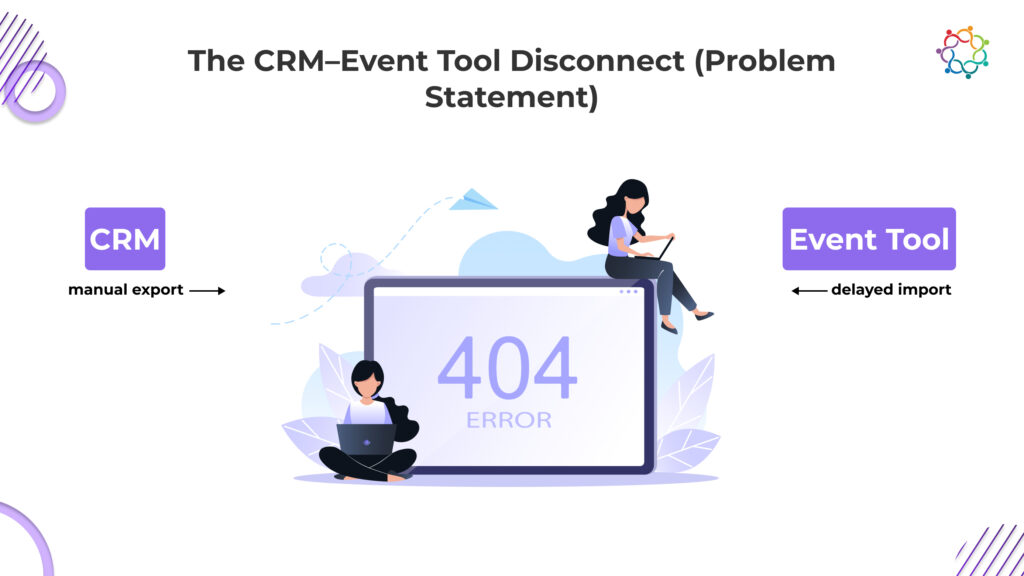
Marketing owns the CRM. Sales owns the CRM. Events owns a separate tool.
They don’t talk to each other.
So marketing pulls a contact list from the CRM. By the time it reaches the event tool, it’s old. Half the emails are outdated. Bounces pile up.
Someone registers for the event. The CRM doesn’t know about it. Sales doesn’t call them with context. Marketing doesn’t know who showed up.
Event happens. Data gets dumped manually back into the CRM. Hours of work. Spreadsheet errors. Contact records end up duplicated or missing.
And the whole time, everyone’s treating it like this is normal.
It’s not. It’s costing you registrations.
Stop thinking of your CRM and event tool as two systems. Start thinking of them as one.
Your CRM knows who buys from you. Who’s close to buying. Who’s interested in what. Your event tool knows how to collect registrations and track attendance.
Put them together and something different happens.
Before you send a single email, look at your CRM.
Who’s actually worth inviting?
Not everyone. Be specific.
Find people who’ve attended your events before. Find people who opened your last five emails. Find people in your target company sizes and industries. Find people with the right job titles for your event topic.
Example: You’re running an event on marketing automation. Look for CMOs and marketing directors at companies with 50-500 employees who’ve downloaded your marketing ops guide and opened at least half your emails.
That’s someone who will register.
Don’t just blast your whole database. That person at a company that’s too small or too big or wrong industry? They won’t come. Don’t waste the email.
A generic email says “Join us for our event.”
A personalized email says “I saw you downloaded our guide on marketing ops. We’re hosting an event with a keynote on exactly that topic. Here’s why you should care.”
Your CRM has everything you need to write that second email.
Use their name. Reference what they’ve done. Mention the specific session that matters to them.
One click to register. That’s it.
Someone opens your invitation but doesn’t register. What do you do?
Nothing, usually.
What you should do: follow up.
A week later send a different message. Maybe highlight a different speaker. Maybe mention something they missed in the first email. Maybe try a different channel like WhatsApp or SMS for high-value prospects.
Some people need to see it twice before they move.

They registered. Now what?
Send them the agenda. Introduce the speakers. Explain why each session matters.
Build actual excitement. Not hype. Real excitement.
People show up to things they’re looking forward to. People skip things they forgot about or weren’t actually interested in.
Here’s what actually changes the game.
Your CRM sends information to your event tool. That part is straightforward.
But then your event tool sends information back to your CRM. Automatically. In real time.
Someone registers? Their CRM record gets updated immediately.
They show up and attend a specific session? That gets recorded.
They don’t show up? That also gets recorded.
Not for reporting. For action.
Sales sees someone registered. They know to call with relevant context instead of cold calling.
Marketing can see exactly which invitations led to registrations and which registrants actually came.
Your CRM can automatically do something when data changes. If someone attended a product demo at the event, automatically send them a consultation booking email.
No manual work. No spreadsheets. No waiting.

Your marketing team tags someone in the CRM as “Enterprise Marketer.”
You send them an invitation to your event with a keynote on enterprise marketing.
They click. They register.
Immediately, their CRM record updates. Status: “Registered Event X.”
The event happens. They actually attend the product demo session.
Their CRM record updates again. Tag added: “Attended Product Demo.”
Your CRM automatically sends them an email: “You attended our demo. Here’s how to schedule a consultation.”
Sales rep opens their record and sees all of this. They know this person is interested. They have context. They call.
All automatic. No one had to do manual work.
Track the numbers. That’s how you know.
What percentage of people you invited actually registered? Target 5-15% for warm audiences.
Of the people who registered, how many actually showed up? Some won’t. Find out why and fix it.
Of the attendees, how many became sales opportunities? This is the real number that matters.
Are your CRM-sourced attendees closing deals faster than people from other sources? Most companies find 2-3x faster.
What’s the deal size? Are these better deals than cold leads?
Look at these numbers. Compare to your cold outreach. You’ll see the difference immediately.
This isn’t about sending prettier emails.
This is about connecting the dots between who someone is, what they’re interested in, and what you’re selling.
Someone in your CRM is in “evaluating” stage for a deal. You invite them to an event on that exact topic. They attend. Now they’re in “negotiation” stage.
That connection is invisible without CRM-event integration. With it, it’s crystal clear.
Without it, you’re guessing. With it, you’re measuring.
The difference between companies crushing their events and companies struggling with events isn’t the event tool.
It’s whether they actually connected their CRM.
Good companies send invitations to everyone. Great companies send personalized invitations to the right people based on CRM data.
Good companies hope people register. Great companies know people will register because they targeted the right audience.
Good companies spend days cleaning up data after events. Great companies have data flow automatically.
The setup takes work. You map fields. You configure sync rules. You build automations.
But once it’s done, everything changes. Higher registration rates. Better attendance. Faster deals.
This is the difference. Not budget. Not better tools. Integration.
Want to connect your CRM with your next event campaign and unlock truly integrated workflows? Book a free walkthrough of Samaaro’s CRM integrated workflows today.
Q: Why would I even use my CRM for event campaigns?
A: Because it already has the targeting data that determines whether someone will register. Their company size. Their industry. Their job title. How they’ve engaged with you. Their buying stage. A cold email gets maybe 2% registration rate. A personalized CRM-based email gets 8-12%. That’s the difference.
Q: How do I actually segment my CRM for an event?
A: Start simple. Look for past attendees at similar events. Look for people who’ve engaged with content related to your event topic. Look for people with the right job titles at the right company sizes. Combine those criteria. You don’t need fancy. You need specific.
Q: What’s the actual difference between manually exporting a list and having the systems talk?
A: Manual export means you pull data once and it immediately goes stale. Two-way integration means data flows continuously. Someone registers at 2 AM? Your CRM knows about it instantly. Someone attends a session? That’s recorded automatically. No delays. No manual work. No errors from copying data wrong.
Q: Do reminders actually make a difference for no-shows?
A: Yes. Massively. Most people skip events because they forgot or got distracted, not because they don’t want to go. Send a reminder seven days before. Another one day before. Another a few hours before. Include their specific agenda and location info. This alone cuts no-shows by 15-25%.
Q: Does it matter which CRM I use?
A: No. Salesforce. HubSpot. Zoho. Dynamics 365. All work fine. Pick the one your team already uses. If your CRM choice is driven by event integration, you’re thinking about it backward. Use what you have and integrate your event tool with it.
Q: How do I actually measure if this is working?
A: Track these four numbers: what percentage of people you invited registered, what percentage of registrants showed up, what percentage of attendees became sales opportunities, and how fast they closed compared to other sources. Compare these to your cold outreach. The gap is your answer.