Samaaro + Your CRM: Zero Integration Fee for Annual Sign-Ups Until 30 June, 2025
- 00Days
- 00Hrs
- 00Min

Key Takeaways (TL;DR)
1
2
3
→
Bottom Line:
Converting a media audience into attendance is less about the venue than about not spending the daily trust you’ve earned, from the first RSVP to the app they open at the door.
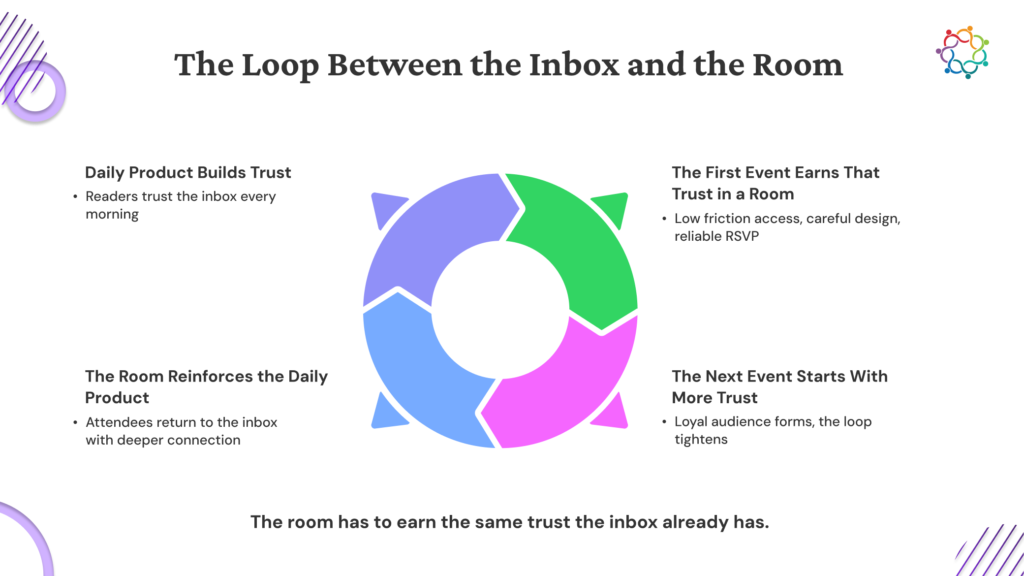
The inbox already has their trust. The room still has to earn it.
Your readers trust you in their inbox every morning. Getting them into a room and a second audience alongside them is a different kind of trust to earn.
A financial daily’s first event usually has to work for two audiences at once: the professional subscriber base built over years, and a broader consumer audience the event itself is meant to introduce. Both are meeting the brand outside its usual format for the first time, which makes converting a media audience into attendance as much about protecting reputation as filling seats.
That’s the part worth taking seriously. A first event carries brand risk; a hundredth newsletter send doesn’t. A confusing or clunky experience doesn’t just disappoint the people in the room; it dents the daily trust the publication spent years building.
What follows are the practical decisions that matter most for a first event serving two audiences, starting with the one that trips up first-timers: whether to build the attendee experience as a web app or a native app.

It’s easy to underestimate how much is riding on a first event, because on paper it’s just one evening. The risk is that it’s one evening carrying decades of credibility.
A subscriber base built on daily accuracy and judgment walks in with high expectations. A check-in line that snakes out the door, or an app nobody can figure out, reflects on the exact reputation the publication earned in print and online. The dual audience raises the stakes again: professional subscribers measure the event against the standard the brand set for itself, while the newer consumer audience is forming its very first impression of the brand through this single experience.
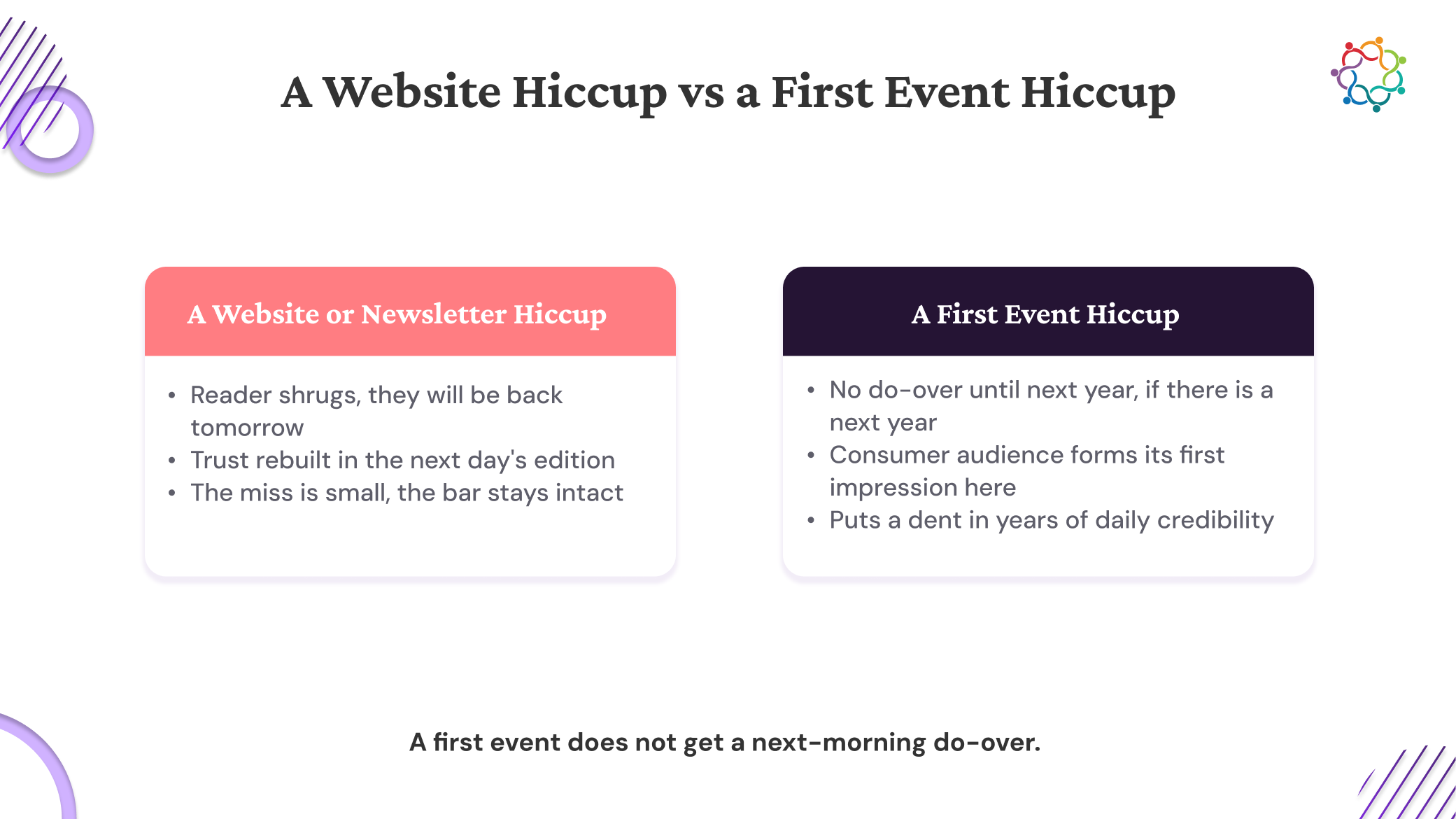
There’s also no do-over. A subscriber forgives a website hiccup because they’ll be back tomorrow anyway. An attendee who has a bad night at the one event this year doesn’t get another chance until next year, if there is a next year. None of this is a reason to avoid the event. It’s a reason to make deliberate, low-risk choices on the practical decisions instead of defaulting to whatever launches fastest.

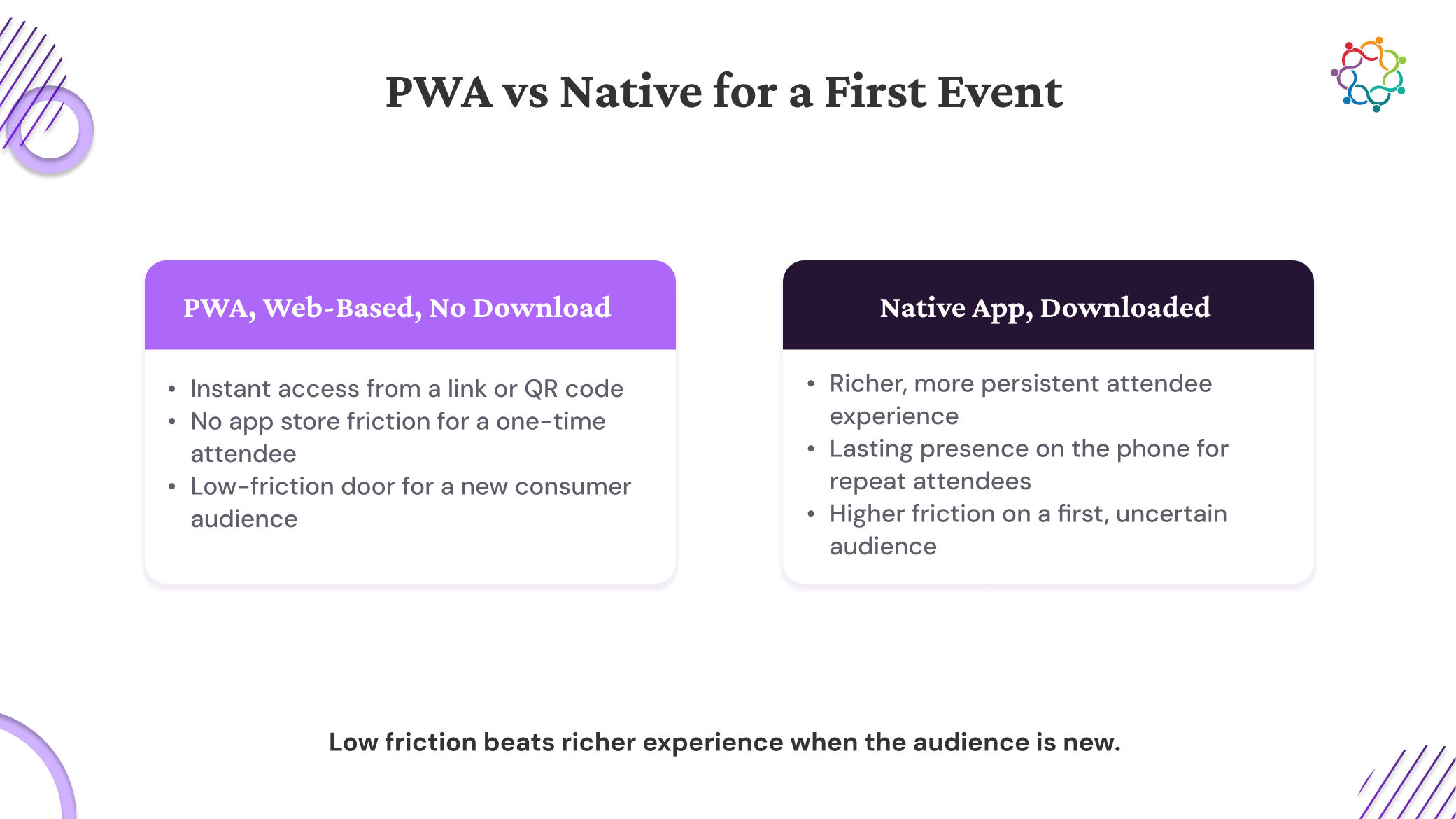
For a first event, the app choice comes down to a single trade-off: friction versus depth. Here’s how to think about it.
Common trap: choosing native for a first event because it looks more polished or more “real” as a brand statement. Polish that costs downloads, in front of an uncertain and partly unfamiliar audience, is a bad trade. Low friction beats a slightly richer experience when the goal is simply getting a new audience through the door at all.

The app is one decision; serving two different audiences with one event is another, and it’s easy to get wrong by trying to please everyone with a single agenda.
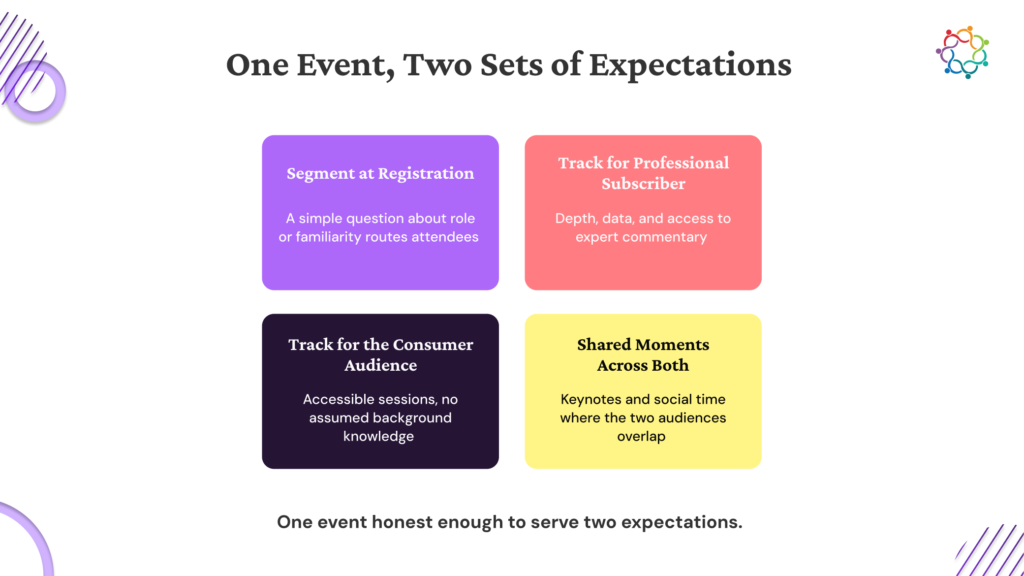
Professional subscribers usually want depth: data, expert commentary, the kind of session that justifies their subscription. A broader consumer audience is often there for something more accessible. One agenda trying to satisfy both tends to feel thin to the professionals and over the newcomers’ heads. The fix is a track structure inside the same event: some sessions are built for the depth subscribers expect, others are pitched to a general audience, so the event serves both without watering either down.
Registration can start the sorting. A single question at signup, about someone’s role or how well they know the publication, lets the event point people toward the sessions built for them instead of leaving everyone to guess from one long agenda. The two audiences don’t need two separate events. They need one event honest enough to admit it’s serving two sets of expectations under the same roof.

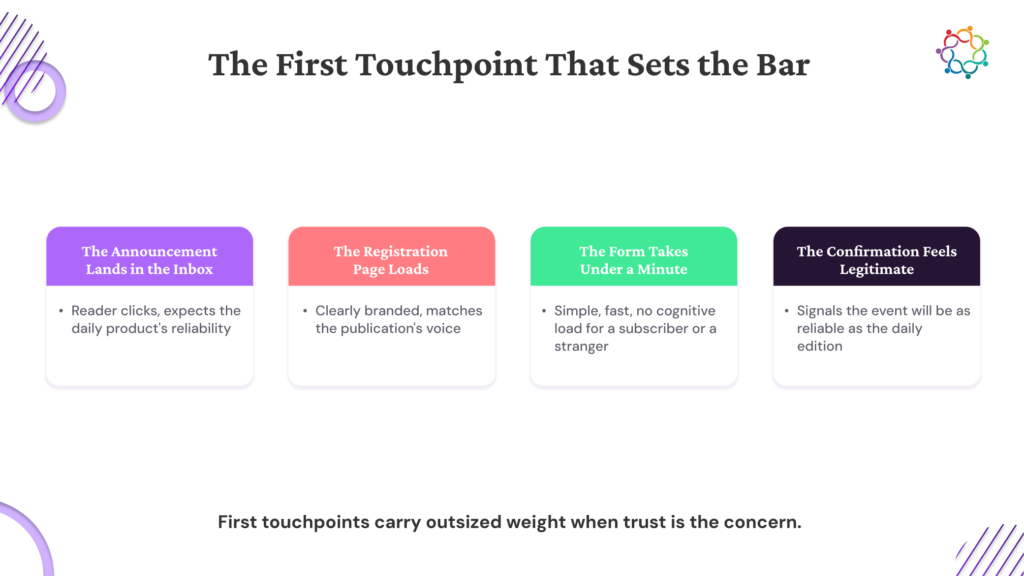
Before the app, before the sessions, there’s the RSVP. It’s often the first real interaction anyone has with the event, and for a brand protecting its credibility, it carries outsized weight. A good first RSVP does three things:
This is a small thing to get right next to the app decision, but it’s the very first touchpoint, and first touchpoints carry outsized weight when brand risk is the concern. It’s also where industries like finance already lean on RSVP data to shape a smoother attendee journey from the very first click.

Low-friction access for a first-time audience, sessions designed for two different sets of expectations under one roof, and a registration experience that doesn’t undercut years of daily trust in its first moment: those are the decisions that decide whether a first event builds the brand or bruises it.
Readers already trust the publication in their inbox every morning. The event’s only real job is to avoid spending that trust down before the room is even full. Getting the RSVP experience right, so it feels as reliable as the daily product readers already know, is exactly what RSVP management software is built to support from the very first signup.
So treat the first event as carefully as you treat the front page, starting with the registration flow readers see first. Samaaro can help you make that first impression a reliable one.
1. How does event manager software help serve two audiences at one event?
Professional subscribers want depth and data; a newer consumer audience wants something more accessible. Event manager software supports a track structure inside one event and can route people at signup with a single question, so each audience is pointed toward sessions built for them. One event runs two clear paths without either group feeling lost.
2. Should a first media event use a web app or a native app?
For a first event reaching a partly new audience, a no-download web app wins. A native app is more polished but costs downloads, and the consumer audience tends to abandon at the install prompt. A web app opens instantly from an email link or QR code. Once you have repeat attendees, revisiting native makes sense.
3. Can an event management app offer both a web app and a native app?
Yes, and that flexibility is what a first-timer wants. An event management app that offers a no-download web app alongside native apps lets you start light for a first event, then lean on the native experience later, once there’s a loyal returning audience for whom a one-time download is worth it. You aren’t locked into one choice.
4. What does event organizer software do to design tracks for two audiences?
Event organizer software lets you build parallel session streams inside a single event: expert, data-heavy sessions for subscribers, and more accessible topics for a general audience. A short registration question routes each person toward the right track, so both audiences stay engaged and neither feels the event wasn’t built for them.
5. How does event coordinator software help protect brand credibility at registration?
Event coordinator software gives you a smooth, clearly branded registration page, which signals the event will meet the same bar as the daily product readers already trust. A glitchy or generic flow undermines confidence before anyone arrives. Since the RSVP is often the first touchpoint, getting it clean protects years of reputation at the moment it’s most exposed.
6. Is an event planning tool worth it for a media brand’s first event?
For a first event carrying real brand risk, an event planning tool keeps the moving parts, registration, sessions, and the two-audience structure, organized in one place rather than improvised. That reduces the chance of a visible stumble on the night, which is what protects the trust the publication has spent years building with its readers.

Samaaro is an AI-powered event marketing platform that enables marketing teams to turn events into a measurable growth channel by planning, promoting, executing, and measuring their business impact.
Location


© 2026 — Samaaro. All Rights Reserved.