Samaaro + Your CRM: Zero Integration Fee for Annual Sign-Ups Until 30 June, 2025
- 00Days
- 00Hrs
- 00Min

Key Takeaways (TL;DR)
1
2
3
→
Bottom Line:
Media event monetization comes down to turning a trusted audience and a hard-won contact database into delegate and sponsor revenue, which is exactly the work the manual era makes hardest to scale.
The Spreadsheet That Got You This Far
Years of running the awards night off a spreadsheet, and it worked. Then you start wondering what the next one could be if it did not have to.
For a trade publication, the annual awards or the flagship conference is often a real business: delegate fees, sponsor packages, and a room full of the exact audience the brand spent years earning. Media event monetization is the work of turning that trusted audience and the contact database behind it into delegate and sponsor revenue. For a long time, most of that work has been done by hand.
The spreadsheet, the manual invites, the sponsor list kept in someone’s head: none of it was wrong. It got the event built and the brand known. The manual era worked. The real question is what the same event becomes when the manual steps stop setting the ceiling.
What follows is the manual era, next to what changes after you automate, and why the contact database turns out to be the thing worth building on, even more than the event itself.

Same event, two very different back offices. Here’s what changes, task by task, when the manual steps come out.
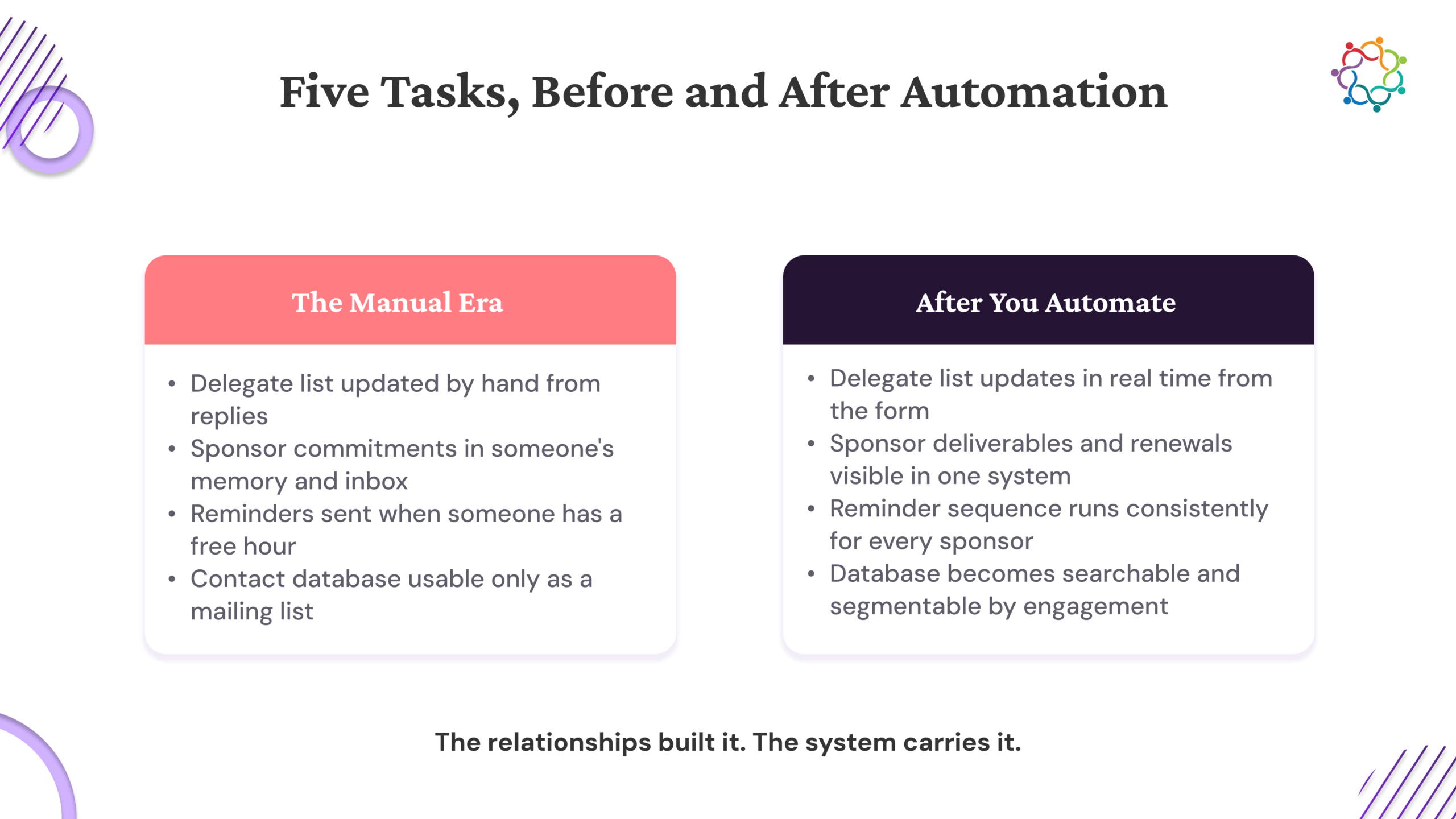
Manual era: Registrations arrive by email and get typed into a spreadsheet by hand, deduped when someone remembers, and reconciled against payments the week of the event.
After you automate: Delegates register themselves through a form that captures and organizes everyone, payment status included, with no retyping and no version that’s three edits out of date.
Manual era: Who committed, who paid, and what each sponsor was promised lives across email threads and one person’s memory, which turns renewal season into detective work.
After you automate: Every sponsor’s commitments, deliverables, and history sit in one place, so renewals become a conversation backed by a record rather than a scramble to reconstruct last year. That record is also what makes a confident renewal ask possible, because you can show a sponsor exactly what they got.
Manual era: Confirmations, reminders, and joining details go out as individual emails, or in a bulk send that treats a platinum sponsor and a single-ticket delegate exactly alike.
After you automate: Communication is scheduled and segmented, so delegates, speakers, and sponsors each get what’s relevant to them without anyone sending forty emails the night before. The platinum sponsor feels looked after and the single-ticket delegate gets a clean experience, both from the same system.
Manual era: The list of everyone who ever attended or sponsored exists, technically, but it’s scattered across spreadsheets and inboxes, too messy to use for anything.
After you automate: The database becomes searchable and segmentable, so the brand can invite the right people, target the right sponsors, and see who’s engaged, all from one place. The list stops being a liability nobody trusts and becomes something the sales team can sell against.
Manual era: A second event, or a regional edition, means roughly doubling the manual work, which usually means it doesn’t happen or it burns someone out.
After you automate: Because the process runs on rails, a second edition reuses the same setup, so growth stops depending on finding twice the hours. The second edition inherits the first one’s setup instead of starting from a blank spreadsheet.
Common trap: assuming automation means losing the personal touch that made the events work. It’s the opposite. Taking the manual data entry off the team’s plate is what frees them to spend time on the sponsor relationships and program quality the audience shows up for.

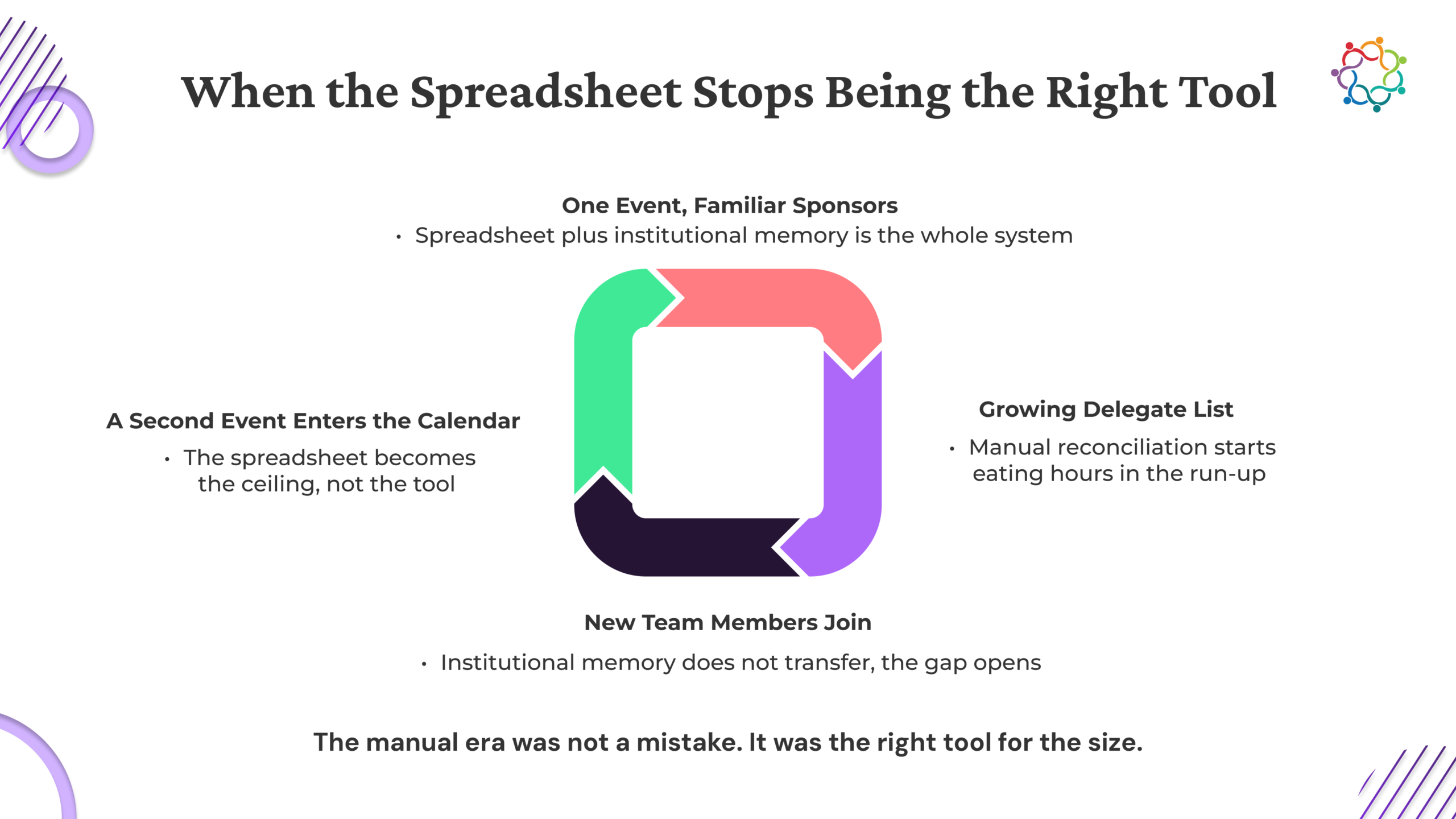
It’s worth being honest about why the manual approach lasted so long, because it wasn’t stubbornness. The spreadsheet worked. For one event a year, a capable person with the system in their head can run the whole thing: they know the sponsors personally, they remember who sat where last year, and the scale is small enough that nothing slips. At that size, the manual method is often better than a tool, because the personal knowledge is real and the overhead is close to zero. There’s no software to learn, no per-seat cost, and no gap between what the tool knows and what the organizer knows, because they’re the same thing.
The strain shows up at the edges of growth. The person who holds it all in their head becomes a single point of failure, and every ambition, a second event, a bigger sponsor roster, a regional edition, runs straight into the same ceiling: there are only so many hours, and too much of the operation lives in one place that can’t be handed off. One person going on leave the wrong week can put the whole event at risk. The spreadsheet didn’t stop working. The brand simply started wanting things the spreadsheet couldn’t scale to.

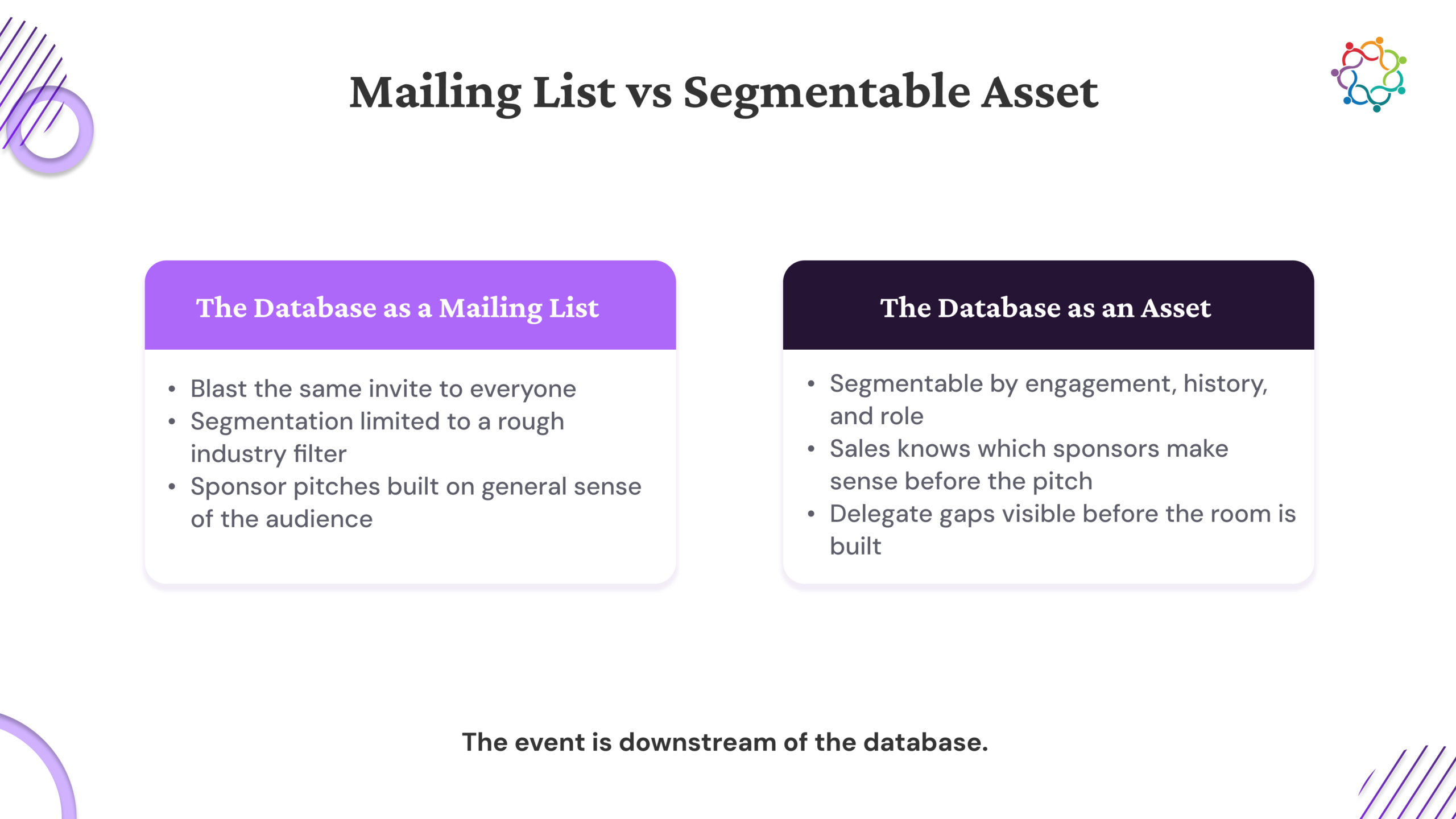
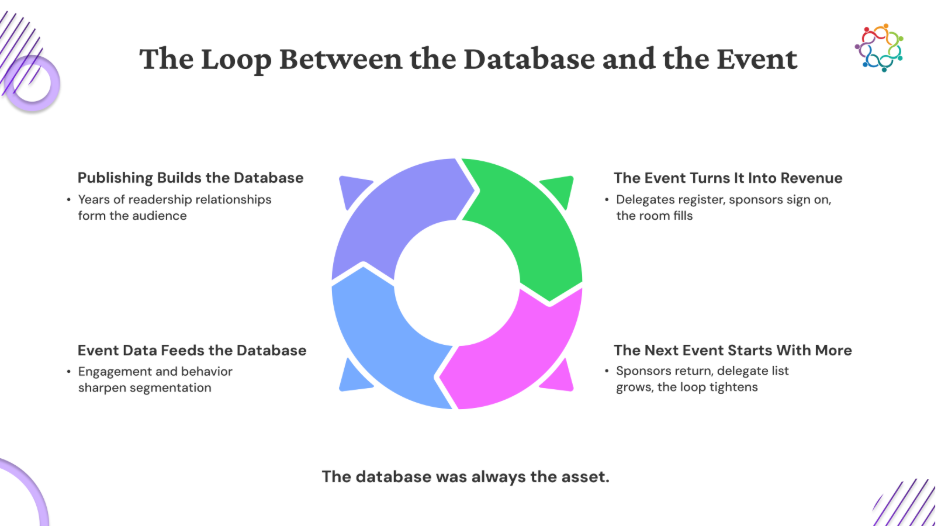
Here’s the reframe that changes how you think about the whole operation: the most valuable thing a media brand’s events produce is the database behind them. Every delegate who ever registered, every sponsor who ever signed, every company that ever expressed interest, that list is the compounding asset. The event is how you build it and how you activate it, but the database is what carries value from one year to the next. A single event is a moment; the database is the thing that appreciates, because every edition adds to it.
In the manual era, that asset mostly sits idle, because a list scattered across spreadsheets and inboxes is too fragmented to work. Once it’s consolidated and segmentable in one place, it becomes the engine behind everything: you can pitch sponsors with real audience data instead of a rate card, spin up the next event to a warm list, and show a high-value sponsor exactly the audience they would reach rather than describing it. The event fills the database. The database is what you monetize, again and again. That’s the shift from running an event to running an asset.

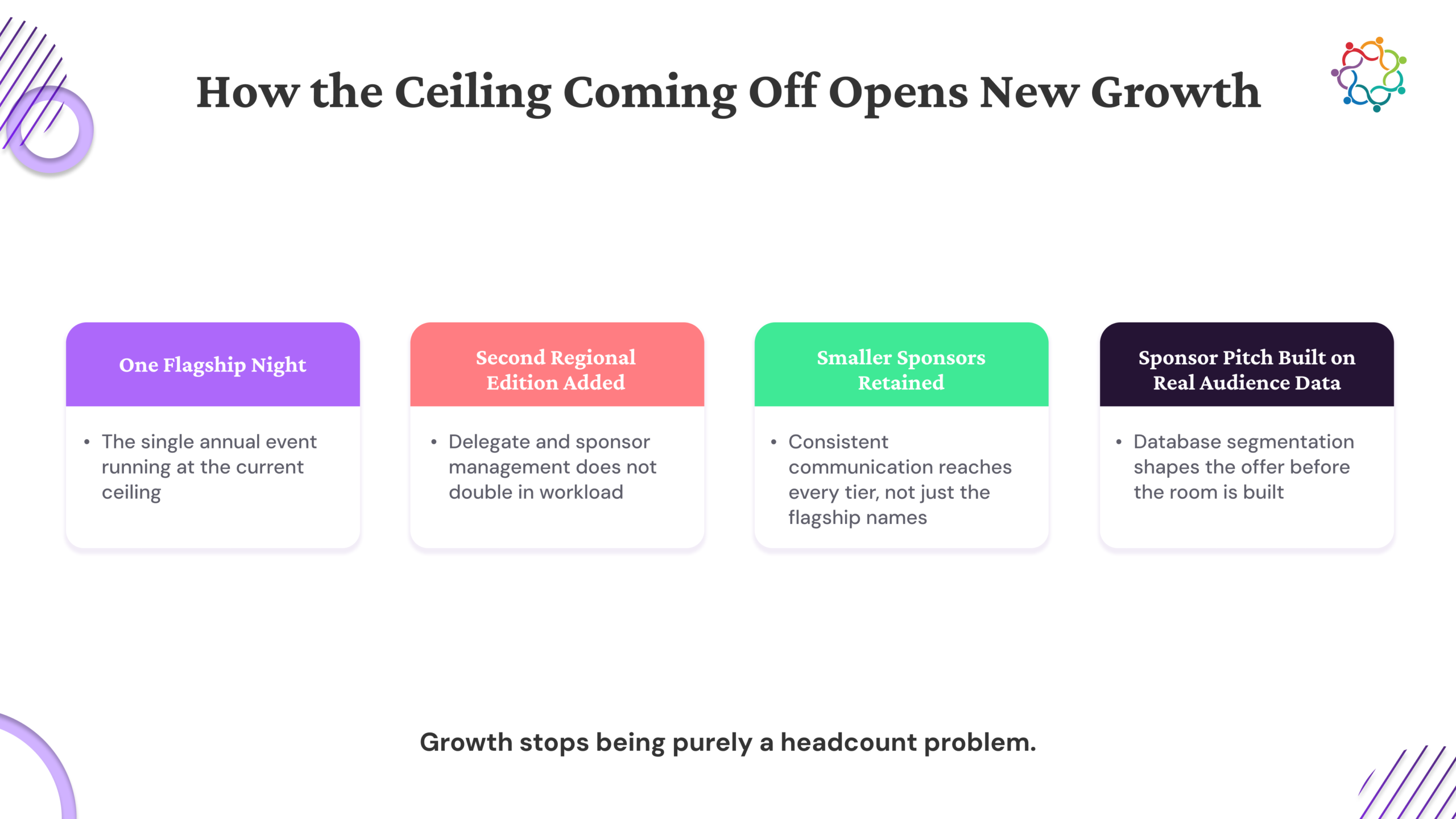
So what does the brand do with the ceiling lifted? A few things that were impractical by hand become routine.
None of this requires a big team. Small teams already run remarkable event volume this way: the 20-person operation running hundreds of events a year works only because the manual steps were taken out, not because anyone hired an army. For a media brand, the same shift is what lets the awards night finally become an events business.

The delegate list, the sponsor records, the communication, the database, the path to a second event: each one either runs on a spreadsheet and a person’s memory or it runs on rails. The manual version built the brand. The automated version is what lets the brand grow past what one person can hold.
The awards night off a spreadsheet did its job: it built the audience and the database that a real events business runs on. The next step is building on that database on purpose. Moving delegate registration, sponsor tracking, and audience data onto event marketing software is what turns that hard-won list into revenue you can grow deliberately.
So look at where your event still lives in one person’s head and one fragile spreadsheet, and picture the same event without that limit. When you want the next edition to run on the database instead of the spreadsheet, that’s what Samaaro is for.
1. How does event registration software help move a media event off the spreadsheet?
Event registration software lets delegates sign themselves up, with payment status captured automatically, so nothing gets retyped into a spreadsheet or reconciled by hand the week of the event. The list stays current instead of living in a version that’s three edits out of date, which is the first step to running the event as a real business.
2. What does event manager software do for sponsor tracking and renewals?
Event manager software keeps every sponsor’s commitments, deliverables, and history in one place, so renewal season stops being detective work across old email threads. Because you can show a sponsor exactly what their package delivered last year, the renewal ask is a conversation backed by a record rather than a scramble to reconstruct the details.
3. How does an event management app handle communication for delegates and sponsors?
An event management app schedules and segments communication, so confirmations, reminders, and joining details reach the right people at the right time. A platinum sponsor and a single-ticket delegate get experiences suited to each, both from the same system, without anyone sending forty individual emails the night before the event.
4. Why is the contact database the real asset for a media brand’s events?
Every delegate, sponsor, and interested company becomes a contact the brand can reach again, and that list compounds with every edition. The event builds the database; the database is what the brand monetizes year after year, pitching sponsors and filling the next event from a warm list rather than starting cold each time.
5. How does event coordinator software make a second edition practical?
Event coordinator software lets a second event, or a regional edition, reuse the same registration, communication, and sponsor setup, so it’s a copy-and-adjust rather than a rebuild from scratch. Growth stops depending on doubling the manual hours, which is how a small team runs two editions instead of burning out on one.
6. Can an event planning tool help a small team grow the event?
Yes. An event planning tool lets a small team plan regional editions and new formats from a setup that already exists, instead of a blank spreadsheet. Mid-tier sponsors finally get consistent attention, and sponsor pitches draw on who attends and how engaged they are, so the program grows without hiring an army.

Samaaro is an AI-powered event marketing platform that enables marketing teams to turn events into a measurable growth channel by planning, promoting, executing, and measuring their business impact.
Location


© 2026 — Samaaro. All Rights Reserved.