Samaaro + Your CRM: Zero Integration Fee for Annual Sign-Ups Until 30 June, 2025
- 00Days
- 00Hrs
- 00Min

You’ve got a marketing calendar. It says send the welcome email on Monday. Send the reminder on Friday. But people don’t register on your calendar. They register at 11 PM on Tuesday. They abandon their cart on Saturday morning. They show up an hour before the event.
Your calendar emails miss all of it. Trigger-based emails are different. They fire when people actually do something. Not when you planned to send them. When someone registers? Immediate welcome email. When someone abandons their cart? Immediate nudge.
This is the difference between hoping people engage and knowing they will.
A trigger-based email fires automatically when someone takes a specific action. Registration? Trigger fires. Email goes out. Adds tickets to cart but doesn’t complete? Trigger fires. Reminder email goes out. Event ends? Trigger fires. Thank you email goes out.
It’s not a mass broadcast to everyone at once. It’s a targeted email to one person at the exact moment they’re most likely to care. This changes everything about engagement because timing plus relevance equals results.
The difference is massive. One big email to everyone might get 2% opens. One triggered email to one person at the right moment gets 15-20% opens. That’s the power of trigger-based.
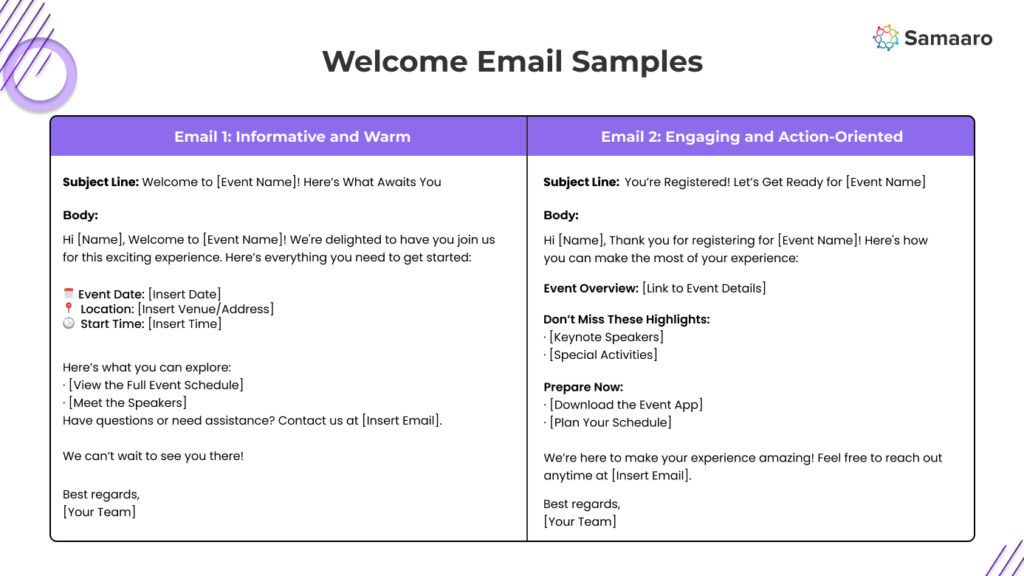
They just registered. They’re excited. This is the moment to capitalize on that excitement and get them invested in the event before they forget about it.
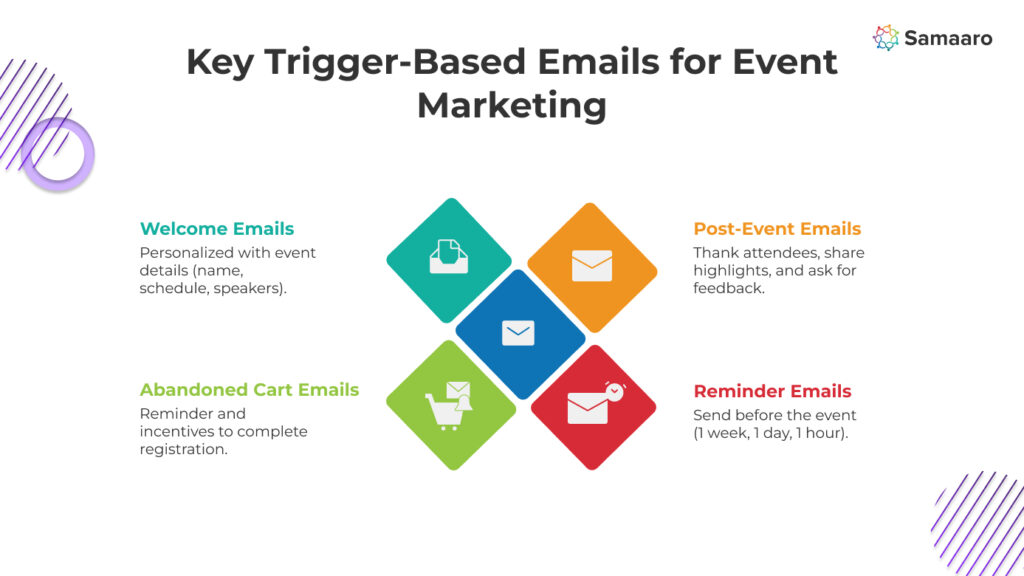
Send them immediately. Not tomorrow. Now. Include their event date, time, location, and what to expect. Give them resources like the session schedule, speaker bios, and preparation tips so they can start planning.
Make them feel like they made the right decision registering. A warm welcome sets the tone for everything that comes next.
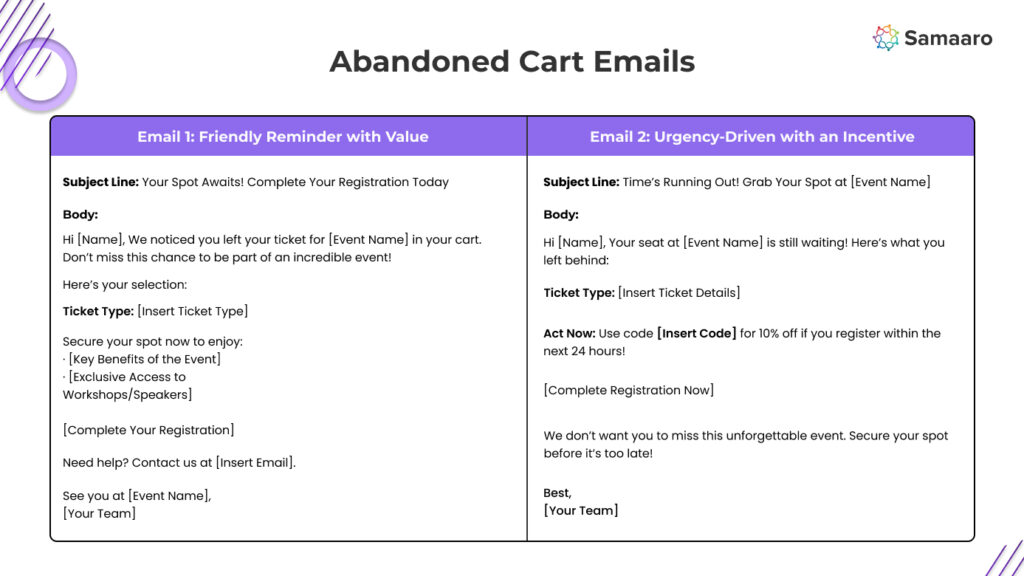
Someone starts the registration process. They add tickets to their cart. Then they leave. Maybe they got distracted. Maybe they weren’t sure. Maybe they wanted to think about it.
Send them an email within 24 hours. Remind them they left something behind. Not aggressive. Just a friendly nudge that says “Hey, we noticed you started. Want to finish?” Include what they were buying and give them a reason to complete the registration.
Offer something that helps them decide. A small discount. Free access to content. Bonus materials. This recovers 20-30% of abandoned registrations. Three follow-up emails over seven days usually outperform a single send.
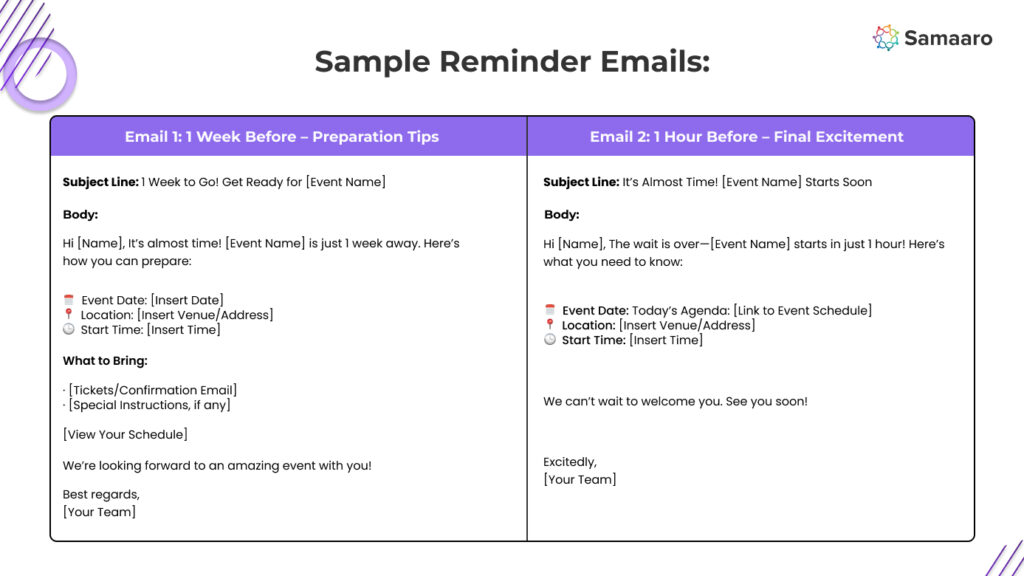
People forget. Even people who registered. Especially people who registered. They sign up with the best intentions, then life gets busy and the event slips their mind.
Send reminders at specific intervals. Seven days before for preparation. One day before for logistics. A few hours before for final details. Each one is different and serves a different purpose in getting them ready.
The seven-day email is about what to expect and how to prepare. The one-day email tells them parking, what to bring, when to arrive. The final email focuses on location, timing, and check-in instructions. Reminders cut no-shows by 15-25% because they bring the event back to top of mind.
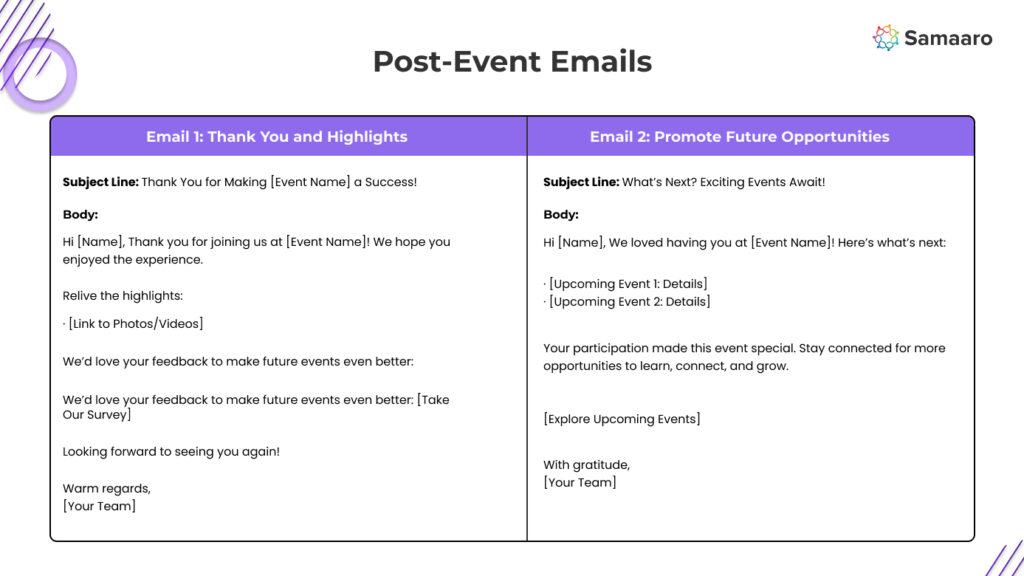
The event happened. Now what? Many organizers think the work is done. But this is when you build lasting relationships and gather insights for improvement.
Send a thank you email within 24-48 hours. While it’s still fresh in their mind. Share highlights with links to recordings, photos, and key takeaways. This keeps the momentum going and extends the value of the event beyond the day itself.
Ask for feedback with a short survey. What worked. What didn’t. Mention upcoming events to keep the relationship going. This turns an event into an ongoing relationship, not a one-time transaction.
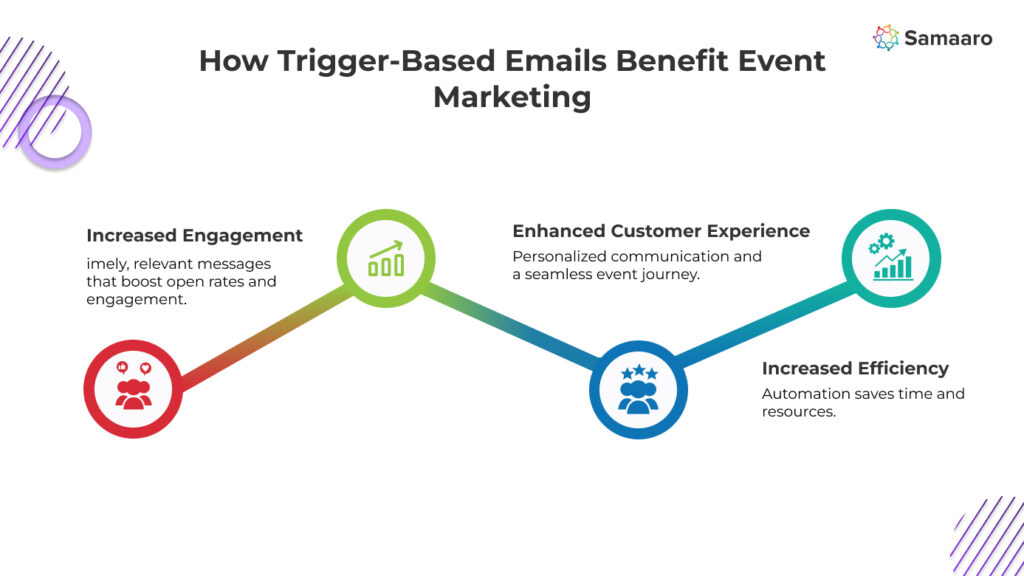
People open emails that feel relevant to them right now. Not some random marketing message from a calendar. A message that responds to something they just did. When someone registers, they want confirmation and information. That welcome email delivers both.
When someone’s cart is abandoned, they might be deciding whether to commit. That nudge email at the right moment helps them tip from “maybe” to “yes.” When an event is tomorrow, they want practical logistics. That reminder email gives them exactly what they need to show up prepared.
When an event is over, they want closure and to feel appreciated. That thank you email provides both. Timing plus relevance equals engagement. This is why triggered emails get 3-5x higher open rates than batch emails.
You need a system that tracks actions. Registration. Cart abandonment. Event attendance. Session participation. When it sees an action, it automatically sends the right email to that person at that exact moment.
Not manual sending. Automatic sending. Once you set it up, it runs forever. You’re building workflows that respond to behavior, not managing spreadsheets and send dates.
This is the future of event marketing. Set it up once and let it work for every attendee while your team focuses on strategy and content instead of manual email sends.
Don’t just use their name. That’s table stakes now and doesn’t move the needle anymore. Reference their ticket type. The sessions they registered for. Their company. What they’ve downloaded before.
Say something like “You registered for the AI track. Here are speakers we think you’ll love in that track based on your interests.” Not generic. Specific to them.
Open rates jump 30-50% when emails feel personally relevant to each person. Deep personalization wins every time over surface-level personalization.
Most people read email on phones. If it’s not readable on mobile, they delete it without reading. This is non-negotiable. Test it on your actual phone. Make buttons big enough to tap without zooming in.
Keep text short. Use one column. Short paragraphs. Avoid images that don’t load on mobile. Simplify ruthlessly.
One readable email on mobile beats one beautiful email on desktop that no one can read on their phone.
Try different subject lines. Different send times. Different CTAs. Document what wins. Build a playbook of what actually resonates with your specific audience.
Say you find that subject lines starting with a question get 40% open rate while statements get 20%. Document that. Use it next time.
Most organizers never test anything. They just send the same way every event. The ones who test consistently beat them by miles.
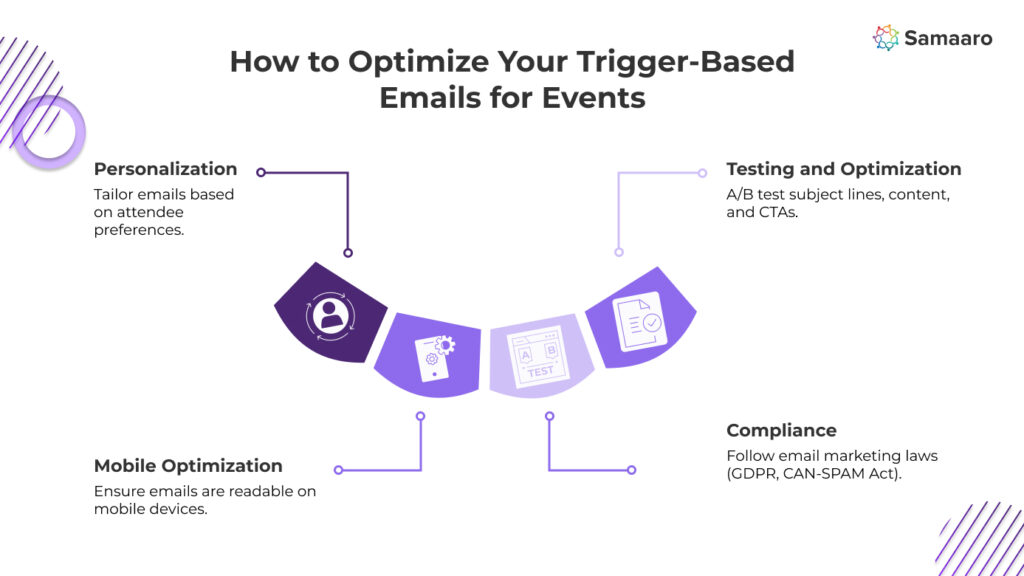
Include an unsubscribe link. Make sure people actually opted in to your emails. Don’t spam people who didn’t ask to hear from you.
It’s not complicated. Just respect people’s inboxes. Include your company contact information. Be clear about why you’re sending.
Legal compliance matters and so does not burning bridges with your audience. Respect goes both ways.
Companies using trigger-based emails see 3-5x higher open rates than blast emails. That’s not a small difference. That’s game-changing. Abandoned cart emails recover 20-30% of lost registrations just by sending a friendly reminder at the right moment.
Reminder emails cut no-shows by 15-25% because they bring the event back to mind when people get busy. Post-event emails that ask for feedback get 40% response rates because people are still engaged after the event.
These aren’t small numbers. This is significant business impact from emails that actually matter to people.
Your event marketing should respond to what people do. Not what your calendar says. When someone registers, celebrate it immediately. When someone hesitates, nudge them at that moment.
When an event is coming, remind them practically. When it’s over, close the loop. Trigger-based emails do all of this automatically.
Once you set them up, they work forever. This is the future of event email marketing. Not batch and blast. Responsive and relevant.
Connect with Samaaro today, book a demo or start your free trial to experience how our platform can help you craft and send personalized, automated trigger-based emails for your events.
Q: Why would I use trigger-based emails instead of just sending one big email to everyone?
A: Because one big email to everyone goes unread. A triggered email to one person at the right moment gets opened and clicked. Triggered emails get 3-5x higher open rates because timing and relevance matter. Your audience doesn’t care about your calendar. They care about messages that actually apply to them right now.
Q: What action actually triggers each type of email?
A: Welcome emails trigger when someone completes registration. Abandoned cart emails trigger when someone starts registration but doesn’t finish within a few hours. Reminder emails trigger based on countdown windows: seven days before, one day before, same-day morning. Post-event emails trigger automatically when the event ends or when someone attends a session.
Q: How do I actually recover people who started registering but didn’t finish?
A: Send them an email within 24 hours. Not angry. Not pushy. Just “Hey, we noticed you started registering. Want to finish?” Include what they were buying. Give them a reason to complete. A small discount. Free bonus content. Something that tips them from “thinking about it” to “let’s do it.” You’ll recover 20-30% of abandoned carts this way.
Q: When should I send reminders and what should they actually say?
A: Send reminders seven days before, one day before, and a few hours before the event. Seven days before: show the agenda so they can plan. One day before: tell them parking, what to bring, when to arrive. A few hours before: last chance reminders and how to get there. Short and practical. People ignore reminder emails with giant agendas. Give them exactly what they need that day.
Q: How much personalization actually matters in these emails?
A: A lot more than just using someone’s name. Reference their ticket type. The sessions they registered for. Content they’ve downloaded. Their company industry. Open rates jump 30-50% when emails feel personally relevant. Generic personalization (just the name) is now expected, not impressive. Deep personalization wins.
Q: What do I actually need to set up trigger-based emails?
A: You need an email platform that tracks attendee actions and can automatically send emails based on those actions. Something that connects to your registration system and fires emails when someone registers, abandons, or completes. Platforms like Samaaro, HubSpot, or Mailchimp have this. Once you connect them, you set up the workflows once and they run automatically forever.