Samaaro + Your CRM: Zero Integration Fee for Annual Sign-Ups Until 30 June, 2025
- 00Days
- 00Hrs
- 00Min

1
2
3
→
Bottom Line:
Event lead capture only creates a pipeline when the handoff preserves context and enables informed sales action.
Event teams often measure success at the point of lead capture. Once data is collected, the process is considered complete, and performance is evaluated based on volume rather than downstream impact.
This framing creates a disconnect between marketing activity and sales outcomes. Leads are treated as finished outputs instead of inputs into a larger system. The issue is not effort or intent. There is a structural misalignment between capture and activation.
An event does not create a pipeline when leads are captured. It creates a pipeline when leads are acted on.
This blog explains what happens after event lead capture and why the handoff determines whether captured data translates into real pipeline outcomes.
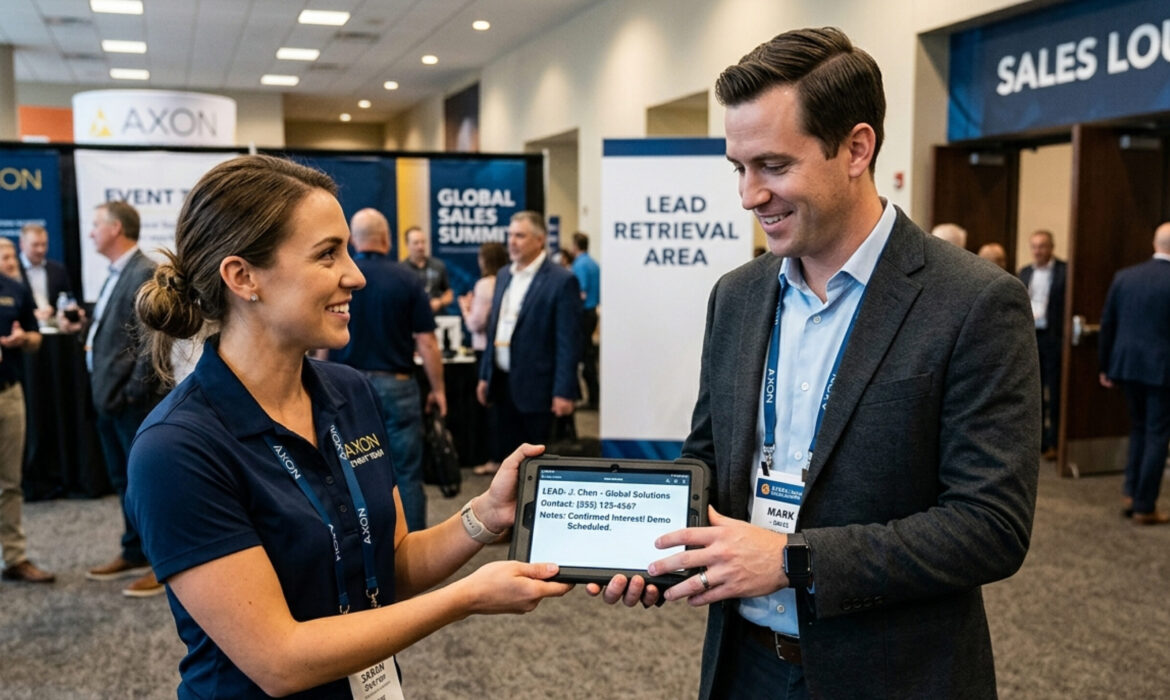
Event lead capture produces interaction data, including identity, engagement signals, and conversation context. But this data is raw input, not a pipeline. What happens next is what determines whether it was worth capturing at all.
The operational procedure that occurs after marketing finishes its work and sales start theirs is known as the handoff. It involves more than just transferring data between systems. It entails making judgements on which leads are given priority, what information goes with each record, who is responsible for follow-up, and what the sales representative is supposed to do.
A sales representative opens their CRM and finds something helpful when the handoff is successful. The contact record includes the source of the event, a structured note summarising the topics covered, an assigned owner, an intent classification (e.g., assessing alternatives or investigating a particular use case), and a recommended course of action. The rep does not need to investigate. They continue a conversation that has already started.
When the handoff does not work, the rep sees a name, an email address, a company, and a field that says Source: Conference. There is no context, no classification, and no direction. The rep either delays outreach while trying to piece together what happened or reaches out generically and restarts the conversation from zero. Either way, the value of the interaction is lost.
The gap between these two outcomes is entirely determined by what decisions were made, and by whom, between the moment the badge was scanned and the moment the record appeared in the CRM.
A working handoff requires clarity on several things at once. What was the nature of the interaction? Was it a brief booth visit, a longer product conversation, or a specific request for follow-up? What account does this contact map to, and is that account already in a sales cycle? What signals suggest readiness, urgency, or a specific buying trigger? Who is responsible for the next steps, and within what timeframe?
Without answers to these questions embedded in the record, sales engagement becomes guesswork.
Speed and context are both required for effective follow-up. Either one without the other fails.
In the first 24 hours after an event interaction, buyer intent is at its highest. The conversation is recent, interest is active, and the context is still clear in both parties’ minds. A sales rep who reaches out during this window with a message that reflects the actual discussion has a strong foundation to work from. The follow-up feels like a continuation, not a cold approach.
By 48 hours, the window is narrowing. Competitors who were at the same event have likely already followed up. The buyer has returned to their regular workflow and may be managing a backlog of messages. A generic outreach at this stage is easy to deprioritize because it does not remind the buyer of anything specific.
By 72 hours and beyond, the interaction has faded. The buying trigger that may have been present at the event, such as a frustration voiced in conversation or a product capability that caught their attention, is no longer top of mind. Even a well-structured message at this stage is working against the decaying signal strength.
The implication is straightforward. Fast outreach without context produces generic communication that does not reflect the interaction. Contextual outreach that arrives late loses the advantage of recency. Effective follow-up requires both enough structure in the handoff to enable relevance and enough speed in the process to maintain timing.
This means the handoff cannot be treated as a batch process. Waiting until the end of the event to transfer all records at once introduces delays that weaken every lead in the set. The closer the handoff is to real time, the better the conditions for effective engagement.
Event lead capture is not a complete process on its own. Its value depends entirely on what happens after the data is collected. Without a structured handoff, captured information remains disconnected from sales action.
For events to influence the pipeline, data must move forward with clarity, enriched with context, and aligned to what sales teams actually need to engage. That means decisions made during the handoff, not just tools or volume at capture, are what determine whether the event contributed to revenue.
This also affects how events are measured. When handoff quality is low, pipeline attribution becomes unreliable. Leads that could have converted are lost, not because interest was absent, but because the transition was broken. Attribution models that only track capture miss this entirely, which leads to inaccurate ROI reporting and undervaluation of events as a revenue channel.
The case for events as a consistent pipeline source is not built at the booth. It is built in the process that follows. When the handoff works, events generate outcomes that are traceable, repeatable, and worth investing in. When it does not, even high-volume capture produces little beyond a list that sales ignores.
The outcome is not determined at the point of capture. It is determined at the point of activation, and activation begins with a handoff that actually works.

Samaaro is an AI-powered event marketing platform that enables marketing teams to turn events into a measurable growth channel by planning, promoting, executing, and measuring their business impact.
Location


© 2026 — Samaaro. All Rights Reserved.