Samaaro + Your CRM: Zero Integration Fee for Annual Sign-Ups Until 30 June, 2025
- 00Days
- 00Hrs
- 00Min

When marketing events, most marketing teams work hard but not always strategically. Most event campaigns just end up being reactive and fragmented through multiple channels or favoured because whatever tactic they are currently engaged in, or feel is the least effort. As a result, some of the best events fail to meet their attendance and ROI goals.
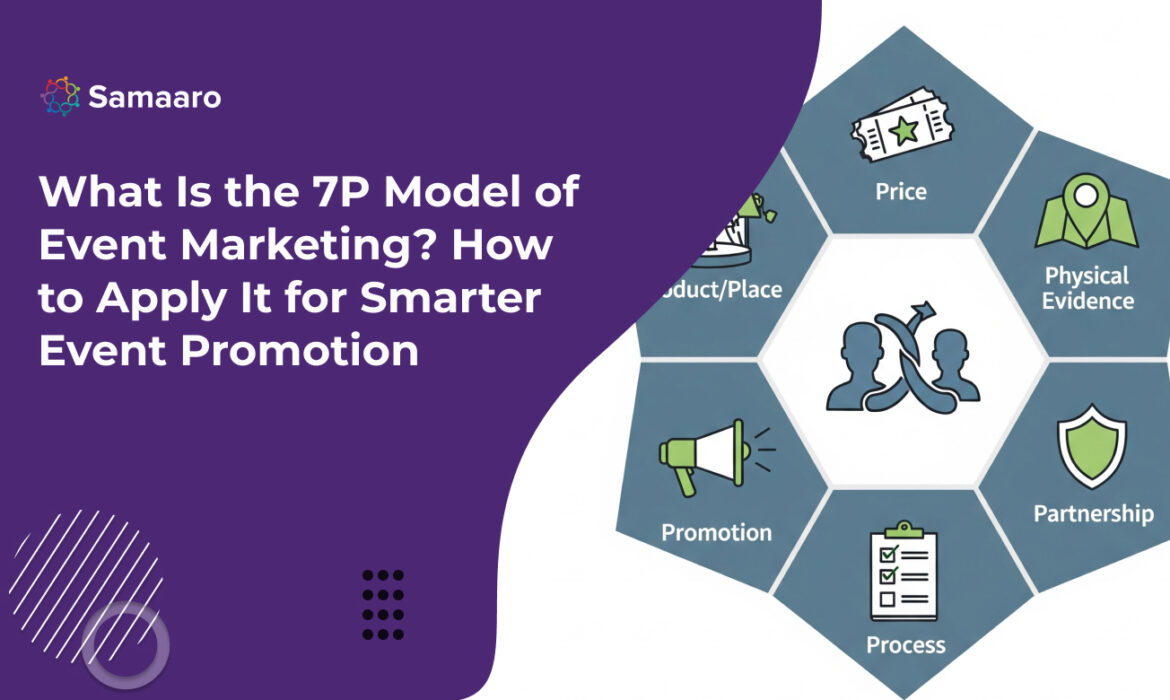
This is where the 7P model of marketing can help. The 7Ps were developed to broaden the original 4Ps (‘Product’, ‘Price’, ‘Place’, ‘Promotion’) and provides a structured approach to properly analyse every decision made during an event campaign. More specifically, this model can both establish promotion as a repeatable and comprehensive approach versus being left to chance.
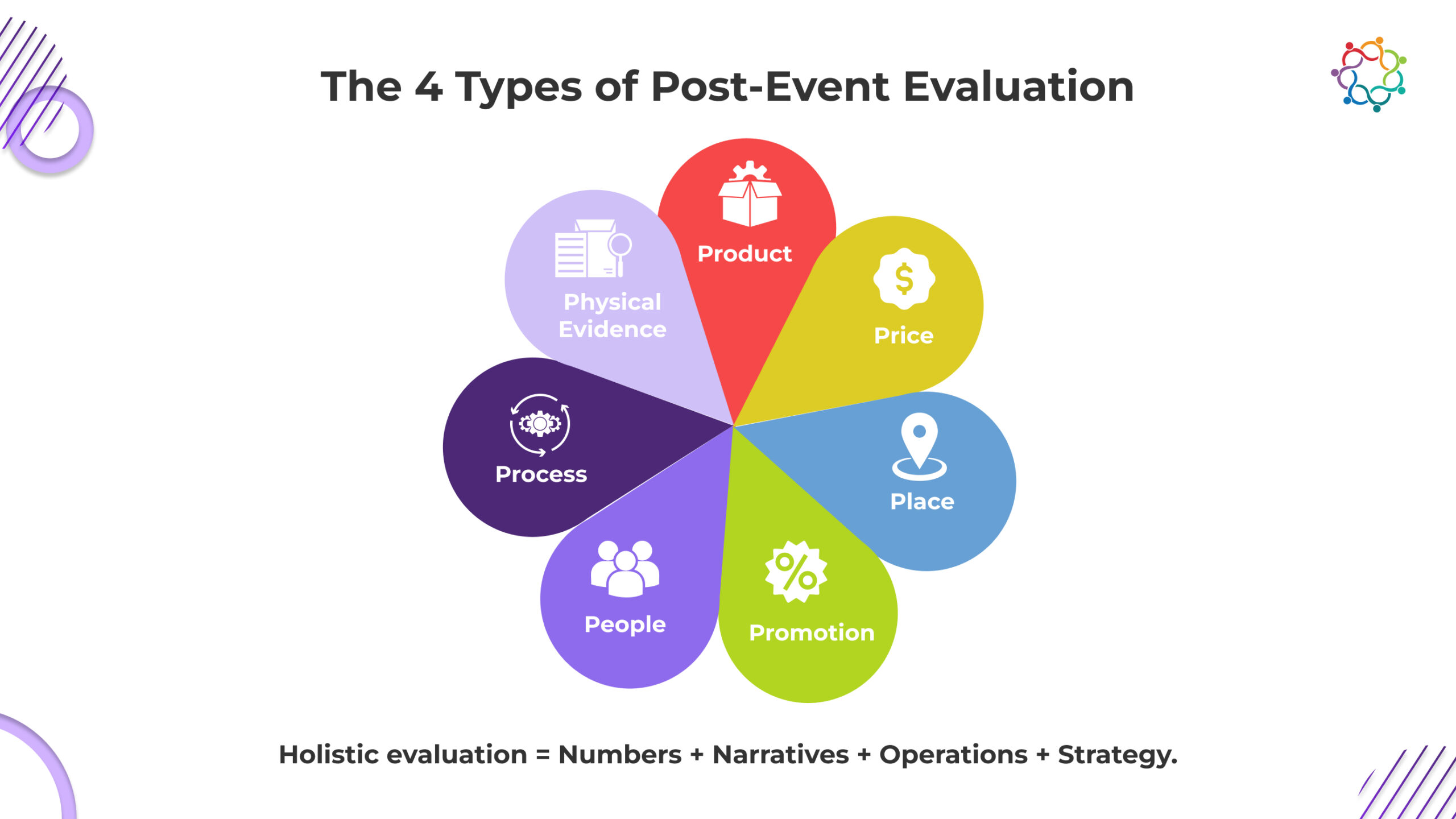
This blog will provide clarity regarding the 7Ps: Product, Price, Place, Promotion, People, Process and Physical evidence as it pertains to event marketing, and how enterprise can use this model to create ongoing, impactful campaigns as we move into 2025.

The 7P model evolved from the classic marketing mix. The first 4Ps (Product, Price, Place, Promotion) focus more on tangible product goods, but the 7Ps add three more elements: People, Process, and Physical Evidence, for a deeper exploration of the particulars of service-based industries.
By its very nature, events are experiential products. They bring together both tangible (venue, speakers, ticketing) and intangible (learning, networking, branding) elements. This makes the 7Ps an especially useful framework for promoting events as it incorporates all elements of logistical and perceived value.
In simple terms: The 7Ps help marketers make sure every base is covered when they design event marketing campaigns, so they do not forget any important parts of the campaign.
Let’s break down each “P” and how it translates into event promotion strategy.
The event itself is really what makes up any campaign. By “product,” we mean the experience, the content, and the format being sold.
For example: A B2B SaaS (software as a service) conference should define the product as a learning hub for industry best practices, discovering innovation, and meeting with enterprise buyers.
Price is not just a number in an event; it establishes the expectation of the perceived value of the event.
Example: A VIP pass offering private networking and dinners with speakers increases perceived exclusivity, while also enabling another potential revenue stream.
“Place” is no longer just the physical venue but also the passages to access the platforms/sites/or channels that you plan to use for your event attendees.
Example: If your leadership summit is located centrally in a business district, it shows credibility and professionalism. The option to offer a livestream also allows you to cast a larger net.
Marketers tend to focus on just this part of the cycle, but this part is just one piece of the puzzle. Promotion encompasses the methods you use to spread the word and create demand.
The important part is to integrate and not use one channel, but layer them to create campaigns.
People drive events, and events are some of their most powerful promotional assets.
Example: When every speaker posts about your event on LinkedIn, the campaign leverages thousands of relevant followers at no additional cost.
Sleek processes are fundamental to turning interest into attendance. If registration or engagement becomes difficult, the promotional activity may become null and void. With the above in mind, and with a view to reducing unnecessary burden on a potential attendee during registration and/or engagement, consider:
For example; an attendee registering, receiving a personalized confirmation email, receiving updates of relative value in small batches leading up to the event as reminders of intended content, and the schedule of the event. A structured approach/communication, and sequence of communications during this process keeps an attendee engaged.
Tangible evidence gives potential participants a sense of value that can be difficult to quantify.
Example of a landing page with video highlights of last year’s summit, along with testimonials from Fortune 500 attendees, creates trust right away.

Want to see how this would work for you?
See how Samaaro operationalizes Promotion, Place, People, and the rest into one workflow.
Book a tailored walkthrough →
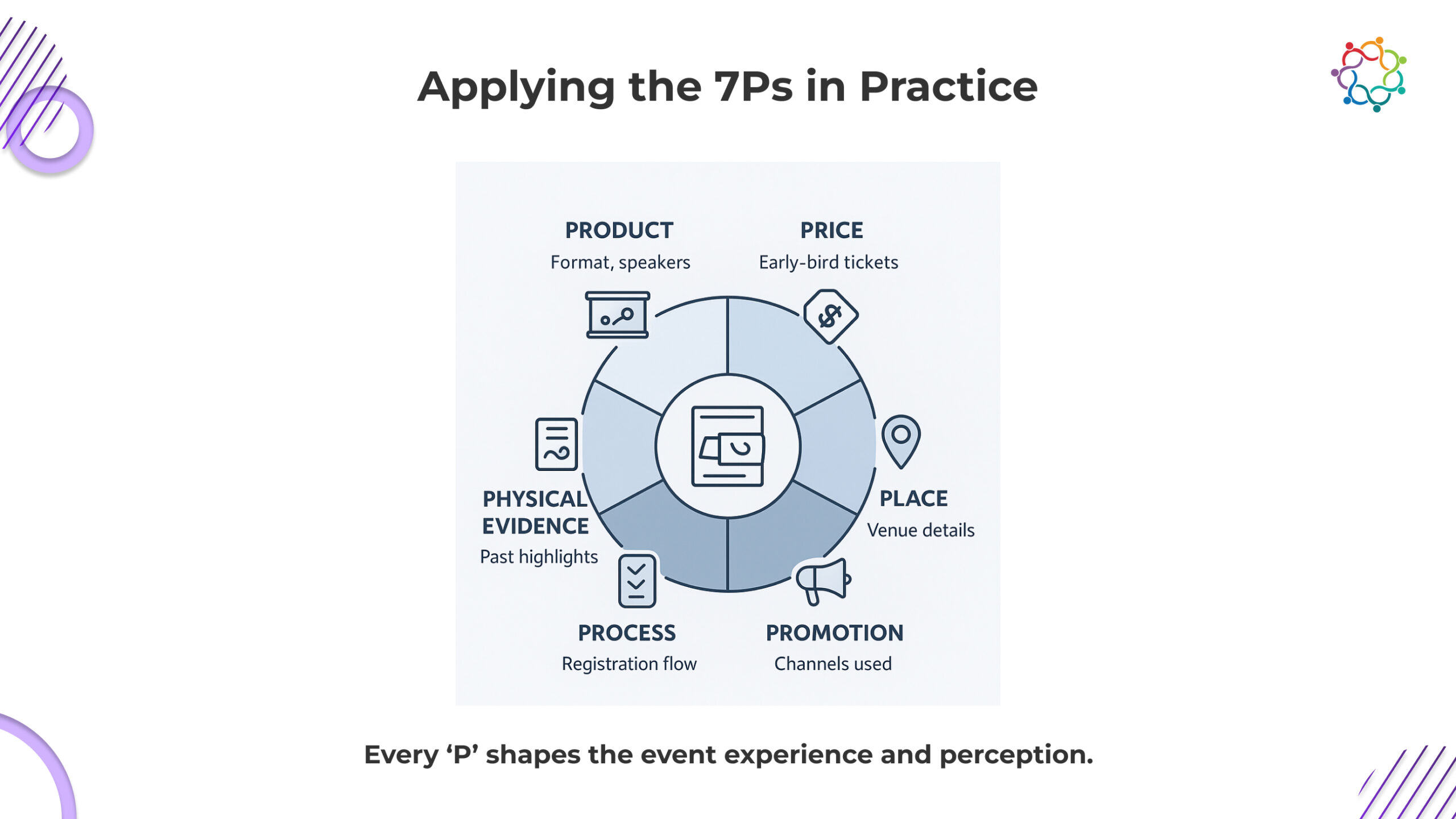
Picture that a business has just run their Annual Leadership Summit. If you are conscious of the 7P’s, your campaign could look something like this:
Only consider the graphics within your campaign
Engaging with this campaign design framework will help ensure your campaign is complete, credible and consistent.

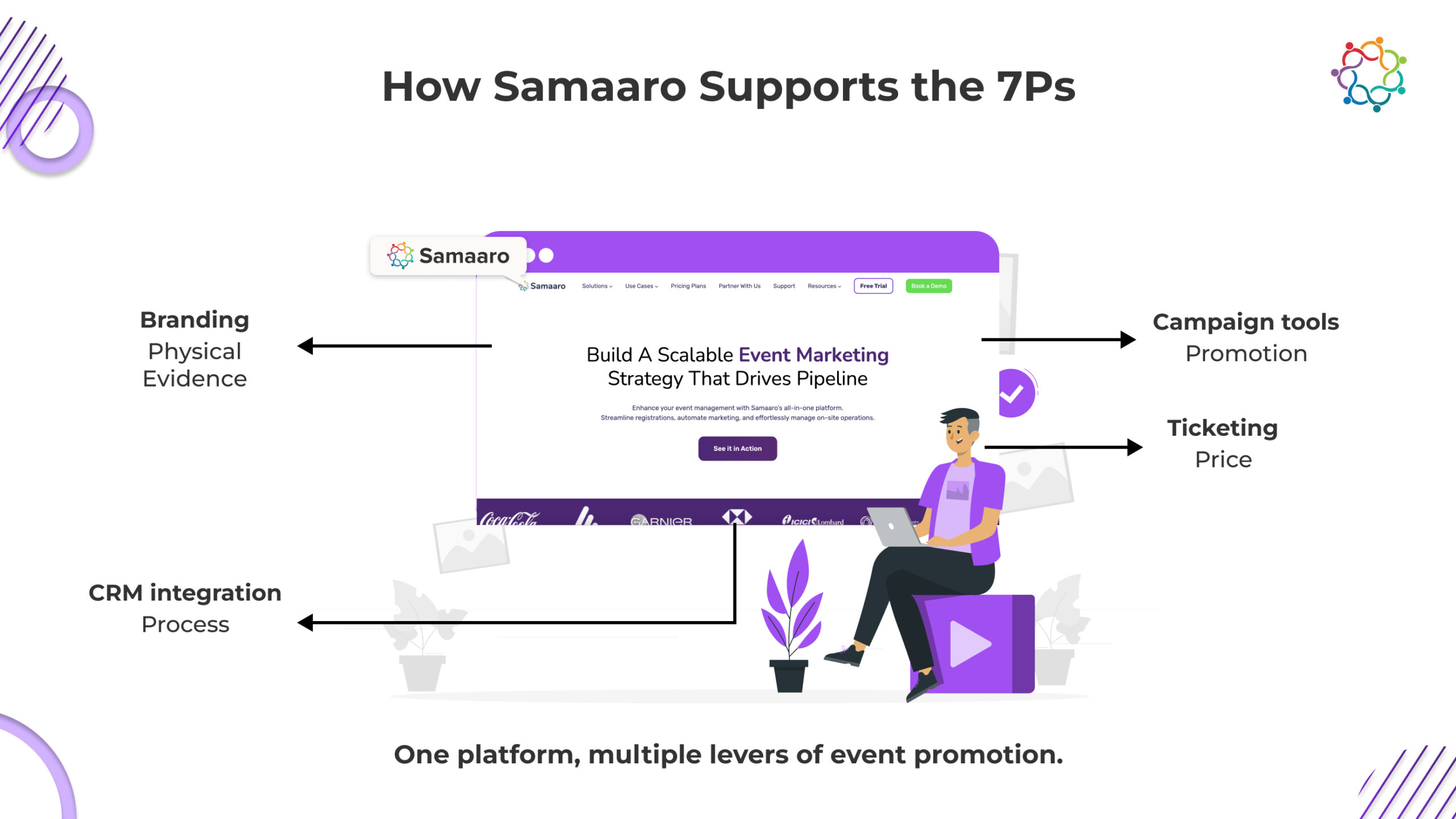
Samaaro’s platform is designed to make each of the 7Ps work in a simple and real way:
Samaaro takes the 7P model out of the theoretical and into a practical campaign tool.
Event marketing does not have to be a frenzy or a guessing game. The 7P model allows event marketers to give structure to the full range of aspects of event marketing depending on the time of year including pricing, promotion, and engagement with attendees.
The real benefit of the 7Ps is consistency: every time a campaign is run, it can be documented, implemented and improved upon based on the previous campaign. This is especially beneficial for companies running multiple events in a 12-month cycle as it allows for sustained growth.
Would you like to learn more about how you can build promotional campaigns using models like the 7Ps? Download the Event Promotion white paper or see how Samaaro makes execution easy.
The 7P model of event marketing extends the traditional 4P framework (Product, Price, Place, Promotion) by adding People, Process, and Physical Evidence. It differs because events are a service, not a product, and services depend on the humans delivering them, the processes attendees experience, and the visible proof of credibility. The 7P model gives event marketers a more complete checklist for planning, promoting, and measuring.
In the 7P model, the ‘Product’ element is the event experience itself: the agenda, speakers, networking format, and the specific outcome attendees walk away with. To define your event’s USP, answer one question: what can someone get here that they can’t get from any other event or YouTube replay? It might be exclusive industry data, the chance to meet a specific peer group, or hands-on workshops. That USP shapes every other P in the model.
Event marketers use pricing strategy by combining tiered ticketing (Standard, Gold, VIP), early-bird discounts, and group rates to influence perception and drive early registrations. Tiered pricing signals event value (a $5,000 VIP pass tells attendees the event is premium). Early-bird discounts create urgency and a sense of scarcity. Group rates accelerate enterprise team registrations. Avoid discounting too aggressively. Repeated discounts train your audience to wait.
The ‘People’ element in the 7P model covers everyone who shapes the attendee’s perception of your event: speakers, on-site staff, registration agents, sponsors, and influencer advocates. Speakers drive registrations because their credibility transfers to your event. Staff shape the on-site experience. Influencers extend reach beyond your owned audience. Invest in all three. A great agenda with poor on-site staff still produces a bad event.
The ‘Process’ element of the 7P model covers every touchpoint from the first invite to the final survey. A smooth process (one-click registration, automated reminders, fast check-in, personalised agenda, simple feedback collection) signals professionalism. A clunky one (broken forms, no confirmations, long queues) creates friction. Most event teams underestimate how much process design influences whether attendees come back next year.
Physical evidence in event marketing is everything visible that backs up your claims: testimonials from past attendees, logos of sponsoring companies, photos and videos from previous editions, media coverage, case studies, speaker credentials, and venue quality. Use them throughout your landing page, email campaigns, and social content. People register when they believe the event will deliver, and physical evidence is what makes them believe.

Samaaro is an AI-powered event marketing platform that enables marketing teams to turn events into a measurable growth channel by planning, promoting, executing, and measuring their business impact.
Location


© 2026 — Samaaro. All Rights Reserved.