Samaaro + Your CRM: Zero Integration Fee for Annual Sign-Ups Until 30 June, 2025
- 00Days
- 00Hrs
- 00Min
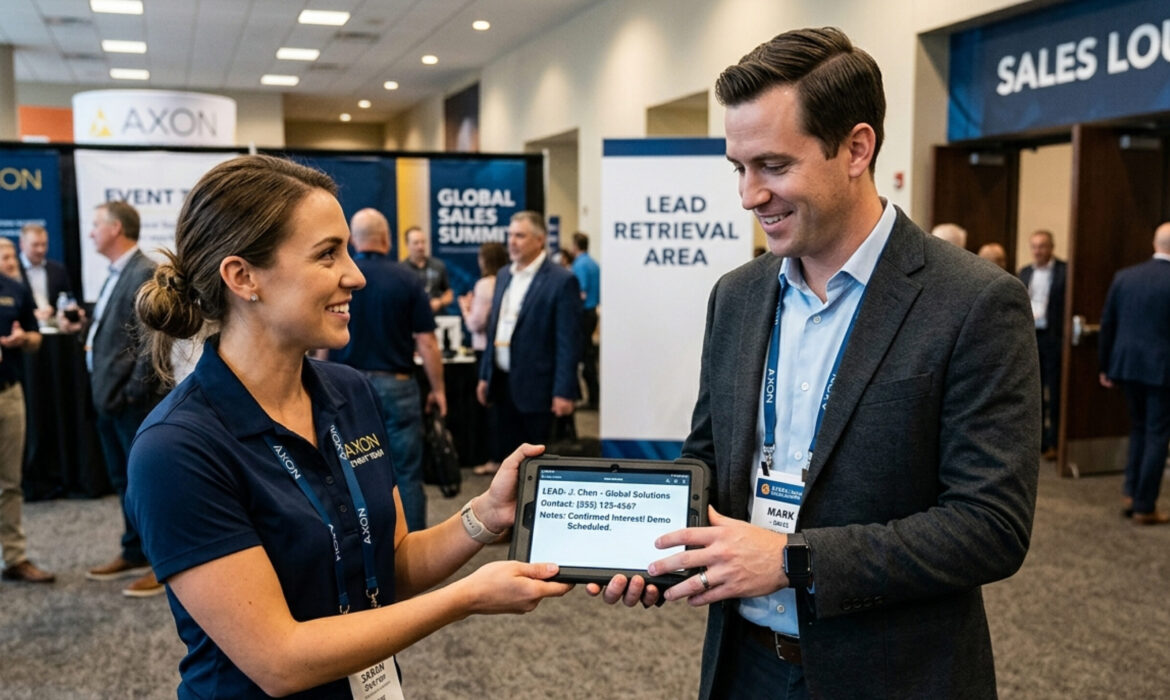
Even though B2B organizations invest a lot of money in events, sales discussions at these gatherings are still surprisingly poorly managed. Despite the fact that booths are crowded, calendars are full, and scans are taken, revenue teams frequently go without knowing which discussions were truly important. When choosing who to approach, sales representatives rely on intuition, location, and good fortune. Recall and disorganized notes are necessary for follow-up. Important context fades quickly once the event ends.
Events generate intense, high-signal interactions, but most teams treat those moments as temporary activity rather than durable sales intelligence. As a result, high-intent attendees are missed, strong buying signals are delayed, and follow-ups arrive too late or feel generic. None of this is due to poor effort. It is a structural gap in how conversations are identified, prioritized, and remembered.
This is where AI for event sales conversations begins to matter, not as automation or novelty, but as intelligence. The real opportunity is not replacing representatives. It is helping sales teams focus their time and attention on the conversations that are most likely to influence the pipeline. When used thoughtfully, AI can shift events from chaotic activity to intentional sales moments- before, during, and after the event.

Most event sales motions are still reactive. Reps greet whoever is in front of them, scan badges, exchange pleasantries, and move on. At scale, this looks productive while hiding serious inefficiencies.
The old model follows familiar patterns:
Even strong salespeople struggle here. They cannot see which attendees are actively evaluating solutions, which accounts are already in the pipeline, or which conversations deserve deeper qualification. In the moment, everything feels equally urgent, so prioritization disappears.
After the event, the damage compounds. Reps return to full inboxes and open deals. Event leads become just another list. Context fades, timing slips, and promising conversations go cold. Leadership then questions event ROI, mistaking a reactive system for an ineffective event.

Sales teams don’t fail at events due to lack of effort or tools. They fail because they lack timely, usable intelligence. Before introducing AI, it’s worth defining what intelligence actually needs to do for sales.
First, sales needs visibility into intent. Signals around buying interest, account relevance, and role alignment help reps separate casual curiosity from active evaluation.
Second, sales needs real-time prioritization cues. During events, decisions are made quickly. Intelligence should surface simple signals that guide where time is spent without disrupting natural conversations.
Third, sales needs shared context. Key conversation details must be captured and accessible across teams so follow-up reflects what actually happened, not assumptions.
Finally, sales needs guidance on follow-up. Knowing who to contact first — and why — turns outreach from reactive to intentional.

Preparation is where event outcomes are quietly decided. Yet most sales teams arrive with little more than a generic attendee list and a rough staffing plan. AI changes this by introducing intent-based preparation.
Before the event, AI can analyze registration behavior, session selections, past engagement, and account-level data to highlight attendees who are more likely to be in-market. It can also match roles and responsibilities to relevant offerings, helping reps understand why a conversation might matter before it starts.
Which accounts deserve proactive outreach?
How to allocate senior reps versus general coverage.
Which meetings should be scheduled in advance?
Where booth staffing should be concentrated.
By reducing randomness, AI for event sales conversations turns preparation into a competitive advantage. Reps arrive knowing which conversations to seek out and which questions to ask. Marketing and sales leaders gain confidence that coverage aligns with revenue priorities, not just foot traffic.
Importantly, this does not eliminate spontaneity. It simply ensures that high-intent opportunities are not left to chance. When preparation is guided by signals rather than assumptions, events begin with focus instead of hope.
Prioritization is most important and most difficult to uphold on the event floor. Reps have to decide quickly where to spend their time as several discussions vie for their attention. AI helps make these choices without taking over.
AI can display priority guests in real time throughout the event according to pre-identified purpose, account importance, or live interaction. This helps representatives in determining whether to engage in a more in-depth discussion, consult a professional, or immediately arrange for follow-up. The goal is not interruption, but informed choice.
Better allocation of senior sales time.
More intentional qualification conversations.
Reduced missed opportunities during peak moments.
Used correctly, AI for event sales conversations feels empowering. Reps remain fully in control of the interaction. AI simply provides context that would otherwise be invisible. This balance preserves the human nature of selling while improving focus.

Conversations about events are frequently insightful yet memory-fragile. Representatives switch topics fast, and important details are soon forgotten after the encounter. Recording all that was said is not the goal of capturing context. In order for discussions to continue with clarity, relevance, and momentum, it is important to preserve what is essential. AI introduces a more reliable way to structure and retain this context without interrupting the human flow of selling.
Dependence on rushed post-event explanations or handwritten notes results in gaps and inconsistencies. AI assists in structuring important discussion components, such as needs, objections, and priorities, into a dependable framework that salespeople can refer to.
When the conversation context is structured, it does not stay locked with a single rep. AI enables intent, urgency, and next steps to be visible across sales, marketing, and account teams, reducing misalignment after the event.
Structured context allows follow-up messages to reference real discussions instead of generic themes. This improves relevance and timing without requiring reps to spend extra time reconstructing conversations.
A smaller number of well-documented conversations drives more revenue impact than a large volume of low-context leads. By prioritizing clarity over quantity, AI strengthens sales effectiveness and continuity beyond the event.

Post-event follow-up is where many teams lose momentum. Emails are delayed, messages are generic, and relevance fades. AI helps by aligning timing and content with actual intent.
After the event, AI can prioritize follow-ups based on conversation signals, engagement level, and account status. This makes sure that high-intent prospects are contacted first and with appropriate context. Personalization is grounded in what was discussed, not in templated phrases.
Intent-based sequencing rather than batch blasts.
Messaging tied to specific needs or questions.
Clear recommendations on when to re-engage.
When used responsibly, AI for event sales conversations supports reps without replacing them. The rep still writes the message, chooses the tone, and builds the relationship. AI simply ensures that effort is focused where it matters most.
The result is a follow-up that feels timely, relevant, and human. Prospects recognize that they were heard, not processed.
Events rarely create instant deals, which makes attribution misleading. AI helps clarify influence without overclaiming credit by connecting conversation signals to pipeline movement.
This includes identifying patterns such as:
This is not about ownership. It is about contribution. When sales leaders can see how event conversations support deal progression, confidence in event investment increases. Decisions become informed rather than defensive.
When influence is visible, events stop being judged by lead volume alone and start being evaluated by their role in revenue motion.
(Also Read: The Ultimate Guide to Integrating Sales Enablement and Event Marketing)
Cross-team alignment often breaks down around events. Sales questions lead quality, marketing questions follow-up, and RevOps struggles to reconcile data. AI insights can reduce this friction if shared thoughtfully.
Alignment starts with shared definitions of intent. When teams agree on what signals matter, AI outputs become trusted rather than debated. Visibility should empower, not police. The goal is clarity, not micromanagement.
Clear ownership of how insights are used.
Guardrails that prevent data overload.
Transparency into how signals are generated.
Importantly, this does not require new dashboards for every team. Sometimes the most effective alignment comes from simpler, shared views and consistent language.
When AI insights are framed as support rather than control, trust grows. Sales, marketing, and RevOps move from defending their metrics to collaborating on outcomes.
AI adds credibility to event sales strategies only when its boundaries are clearly understood. Algorithms cannot direct every aspect of a sales conversation. AI is useful when it complements judgment rather than when it takes its place. This section explains the situations in which human decision-making is still crucial and the ones in which AI actually improves event sales talks.
Prioritizing attention and time
AI excels at analyzing multiple signals at once to help reps decide which conversations deserve deeper focus, especially in busy event environments.
Identifying patterns humans miss
By connecting engagement behavior, account data, and historical outcomes, AI surfaces intent patterns that are difficult to spot manually.
Preserving and structuring context
AI helps retain key details from conversations so insights are not lost after the event, enabling more relevant and timely follow-up.
Improving consistency across teams
It creates a shared understanding of intent and conversation quality, reducing variation caused by individual memory or subjective interpretation.
Replacing human judgment in conversations
AI cannot read emotional cues, adapt tone in real time, or navigate complex interpersonal dynamics that define effective selling.
Handling ambiguity without guidance
When data is incomplete or situations shift unexpectedly, AI lacks the situational awareness that experienced reps bring.
Building trust and rapport
Relationships are formed through listening, empathy, and credibility, all of which remain distinctly human skills.
Making ethical or strategic trade-offs
Decisions involving sensitivity, long-term partnerships, or brand trust require human oversight and accountability.
Events have always been about conversations. Technology should serve that truth, not distract from it. The real promise of AI for event sales conversations is not efficiency for its own sake. It is focus, relevance, and continuity.
Sales teams have more clarity when AI is used strategically before, during, and after an event. They are aware of when to follow up, who to talk to, and how to set priorities. As attention improves, so do conversations.
When people apply greater intelligence, not when they give up their judgment, the best results are achieved. Things become more deliberate and less chaotic. Sales discussions become a strategic asset rather than a blind spot.
No automation replaces a great rep. But better intelligence helps great reps do their best work.
(If you’re thinking about how these ideas translate into real-world events, you can explore how teams use Samaaro to plan and run data-driven events.)
Enterprise attention has become one of the scarcest resources in 2026. Buyers are better informed, calendars are tighter, and decision-making groups are larger and harder to coordinate. In this environment, the assumption that event success depends on scale is starting to fracture. Leadership teams are increasingly questioning why large, expensive events generate so much activity but so little clarity.
For years, event strategy was built around visibility. More attendees meant more relevance. Bigger rooms implied greater impact. Yet enterprise teams now see a growing disconnect between attendance numbers and business outcomes. Sales conversations are rushed. Engagement diffuses across too many interactions. Feedback exists, but rarely points to a clear next step.
What is emerging instead is a shift toward deliberate, smaller formats that prioritize relevance over reach. These are not scaled-down flagship events or budget-driven compromises. They are intentional investments designed to improve alignment, learning, and decision movement. The rise of micro-events reflects a broader change in how enterprise teams think about engagement, attention, and return on effort.
Success is being redefined. With the right participants in the room, fewer voices often lead to better discussions, faster insight, and greater confidence in decisions. This blog explores why that shift is happening and why it matters now.

Large events are not failing because teams lack ambition or effort. They struggle because scale introduces friction that enterprise organizations can no longer ignore. As events grow, attention fragments, conversations compress, and the conditions required for meaningful engagement quietly disappear.
At large events, attendees are constantly pulled in multiple directions – parallel sessions, back-to-back meetings, networking zones, side conversations. Focus becomes transactional. Conversations that require context, continuity, and time are cut short or deferred indefinitely. The event may look busy, but cognitive bandwidth is thin.
This fragmentation is especially damaging in enterprise buying environments. Complex deals depend on trust, nuance, and sustained dialogue across multiple stakeholders. One-to-many formats struggle to accommodate layered concerns or align different decision-makers in a coordinated way. The result is surface-level interaction where depth is required most.
Scale also creates a signal problem. High activity produces impressive volume – booth scans, session check-ins, survey responses, but very little clarity. Teams leave with dashboards full of numbers that are difficult to interpret and harder to act on. Intent, readiness, and next steps remain ambiguous despite the apparent success of the event.
All of this comes at a rising cost. Venue size, travel, production, and sponsorship expenses escalate quickly, while attribution remains murky. When outcomes are unclear, leadership stops asking how to improve the event and starts questioning whether the scale itself is worth defending.
The core issue isn’t execution. It’s the assumption that size guarantees impact. That assumption no longer aligns with how enterprise buyers make decisions or how revenue teams are expected to operate today.

Enterprise teams are no longer satisfied with events that simply generate awareness. They expect events to move decisions forward. In 2026, value is defined less by how many people attend and more by what changes as a result of those interactions. What enterprises are actively looking for includes:
Teams want conversations that surface real priorities, objections, and constraints, not surface-level engagement that ends when the event does.
Events should help align multiple decision-makers in the same context, reducing the need for weeks of follow-up to reconstruct intent and consensus.
Leadership expects quick, actionable feedback on messaging, positioning, and product relevance. Events must generate signals that inform decisions without long delays.
Events deliver value when sales teams can engage directly, learn from buyers, and influence outcomes without competing for attention in crowded environments.
These expectations naturally favor smaller, more focused formats. They align with enterprise priorities around engagement depth, audience precision, and revenue clarity. Micro-events are not a passing trend. They are a direct response to what enterprises actually need from events today.

Micro-events are often misunderstood as simply smaller versions of traditional events. In reality, they represent a different design philosophy altogether. Their effectiveness comes from intentional constraints that force clarity and focus.
At the heart of this approach is curation. Attendance is defined by relevance, not availability. Audiences are selected based on clear criteria such as role, account fit, or buying stage. This makes sure that conversations are immediately meaningful and aligned.
Another defining feature is structure. Micro-events prioritize interaction over passive consumption. Sessions are designed to encourage discussion, debate, and shared problem-solving. This creates space for deeper engagement and more honest exchanges.
Key characteristics typically include:
This is where the micro-events strategy becomes critical. Success depends on intentional design choices that align audience, content, and outcomes. These events are not about filling seats. They are about creating environments where the right conversations can happen efficiently and effectively.

As the room gets smaller, engagement changes fundamentally. Distractions drop and accountability rises. Participants are no longer anonymous attendees; their presence carries weight. Contribution is expected, not optional. Events shift from being attendance-driven to participation-driven, which is where meaningful value begins.
Smaller groups reduce social hiding. People speak more freely, ask sharper questions, and listen more closely because the conversation depends on them. Dialogue becomes two-way rather than performative.
This environment also changes the quality of discussion. Without the pressure of stagecraft or promotion, buyers are more willing to surface real constraints, competing priorities, and unresolved concerns. Conversations last longer and move beyond surface agreement into nuance.
When multiple stakeholders are present, buying dynamics become visible. Alignment, hesitation, and influence can be observed directly instead of inferred later. For sales teams, this visibility is often more instructive than hundreds of disconnected interactions. Depth replaces guesswork with understanding.
One of the most practical advantages of micro-events is how quickly teams learn from them. In smaller settings, feedback is immediate, contextual, and specific. Teams don’t need to interpret meaning from aggregated surveys or stitched-together notes.
Because discussions are more candid, patterns emerge faster. Objections repeat. Interests cluster. Priorities sharpen. This accelerates learning not just for sales, but across marketing, product, and leadership teams.
The timing matters as much as the content. Feedback is often processed while the experience is still unfolding, sometimes in the same room. Assumptions can be tested and reframed immediately, rather than weeks later in a post-event report.
This shortens learning cycles and increases confidence in decisions. In contrast, high-volume environments often delay insight until momentum is already lost.

Large events generate numerous touchpoints that are difficult to isolate and even harder to interpret. Measurement has always been challenging at scale, particularly when goals are diffuse. Micro-events reduce this complexity by narrowing focus and variables.
When attendance is intentional and objectives are explicit, it becomes easier to connect participation to pipeline movement or deal progression. Teams can identify which conversations mattered and why, leading to more honest evaluations of impact.
While micro-events may cost more per attendee, they often cost less per meaningful interaction. This reframes ROI discussions away from volume justification and toward outcome credibility.
Measurement becomes less about defending activity and more about understanding influence. The goal isn’t perfect attribution. It’s realistic clarity. When noise drops, insight rises, and decisions improve as a result.
Treating micro-events as isolated experiments limits their value. Enterprises that see the strongest results think in terms of portfolios rather than individual events. Each micro-event serves a specific purpose within a broader engagement strategy.
Different formats can support different stages of the pipeline. Some may focus on early-stage education, while others facilitate late-stage alignment or customer expansion. Sequencing these events creates momentum and continuity.
This portfolio mindset also allows teams to compare investments more objectively. Micro-events and large events become options within a spectrum, evaluated based on expected outcomes rather than tradition.
Opportunity cost is an important consideration. Defaulting to scale can crowd out more precise investments. A thoughtful micro-events strategy confirms that resources are allocated where they can create the most impact.
By viewing micro-events as a strategic asset rather than a tactic, enterprises elevate their role from experimental to essential.
Adopting micro-events is not just a change in event format. It requires a fundamental shift in how teams define success. For years, visibility and scale were treated as a replacement for impact. In 2026, that equation no longer holds. Enterprise teams need to prioritize clarity, alignment, and decision support over reach. That shift begins before planning starts, with more deliberate thinking about purpose and outcomes.
Not every event needs to be widely seen to be valuable. Teams should focus on whether an event advances understanding, alignment, or momentum rather than how many people it attracts.
Leaders must decide when focused engagement delivers more value than broad exposure. Certain audiences and buying stages benefit far more from smaller, curated interactions.
Micro-events only work when sales and marketing agree on objectives, audience selection, and success criteria. Misalignment undermines focus and outcomes.
Fewer, well-aligned events often outperform a packed calendar. Discipline in what not to do is as important as execution.
When micro-events are intentional, aligned, and measured honestly, they reward teams with insight, confidence, and clearer decision-making.
As buyer behavior shifts, enterprise events are being forced to evolve with it. Attention is no longer granted by scale or visibility. It is constrained, selective, and governed by relevance. In this environment, precision consistently outperforms presence.
Micro-event strategies are not a reaction to budget pressure, nor are they a tactical compromise. For teams that understand the cost of distraction, they represent a structural advantage. By prioritizing engagement depth, feedback quality, and ROI clarity, organizations can design events that actively move decisions forward rather than merely support awareness.
A well-executed micro-event strategy accepts a hard truth: under the right conditions, fewer participants produce stronger outcomes. Being everywhere will not earn attention in 2026. Presence no longer earns attention. Precision does. Attention is earned in focused, high-intent settings where conversations shape decisions.
Paid promotion has become the default response when event registrations slow down. Budgets are unlocked, campaigns are rushed live, and performance is judged almost entirely on registration volume. When results disappoint, the conclusion is predictable. Paid ads do not work for events. This assumption misses the real issue. The problem is rarely the channel. It is the expectation placed on it.
In 2026, event advertising sits at the intersection of demand generation, brand positioning, and pipeline accountability. Treating it as a last-minute attendance booster ignores how paid media actually functions. Ads amplify whatever strategy already exists. If the event has unclear value, weak targeting, or mismatched goals, paid spend simply scales those flaws faster.
Many teams also collapse two very different objectives into one metric. Driving attendance is not the same as driving outcomes. High registration numbers can coexist with low engagement, poor follow-up, and zero pipeline influence. When success is defined narrowly, paid campaigns are set up to fail before they start.
This article reframes paid promotion as an investment decision. The goal is not to run more ads, but to run them with intent, discipline, and a realistic view of ROI.

Paid promotion is powerful, but it is not universally appropriate. Knowing when to use it is the first act of responsible spending. Some events benefit significantly from paid support, while others perform better through owned, earned, or partner-driven channels.
When there are distinct purpose signals and a well-defined audience for the event, paid advertisements typically perform the best. This includes account-specific executive events, product-led workshops, and mid-funnel webinars. These formats allow targeting precision and message clarity to do real work.
By contrast, paid ads struggle when the event value is broad or ambiguous. Community meetups, early-stage brand events, or partner-heavy conferences often rely more on trust and relationships than on ad-driven discovery. In these cases, paid promotion may inflate registrations without improving attendance quality.
Teams should also recognize situations where paid spend creates false confidence. If internal alignment on audience, follow-up, or success metrics is missing, ads only mask deeper issues.
Before committing budget, ask:
Saying no to paid ads in the wrong context preserves budget and credibility.

Event ad budgets often emerge from habit rather than strategy. A fixed percentage of the event budget is allocated to promotion, regardless of audience size, funnel stage, or event value. This approach feels structured, but it is not intellectual.
Effective budgeting starts with understanding what the event is meant to produce. A high-value executive roundtable with a narrow audience requires a different spend logic than a scalable product demo. Budget should reflect potential impact, not tradition.
Several factors should shape spending decisions. Audience size determines how quickly saturation occurs. The funnel stage influences how much education and reinforcement are needed. Timing matters as well. Early testing helps validate messaging and targeting, while late-stage pushes focus on conversion.
Instead of formulas, teams need guardrails. Define a maximum acceptable cost per qualified attendee. Decide in advance what signals justify scaling spend and what signals trigger a pause. This turns budgeting into a learning system rather than a gamble.
One disciplined approach is to separate the budget into two phases. An exploratory phase tests assumptions at low spend. A commitment phase scales only what proves capable of driving quality attendance. This structure protects ROI and forces accountability.

Before any discussion of platforms, budgets, or creative, audience targeting sets the ceiling for event ad ROI. Every downstream metric is shaped by who you choose to reach in the first place. When targeting is loose, paid spend buys attention without relevance. When it is precise, even modest budgets can drive high-quality attendance.
This section breaks down how targeting decisions create or destroy value, starting with the most common mistake teams make while prioritizing reach over intent.
Reach is seductive because it looks like momentum. Large audiences create the illusion of scale, but they also dilute relevance. Broad targeting inflates costs and attracts attendees with little connection to the event’s purpose.
Intent-based targeting shifts the focus from who could attend to who should attend. Signals such as prior engagement, relevant search behavior, or content consumption indicate readiness. These signals may reduce audience size, but they increase attendance quality.
In 2026, targeting decisions matter more than creative polish. Narrowing reach feels risky, yet it aligns spending with outcomes. When ads speak to an existing problem or active need, they function as confirmation rather than persuasion.
The trade-off is clear. Intent targeting limits volume but improves downstream metrics. Reach-based targeting boosts registrations while weakening ROI. Mature teams choose the former and accept lower top-line numbers in exchange for meaningful results.
First-party data remains one of the most underutilized advantages in event promotion, even as teams invest heavily in paid channels. CRM records, past attendee lists, account engagement history, and product usage signals provide a level of context that no platform-built audience can replicate. These data sources reflect real interactions, real intent, and real relationships, which makes them far more predictive of attendance quality than inferred interests.
Platform audiences and lookalikes still play an important role, but only when they are used with discipline. Left unchecked, they optimize for surface-level similarity rather than relevance. This is where many campaigns lose focus. Effective targeting anchors expansion to first-party data, using it as a benchmark rather than a replacement.
The objective is balance. First-party audiences establish quality thresholds. Platform audiences are then layered in carefully to extend reach without diluting intent. When this balance is missing, performance issues are often misattributed to channels instead of audience design.
Strong audience strategies typically include:
This approach protects ROI while still enabling growth.
Retargeting is frequently overused and poorly timed in event promotion. Many teams treat it as a discovery channel, assuming repeated exposure will create interest. In reality, retargeting only works when some level of intent already exists. Without prior awareness or relevance, impressions are wasted.
Effective retargeting is designed for audiences that are already warm. These individuals have signaled curiosity or consideration, and the role of ads is to reinforce value, reduce friction, and prompt action. When used earlier in the funnel, retargeting feels repetitive and increases fatigue without improving outcomes.
The effectiveness of retargeting depends on restraint and timing. It should have a narrow focus, not expand its reach. When applied correctly, it becomes one of the most efficient levers in event promotion because it improves conversion without inflating audience size.
Retargeting works best when it is limited to:
Used with intent, retargeting supports ROI rather than distorting it.

Running ads everywhere is not a strategy. Each channel exists for a reason, and confusing those roles leads to wasted spend and unclear results. Channel selection should follow intent, not habit.
Search platforms capture existing demand. When potential attendees actively look for solutions or events, ads meet them at the right moment. Scale is limited, but intent is high. This makes search valuable for focused, problem-driven events.
Professional networks offer contextual targeting. Role, industry, and account-level precision support complex B2B events. These platforms excel at shaping perception and filtering audiences, but costs rise quickly without message discipline.
Retargeting channels reinforce decisions already in motion. They remind, validate, and nudge. They should not carry the burden of initial discovery.
A balanced mix assigns each platform a clear job:
Clarity of role simplifies measurement and expectation setting.
(Also Read: How to Promote Your Event on a Limited Budget: High-Impact, Low-Cost Ideas)

Most event ads fail because they try to please everyone. Generic invitations attract clicks, but they do not attract commitment. Messaging should function as a filter, not a compliment.
Problem-led messaging speaks to a specific challenge. It signals relevance and repels disinterest. Agenda-led messaging lists features, but often lacks urgency. In 2026, clarity outperforms enthusiasm.
Strong messaging sets expectations. It communicates who the event is for and what it will deliver. This may reduce registrations, but it improves attendance quality and engagement.
Filtering also protects post-event ROI. When attendees arrive aligned with the event’s purpose, follow-up conversations start at a higher level. Messaging choices upstream directly influence downstream outcomes.
One practical approach is to test exclusionary language. Phrases that clearly define role, maturity, or use case reduce noise. The goal is not maximum reach, but maximum alignment.

Measuring paid event performance is where many teams retreat to comfort metrics. Last-click attribution, cost per registration, and surface-level engagement feel objective, but they hide more than they reveal. Event advertising demands a more nuanced view of ROI.
Leading indicators matter before the event occurs. Registration source quality, role relevance, and pre-event engagement signal whether paid campaigns are attracting the right audience. These metrics guide optimization while there is still time to act.
Post-event measurement should focus on behavior, not just presence. Session participation, follow-up actions, and sales interactions provide directional insight into value creation. Pipeline influence is rarely perfect, but patterns emerge over time.
Teams must also accept limitations. Not every impact is attributable. Not every deal is traceable. The goal is not precision, but decision support. Tracking should inform future spend, not justify past choices.
Honest measurement builds credibility and improves learning cycles.

Certain mistakes appear repeatedly across organizations, regardless of budget size. Recognizing them early prevents costly repetition.
Over-optimizing for cost per click shifts focus away from quality. Scaling too late turns paid ads into a rescue plan instead of a growth lever. Treating registrations as the only success metric ignores the purpose of the event itself.
Another common error is separating paid teams from event strategy. When media execution operates without context, optimization favors easy wins over meaningful outcomes.
Avoiding these pitfalls requires discipline and alignment:
Mistakes are expensive for teachers. Learning from others is cheaper.
Paid promotion is often discussed in extremes. It is either positioned as the fastest way to fill an event or dismissed as an expensive disappointment. Both views miss the point. Paid ads are neither a silver bullet nor a necessary evil. They are a force multiplier. They amplify whatever strategic clarity or confusion already exists within an event program.
In 2026, event advertising consistently rewards teams that understand this dynamic. When targeting is intentional, budgets are set with discipline, and success is defined beyond raw registrations, paid promotion becomes a controllable growth lever. When those foundations are missing, ads simply accelerate waste. Spend increases, dashboards look busy, and post-event explanations become defensive.
The most important shift is recognizing that attendance itself is not the outcome. Attendance is an input. The real value of paid promotion shows up in who attends, how they engage, and what actions follow once the event concludes. Strong targeting protects quality. Thoughtful budgeting enforces prioritization. Honest measurement creates learning instead of justification.
Teams that treat paid ads as a last-minute fix rarely see sustained ROI. Those who treat them as an investment, planned early and evaluated rigorously, earn leverage and credibility over time. The difference is not how much is spent, but how strategically the spending is designed, governed, and judged.
(If you’re thinking about how these ideas translate into real-world events, you can explore how teams use Samaaro to plan and run data-driven events.)
Field marketing sits in an uncomfortable spotlight. It is one of the most visible investments a B2B company makes, involving executive time, travel, venues, sponsorships, and direct sales participation. It is also one of the hardest channels to explain with clean attribution. In 2026, that tension is sharper than ever. Budgets are tighter, scrutiny is constant, and events are routinely compared to digital channels that promise clearer tracking and faster optimization.
Events do not behave like paid media or lifecycle email. They do not operate in isolation or convert on demand. They shape perception, strengthen relationships, and accelerate decisions that may close months later. Yet when leadership asks for proof, field marketing teams often default to attendance numbers, badge scans, or anecdotal sales praise. These signals describe effort, not business impact.
This creates a familiar standoff. Leadership wants confidence that events are worth continued investment. Field teams know the influence is real but struggle to present it in a way that survives scrutiny. This article resolves that tension by redefining how field marketing ROI should be measured, explained, and trusted in 2026.
ROI vs Impact. A Critical Distinction Most Teams Miss

Many event ROI conversations fail before they start because ROI and impact are treated as the same thing. ROI is a financial ratio: revenue divided by cost. It works best in channels with short feedback loops and direct conversion paths. Events rarely fit that model.
Impact measures influence. It captures how events affect pipeline creation, opportunity progression, and deal outcomes over time. Most field marketing events create impact first and revenue later. When teams force events into narrow ROI math, they underrepresent their true contribution.
Why this matters to leadership is simple. Executives are not demanding perfect attribution. They are deciding where to allocate future spend. They want to know whether events are pushing the business forward in ways that justify their cost.
This distinction reshapes measurement. ROI answers financial efficiency. Impact explains business movement. Credible field marketing teams in 2026 hold both at once. They acknowledge attribution limits once, then move forward with authority while presenting impact through multiple reinforcing lenses instead of false precision.
Field marketing teams often mistake reporting volume for clarity. Dashboards are dense, meetings are long, and uncertainty remains. The problem is misaligned intent.
When executives ask about event ROI, they are not asking for more charts. They are asking questions that guide decisions:
Metrics matter only if they answer these questions. Attendance, engagement scores, and lead volume are irrelevant unless they support trade-offs. Leadership does not want to debate attribution models. They want confidence to act.
This is why ROI reporting must function as decision support, not performance defense. Strong teams lead with interpretation, not raw numbers. They explain what the data suggests, where confidence is high, and what choices it implies. This signals strategic maturity and builds trust.
The Core Pillars of Field Marketing Event ROI

Before diving into individual metrics, it is important to establish a unifying framework. Field marketing event ROI cannot be reduced to a single number without losing meaning. Instead, it should be understood as a set of connected value pillars that reflect how events actually drive growth. Some events create new pipeline, others accelerate active opportunities, and others deliver strategic influence that supports long-term revenue. Measured together, these pillars provide leadership with a balanced, credible view of event performance in 2026.
Pipeline contribution is the most direct bridge between events and revenue, yet it is often misunderstood. Many teams stop at lead counts or marketing qualified leads, assuming volume equates to value. In reality, the pipeline tells a much richer story.
There are two primary ways events contribute to the pipeline. Sourced pipeline refers to opportunities that originate from event engagement. Influenced pipeline captures opportunities that already existed but progressed meaningfully after the event. Both matter, and leadership increasingly cares about the combined picture.
Account-level analysis is particularly important. Events often move entire buying groups, not just individuals. Tracking how target accounts advance through stages after event participation provides stronger evidence of impact than isolated lead metrics.
A mature approach to pipeline contribution includes:
By focusing on directional contribution rather than last-touch credit, teams present a more honest and useful view of how events shape revenue potential.
Particularly when costs are being scrutinized, a high lead volume can be alluring. Leadership has discovered that not all leads are made equal, though. In terms of downstream revenue, events that provide fewer but better-quality leads frequently outperform high-volume events.
Sales alignment should be used to evaluate lead quality instead of marketing assumptions. Compared to demographic match alone, indicators like opportunity conversion, follow-up rates, and sales acceptance offer clearer insights. Events that attract the right roles from the right accounts consistently outperform those that optimize for footfall.
Quality-focused measurement shifts the conversation away from raw counts and toward efficiency. It answers whether event-generated leads are worth sales time, not just whether they exist.
Key signals of strong lead quality include:
When field marketing teams emphasize lead quality, they align their reporting with revenue outcomes, not vanity metrics.
One of the most undervalued contributions of events is their ability to accelerate deals. A single conversation at the right moment can shorten sales cycles dramatically. Yet this impact is often invisible in traditional ROI models.
Deal velocity measures how quickly opportunities move from stage to stage. Events influence velocity by building trust, addressing objections, and aligning stakeholders. Faster deals reduce the cost of sale and improve forecast reliability. This is valued by leadership on a deeper level.
Measuring acceleration requires comparing similar opportunities with and without event engagement. Directional trends are frequently obvious enough to guide judgments, even though this analysis is not entirely accurate.
Important velocity indicators include:
By highlighting acceleration, field teams demonstrate value beyond simple deal creation, reinforcing a more sophisticated view of ROI.
Not all event value shows up neatly in pipeline reports. Some of the most important outcomes are strategic in nature. Account reactivation, executive relationship building, and expansion conversations often begin at events long before revenue is booked.
These outcomes should not be ignored simply because they are harder to quantify. Instead, they should be tracked through qualitative and semi-quantitative indicators that leadership can contextualize.
Examples of strategic influence include:
When reported responsibly, these signals complement revenue metrics rather than replace them. They help leadership understand the full scope of event impact without overstating financial claims.
(Also Read: The Complete Guide to Field Marketing for Impactful Events)
Attribution Models. What Works, What Fails, What to Accept

Attribution is where many ROI discussions break down. Last-touch attribution fails events almost by definition, as deals rarely close directly from a booth scan or session attendance. Multi-touch models offer improvement, but they introduce complexity that can obscure insight if overused.
The key is to accept attribution as directional, not definitive. Multi-touch attribution can help identify patterns, such as consistent event influence across successful deals. It cannot assign perfect credit.
Over-modeling is a common trap. When teams invest excessive effort into attribution logic, they often lose the narrative. Leadership cares less about the model than about what it reveals.
A pragmatic attribution stance includes:
Directional truth builds more confidence than false precision. In 2026, credibility matters more than complexity.

Events should not be evaluated only after they end. Measurement must span the full lifecycle, aligning signals with decision points. Pre-event, during-event, and post-event metrics each serve different purposes.
Pre-event indicators assess readiness and audience quality. Intent data, registration composition, and account alignment signal whether an event is likely to perform. During the event, engagement depth matters more than raw attendance. Session participation, meaningful conversations, and meeting quality provide real-time feedback.
Post-event outcomes connect activity to business results. Pipeline creation, opportunity acceleration, and revenue influence emerge over time and should be tracked accordingly.
A lifecycle approach ensures that ROI measurement supports both optimization and accountability, rather than serving as a retrospective justification exercise.
Turning ROI Data Into Leadership-Ready Reporting

Most ROI reporting fails because it overwhelms instead of clarifying. Leadership-ready reporting compares options, highlights trade-offs, and ends with recommendations. In weak ROI reporting, numbers are presented without interpretation.
Effective ROI narratives typically include:
This shifts ROI discussions from defense to direction.
Despite years of experience, many teams repeat the same mistakes. They defend events emotionally, relying on anecdotal sales praise. They hide behind vanity metrics that feel impressive but answer no real questions. They over-attribute success, undermining trust when claims are scrutinized.
Another frequent error is reporting activity instead of outcomes. Activity describes effort. Outcomes describe value. Leadership cares about the latter.
Avoiding these mistakes requires discipline and honesty. Teams that surface uncomfortable truths earn more credibility than those that overstate success.
Field marketing ROI in 2026 is not about proving that every dollar returned ten. It is about earning leadership’s confidence to keep investing. Events should be evaluated on whether they move the business forward by supporting sales, accelerating deals, and opening the right conversations.
(If you’re thinking about how these ideas translate into real-world events, you can explore how teams use Samaaro to plan and run data-driven events.)
Field marketing dashboards often look impressive at first glance. Charts are full, numbers are moving, and reports arrive on time. Yet when leadership asks a simple question, such as whether events helped move the pipeline or accelerate deals, the answers are often vague. This gap is not caused by a lack of effort or skill. It is caused by tracking the wrong things for the wrong reasons.
Most teams rely on Field marketing KPIs that are easy to capture rather than metrics that explain business impact. Registrations, attendance percentages, and badge scans feel concrete, but they rarely guide decisions. Over time, this creates KPI overload, where teams spend more time reporting than learning. Dashboards become collections of activity proof instead of tools for direction.
The result is predictable. Leadership stops trusting event reports. Finance questions budgets. Sales teams disengage because metrics do not reflect their reality. None of this means field marketing is underperforming. It means measurement has drifted away from outcomes.
This blog reframes KPIs as decision tools, not performance theater. The goal is to track fewer that actually explain pipeline movement, deal progression, and revenue influence. When KPIs are aligned to these outcomes, field marketing regains credibility and clarity.

Before listing any metric, teams need a filter. Without one, every measurable action starts to look like a KPI. A meaningful KPI is not defined by how commonly it is used or how good it looks in a dashboard. It is defined by the decision it enables.
A KPI worth tracking in field marketing must meet three conditions. First, it must inform a specific decision. If a number changes and no action follows, it is not a KPI. Second, it must connect directly or indirectly to the pipeline or revenue. This connection does not need perfect attribution, but it must show influence. Third, it must change behavior. Good KPIs shape planning, prioritization, and execution.
Many teams confuse metrics with KPIs. Metrics describe activity. KPIs guide choices. This distinction is critical because leadership expects KPIs to explain why resources should be allocated, scaled, or reduced.
A simple evaluation checklist helps teams prune aggressively:
If the answer is no, the metric may still be useful operationally, but it does not deserve KPI status. Applying this filter early prevents noise and keeps reporting focused on business outcomes rather than internal validation.
Vanity KPIs Field Marketing Teams Still Rely On

Some KPIs persist not because they are useful, but because they are familiar. These vanity KPIs often dominate event marketing reports and create a false sense of performance. They are not useless, but they are incomplete and easily misinterpreted.
Registrations are a classic example. They indicate initial interest but say nothing about intent quality or pipeline relevance. Attendance percentage adds a layer of engagement, yet it still does not reveal whether the right accounts showed up. Badge scans measure activity at a booth, not meaningful conversations or follow-up outcomes.
Session rating averages and feedback scores are also widely reported. They reflect attendee satisfaction but not business impact. A highly rated session can still attract accounts that never enter the pipeline. Leadership has grown skeptical of these metrics because they answer the wrong questions.
What these KPIs can tell you is limited:
What they cannot tell you is whether the pipeline moved, deals progressed, or revenue was influenced. When these metrics are presented as proof of success, trust erodes. Used carefully, they can support context. Used alone, they mislead and distract from outcomes that matter.
The KPIs That Actually Influence Pipeline

Pipeline-centric KPIs focus on what happened to opportunities and accounts after the event. These are the metrics leadership looks for, even if they do not always articulate it clearly.
Pipeline influenced by events measures whether opportunities associated with event-engaged accounts changed in meaningful ways. Influence does not mean claiming full credit. It means demonstrating directional impact. The key is consistency in definition, not perfection in attribution.
This KPI answers whether events are touching the active pipeline and whether that pipeline grows, progresses, or accelerates afterward. Direction matters more than precision because field marketing operates alongside sales and other channels.
Use this KPI to decide investment priorities:
When tracked over time, pipeline influence builds a credible narrative that events support revenue generation rather than existing as isolated activities.
Opportunity progression focuses on stage movement after an event. Instead of asking how many people attended, this KPI asks how many opportunities moved forward because of event engagement. Meeting-to-opportunity conversion and post-event stage advancement are strong signals of sales relevance.
This KPI helps identify whether events support sales momentum. If opportunities stall despite high attendance, the issue is not promotion but relevance or follow-up alignment. Tracking progression forces tighter coordination with sales and reinforces shared accountability.
It also informs tactical decisions about agenda design, audience targeting, and sales involvement. When progression improves, teams know they are attracting and engaging the right buyers at the right time.
(Also read: The Complete Guide to Field Marketing for Impactful Events)
Account coverage shifts the focus from volume to relevance. It asks whether priority accounts are engaging and how deeply. Depth matters more than reach because revenue comes from specific accounts, not anonymous audiences.
This KPI evaluates whether field marketing is aligned with the account strategy. Engagement depth might include multiple contacts from the same account or repeat interactions across events.
Use account coverage to guide decisions such as:
Together, these pipeline KPIs replace surface metrics with evidence of business impact.
Revenue impact from field marketing is rarely immediate, which is why many teams avoid revenue-linked KPIs. This avoidance creates a credibility gap. While events may not close deals directly, they often influence how quickly and successfully deals close.
Deal velocity changes are one of the most revealing KPIs. Comparing time to close for event-engaged opportunities versus non-engaged ones highlights acceleration effects. Even modest improvements matter at scale.
Win-rate lift is another underused metric. When accounts that engage with field marketing convert at higher rates, it demonstrates value beyond awareness. Expansion and cross-sell signals further extend this view by showing how events support existing customers.
These KPIs answer leadership-level questions:
Revenue-linked KPIs require collaboration with revenue operations, but the payoff is trust. They show that Field marketing KPIs can explain not just activity, but economic impact.
Leading Indicators vs Lagging Indicators

A mature KPI framework balances leading and lagging indicators. Lagging indicators such as revenue and closed-won deals confirm impact, but they arrive late. Leading indicators provide earlier signals that help teams adjust before quarters are lost.
In field marketing, leading indicators might include post-event meetings booked with priority accounts or opportunity creation within a defined window. These indicators do not guarantee revenue, but they predict it.
Lagging indicators remain essential because they validate the strategy. The mistake is relying on only one type. Teams that focus solely on lagging indicators wait too long to learn. Teams that focus only on leading indicators risk celebrating activity without outcomes.
A balanced approach enables smarter sequencing:
This balance elevates Field marketing KPIs from reporting tools to management instruments.
KPIs fail when ownership is unclear. Field marketing cannot own every metric, nor should it. Clear ownership prevents metric theater where teams report numbers they cannot influence.
Field marketing should own KPIs related to audience relevance, pipeline influence, and engagement depth. Sales owns opportunity progression and deal outcomes. Leadership cares about summarized views that connect investment to results.
Alignment requires agreement on definitions and expectations. When ownership is clear, KPIs become shared reference points rather than sources of conflict.
This clarity helps teams focus on what they can control while contributing to broader revenue goals. It also reinforces accountability without blame.
How to Build a KPI Set That Leadership Trusts

Trust comes from restraint. Leadership trusts teams that present fewer KPIs with clear explanations over those that present many without context. Consistency matters more than novelty. Comparing performance over time builds confidence.
A trusted KPI set is stable, decision-oriented, and clearly tied to business questions. Each KPI should answer why an event mattered or did not. Key principles include:
When KPIs are framed this way, Field marketing KPIs become strategic assets rather than reporting obligations.
Mature field marketing teams approach KPI tracking as coordination, not data collection. They integrate event measurements, pipeline reports, and account insights into an integrated performance narrative rather than handling them separately. Teams are better able to comprehend how an event affected accounts, opportunities, and revenue over time thanks to this alignment.
Although technology can aid in this process, mindset is more important than technology. The real shift happens when teams agree on consistent KPI definitions and apply them uniformly across events, regions, and quarters. In some organizations, platforms like Samaaro make this alignment easier by connecting event engagement data with pipeline visibility, but the value lies in consistency, not the tool itself.
Operational maturity becomes visible when leadership questions can be answered quickly, clearly, and with confidence. At that stage, reporting is no longer a separate task. It becomes a natural output of decision-making, not its primary goal.
KPIs are meant to drive decisions. When a metric does not lead to a clear action, it stops being useful and starts adding noise. This is where many field marketing teams lose credibility. Tracking everything may look thorough, but it rarely helps leadership understand what is actually working.
High-performing teams take a different approach. They focus on KPIs that show real movement in pipeline, clear progression of deals, and measurable influence on revenue. They understand that not every measurable activity deserves attention and that simplicity often delivers better insight than complexity. Clarity matters more than volume.
By deliberately removing weak or performative metrics, field marketing teams create space for sharper analysis and better decisions. Field marketing KPIs become tools for prioritization, not justification. When metrics are tightly aligned to business outcomes, field marketing moves beyond activity reporting and earns long-term trust as a revenue-relevant function.
(If you’re thinking about how these ideas translate into real-world events, you can explore how teams use Samaaro to plan and run data-driven events.)
Walk any major trade show floor, and the logic feels obvious. Crowded booths look successful. Empty booths look like mistakes. For years, exhibitors have used footfall, badge scans, and surface-level energy as proof that an event “worked.” The problem is not that this logic is lazy. It is incomplete.
Sales teams see a different picture once the noise fades. Deals that actually close often trace back to quieter events. Smaller rooms. Fewer conversations, but with the right people. Meanwhile, some of the busiest shows quietly drain budget, time, and sales focus without moving revenue forward.
This disconnect persists because footfall feels tangible. It is visible, countable, and emotionally reassuring. Sales impact is slower, messier, and harder to attribute cleanly. When reporting deadlines arrive, teams default to what they can measure fast, not what matters long term.
This is where Event ROI for exhibitors needs to be reframed. The goal of exhibiting is not attention. It is progress. Progress in deals, in the pipeline, and in revenue momentum. Footfall became a proxy for value because it was easy, not because it was accurate.
This blog challenges that habit, not by dismissing footfall as useless, but by putting it back in its place. Exhibitors who want clarity must learn to judge events the way revenue leaders judge investments, using sales evidence rather than surface-level signals.
The Footfall Trap: Why Attendance Numbers Mislead Exhibitors

Footfall fails exhibitors not because it is meaningless, but because it is misunderstood. Attendance volume answers one narrow question: how many people passed by or stopped briefly. It does not answer whether those people were capable of buying, influencing a deal, or accelerating a decision.
At most large events, a significant portion of booth traffic comes from curiosity rather than intent. Free giveaways, flashy demos, brand recognition, or even proximity to coffee stations inflate numbers. Junior staff, students, competitors, and partners all count as scans, yet contribute little to revenue outcomes.
There is also a hidden cost to high traffic. Sales teams stretched thin across hundreds of low-quality conversations lose the ability to go deep with the few accounts that matter. Distraction replaces focus. Energy is spent managing crowds rather than advancing deals.
Footfall also masks opportunity cost. When teams celebrate volume, they stop asking harder questions about what could have happened if the same budget and time were spent elsewhere. A quieter event that enables meaningful discussions often looks worse on paper, even if it outperforms commercially.
The trap is reinforced because footfall is socially validated. It photographs well. It reassures leadership. It creates a feeling of momentum, even when that momentum does not translate into pipeline movement.
To understand why footfall misleads, exhibitors must separate activity from impact:
Until this distinction is clear, exhibitors will continue to reward events that look successful while quietly underperforming in revenue terms.
Once footfall is stripped of its emotional weight, a more useful question emerges. What does value actually look like for an exhibitor? The answer lives closer to sales behavior than marketing optics.
Value is created when an event improves the probability of revenue. That can happen in several ways. Conversations become more relevant. Accounts that were stalled re-engage. Deals move forward with greater urgency. The event creates momentum that did not exist before.
Quality of interaction matters more than quantity. A single focused discussion with a decision-maker can outweigh dozens of casual conversations. Relevance of accounts matters more than total scans. Talking to companies that match your ideal customer profile is more valuable than collecting names that never convert.
Events also differ in the type of momentum they create. Some introduce new opportunities. Others accelerate existing ones. Some enable expansion or renewal conversations that would not have happened otherwise. All of these outcomes are valuable, but none are visible in raw footfall numbers.
To redefine event value, exhibitors must shift their lens:
This reframing sets the stage for using sales data as the primary evaluation tool. When value is defined in revenue terms, sales evidence becomes the most reliable signal of whether an event mattered or not.

The most practical way to assess event performance is to look backward before looking forward. Historical sales data already contains clues about which events influenced real outcomes. The mistake most exhibitors make is never connecting those dots.
Start by reviewing closed deals from the past year or two. Identify which opportunities had any event touchpoints along the way. This does not require perfect attribution. Directional mapping is enough. The goal is to see patterns, not to assign mathematical credit.
Next, examine pipeline movement. Which events coincided with deals accelerating from one stage to the next? Which events were present in opportunities that stalled or dropped out entirely? Over time, these patterns reveal the difference between events that create momentum and those that simply create noise.
This is where Event ROI for exhibitors becomes measurable without becoming over-technical. You are not building an attribution model. You are building judgment.
Sales data can also expose repeatability. If certain events consistently appear in successful deals, they deserve protection even if the footfall was modest. If other events rarely show up in revenue stories, their value should be questioned regardless of attendance size.
A simple review process might include:
Historical sales data turns event evaluation from opinion into evidence. It replaces memory with insight and gives exhibitors a foundation for smarter decisions.
Deal Velocity: The Most Underrated Event Signal

Deal velocity refers to how quickly opportunities move from one stage to the next. It is one of the clearest indicators of sales effectiveness, yet it is rarely used to evaluate events. This is a missed opportunity.
Some events compress sales cycles dramatically. A face-to-face conversation resolves objections that weeks of emails could not. A live demo aligns stakeholders faster than remote calls. A well-timed event can turn indecision into action.
Faster deals often matter more than more deals. Shorter cycles reduce the cost of sale, free up sales capacity, and improve forecast reliability. An event that helps deals close faster can outperform one that generates more leads but drags out conversations.
Deal velocity also highlights event quality. High-intent environments tend to produce urgency. Low-intent environments produce follow-ups that go nowhere. Velocity reveals this difference clearly.
To use deal velocity as an event signal, exhibitors should look at how long deals take to close with and without event interaction. Even rough comparisons can be revealing. If deals tied to certain events consistently move faster, that event is doing real work.
Key insights velocity can uncover include:
For many teams, this lens feels like a revelation because it shifts focus from volume to momentum. Velocity makes invisible value visible.
Lead counts remain one of the most misleading metrics in event reporting. They reward quantity without questioning quality. Pipeline influence offers a more honest alternative.
Pipeline influence looks at how events affect deals that already exist, not just how many new names were added. Events often help re-engage dormant accounts, unblock stalled negotiations, or expand deal scope. None of this shows up in lead totals.
Raw leads also hide inefficiency. Hundreds of low-quality leads consume sales time with little return. Fewer, better-aligned conversations often generate more pipeline value with less effort.
Influence is rarely clean or linear. An event might not be the last touch before a deal closes, yet still play a meaningful role. This is why directional insight matters more than last-touch credit.
This is another place where Event ROI for exhibitors should be evaluated with realism. The goal is not to prove that an event “caused” revenue, but to understand whether it consistently supports pipeline health.
A practical way to assess influence includes:
When pipeline influence replaces lead volume as the primary lens, exhibitors stop optimizing for appearance and start optimizing for impact.
Comparing Events Like a Sales Portfolio

One of the biggest strategic mistakes exhibitors make is evaluating events in isolation. Each show is judged on its own numbers, detached from the broader portfolio. This obscures trade-offs and hides opportunity costs.
Revenue leaders think in portfolios. They compare investments against each other. Events should be treated the same way. The question is not whether an event was good or bad, but whether it was better or worse than alternatives.
When events are compared side by side using sales outcomes, surprising truths emerge. A single niche event might influence more pipeline than three large trade shows combined. A quiet executive forum might accelerate more revenue than a high-traffic expo.
Portfolio thinking also exposes waste. Every event attended consumes budget, sales time, and focus. Attending the wrong event means not attending a better one. This cost is invisible when events are reviewed individually.
This portfolio lens reinforces Event ROI for exhibitors as a decision-making discipline rather than a reporting exercise. It enables trade-offs, prioritization, and long-term learning.
Useful comparison dimensions include:
When exhibitors adopt this view, clarity replaces tradition. Events earn their place based on contribution, not reputation.
(Also Read: Common Event Marketing Mistakes That Limit ROI)
How Exhibitors Can Start Making Data-Led Event Decisions

Moving toward data-led decisions does not require new tools or complex models. Most exhibitors already have the necessary information. What is missing is alignment and intent.
Sales and marketing must agree on a small set of questions that matter. Which events influence deals? Which accelerates the pipeline? Which consistently underperforms? These questions guide analysis without overcomplicating it.
CRM systems already track opportunities, stages, and timelines. Adding simple event touchpoint notes or tags is often enough to enable meaningful review. The goal is consistency, not perfection.
Post-event reviews should also change. Instead of focusing on leads and attendance, discussions should center on sales outcomes. What moved? What did not? What surprised the team?
A simple starting framework includes:
By keeping the process practical, exhibitors avoid paralysis and build confidence over time. Data-led does not mean data-heavy. It means evidence-aware.
Events are not branding exercises for exhibitors. They are commercial investments that consume budget, sales time, and executive attention. Like any other investment, they should be judged by what they return, not by how successful they feel while they are happening. A busy booth, positive energy, or a long line of conversations can create confidence in the moment, but confidence is not the same as contribution.
Footfall is a feeling. It is visible, reassuring, and easy to defend in internal conversations. Sales data is evidence. It is slower to surface, less tidy, and far more honest about what actually changed because the event occurred. When exhibitors rely on evidence instead of impressions, clear patterns start to emerge. Some events consistently show up in closed deals. Some accelerate the pipeline. Others generate noise without leaving a trace in revenue outcomes.
This is the core lesson of Event ROI for exhibitors. Value is not defined by crowds, booth traffic, or anecdotal enthusiasm. It is defined by movement in deals, improvement in pipeline health, and momentum toward revenue.
(If you’re thinking about how these ideas translate into real-world events, you can explore how teams use Samaaro to plan and run data-driven events.)
The majority of conferences are advertised with a limited time frame. A few weeks prior to the event, promotion intensifies, peaks around registration deadlines, and then abruptly ends when the venue doors close. Instead of viewing conferences as strategic assets, this method views them as discrete calendar occurrences. The result is predictable: rushed campaigns, uneven attendance quality, and lost momentum immediately after the event.
The problem is not effort but framing. When teams see a conference as a short campaign, they optimize for visibility instead of value. They focus on filling seats rather than shaping the right audience. They concentrate their spending on late-stage promotion instead of building trust and anticipation over time. Most importantly, they fail to connect pre-event activity, on-site engagement, and post-event outcomes into a single system.
A more effective approach reframes the entire discipline of conference marketing. How to create a year-long marketing engine that culminates in a live experience and continues long after it ends is a better question to ask than how to advertise an event. Conferences have unique advantages that other channels do not have. They combine content, community, credibility, and conversation in one place. When marketed as a lifecycle, these elements compound rather than reset each year.
This blog challenges the short-cycle mindset and introduces a lifecycle-driven model. It explains why the most successful conferences begin creating value months before the first attendee arrives and continue doing so long after the last session ends.
The Conference Marketing Lifecycle: The Big Picture

To move beyond fragmented execution, teams need a clear mental model. The conference marketing lifecycle provides that structure. It frames every activity as part of a continuous flow where each phase feeds the next. Instead of separate plans for promotion, engagement, and follow-up, the lifecycle aligns them into a single narrative.
The lifecycle has three connected arcs at a high level. The first is pre-event momentum, where visibility, credibility, and intent are built gradually. The second is during-event amplification, where energy, interaction, and shared experience peak. The third is post-event compounding, where content and relationships extend the value of what happened on-site.
This structure helps teams answer better questions. Rather than asking whether an activity drives registrations, they can ask whether it builds momentum. Rather than measuring success only on event days, they can evaluate how engagement evolves across months. The lifecycle also clarifies roles across teams. Content, community, field marketing, and demand functions all contribute at different stages, but toward a shared outcome.
The lifecycle model can be summarized as:
Once this big picture is clear, each phase can be designed intentionally instead of reactively.
Phase 1: Call for Speakers as the First Marketing Engine

The call for speakers is often treated as an operational necessity. A form is published, submissions are collected, and selection happens behind closed doors. From a lifecycle perspective, this is a missed opportunity. Speaker outreach is one of the earliest and most powerful marketing levers available to conference teams.
Speakers bring more than expertise. They bring credibility, networks, and audiences that already trust them. When a call for speakers is positioned as an invitation to shape the conversation rather than fill slots, it signals ambition and openness. It also creates early visibility, often months before paid promotion begins.
Effective speaker programs treat contributors as partners. This means involving them early, communicating the conference vision clearly, and making it easy for them to advocate participation. The act of applying, sharing ideas, and engaging with the event narrative builds momentum long before tickets are sold.
From a strategic standpoint, speaker-led marketing also improves audience quality. When respected practitioners talk about a conference, they attract peers who care about substance, not just scale. This sets the tone for everything that follows, including agenda design and engagement expectations.
Key principles for leveraging speakers as a marketing engine include:
In a lifecycle-driven approach, the call for speakers marks the true beginning of conference marketing, not a background task.
Phase 2: Agenda Marketing That Signals Value, Not Volume

Agendas are often published as long lists of sessions and speakers, updated all at once close to the event. And these agenda dumps rarely help potential attendees understand why they should care. They focus on quantity over clarity and often attract the wrong audience.
Agenda marketing should be viewed as a means of communication. It conveys the purpose of the conference, the issues it addresses, and the caliber of thought that participants might anticipate. Prospects can self-qualify when agendas are structured around issues, phases, or roles. Better on-site involvement and deeper discussions result from this.
A staggered agenda helps keep interest and momentum going. Gradually exposing topics, keynote speakers, and flagship sessions creates ongoing touchpoints. Every revelation is a chance to improve the event’s placement and re-engage the audience.
This approach also aligns with lifecycle thinking in conference marketing. Agenda content feeds pre-event engagement, shapes on-site interaction, and determines what content will be most valuable to repurpose afterward. A well-structured agenda is a roadmap for the entire conference narrative.
Effective agenda marketing focuses on:
By treating the agenda as a strategic asset, teams move beyond promotion toward intentional audience building.
Phase 3: Pre-Event Audience Engagement Before Day One

Once speakers and agenda themes are established, the next phase shifts from awareness to engagement. This stage is not about pushing reminders or discounts. It is about warming intent and setting expectations for participation.
The strongest results from pre-event engagement come when the conference discussions are extended onto online platforms. Short articles, interviews, or discussion starters are examples of content seeding that make participants more knowledgeable and engaged. Speaker-led previews build anticipation rather than repetition by introducing concepts that will be further discussed on-site.
Additionally, this stage is critical in forming behavior. Teams prepare participants for active participation by explaining how they can contribute, ask questions, or connect with peers. This raises the possibility of meaningful interaction during the event and decreases passive consumption.
Pre-event involvement guarantees continuity from a lifecycle standpoint. It fills in the void that frequently occurs between registration and attendance. Additionally, it generates information and insights that guide post-event follow-up and on-site facilitation.
What executives need is a distilled view of performance that aligns with business outcomes. This means fewer metrics, not more. It means reports that answer strategic questions directly instead of inviting interpretation.
Key engagement tactics in this phase include:
When executed well, this phase transforms registrants into participants and strengthens the long-term impact of conference marketing.
In a lifecycle model, on-site interaction is a continuation of what began months earlier, but it is frequently perceived as the major event. Participants come with preexisting relationships, expectations, and context. Instead of starting from scratch, the purpose of on-site design is to strengthen these linkages.
This objective is undermined by passive attendance. One-way presentations restrict interaction and lower retention throughout sessions. Rather, the experience should incorporate engagement. This includes formats that promote participation, organized networking, and mediated conversations.
Novelty is not as important as experience design logic. While they could generate excitement in the near term, gimmicks rarely lead to significant results. Good on-site interaction reinforces continuity and trust by aligning with the issues and topics previously discussed.
This phase also generates the raw material for post-event value. Conversations, questions, and shared insights become content and signals that guide follow-up. When on-site engagement is intentional, it strengthens the entire lifecycle.
Principles for sustaining engagement on-site include:
Viewed this way, the live experience becomes a pivotal midpoint in the broader conference marketing system.
This shift feels liberating because it reframes analytics as a support system rather than a burden. Instead of defending past spending, leaders can focus on shaping future investment. Outcome-oriented reporting restores trust in measurement by making it actionable.
Phase 5: Extending Conference Value Beyond the Venue

Many conferences lose momentum immediately after the final session. Content is uploaded, thank-you emails are sent, and teams move on to the next project. This abrupt ending wastes accumulated attention and trust.
Post-event activity should be positioned as amplification, not closure. Sessions can be repurposed into articles, videos, or discussion starters. Speaker and attendee follow-ups can continue conversations that began on-site. Community spaces can remain active, turning a single event into an ongoing forum.
This phase is where compounding happens. Content reaches audiences who could not attend. Relationships deepen through continued interaction. Insights gathered during the event inform future programming and marketing decisions.
From a lifecycle standpoint, post-event engagement also feeds the next iteration. It shortens the ramp-up for future conferences and strengthens the brand’s authority in its domain. This continuity is a defining feature of mature conference marketing strategies.
Effective post-event extension focuses on:
By extending value intentionally, teams ensure the conference lives far beyond its dates
Measuring Conference Success Across the Lifecycle
Measurement often lags strategy. Many teams still rely on day-of metrics such as attendance or satisfaction scores. While useful, these indicators capture only a fraction of the conference’s impact.
Lifecycle measurement evaluates momentum, engagement, and outcomes across phases. Pre-event indicators might include speaker reach or content engagement. During-event metrics can track participation and interaction quality. Post-event measures assess content performance, community activity, and downstream business outcomes.
This approach aligns with evaluating conferences as programs rather than occurrences. It also connects with broader discussions around event ROI and post-event evaluation. When metrics are mapped to lifecycle stages, teams gain clarity on what drives long-term value.
Importantly, lifecycle measurement supports better decisions. It helps leaders determine which elements to scale, refine, or retire. It also provides a more credible narrative for stakeholders who expect accountability.
Key measurement principles include:
In mature conference marketing operations, measurement reinforces strategy rather than reacting to it.
Conferences reward patience and structure because their real value is created over time, not compressed into a few days. When they are marketed as short campaigns, results are equally short-lived. Attention spikes briefly, engagement fades quickly, and whatever momentum was built disappears once the event ends. In contrast, when conferences are treated as lifecycle-driven assets, they produce sustained momentum, deeper participation, and returns that compound with each phase.
This shift begins with reframing how each element is used. Calls for speakers are no longer administrative steps but early marketing engines that build credibility and reach. Agendas stop being long lists and start acting as clear value signals that attract the right audience. On-site engagement is designed as a continuation of conversations that began months earlier, not a standalone experience. Post-event activity evolves from basic follow-up into amplification that extends learning, discussion, and connection.
Conferences become strategic assets within a broader marketing ecosystem when observed this way. They are not isolated moments on a calendar but interconnected systems that build community, authority, and continuity year after year. Teams that adopt this mindset move beyond promotion and execution toward long-term impact.
Ultimately, the real power of conference marketing lies in creating relationships and conversations that continue to deliver value after the event concludes.
(If you’re thinking about how these ideas translate into real-world events, you can explore how teams use Samaaro to plan and run data-driven events.)
There is an abundance of information available to modern CMOs. Spreadsheets, dashboards, and post-event reports containing registrations, attendance rates, engagement scores, and satisfaction indicators are generated for each event. On paper, visibility has never been higher. Yet in practice, event budgets are still defended reactively, often after questions are raised by finance or leadership. The contradiction is hard to ignore. If marketing leaders have more data than ever, why do decisions still feel uncertain?
The problem is not a lack of reporting. It is a misplaced belief that dashboards naturally lead to better judgment. Most dashboards are designed to describe what happened instead of guiding what should happen next. They excel at summarizing activity but struggle to explain impact. As a result, CMOs are surrounded by numbers while remaining unclear on trade-offs, prioritization, and opportunity costs.
This is where event analytics begins to fail at the executive level. The failure is subtle and systemic, not technical. Dashboards were never meant to answer questions such as which events deserve increased investment, which formats should be retired, or how event strategy should evolve quarter over quarter. Instead, they provide reassurance through volume and visibility.
The dashboard delusion is the assumption that more metrics equal better decisions. In reality, clarity comes from relevance, context, and direction. Until analytics are designed with decision-making as the primary outcome, CMOs will continue to feel informed yet unsupported when it matters most.
Event ROI is usually treated as a measurement problem. It isn’t. It’s a timing problem. Post-event metrics are lagging indicators; they explain what happened, not why it happened. Senior marketers are often evaluated on results that were determined weeks earlier, long before the first attendee walked into a session.

Dashboards feel confusing to executives because they were not built for them in the first place. Most event reports were created to help teams run events day to day, like tracking registrations, attendance, and logistics. They were not meant to help leaders decide where to spend money or what to change next. Because of this, executives often see a lot of numbers but still struggle to make clear decisions.
Event reports typically optimize for the following audiences:
These stakeholders care deeply about completeness, accuracy, and operational efficiency. CMOs care about something very different. Their questions are comparative and forward-looking. They want to understand trade-offs, risk, and return across an entire portfolio of activity.
The result is an audience mismatch. CMOs are handed reports that answer operational questions while they are expected to make strategic decisions. Metrics are presented without interpretation, context, or prioritization. Numbers appear precise but lack relevance to executive choices.
This structural gap is why event analytics often feel busy rather than useful at the leadership level. The data itself is not wrong. It is simply optimized for the wrong layer of the organization. Until analytics are reframed around executive decisions, dashboards will continue to underperform for the people who control budgets.
Data Collection Is Not the Same as Intelligence

One of the most persistent misunderstandings in marketing measurement is the assumption that collecting more data automatically creates insight. Data collection answers what happened. Intelligence explains what it means and what should change as a result. The difference is not semantic. It is foundational.
Most event reporting stops at description. It tells you how many people registered, how many attended, and how they rated the experience. These metrics are useful, but they are incomplete. They describe activity without diagnosing performance. Intelligence, by contrast, connects activity to outcomes and implications.
Consider the distinction:
This gap is where many event analytics initiatives stall. Teams invest heavily in tracking every interaction but fail to translate that information into executive guidance. Dashboards become repositories of facts rather than engines of decision-making.
The issue is not sophistication. It is intent. Intelligence requires framing data around business questions, such as pipeline influence, audience quality, and marginal return. Without that framing, reports remain descriptive. They tell a story of effort, not effectiveness.
For CMOs, the value of analytics lies in reducing uncertainty. Intelligence shortens decision latency by clarifying what matters now and what can be deprioritized. Data alone cannot do that. Until organizations acknowledge this distinction, analytics will continue to feel comprehensive yet inconclusive.
The 4 Reasons Event Dashboards Fail at Decision-Making

Event dashboards are ineffective because they are not in line with the actual decision-making process, not because they are lacking. The majority of reporting systems are designed to display activity and effort rather than to direct budgetary or prioritizing decisions. CMOs are thus left with a wealth of information but little guidance. The inability of dashboards to transition from reporting to actual decision support can be explained by the following four problems. Even though each issue can appear insignificant on its own, taken as a whole, they produce an impressive-looking but strategically flawed system.
Activity metrics predominate in most event dashboards due to their ease of collection and explanation. Reports are filled with numbers that are visible and instantaneous, such as registrations, attendance, booth scans, and session check-ins. These indicators give teams insight into how well an event went, but they don’t reveal much about whether the event truly advanced corporate objectives.
These dashboards answer the question of execution, not impact. An event can be well attended, well reviewed, and still have no meaningful effect on pipeline or revenue. When dashboards focus mainly on volume, they hide the connection between effort and outcome.
This creates a misleading picture of success. Leaders see rising numbers but cannot tell if those numbers justify continued investment.
Common signs of this problem include:
Without outcome-oriented measures, event analytics stay disconnected from the decisions executives are responsible for making.
Even when dashboards go beyond basic activity, they often fail to place metrics in a meaningful business context. Event performance is shown in isolation, without being tied back to revenue goals, pipeline stages, or cost considerations. This makes it difficult for leaders to judge whether results are good, bad, or simply expensive.
Context is what turns numbers into insight. Without it, comparisons become misleading. A high-performing event may appear successful until its cost is considered. A smaller event may look weak until its conversion quality is examined.
Typical context gaps include:
CMOs need to understand not only what worked, but why it worked and at what price. Without context, dashboards remain static summaries instead of strategic tools that guide allocation decisions.
Event dashboards’ excessive reliance on trailing indicators is one of the main reasons they struggle with decision-making. These analytics, which include post-event surveys, satisfaction scores, and engagement summaries, are only accessible after an event has concluded. Even while these figures might show how attendance felt, they come too late to have a significant impact. Budgets are frequently finalized, and future plans are in motion by the time this data is analyzed.
Lagging indicators describe the past rather than shape the future. They explain what happened but offer little guidance on what should change next. When dashboards treat these signals as primary measures of success, analytics become retrospective instead of directional. Leaders are left evaluating history rather than managing strategy.
Another limitation is that lagging metrics often focus on sentiment instead of outcomes. High satisfaction does not necessarily translate into pipeline progression or revenue influence. This creates a disconnect between perceived success and actual business impact.
Effective event analytics must surface signals early enough to guide decisions, not simply validate them afterward. Without stronger leading indicators, dashboards become reporting artifacts rather than strategic tools, documenting results instead of enabling smarter choices.
One of the biggest weaknesses in event dashboards is the lack of comparison. Events are often reported individually, each with its own set of metrics, but rarely evaluated against one another. This makes it nearly impossible to understand relative performance across formats, regions, or audiences.
Without comparison, there is no prioritization signal.
CMOs cannot see which events consistently outperform others or where returns are declining over time. Trends remain hidden, and decisions are made based on memory or intuition instead of evidence.
Common issues include:
Good decision-making depends on understanding relative value. When dashboards fail to provide that perspective, executives are forced to draw conclusions that analytics should have made obvious.
(Also Read: Decoding Event Analytics: Key Metrics Beyond Attendance)
What CMOs Actually Need From Event Analytics in 2026

By 2026, CMOs will not be asking for more dashboards. They are asking for clarity. The volume of data is no longer the constraint. Attention and confidence are. Effective analytics must reduce noise and elevate the signal.
What executives need is a distilled view of performance that aligns with business outcomes. This means fewer metrics, not more. It means reports that answer strategic questions directly instead of inviting interpretation.
CMOs want event analytics that provide:
This shift feels liberating because it reframes analytics as a support system rather than a burden. Instead of defending past spending, leaders can focus on shaping future investment. Outcome-oriented reporting restores trust in measurement by making it actionable.
In this model, dashboards are not abandoned. They are elevated. Their role is to inform decisions, not to document activity. When analytics speaks the language of impact, CMOs can move from justification to leadership.
How Modern Teams Are Rebuilding Event Analytics

The transition from reporting to decision support requires a change in mindset. Dashboards are static by design. They present information at a point in time. Decision systems are dynamic. They evolve as questions change and strategy matures.
This shift involves moving from measurement to prioritization. Instead of asking whether an event performed well, leaders ask whether it deserves continued investment. Analytics becomes a mechanism for ranking options rather than summarizing results.
Key changes include:
Conclusion: Analytics That Don’t Drive Decisions Are Just Decoration
Analytics are only useful to senior leaders if they help them make better choices. When reports do not guide decisions, they become something people look at but do not act on. This is the core issue with most event reporting today. The problem is not that teams are missing data. It is that the data is not shaped around the decisions leaders actually need to make.
The majority of dashboards concentrate on outlining past events. They display engagement levels, attendance figures, and post-event comments. Even while this knowledge can be fascinating, a CMO is rarely told what to do next. A summary of activity is not what leaders are searching for. They’re looking for guidance. They want to know which projects are no longer worth the time or money, and where to make greater investments.
In 2026, the real value of event analytics will not be judged by how detailed or complex dashboards are. It will be judged by whether they reduce confusion and make choices easier. Good analytics should help leaders feel confident about trade-offs and future plans. If reporting does not lead to clearer decisions, it is not insight. It is just noise presented as information.
(If you’re thinking about how these ideas translate into real-world events, you can explore how teams use Samaaro to plan and run data-driven events.)
Most conversations about event ROI begin after the event is already over. Teams pore over attendance numbers, engagement scores, survey results, and pipeline attribution, metrics that describe outcomes but cannot change them. By the time ROI is reviewed, it is already locked in.
Event ROI is usually treated as a measurement problem. It isn’t. It’s a timing problem. Post-event metrics are lagging indicators; they explain what happened, not why it happened. Senior marketers are often evaluated on results that were determined weeks earlier, long before the first attendee walked into a session.
This is why pre-event marketing matters more than most teams are willing to admit. It sits upstream of engagement quality, feedback depth, and pipeline influence. When those inputs are weak, no amount of post-event analysis can fix the damage. ROI conversations start too late because the real drivers of ROI are rarely treated as strategic decisions in the first place.

Many teams equate pre-event work with promotion. And the goal becomes driving registrations as efficiently as possible. Promotion focuses on volume. Outcome engineering focuses on intent.
Promotion asks how many people can be convinced to register. Outcome engineering asks who should attend and why their presence matters to the business. This distinction is critical. The quality of attendees determines the quality of engagement, feedback, and follow-up conversations.
Pre-event marketing is the phase where intent is filtered. Decisions about positioning, audience definition, and channel mix determine whether the event attracts decision-makers or not. High attendance numbers can coexist with weak ROI when the audience is misaligned with the event’s purpose.
This is where signal quality becomes more important than volume. A smaller audience with high intent produces clearer engagement metrics and more reliable post-event data. A larger audience with mixed intent produces noise. The difference is rarely visible in registration dashboards, but it becomes obvious when teams attempt to connect events to revenue outcomes.

Event ROI rarely hinges on what happens during the event itself. It is shaped by a small set of upstream decisions that determine who shows up, why they attend, and how seriously they engage. These choices are often treated as execution details, but they quietly lock in the ceiling for post-event outcomes. Audience targeting, messaging, and channel strategy act as filters. They decide intent quality long before engagement is measured. When these inputs are weak, ROI erosion is already underway, even if registrations look healthy.
Audience targeting is often optimized for reach, but it quietly defines the quality of every downstream metric. Broad targeting may increase registrations, but it almost always dilutes relevance.
When targeting is too wide, intent density drops. Sessions fill with attendees who have casual interest rather than active problems. Engagement still occurs, but it lacks depth, questions trend generic, polls flatten, and feedback becomes non-specific. These are not engagement failures. They are targeting failures.
Misaligned audiences also distort how ROI is interpreted. Attendees outside buying or influence roles cannot realistically affect pipeline outcomes, yet they are still counted in engagement and attendance metrics. Follow-up conversations stall because intent was never present, and attribution becomes diluted, making events appear less effective than they actually were.
Effective audience targeting prioritizes relevance over volume. It narrows participation to people who can act on what the event delivers, producing clearer engagement signals and more reliable ROI outcomes.
Messaging determines who chooses to attend and with what mindset. It acts as a self-selection mechanism.
Many event invitations lead with speaker names, session titles, and schedules. This framing positions the event as content consumption. Attendees register without a clear expectation of value beyond learning. As a result, engagement remains passive.
When messaging is framed around specific problems, trade-offs, or decisions, it signals that the event is designed for the real audience. Decision-makers respond to relevance. This framing reduces registration volume but increases intent density, which directly affects engagement metrics and post-event follow-up responsiveness. This shift directly affects outcomes.
Value framing does not just influence attendance. It determines whether the event functions as a learning session or a decision catalyst.
Channel mix and timing shape intent, not just reach. They determine who shows up and how seriously they engage. Channels are not neutral distribution pipes; each one attracts a different level of commitment.
Awareness-heavy channels tend to drive curiosity. Relationship-driven channels include email to known accounts, partner outreach, direct sales invites, pull in attendees with context and a reason to care. When all channels are treated as interchangeable, registration volume increases but intent quality does not.
Timing sharpens this difference. Early registrants typically assess relevance before committing. They attend more sessions, engage more consistently, and are easier to follow up with. Late registrants often arrive due to urgency or reminders, not fit. As decision-making compresses, drop-off rises and engagement becomes uneven.
These patterns show up clearly in ROI signals: attendance volatility, inconsistent session participation, and stalled follow-ups. Channel mix and timing don’t just influence who attends. They influence how much intent enters the room, and intent is what ultimately converts engagement into impact.
(Also Read: Pre-Event Engagement Strategies: How to Warm Up Attendees Before Registration Opens)

Want to see how this would work for you?
30 minutes on how Samaaro attributes pipeline back to the campaigns that drove it.
Book a tailored walkthrough →How Pre-Event Inputs Shape Post-Event Outputs

Event ROI is often described as unpredictable, as if outcomes hinge on timing, market mood, or execution luck. In reality, ROI follows structure. It emerges from a chain of decisions that set conditions long before results are measured. What appears uncertain after the event is usually quite deterministic before it. Inputs define the boundaries within which outcomes can occur.
Audience targeting shapes session attendance depth. When attendees share a common context, sessions feel more relevant, discussions become richer, and drop-off rates decline. Broad audiences fragment attention and reduce perceived value.
Messaging influences feedback quality. Problem-led positioning produces feedback that reflects real constraints and priorities. Agenda-led positioning produces generic satisfaction scores that offer little strategic insight. Feedback bias increases when attendees lack a clear reason for attending.
Channels affect follow-up responsiveness. Attendees who register through high-intent channels are more likely to respond to post-event outreach. Those acquired through low-friction channels often disengage once the event ends, weakening the funnel beyond the event itself.
Registration intent shapes pipeline influence. When intent is high, events accelerate existing opportunities or trigger qualified conversations. When intent is low, attribution decay sets in quickly, making impact harder to trace even when activity appears strong.
This is where pre-event marketing functions as strategic infrastructure. It determines whether post-event metrics reflect genuine signal or statistical noise. When inputs are deliberate, outputs become interpretable, comparable, and useful for decision-making. When inputs are weak, post-event data may look complete but cannot be trusted to guide strategy.
Post-event metrics are often treated as the objective truth. In reality, they are heavily context-dependent. Without understanding pre-event decisions, these metrics can mislead.
High-performing teams approach events with a different mindset. They do not chase volume for reassurance or optics. They prioritize intent filtering, even when it means accepting lower registration numbers. This runs against leadership instincts that equate success with scale, but experienced teams value clear signals over crowded rooms.
Events are not treated as standalone campaigns. They are designed backward from business outcomes. The defining question is not how to drive registrations, but who must attend for the event to matter and what decision the event should enable. Everything upstream aligns to that answer.
Pre-event marketing, in this model, is a strategic phase rather than a promotional sprint. Assumptions about audience, intent, and value are made explicit. Trade-offs are chosen deliberately instead of being obscured by vanity metrics. As a result, post-event analysis becomes about learning, not justification. Outcomes can be traced to decisions rather than explained away.
High-ROI teams also recognize that events are decision environments. Attendees arrive to evaluate relevance, credibility, and next steps. The advantage is not better execution on the day. It is earlier, more deliberate thinking about what the event is meant to change.

The most persistent breakdown in event ROI does not happen at the execution level. It happens upstream, driven by leadership pressure to prove momentum through registrations. Volume is visible, comparable, and easy to celebrate in reviews. Intent is abstract, slower to surface, and harder to defend when targets are looming. As a result, teams default to what can be shown quickly, even when it undermines long-term outcomes.
This behavior is reinforced by dashboards that prioritize optics over insight. Metrics such as total attendees, email open rates, and click-throughs create the illusion of progress without revealing whether the event is positioned to influence real decisions. When these numbers become the primary indicators of success, teams begin optimizing for what looks good rather than what matters.
At this point, structural mistakes start to compound:
Because the negative consequences surface later, the pattern persists. When ROI falls short, the instinct is to question reporting models or execution quality. Rarely does the conversation move upstream to examine pre-event strategy, even though it quietly set the limits for every downstream result.
Event ROI is often treated as something to diagnose after the event is over. Reports are reviewed, dashboards are questioned, and explanations are prepared. But this framing misses the real issue. ROI is not an after-event problem. It is a lifecycle problem. By the time metrics are analyzed, the most influential decisions have already been made, and they cannot be undone.
Pre-event marketing determines the conditions under which ROI is even possible. It decides who shows up, what level of intent they bring, and whether their engagement can translate into meaningful business outcomes. It shapes signal quality long before surveys are sent or attribution models are applied. Strong pre-event decisions reduce noise, limit feedback bias, and slow attribution decay. Weak ones do the opposite, no matter how polished the event execution may be.
Teams that consistently deliver event marketing ROI do not start with promotion or reporting. They start with outcomes. They work backward to define the audience, the problem framing, and the intent required for the event to matter. Everything upstream is designed with purpose, not urgency.
In 2026, the gap will widen between teams that spend time explaining ROI and teams that rarely need to. The difference will not be better dashboards. It will be earlier, clearer thinking about why the event exists in the first place.
(If you’re thinking about how these ideas translate into real-world events, you can explore how teams use Samaaro to plan and run data-driven events.)
Pre-event marketing affects post-event ROI because the audience you attract is the audience you measure. If pre-event marketing brings in the wrong people (curious browsers, not buyers), no amount of post-event work will recover the ROI. Strong pre-event marketing targets the right firmographic and behavioural segments, sets attendee expectations, and creates intent signals that fuel lead qualification later. ROI is decided before the doors open.
Early promotion is critical because the buyers you most want at your event have full calendars 8 to 12 weeks out. Wait until 3 weeks before and they’re already booked. Early promotion also gives your content time to build organically through speaker amplification, partner sharing, and SEO, which lowers your paid-channel costs as the event approaches.
The channels that work best for pre-event marketing in 2026 are: email to your CRM database (highest ROI), LinkedIn organic and paid (best for B2B reach), WhatsApp for personalised follow-ups, content marketing (blogs, whitepapers, podcasts) for top-of-funnel, partner co-promotion through sponsors and speakers, and PR for credibility. The right mix depends on your audience, but email + LinkedIn + partner is the most common high-performing combination.
Pre-event marketing improves registrations by creating intent before the registration form opens. Build awareness with teaser content, share speaker reveals and agenda previews to create anticipation, offer early-bird pricing to reward fast decisions, segment your outreach by industry and role, and use retargeting to bring back visitors who didn’t convert. The goal is to make registration feel like the natural next step, not a cold ask.
Track these metrics to evaluate pre-event efforts: registrations per channel, cost per registration per channel, time from first touch to registration, registration conversion rate by audience segment, audience quality (firmographic match to your ICP), and downstream attendance rate of pre-event-acquired registrants. The last metric is the truth-teller. High registrations from low-intent audiences look great in week 1 and disappoint on event day.
Audience targeting influences event ROI more than any other factor. An event with 200 perfectly targeted attendees outperforms an event with 2,000 random ones, because pipeline comes from the right people, not the most people. Use firmographic data (industry, company size, role), behavioural signals (engagement with prior content), and CRM context (deal stage, account tier) to target the audiences most likely to convert. Get this right and ROI follows.
The problem is not effort. It is intent. When evaluation is treated as a task to complete rather than a system to inform future choices, its impact is limited. A large number of post-event reports are archived, mentioned only once in a quarterly review, and never looked at again. They provide a cursory explanation of what transpired, but they don’t go into detail on what changed or what should be done differently going forward.
In 2026, enterprise environments are less forgiving. Budgets are scrutinized, leadership expects clarity, and scale amplifies the cost of weak decisions. Treating post-event evaluation as documentation rather than decision infrastructure is no longer sustainable. Evaluation must move beyond comfort metrics and toward signals that explain behavior, outcomes, and trade-offs. Without that shift, teams will continue to optimize execution while learning very little.

Feedback and evaluation are often used interchangeably, but they serve fundamentally different purposes. Feedback captures how people felt. Evaluation explains what happened, why it happened, and what should change as a result. Confusing the two leads to shallow conclusions and misplaced confidence.
Feedback is subjective by design. It is voluntary, influenced by recency and emotion, and skewed toward extremes. It can highlight obvious issues or confirm basic satisfaction, but it cannot reliably explain performance. Evaluation, by contrast, is a structured discipline that combines multiple signals, contextual understanding, and explicit intent to inform decisions.
At enterprise scale, this distinction matters. Leaders do not need reassurance that an event was enjoyable. They need evidence to guide investment, prioritization, and strategy. Post-event evaluation becomes valuable only when it integrates opinion with behavior, outcomes, and comparison.
A useful way to frame the difference is simple:
Feedback answers how attendees reacted.
Evaluation answers what the organization learned.
When teams rely solely on feedback, they mistake sentiment for signal. A disciplined evaluation approach acknowledges the limits of opinion and deliberately incorporates event performance measurement, engagement patterns, and downstream impact. This is not about abandoning surveys. It is about placing them in their proper, limited role within a broader system.

Feedback mechanisms degrade as scale increases. What works for a single workshop or small event becomes unreliable across dozens of events, regions, and audiences. The failure is structural, not tactical.
Response rates decline as audiences grow and survey fatigue increases. Those who respond are rarely representative of the full attendee base. Politeness bias further distorts results, especially in B2B contexts where relationships matter. Attendees often provide positive ratings to be courteous, not because the experience delivered value.
More importantly, feedback forms cannot explain causality. They can indicate that satisfaction was high or low, but they cannot reveal why certain outcomes occurred. They do not connect engagement depth to business results. They do not account for differences in audience intent, event objectives, or market context.
As enterprise teams attempt event ROI measurement using survey averages, they encounter false precision. A score of 4.3 out of 5 feels definitive but provides no guidance on what to adjust. This creates a dangerous loop where teams repeat formats that feel successful while ignoring underperforming signals hidden beneath positive sentiment.
At scale, reliance on feedback alone produces noise, not insight. Recognizing this breakdown is the first step toward a more resilient post-event evaluation model that values explanation over reassurance.

Before diving into specific metrics, it is important to reset how measurement is approached. Moving beyond feedback does not mean adding more numbers or building heavier dashboards. It means identifying signals that explain value. Enterprise teams must measure what reflects attention, intent, and impact across the event lifecycle. These signals should reveal how audiences actually behaved, how that behavior connected to business outcomes, and how performance compares across events.
This section outlines the core dimensions that matter once evaluation shifts from opinion collection to decision support. Each dimension answers a different strategic question, and together they form a complete evaluation system.
Attendance is an entry condition, not a value indicator. Enterprise teams that equate presence with success miss the most important signal: how deeply participants engaged. Engagement depth reveals whether an event held attention, delivered relevance, and justified the time investment.
Depth can be observed through patterns rather than opinions. Session drop-offs show where interest declined. Interaction frequency highlights moments of curiosity or confusion. Time spent indicates whether the content sustained attention beyond obligation.
One effective way to approach this is to look for gradients, not totals:
Compare early versus late session participation.
Identify which segments stayed engaged longest.
Examine interaction intensity across formats.
Engagement depth predicts value because it reflects voluntary behavior. People disengage quietly when content does not resonate. Measuring this behavior provides a more honest assessment than satisfaction scores.
When engagement metrics are treated as event engagement metrics rather than vanity numbers, they help teams refine agendas, formats, and pacing. Over time, these patterns form a baseline for post-event evaluation that focuses on how value was actually consumed.
Behavior is a stronger indicator of intent than stated preference. What attendees do during and after an event reveals what mattered to them. Behavioral signals cut through bias because they require effort.
During events, signals include content downloads, questions asked, polls answered, and meetings requested. After events, follow-up actions such as resource access, demo requests, or continued conversations provide further evidence of impact.
These behaviors should be interpreted collectively, not in isolation. A single download may mean little. A cluster of related actions suggests momentum. Event feedback analysis becomes more credible when anchored in observed behavior.
Behavioral data also bridges the gap between marketing and sales. It shows where interest translated into action without forcing strict attribution. This allows teams to discuss event performance measurement in terms of influence rather than credit.
Incorporating behavioral signals elevates post-event evaluation from retrospective commentary to forward-looking insight. It highlights which experiences moved audiences from passive consumption to active engagement.
Enterprise leaders ultimately care about outcomes, but simplistic attribution models often obscure more than they reveal. The goal is not to prove that an event caused a deal, but to understand how it influenced movement within the business system.
Outcome linkage should focus on direction and proximity. Did targeted accounts progress after engagement? Did sales cycles shorten? Did pipeline velocity change for attendees compared to non-attendees? These questions support event ROI measurement without overpromising precision.
Avoiding attribution jargon helps maintain credibility. Instead of claiming direct revenue impact, frame insights around influence and acceleration. This aligns evaluation with how complex buying decisions actually unfold.
A practical approach includes:
Comparing the pipeline behavior of engaged versus unengaged accounts
Tracking deal stage movement post-event
Observing changes in sales conversations initiated
These linkages transform post-event evaluation into a strategic lens rather than a defensive report. They inform where events contribute meaningfully within a broader go-to-market strategy.
Evaluation without comparison is guesswork. Single-event analysis lacks context. Enterprise teams operate portfolios, not isolated experiences, and evaluation must reflect that reality.
Comparative analysis answers questions that standalone metrics cannot. Which formats outperform others for specific audiences? Which regions show stronger engagement depth? Which objectives consistently underdeliver?
Comparison should be intentional and scoped. Event versus event, format versus format, and audience versus audience comparisons reveal patterns over time. This supports measuring event success as a relative, evolving standard rather than a static benchmark.
One structured comparison per dimension is sufficient. Overloading analysis creates confusion. The objective is to surface differences that warrant decision-making, not to rank everything.
By embedding comparison into post-event evaluation, teams shift from anecdotal learning to portfolio intelligence. This is where evaluation begins to shape strategy rather than validate execution.
(Also Read: What Is Post-Event Evaluation and Why Is It Critical for Enterprise Events?)

Collecting metrics is easier than interpreting them. Raw data does not explain itself, and without context, even accurate metrics can mislead. Insight emerges only when signals are framed against intent, cost, and constraints.
Contextual interpretation requires asking disciplined questions. What was the objective of this event? Who was the audience? What trade-offs were made in design and spend? Without these anchors, event reporting best practices devolve into dashboards that look impressive but guide nothing.
Meaning is created through synthesis. Engagement depth gains significance when compared to audience expectations. Behavioral signals matter more when aligned with account strategy. Outcome linkage is useful only when viewed alongside investment levels.
Teams should focus on translating observations into implications. An observation states what happened. An implication explains what should change. This step is often skipped, leaving insights trapped in analysis.
Post-event evaluation becomes valuable when it trains teams to think, not just to measure. Metrics are inputs. Insight is the output that influences future decisions.

Most insights die in decks because there is no mechanism to carry them forward. Learning loops close that gap. A learning loop connects evaluation to action and then back to evaluation again.
A true learning loop has three properties. It captures insight, assigns ownership, and influences a future decision. Without all three, learning remains theoretical.
Learning loops should explicitly shape:
Targeting choices
Messaging emphasis
Format and experience design
Budget allocation across events
This is where post-event evaluation becomes strategic infrastructure. It ensures that each event contributes to cumulative understanding rather than isolated reporting.
Learning loops also enable continuous improvement. They create memory across teams and time. Instead of repeating assumptions, teams test and refine them. This aligns evaluation with the pace and complexity of enterprise operations.

Maturity is not about more data. It is about better judgment. Mature evaluation systems prioritize clarity, relevance, and accountability.
In 2026, advanced teams exhibit consistent traits. They track fewer metrics but understand them deeply. They assign clear ownership for insights and decisions. They view evaluation as a longitudinal process rather than a per-event task.
Characteristics of maturity include:
These teams treat evaluation as a capability, not a report. They invest in thinking as much as in measurement. Post-event evaluation becomes a shared language for learning and improvement across the organization.
Evaluation that does not influence decisions is documentation, not learning. Many enterprise teams invest significant time collecting data after events, yet very little of it shapes what happens next. Activity is reviewed, numbers are acknowledged, and reports are filed away. The appearance of rigor replaces actual improvement. In a climate of tighter budgets and higher executive scrutiny, this gap is no longer harmless. Every evaluation effort must justify itself by improving future choices, not by proving work was done.
This requires a fundamental shift in how evaluation is valued. Surveys and feedback forms still matter, but only within clear limits. They capture sentiment at a moment in time and from a narrow slice of the audience. On their own, they cannot explain behavior, intent, or business impact. Insight comes from observing what people actually do, comparing performance across contexts, and linking engagement to outcomes within the realities of cost, audience, and objectives.
When post-event evaluation is treated as strategic infrastructure, it stops being a closing ritual. It becomes a forward-looking system that informs targeting, experience design, and investment decisions. Evaluation earns its place only when it changes future action. If it does not alter priorities, formats, or resource allocation, it should be questioned, simplified, or replaced.
(If you’re thinking about how these ideas translate into real-world events, you can explore how teams use Samaaro to plan and run data-driven events.)

Samaaro is an AI-powered event marketing platform that enables marketing teams to turn events into a measurable growth channel by planning, promoting, executing, and measuring their business impact.
Location


© 2026 — Samaaro. All Rights Reserved.