Samaaro + Your CRM: Zero Integration Fee for Annual Sign-Ups Until 30 June, 2025
- 00Days
- 00Hrs
- 00Min

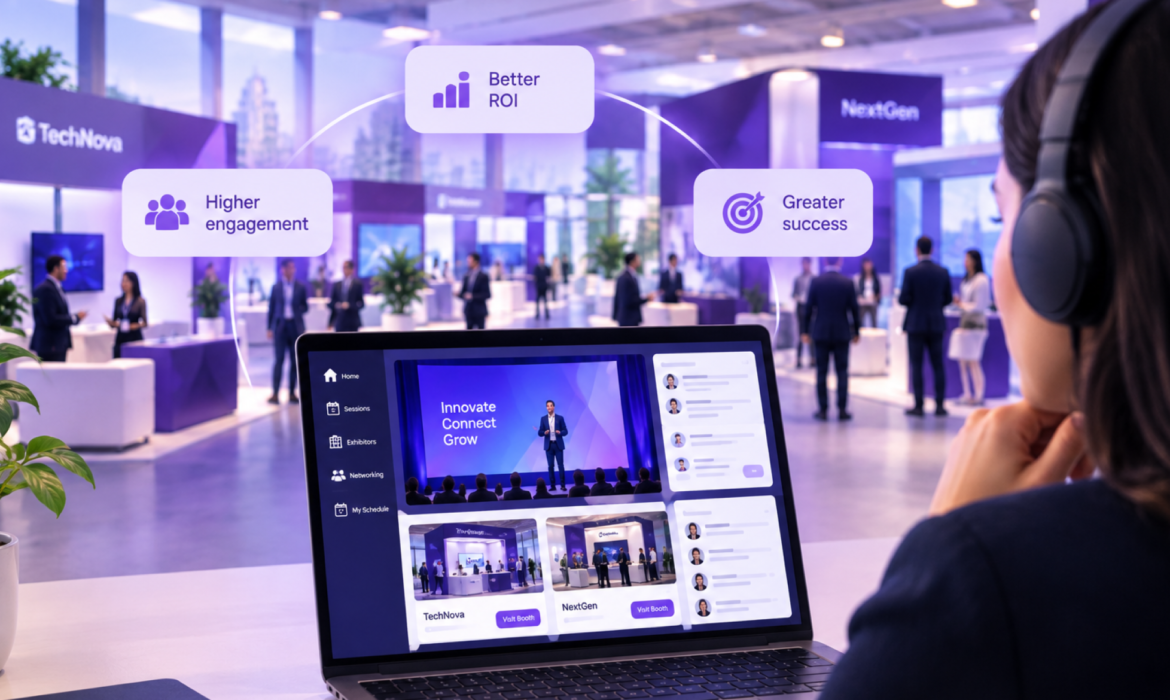
Exhibitions used to mean a physical hall, a travel budget, and a fixed number of days. Technology has changed that math. A virtual exhibition simulates the real thing on an online platform, letting exhibitors present products, talk to visitors, and network with potential clients anywhere in the world, without the usual constraints of time and geography.
The format brings real advantages over a physical show: lower cost, more convenience for both attendees and brands, and a genuinely reliable way to build community ties and tell a company’s story to more people than a venue could ever hold. Whether the goal is lead generation, brand visibility, or simply staying connected with an industry across borders, the mechanics below cover what actually makes a virtual exhibition work.
A few specific advantages explain why the format has stuck around.
Global Accessibility: Anyone with an internet connection can attend from anywhere, which reaches a far bigger audience than a physical venue ever could, without anyone having to book a flight.
Enhanced Interactivity: 3D models, multimedia presentations, audio tours, and clickable content all make the visitor experience more engaging than a static booth display.
Timeless Access: A physical show has a fixed run. A virtual one can stay live indefinitely, letting people revisit content on their own schedule.
Analytics and Insights: Digital platforms track visitor behavior directly, visitor counts, popular booths, time spent per item, giving organizers real data to plan the next event around instead of a guess.
Pretty much every industry has found its own way to use this. Tech companies set up virtual showrooms for new gadgets and software. Healthcare runs webinars and live demos covering new equipment and telemedicine. Car brands let people click through 3D models and watch a launch from home. Fashion houses stream entire runway shows for a new collection. Property developers offer a 3D walkthrough of a building before it’s finished. Restaurants host virtual tastings and use the format to meet other businesses. Renewable energy companies walk people through new tech with webinars and displays. Schools demo their tools inside virtual classrooms. Banks and fintech firms run showcases and teach financial literacy the same way.
Different industries, same reason for doing it: everyone wants a digital space where people can network, learn something, and connect, without the cost of a physical event.
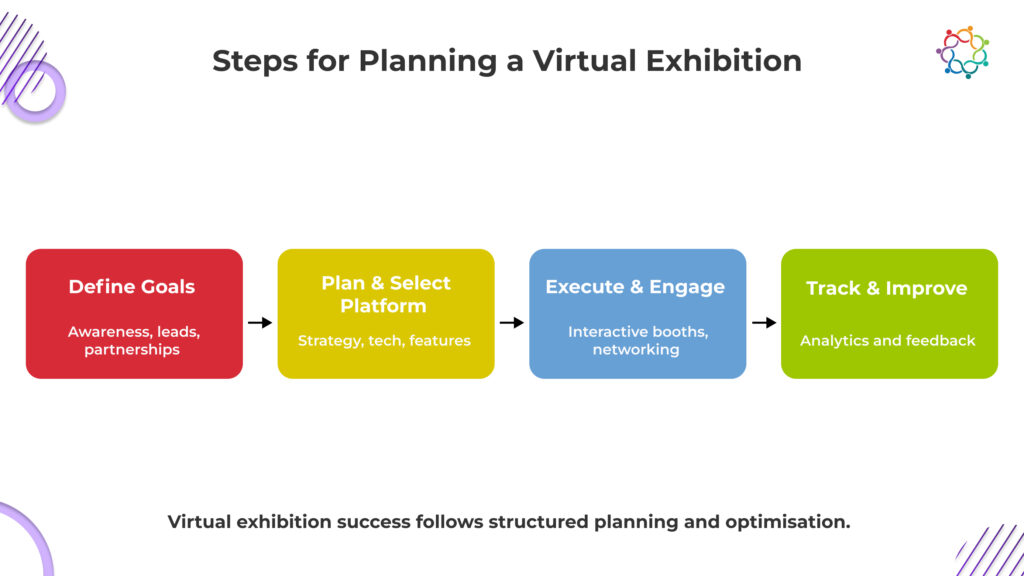
Getting a virtual exhibition right takes real planning, not just picking a platform.
Attendee registration usually runs through a landing page with event details and a clear sign-up button, followed by basic personal information, an optional profile for networking purposes, ticket selection where relevant, payment if the event isn’t free, and a confirmation email with access details. Each of these steps is a chance to either build momentum toward the event or lose someone at the first sign of friction, so keeping the flow short matters as much as the content on the landing page itself.
Exhibitor registration goes deeper: company information and branding upfront, a booth package selected to match budget and goals, booth customization through a dashboard, and a live dashboard tracking visitor engagement, popular booth sections, and captured leads ready for follow-up.
A pre-event meeting scheduler lets attendees and exhibitors lock in appointments before the show even starts, so important conversations don’t get lost in the noise of a live event. AI-powered matchmaking connects attendees and exhibitors based on stated interests and business goals, which does more for lead quality than a generic booth visit.
A product finder lets attendees search directly for what they came looking for, skipping the browsing entirely. The digital booth itself functions as a full storefront, video, brochures, live chat, demos, all in one place. A dedicated event app pushes personalized agendas and real-time notifications to keep attendees oriented. A digital floor plan gives the whole event a navigable map, so finding a specific booth or session doesn’t require guesswork.
Sponsors fund or support an event in exchange for visibility, and managing that relationship well means real documentation: contracts, sponsorship tiers with clear benefits, and a record of every commitment made. It also means active coordination, booth logistics, materials delivery, technical setup, and creating real opportunities for sponsors to interact with attendees through workshops or demos. Done well, this is what makes a sponsor want to come back next year instead of treating the relationship as a one-time transaction that ends the moment the invoice gets paid.
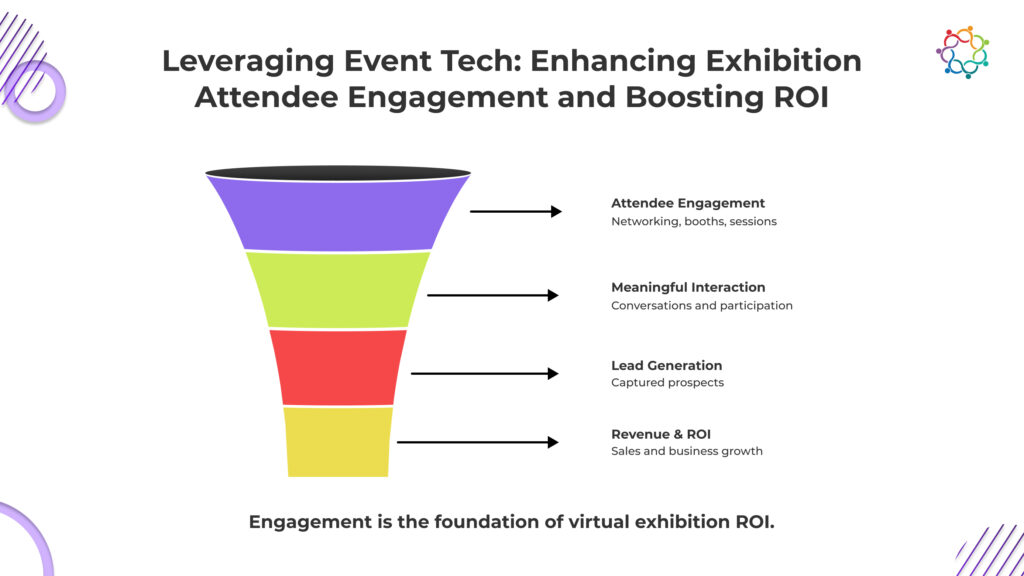
AI matchmaking and built-in chat or video calls turn networking into something structured rather than accidental, connecting people by shared interest instead of leaving it to chance. Interactive virtual booths generate a steady stream of leads throughout the event, and tracking which booths and sessions actually drew a crowd is what feeds smarter decisions into event ROI calculations rather than a rough guess after the fact. Conferencing tools built into the platform let leaders share real expertise, and recorded sessions extend that value well past the event’s actual dates. Gamification, quizzes, small competitions, keeps people exploring more of the event instead of visiting one booth and leaving. There’s a genuine sustainability angle too: less travel, less printed material, a smaller footprint than the physical alternative. And structured polls and surveys placed throughout the event capture real-time feedback that shapes the next one.
A virtual exhibition succeeds on the same fundamentals as any event, clear goals, real planning, and a platform that actually supports what you’re trying to do, just without the constraints a physical venue puts on reach and cost. Event management software built around registration, booths, matchmaking, and analytics in one place is what makes running this kind of event manageable instead of a patchwork of separate tools.
Curious what this looks like for your next virtual exhibition? Book a demo with Samaaro today.