Samaaro + Your CRM: Zero Integration Fee for Annual Sign-Ups Until 30 June, 2025
- 00Days
- 00Hrs
- 00Min

Event marketing used to run on instinct. A planner picked a venue, guessed at a format, and found out whether it worked by how the room felt on the day. That approach doesn’t hold up anymore. With every registration form, badge scan, and session check-in generating a data point, marketers who ignore that information are leaving most of the story untold.
The shift shows up clearest inside an event management platform, where registration, attendance, and engagement all land in one place instead of three different spreadsheets. Collecting that data is the easy part. Turning it into decisions that change the next event is where most teams actually fall behind.
Data answers the questions a gut feeling can’t: who actually showed up, what they engaged with, and what they ignored entirely. It also builds a record you can act on for the next event instead of starting from scratch each time.
Used well, event data can:
None of this replaces judgment. It just gives that judgment something to stand on.
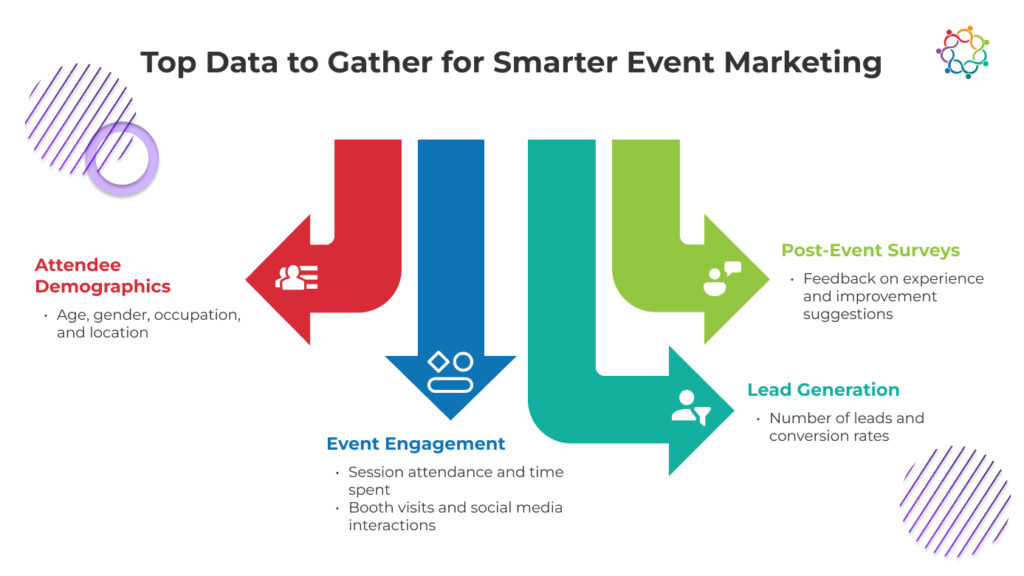
Not every metric is worth tracking, and chasing all of them at once usually means none of them get used properly. Four categories cover most of what matters.
1. Attendee Demographics
Role, industry, company size, and location tell you who’s actually in the room. That’s the baseline for everything else: content, session design, even which sponsors make sense for this crowd.
2. Event Engagement
This is the part that tells you what people did, not just who they were. Track which sessions filled up, how long people lingered at a booth, and what got mentioned on social media while it was happening. A session with strong attendance but a quiet Q&A tells a different story than one where people stayed to argue about the answer.
3. Lead Generation
Total leads is a vanity number on its own. What matters is how many converted, and how engaged those leads were before they left the building. A hundred badge scans mean less than twenty conversations that turned into follow-up calls.
4. Post-Event Surveys
A short survey sent while the event is still fresh catches details that fade within a week: what a speaker actually said that landed, which session felt rushed, what people wish had been different.
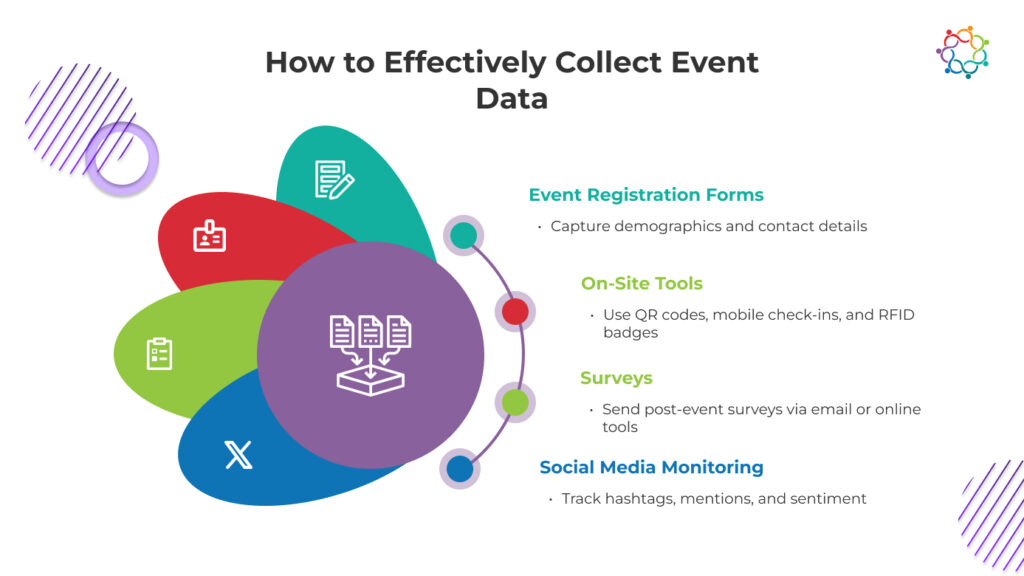
The method matters as much as the metric. A clunky collection process produces incomplete data no matter how good the questions are.
1. Event Registration Forms
Registration is the first real touchpoint with an attendee, which makes it worth getting right. A well-built RSVP management process captures the demographic and preference data you’ll need later, without turning signup into a chore that people abandon halfway through.
2. On-Site Data Capture
Three methods cover most events: QR codes for check-in and session access, mobile app check-ins that also flag real-time engagement, and RFID badges for passive tracking that doesn’t ask attendees to do anything extra. RFID is the most accurate of the three, QR codes are the cheapest to deploy, and app-based tracking lives or dies on whether attendees actually download the app.
3. Post-Event Surveys
Keep it short. A five-minute survey gets answered. A fifteen-minute one gets abandoned at question four.
4. Social Media Monitoring
Hashtag activity and brand mentions during the event show how it landed with people who weren’t necessarily filling out a survey afterward.
Collecting the data is the easy half. The harder part is deciding what it’s telling you.
1. Identify Key Trends and Patterns
Look for which sessions drew a crowd, whether certain attendee segments engaged more than others, and which channel actually drove registrations rather than just getting credit for the last click. Patterns here shape what next quarter’s event looks like.
2. Measure ROI
Cost per lead, revenue tied directly to the event, and ROI against whatever goal justified the budget in the first place. This is the number that gets an event greenlit again, or doesn’t.
3. Segment Your Audience
Behavior and demographic data together let you split attendees into groups worth targeting differently, instead of sending the same follow-up email to everyone who walked through the door.
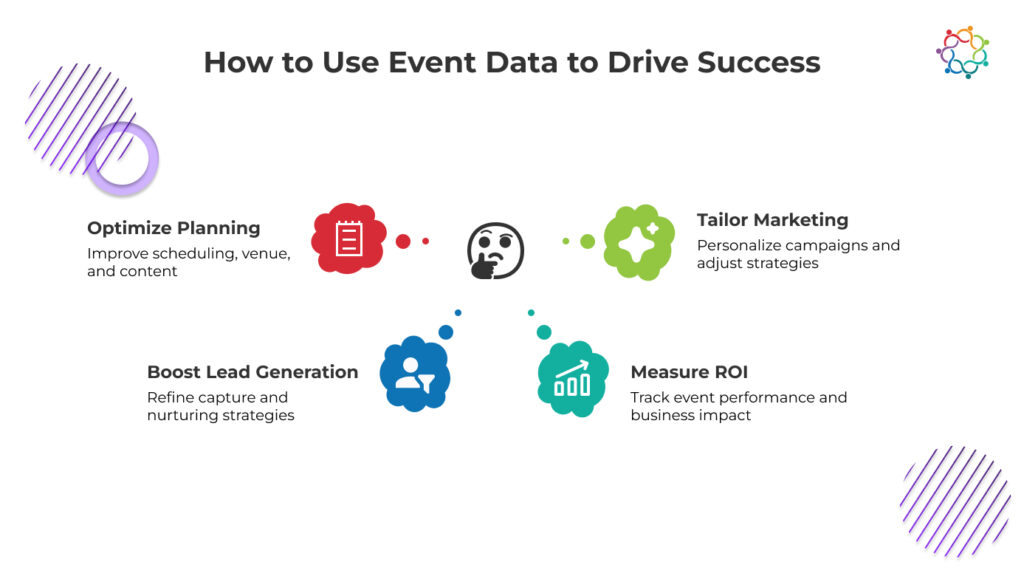
The insights only matter if they actually change the next event, not just sit in a report nobody reopens.
1. Optimize Event Planning
Feedback on venue, timing, and speaker lineup should directly shape the next agenda. If attendees kept mentioning the afternoon sessions felt rushed, that’s next year’s schedule fix, not a footnote.
2. Enhance Lead Generation
If QR codes consistently outperformed manual sign-up sheets, that’s your default going forward. Segment leads by quality and behavior so follow-up actually matches how warm each one is.
3. Measure Campaign Effectiveness
Track which marketing channels actually drove registrations, and shift the next budget toward what worked rather than what felt like it should have worked.
Data-driven event marketing isn’t a nice-to-have layer on top of a good event anymore, it’s what tells you whether the event actually did what it was supposed to do. Collecting the right information, reading it honestly, and letting it change the next event is the entire point.
If your current setup still means jumping between a registration tool, a survey platform, and a spreadsheet to piece together what happened, book a demo and see what it looks like when all of that lives in one place.
1. What’s the real difference between attendee demographics and engagement data?
Demographics tell you who showed up, role, industry, company size, location. Engagement data tells you what they actually did once they were there, sessions joined, polls answered, content downloaded.
2. Which on-site data collection method works best, QR codes, a mobile app, or RFID?
RFID gives the most accurate passive tracking but costs more to deploy. QR codes are the middle ground, solid accuracy without a big price tag. Mobile apps only work as well as your attendees’ willingness to download one.
3. What’s a reasonable response rate to expect from a post-event survey?
Somewhere between 20 and 30 percent is typical. Short forms, mobile-friendly design, and a small incentive all push that number up.
4. What’s the right way to calculate cost per lead for an event in 2026?
Divide total event cost by qualified leads captured, then break it down by lead quality tier. A low blended cost per lead can still hide a batch of leads that never should have counted.
5. How does a platform actually cut down on data silos between registration, engagement, and CRM?
When registration, engagement, and CRM data sit in one system, every touchpoint updates the same attendee record instead of three disconnected ones. That’s fewer manual exports and fewer reports that quietly contradict each other.