Samaaro + Your CRM: Zero Integration Fee for Annual Sign-Ups Until 30 June, 2025
- 00Days
- 00Hrs
- 00Min

1
2
3
4
In event organization, the first experience begins a day-long impression. There is no worse feeling than having guests stuck at the entry, primarily caused by distance or downtime due to poor or no Wi-Fi.
If you are managing a hotel ballroom-based conference, a summit in a remote convention centre, or a festival in an open field, the last thing you want is connectivity issues to affect guest management. This is where offline event check-in apps become indispensable to the function.
Offline event check-in apps allow you to transform registration from exercise of technical risk to a reliable and consistent activity. Everyone understands the basic premise: offline event check-in is the reliability event execution rests upon.
In the past, a system that either relied on traditional methods or was poorly designed caused enormous bottlenecks.

Modern-day event registration applications are developed with an “offline-first” approach, or a mindset that they need to work quite well without a network connection.
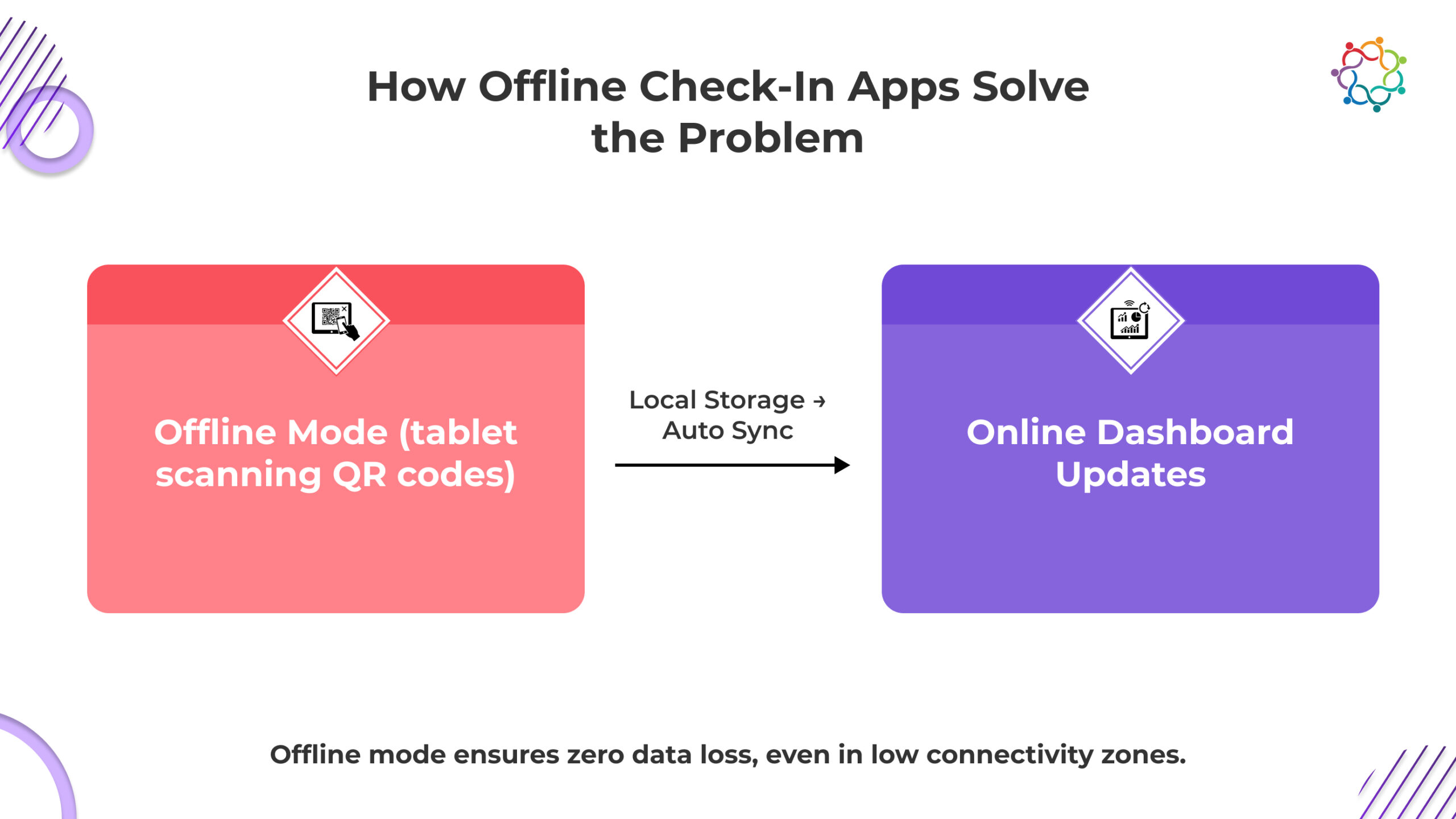
The main mechanism here is through local data cache. In advance of the event the entire guest list is securely downloaded to the check-in devices (on the fast devices – it is done overnight prior) in advance and the staff now utilizes the app to check guests in based on the QR code or name lookup. Any activity occurring is recorded locally and instantaneously with the activities recorded locally.
These apps are designed for quick entry without any touching, utilizing QR code scanning and tap-to-enter NFC, still working offline. The app simply checks the scanned code against the guest list that is stored locally. This is the fastest way to verify guests and is a core function of how offline check app technology facilitates a fast and uninterrupted flow of guests being checked-in, thus the lines are minimized even when doing this during peak capacities.
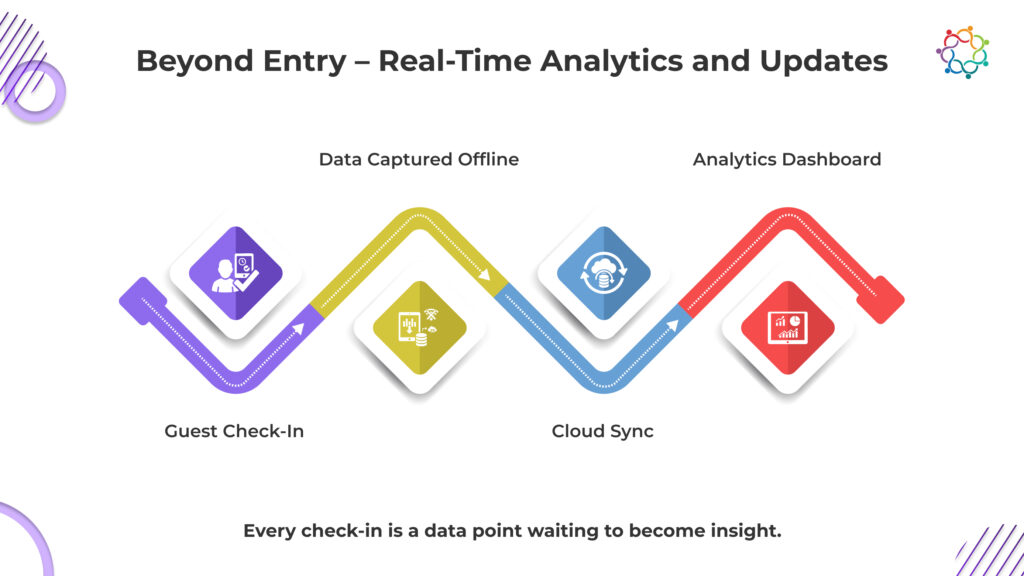
Once the device connects back to WiFi (even just for a quick minute) all the locally recorded guest check-in data can now Auto Sync all the recorded data back to the cloud and subsequently their party representation on the ground event inventory is updated. Also, for a larger event even if being used on ten devices as a guest check point all guest check-in inventories all syncs across devices so that all check-ins agree.

The benefits of offline event check-in solutions encompass more than just the point of entry; it will change your guest management quality level and post-event reports.
Data Capture Without Interruption
During the event, offline data will also contribute to the reporting and analytics, once you regain connection. This ensures an accurate and comprehensive attendance record, session attendance, and entrance time, regardless of unreliable connectivity at the venue.
Insights Worth Having
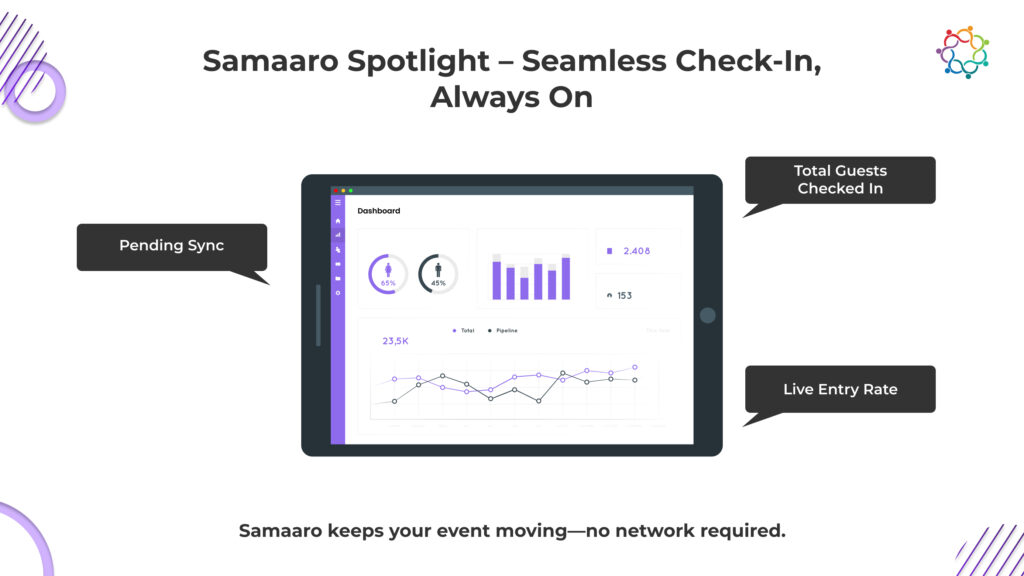
You will gain dashboards once the sync occurs, right after the data is synced. Check-in speed, attendance numbers, and segments are far easier to visualize just after the event for both reporting and ROI analysis.
For example, a great guest management tool will save staff’s time and efforts handling even categorizing, a 5,000-person summit reduced their wait by over 60% due to having an unsupported/insecure connection to the external network.
You can learn more about how streamlined check-in enhances the event experience here: https://samaaro.com/blogs/beyond-the-scan-how-samaaros-qr-codes-revolutionize-event-registration/

Samaaro understands that an enterprise event check-in application must be completely reliable. Our solution is developed to remove the number one source of onsite stress, a connectivity failure.
By 2026, your event’s success will be evaluated based on not only the quality of your content, but also on the seamless delivery of your logistics. The effectiveness of your events will be evaluated based on the seamless experience of your guests. When you use offline event check-in applications, you are making an investment in reliability, efficiency, and a better first impression for each and every participant.
The benefits of offline event registration are readily apparent, speed, accuracy, and peace of mind. Discover Samaaro’s offline event check-in applications for seamless event guest management
Traditional Wi-Fi-dependent check-in systems break when venue Wi-Fi gets overloaded (which it usually does during peak entry periods), when connectivity drops, or when offline backup isn’t built in. The guest experience suffers because attendees stand in queues while staff troubleshoot connections, the event opens with a logistics complaint instead of a positive first impression, and badge printing stalls. For large events, this is one of the most preventable damages to satisfaction scores.
The offline-first approach in modern event check-in apps works by storing the full guest list and access rules locally on each device, so check-in continues even when Wi-Fi drops. Local data caching means each staff device has a complete copy of the registration database. When a guest’s QR code is scanned, the app validates against the local cache instantly. The internet is only needed for syncing data back, not for the check-in itself.
QR codes and NFC enable faster check-in by reducing each entry to a single tap or scan. No paper lists, no manual name lookups, no typing into a form. A trained staff member can process 200+ guests per hour per station with QR or NFC. During peak entry (the first 30 minutes when 60 percent of guests typically arrive), this is the difference between a smooth opening and a queue stretching out the door.
Automatic cloud synchronisation handles the data reconciliation once connectivity returns. Every check-in captured offline is timestamped locally, then pushed to the cloud when the device reconnects. Duplicate-detection logic ensures the same guest isn’t counted twice if scanned at two stations. Real-time dashboards stay accurate even if individual devices were briefly offline. Organisers see one consolidated, accurate attendance number, not five conflicting ones.
Offline check-in apps still contribute to post-event attendance analytics and ROI reporting because every offline scan is timestamped and synced once connectivity returns. The post-event report shows attendance rate, peak entry times, average check-in duration, and per-session attendance, all based on the same data that would have flowed in real time. The CRM gets the right attendee records, attribution holds, and ROI calculations remain accurate.
Custom access control features that work offline include: VIP tagging that flags special guests at scan for personalised greeting, track-level access verification (one pass for the main conference, another for VIP rooms or workshops), session-specific entry rules, sponsor-area gating, and meal voucher tracking. All these rules sit in the local cache, so staff can enforce them without an internet connection while still keeping the audit log accurate.

Samaaro is an AI-powered event marketing platform that enables marketing teams to turn events into a measurable growth channel by planning, promoting, executing, and measuring their business impact.
Location


© 2026 — Samaaro. All Rights Reserved.