Samaaro + Your CRM: Zero Integration Fee for Annual Sign-Ups Until 30 June, 2025
- 00Days
- 00Hrs
- 00Min

Real estate events used to run on gut feel: book the venue, invite the usual list, hope the right people show up. AI and machine learning are changing that math. Instead of guessing which sessions will draw a crowd or which attendees actually care about a specific listing type, organizers now have data that tells them before the event even starts, and that shift matters more in real estate than in most other categories, since the buyers in the room range from first-time homeowners to institutional investors, all sitting through the same agenda unless something actually separates them.
None of this replaces good event planning, it sharpens it. Automating the repetitive parts, reading attendee behavior in real time, and targeting outreach based on actual preference rather than a generic list all add up to events that perform better with less wasted effort. The sections below walk through where AI and machine learning actually show up across the event lifecycle, from the planning stage through what happens after everyone’s gone home.
Quick definitions before getting into the specifics:
In real estate event marketing, these show up as sharper personalization, faster planning, and predictions about outcomes that used to be pure guesswork, all built on data collected throughout the event lifecycle. The difference from older approaches isn’t that the data existed before, most platforms already tracked registrations and clicks, it’s that machine learning actually turns that raw activity into a prediction or a recommendation instead of leaving it sitting in a dashboard nobody checks until the post-event report.
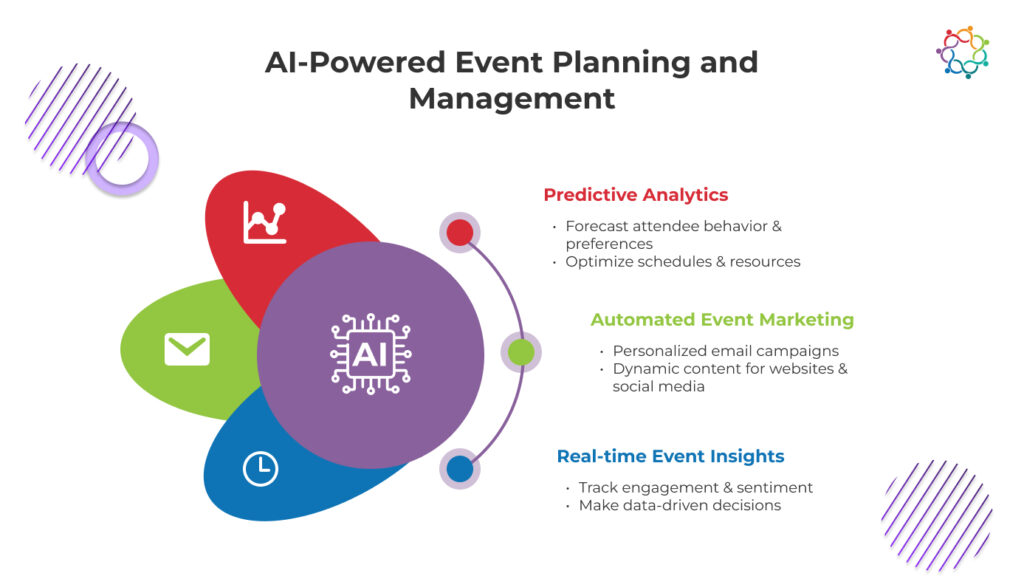
Planning an event involves a hundred small decisions. AI doesn’t make them for you, but it gives you better information to make them with.
1. Predictive Analytics
Past event data can forecast what’s likely to happen at the next one, which sessions will draw a crowd, what content lands with which group, which speakers or exhibitors pull the most interest. That lets organizers put resources where they’ll actually matter instead of spreading everything evenly and hoping. The same forecasting extends to logistics too, predicting demand for a specific showcase or activity ahead of time makes staffing and setup a lot less reactive, and it means fewer last-minute scrambles to add chairs to a session nobody expected to be popular.
2. Automated Event Marketing
Email campaigns built around individual preferences and behavior reach people with content that’s actually relevant to them, rather than one generic blast sent to the entire list. Someone who’s shown interest in commercial listings gets messaging built around that, not the same luxury residential pitch going out to everyone on the list. The same logic extends to event websites and social channels, where descriptions, speaker bios, and ad copy can adjust based on who’s actually looking at them, rather than presenting one static version to every visitor regardless of what brought them to the page.
3. Real-Time Event Insights
Once the event is running, tracking social mentions, survey responses, and app activity gives organizers a live read on how attendees are actually feeling, not just how the room looks from the stage. That data supports real adjustments mid-event: reworking a session that’s clearly not landing, or opening up more networking opportunities when the data shows attendees are hungry for more of it than the agenda currently offers. A session with a full room but a dead Q&A tells a very different story than a half-full room where every hand goes up.
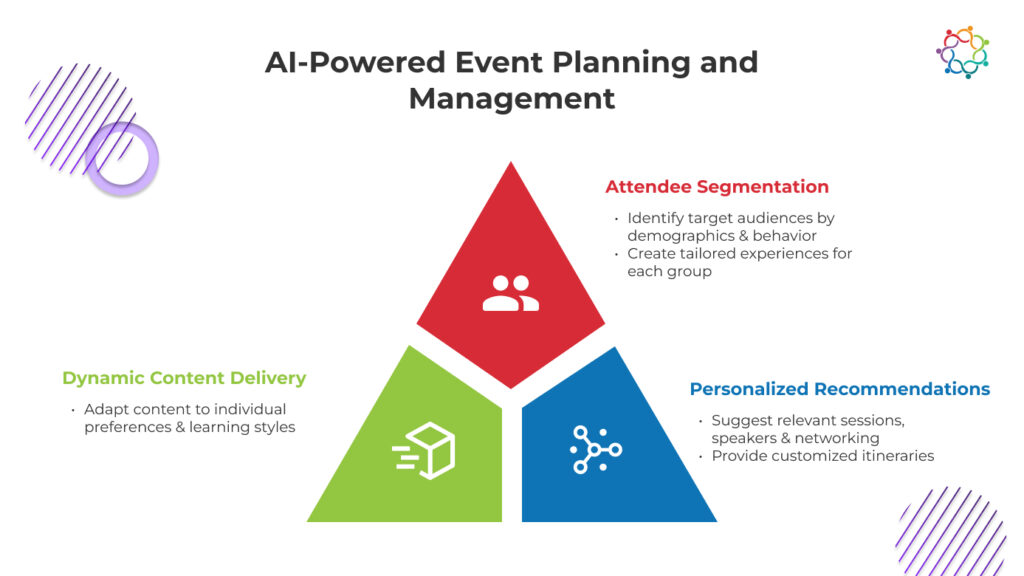
Machine learning takes personalization further by working through attendee data to build event experiences that actually fit the person, not just the audience segment they technically belong to.
1. Attendee Segmentation
Processing demographics, preferences, and behavior at scale lets organizers split a real estate audience the way it actually breaks down, first-time homebuyers, seasoned investors, luxury buyers, and serve each group content that fits, rather than treating everyone in the room as the same prospect. A first-time buyer and an institutional investor asking about the same property are looking for completely different information, financing options versus cap rate projections, and segmentation is what makes it possible to serve both without diluting the message for either.
2. Personalized Recommendations
An event app that suggests specific sessions, speakers, or networking connections based on someone’s past behavior does more for engagement than a printed agenda ever could. Real-time recommendations guide people toward what’s actually useful to them, instead of leaving it to chance whether they stumble into the right conversation. Someone who spent the morning in commercial-focused sessions gets nudged toward the afternoon panel on commercial financing, not a generic reminder about the closing keynote.
3. Dynamic Content Delivery
At a virtual or hybrid event, the format itself can adapt, video for one attendee, text summary for another, interactive elements for a third, based on what that person actually engages with. Content that matches how someone prefers to consume it gets used, content that doesn’t gets scrolled past. Over multiple sessions, the platform can also learn which format a given attendee responds to and lean into it by default, rather than presenting the same static mix to everyone regardless of what’s actually working.
AI and machine learning only deliver on their potential when there’s a platform actually running them day to day.
1. Samaaro: An Event Marketing Solution Built Around This
Samaaro is an event marketing platform with AI and machine learning built into the core workflow rather than bolted on. It covers planning, execution, and post-event analysis in one place, and the AI layer specifically handles predictive analytics, real-time insights, and personalized content delivery so organizers aren’t stitching together three separate tools to get the same result. On the management side, it also handles registration, attendee tracking, and on-site operations, which keeps the marketing and logistics sides of an event talking to the same data instead of living in separate systems that need manual reconciliation after the fact.
2. Event Management and Marketing Working Together
Running marketing and management through one platform means the two sides actually inform each other instead of operating on separate timelines. Attendee behavior tracked during the event feeds directly into what gets sent to them afterward, and marketing performance data feeds back into how the next event gets planned. That closes a loop that used to require someone manually exporting data from one system and importing it into another, usually days or weeks after the information was actually useful.
AI and machine learning don’t replace the judgment a good event marketer brings, they remove a lot of the guesswork that used to sit underneath it. Predictive planning, real-time adjustments, and event experiences built around what a specific attendee actually wants add up to real estate events that convert better and waste less budget on outreach nobody was going to respond to anyway. The organizers who get the most out of this aren’t the ones with the flashiest AI features, they’re the ones who actually act on what the data tells them, adjusting a session mid-event, retargeting a segment that isn’t engaging, instead of collecting the insight and filing it away for a debrief no one revisits.
Curious what this looks like for your next event? Book a demo and see the AI tools in action.

Samaaro is an AI-powered event marketing platform that enables marketing teams to turn events into a measurable growth channel by planning, promoting, executing, and measuring their business impact.
Location
© 2026 — Samaaro. All Rights Reserved.