Samaaro + Your CRM: Zero Integration Fee for Annual Sign-Ups Until 30 June, 2025
- 00Days
- 00Hrs
- 00Min

In the current marketing environment, event promotion doesn’t require a “do it all, do it everywhere” mentality. It’s easy to think you can do everything at once: you can run paid ads, post 5 times a day and expect registration to come flooding in; you can send out mass emails and expect attendance. But for organizations and B2B marketers this “spray and pray” method, gets costly, spreads us thin, and can be quite disappointing.
Not all event marketing channels are created equally, some have credibility and longevity, while others offer immediacy and relevance, some allow you to partner strategically with trusted partners, while others allow you to create excitement, and buzz. Successful, smart marketers understand that success is not about using each channel, but building the right combination of the four creative benchmarks:
Each play a specific role in the promotional mix; and when integrated effectively, they help ensure your event gets in front of the right people, in front of them at the right time, and the right way.

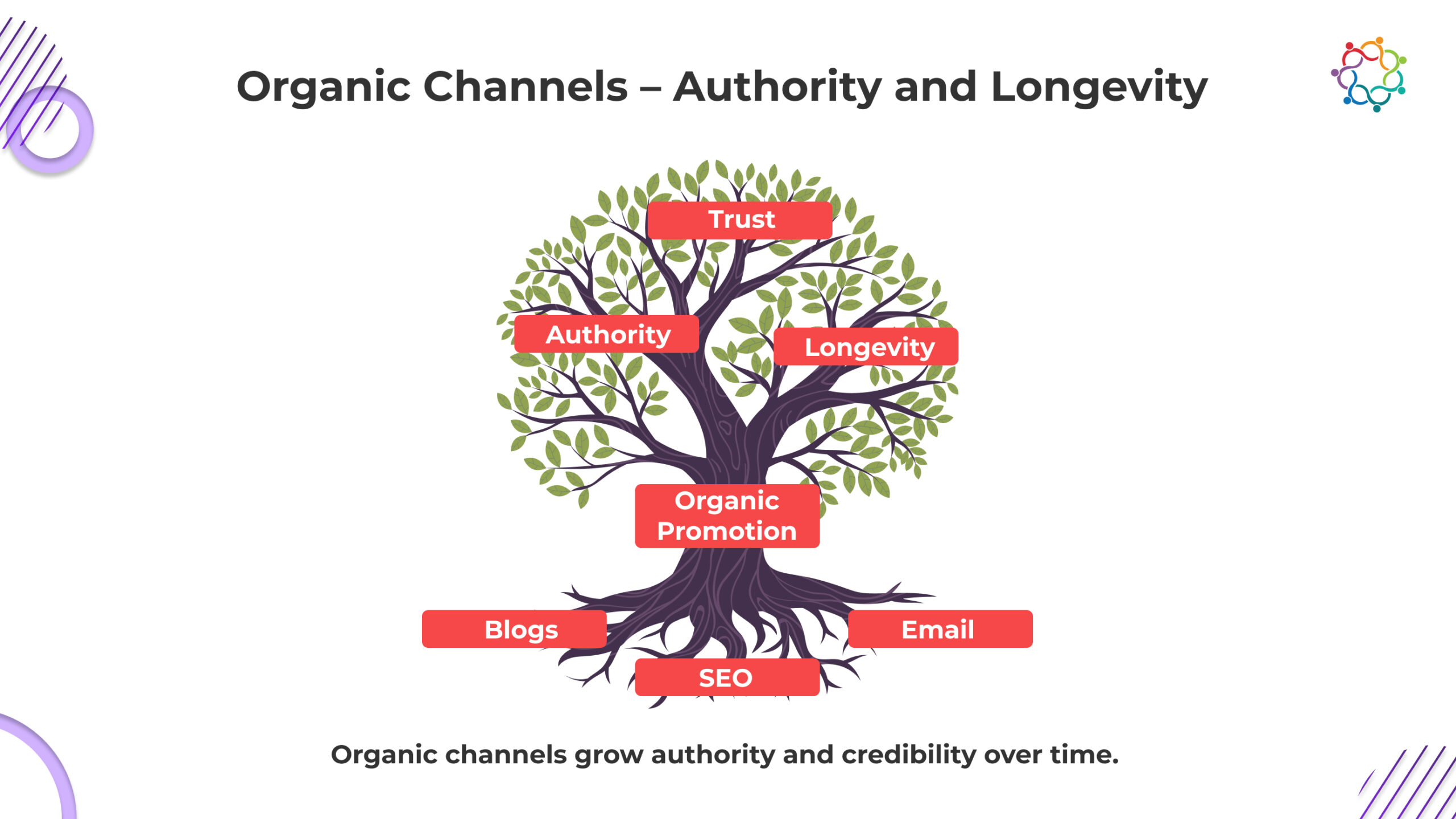
Organic promotion channels act a slow-burn engines. They don’t generate spikes overnight, they build consistent visibility, credibility, and trust from your audience over time.
What It Includes:
Why is it Important:
Example:
A B2B SaaS company created a six-part blog series on the “future of work” trends based on the keynotes of its annual enterprise summit. Before any advertising budget was deployed, the blogs were climbing in Google and attracting near continuous registrations from mid-funnel prospects at no cost to the marketers.
Cautions:
Organic is slow. If you are only three weeks away from an event, organic alone will not get the job done. It must be in play early in the event lifecycle and there should be supporting resource such as paid or social.

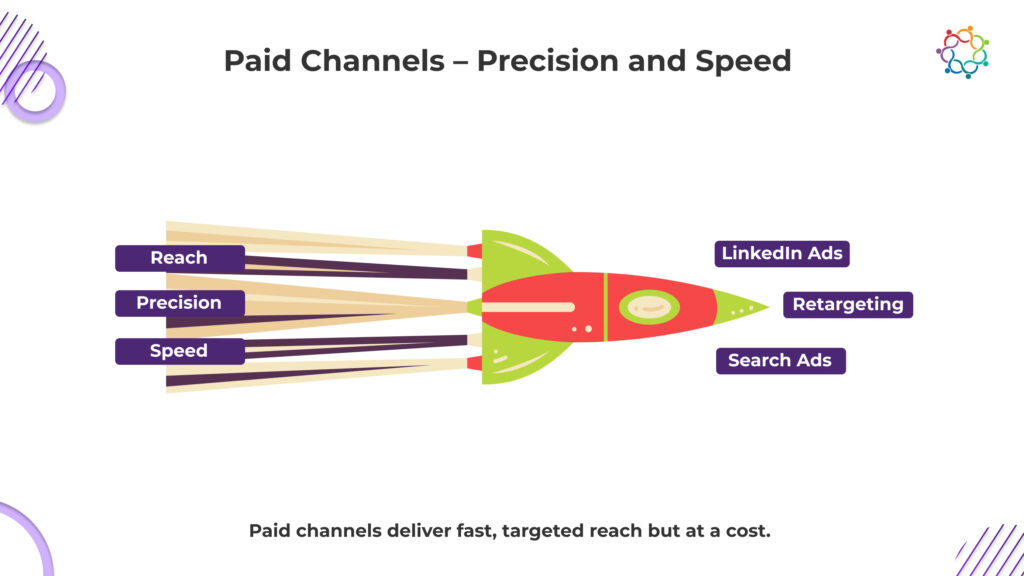
Paid channels are the jet fuel for event marketing. They allow you the hyper-targeting of the right audience and instant bursts of visibility.
What it includes:
Why it is Important:
For example:
A financial services firm promoting a CXO round table that used LinkedIn Sponsored Content with strict filters (India, VP+, BFSI). The promotion delivered a CTR that outperformed less focused campaigns by 40% and produced 150 qualified registrations in 10 days.
Cautions:
Paid is budget pass heavy. If you are not careful with targeting and creative, you can easily waste budgets on vanity impressions. Always identify ROI (cost per qualified registration) versus reach.
In B2B event marketing, partners can sometimes be your best advocates. Sponsors, exhibitors and industry associations all come with their own trust and target audiences and can give your event reach that you simply can’t buy.
What it Gets You:
Why it Matters:
For example,
A global technology brand partnered with a local chamber of commerce to jointly sponsor an enterprise conference. The chamber’s promotional efforts resulted in twice as many registrations, particularly from mid-market companies that the tech brand had never worked with.
Cautions:
Partner promotion takes enablement. Simply asking partners to promote your event is insufficient. You must give them a frictionless way to promote your event using ready-to-use assets (e.g., banners, email templates, social posts).
If “organic” is a long burn and “paid” is like jet fuel, then social media is the amplifier. Social media creates live buzz and conversations prior, during, and after your event, and will continue to nurture community affiliations.
What It Includes
Why It Matters
For Example,
At a global fintech summit, organizers created a branded hashtag that was sponsored and deployed by the sponsors and speakers. The hashtag trended regionally on X and gained 5x organic visibility over the course of the summit because of the deployment of other organic content and website livestream viewership increased as a result.
Cautions:
Social may be distracting if not connected to a strategy. It is easy to get caught up in chasing “likes” and retweets and not connect the content you posted back to registrations or pipeline. Always remember to tightly link engagement metrics with conversion.

Want to see how this would work for you?
See how Samaaro orchestrates organic, paid, partner, and social into one event funnel.
Book a tailored walkthrough →
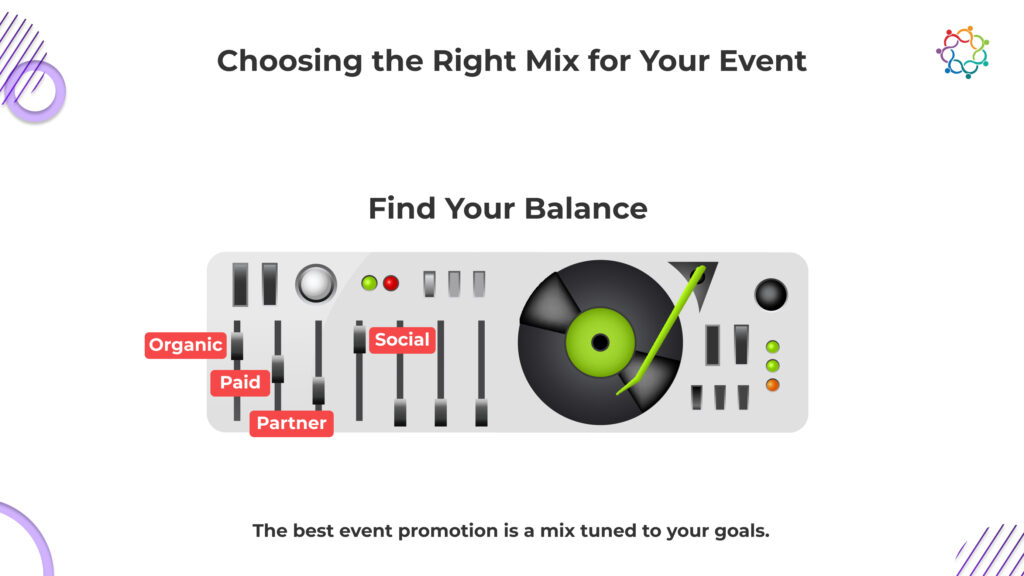
There is no one best channel. The best approach is selecting a good mix of channels based on:
The power relies on the orchestration, all channels playing their meaningful role in the entire promotion timeline.
Managing four pillars simultaneously may become overwhelming for teams. Samaaro makes it easier by using:
Instead of fragmented reporting, Samaaro allows enterprises to plan and report multi-channel campaigns with ease and transparency.
Event promotion is not about being everywhere; it is about being effective. If you can master the four pillars of organic, paid, partner program, and social media; enterprises have the ability to;
The smartest teams are not gambling around with the channel; they are designing a mix that works in unison with each other.
Want to master the 4 pillars of event marketing? Download our Event Promotion white paper or check out Samaaro’s campaign management tools today.
The 4 key event marketing channels are: organic (SEO content, blogs, email nurturing) for sustained awareness, paid (LinkedIn ads, retargeting) for fast targeted visibility, partner (sponsors, speakers, associations) for credibility and extended reach, and social media (LinkedIn, X, Instagram) for community engagement. Each plays a different role. Organic builds long-term authority. Paid accelerates short-term visibility. Partners borrow trust. Social drives community.
Activate organic channels like blogs, SEO, and email nurturing early in the event lifecycle because they compound over time. A blog post takes 6 to 12 weeks to rank on Google. An email nurture sequence needs weeks to warm contacts. Starting these 3 weeks before the event misses the window. Start them 10 to 12 weeks out and they’re delivering registrations throughout the campaign, not just at the end.
Paid channels like LinkedIn ads and retargeting campaigns enable precise targeting because you can narrow audiences by job title, industry, company size, and behaviour. Retargeting in particular converts at 5 to 10x the rate of cold ads, because it reaches people who’ve already shown intent by visiting your landing page. For time-sensitive event promotions in the final 2 to 3 weeks, paid channels are how you scale registrations quickly without waiting for organic to mature.
Enable sponsors, exhibitors, associations, and speaker networks as partner promoters by giving them ready-to-use assets (pre-written posts, branded graphics, unique referral links), setting clear expectations (one post per week leading up), and tracking their contributions in your attribution reports. Most partners want to amplify because event success serves their own goals. The reason most don’t is friction. Remove the friction by making sharing one-click easy.
Use social media channels strategically across phases. Before the event: LinkedIn for thought leadership and speaker reveals, X for live commentary teasers, Instagram for behind-the-scenes prep. During the event: live coverage with branded hashtags across all three. After: highlight reels, attendee quotes, and on-demand session content. Different platforms reach different audiences in different moods, so the content style must adapt to each platform.
Choose your channel mix by event type and audience. Flagship summits need all four channels with budget weighted toward paid LinkedIn and content marketing. Niche executive roundtables need direct outreach, partner referrals, and personal LinkedIn DMs from speakers. Webinars need fast-cycle email and paid social. Don’t apply the same mix to every event. Match channel intensity to the audience size and intent level you need to reach.
The four key channels are organic, paid, partner, and social media. Organic, like blogs, SEO, and email, builds long-term authority. Paid, like LinkedIn ads and retargeting, delivers fast, precise visibility. Partner programs, like sponsors and associations, lend credibility and reach. Social media drives engagement and buzz. Each plays a distinct role, and they work best layered together.
Promote across all four by giving each channel its job. Use organic content to build authority early, paid ads to target the right people quickly, partners to extend your reach through their networks, and social media to create buzz and conversation. The real power is orchestration, where every channel plays its role across the promotion timeline rather than working in isolation.
Organic channels, like blogs, SEO, and email, build credibility and last for months, but they are slow to take effect. Paid channels, like ads and retargeting, are fast and precise but cost money and stop when you stop paying. They work best together: organic builds long-term authority while paid accelerates visibility close to the event. One is the slow burn, the other the jet fuel.
Partners amplify your reach through audiences you do not own. Sponsors and exhibitors can promote to their customer base, industry associations open the door to their members, and speakers share with their followers. An email from a partner to their list often outperforms your own. The catch is enablement: give partners ready-made assets so promoting your event is effortless for them.
The blog highlights LinkedIn, X, and Instagram, each with a different strength. Use LinkedIn for thought leadership and speaker reveals, X for live commentary and trending hashtags, and Instagram for visual storytelling through reels and polls. Match the content style to each platform, and tie engagement back to registrations so social buzz turns into real sign-ups rather than just likes.
Build a balanced mix based on your budget, audience, and event type. A flagship summit may use all four channels, a regional roadshow may lean on paid and partners, and a webinar may use organic, email, and social. Activate organic early, layer in paid and partners, and keep social buzz going throughout. Orchestrating the channels together is what drives consistent attendance.
Maximize organic reach by starting early, since it compounds over time. Publish blog content around your event themes and speakers to earn search traffic, optimize your landing and registration pages for SEO, and run email nurture sequences to warm leads. A well-ranked blog post can keep pulling registrations for months. The key is to activate organic 10 to 12 weeks out, not three.
Paid ads and retargeting drive registrations quickly and precisely. Use LinkedIn ads to target decision-makers by job title, industry, and company, and run retargeting to reach people who already visited your page. Retargeting converts far better than cold ads because it reaches warm prospects. In the final weeks before an event, paid channels are how you scale sign-ups fast.
Track each channel against conversion, not just reach. For organic, watch search traffic and registrations from content. For paid, watch cost per qualified registration and click-through rate. For partners, track registrations from their referral links. For social, tie engagement to sign-ups. Campaign attribution tools show which channel drove registrations and which influenced pipeline, so you can invest where it pays off.
Integrate the channels by orchestrating them around one timeline and one message. Start organic and email early, layer in paid and partner promotion, and keep social buzz going before, during, and after. Use a central dashboard to see performance across all four and attribute results. Consistent messaging across every channel, each playing its role, is what drives maximum, reliable attendance.

Samaaro is an AI-powered event marketing platform that enables marketing teams to turn events into a measurable growth channel by planning, promoting, executing, and measuring their business impact.
Location


© 2026 — Samaaro. All Rights Reserved.