Samaaro + Your CRM: Zero Integration Fee for Annual Sign-Ups Until 30 June, 2025
- 00Days
- 00Hrs
- 00Min

Imagine this: according to Skift Meetings’ 2025 industry reporting, free corporate events regularly see no-show rates of 50% or higher, and even with personal outreach, planners often see only 22% of confirmed RSVPs actually attend, not because the events themselves lacked value, but due to poor ticket sales, weak engagement, and ineffective promotion. That gap between planning and actual turnout can make or break your event’s success.
In today’s hyper-competitive climate, simply putting on a great event is no longer acceptable. You need to use a smart, strategic approach to event ticket sales – one that identifies the right audience, builds real interest, and gets that buzz to a point of registration. This 2026 guide will be your ultimate road map for doing so.
Whether you’re launching your first event or scaling up your annual conference, this guide breaks down proven ticket selling strategies and sales techniques for events step-by-step. You’ll learn how to maximize attendee acquisition, optimize your marketing, and generate sustainable event revenue.
By the end, you’ll have a clear, actionable plan to boost your event’s visibility, sell out your tickets faster, and create memorable experiences that keep attendees coming back.
Ready to turn your event into a sold-out success story? Let’s dive in.
Before you get into selling tickets, it’s important to take a pause and start on the right footing. The overall success of your event will depend on how well you’ve defined its unique selling proposition and defined who you are selling the experience to. This foundation will make it easier to create marketing messages and sales approaches that are targeted.
First off, you want to define the event’s Unique Value Proposition clearly.
Your UVP defines why someone can’t afford to miss your event. This message will serve to design all of your communications and entice your audiences in the right capacity.
Third, it is very important to have a deep understanding of your target audience. Essentially, you want to create detailed persona(s) representing all of the attendees: who they are, what they like, what problems your event will help them solve? Think about their demographics, preferences, and especially the communication channels they use: email, social media, etc. When you understand who your audience is and how to communicate to them, you increase your chances of grabbing their attention and turning that attention into ticket sales.
Finally, setting SMART goals for your ticket sales will keep your efforts on track. Your goals should be:
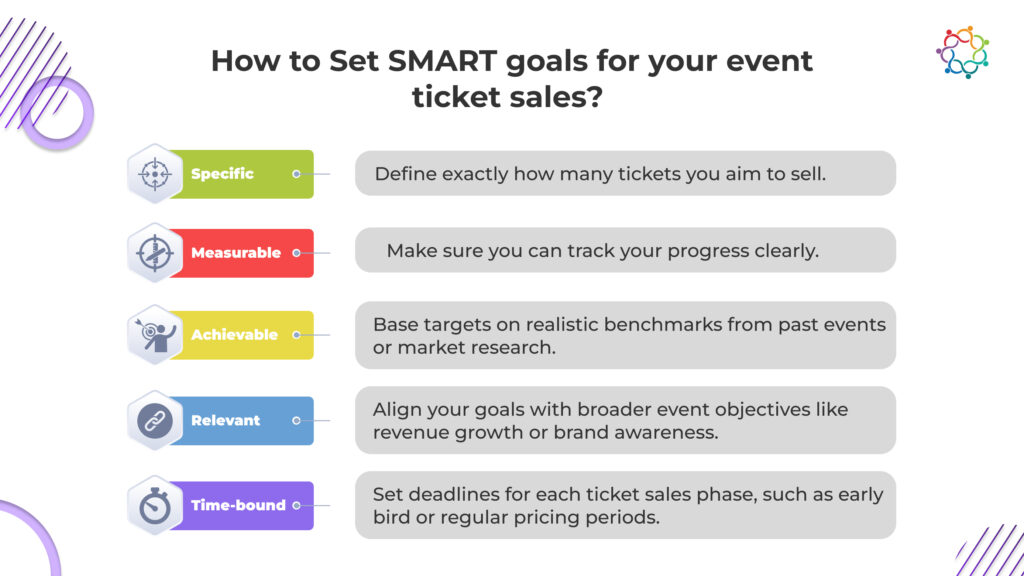
Establishing these essentials equips you with a clear roadmap, ensuring your event ticket sales strategies are purposeful and effective.
The period leading up to your event is arguably the most critical for ticket sales. This phase, often called the “critical window,” is when your marketing efforts directly influence your event’s success. Implementing smart, targeted strategies during this time can generate momentum and ensure a steady flow of ticket purchases.
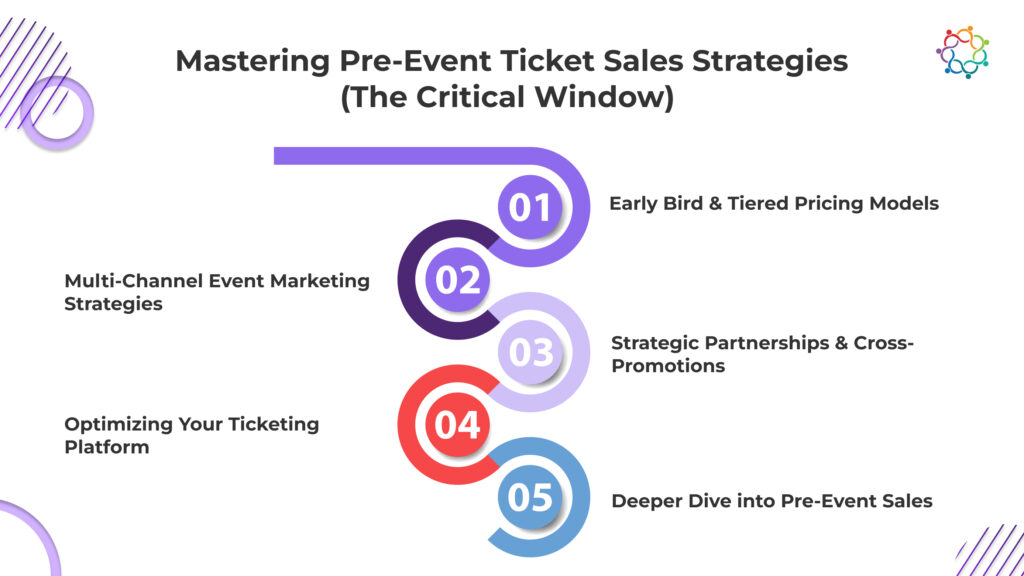
One of the most effective ways to incentivize early ticket purchases is through tiered pricing. Early bird offers reward attendees for committing early, while gradually increasing prices create urgency and capitalize on FOMO (Fear Of Missing Out). Here’s how to approach it:
This pricing strategy not only boosts initial sales but also helps predict attendance levels, aiding event planning.
Relying on one channel to maximize ticket sales isn’t going to work. You must use a mix of strategies based on your audience’s preferences.
Collaborating with complementary brands or influencers can broaden your reach exponentially. Consider:
Your ticketing platform is at the center of the sales process – get it right first:
– Easy for attendees to navigate to the checkout in as few steps as possible.
– Mobile-friendly so attendees can purchase via any device with no friction.
– Secure payment options for attendees, so they know they can trust you.
– Integration with your CRM or marketing platforms to create data analysis.
By nailing these elements during the most valuable event sales window, you have developed a strong ticketing momentum for a sellout event!
At this point, the aim is to convert interest into action. Whether it’s a strongly marketed event or a fantastically good event, even the best planning can get stalled by hesitation. This is where sales psychology becomes important – if you have studied how people purchase, you can give a nudge to prospects to get them over the line.
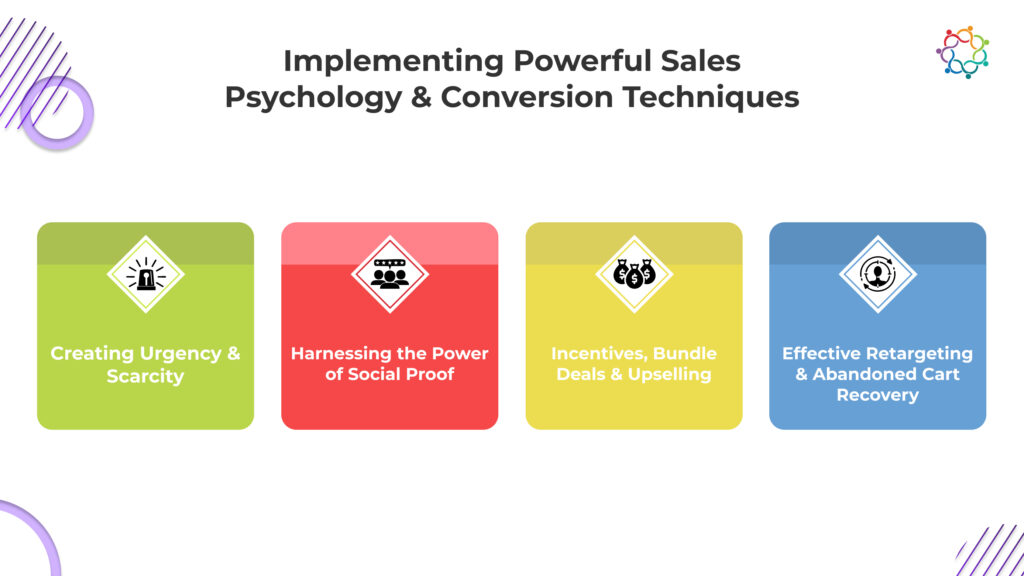
Nothing drives action like the fear of missing out. Leverage urgency and scarcity in ways that feel genuine, not gimmicky:
These tactics help overcome procrastination and trigger action.
Humans trust the crowd. Showing that others are attending, enjoying, or recommending your event can build trust instantly.
When potential attendees see others backing your event, their hesitation fades.
Value-adds can tip the scale for on-the-fence buyers. Don’t just sell tickets—sell experiences.
These techniques not only boost conversions but increase average revenue per ticket.
Many potential ticket buyers will not finish their purchase the first time they come to your site. With useful retargeting, you can bring them back.
These psychology-based techniques work best feel back: use them together. If you do this right, it will be faster and at better value as curious visitors become committed attendees!
Pricing isn’t just about covering costs – it’s a strategic lever to influence buyer behavior, increase perceived value, and maximize event revenue. In 2026, smart pricing is dynamic, flexible, and data-informed.
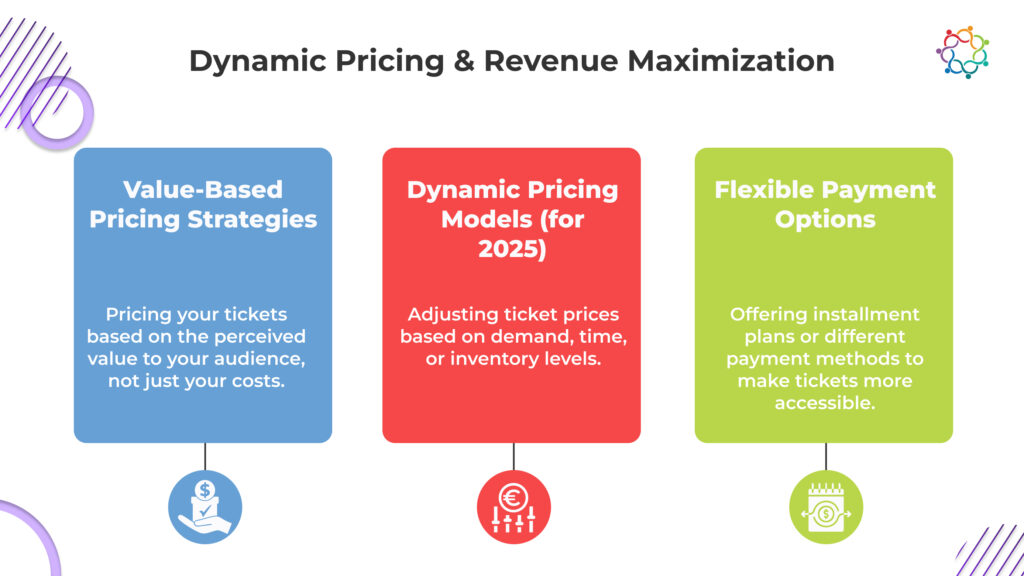
Instead of pricing based solely on what your event costs to produce, consider what it’s worth to your audience.
Modern ticketing allows you to adapt prices based on real-time conditions. Dynamic pricing can help you:
This model works especially well for multi-day events, large conferences, or tiered ticketing systems.
The easier it is for someone to say yes, the more likely they will. Flexible payments can unlock budget-sensitive buyers:
Not only do these options lower financial barriers, they also increase conversions for premium and group ticket types.
By combining value-based positioning with intelligent pricing models and accessible payment options, you give your audience more reasons to buy—and fewer reasons to hesitate.

Want to see how this would work for you?
See how Samaaro connects ticket sales to attendee data, channels, and pipeline.
Book a tailored walkthroughThe key to an effective ticket sales plan is not only planning and promoting but iterating on it. The top event organizers use data to improve their approach in a continuous cycle. In this process, we will talk about what you should be measuring, how to identify actionable insights and implement for long-term growth.
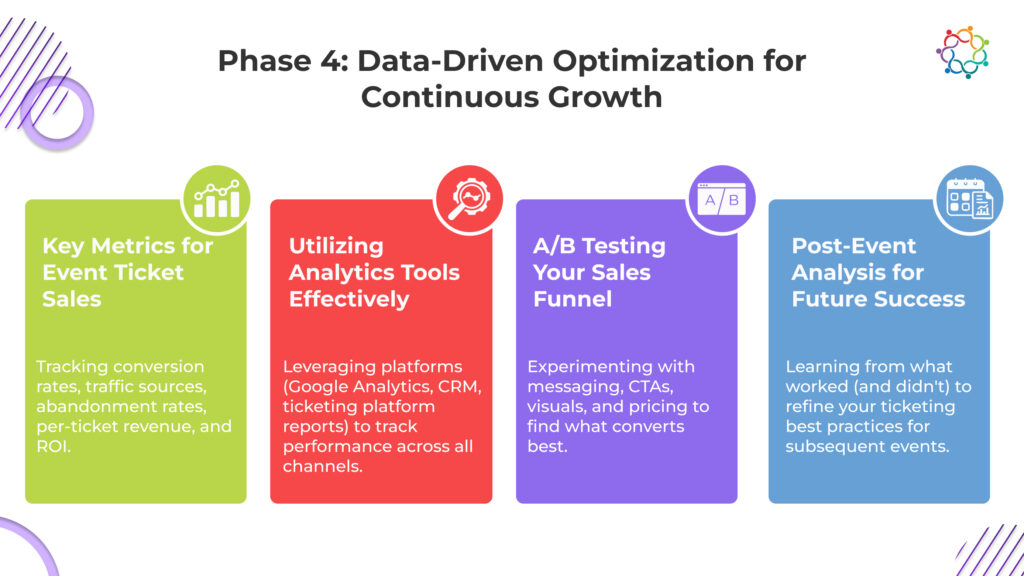
Understanding your performance begins with tracking the right metrics. These aren’t just numbers—they’re indicators of buyer behavior, marketing efficiency, and revenue health.
These metrics are important to help identify where you’re winning and where you have room to improve.
Collecting data is only half the battle. You need to analyze it meaningfully to optimize campaigns and make informed decisions.
Build custom dashboards to regularly review these insights and keep your team aligned.
Optimization isn’t guesswork—it’s experimentation. A/B testing allows you to identify which elements of your campaign directly influence performance.
Start small, and learn, gain insights, and apply them to larger campaigns. It is important to isolate only one variable at a time for better clarity in your results.
Once the event is over, the real learning begins. A structured post-event analysis provides valuable insights you can apply to future ticketing campaigns.
Turn these findings into a reusable playbook. Over time, this iterative approach will help you develop a high-converting, scalable ticketing system.
With a strong foundation in data-driven decision-making, you can move beyond intuition and build repeatable ticket sales success.
Every event, no matter how carefully laid out, will have its challenges when it comes to selling tickets. Market noise, perceived deal pricing, and timing are issues for every organizer. The goal is to spot these roadblocks early and plan some type of strategic response.
If your audience doesn’t know about your event, they can’t buy tickets—no matter how good your offering is.
Even when pricing is fair, it can be a barrier if the value isn’t communicated well enough.
Today’s attendees have multiple event options. To stand out, differentiation is crucial.
Many events experience a sales surge early on—and a panic-inducing drop mid-way before the final push.
All of these obstacles are normal, just not permanent. With sufficient adjustments, and a data-driven approach, each stymie becomes an opportunity to sharpen your ticket sales engine.
Continually improving ticket sales strategies is only half the battle in remaining relevant, the rest is about what’s changing with the next generation of consumers and their behaviour. As we move towards 2026, new trends shift how event organizers attract, convert, and retain attendees.
Let’s take a look at the most crucial trends for you to consider moving forward to ensure your ticketing strategy is future proof.
Generic outreach is fading fast. Today’s attendees expect relevance, and AI helps deliver it at scale.
Before buying a ticket, people want to feel the event. That’s where immersive content comes in.
People trust people. By activating communities, your attendees become your most powerful marketers.
Still evolving—but promising for transparency, security, and exclusivity.
In a post-pandemic world, buyers expect flexibility—and organizers who offer it win trust.
By integrating these trends into your sales strategy, you don’t just sell more tickets—you build future-ready events that resonate with modern attendees.
In the dynamic world of event planning, success isn’t defined by logistics alone—it’s defined by how many people show up. And in 2026, that means building a ticket sales strategy that is not only creative and compelling, but data-driven and audience-first.
Let’s recap the journey:
If there’s one truth about event ticket sales, it’s this: you can’t leave it to chance. Selling out isn’t about luck—it’s about the strategy you build long before your attendees ever arrive.
Implement these proven techniques to boost event revenue, drive more attendance, and build a repeatable, scalable ticket sales engine. Whether you’re planning a conference, festival, or corporate gathering—your roadmap is now in your hands.
The most effective strategies to increase event ticket sales in 2026 are tiered pricing with early-bird discounts, multi-channel promotion across email, LinkedIn, and WhatsApp, social proof from past attendees, urgency tactics like limited-seat warnings, and retargeting people who started but didn’t complete registration. Combine these with a fast, mobile-friendly checkout and you’ll see registration conversion rates move significantly.
Early bird pricing, tiered ticketing, and dynamic pricing improve event ticket sales by creating urgency and price anchoring. Early-bird discounts reward fast decisions and build momentum in your first weeks. Tiered ticketing (Standard, Gold, VIP) helps high-intent buyers self-select into higher-value passes. Dynamic pricing lets you raise prices as demand builds, capturing more revenue from late buyers without losing the early commitment from your core audience.
For B2B and corporate events, LinkedIn ads, targeted email campaigns, partner co-promotion, and WhatsApp follow-ups drive the highest ticket sales. For consumer events, Instagram, Facebook, and influencer partnerships convert better. The channel that wins for you depends on where your audience already spends time, so start with two or three, measure CPL by channel, and double down on what works.
Event organizers boost ticket conversions by layering social proof, urgency, and FOMO across the registration journey. Show logos of past attendee companies on the landing page. Display real-time counters like ‘only 42 VIP seats left’. Share testimonials from previous editions. Send WhatsApp messages when popular sessions are filling up. These cues work because most buyers wait until they feel a real risk of missing out before they commit.
Retargeting, abandoned cart recovery, and audience segmentation often recover 20 to 30 percent of lost ticket sales. Most people who land on your event page don’t buy on the first visit. Retargeting ads bring them back. Abandoned cart emails (sent within 24 hours, ideally with a small incentive) recover registrations that stalled at checkout. Segmenting by job title, industry, or past event behaviour lets you personalise the recovery message instead of sending the same generic reminder to everyone.
To optimise event ticket sales and maximise ROI, track these KPIs: registration conversion rate by channel, cost per registration, ticket revenue by tier, abandoned cart recovery rate, time from first touch to purchase, and pipeline influenced from registered attendees. Skip vanity metrics like impressions. The numbers that matter are the ones that connect a registration to a revenue outcome, which is exactly what a good event marketing platform reports for you automatically.
Organizers boost ticket sales with a clear plan, not luck. Start by defining your event’s unique value and your target audience. Use tiered and early-bird pricing, promote across email, social, and partners, and add urgency with limited-seat warnings. Make checkout fast and mobile-friendly, then retarget people who did not finish. A data-driven, audience-first approach is what fills seats faster.
The best strategies work in phases. First, build a strong foundation with a clear value proposition and audience. Then use early-bird and tiered pricing plus multi-channel promotion. Next, add sales psychology like scarcity and social proof. Finally, use dynamic pricing and flexible payments. Layering these together, instead of relying on one tactic, is what drives steady ticket sales.
Early-bird pricing rewards people who commit early with a lower price, which gets sign-ups rolling in your first weeks. As you raise prices through later tiers, you create urgency and tap into fear of missing out. Setting clear deadlines for each tier pushes people to decide. It also helps you predict attendance early, which makes planning much easier.
There is no single best channel. You need a mix based on your audience. Email lets you send personalized invites and reminders. Social media builds hype with posts, ads, and an event page. Content marketing like blogs and videos draws interest, and partnerships extend your reach. For B2B events, email, LinkedIn, and partner promotion usually drive the most sales.
Social media builds excitement and trust that pushes people to buy. Use organic posts, stories, reels, and live chats to share value and behind-the-scenes content. Paid social ads target the right audience precisely. Showing social proof, like attendee posts and testimonials, reassures hesitant buyers. When social activity links clearly to your ticketing page, that buzz turns into real registrations.
Effective online promotion blends several channels. Send segmented email campaigns with personal invites and reminders. Use social media for organic buzz and paid ads. Publish blogs and videos that highlight your speakers and value. Keep your event website mobile-friendly with clear calls to action. Partnerships and influencers widen your reach. The trick is layering these together, not relying on just one.
Use genuine urgency and scarcity to beat procrastination. Run last-chance campaigns with countdown timers as pricing deadlines near. Release limited or flash tickets in capped batches. Show live signals like only five VIP tickets left or 12 people viewing now. These cues make buyers feel a real risk of missing out, which nudges them to commit instead of waiting.
Several things sway the decision. Clear value matters most, so people understand what they will gain. Social proof, like testimonials and notable attendees, builds trust. Urgency and scarcity push action. Price and flexible payment options lower barriers, and add-ons like group deals or VIP upgrades tip undecided buyers. People commit when they believe the event is worth it and risk missing out.
Technology smooths and speeds up the buying process. A good ticketing platform makes checkout quick, mobile-friendly, and secure, and connects to your CRM for data. Analytics tools show which channels work and where buyers drop off. AI can personalize offers and flag high-intent leads. Together, the right tech reduces friction and helps you sell more tickets with less guesswork.
The blog highlights several trends. AI personalization tailors offers to each buyer. Immersive content, like AR previews and venue walkthroughs, lets people feel the event before buying. Community and ambassador programs turn attendees into promoters. Blockchain and NFT tickets add security against fraud. Flexible options, like transfers and installment payments, build trust. Together these shape future-ready ticketing.