Samaaro + Your CRM: Zero Integration Fee for Annual Sign-Ups Until 30 June, 2025
- 00Days
- 00Hrs
- 00Min

Ever pondered the secret to flawlessly executed events that leave attendees in awe? It’s not just impeccable planning. Here’s a stat that’ll leave you intrigued: 90% of event coordinators have harnessed the power of event management software to create and execute their spectacular events as found in Capterra’s study. Having the proper software can transform your events from ordinary to extraordinary, regardless of whether you are an event planning master or just beginning to explore this exciting domain. As the environment continues to change, incorporating innovative solutions is integral to the success of any event.
Event planning software has emerged as a game-changer in terms of speeding up tasks, enhancing the attendee experience, and increasing the event’s return on investment. Let’s examine some features you should seek in event management software for your upcoming event. Each feature plays a critical role in streamlining processes, boosting attendee engagement, and optimising post-event analysis, from creating captivating event websites to nurturing meaningful networking interactions.

1. Event Website Builder
The first impression is the most significant, and in the world of events, your event website is the digital front door. The event planning software you seek should provide an intuitive website builder that enables planners to create engaging event websites without extensive coding knowledge. The ability to personalise layouts, integrate multimedia, and display essential information such as schedules, speakers, and sponsors enhances the experience of attendees prior to the event.
2. Custom Registrations & Ticketing
Personalised registration experiences are the foundation for effective attendee orientation. The software should facilitate the creation of customised registration forms that capture essential registrant information and adhere to the event’s specific needs. Samaaro also offers CSV uploads for bulk registrations, which simplifies the process for large events. Additionally, single sign-on solutions and integration with popular CRMs ensures a smooth data flow, reducing friction for both attendees and event organisers. Similarly, customizing event tickets enhances the overall experience for attendees and adds a personalized touch to the event.
3. On-site Check-in & Badge Printing Solutions
Creating a favourable first impression is also dependent on streamlining the on-site check-in procedure as much as possible. The software ought to provide capabilities for speedy check-in procedures for attendees. In addition, an integrated badge printing solution enables you to generate badges on-site that have a professional appearance, which improves the experience that each participant has overall.
4. Speaker Management
For events with a constellation of various speakers, it is imperative to have efficient speaker management. Communication between speakers, session allocation, and profile management can be streamlined with a specialised module within the event planning software. Having the option to input speaker biographies, session topics, and presentation materials enables event organisers to create a unified event narrative.

5. Sponsor Management
Sponsors are significant in the funding and enhancement of an event. Managing sponsor relationships effectively is crucial. The software should provide tools for displaying different sponsorship levels, allocating exhibit spaces, and tracking deliverables like logo placement and branding opportunities. Clear channels of communication within the software ensure that sponsors are well-informed and satisfied with their involvement. By providing sponsors with a seamless experience, you can strengthen partnerships and increase the likelihood of future sponsorship.
6. Event App
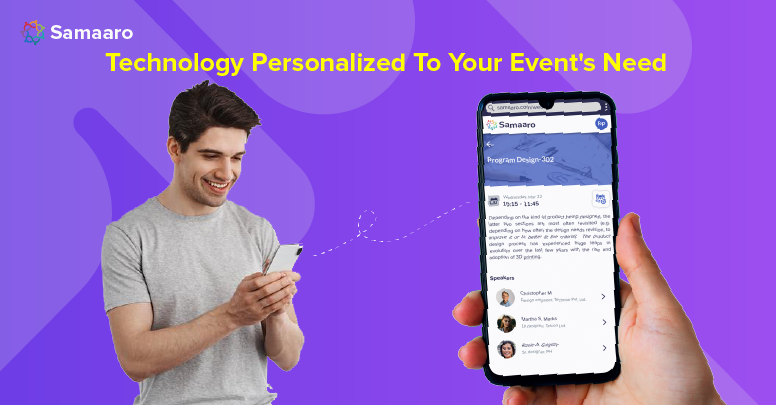
With the help of the software, you will be able to develop a bespoke application that acts as the participants’ individual guide. They will be able to maintain the event’s excitement at their fingertips while accessing schedules, maps, and real-time updates that are provided. It cannot be denied that mobile event apps have the power to energise attendees of the event. The capability of these applications to enable fast access to information, deliver real-time updates, stimulate timeless connections, and create customised experiences has completely disrupted the event sector and ushered in a new era of innovation.
7. Networking (AI Matchmaking / Meeting Scheduler)
Networking is one of the most valuable aspects of attending events. Utilising AI-powered matchmaking algorithms, event planning software can recommend pertinent connections based on the profiles and interests of attendees. In addition, a meeting scheduler function enables attendees to book one-on-one or group meetings with other delegates, speakers or solution providers. These tools facilitate meaningful interactions and collaborations, resulting in fruitful business opportunities.
Effective marketing is a prerequisite for increasing event attendance and maximising its impact. Event management software with integrated marketing tools permits the creation of targeted email campaigns, social media promotions, and personalised event invitations. Integration with marketing automation platforms improves your ability to cultivate leads and engage with prospective attendees prior to, during, and after an event. You can effectively promote your event, reach a larger audience, and ensure its success by utilising these marketing tools.

9. Accessibility
All events should prioritise inclusivity. Event planning software’s accessibility feature includes real-time translation capabilities for multilingual audiences. This guarantees that language barriers will not prevent attendees from gaining access to valuable content. Providing transcripts for presentations is also advantageous for attendees with auditory impairments or who prefer written content. By providing these features, you create an environment that is welcoming to a wide variety of participants.
10. Engagement
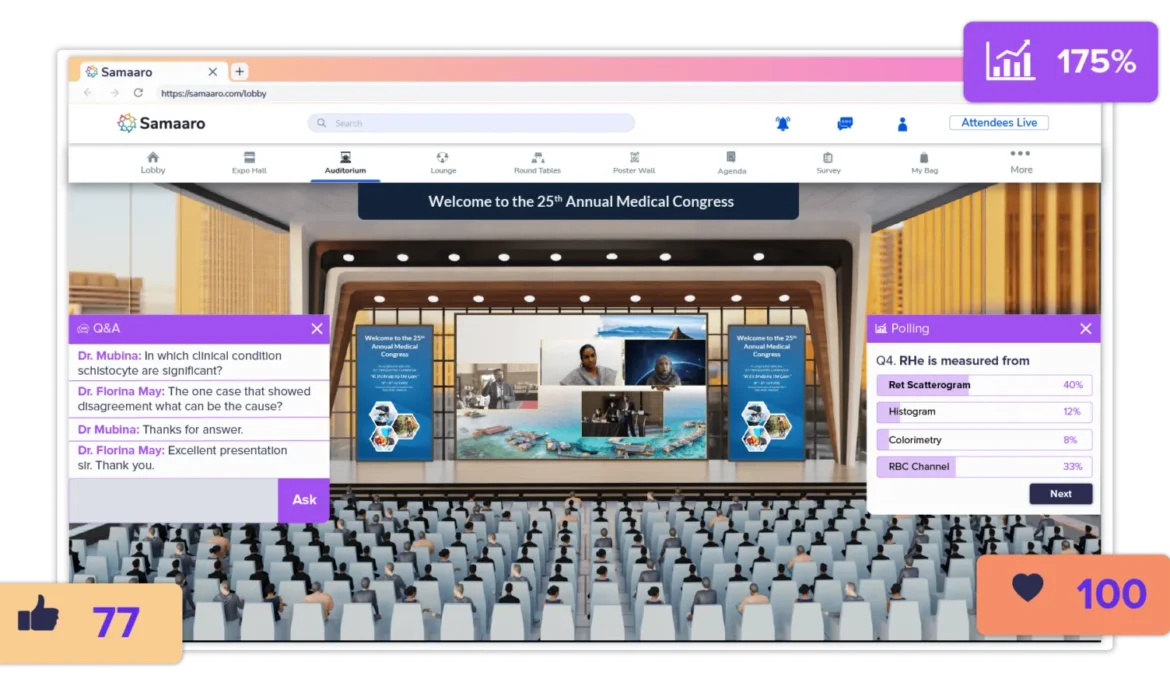
To create a memorable experience, it is essential to keep attendees engaged throughout the event. The software you choose for event planning should include engagement tools such as live polling, interactive Q&A sessions, and gamification capabilities. During sessions, live polling enables real-time audience participation and feedback. Interactive question-and-answer sessions facilitate direct communication between presenters and attendees. Features of gamification, such as scavenger searches or leaderboards, encourage interaction and competition, thereby enhancing the engagement and enjoyment of attendees.
11. Lead Generation
Events are not only about the present; they also provide an excellent opportunity to collect leads for future engagement. Event planning software can integrate digital touchpoints such as QR codes at exhibits, interactive sessions, and lead retrieval tools throughout the event. These touchpoints capture attendee intent, allowing you to collect valuable data for future event planning and targeted follow-up campaigns. Utilising these digital touchpoints increases the value of each participant’s presence.
12. Survey & Other Reports
Feedback collection is essential for evaluating the success of an event and identifying areas for improvement. A comprehensive event planning software should include a survey function accessible via the event app. This feature permits participants to provide real-time feedback on sessions, presenters, logistics, and overall satisfaction. In addition, the software should generate post-event reports that provide information regarding attendance, engagement metrics, and attendee feedback. These reports are fundamental for refining future events, making decisions based on data, and demonstrating the event’s impact.
Creating captivating events that encourage participation and foster meaningful connections in today’s fast-paced world is not a simple task. The Mobile Event App, however, is the secret ingredient that can transform your event from ordinary to extraordinary.
Now, picture an event where there are no set up glitches or confusing interfaces. Imagine a gathering where everything goes swiftly, from entering through to meeting people and beyond. The days of mundane events are over. With Mobile Web Event Apps, you can make events that are interesting, bring people together, and have an effect that lasts.
Embrace the magic, make your events more interesting, and make sure they go well. Don’t settle for ordinary – choose Samaaro and transform your events into unforgettable, captivating experiences.
It is now time to officially bid farewell to long lines and welcome the next major thing, QR Check-in and registrations. With a Mobile Event App, registrations can be optimised, saving organisers and attendees valuable time and effort. Your guests will begin their journey at your event on the proper foot if the registration process is streamlined. Attendees can quickly and conveniently register for events by using their mobile devices. Upon arriving at the venue, guests only need to pull up the app and scan their unique QR code to gain entrance, rather than searching through their WhatsApp or email inboxes for information.

Networking has never been this simple. Not only does the mobile web app connect attendees, but it also supercharges networking. Find and interact with other attendees based on their interests, industries, and even location. Exchanging digital business cards, initiating conversations through the app’s integrated messaging feature, and scheduling meetings on the go are now all possible with the help of a mobile web application. Whether you are a seasoned industry professional seeking collaborations or a newcomer eager to expand your network, the mobile event app is your best friend. Before the event begins, break the ice to make the most of every interaction and maximise your event experience.
Imagine having all event-related information easily accessible on the attendees’ mobile devices. The mobile web app offers a personalised event calendar that makes schedules, speaker profiles, and other information accessible with a single tap. Participants can personalise their event experience by marking must-attend sessions, seminars, and activities. This customised approach ensures that each attendee gets the most out of your event without feeling overwhelmed by the sheer number of available options. The app’s personalised calendar sends ideal reminders and updates in addition to session information, ensuring that attendees never miss a beat.

Your event’s enchantment will not diminish when the curtains close. Using the Mobile Web App, your event will have a lasting impact. The Mobile Event App serves as a virtual archive of your event’s highlights, allowing attendees to review presentations, panel discussions, and seminars at their leisure. Share recorded sessions, downloadable resources, and presentation materials through the app directly. With the apps discussion forums and social media integration, attendees can remain in touch with the event community, fostering ongoing conversations and collaborations. This post-event engagement not only reinforces the value of your event, but also ensures that the relationships formed will continue to flourish long after the event has concluded.
The ability of mobile event apps to energise attendees is undeniable. The event industry has been revolutionised by the ability of these applications to provide instant access to information, deliver real-time updates, foster interaction, and create personalised experiences. As technology continues to advance, the potential for even more innovative features and functions in mobile event applications is essentially limitless. By incorporating this digital tool, event organisers can create unforgettable experiences that leave attendees inspired, motivated, and eager for future events.
We have mentioned this before, but it is important to emphasise that before you start planning your event, the first step is to clearly define your event agenda and objectives.
Defining goals for your event and outlining the necessary actions to achieve them can offer several benefits. Firstly, it helps you clearly define what success means for your team. Secondly, it allows you to anticipate any potential challenges or areas where different components of the event may align. Thirdly, it helps you understand the specific numerical targets needed for profitability or breaking even. Lastly, it enables smooth communication of your event requirements within your organisation.
To determine your event agenda, it is important to document the purpose behind your event. During the planning phase of your goals, it is beneficial to engage in a series of inquiries to improve your understanding. The questions that are included are:
Recommended goals for events are to use the S.M.A.R.T. model. This tool is used to develop goals that are Specific, Measurable, Achievable, Relevant, Time Bound.This article will discuss an important set of goals that businesses should consider first before planning different levels of events. This article speaks to the importance of having a clearly defined event agenda. As an advertisement event can help create brand awareness and generate leads, an event will exist as a one piece of a larger marketing approach and not create reliance.

Conference events provide an effective way to share knowledge, build professional connections and learn skills & insights specific to the industry. To maximise the benefits of conference events, businesses should establish their own event objectives:

Trade shows are high-energy marketplaces where companies sell specific products and services to a targeted audience. Therefore, it is essential to formulate a well-planned agenda around the event to reap the most benefits from such high-energy events.
Congratulations! You are launching a new product and have evidence of planning in this process. A measure of success in launching your product is planful strategy and evidenced by a detailed plan of strategy. You will have a greater degree of success with an evidenced, measurable objective.
Pop-up events are temporary experiential opportunities to connect with a specific audience in a transitional space. When designing pop-ups, please consider the below objectives:
Seminars, like pop-up events, are education programs designed to share knowledge, expertise, and insights to audiences. When organizing seminars, consider the following objectives:
The goal of Networking Events is to develop connections in the industry. Be sure to establish the following goals so it will be a successful networking event:

Webinars are seminars or workshops where businesses can connect with their audience virtually online. When planning webinars, you should consider:

Charity events are organised to raise money, awareness, or support for a particular cause. When planning charitable events, consider the following objectives:

Partner meetings bring together business partners, distributors, resellers, and other stakeholders to strengthen relationships and discuss potential collaborations. When organising partner meetings, consider the following objectives:
Setting definite, detailed event goals/agenda is comparable to plotting a successful journey. These objectives act as compass points, pointing your efforts, resources, and innovation in the direction of obtaining worthwhile results.
However, it’s especially important to stress the significance of not combining goals and anticipating various results from the same occurrence. Each objective has a unique focus and purpose, and attempting to combine or compel them can result in confusion, ineffective efforts, and ultimately unsatisfying outcomes.
In today’s competitive business landscape, organizing successful events is crucial for companies to achieve their goals. Whether it’s a corporate conference, trade show, product launch, or a marketing event, the importance of maximizing Event Return on Investment (ROI) cannot be overstated. Every event represents a significant financial and resource investment, and understanding how to drive success is paramount to reap the desired benefits.
Return on investment (ROI) for an event is not solely financial. Generating revenue and increasing profits are important, but successful events also contribute to brand building, networking, lead generation, and customer engagement. Maximizing ROI for an event allows organizations to tap into the totality of the opportunities that existed, driving long-term business growth and a competitive position in the marketplace.

There are a number of factors that can contribute to the overall success of an event, and thus its ROI. These elements may include:
Quantifying event ROI can be challenging due to many of the intangibles involved with events. Several challenges arise with regards to:
This is where event management software plays an important role and can help to overcome many challenges associated with maximizing the ROI of your event by utilizing technology to simplify the planning process, execution of the event, and analysis.

Event management software is instrumental in driving the success of events and ROI. It provides a comprehensive set of tools and features and can streamline the event planning, organization, marketing, and engagement process. Event planners can strategically make decisions, better attendee experience, and ultimately reach their goals by utilizing technology, an example of these tools is event management software.
In conclusion, event management software is truly a powerful vessel in maximizing event ROI. Event management software simplifies and organizes the planning process, simplifies the registration process, and manages the marketing process in parallel with the event to maximize attendee experience and engagement. This process allows event organizers to design and produce successful events that offer quantifiable outcomes for the attendee and leave a lasting impression on attendees and stakeholders. Employing technology-driven solutions is critical to competitiveness with the fast-paced changing world of events while generating success for businesses and organizations themselves.
Scalability is an essential feature of event management software in terms of flexibly adjusting its capacity to meet events that vary in size or complexity. Whether you are organizing a small workshop, or a large-scale conference, the software should be able to meet the needs of the point of reference regardless and provide an organized manner through and through. Scalability allows event coordinators to accommodate more attendees and data without sacrificing performance and user experience.
In event management, personalization is a growing priority for improving attendee satisfaction and engagement. Event management software that can accommodate personalization adjusts the event experience according to individual participant preferences. This can range from personalized agendas to recommendations for sessions/activities, to personalized communications. By enhancing the experience with personalized features, organizers can create stronger connections with participants and increase satisfaction, which leads to greater ROI.
A key component of event management software is seamless integrations with other business tools.
By discussing key features within the event management space, software can increase productivity, provide personalization, provide a streamlined process, and assess performance. When event managers have technology that supports and enhances each aspect of event management, and generates memorable and valuable experiences, then they will see improved event ROI.

Event management software can be a powerful tool for maximizing event ROI. By using event management software, you can:
Before launching an event, it is essential to define clear objectives and set measurable goals. Event management software enables organizers to track key performance indicators (KPIs) such as
To maximize the event’s success, use event management software to set benchmarks and performance targets for each KPI, and align event strategies and planning with the defined objectives and goals, ensuring a focused and purposeful event.
Once you have set clear event objectives and measurable goals, you can use data and analytics to make informed decisions about your event. For example, you can use data to:
By using data and analytics, you can make better decisions about your event and improve your chances of success.
After your event is over, it is important to evaluate your results and identify areas for improvement. You can use event management software to collect feedback from attendees, track sales leads, and measure the overall success of your event.
This information will help you improve your event planning process for future events. By continuously evaluating and improving, you can ensure that your events are more successful over time.
The best way to maximize event ROI is to continuously improve and learn from past events. This means taking the time to analyze your data, identify areas for improvement, and make changes to your event planning process.
For example, if you notice that your attendance numbers are declining, you could try changing your marketing strategy or offering more relevant content. If you find that your attendees are not engaged, you could try changing the format of your sessions or adding more networking opportunities.
By continuously improving, you can ensure that your events are more successful over time.
Event management software can also be used to automate tasks and improve efficiency.
For example, you can use event management software to automatically send out confirmation emails, track RSVPs, and manage speaker payments. By automating tasks, you can free up your time to focus on other aspects of event planning.
This can save you a lot of time and energy, which can help you make your events more successful.
In conclusion, in today’s fast-paced and competitive landscape, investing in event management software has become a strategic imperative for businesses and organizations seeking to thrive in the events industry. With the right event management platform, such as Samaaro, event organizers can streamline their operations, enhance attendee experiences, and optimize resource utilization, ultimately leading to better returns on investment (ROI). From seamless registration and ticketing processes to interactive networking opportunities and real-time analytics, Samaaro empowers event organizers to orchestrate successful events that leave a lasting impact on participants and stakeholders alike. By leveraging the power of event management software, businesses can unlock new possibilities, drive growth, and stay ahead of the curve in an ever-evolving events landscape.
In an era where events are no longer confined to mere gatherings but are anticipated as immersive experiences, event organizers are increasingly turning to the power of personalization in event ticketing. At its core, personalization in event ticketing refers to tailoring every aspect of the ticketing process to meet the unique preferences and expectations of individual attendees. In order to stand out and create events that attendees remember forever, organisers now need to give tiered tickets choices, allow bulk registrations, and generate excitement through coupon codes and RSVP features. Personalization strategies can have a big influence on how successful an event turns out in the end.
Join us as we explore each aspect of personalisation in event tickets on this informative journey. Towards the end, you’ll not only comprehend how these tactics work but also be able to see how they all work together to create an outstanding event experience. This blog article will serve as your guide as you negotiate the always changing world of contemporary event ticketing.

Flexibility In Ticket Types
Providing flexibility in ticket types allows attendees to select options that resonate with their interests and budget. Customizing ticket types such as early birds, senior citizen discounts, veterans, VIP passes, coupon codes and more has the power to increase the overall ticket sales for the event. Encourage larger group attendance by providing tailored ticket options for students, families, and even sizable groups, thereby incentivizing a collective experience at your event.
Customizing Ticket Packages
Customizing ticket packages takes personalization a step further by allowing attendees to curate their event experience. This could include options like choosing specific workshops, meet-and-greets, or merchandise bundles, enabling attendees to design a unique package that aligns with their passions.
Dynamic pricing and personalized offers
Dynamic pricing and personalized offers harness the power of data to adjust ticket prices based on demand, ensuring a fair market value. Moreover, offering personalized discounts or exclusive offers based on attendee preferences or past interactions can foster a sense of belonging and appreciation. In sum, tailoring ticketing options is the cornerstone of crafting unforgettable event experiences that cater to the individual tastes and desires of your audience.

Personalized Email Campaigns
Personalized email campaigns are highly likely to be positively received and impactful due to their tailored approach that aligns with each recipient’s unique preferences. You may increase the impact and efficacy of your communications by understanding people’s preferences and tailoring messaging to suit them. Every person’s experience with these campaigns may be uniquely tailored, and senders can even include the recipient’s name to email content to make it more personalised and effective.
SMS and Push Notifications
By sending timely notifications, reminders, and special material straight to participants’ devices, SMS and Push Notifications boost this engagement. These brief announcements keep guests informed and foster a feeling of connection with the event, which improves the overall attendance experience.
Social Media Engagement
Social media engagement takes use of the widespread use of different platforms to interact with attendees in a comfortable environment. Organisers create a feeling of community and authenticity through interactive posts, live Q&A sessions, and behind-the-scenes looks, building a special link between the event and its audience. In conclusion, personalised communication is a fundamental tenet of event ticketing since it enables event planners to create custom experiences that make an impact on attendees.

Follow-up Surveys and Feedback
Engaging interactions with clients is vital, but they it is not adequate in and of themselves. It’s equally important to pay attention to post-interaction activities. The day after your event offers an essential opportunity to further your goals. During this time, using surveys serves a dual purpose: they provide participants a way to share their thoughts and give event organisers a way to gauge how well-received the event was overall. By analysing this data, organisers may identify areas that require improvement and alter forthcoming events so that they better suit the tastes of their audience.
Personalized Thank You Messages
An easy yet impactful way to close the communication gap between event organisers and attendees is by sending thank-you notes. These letters serve as expressions of gratitude, thanking everyone for their attendance at or participation in your event. By taking the time to write them a personalised message, you show them how much you appreciated and recognised their attendance, leaving them feeling good long after the event is over. The idea that those who attend are more than simply audience members, but essential community members is reinforced when they get a sincere thank-you message. They may feel more loyal and willing to consider attending future events because of feeling welcomed and appreciated.
We discovered how personalisation fosters a stronger connection between event organisers and the attendees by exploring its significance. This bond goes beyond the purely transactional aspect of ticket sales, creating an atmosphere of expectation, exclusivity, and belonging among attendees. More engagement and pleasure is obtained when it is possible to respond to individual preferences, whether it be special access, or curated content, results in a heightened level of engagement and satisfaction. Personalise each event experience you design using Samaaro’s Event Ticketing Software to appeal to the target market and audience you want to attract.
Marketing professionals recognise the significance of implementing successful tactics, and a startling 31% of them choose event marketing as their most effective tactic. Events stand as a fantastic opportunity to engage your audience, flaunt your brand, and generate extraordinary outcomes in this digital age where internet marketing rule the scene.
The fact that event marketing has numerous aspects and offers so many advantages speak volumes. The potential of events is limitless, from increasing brand exposure and encouraging customer interaction to generating valuable leads and educating both prospects and consumers.
However, as with any marketing endeavour, the outcome lies in the execution. A badly organised and carried out event may be disastrous, wasting resources, missing out on great possibilities, and perhaps tarnishing the brand’s reputation. On the other side, a well-designed event marketing plan may bring about a wealth of benefits, such as increased brand recognition, an upsurge in lead generation, and valuable consumer insights.
With so much at stake, it becomes paramount to navigate the world of event marketing with precision and tact. Therefore, let’s explore some of the vital dos and don’ts that might make or break your event marketing efforts.

The secret recipe to attract a roaring crowd lies in a mind-blowing event agenda. And guess what? Samaaro is here to empower you with the creative freedom to craft unforgettable event websites that set the stage on fire. With a plethora of stunning templates at your fingertips, you can effortlessly infuse the event with the perfect tone and vibe. Craft a well-balanced program that includes relevant topics, expert speakers, and interactive sessions. Interactive sessions, such as workshops, panels, and Q&A sessions, foster engagement and create a dynamic atmosphere. Attendees appreciate the opportunity to interact with speakers and fellow participants, making the event more memorable and valuable.
If you’re not actively participating in social media trends, you risk falling behind the times, as nowadays, being active on multiple platforms is the key to success. It’s important to share visually captivating content, such as event teasers, behind-the-scenes clips, and highlights of the speakers. Engaging with your followers and promptly responding to their queries helps build anticipation and fosters a sense of community surrounding the event. Using AI to create content AI can help you determine the best writing style and tone for session materials including presentation slides, handouts, and promotional text. Create a unique hashtag for your event to stand out, then urge attendees to use it when posting on social media. Promote tagging and run social media competitions as well to encourage sharing.
Generating FOMO (Fear of Missing Out) ahead of the event can greatly motivate attendees to participate. Employing pre-marketing tactics, such as providing early bird ticket promotions and exclusive discounts, creates a sense of urgency and encourages people to register early. This approach not only increases ticket sales but also allows you to gauge the initial interest in the event and make necessary logistical arrangements accordingly.
59% of marketers believe email is over twice as effective at generating leads than channels such as PPC and paid social media. Well, the researchers have laid out the importance to incorporate email marketing. Create a targeted email list by collecting contact information through website sign-ups, social media lead generation, and other avenues. Start by crafting engaging and personalized emails that cater to the recipient’s interests and needs. Share valuable content, event updates, and exclusive offers. Additionally, send reminders, last-minute details, and post-event follow-ups to maintain a positive relationship with your audience.
One of the most effective methods to maximize event marketing is by inviting last year’s attendees to the upcoming event. Not only that, but you can further encourage their participation by offering incentives and referral programs. Another smart approach is to start selling tickets for the next year’s event right after the conclusion of the current one, initiating early marketing efforts. Share exciting details about the future event to entice more and more people to join in the anticipation and excitement.

Consistency in branding is a key consideration if you want to leave a lasting impact on your audience. Make sure the logo, colour palette, and general design language of your event are consistent with your brand identity. Certain event planners could produce packed designs that overwhelm visitors and impede important information. Effective event marketing relies on clarity and simplicity. Focus on user-friendly designs while keeping it aesthetically appealing.
Attendee feedback is a treasure of useful information. Not getting feedback prevents you from knowing what went well and what needs improvement. Send questionnaires to attendees after the event to get their feedback on the event, the calibre of the sessions, and ideas for future events. Similarly, event analytics offer insightful data on attendee behaviour, engagement, and overall event success. There may be lost chances to improve future events if important indicators like registration rates, participant demographics, and session popularity are not monitored.
Although traditional advertising has its advantages, depending only on it may restrict the visibility and reach of your event. Employ digital marketing techniques like influencer collaborations, email campaigns, and social media advertising to reach a wider audience and generate more discussion about your event. An event marketing campaign’s success depends on finding the ideal mix between conventional and digital platforms. To increase attendance from a variety of demographics and increase the exposure of your event, combine the two tactics.
Missing out on post-event engagement might result in lost chances to develop relationships with attendees. Continue to engage with your audience through newsletters, webinars, or exclusive content related to the event’s themes. By staying in touch, you raise the possibility that they may back your brand by attending future events. Send them unique thank-you emails to show your appreciation for their involvement. Include the event’s highlights as well as any related materials or recordings. This action not only expresses gratitude but also encourages audience participation.
In conclusion, refining the art of event marketing demands striking a careful balance between creativity, planning, and foresight. You can make your events successful and leave a lasting impression on your audience by knowing the dos and don’ts.
Events, whether they be business conferences, music festivals, weddings, or trade shows, serve as key for bringing people together and building a sense of community. Event management has changed drastically over time, evolving to keep up with cultural trends and technology innovations. It has never been harder to keep up with the most recent developments in the industry as we stand on the edge of a new era.
Professionals in the event management field may improve their offers, acquire a competitive edge, and assure long-term success in this fast-paced market by being aware of and adopting the most recent developments. It is imperative to investigate the most recent EMS developments that are reshaping the industry as technology continues to influence how events are organised, carried out, and experienced.
Event management software have developed into essential tools for event organisers looking to optimise operations and raise attendee happiness, from event registration and ticketing to on-site interaction and post-event analytics. In this blog, let’s explore some exceptional EMS trends that are going to be big in 2023!
Hybrid Events
Did you know that 73% of organisers believe that hybrid events will become more prevalent in the future? These gatherings mix the personal touch of physical gatherings with the benefits of virtual gatherings, such as flexibility and a wider audience. It is anticipated that the popularity of hybrid events will increase as more Middle Eastern nations adopt hybrid work and learning practices.
Event planners and businesses are aware of the value of conventional live events, but to close the gap between the real world and the virtual world, they are turning to virtual solutions. This enables businesses to unleash their creativity and create novel methods of information dissemination while also sustaining money and resources.

Facial Recognition and the Era of Contactless Convenience
The way events are organised and guarded has been revolutionised by facial recognition technology. The tradition of physical tickets or laborious registration procedures has been replaced by seamless check-in procedures made possible by face recognition devices.
The system quickly recognises and authenticates attendees as they approach specific entrance points, allowing admittance to the event. To improve the entire event experience, these technologies may also be utilised to recognise VIPs, personalise interactions, and offer specialised services. As a potent tool that is quickly gaining acceptance in a variety of sectors, facial recognition technology for event registration is growing. Facial recognition technology is a game-changer for the events sector thanks to its speedy attendance identification, elimination of human check-ins, and provision of personalised experiences.
AI – Artificial Intelligence
Come 2022 and AI is everywhere, and the event business is no different. Adapting attendee experiences to their unique preferences and interests can solve one of the most prevalent problems in this field. Event planners can use the study of attendees’ profiles and behaviour to recommend meaningful connections with appropriate exhibitors or like-minded peers by using AI-powered matching engines. Large-scale events and conferences, which can last for many days, include a variety of lectures, panels, and breakout sessions. AI can aid throughout the event lifecycle, including planning, ideation, and post-event tasks. To learn more about AI’s role in event ideation and how it enhances guest and organizer experiences, read our detailed blog on using AI for seamless events.
Attendees are still required to go through these choices to choose the ones that are most pertinent to their interests, this is where AI is so valuable. With attendees’ consent, AI can analyse various data points such as interests, geographical location, social media activities, and career experience. By doing so, AI eliminates the need for attendees to meet people randomly or endlessly browse through the attendees’ list. Instead, it enables them to establish higher-quality connections that align with their specific business needs and interests.

Wearable Tech
Wearables have become a great complement to events, combining amusement with insightful data. Wearable technology typically tracks numerous event parameters, in the form of “smart” badges and more. Wearable technology makes it easier to track event attendees more effectively. For instance, it enables planners to get detailed information on participants’ demographics, such as VPs, women between the ages of 18 and 35, or other information gathered during registration, in addition to information about the number of attendees at sessions and activities.
Wearable technology ushers in a new era of seamless event experiences and provides less disruptive options for attendees, despite its currently limited level of popularity. The incorporation of fun and functionality into wearable technology has the potential to revolutionise event management by improving guest tracking, data analysis, and ultimately, participant satisfaction.
Sustainability
A significant shift has occurred as people are now placing greater emphasis on the impact they have on the environment. As a result of this transformation, the concept of sustainability has arisen, particularly in the search for clean energy alternatives without eliminating current lifestyles. The concept of sustainability is being embraced by the events industry as well.
The development of technology and the acceptance of cleaner energy sources stand out. Event planners are implementing a variety of best practises to guarantee sustainability. They actively promote environmentally friendly travel and give local employment a priority while planning their events. In 2023, these behaviours will become more significant in determining people’s conduct and event choices.
To maintain their competitive edge and guarantee long-term success, professionals in this industry must remain watchful and adopt the most recent advancements. These trends are expected to dominate the market in 2023 and beyond, from hybrid events and AI-powered personalisation to wearable technology. Adopting sustainable practises will be essential as consumers prioritise the environmental effect of events more and more. Event planners can create remarkable experiences that encourage a feeling of community and participation among guests by incorporating these trends and keeping on at the forefront of innovation.
In today’s rapidly evolving world, the traditional concept of exhibitions has been redefined through the power of technology. Virtual exhibitions have evolved as a novel and game-changing alternative for event organisers and company owners looking to reach a worldwide audience while overcoming the restrictions of real events.
In this in-depth study, we will delve into the concept of virtual exhibitions and explore the plethora of capabilities they offer to revolutionise the way events are organised and experienced.

A virtual exhibition is an entirely digital event that simulates the experience of a real exhibition via an online platform. It allows exhibitors to present their products or services, interact with visitors, and network with potential collaborators or clients from all over the world, breaking the barriers of time and space.
Virtual shows provide several advantages over traditional exhibitions. They are more affordable and give a more convenient platform for both customers and brands. Virtual exhibits have arisen as an extremely dependable method of networking, building community ties, and successfully exhibiting a company’s narrative.
Virtual exhibits have significant benefits over traditional physical exhibitions, making them a valuable tool for displaying content and engaging people.
Global Accessibility: One of the most major advantages of virtual exhibits is that they can be accessed from anywhere in the globe by anybody with an internet connection. This worldwide accessibility broadens the exhibition’s reach to a considerably bigger audience than a physical event would, allowing individuals from other nations and regions to participate without having to travel.
Enhanced Interactivity: Interactive components like as 3D models, multimedia presentations, audio tours, and clickable material can be included in virtual exhibitions to improve the visitor experience and make it more engaging and instructive.
Timeless Access: Due to space limits and scheduling, physical displays have a limited lifespan. Virtual exhibits may be kept online for a long time, allowing viewers to access and review the content whenever they plan.
Analytics and Insights: Digital platforms offer useful insights into visitor behaviour and preferences. Organisers can collect statistics on the number of visitors, popular displays, time spent on each item, and other factors to help with future planning and increasing the exhibition’s effect.

Virtual exhibitions have emerged as powerful alternatives to physical gatherings, offering diverse benefits like global accessibility, cost-effectiveness, and flexibility. Each type of virtual exhibition caters to specific interests and industries, fostering networking, knowledge exchange, and community engagement in the digital age.
Technology and Electronics: Virtual exhibitions in this field showcase the latest innovations in gadgets, software, and consumer electronics, allowing participants to interact with cutting-edge technologies from the comfort of their own homes and explore virtual showrooms for a hands-on experience.
Healthcare and Medical: Virtual exhibitions in healthcare and medical domains serve as platforms to present advancements in medical equipment, pharmaceuticals, and telemedicine solutions. Participants can engage in live webinars, virtual demos, and networking opportunities to stay informed about the latest developments in the industry.
Automotive: Virtual automotive exhibitions offer car enthusiasts and industry professionals a digital space to explore the latest car models, concept designs, and automotive technologies. Attendees can view 3D models, participate in virtual test drives, and attend product launches, all without leaving their homes.
Fashion and Apparel: In virtual fashion exhibitions, designers can showcase their latest collections through high-resolution virtual runways, enabling fashion enthusiasts and buyers worldwide to attend fashion shows, explore new trends, and interact with virtual showrooms to place orders and gain insights into the industry.
Real Estate and Construction: Virtual exhibitions in real estate and construction offer a 3D immersive experience for property developers, buyers, and investors. Attendees can virtually tour properties, explore architectural designs, and attend seminars on the latest trends and technologies shaping the industry.
Food and Beverage: Virtual exhibitions in the food and beverage industry provide a digital platform for food vendors, manufacturers, and restaurateurs to showcase their products, offer virtual tastings, and engage in B2B networking to foster new business partnerships.
Energy and Renewable Resources: Virtual exhibitions in this field present the latest advancements in renewable energy technologies, sustainable practices, and energy-efficient solutions. Participants can attend webinars, explore interactive displays, and connect with industry experts to promote eco-friendly practices.
Education and Training: Virtual exhibitions in education and training focus on e-learning platforms, digital learning tools, and educational resources. Educators, students, and institutions can participate in virtual classrooms, demo educational technologies, and discuss the future of online education.
Finance and Banking: Virtual exhibitions in finance and banking offer a platform for financial institutions, fintech companies, and investors to showcase their services, hold webinars on financial literacy, and engage in discussions about the evolving landscape of the financial sector.

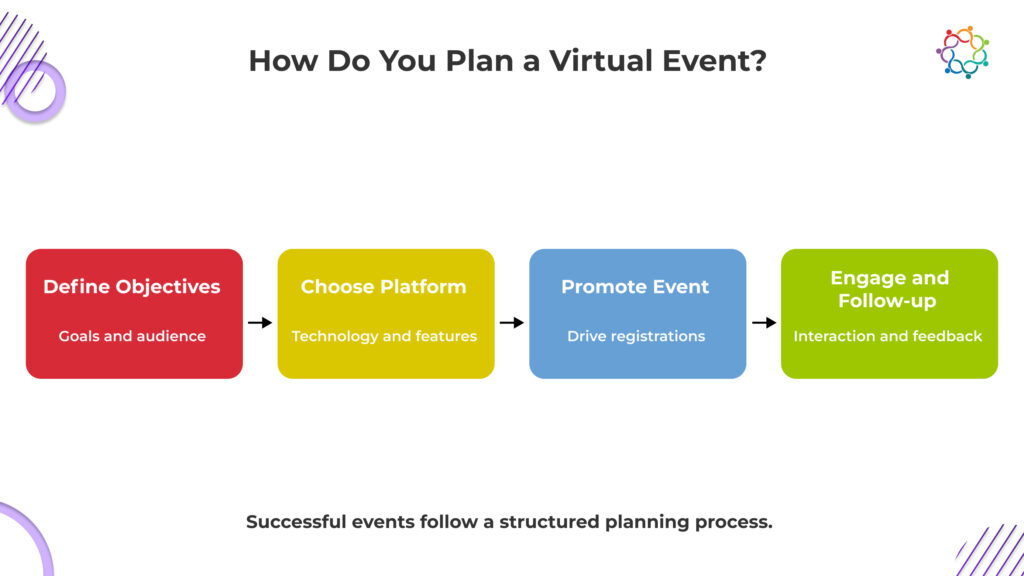
To ensure the success and engagement of a virtual exhibition, numerous things must be carefully considered. Here is a step-by-step approach to organising a virtual exhibition:
Specify Goals: Begin by identifying explicitly stated goals for your virtual exhibition. Understand your objectives for the event. Among the objectives might include raising brand awareness, generating leads, educating participants, or establishing collaborations. Having well-defined objectives will assist guide the planning process and assess the success of the event.
Create an Event Plan Strategy: Create an event plan strategy that covers the full process, from pre-event promotion to post-event follow-up. Include important milestones, deadlines, roles and duties, and marketing techniques to entice attendees. This strategy should also include content development, speaker selection, and sponsorship options. Below are some example questions that should be addressed while organizing an online exhibition:
Selecting the Right Event Tech Platform: Choosing the right virtual event platform is critical for a successful exhibition. Consider elements like as usability, interaction, scalability, and audience reach. Look for solutions that can host webinars, live streaming, virtual booths, and networking places. Test the platform properly to verify that it suits your needs.
Make the Exhibition Interactive with Amazing Features: Engagement is critical for the success of a virtual exhibition. Include interactive elements such as product finder, search & filter options, scavenger hunts to boost interaction. Make it possible for attendees to communicate with exhibitors via chat or video calls. To improve the experience, consider incorporating 3D virtual booths with product demos and swag bags.
Gather Feedback: Attendee satisfaction and areas for development may be greatly improved by gathering feedback. Collect input from participants via surveys or polls both during and after the virtual display. Inquire about their overall experience, favourite aspects, and any future event recommendations. Utilise this input to improve future exhibits.
Track event analytics to acquire insights into attendee behaviour, content performance, and overall event success. Keep track of KPIs like the number of registrants, session attendance rates, engagement levels, and lead conversion rates. This information will be used to assess the event’s impact and give vital insights for future planning.

Registration for users and exhibitors is a crucial aspect of virtual exhibitions. For users, the process focuses on creating a seamless and personalized experience, while exhibitors go through a more involved process to showcase their offerings effectively.
With proper registration and preparation, virtual exhibitions can be highly successful in connecting businesses and individuals across the globe.
The first step that potential attendees must do to participate in a virtual exhibition is to register as a user. The registration procedure varies according on the platform hosting the event, but it usually consists of the following steps:
Landing Page: The website for the virtual exhibition will have a landing page with information about the event, its schedule, and major attractions. Users will be able to begin the registration process by clicking a visible “Register” or “Sign Up” button on the website.
Personal Information: Users will be routed to a registration form where they must submit personal information such as their name, email address, and, in certain cases, a phone number. This data is essential for event organisers to engage with participants and offer event-related updates.
Establish a Profile: Some virtual exhibition platforms allow users to establish personalised profiles that include professional information, interests, and social network handles. This facilitates networking and helps exhibitors to better understand their target demographic.
Ticket Selection: Virtual exhibits may ask consumers to pick a ticket type depending on their preferences in some situations. For example, various ticket categories might have differing degrees of access or additional privileges.
Payment: While many virtual exhibits are free to visit, others may charge a registration fee to support event costs. Users will be requested to make a safe payment using the site.
Confirmation and Access Details: After completing the registration procedure, users will get an email with their access details, event links, and any additional instructions they may need to join the virtual exhibition.
Organization Information: During the application process, exhibitors will be asked to provide details about their company or organization, including name, description, logo, and contact information.
Select Exhibition Booth: Virtual exhibitions often offer different booth with varying levels of visibility and features. Exhibitors will choose a package that aligns with their marketing goals and budget.
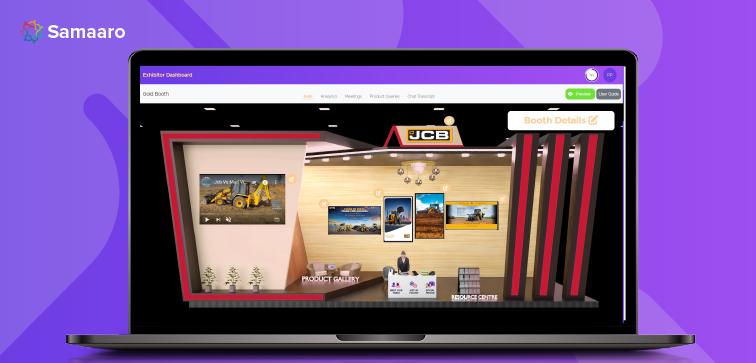
Booth Customization: Exhibitors can customize their virtual booth using the dashboard. They can upload branding elements such as logos, banners, and booth designs to create a visually appealing and on-brand representation of their company.
Dashboard: The dashboard provides exhibitors with real-time analytics about visitor engagement. They can see the number of visitors, the duration of their visits, popular booth sections, and more. This data helps exhibitors understand their audience and make informed decisions. It allows to capture and manage leads generated during the virtual exhibition. They can view contact information of potential customers and export the data for further follow-up.

Pre-event Meeting Scheduler
A pre-event meeting scheduler is a tool that allows attendees and exhibitors to schedule meetings before the virtual show begins. It allows participants to organise their calendars ahead of time and maximises networking chances.
Attendees can explore the list of exhibitors and their profiles, see their products/services, and then request appointments with certain exhibitors during specific time windows. Likewise, exhibitors may contact potential leads and set up appointments with interested attendees. This feature simplifies the process of interacting with relevant individuals and guarantees that important interactions do not go unnoticed during the virtual event.
Attendee and Exhibitor Matchmaking
The tool uses AI algorithms to link attendees with exhibitors based on their preferences, interests, and business objectives. Attendees may be expected to fill up a thorough profile showcasing their industry, interests, goods of interest, and so on when they register for the virtual expo.
Exhibitors, meanwhile, submit information about their services, target audience, and business objectives. This data is then analysed by the AI-powered matching engine, which suggests appropriate exhibitors to attendees and vice versa. This guarantees that guests are linked with the most appropriate exhibitors, which improves their entire experience and increases the possibility of fruitful connections.
Product Finder
Matchmaking is just a simplified way of connecting the participants with relevant exhibitors. To further improve the experience for the attendees, consider a platform that offers a tool that enables attendees to quickly search for products & sellers that they wish to explore.
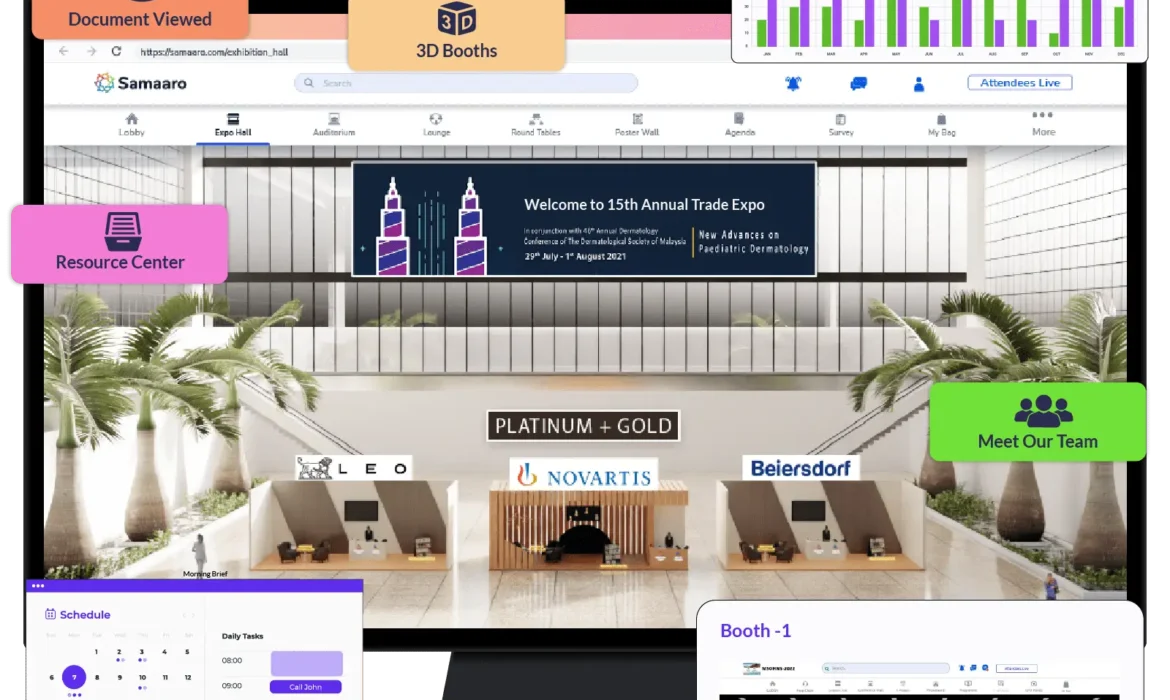
Digital Booth & Showcase
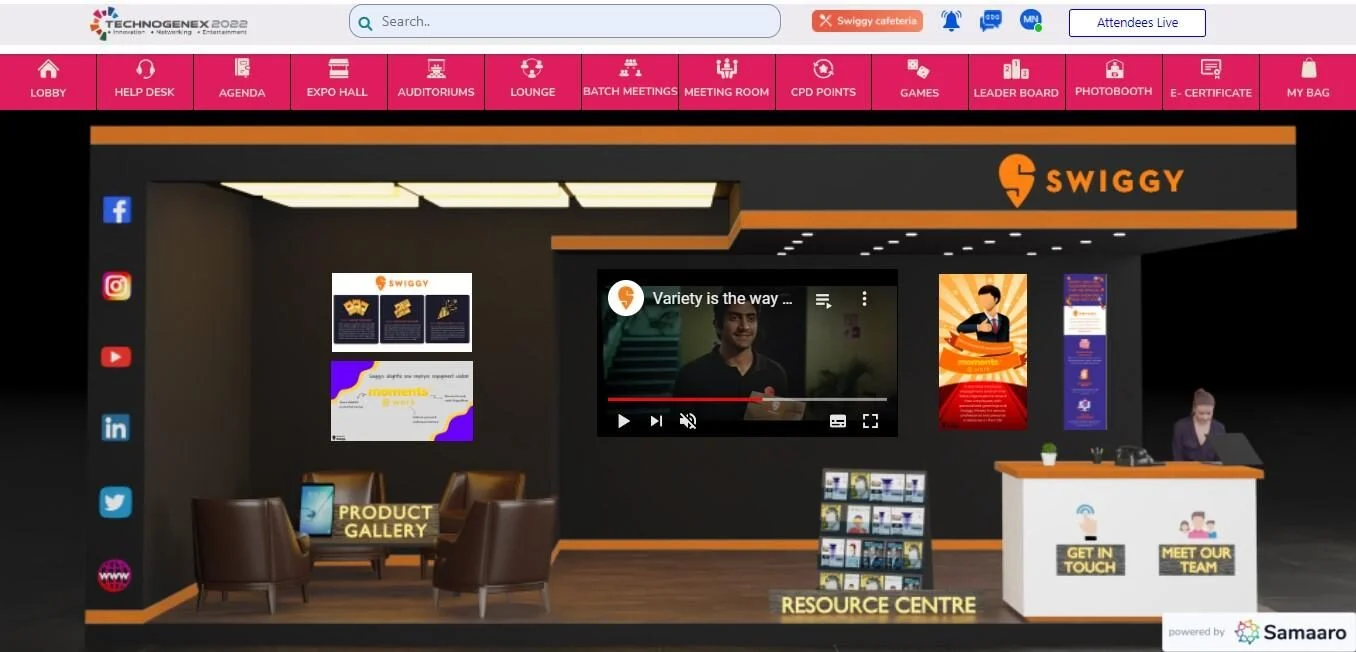
The digital booth and showcase are virtual representations of an exhibitor’s actual display at the event. It is a customised online platform where exhibitors may showcase their products, services, promotional materials, and corporate information. To successfully engage guests, the digital booth frequently contains multimedia features including as movies, photos, brochures, and interactive demos.
Exhibitors may use the digital booth to present their services, communicate with visitors via live chat or video conferencing, and generate leads in a virtual setting. Attendees may tour various digital booths at their leisure, obtain information, and engage in real-time dialogues with exhibitors without having to physically present themselves.
Event Apps to Promote Personalised Engagement
Event applications have evolved into significant tools for interacting with participants in real time. Event applications keep attendees informed and involved during the event by using push alerts, personalised agendas, and interactive elements.
Organisers may send personalised messages to attendees, propose services based on their interests, and encourage networking opportunities, resulting in a more rewarding and personalised experience.
Digital Floor plan
A floor plan is a digital depiction of the virtual exhibition venue that shows how booths, stages, networking spaces, and other event features are laid out. It acts as a navigation tool for spectators to quickly navigate the virtual exhibition.
The floor design includes an interactive map that allows participants to view exhibitor information, join seminars, and engage in other activities by clicking on certain booths or regions. It assists guests in planning their event experience, locating relevant exhibitors, and identifying the schedule of talks or presentations they wish to attend. The floor layout improves the entire event experience by organising and making it more accessible to all participants.

Organisations or people that support an event financially or in-kind in exchange for different perks are known as sponsors. A successful and gratifying collaboration for both the sponsors and the exhibitors depends on proper sponsorship management.
Documentation:
Sponsor management also involves creating and executing comprehensive plans for sponsors’ involvement during the event.
By effectively managing sponsors, exhibitors can build strong relationships, deliver on promises, and create a positive experience that encourages sponsors to participate in future events, leading to a successful and sustainable event ecosystem.

Increase Networking Opportunities (AI matchmaking, one-one/group chat & video calls)
Through AI matchmaking algorithms that join people based on their interests, industries, and preferences, event tech facilitates effortless networking. Participants can have meaningful conversations and create enduring relationships by meeting other like-minded professionals.
Additionally, one-on-one and group chat features offer in-the-moment conversations, enabling participants to share ideas, work together on projects, and talk about new business partnerships. By allowing face-to-face talks even in a virtual context, the integration of video call capabilities further increases the physical touch.
Generate Leads and Sales (virtual booths)
Exhibitors can create interactive and immersive digital booths, complete with product demonstrations, promotional videos, and downloadable resources. Attendees can access these booths at their convenience, facilitating a steady stream of leads throughout the event and beyond.
Organisers can track which sessions were the most popular, which booths had the most footfall, and which components of the event were the most popular with guests. Event organisers can take data-driven decisions to better future events, allocate resources, and ultimately boost ROI by analysing this data.
Showcase New Projects and Innovations & Education (conferencing)
Conferencing tools integrated with event technology platforms provide educational sessions and presentations where business leaders may discuss their latest projects and discoveries. In addition to fostering thought leadership and a culture of continual learning inside the exhibition space, these seminars offer insightful information.
Attendees are more likely to stay interested during the event by providing a wide variety of instructional information, which improves the whole event. Additionally, taped sessions may be made accessible for on-demand access, expanding the reach of the event past its scheduled duration.
Engagement – Games, Quizzes, Swag Bags
Event tech platforms can incorporate gamified elements like interactive games, quizzes, and competitions to keep attendees actively involved. This stimulates healthy competition, encourages guests to explore all exhibition areas, and increases the amount of time attendees spend interacting with exhibitors. Therefore, exhibitors benefit from more visibility, while attendees have a more engaging and collaborative event experience.
Sustainability and Responsibility
Event organizers and attendees are growing more aware of their environmental effect. By lowering the demand for physical resources and lowering the carbon footprint connected with conventional events, event technology may aid in sustainability initiatives. With virtual exhibits, less paper and other resources are used, and the accompanying travel for visitors may be minimised or avoided.
Gather Feedback – Strategic polls, surveys, pop-ups
For organisers and exhibitors, feedback is a significant asset for understanding visitor preferences, assessing event performance, and identifying areas for development. Strategic polls, surveys, and pop-ups strategically positioned around the event may capture real-time input from guests using event tech platforms. The information gathered can provide useful insights on attendee satisfaction, preferences, and pain points. Organisers may constantly improve their event plans and create more engaging and rewarding experiences for future guests by acting on this input.
Event registration is crucial to the success of any event, whether a corporate conference, charity fundraising event, or community workshop or happening. The first step to executing a successful event to a large audience is getting registrants to the event successfully and on time. To engage prospective applicants and have them register with ease of access to completing the registration, a wide-ranging and varied approach is needed.
As the advancement of digital technology advances and continues to enhance the days of planning an event, events have a wide variety of different types of tools available that can increase registration. These tools when utilized will inform an event to not only have a large audience but can also create a buzz that can lead to an atmosphere for a great experience.

The first step in engaging registrants quickly for an event is to choose the right event registration and ticketing platform.
A contingent Samaaro can assist in the overall planning by simplifying the registration process but still allowing attendees the important aspect of a good user experience as the participants use the registration platform so the event also affords event planners the tools and good user experience as they input registration material.
Following is a list of considerations to review for a potential ideal registration platform for events:

A. Event Marketplace
An event marketplace is one great way to build your reach for your event. An event marketplace source will have very strong search and recommendations abilities in addition to just exposure to an entirely new audience that will increase the likelihood of someone discovering your event. When marketing your event on a marketplace site, remember to use great images (your imagery should capture the experience people will have at your event and set – the tone for your event) and also relevant keywords in the description of your event. Ask people who attended you event in years past to leave reviews on the site, because a positive review does a great deal to establish credibility with potential registrants.
B. Discounts or Early Bird Passes
Who doesn’t love a good deal? Enabling early registration discounts is an easy way to drive registrations early.Do not confine yourself to only one promotion. Use a range of promotional techniques to engage targeted audience subgroups. For example, if you are offering a series of related events and are trying to attract young participation you can provide student pricing, group pricing for teams or colleagues or bundle pricing for multiple events. Be sure to effectively communicate these promotions through all of your marketing strategies.
C. Email Marketing
A 2021 Markletic survey found 76% of marketers believe using email marketing is the best approach to generate event registrations. Organizers can further increase their return on investment for their events with a good email marketing plan in place. To build momentum, start with sending out a save-the-date email to build awareness. Next, send emails that educate and persuade attendees about the benefits and highlights of attending the event. Ensure the emails articulate a clear call to action that takes them right to the registration page. Building FOMO before your event will help increase registrations. Attach countdown timers to the emails as the event date nears to create some urgency in the audience. Additionally, personalization can bring substantial increases in conversion and open rates.
D. Social Media Hype
Social media is a goldmine for event promotion and increased registrations. Organize live Q & A sessions or virtually meet-and-greet sessions with speakers or performers to create a community feel and build excitement around your event. Push out teaser videos, behind-the-scenes photos and participant testimonials. Consider partnering with a social media influencer or micro-influencer in your field; these influencers can promote your event to their followers, reaching a larger and more relevant market. Consider running polls, contests or giveaways to keep the audience engaged in your event.
E. Pre-Event Sessions
Webinars or pre-event panels serve a number of purposes. Use these to further entice people to register for your main event. Provide useful information to entice possible participating to see the value of attending the event, in addition to creating excitement. Invite well-known speakers or subject-matter experts to present, and be certain the topics relate to the messaging of the overall event or examine the subject from a different angle. In order to maximize registration effectiveness, gate the pre-event sessions behind a free registration. This will capture valuable registration information, and further compel registration for the main event. To maximize attendance, you should also record these sessions and make them available as on demand content for people to consume.
Did you know that, according to a new Markeltic report, it says “87% of B2B companies receive a positive return on investment on their hybrid event within 7 months after the closing of the event”? Clearly, hybrid events will soon be the most popular and the future of events.
Hybrid events have transformed the event space. They provide a vibrant and welcoming atmosphere for all attendees and even creators or organizers that is is not restricted to size, location, or venue limitations. Whether it is a conference, trade show, concert, or business meeting, hybrid events are breaking down the traditional barriers to reach a wider audience: scalability, accessibility, and cost efficiency as it allows attendees to attend in person or remote or via online channels.
In previous blogs, we have cautioned on how to save on venue rents, lodging, food, and transportation for your in-person and speaker attendees, and now, once you add a virtual component, so remote attendees add affordable easy-to-attend options for the event as well as cut down on lodging and transport expenses all together. This doesn’t just save money: the smaller organizations or individuals who are historically cut out of engagements, can create and attend an event they otherwise would not.
Hybrid events are incredible at considering quality because they are sustainable, profitable, and will be accessible. The future of events will lie in the integration of hybrid experiences, where attendees will continue to expect personalized and participatory levels that are extraordinary for an event. This hybrid phenomenon will start to seamlessly run in-person meetings alongside online events, allowing agility and inclusivity without hindering experience. Attendees can participate from anywhere in the world, with a variety of virtual activities designed to eliminate time and location barriers.
But that’s just the beginning. Organizers have endless opportunities to provide engaging and truly immersive interactions for attendees – both at the event, as well as online – with an array of interactive tools, live stream options, and virtual networking platforms at their disposal.
Hybrid events blend physical and digital elements together. This unique combination helps to combine the best of both worlds into a memorable, energetic event.

Efficient registration and ticketing technologies, make managing attendance process straightforward. When participants want to come to the event, they can easily register for the event, choose their attendance type, and pay securely online. Samaaro allows organizers to obtain complete data on all attendees to ensure personalized communication and effective logistical planning.
B. Event Management Software
EMS has become important for Hybrid Events; give organizers the suite of tools event managers need to efficiently execute planning an event. Samaaro provides event organizers with the ability to have event websites, manage registrations and deliver customized communication to the participants. Event Management Software can also ensure excellent operational efficiency, though ease of scheduling and managing speakers, and working with exhibitors through an EMS. Along with interactive technologies for virtual events that can offer opportunities for attendee virtual networking, gamification options and attendee engagement measurement are included in event management software. Event organizers can leverage robust analytic and reporting tools to observe attendee behaviour, review event success, and make data-informed decisions for future events. The all-in-one platform allows organizers to quickly and easily manage all aspects of the hybrid event through each of the event stages.
C. Live Streaming & Broadcasting
Live streaming and broadcasting capabilities are essential to hybrid events because they serve as a conduit between in-person and online attendees. Live streaming allows virtual attendees to participate in and log in to the event through high-quality video streaming technology. Engagement with the hybrid event still exists through virtual attendee behaviours like live chat and Q & A, as attendees connect with speakers (online attendees) and their peers (in-person attendees) and develop a sense of connection. Virtual and in-person photo booths can also be included in the experience for memory making and sharing on social media.
D. Mobile Web Apps
Mobile web apps can increase engagement and participation for both in-person and online attendees. With apps, the experience can be tailored by using interactive tools like full session schedules, interactive event maps, and notifications for multi-sessions and reminders.
Communication and engagement are seamless between onsite attendees and encourages sharing of attendee information while also allowing for important announcements related to the experience and the event. Mobile web apps enhance participant connection to information to improve overall event experience. For event organizers, mobile web apps provide an experience for all participants as well as valuable insights and information. Organizers can capture participant engagement through polls and surveys on what activities were completed, track who attended the sessions, and even collect feedback. Interactive maps and event catalogs allow for further information sharing about exhibitors and enhance navigation experience for the attendee.

E. Networking
The blending of technology and many digital tools provides enhanced opportunities for networking in hybrid learning events. AI matchmaking can connect attendees, furthering optimized networking opportunity as well as a space for related conversation and engagement. Pre-event meeting schedulers also exist that allow participants to connect and setup pre-scheduled meetings which allows for efficient time management and engagement-focused attendance among the event.
With the digitalisation of business cards, and connection request, sharing information is often managed in one digital source making it easy for attendees to grow their connections. In addition, event live chat can promote real-time engagement between in-person and virtual attendees through sharing, exchanging information, developing a collaborative experience, with information sharing all because of hybrid events.
Event organizers can create immersive, engaging experiences to a varied audience using event technology. A blend of in-person engagement and online accessibility provides various avenues of sharing knowledge, engagement, and developing networking and business opportunities. Future event experiences will almost certainly depend on the events industry continuing to develop and evolve hybrid events and the technology to enhance hybrid engagement.
Whether it is a greener experience, more engagement experience, business networking and/or engagement experience, or an event in the future, hybrid events represent the future of events! Get ready with Samaaro to put the revolution of event planning and engagement into a world of possibilities!

Built for modern marketing teams, Samaaro’s AI-powered event-tech platform helps you run events more efficiently, reduce manual work, engage attendees, capture qualified leads and gain real-time visibility into your events’ performance.
Location


© 2026 — Samaaro. All Rights Reserved.