Samaaro + Your CRM: Zero Integration Fee for Annual Sign-Ups Until 30 June, 2025
- 00Days
- 00Hrs
- 00Min

Every marketer knows that channels are important, email, social, ads, partnerships, they all matter. But one of the biggest factors that differentiates good events from poor ones is not channel, but rather timing.
If you launch a campaign too late, you won’t have enough time to generate awareness. If you push too hard at an inopportune time, your audience may tune out. And if you wait until the last minute, even the most polished campaign will probably not convert.
That is why the promotion timeline is just as important as the channels. For B2B firms when events usually have expensive budgets, valuable leads and long durations of decision making, timing is strategic in the sense that taking a more sequential approach can help create consistent momentum for prospects moving through each stage, awareness, engagement and finally action/purchase.
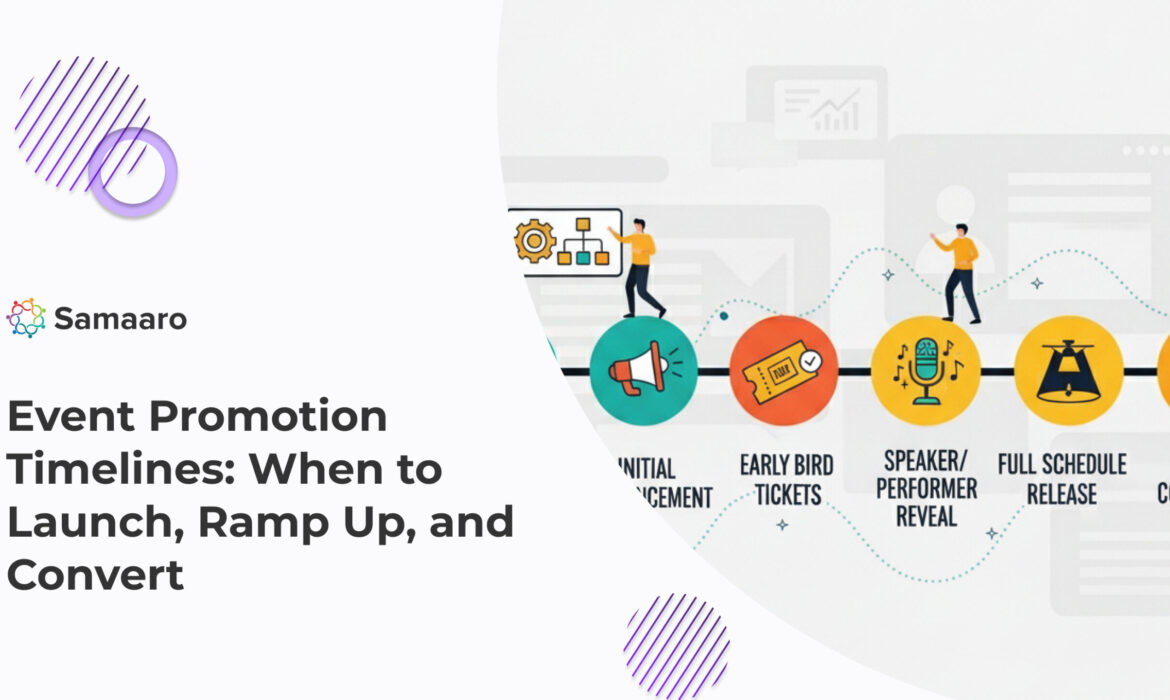
This article shows the three critical event promotion phases- Launch, Ramp Up and Conversion, and helps to show how to avoid wasted budgets and lost ROI due to timing.

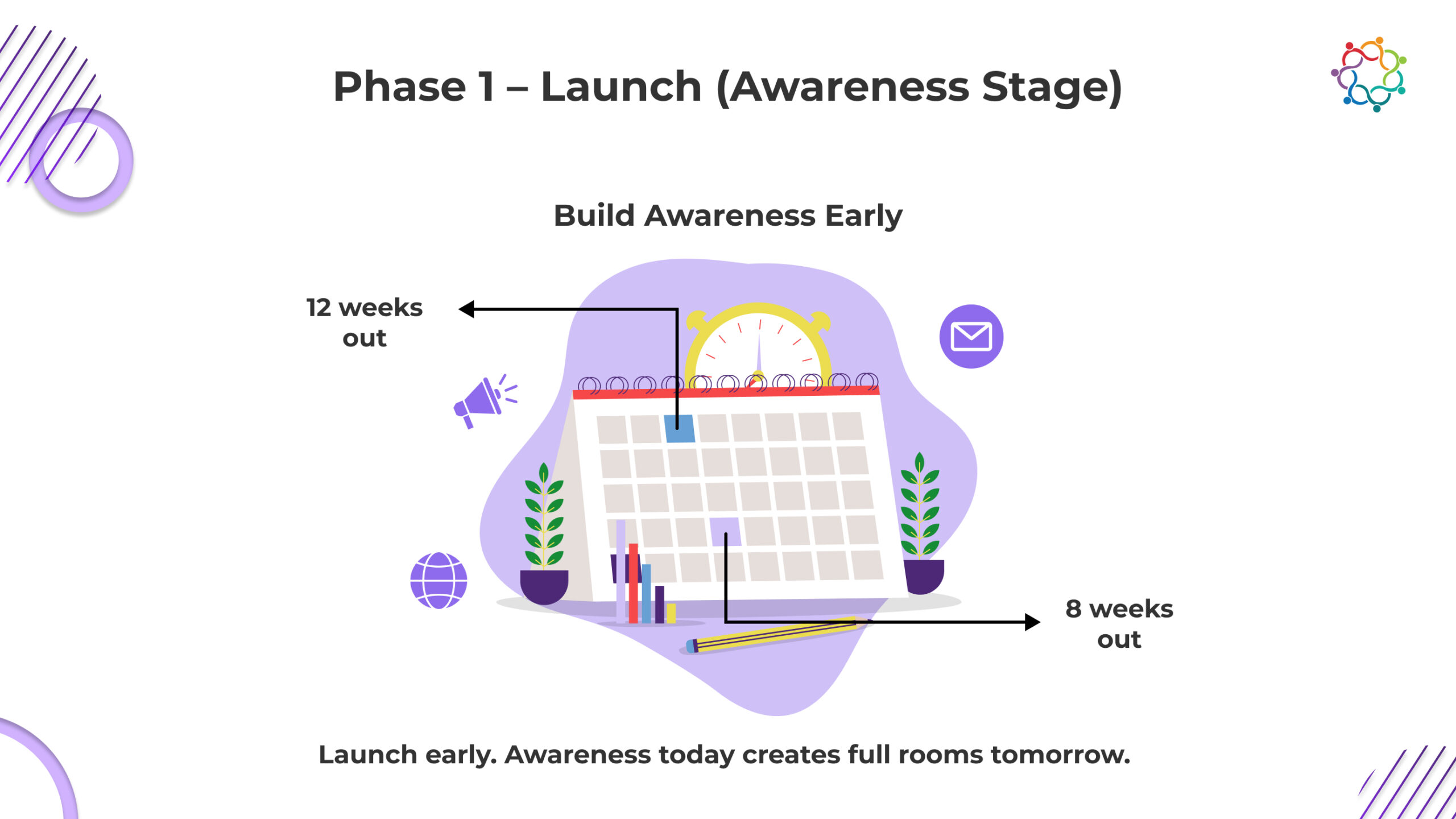
The first step is planting the seed. Your audience does not need much information at this stage. They only need to know:
This is where you create excitement. This is where you start building your credibility.
Some things in your Launch phase:
Why It Is Important:
Enterprise buyers and decision-makers need time to block out their calendars – budgets are often determined months ahead. If you do not notify them early, you risk the chance of them tying themselves to another event.
Think of this as your awareness window. You will hopefully get them curious and stop them from blocking off that space in their minds for competitors.

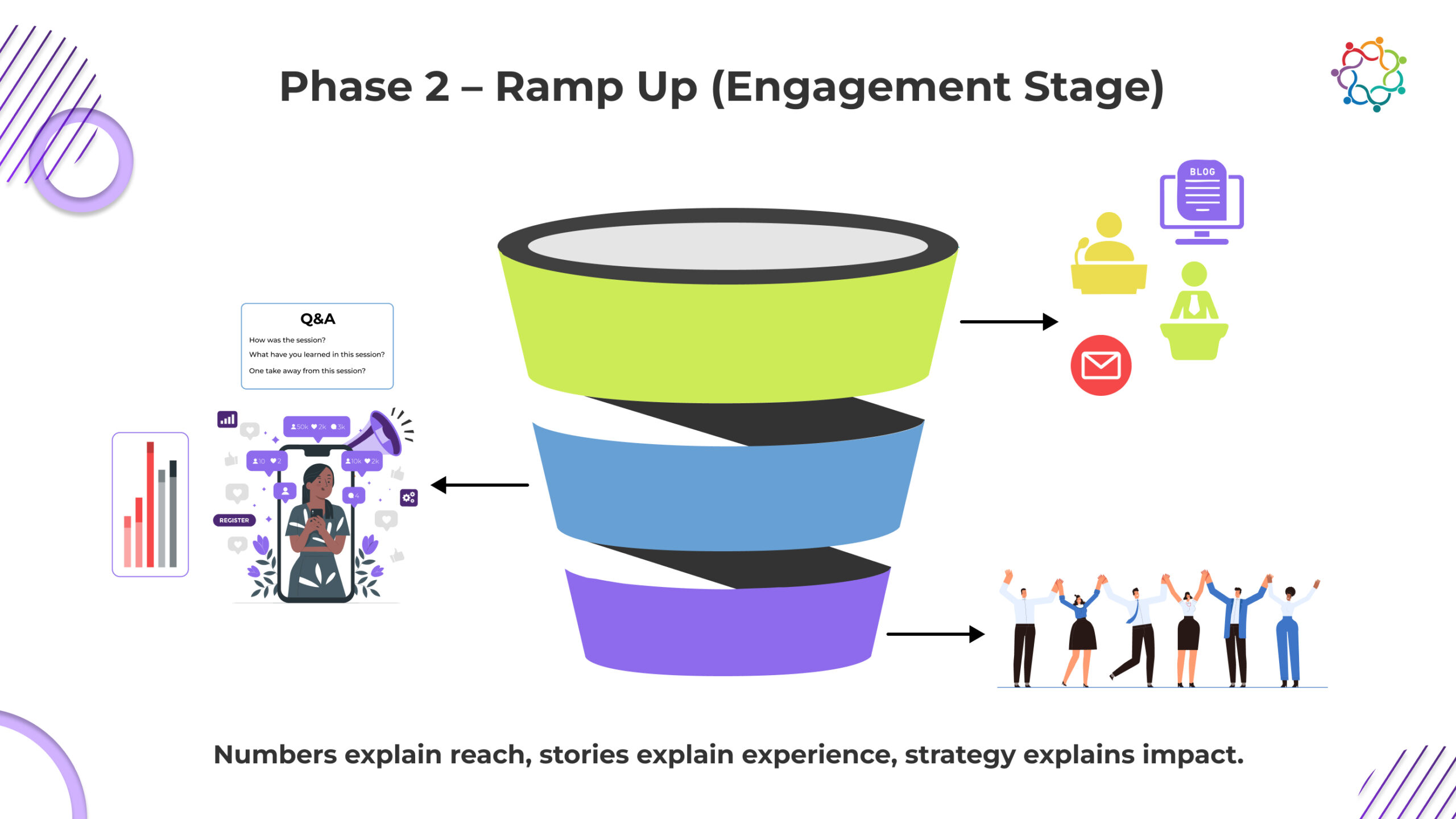
Once awareness is created, it’s time to give your audience reasons to care. The Ramp Up stage of engagement increases the depth of engagement with your audience by providing content, value, and inviting them to participate.
Key activities in the Ramp Up Stage:
Why is it important?
In the middle stage is where participants will internally develop their perspective on why your event is worth their time. Without having truly developed an audience engagement strategy the awareness that was generated in the first stage, will fade away. Start with content rich previews of your event so that potential participants can decide it is not merely happening, but valuable and cannot be missed.

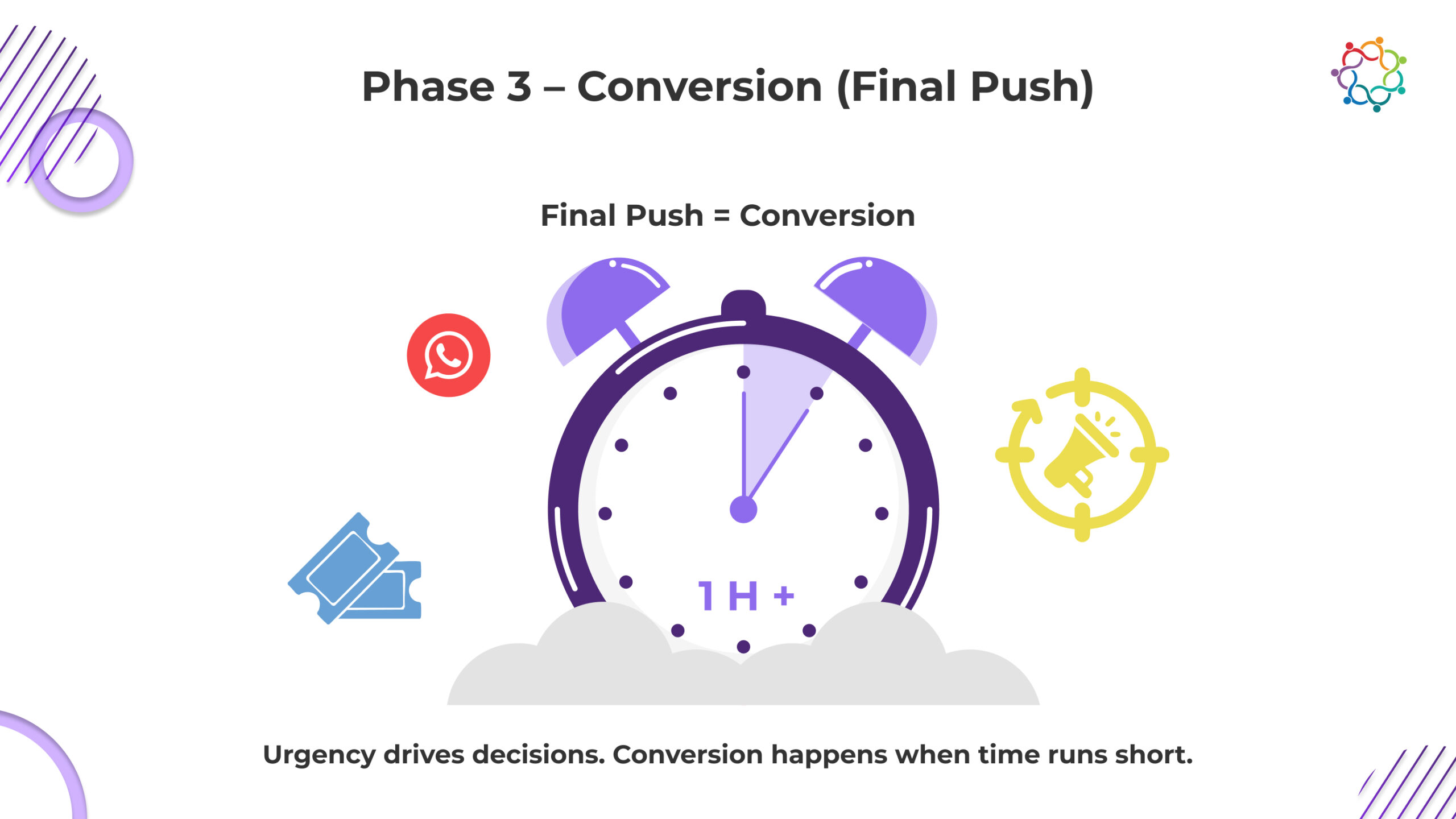
This is where urgency will serve you best, the Conversion Phase is all about taking engaged prospects and converting them into confirmed attendees.
Key Activities in the Conversion Phase:
Why This Is Important:
Engaged audiences will procrastinate. So, a final push may be just what it takes to ensure they don’t wait until it is too late. The Conversion Phase helps give your audiences something that helps differentiate between “interest” and commitment.
Promotional timelines aren’t inherently bad; however, they are mismanaged more often than not. These behaviours are often the fatal flaws of even the best-funded promotional campaign:
Take away? – Timing is not so much, guesswork, it is pacing.

Want to see how this would work for you?
See how Samaaro maps your launch-to-conversion workflow inside a single platform.
Book a tailored walkthrough →Samaaro assists enterprises in implementing these principles using:
By aligning timelines with channels, Samaaro guarantees that promotion campaigns will not only run, but run strategically.
Event promotion isn’t just about how many channels you use or how much budget you spend. It’s about when you act.
The most successful enterprise campaigns follow a simple rhythm:
By treating timing as a strategic lever, you’ll maximize ROI, avoid wasted spend, and build momentum that carries directly into event-day success.
Want to optimize promotion timelines? Download our Event Promotion white paper or explore Samaaro’s campaign tools.
Event promotion should start 12 to 16 weeks before the event for flagship conferences, 8 to 10 weeks for mid-sized B2B events, 4 to 6 weeks for webinars, and 2 to 4 weeks for executive roundtables. Start with a teaser and a save-the-date, open registration 2 to 4 weeks later with early-bird pricing, and ramp up the cadence as the event approaches. Starting earlier rarely hurts. Starting later almost always does.
Ramp up promotion in three phases. Phase 1 (10+ weeks out): awareness through teasers, speaker announcements, and content marketing. Phase 2 (4 to 9 weeks out): conversion-focused content like agenda reveals, testimonials, and early-bird offers. Phase 3 (final 3 weeks): urgency, FOMO, last-call discounts, and personalised reminders to people who showed interest but didn’t register. Each phase has a different cadence and tone.
Activate email and LinkedIn organic 10 to 12 weeks out. Activate paid LinkedIn ads 6 to 8 weeks out, when your organic content has tested which messages work. Activate partner and sponsor co-promotion 6 to 8 weeks out. Activate WhatsApp and SMS 2 to 4 weeks out for high-intent audiences. Activate retargeting ads continuously once you have landing page traffic. Match channel velocity to its strength.
During the final conversion phase (last 2 to 3 weeks), prioritise: urgency messaging (limited seats, final call), retargeting anyone who visited but didn’t register, WhatsApp and SMS reminders to registered attendees about logistics, personal outreach to high-value invitees, and abandoned cart recovery for stalled registrations. Skip top-of-funnel awareness content. Every touchpoint in this phase should drive a registration or confirm an attendance.
Small events (under 100 attendees, especially executive roundtables) can be promoted in 2 to 4 weeks with direct outreach, personal invitations, and partner referrals. Large events (500+ attendees, conferences, summits) need 12 to 16 weeks of layered promotion across multiple channels. The difference is not just duration but also tactics: small events rely on relationship channels, large events need broad campaigns.
Avoid these event promotion timing mistakes: starting too late and rushing the funnel, dumping all the budget in the last two weeks, sending the same message every week, going dark in the middle weeks when momentum is fragile, ignoring registered attendees until the event day, and forgetting to retarget people who visited but didn’t convert. Consistent presence matters more than big bursts.
It depends on the event size. Flagship conferences need around 12 to 16 weeks, mid-sized B2B events 8 to 10 weeks, webinars 4 to 6 weeks, and small executive roundtables 2 to 4 weeks. Start with a teaser and save-the-date, then open registration with early-bird pricing. Starting earlier rarely hurts, but starting late almost always does.
There are three key phases. Launch, roughly 8 to 12 weeks out, builds awareness with save-the-dates and teasers. Ramp Up, around 4 to 6 weeks out, deepens interest with content, speaker previews, and email nurturing. Conversion, in the final 2 to 3 weeks, uses urgency, reminders, and retargeting to turn interested people into confirmed attendees.
Build early awareness in the launch phase. Send save-the-dates by email and social, drop teasers about keynote speakers and themes, and put up your event page with a short value proposition. Use press releases or partner announcements for wider reach. Enterprise buyers plan their calendars months ahead, so getting on their radar early stops competitors from claiming that slot.
In the launch phase, prioritize awareness. Send save-the-date emails and social posts, share early teasers hinting at speakers and themes, and launch your event page with registration and a clear value proposition. Line up press releases and partner shout-outs for wider reach. The goal is simply to get curious people aware and interested before you push for sign-ups.
During ramp-up, give people reasons to care. Publish thought-leadership blogs tied to your themes, share speaker interviews and previews, and move your emails from save-the-dates toward agenda details and early-bird deadlines. Keep social momentum with countdowns, infographics, and polls, and lean on partners for extra reach. This is where casual interest turns into a real sense the event is worth attending.
In the final 2 to 3 weeks, lean into urgency. Send last-chance emails, add WhatsApp and SMS reminders that cut through busy inboxes, and run retargeting ads for people who visited but did not register. Limited-time incentives and final speaker announcements create FOMO. Engaged people procrastinate, so this final push is what turns interest into a confirmed sign-up.
Match each channel to the right phase. Activate email and organic LinkedIn early, around 10 to 12 weeks out. Bring in paid ads at 6 to 8 weeks, once your organic content shows which messages land. Add WhatsApp and SMS in the final weeks for high-intent people, and run retargeting continuously. Aligning channel timing keeps your message consistent and momentum steady.
Common mistakes include launching too late, which rushes the funnel, and dumping all your budget into the final week, which causes chaos and weak conversions. Others skip the middle ramp-up phase, so interest fades, or treat the timeline as fixed and ignore weak early signals. The takeaway is that timing is about steady pacing, not big last-minute bursts.
Use funnel analytics to see how each stage performs. In the launch phase, watch awareness signals like reach and early sign-ups. In ramp-up, track engagement and registration pace. In conversion, watch final registrations and retargeting results. Reviewing performance by stage shows you exactly where awareness, engagement, or conversion is lagging, so you can adjust before it is too late.
A structured timeline makes sure you reach the right people at the right time, which avoids wasted budget and lost registrations. Launching early captures attention before competitors, ramping up keeps prospects warm, and converting late drives sign-ups. Treating timing as a strategic lever, rather than guesswork, builds steady momentum into event day and gets more value from your spend.

Samaaro is an AI-powered event marketing platform that enables marketing teams to turn events into a measurable growth channel by planning, promoting, executing, and measuring their business impact.
Location


© 2026 — Samaaro. All Rights Reserved.