Samaaro + Your CRM: Zero Integration Fee for Annual Sign-Ups Until 30 June, 2025
- 00Days
- 00Hrs
- 00Min

Your event is over. The last session has concluded, the lobby is quiet, and now the big question is – was it a success? For many teams, the answer is boiled down to one KPI, a total attendance number, or a quick NPS (Net Promoter Score). But events are layered, complicated experiences. Focusing on only one metric creates a flat incomplete picture; it leaves you with more questions than answers. You may have clarity on what happened, but you are not sure why, and furthermore, what it means for the future.
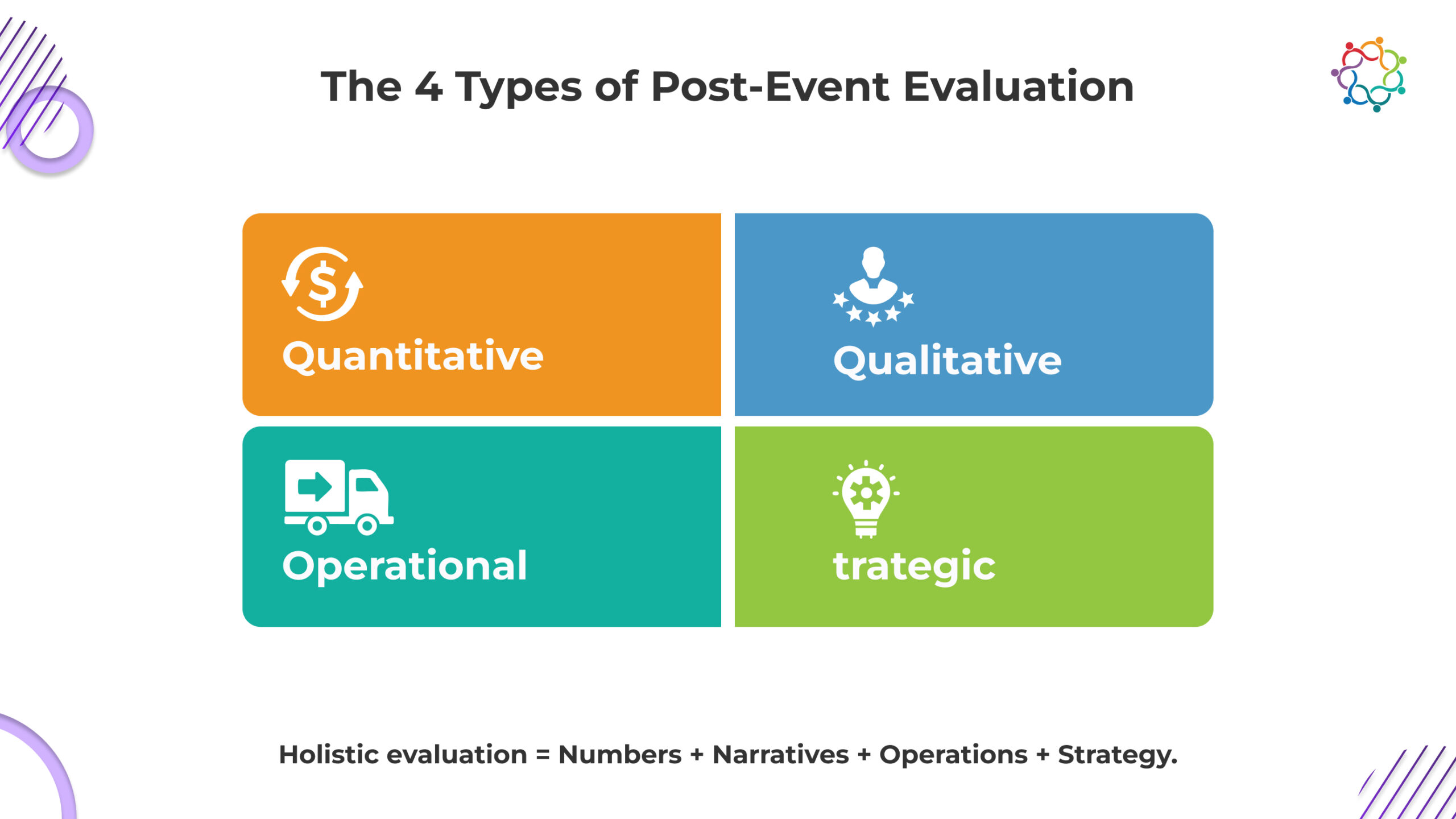
This is the reason a holistic approach to post-event evaluation is so important. It requires taking the event experience one step further and viewing it through multiple lenses. By identifying and applying the four main types of post-event evaluation, you can clarify your evidence from a complete picture; one that is not only going to help you determine your next steps but also increase your chances of securing budget next time and demonstrate the overall value of the experience. This blog will breakdown the various methods of event evaluation, outlining when and why one will be an important piece of your event reporting framework.
Quantitative evaluation is likely the most well known and easiest to process of the four assessment types. Quantitative evaluation simply deals with numerical data and measurable outputs. This is where the heavy, data-based data deals have started. These are things you can count. This information is objective, comparable, scalable, and directly measurable to consumers, stakeholders, and executives.
Quantitative data tells you what happened, while qualitative evaluation tells you why. This method seeks the stories, feelings, and perceptions of attendees, adding a human context to that data. It allows you to actually hear from your attendees in their own words and provides additional insights that data cannot illuminate.
Operational evaluation is an internal evaluation process that focuses purely on your event’s logistics including how it was executed. The goal of operational evaluation is to establish what was executed well and what wasn’t, so your team can learn from the experience so that they can inform capability and refine the process for the next event.
Strategic evaluation looks at your event holistically and examines the longer-term outcomes. It connects the event to higher-level business objectives. The focus is on the change in impact and lasting influence the event had, as opposed to short-term outcomes. Strategic evaluation is the most developed and therefore most challenging type of post-event evaluation, as it may be difficult to establish during the engagement level of an event.
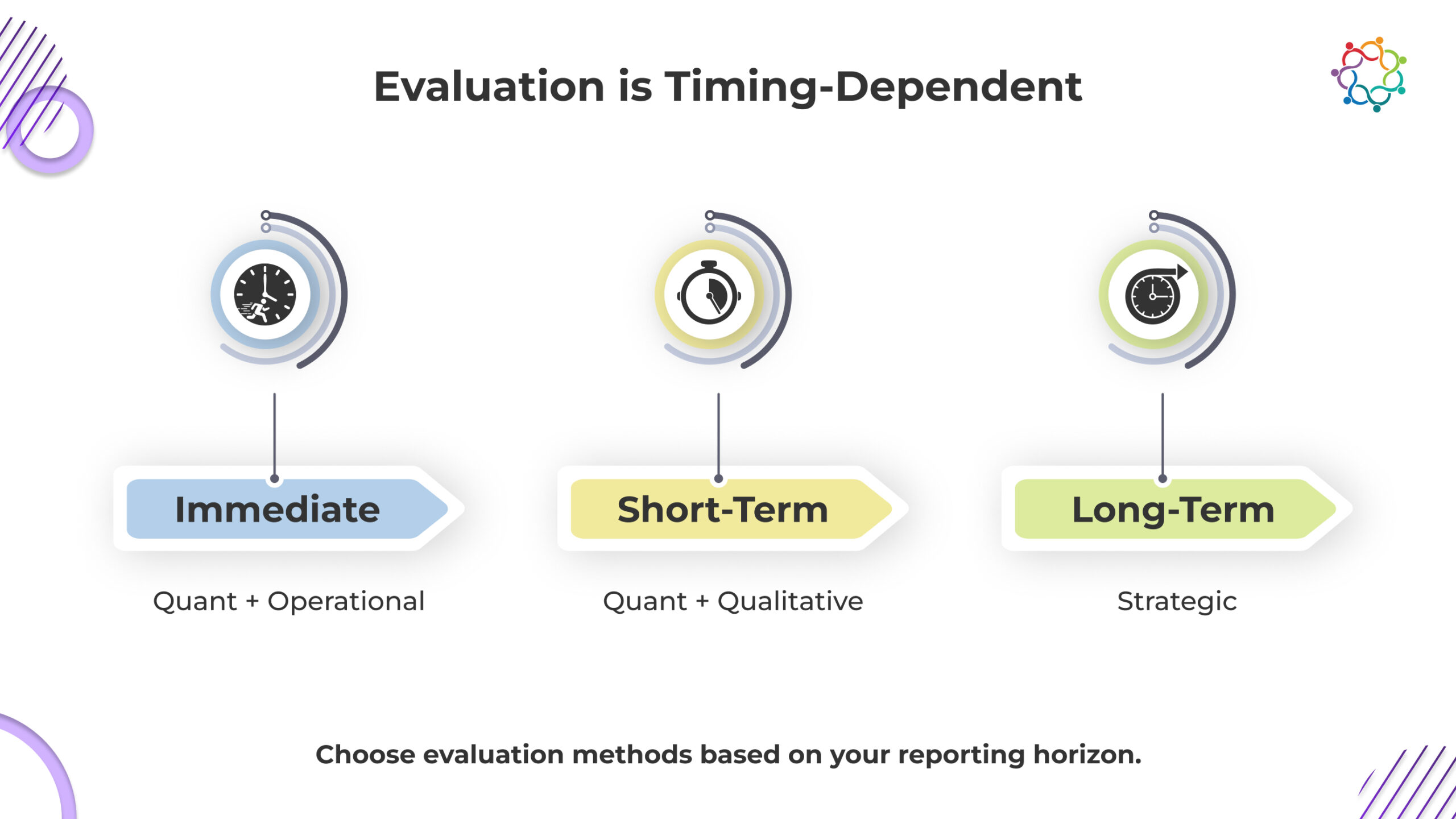
The best approach to evaluation is to take a blended approach to evaluation, depending on your goals and schedule. No single event evaluation approach will suffice alone. Here is a very simple approach to take:
The best practice is to always take a blended approach to these types based on your specific goals. For instance, if you are trying to demonstrate ROI, you will need both quantitative data on pipeline generated, and qualitative feedback from sales teams on the quality of leads, to be able to provide a compelling full-circle story.
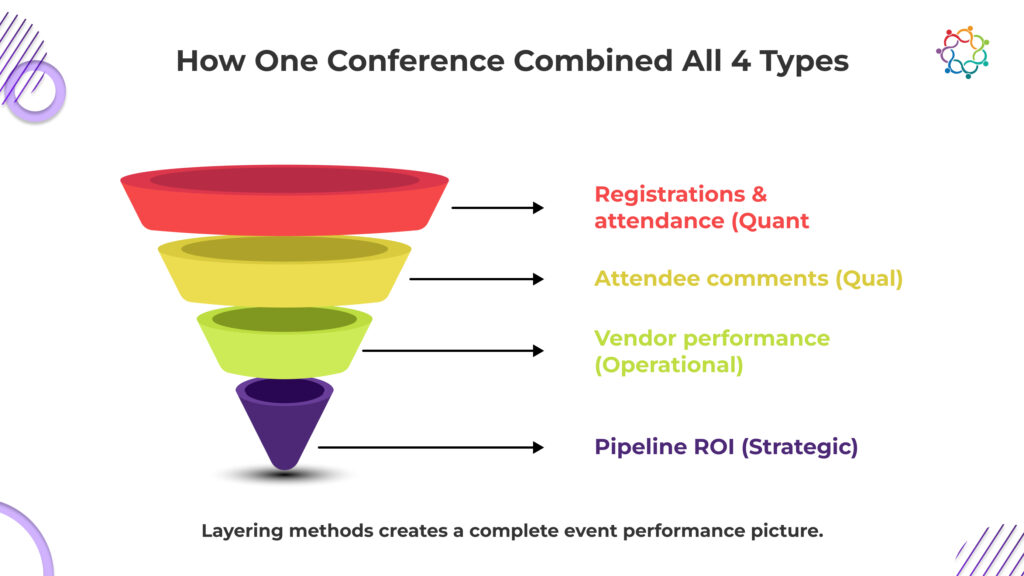
Now imagine a B2B event that used the universal evaluation framework. The team did not just use the evaluation to investigate the 1,500 participants but designed their evaluation to identify the full context.

Want to see how this would work for you?
See how Samaaro turns raw event data into the four reports your stakeholders actually want.
Book a tailored walkthroughSamaaro’s platform is built to be an all-in-one platform that facilitates every type of post-event evaluation. Our strong tools push you beyond the basics so that you can gather a more complete picture of your event’s outcome.
In an era of flawless marketing accounting, it’s crucial that your event evaluation practices are as sophisticated and multi-dimensional as your events are. By only measuring a multi-dimensional experience by one key performance indicator (KPI), you are underestimating the potential insights. Enter the realm of all four event evaluation types – quantitative, qualitative, operational, and strategic – and you will leave an event with a full circle understanding of the performance of your event.
Using a full circle approach will not only help you demonstrate the value of your previous events, but it will also provide the actionable intelligence needed to design and implement future events that are more successful, impactful and relevant to the business objectives of your organization.
Ready to learn about a full circle evaluation framework, download our Post-Event Evaluation white paper, or learn about Samaaro’s evaluation tools that do it all.
The 4 types of post-event evaluation are: quantitative (the numbers, like attendance and revenue), qualitative (the why, like attendee quotes and themes), operational (the execution, like vendor performance and check-in efficiency), and strategic (the long-term impact, like brand lift and pipeline influence). Quant tells you what happened, qual tells you why, operational tells you what to fix, and strategic tells you whether the event served the business. Each one answers a different question.
Quantitative evaluation is most effective when you need to justify budget, prove ROI to executives or sponsors, or benchmark against past events. Numbers give an objective view that’s hard to argue with. Use quantitative when reporting to CFOs, board members, or finance teams who want a clear value-for-money answer. Quantitative also forms the foundation that qualitative and strategic insights build on.
The qualitative data event teams should collect includes: open-text survey responses, NPS comments, attendee testimonials, sponsor and speaker feedback, social media sentiment around event hashtags, and internal team debrief notes. Qualitative is the ‘why’ behind your numbers. A 70 percent attendance rate without context is just a stat. The qualitative reveals whether attendees loved the content, struggled with check-in, or felt the networking was thin.
Operational evaluation focuses on execution: how check-in performed, whether vendors delivered on time, how the on-site team handled issues, where logistics broke down, and what staffing levels worked. It helps improve future execution by surfacing specific fixes (like ‘check-in took too long with one queue, add three next year’ or ‘A/V vendor was slow, evaluate alternatives’). Operational insights are usually action-ready within days of the event.
Strategic evaluation connects an event’s outcomes to long-term business objectives by tracking outcomes that take weeks or months to surface: pipeline influenced, branded search lift, deals accelerated, customer retention from attendees, and entry into new accounts. It’s the evaluation that defends event marketing in next year’s budget conversation, because it links the event to revenue and growth, not just attendance numbers.
Use operational and quantitative evaluation in the first 48 hours, while details are fresh. Run qualitative evaluation in the first 2 weeks once survey responses come in. Conduct strategic evaluation 60 to 90 days later, when pipeline and revenue attribution are clear. A blended approach gives you a complete picture. One evaluation at one point in time always misses something.
The four types are quantitative, qualitative, operational, and strategic. Quantitative is the numbers, like attendance and revenue. Qualitative is the why, drawn from attendee comments. Operational looks at how smoothly the event ran. Strategic looks at long-term business impact. Use them together, since each one answers a different question about your event’s success.
Quantitative evaluation deals with numbers and measurable results. It tracks things you can count, like total registrations, attendance, email click-through rates, pipeline value, and scores such as NPS or a rating out of five. This data is objective and easy to compare against other events, which makes it perfect for proving ROI to leadership, sponsors, or investors.
Quantitative tells you what happened, while qualitative tells you why. Qualitative evaluation captures stories, feelings, and opinions through open-ended survey questions, testimonials, and conversations with attendees. It adds the human context that numbers miss. For example, data shows people left a session, but qualitative feedback explains they found it too advanced. You need both for a full picture.
Operational evaluation is an internal review of how well your event actually ran. It looks at practical things like how smooth check-in was, whether vendors performed, how many technical issues popped up, and how well the venue was managed. The goal is to spot what worked and what did not, so your team can run the next event more smoothly.
Strategic evaluation looks at the bigger, longer-term impact of your event. Instead of short-term numbers, it tracks things like brand lift, movement on key accounts, and new business relationships. It connects the event to your wider business goals. It is the hardest type to measure because results take time, but it is what justifies events in next year’s budget.
Quantitative evaluation is best for proving ROI to stakeholders. Numbers give an objective, hard-to-argue answer that finance teams and sponsors understand. Things like cost per attendee, leads generated, and pipeline value show clear value for money. For the strongest case, pair these numbers with strategic evaluation, which links the event to long-term revenue and growth.
No single type tells the whole story. Numbers alone miss the human reasons behind them, and feedback alone has no hard proof. A blended approach combines all four types, so you understand what happened, why, how it ran, and what it meant for the business. For example, proving ROI needs both pipeline numbers and sales feedback on lead quality.
Qualitative methods let attendees speak in their own words. You use open-ended survey questions like what was your biggest takeaway, collect testimonials, and gather candid conversations and reflections from your team. This reveals how people actually felt, what delighted them, and where they hit pain points, giving you rich insight that a simple score or number could never show.
Ask practical questions about how the event ran. How long did check-in take? Did vendors deliver on time? Were there technical glitches? Was the venue managed well? Did staffing levels work? These questions surface specific fixes, like adding more check-in lines or switching an unreliable vendor, so your next event runs more smoothly. Operational answers are usually ready within days.
Strategic evaluation traces the event’s effect on outcomes that take weeks or months to appear, like pipeline influenced, branded search lift, deals accelerated, and entry into new accounts. It links the event to revenue and growth rather than just attendance. This is the evaluation that defends event marketing in budget conversations, because it proves lasting business value.