Samaaro + Your CRM: Zero Integration Fee for Annual Sign-Ups Until 30 June, 2025
- 00Days
- 00Hrs
- 00Min

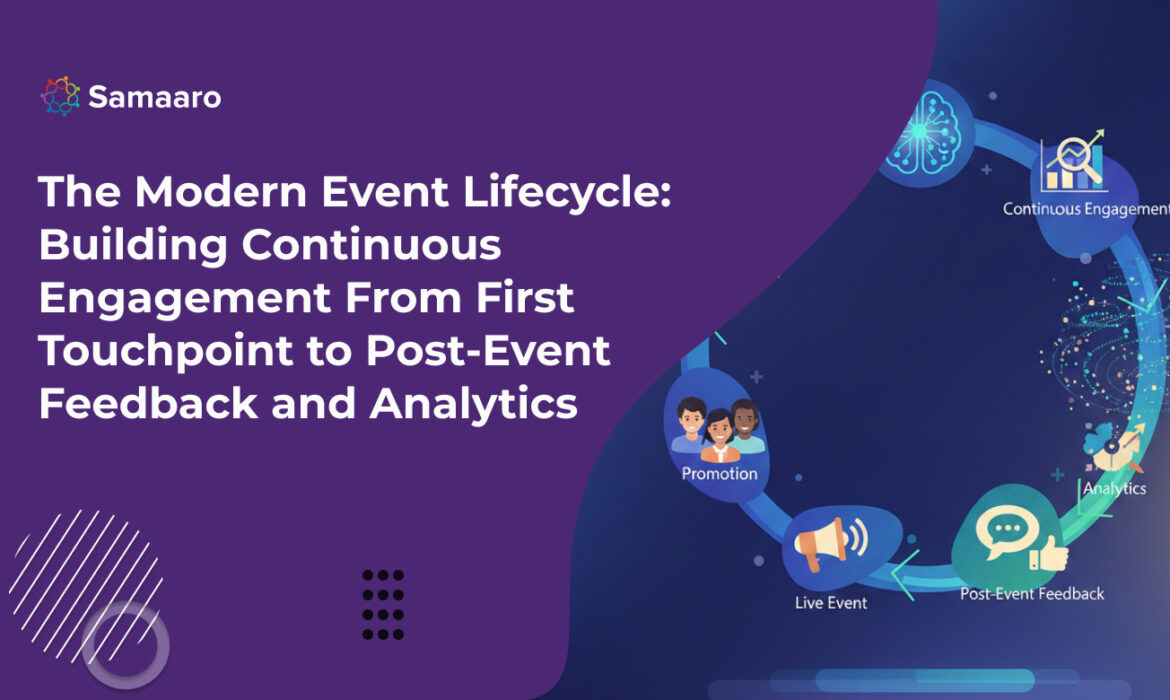
Event marketing has long been treated as a one-day experience. The goal was simple: get as many people to the event as possible, create a memorable experience, and measure success through foot count or applause. But in a data-driven, digital-first marketing ecosystem, this is no longer a viable model.
The event landscape is changing from one-off activations to ongoing engagement ecosystems. For enterprise marketers, events are no longer one-off milestones, they are living, breathing touchpoints that relate brand storytelling, customer data, and audience behavior into a continuous loop.
This change is powered by the integration of automation, analytics, and insights. Every click to register, respond to a poll, and fill out a survey post-event contributes to a cohesive marketing narrative that extends well-beyond the event.
This resource walks through each stage of the life cycle, from pre-event anticipation to post-event analysis, and how some leading organizations leverage customer engagement into a measurable, repeatable growth engine.
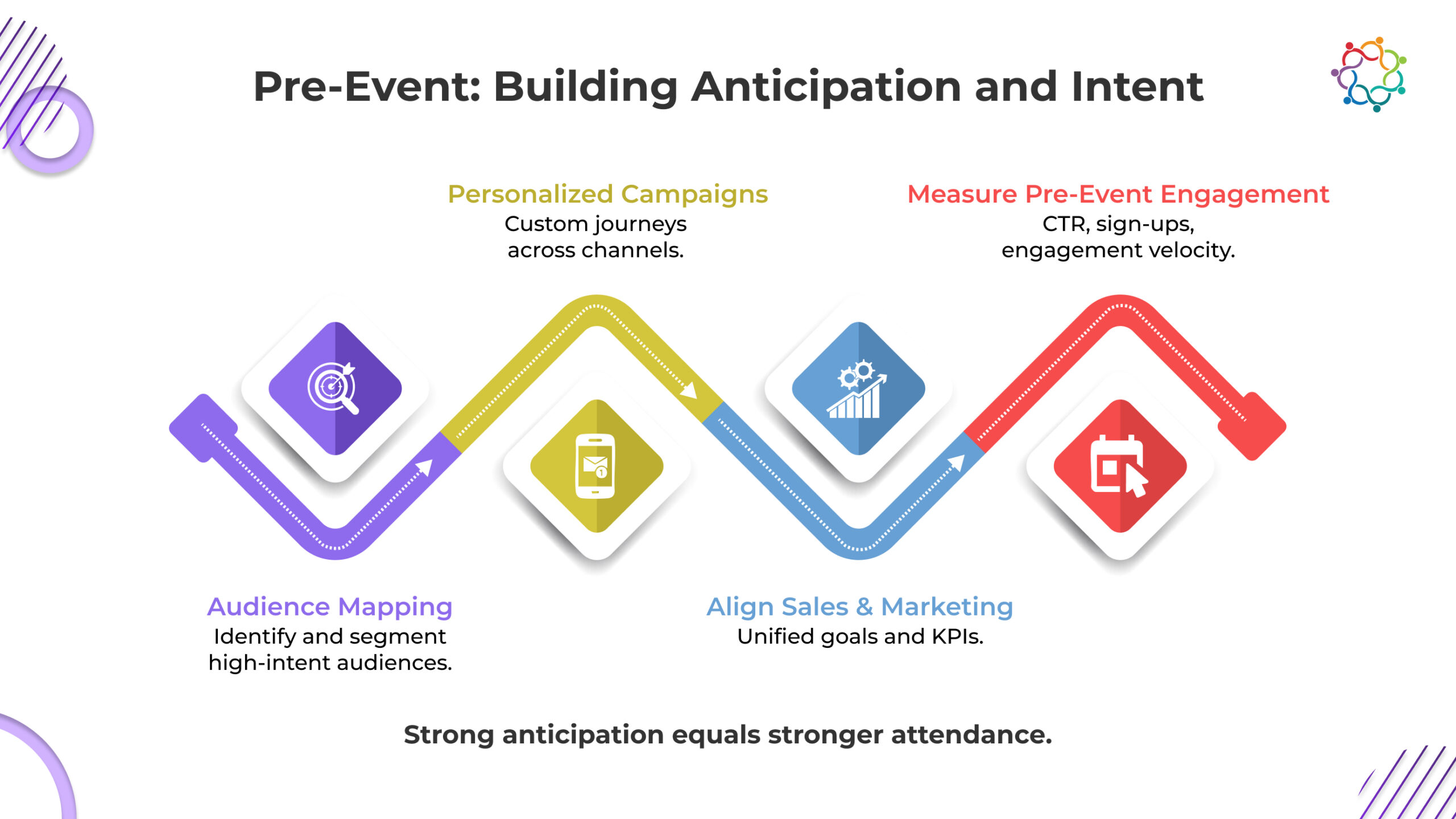
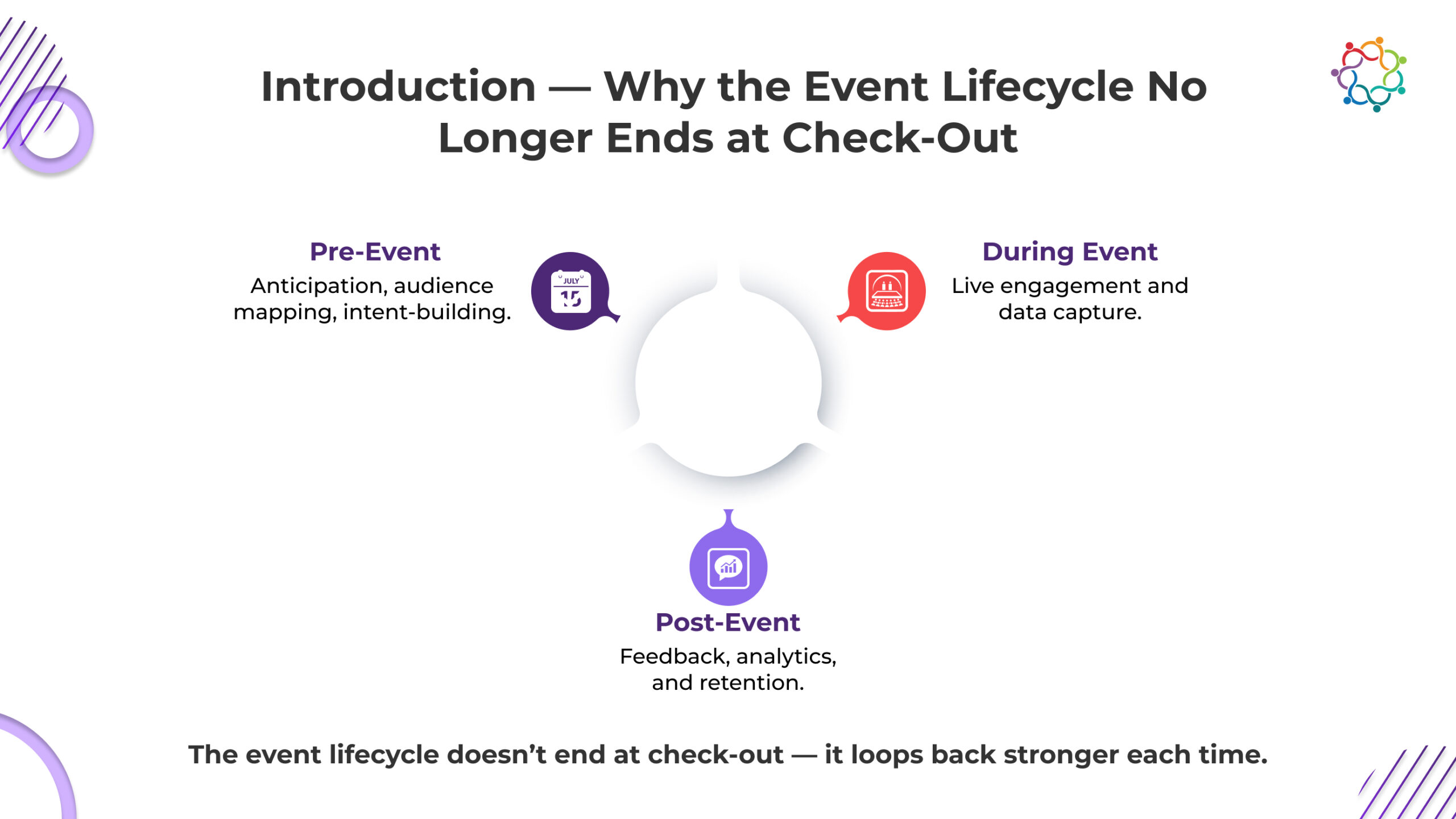
The occurrence of an event starts way before the lights at the venue shine bright. The pre-event phase determines everything that follows. This is where awareness is cultivated, curiosity is heightened, and intent is created.
Previously, pre-event promotional efforts relied on very broad messaging and mass exposure. Now, it’s all about personalization, segmentation, and knowing your audience map to success. Contemporary marketers understand that getting people excited is not a by product of exposure it is a function of relevance.
Marketers at enterprises now use audience intelligence tools to find segments based on interest, behavior or industry. Instead of just pushing out generic messaging, brands can now build tailored communication journeys that speak directly to each persona’s motivations for attending, whether it is to learn, network, or make a business connection.
By integrating data from CRM systems, website traffic and social engagement, marketers can create specific pre-event funnels that more deeply engender emotional and professional engagement.
Content-led nurturing is instrumental in converting awareness into action. Whitepapers, teaser videos, or speaker previews warm up prospects over time, before the registration point of the event. The best events campaigns are those that keep an ongoing narrative going, effectively inviting the audience into a story that takes somewhat over weeks, not hours.
Research suggests that organizations sending personalized pre-event communications have 40% higher attendance rates and 25% more engagement during the event. The rationale is straightforward; when attendees believe the event was designed for them, they want to make it count.
One of the things that tends to be overlooked in terms of pre-event success is internal alignment. When sales teams and marketing have aligned goals (for example, getting targeted accounts to attend or converting attendees into high-value leads), every outreach effort is part of a cohesive strategy, rather than just another independent activity.
Metrics such as pre-registrations, engagement velocity, and conversion-to-check-in ratio help to quantify how well someone is building anticipation. In truth, the pre-event stage is not simply about a “promotion”, it’s about generating intent.
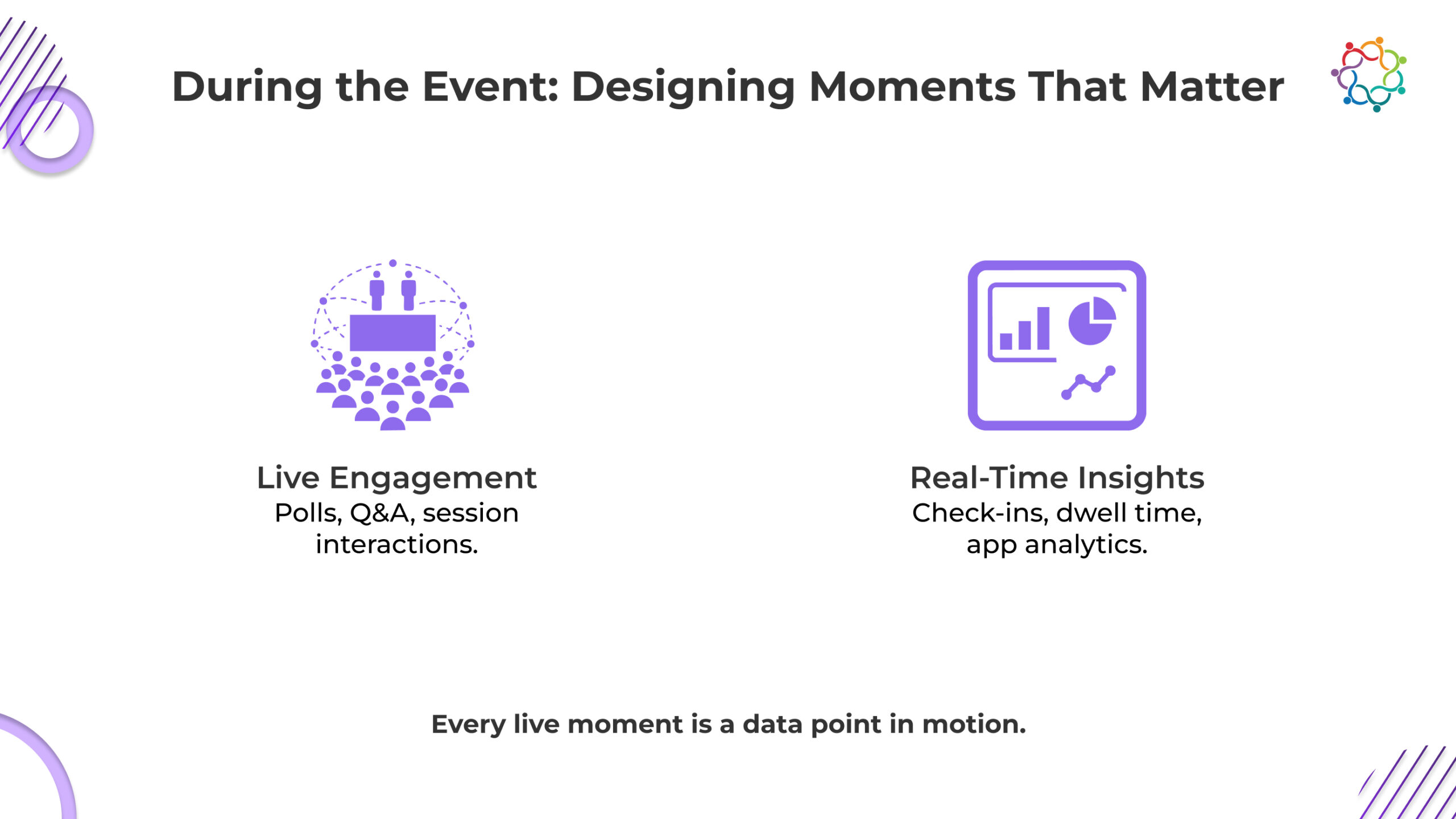
The day (or days) of the event is often the most public, high-stakes period of the event lifecycle. Anticipation becomes participation, and brands have a special opportunity to create memories, collect data and build deeper connections;
However, in the modern era, the “live” experience is also a data experience. Every action of the attendee, from scanning a badge, answering a poll, or posting to the app, feeds a larger feedback loop that will define the future of engagement.
Nowadays, effective event marketing is about engagement rather than just observation. For example, audience poll responses, digital Q&A, and app-based participation experiences turn participants from passive observers into active participants. These inputs allow participants to be engaged in the moment while providing immediate feedback on sentiment and topics that resonate with the audience.
More and more businesses design sessions using audience personas instead of generic tracks. For example, decision-makers may have unique roundtables, while practitioners are participating in workshops. Designed for the audience accelerates relevance and helps manage how content is consumed at professional expense.
All the unique experiences of each attendee track what they did digitally; it tracks mechanisms, check-in time, how long each stayed in booths, how many sessions they attended, and which content they downloaded.
Understanding these behaviorally-based data is the difference between a successful execution and simply good marketing intelligence.
Modern event-tech ecosystems like Samaaro connect all of those signals so that marketing teams can understand engagement levels as they are happening. In this viewpoint, a team can naturally adjust throughout the event when it makes sense to do so, such as session times, promoting panels that had under-attendance, or sales can receive real-time alerts about visitors demonstrating intent.
In the end, the event becomes both brand experience and data laboratory, in which marketers can see, test and learn from the progression of individual levels.
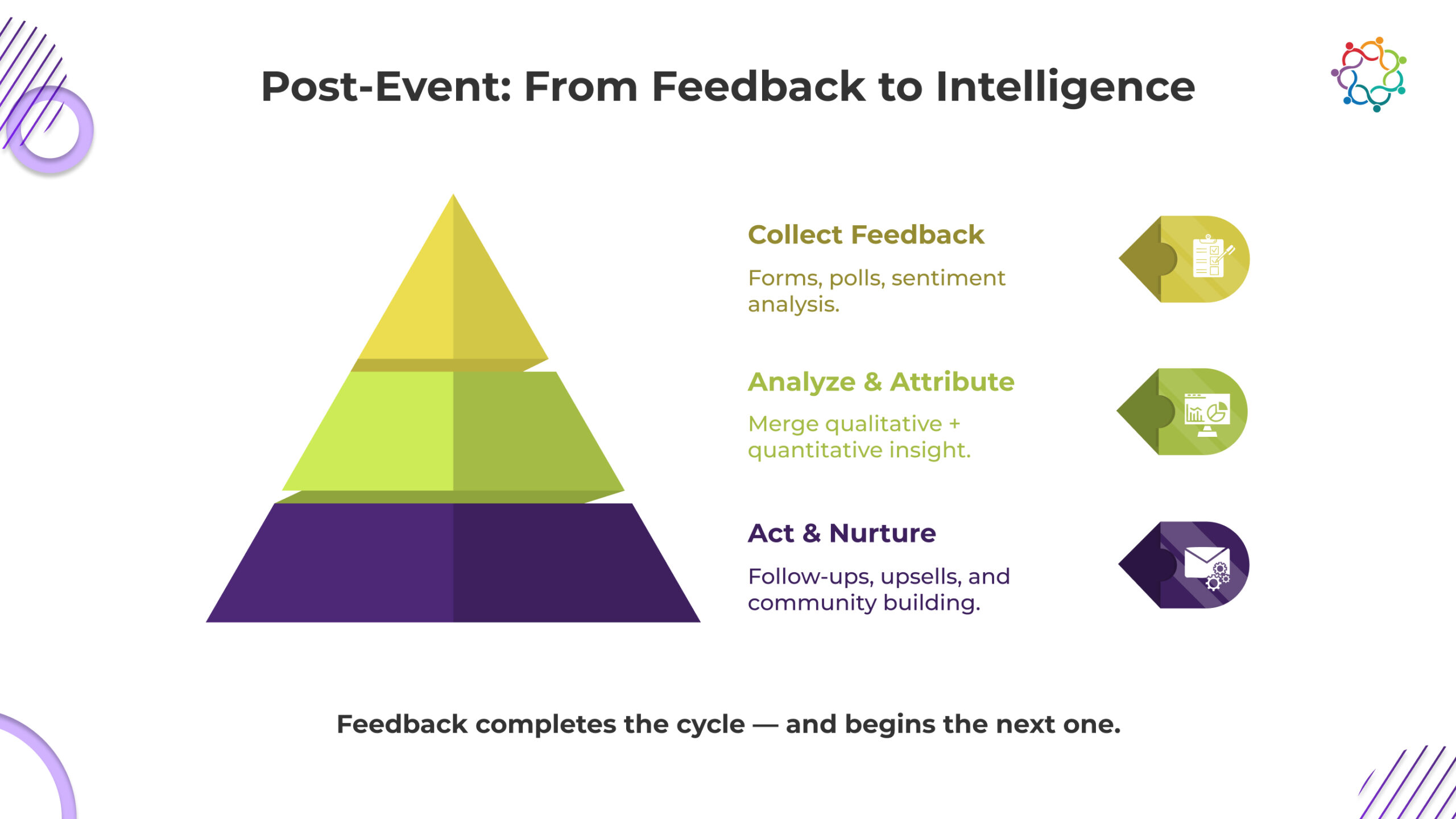
If the event lifecycle stopped when the last attendee left, much of its potential would remain untapped. The post-event phase is where raw experience turns into actionable intelligence — and where the groundwork for future engagement is laid.
Gathering response information has advanced far beyond simply distributing satisfaction surveys. Today, event teams utilize a variety of methods across channels: in-app surveys, email forms, live polling, and sentiment analysis from social media and chat transcripts. Combined, the information collected gives a 360-degree overview of what went well, what did not, and audience sentiment.
When qualitative information is analyzed in conjunction with quantitative metrics, marketers can uncover important factors impacting satisfaction, reveal unmet expectations, and refine future tactics.
Feedback is not merely a process for sharing experiences. Feedback is a tool for creating change or improvement, and if collected and assessed in a timely fashion, can have an impact on marketing automation, generation of content and product strategies.
Just an example, if feedback indicates a high-level interest in sustainability or AI, the feedback can then inform the future skills of marketing campaigns or product demos. The most well-organized enterprise teams will close the feedback loop in weeks not months, to keep the momentum going.
A number of enterprise teams utilize integrated dashboards, Samaaro dashboard for example, to be able to combine engagement metrics with survey data and drive a more clearly and develop a clearer indication of impact. Also, nothing like collecting the post-event data that will turn into the story of customer intent and brand affinity, rather than just data.
Attendee numbers are no longer the one true measure of success – today’s marketers look for deeper, like engagement quality, conversion rates, lead velocity, and customer influence. An actual ROI connects the emotional connection to a business impact and can reflect how each series of events impacted the pipeline, retention, or advocacy.
The post-event point is not an endpoint; the post-event stage is the point where insights lead to new opportunity.
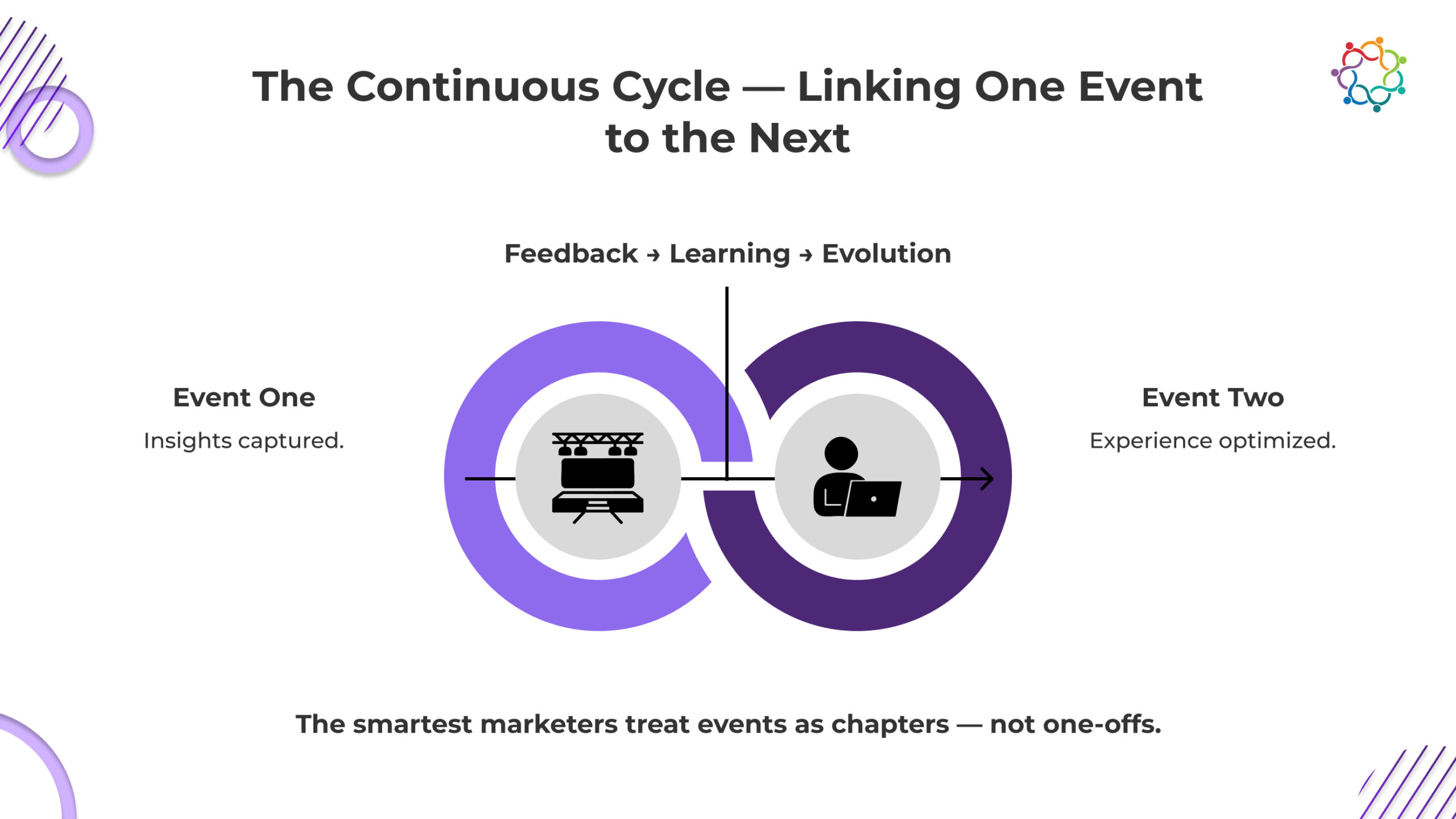
Events today aren’t isolated milestones,, they’re interconnected chapters of a larger narrative. The most successful enterprises think of every event as part of a continuous cycle of learning, engagement, and improvement.
The actual evolution is in how brands shift from organizing individual activations to creating communities. Instead of seeing members as one time participants, the marketer views members as part of an ongoing conversation with lasting meaning. These communities will become self-sustaining ecosystems, where content, conversation, and collaboration occur year-round.
Every event produces a series of patterns, sessions with the greatest dwell-time, the most engaged audiences, or the formats that ignited authenticity and discussion. When properly applied as a review process, this is the starting point for your next event design.
In connecting the dots of the data from event to event, marketers may optimize everything from timing to content themes, to sponsors. KPIs like re-engagement rate, returning audience %, or conversion event to event, more accurately contribute to the definitions of success than ticket counts.
This is an ongoing practice of building value over time withing a series of event- which ultimately creates a long-tail ROI. Each engagement sets up the next, fully transforming the event portfolio – one event at a time – into a living breathing ecosystem of marketing.
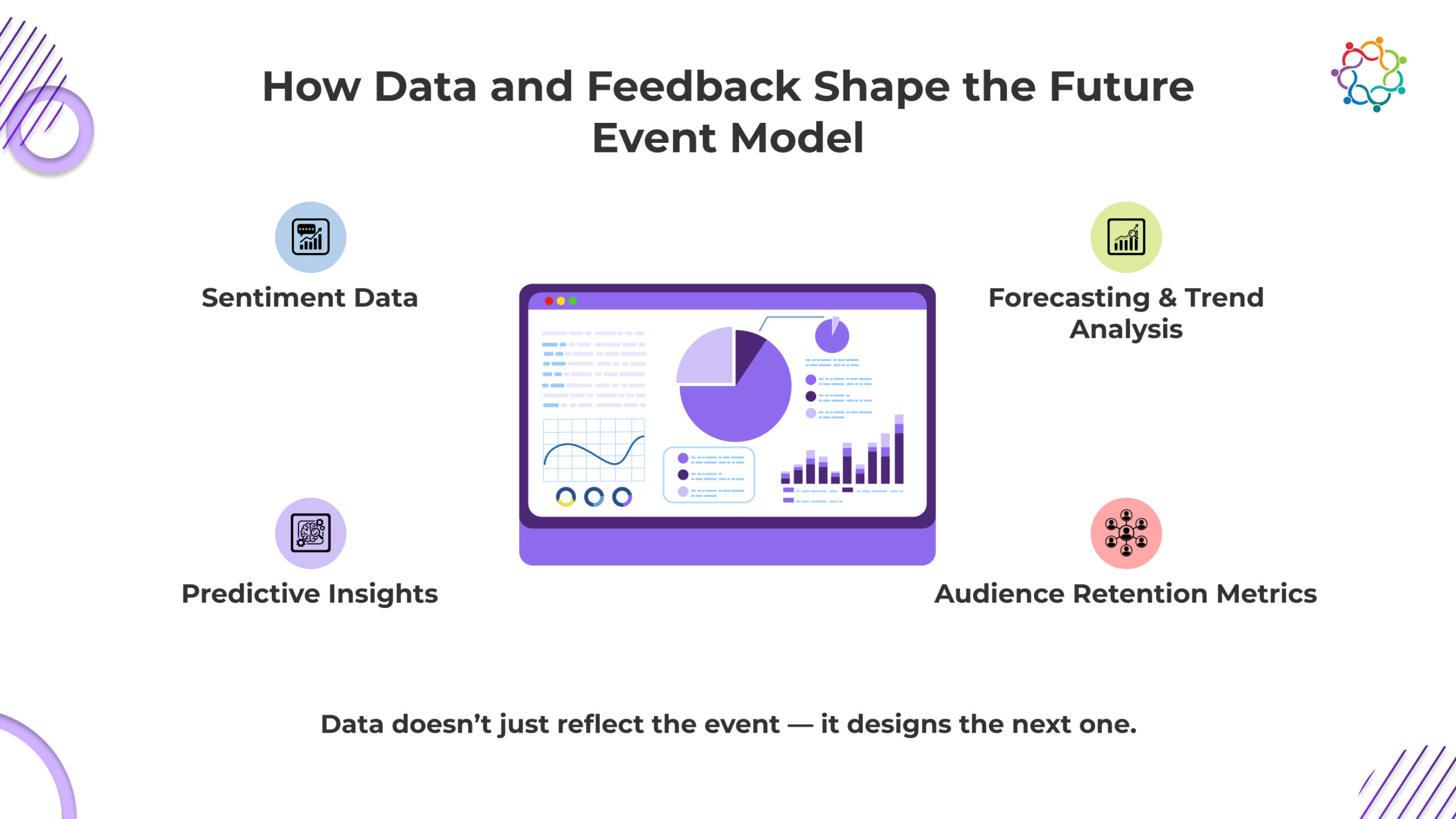
At its core, the event lifecycle is fundamentally based on insight. For each interaction, for every comment left by a participant, or every click they made, you will be able to start to shape your understanding of what the audiences value and want. It’s when feedback crosses paths with analytics does the human dimension and operational side of event success collide.
Post-event feedback doesn’t just unearth information to help improve the next event; it often unearths an insight into the product perception, emerging themes in the industry, and in customer needs. A best-in-class marketer sees feedback as relevant market insight, guiding product roadmaps, and campaign storytelling.
With predictive models infused by AI technology, teams are able to now predict probable attendance, peaks in engagement, and content interests. Predictive data can help planners assign more resources to amplify the reach and increase the potential of their event right from the front end, which saves on efficiencies and reduces any risk associated with budgeting and logistics.
Tools running natural language processing (NLP) technology can signal emotional sentiment from seemingly unmotivated responses. We want to act in future events based on whether a participant or audiences experienced inspiration, or indifference, or were simply overwhelmed. This will help with exactly how we craft the tone for our events, and provides insight into storytelling, and speaker selection for future events.
Research we conducted with Samaaro and their enterprise clients validates that teams capable of operationalizing feedback within 30 days of an event, will commit to double the retention and re-engagement for their next campaign. Leveraging real-time dashboards of event analytics and feedback loops directly engages the audience feedback loops and experiences while getting event insights into action quickly, creating feedback as a living system.
The more frequently data is used, the stronger the event marketing flywheel becomes. Every campaign becomes an experiment that improves the next.
Overseeing the entire lifecycle of an event is complicated, especially on an enterprise level. Organizations that serve their full potential can be disrupted by disparate tools, incomplete data, and isolated teams, which can often make consistency a challenge. It is the organizations that work through these challenges who see tangible benefits to efficiency and impact.
Common dysfunctions
Best practices
Successful enterprises engaged continuously, look at the event lifecycle as a system of learning and connection, rather than a series of disconnected tasks.
The next five years will redefine what event marketing means. The shift from campaigns to communities, from static data to real-time intelligence, will turn event teams into core strategic functions within organizations.
Predictions
As event marketing matures into an always-on discipline, Samaaro continues to advocate for data-driven, feedback-led decision making, a principle at the heart of every modern event lifecycle.
The future of events isn’t in bigger audiences, it’s in smarter, longer-lasting relationships.