Samaaro + Your CRM: Zero Integration Fee for Annual Sign-Ups Until 30 June, 2025
- 00Days
- 00Hrs
- 00Min

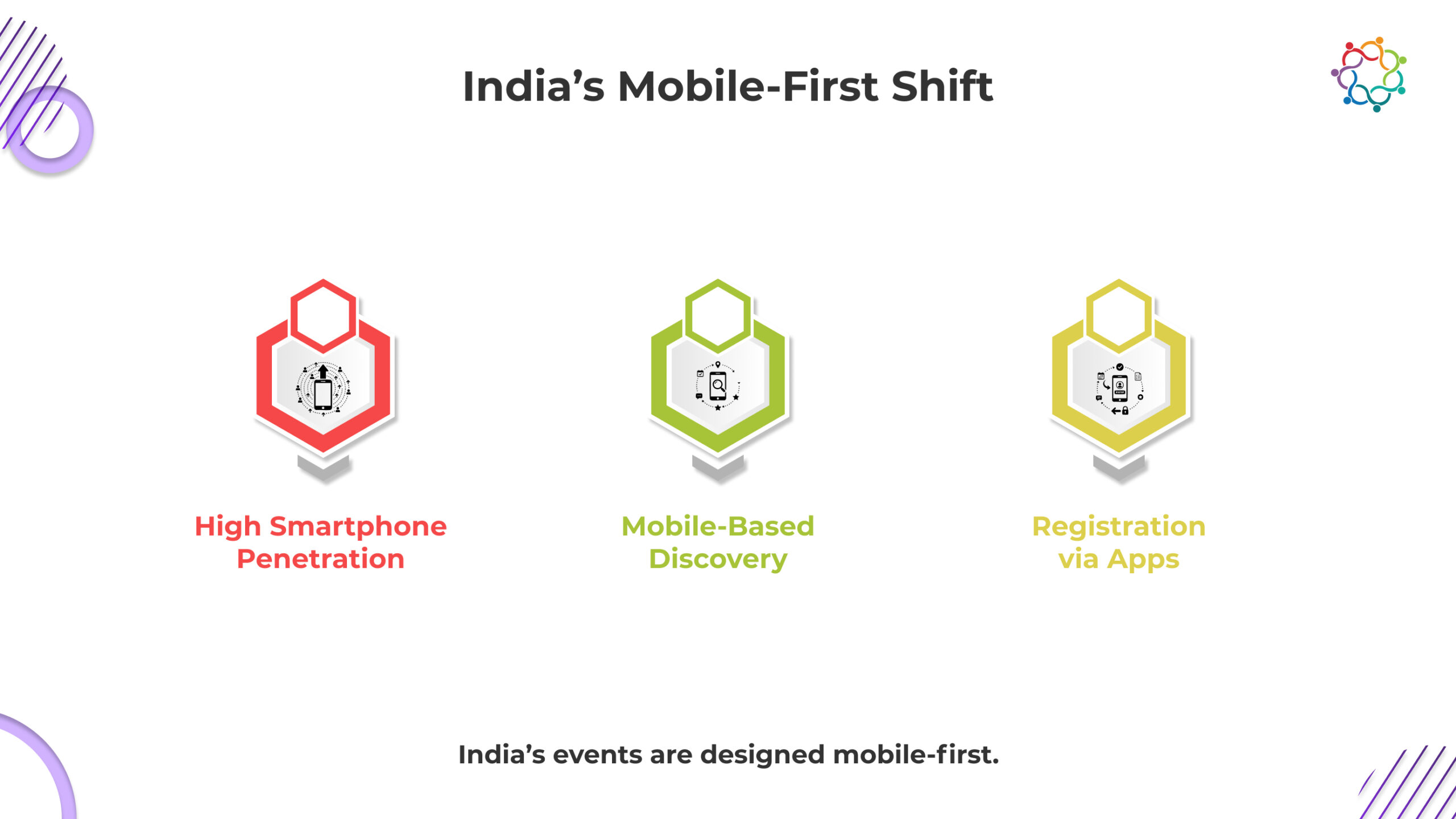
India has emerged as one of the most mobile-first digital economies globally, and this transition is affecting every layer of the B2B event ecosystem. For many attendees, the smartphone is no longer a companion device; it is now the primary channel for discovering events, registering, checking in, exploring content, attending, and ultimately networking. Traditional desktop-first workflows in events are fast approaching obsolescence, as younger professionals, regional audiences and busy executives are demanding fast, intuitive, app-ready experiences.
This change is about much more than just a change in the device used. It signifies a true behavioural shift that will mean event planners, chief marketing officers, and technology buyers will have to think differently about how events are planned and delivered. Speed, simplicity, location, and personalization are now the hallmark pillars of India’s event tech expansion. As organizations extend their event portfolio across metros and emerging rapidly Tier 2 and Tier 3 markets, ‘mobile first’ is a critical component of any B2B event strategy going forward.
Across Indian B2B events today, mobile-first design dictates engagement. Event registrations increasingly happen through mobile landing pages or quick prompting apps, as opposed to sign-up forms and attendees want to enter with a QR code instead of a verified digital pass/tap to confirm their ticket. The days of printing badges or writing on registration forms is starting to phase out across corporate conferences, trade expos, and partner summits.
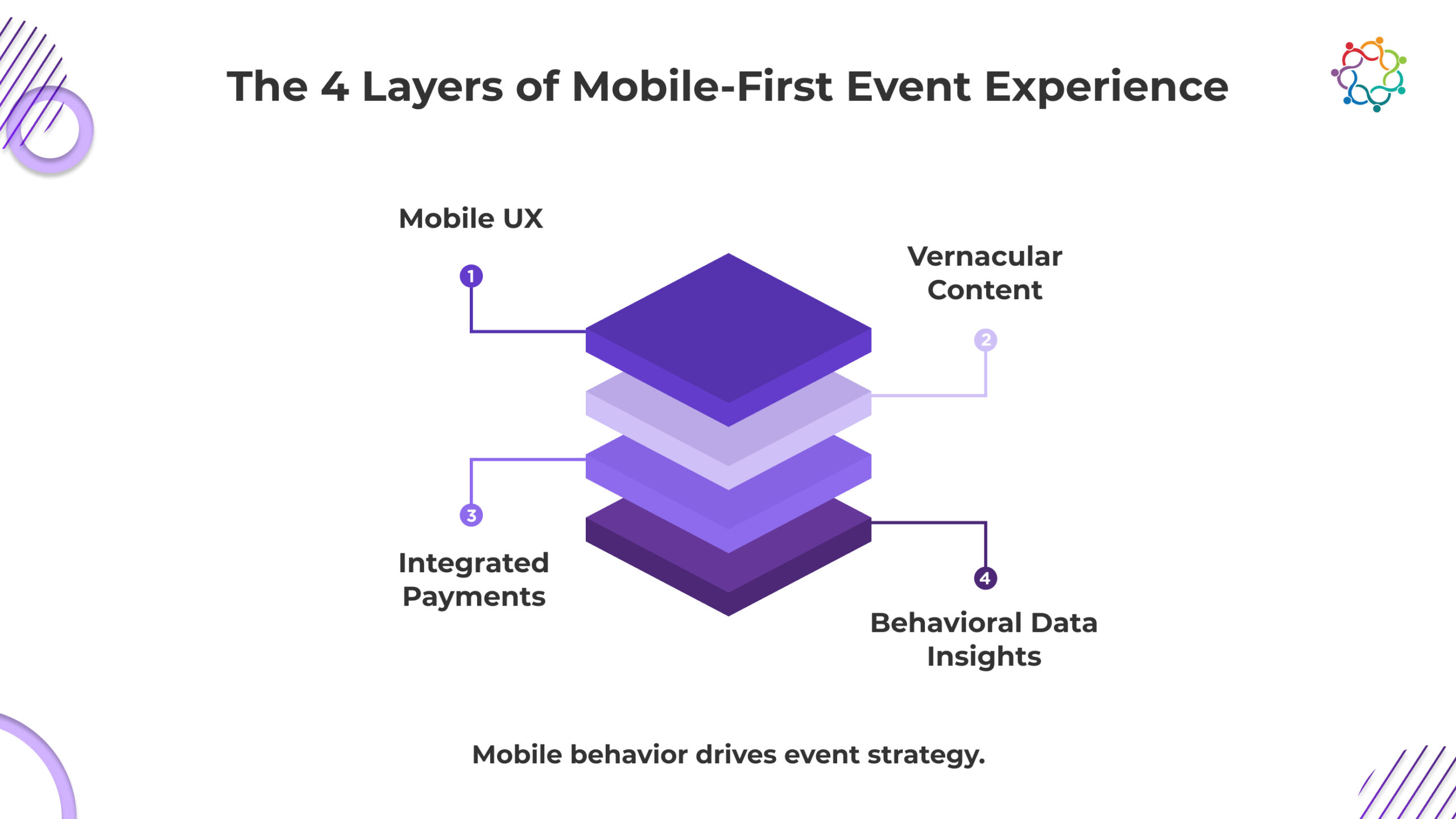
To effectively engage this audience, the event software must utilise a UX engineered for the constraints of mobile. The interfaces must load quickly, remain reliable on contested networks, and require minimal data entry in order to function with ease. If an interface has one more field or takes one more second to load, then the risk of drop-off is imminent. Off-line access has also become equally important for attendees given the venue size and network congestion. Attendees want to have access schedules, maps of the venue, speaker biographies, and announcement alerts, while their network flows in and out.
A friction-less mobile UX is now shaping how attendees participate while they are in-session. Live polls, Q&A modules, emojis and thumbs up thumbs down reactions, session ratings, and digital handouts are accessed through participants’ mobile phones. The more intuitive and minimal the experience, the more likely attendees will engage in the activity. This behaviour baseline has also driven event tech providers to try for app-like responsiveness even when mobile UX is web-based journey.
The crowds at meetings in India are not well united. B2B events are moving away from only the normal metro audience, and this support of regional languages for facilitating attendance. Many attenders in Tier 2 and Tier 3 cities like: instructions and notifications to be in their regional language, and content for sessions to be in the vernacular language as well. Without localization, we have created that invisible wall of frustration, comfort and disengagement from the content.
Broadcasting agendas, notifications and resource materials in multiple languages builds an extra layer of inclusivity in attending events. To even have a toggle for Hindi, Tamil, Telugu, Kannada or Marathi languages can shift sides from a passive attendee to an engaged authority. Vernacular interfaces can help brands communicate a dedication to being regionally diverse, which is a highly considered trait to have in sectors like BFSI, Manufacturing, Distribution and Public Sector.
Localization is not simply language-based Systems, but rather, regional timing considerations, small cultural variations in the vernacular language and potentially even device-variations too. Most participants from lesser sizes of cities carry a light to mid-range smartphone, which means the user interface experience to be light and ensure low band-width optimization. Event technology benefiting from fully considered needs can experience higher adoption rates and supportive behaviour.
India has one of the most advanced mobile payment ecosystems globally, and this has transformed how paid events operate. UPI, mobile wallets, and regional payment gateways have dramatically simplified the registration-to-payment journey. Instead of forcing attendees through lengthy invoicing processes or multi-step checkout flows, organisers now enable near-instant mobile payments.
For B2B events, this shift has reduced bounce rates and improved conversion ratios for:
UPI’s immediacy is especially powerful during last-minute registrations, where opportunity windows are narrow. Many attendees decide to join only a day or even an hour before an event, and the ability to pay through a single tap removes friction entirely.
In-app or mobile-browser payments also allow organisers to run dynamic pricing, early-bird reminders, abandoned-cart nudges, and promotional voucher codes, all optimised for fast conversions on smaller screens. In markets like India, mobile-first monetisation has quickly moved from a convenience feature to a competitive advantage.
One of the most valuable outcomes of India’s mobile-first audience is the sheer depth of behavioural data it generates. Every tap, swipe, click, and interaction becomes a signal that organisers can analyse to refine content strategy, session formats, and lead-generation workflows.
Mobile-first platforms capture:
For CMOs and event leaders, this means post-event reporting goes well beyond attendance numbers. Instead of guessing which sessions resonated or which cohorts were most active, event teams get granular insights that influence sales alignment, content marketing, and the long-term event calendar.
This data becomes especially potent when combined with mobile identity markers, allowing organisers to run personalised retargeting, nurture attendees after the event, and shape better experiences next time. India’s willingness to engage through mobile gives technology buyers the clarity needed to make smarter decisions.
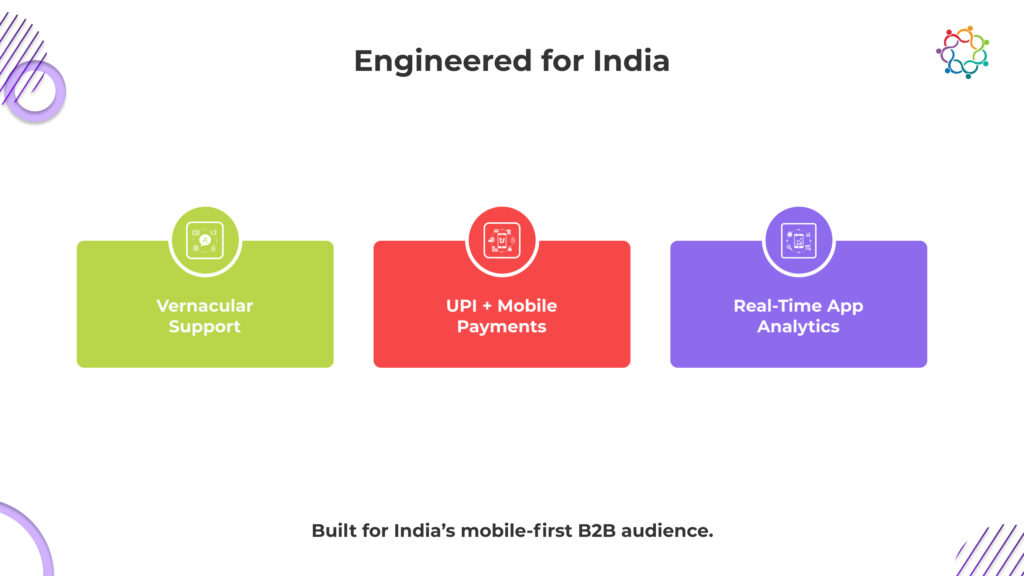
India’s mobile-first audience operates on three realities: inconsistent bandwidth, diverse regional languages, and rapid-fire decision cycles. Samaaro’s architecture is built around these constraints.
The platform is engineered to perform reliably on mid-range devices, busy venue networks, and high-volume traffic spikes. Pages load quickly, forms require minimal input, offline caching keeps agendas and maps accessible, and QR entry works even when connectivity dips. This foundation matters because Indian attendees don’t tolerate lag, they simply drop off.
Samaaro also supports true localisation, not just translated labels. Organisers can send notifications, agendas, alerts, and resources in multiple regional languages and segment different linguistic groups with precision. This removes the friction that normally alienates attendees from Tier 2 and Tier 3 markets.
On monetisation, Samaaro integrates directly with UPI and mobile wallets, enabling one-tap payments across ticket upgrades, add-ons, merchandise, and last-minute registrations, critical in a market where decisions often happen minutes before a session.
Every mobile interaction feeds into Samaaro’s behavioural analytics:
These signals help enterprises understand intent, segment audiences, and align sales and marketing with actual behavioural evidence, not guesswork.
For large-scale employee meets, distributor networks, roadshows, partner programs, and public expos, the formats driving India’s B2B growth, Samaaro gives organisers the scale, speed, and mobile readiness the market demands.
In India, the event technology revolution is not driven by devices, it’s driven by behaviours. A mobile-first populace expects speed, convenience, vernacular comfort, instant payments and personalized pathways. When B2B events build to this reality, they will win over B2B events that still anchor to desktop-era assumptions. The future of event experiences in India will be frictionless, intuitive, and informed by real-time data.
Find out how Samaaro powers India’s most mobile-first enterprise events.