Samaaro + Your CRM: Zero Integration Fee for Annual Sign-Ups Until 30 June, 2025
- 00Days
- 00Hrs
- 00Min

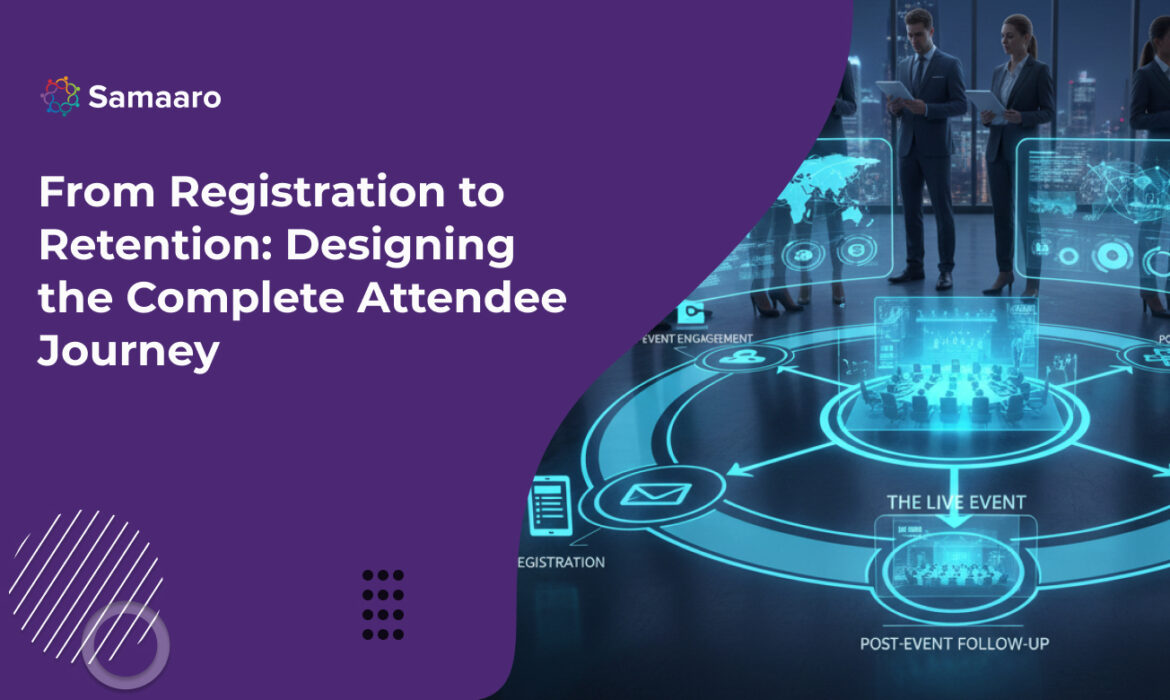
Most event teams consider events as stand-alone campaigns rather than as long-term relationship builders. However, attendees are not leads, or simply numbers on a dashboard. Like a customer journey, attendees go through a lifecycle shaped by their expectations, experiences, and emotions, before, during, and after the event. When this lifecycle aspect is purposely designed, this one of the strongest drivers of brand loyalty.
A well-planned attendee journey will provide added value to every touchpoint, reinforce intent, and move people closer to your long-term ecosystem. This shift from thinking about a single event, to thinking about a lifecycle, gives modern event marketers the ability to increase attendee satisfaction, reduce drop-off, and improve retention through a series of events.
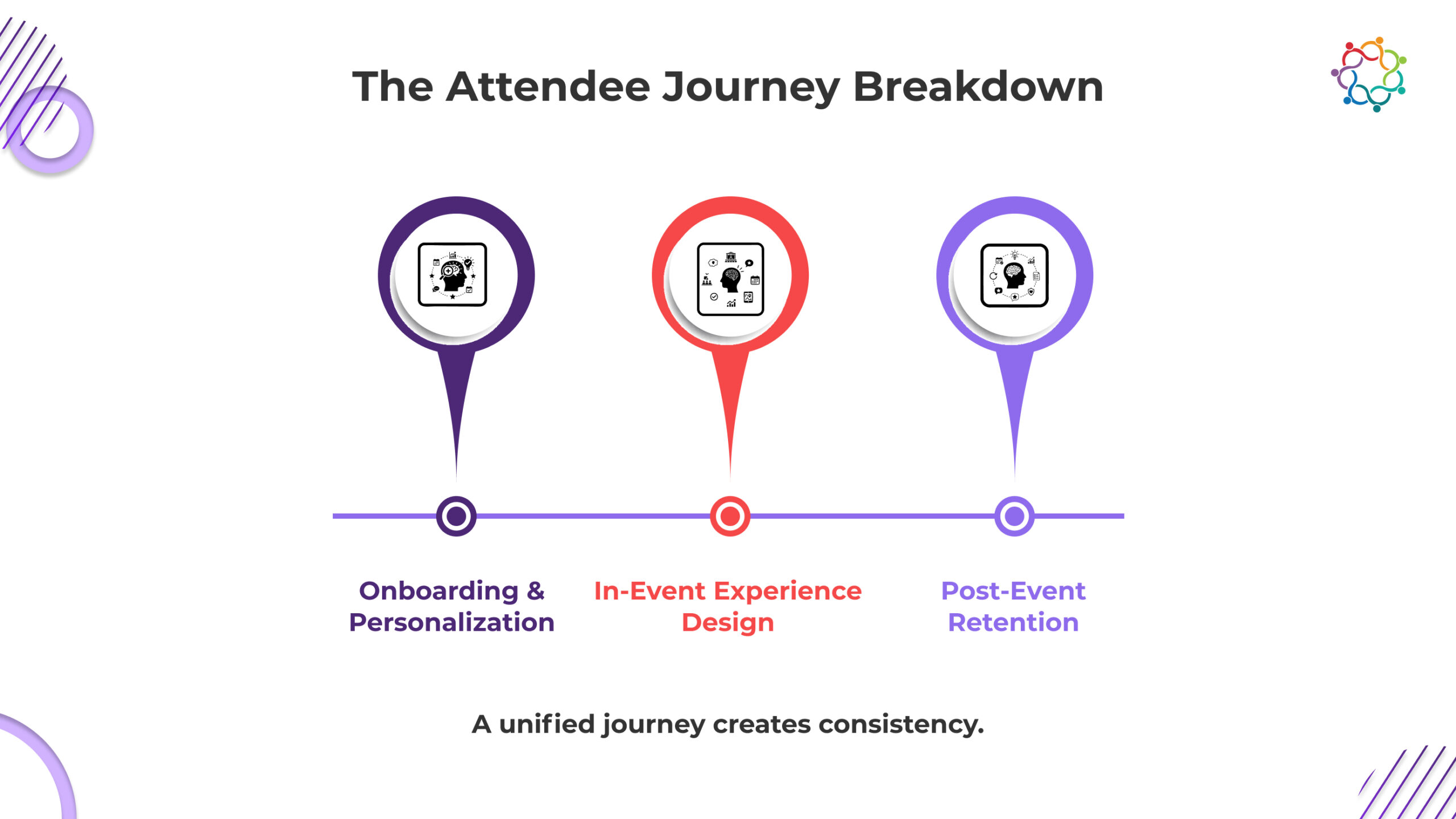
The process of an attendee starts long before they ever step foot inside a venue. It begins the moment they register. An overwhelming registration form or convoluted onboarding process can kill interest before the experience ever begins, so onboarding needs to be simple, quick, and tailored to the attendee.
Personalized registration forms can help set the tone immediately. Asking relevant questions instead of generalized questions, helps capture information that can fuel tailored content, personalized agendas, and session recommendations. Attendees are likely to remain engaged during the event lifecycle when they feel seen from the beginning.
AI-driven agenda recommendations factor in here as well. With the right software, attendee responses, recorded participation, engagement, and professional interests could merge to create a curated event experience. Instead of giving attendees a complicated agenda and forcing them to figure out which session they will attend, you can guide them along to sessions and engagement that met their needs or goals.
A clear onboarding path brings closure to phase one of the attendee journey. There is much that could introduced into the welcome emails, downloading the app, previewing speakers, or readiness information that would prepare the attendee. Every touchpoint should eliminate friction and build excitement. An attendee that arrives to the event feeling confident, informed, and excited is set up for deeper engagement throughout the event.
Once the event is underway, the strategies will steer the event from onboarding to engagement – experience design is critical to the success of driving attendees through the active engagement continuum vs. becoming passive observers. Expectations of audience experiences have evolved and event producers have to design community experiences that are interactive, social and self-rewarding.
Gamified engagement is among the most effective ways to propel sustained participation. When executed properly, challenges, rewards, scavenger hunts or leaderboard options promote exploration. It can inspire participants to get up, speak with and connect with other attendees, expand their scope and, when possible, raise their hands to participate. The promise of gamified engagements can increase attendance in a session, enhance networking, and increase the visibility of sponsors, advertisers and exhibitors – without the registration form filling experience.
Smart matchmaking is equally important. Attendees want to meet people, they do not generally want idle small talk. Letting AI matchmaking do the work to connect people with common interests based on professional goals and behavioral indicators is smart. Attendees that are introduced to each other based on their similarities are more likely to have deeper conversations and find high levels of satisfaction and future potential relationship than those without any relations to the reason for a meeting.
Moreover, “live analytics” opens another layer of the event experience, allowing your team to see in-the-moment attendee behavior. Event organizer can have data on tedious things like the dwell time in a session & traffic flow in a venue, and the cumulative sessions attendee interaction captured over a time. That timing might spark shuffling to some other popular areas, note want to disrupt the current offerings. If an event segment is failing as the interactive audience they wanted, the data could prompt them to act before the interest naturally drops.
Finally, a thoughtfully designed the in-event experience is what takes attendee curiosity to an emotional experience. When attendees feel engaged, included and a have intrinsic motivation throughout the experience, they will be far more likely to engage in a post-event activity and certainly returning for a future event.
The attendee experience does not finish once the event is over. In fact, the most essential piece of the attendee experience begins after the event. The post-event follow-up will determine whether attendees ‘just liked’ the experience or if they become a part of your community.
It is key to collect feedback timely. Well-designed surveys, sentiment polls, and rapid rating questions give attendees a voice, engaging them, while also capturing data to support ongoing improvement. Feedback gives indication to the attendee that you care about their experience. Feedback increases trust and openness.
Recapping content extends the life of the content. Recap options include short highlight reels, quotes from speakers, downloadable slides, or recordings of sessions – all these options keep attendees engaged long after the event experience is over. Recaps keep messages top of mind and also allow you to remain visible in the weeks following the event.
Community groups are yet another effective retention tool. When attendees join dedicated channels on WhatsApp, LinkedIn, or inside your event app, now they have a dedicated space to develop these conversations, announcements, collaborations, or connections. These micro-communities foster ongoing participation and a sense of belonging that continues after the event is over.
When people feel connected to the experience and brand, they will come back again. A good post-event plan makes sure that decisions and momentum are not lost after the event experience, but it translate it into continued participation.
Events are no longer solely evaluated on attendance or NPS, the future is about understanding the full journey viewed through multiple touch points and over multiple events. Once teams start analyzing attendance journeys overtime patterns will emerge. These patterns will inform marketers for better segmenting, customizing communications within every segment, and creating improved experiences for every touchpoint.
Immediately, understanding how people traverse a registration page, to taking action by process of attending sessions, and what actions they take after the event provides insight into conversion roadblocks. Additionally, Knowing which formats of content worked well overtime (or which segments dropped off early) will provide the team data to make informed decisions about what is working or not working. Over time this type of visibility at the level of the journey transforms events from being reactive experiences, to automated growth engines.
Retention becomes at least possible with behavior measured in a more holistic way. Instead of guessing or working on assumptions event marketers can make adjustments or create strategy based on actual audience signals. This becomes a winner because every new (and old) event becomes sharper, custom, and aligned with what the audience expectation was.
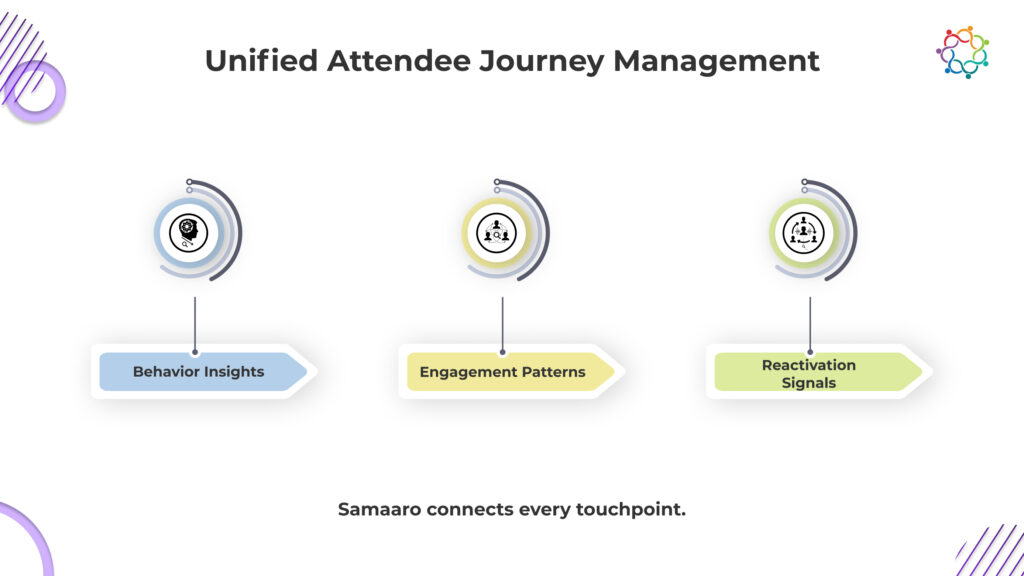
The attendee journey only works when every phase, registration, onboarding, in-event participation, and post-event retention, is connected by intelligence, not isolated tools. Samaaro unifies these touchpoints so event teams can design journeys based on real behaviour, not surface-level assumptions.
Samaaro captures every interaction from the moment someone lands on a registration page: the questions they answer, the sessions they favour, dwell time across content, networking patterns, and the signals they generate before, during, and after the event. These signals drive three core outcomes:
1. Personalised onboarding without friction
Registration data automatically shapes recommended agendas, session paths, meeting suggestions, and pre-event communication. No manual mapping, no bloated forms.
2. In-event engagement that reacts to behaviour
Live analytics show movement, interest spikes, session fatigue, and interaction patterns. Teams can intervene in real time, reroute footfall, promote under-attended sessions, or activate nudges for high-intent attendees.
3. Post-event retention driven by measurable signals
Every action feeds into a unified attendee profile: content consumed, connections made, feedback given, follow-up engagement, CRM progression. Samaaro uses this history to automate personalised follow-up, re-engagement, and multi-event nurture paths.
Where most platforms report attendance, Samaaro reports journeys.
Where most tools end at check-in, Samaaro continues through the entire lifecycle, surfacing the insight needed to build long-term communities and repeat participation.
Samaaro turns attendee management into a continuous, intelligence-led cycle, so every event gets sharper, more personalised, and more predictable over time.
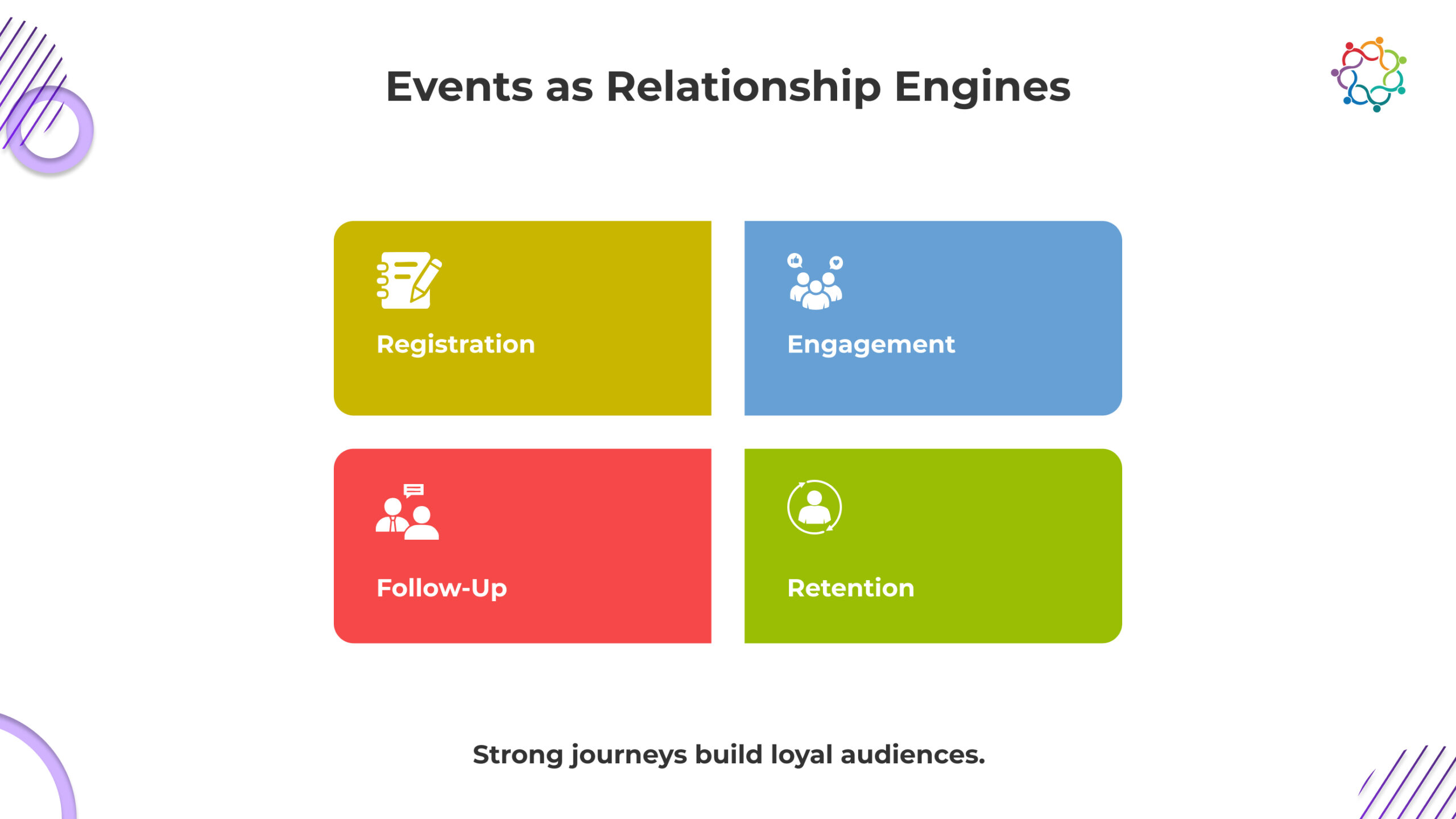
Retention does not happen by accident. It’s the result of thoughtful communication, intentional experience design, and continuous improvement across the entire attendee lifecycle. When event marketers treat events as relationship engines rather than one-time activations, every touchpoint becomes an opportunity to build trust and loyalty.
Design a continuous attendee journey with Samaaro’s connected engagement platform.