Samaaro + Your CRM: Zero Integration Fee for Annual Sign-Ups Until 30 June, 2025
- 00Days
- 00Hrs
- 00Min

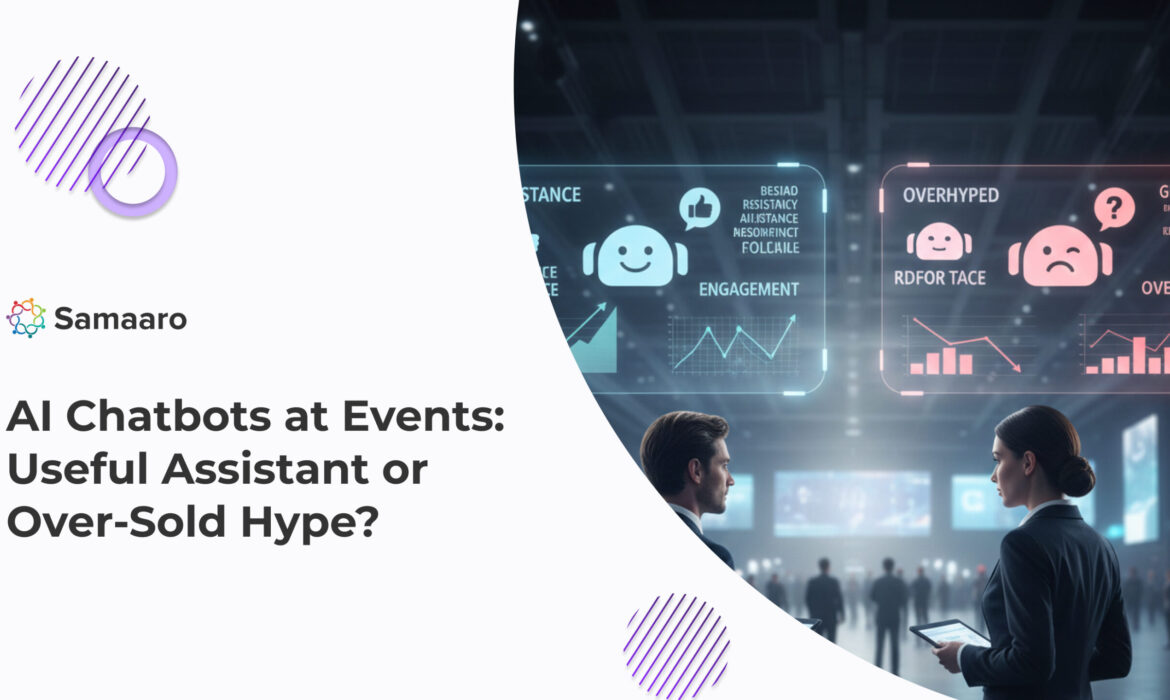
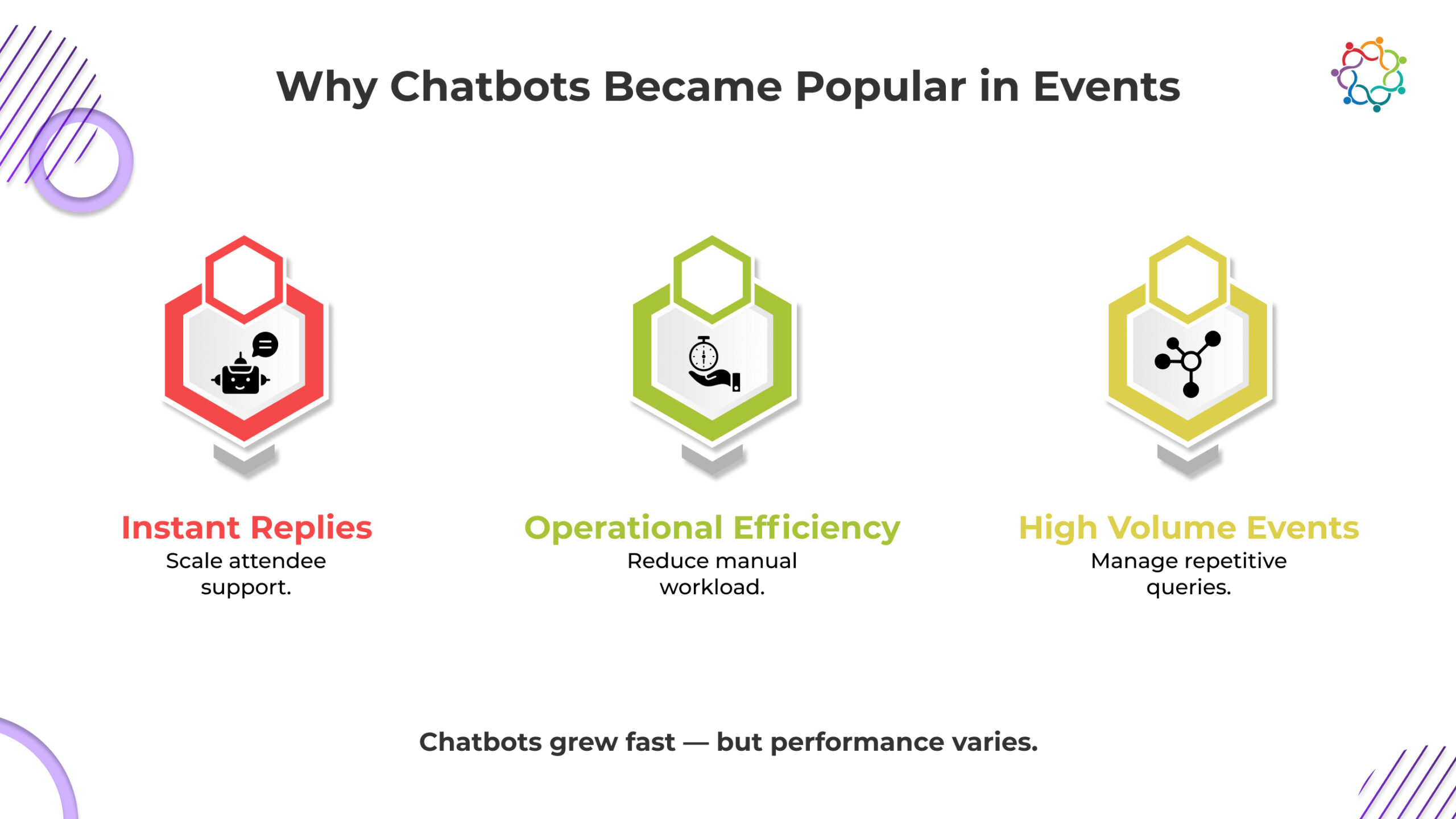
AI chatbots experienced growing popularity in the event industry as event teams have been looking for scalable ways to approach attendee communication. These chatbots promised instant answers, real-time assistance, and reduced need for staff. As events continued to grow larger and more complex, chatbots appeared to be a great way to facilitate high volume questions from attendees as teams learned to scale without burdening their human teams.
However, the results have been mixed. Some events find chatbots helpful to providing good turnaround times and attendees find it easier to navigate the event, while other events report frustrated attendees, citing unanswered questions or unresolved issues. This blog will look at what chatbots are actually bringing, and where they fall short, and how event teams can seasonally evaluate chatbot’s true value before using any commonality in the event space.
Chatbots excel in situations that are predictable and structured, where attendees ask the same question in different ways. Well-programmed chatbots can take the workload off live support staff and provide instant feedback without any live intervention.
Chatbots perform very well with:
Instant FAQs
An attendee may want quick details about timings, layout of the venue, parking, or access to wi-fi. A chatbot can provide an instant answer without needing to wait in line.
Schedule Lookups
Instead of going through the agenda and scrolling to locate a specific session, attendees can request the times for a session they are interested in, or the location of that session.
Personalised Reminders
Bots can help attendees stay on track and send prompts about sessions they have an interest in, or have saved/bookmarked.
Basic Navigation
Chatbots can provide instant information on where the general session hall, booths, lounges, or help desk is located.
In all of these instances, chatbots provide a level of convenience that is truly valuable, especially in larger conference settings where the live help desk becomes overwhelmed.
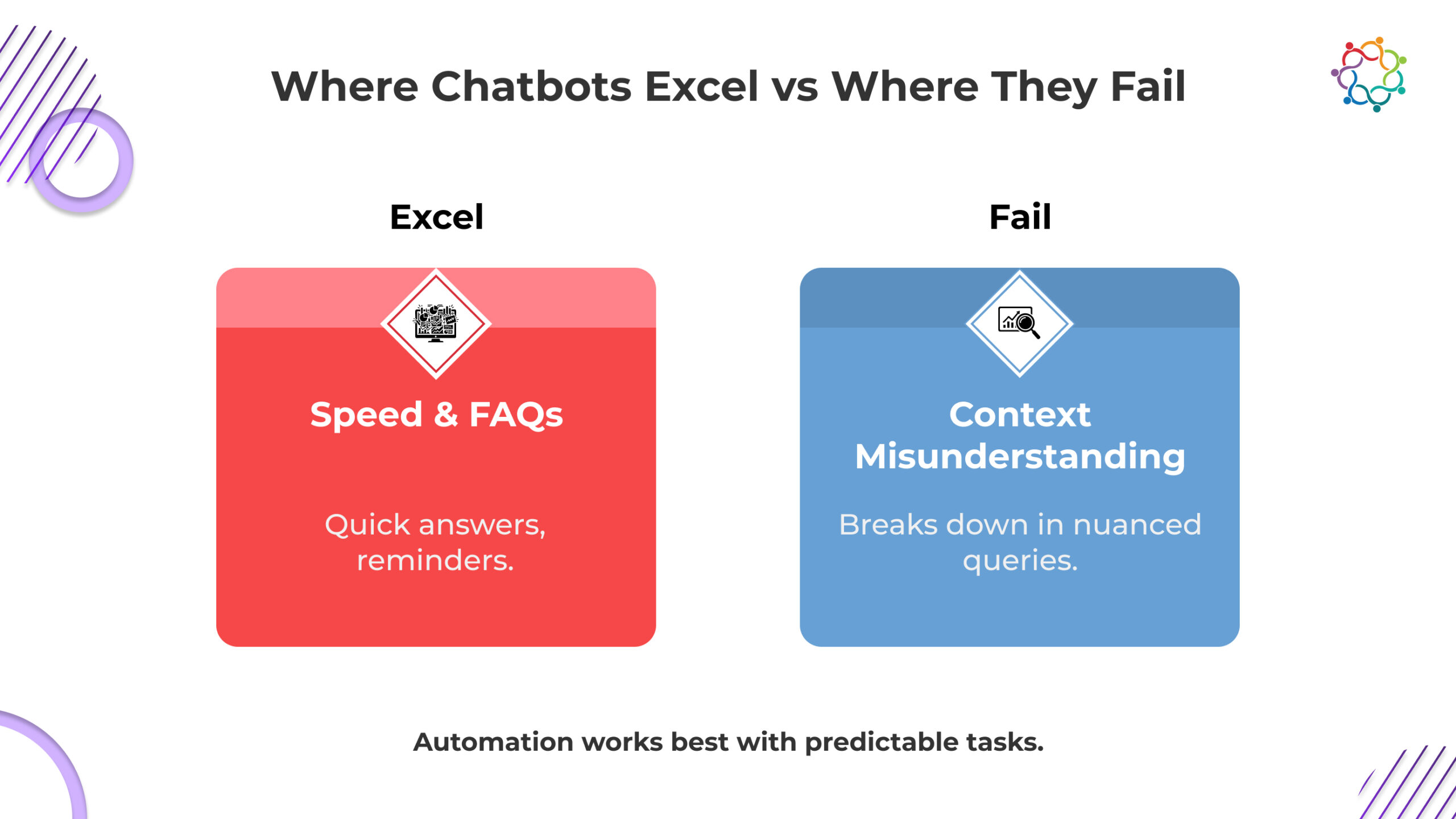
Chatbots encounter limitations when emotions, ambiguities, or context dependency are involved. Events are dynamic environments during which the attendee is often required to form a judgment the automation can’t provide.
Chatbots fail at:
Empathy
A bot cannot comfort an attendee who is confused or stressed at check-in.
Contextual Understanding
Messages that convey meaning but have typos or odd phrasing often result in answers that are disconnected to their intent.
Flexibility
Bots use linear logic. Once a user moves outside those lines, the interaction becomes futile quickly.
Escalation to Humans
Bad chatbots will not offer a seamless transition when the user clearly needs a real person. Without a handoff, frustration ramps up very fast.
These are real gaps in the toolkit of chatbots that should suggest chatbots should supplement their work toward human centred roles not replace.
Chatbots often appeal to event managers because they reduce manpower and lower staffing costs. They can efficiently manage thousands of repetitive queries and free human teams for higher-value interactions.
However, cost savings cannot be evaluated in isolation. A chatbot that delivers poor responses can damage attendee satisfaction, reduce trust in the event brand, and ultimately undermine the experience.
An accurate ROI assessment should consider:
Cost Efficiency
Less dependency on on-ground staff and faster resolution times.
Experience Quality
Whether attendees feel supported or annoyed during interactions.
Brand Impact
A malfunctioning chatbot can reflect poorly on the overall event, signalling a lack of preparedness or care.
The goal is to ensure that automation enhances experience rather than replacing essential human touchpoints.
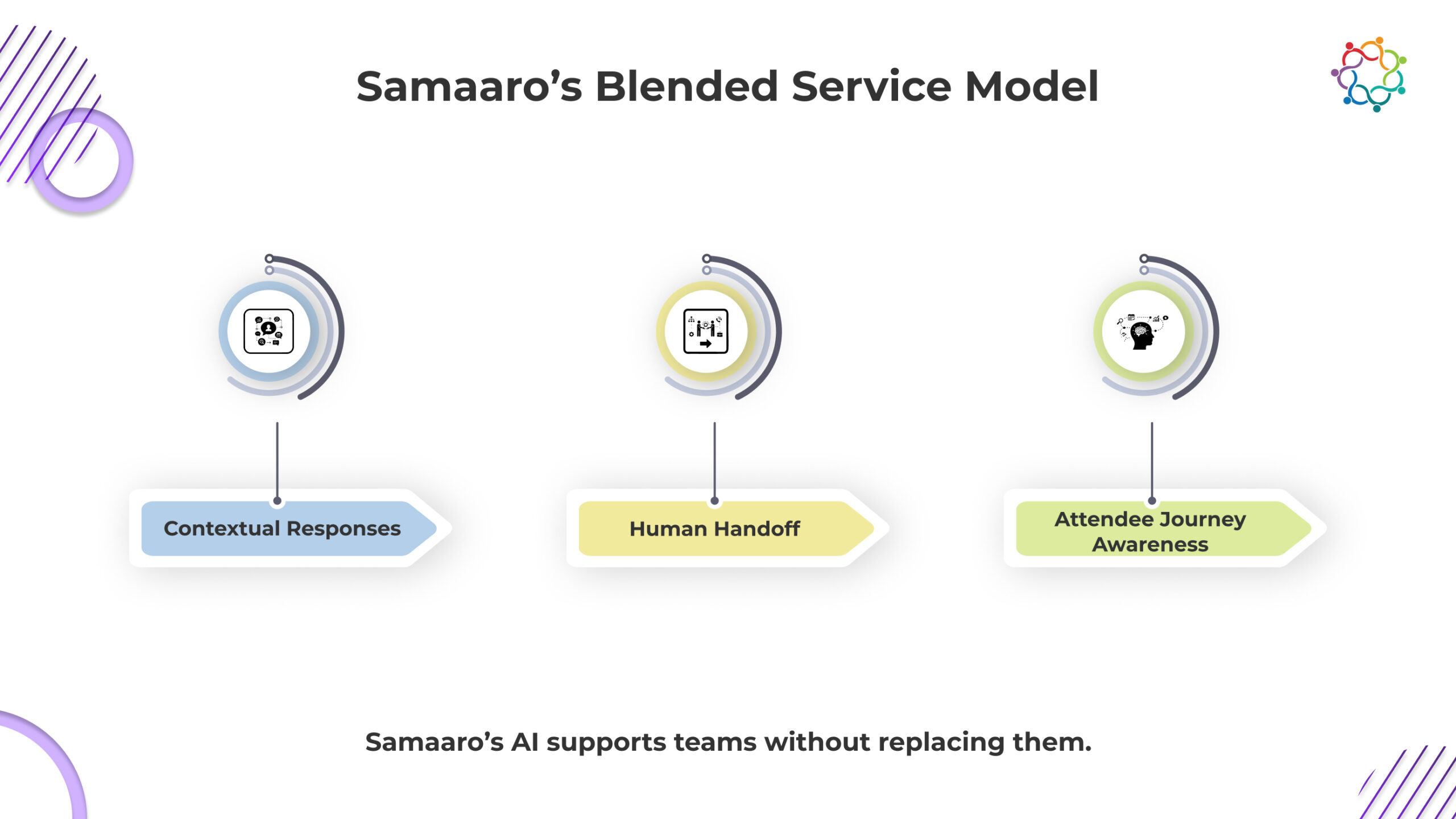
The most effective event organisations use a hybrid support model that combines AI efficiency with human availability. Chatbots handle high-volume, straightforward requests, while trained staff manage nuanced or emotionally sensitive cases.
A blended model looks like this:
AI handles FAQs, schedule checks, reminders, navigation, and rule-based queries.
Humans handle escalations, logistical exceptions, personal disputes, technical issues, and anything requiring empathy.
This approach reduces workloads without compromising experience. It treats automation as a tool that supplements human service, ensuring attendees always receive the right type of support.
With the appropriate strategies, AI chatbots might be a useful resource at events. AI chatbots excel at answering repetitive inquiries that are not emotionally complex or have a simple response. It is advisable for teams to utilize chatbots with clear expectations and as part of a blended service model that maintains the quality of the attendee experience.
Find out how Samaaro assists teams in designing evenly balanced engagement workflows that leverage the power of intelligent automation.