Samaaro + Your CRM: Zero Integration Fee for Annual Sign-Ups Until 30 June, 2025
- 00Days
- 00Hrs
- 00Min


Key Takeaways (TL;DR)
1
2
3
4
5
Walk any major trade show floor, and the logic feels obvious. Crowded booths look successful. Empty booths look like mistakes. For years, exhibitors have used footfall, badge scans, and surface-level energy as proof that an event “worked.” The problem is not that this logic is lazy. It is incomplete.
Sales teams see a different picture once the noise fades. Deals that actually close often trace back to quieter events. Smaller rooms. Fewer conversations, but with the right people. Meanwhile, some of the busiest shows quietly drain budget, time, and sales focus without moving revenue forward.
This disconnect persists because footfall feels tangible. It is visible, countable, and emotionally reassuring. Sales impact is slower, messier, and harder to attribute cleanly. When reporting deadlines arrive, teams default to what they can measure fast, not what matters long term.
This is where Event ROI for exhibitors needs to be reframed. The goal of exhibiting is not attention. It is progress. Progress in deals, in the pipeline, and in revenue momentum. Footfall became a proxy for value because it was easy, not because it was accurate.
This blog challenges that habit, not by dismissing footfall as useless, but by putting it back in its place. Exhibitors who want clarity must learn to judge events the way revenue leaders judge investments, using sales evidence rather than surface-level signals.
The Footfall Trap: Why Attendance Numbers Mislead Exhibitors
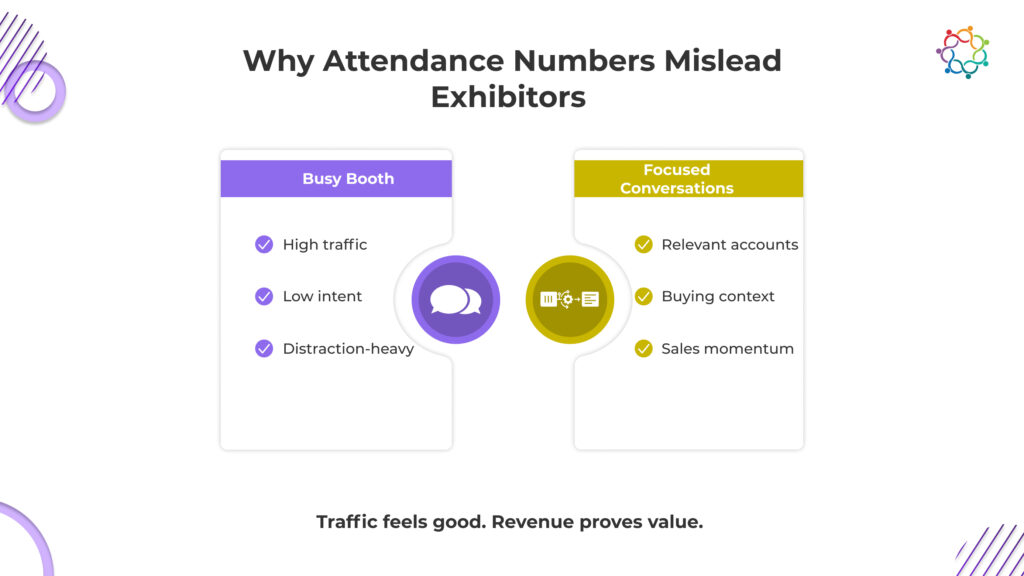
Footfall fails exhibitors not because it is meaningless, but because it is misunderstood. Attendance volume answers one narrow question: how many people passed by or stopped briefly. It does not answer whether those people were capable of buying, influencing a deal, or accelerating a decision.
At most large events, a significant portion of booth traffic comes from curiosity rather than intent. Free giveaways, flashy demos, brand recognition, or even proximity to coffee stations inflate numbers. Junior staff, students, competitors, and partners all count as scans, yet contribute little to revenue outcomes.
There is also a hidden cost to high traffic. Sales teams stretched thin across hundreds of low-quality conversations lose the ability to go deep with the few accounts that matter. Distraction replaces focus. Energy is spent managing crowds rather than advancing deals.
Footfall also masks opportunity cost. When teams celebrate volume, they stop asking harder questions about what could have happened if the same budget and time were spent elsewhere. A quieter event that enables meaningful discussions often looks worse on paper, even if it outperforms commercially.
The trap is reinforced because footfall is socially validated. It photographs well. It reassures leadership. It creates a feeling of momentum, even when that momentum does not translate into pipeline movement.
To understand why footfall misleads, exhibitors must separate activity from impact:
Until this distinction is clear, exhibitors will continue to reward events that look successful while quietly underperforming in revenue terms.
Once footfall is stripped of its emotional weight, a more useful question emerges. What does value actually look like for an exhibitor? The answer lives closer to sales behavior than marketing optics.
Value is created when an event improves the probability of revenue. That can happen in several ways. Conversations become more relevant. Accounts that were stalled re-engage. Deals move forward with greater urgency. The event creates momentum that did not exist before.
Quality of interaction matters more than quantity. A single focused discussion with a decision-maker can outweigh dozens of casual conversations. Relevance of accounts matters more than total scans. Talking to companies that match your ideal customer profile is more valuable than collecting names that never convert.
Events also differ in the type of momentum they create. Some introduce new opportunities. Others accelerate existing ones. Some enable expansion or renewal conversations that would not have happened otherwise. All of these outcomes are valuable, but none are visible in raw footfall numbers.
To redefine event value, exhibitors must shift their lens:
This reframing sets the stage for using sales data as the primary evaluation tool. When value is defined in revenue terms, sales evidence becomes the most reliable signal of whether an event mattered or not.
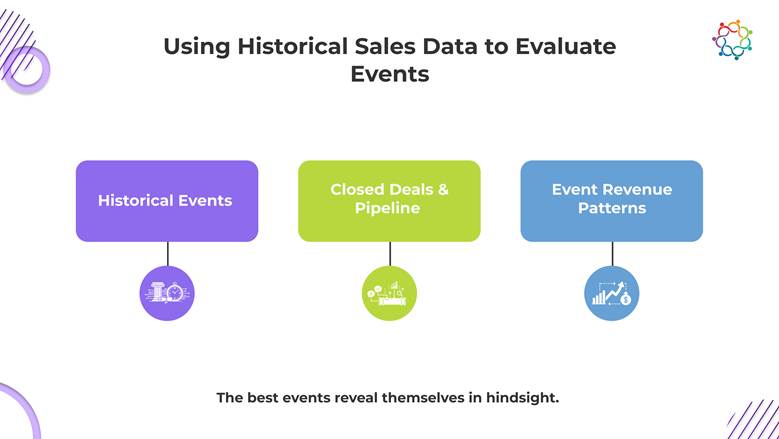
The most practical way to assess event performance is to look backward before looking forward. Historical sales data already contains clues about which events influenced real outcomes. The mistake most exhibitors make is never connecting those dots.
Start by reviewing closed deals from the past year or two. Identify which opportunities had any event touchpoints along the way. This does not require perfect attribution. Directional mapping is enough. The goal is to see patterns, not to assign mathematical credit.
Next, examine pipeline movement. Which events coincided with deals accelerating from one stage to the next? Which events were present in opportunities that stalled or dropped out entirely? Over time, these patterns reveal the difference between events that create momentum and those that simply create noise.
This is where Event ROI for exhibitors becomes measurable without becoming over-technical. You are not building an attribution model. You are building judgment.
Sales data can also expose repeatability. If certain events consistently appear in successful deals, they deserve protection even if the footfall was modest. If other events rarely show up in revenue stories, their value should be questioned regardless of attendance size.
A simple review process might include:
Historical sales data turns event evaluation from opinion into evidence. It replaces memory with insight and gives exhibitors a foundation for smarter decisions.
Deal Velocity: The Most Underrated Event Signal
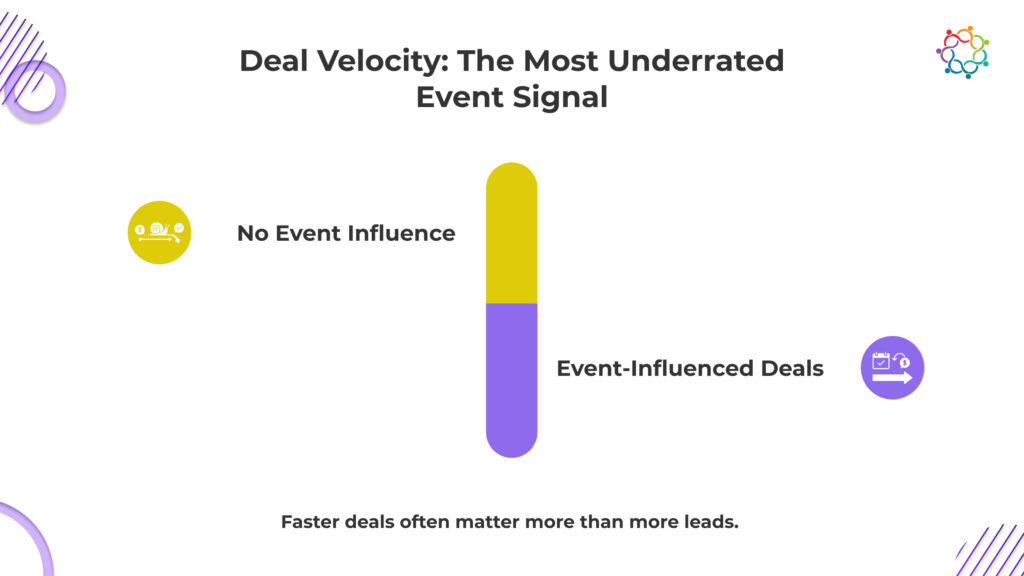
Deal velocity refers to how quickly opportunities move from one stage to the next. It is one of the clearest indicators of sales effectiveness, yet it is rarely used to evaluate events. This is a missed opportunity.
Some events compress sales cycles dramatically. A face-to-face conversation resolves objections that weeks of emails could not. A live demo aligns stakeholders faster than remote calls. A well-timed event can turn indecision into action.
Faster deals often matter more than more deals. Shorter cycles reduce the cost of sale, free up sales capacity, and improve forecast reliability. An event that helps deals close faster can outperform one that generates more leads but drags out conversations.
Deal velocity also highlights event quality. High-intent environments tend to produce urgency. Low-intent environments produce follow-ups that go nowhere. Velocity reveals this difference clearly.
To use deal velocity as an event signal, exhibitors should look at how long deals take to close with and without event interaction. Even rough comparisons can be revealing. If deals tied to certain events consistently move faster, that event is doing real work.
Key insights velocity can uncover include:
For many teams, this lens feels like a revelation because it shifts focus from volume to momentum. Velocity makes invisible value visible.
Lead counts remain one of the most misleading metrics in event reporting. They reward quantity without questioning quality. Pipeline influence offers a more honest alternative.
Pipeline influence looks at how events affect deals that already exist, not just how many new names were added. Events often help re-engage dormant accounts, unblock stalled negotiations, or expand deal scope. None of this shows up in lead totals.
Raw leads also hide inefficiency. Hundreds of low-quality leads consume sales time with little return. Fewer, better-aligned conversations often generate more pipeline value with less effort.
Influence is rarely clean or linear. An event might not be the last touch before a deal closes, yet still play a meaningful role. This is why directional insight matters more than last-touch credit.
This is another place where Event ROI for exhibitors should be evaluated with realism. The goal is not to prove that an event “caused” revenue, but to understand whether it consistently supports pipeline health.
A practical way to assess influence includes:
When pipeline influence replaces lead volume as the primary lens, exhibitors stop optimizing for appearance and start optimizing for impact.
Comparing Events Like a Sales Portfolio
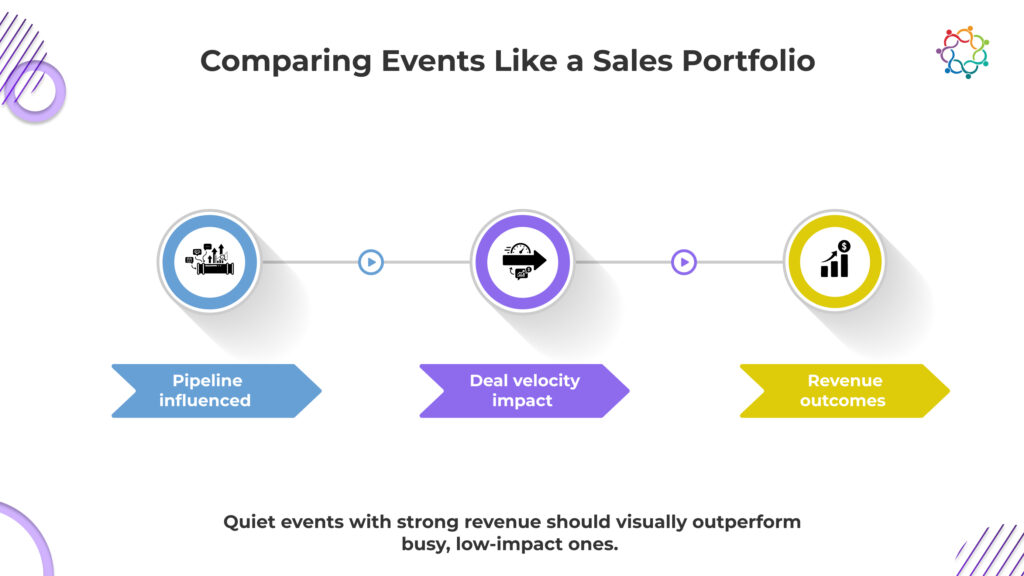
One of the biggest strategic mistakes exhibitors make is evaluating events in isolation. Each show is judged on its own numbers, detached from the broader portfolio. This obscures trade-offs and hides opportunity costs.
Revenue leaders think in portfolios. They compare investments against each other. Events should be treated the same way. The question is not whether an event was good or bad, but whether it was better or worse than alternatives.
When events are compared side by side using sales outcomes, surprising truths emerge. A single niche event might influence more pipeline than three large trade shows combined. A quiet executive forum might accelerate more revenue than a high-traffic expo.
Portfolio thinking also exposes waste. Every event attended consumes budget, sales time, and focus. Attending the wrong event means not attending a better one. This cost is invisible when events are reviewed individually.
This portfolio lens reinforces Event ROI for exhibitors as a decision-making discipline rather than a reporting exercise. It enables trade-offs, prioritization, and long-term learning.
Useful comparison dimensions include:
When exhibitors adopt this view, clarity replaces tradition. Events earn their place based on contribution, not reputation.
(Also Read: Common Event Marketing Mistakes That Limit ROI)
How Exhibitors Can Start Making Data-Led Event Decisions
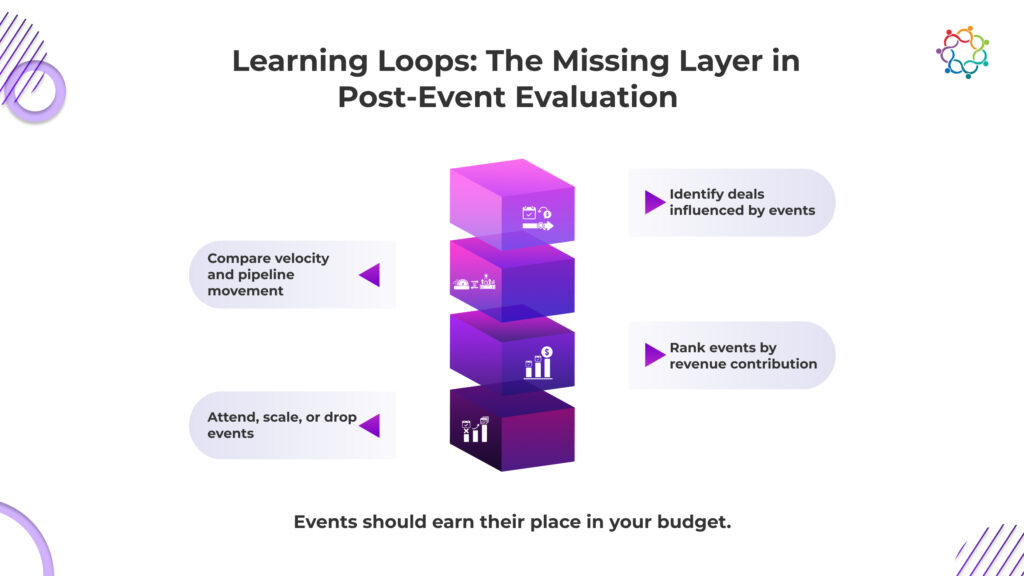
Moving toward data-led decisions does not require new tools or complex models. Most exhibitors already have the necessary information. What is missing is alignment and intent.
Sales and marketing must agree on a small set of questions that matter. Which events influence deals? Which accelerates the pipeline? Which consistently underperforms? These questions guide analysis without overcomplicating it.
CRM systems already track opportunities, stages, and timelines. Adding simple event touchpoint notes or tags is often enough to enable meaningful review. The goal is consistency, not perfection.
Post-event reviews should also change. Instead of focusing on leads and attendance, discussions should center on sales outcomes. What moved? What did not? What surprised the team?
A simple starting framework includes:
By keeping the process practical, exhibitors avoid paralysis and build confidence over time. Data-led does not mean data-heavy. It means evidence-aware.
Events are not branding exercises for exhibitors. They are commercial investments that consume budget, sales time, and executive attention. Like any other investment, they should be judged by what they return, not by how successful they feel while they are happening. A busy booth, positive energy, or a long line of conversations can create confidence in the moment, but confidence is not the same as contribution.
Footfall is a feeling. It is visible, reassuring, and easy to defend in internal conversations. Sales data is evidence. It is slower to surface, less tidy, and far more honest about what actually changed because the event occurred. When exhibitors rely on evidence instead of impressions, clear patterns start to emerge. Some events consistently show up in closed deals. Some accelerate the pipeline. Others generate noise without leaving a trace in revenue outcomes.
This is the core lesson of Event ROI for exhibitors. Value is not defined by crowds, booth traffic, or anecdotal enthusiasm. It is defined by movement in deals, improvement in pipeline health, and momentum toward revenue.
(If you’re thinking about how these ideas translate into real-world events, you can explore how teams use Samaaro to plan and run data-driven events.)