Samaaro + Your CRM: Zero Integration Fee for Annual Sign-Ups Until 30 June, 2025
- 00Days
- 00Hrs
- 00Min

Key Takeaways (TL;DR)
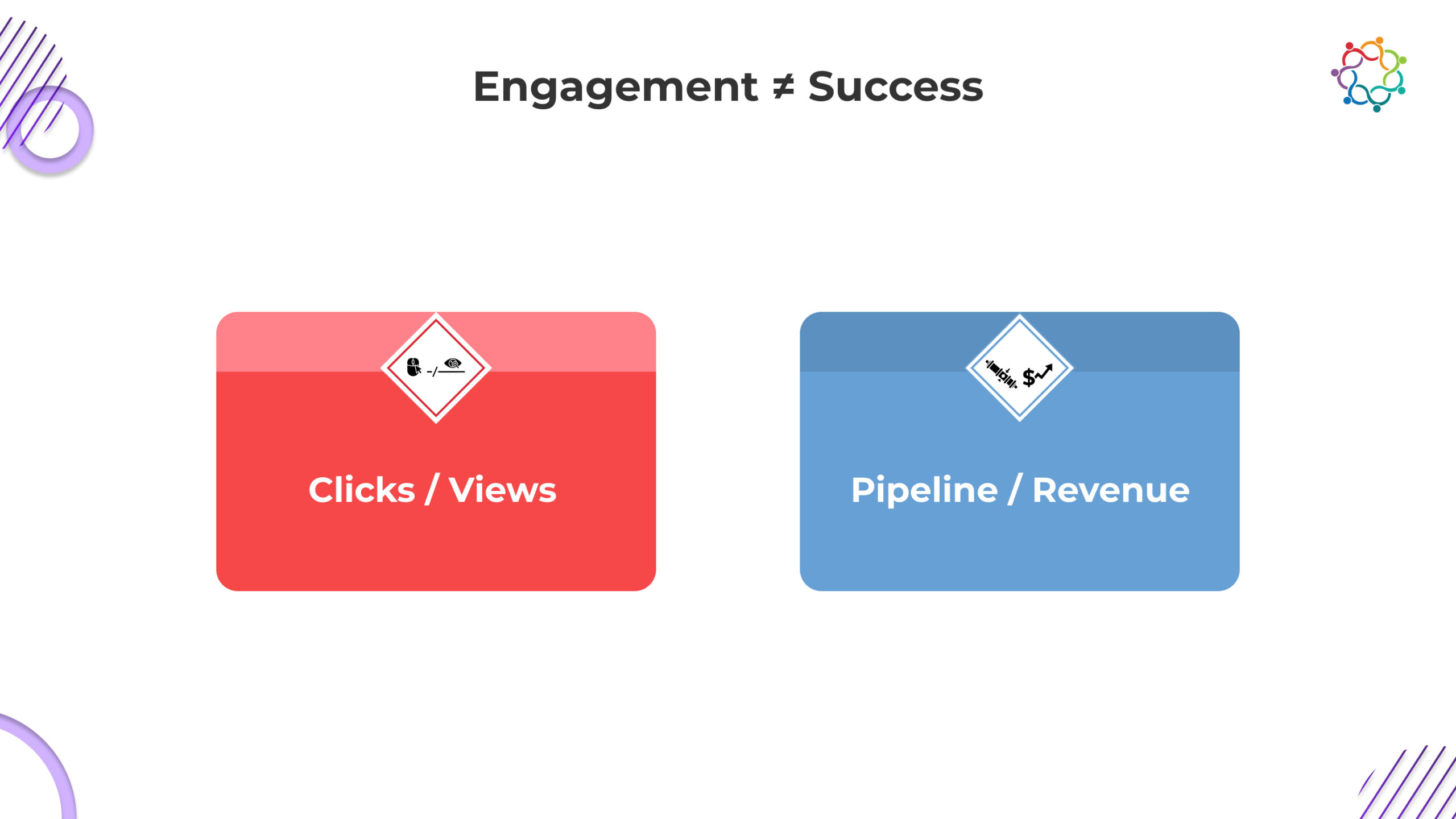
For years, B2B event success has been reported through clicks, views, registrations, and attendance. These metrics are easy to capture and easy to overvalue.
But most revenue teams already know the uncomfortable truth: only a small fraction of event-generated leads ever convert into pipeline, and an even smaller subset results in closed revenue. High engagement does not automatically translate into business impact.
This gap has forced a redefinition of success.
In complex B2B buying environments, especially in India, where enterprise deals involve six or more stakeholders and long evaluation cycles, events are no longer judged by participation. They are judged by influence: did the event move accounts forward, accelerate evaluation, or increase conversion probability?
As CRM adoption and data maturity increase, leadership expectations have changed. Business leaders want intelligence, not activity reports. They want to see how events contributed to pipeline progression, deal velocity, and revenue outcomes, not just how many people showed up.
This shift marks a broader transition in marketing accountability. The future of B2B events belongs to teams that measure conversion impact, not attendance volume.
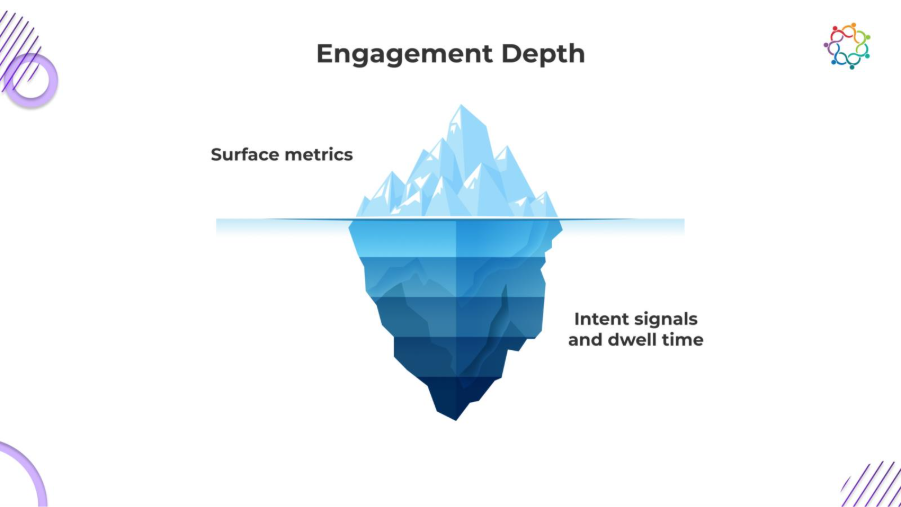
At B2B events, not all engagement signals carry equal weight.
A registration confirms intent to attend. A click confirms curiosity. Neither confirms buying interest. What separates high-performing event programs from noise is the ability to measure engagement depth, how much attention, intent, and evaluation effort an attendee is actually investing.
Engagement depth answers three critical questions:
Session dwell time is one of the clearest indicators of relevance. Attendees who stay through an entire session, participate in Q&A, or interact with live elements are signalling alignment with the topic. Early exits and shallow participation often indicate misaligned expectations or low perceived value.
Intent signals add another layer of clarity. Actions such as:
These behaviours suggest movement from awareness toward evaluation.
This distinction is especially important in the Indian B2B context, where buyers rarely engage sales teams immediately. Evaluation happens quietly, through research and internal discussion. Events that capture and interpret these micro-actions surface early signals of account-level interest long before a formal sales touchpoint appears.
Content preferences deepen this insight further. Repeated engagement with specific formats such as technical deep dives, case studies, compliance discussions, or implementation sessions reveals where buying intent is forming versus where interest remains exploratory.
Taken together, engagement depth reframes success:
Not how many attended but who paid attention, why, and what they did next.
This shift enables marketing teams to prioritise follow-ups, refine content strategy, and align events more closely with revenue outcomes rather than awareness alone.
The mid-funnel is where events generate their real commercial value and where traditional reporting falls short.
Between initial interest and direct sales engagement lies a critical evaluation phase. Buyers compare options, involve additional stakeholders, and assess fit. Most event reports miss this entirely because it does not produce immediate leads or form fills.
Smart event analytics make this phase visible.
Mid-funnel influence is revealed through behaviours such as:
Interest in demos is a strong signal of progression. Attendees exploring solution walkthroughs or feature-specific content are no longer learning broadly, they are assessing fit.
Meeting requests provide even stronger evidence. When multiple stakeholders from the same organisation request discussions, it indicates collective evaluation rather than individual curiosity. This signal is especially important in consensus-driven buying environments like India, where decisions are validated across IT, finance, operations, and leadership.
Content revisits are another reliable indicator. Returning to recorded sessions, technical documentation, or case studies suggests internal sharing and deeper consideration, often a precursor to vendor shortlisting.
When these behaviours are mapped to CRM stages, event-to-funnel alignment becomes clear. Teams can see:
This visibility transforms events from isolated marketing activities into measurable contributors to pipeline development, without relying on last-touch attribution or surface-level metrics.
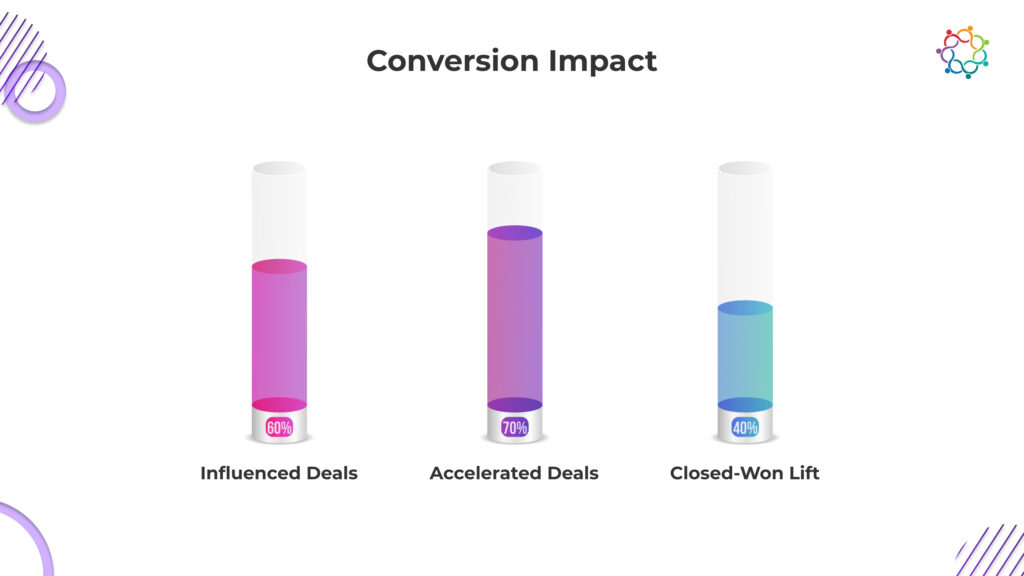
Ultimately, B2B event success is measured by what changed after the event, not what happened during it.
Leadership teams want to understand whether events influenced deal progression, accelerated buying cycles, or increased the likelihood of conversion. This requires moving beyond engagement metrics and into outcome-based measurement.
Conversion impact becomes visible through signals such as:
By comparing accounts that participated in high-intent event interactions with those that did not, teams can identify whether events shortened evaluation cycles or helped unlock stalled deals.
Smart attribution models are critical here. Instead of crediting events only as a “last touch,” multi-touch attribution connects specific event interactions, sessions attended, demos explored, meetings held to downstream revenue outcomes. This shows whether events played a supporting, accelerating, or decisive role in conversion.
When measured this way, events stop being treated as discretionary marketing activity. They become additive conversion drivers that revenue leaders can confidently factor into budget planning and growth strategy.
Event data loses value when it stays isolated from revenue systems.
Samaaro is built to connect engagement signals across the entire B2B funnel, linking what happened at the event to what changed in the pipeline.
Instead of treating events as standalone moments, Samaaro structures them as part of a continuous, measurable revenue journey.
How Samaaro enables end-to-end funnel visibility:
By creating continuity between marketing engagement and revenue outcomes, Samaaro helps teams treat events as a shared growth engine rather than an isolated marketing channel.
Modern B2B events are no longer judged by attendance or activity volume. They are evaluated by influence.
When engagement is measured for depth, intent, and conversion impact, events stop being isolated moments and start functioning as repeatable growth systems. Leadership gains clarity on which interactions matter, which audiences are progressing, and where to invest next.
Smart data shifts events from awareness tools to revenue contributors. Measured this way, events earn their place in the growth strategy, not as costs to justify, but as engines that leadership can scale with confidence.