Samaaro + Your CRM: Zero Integration Fee for Annual Sign-Ups Until 30 June, 2025
- 00Days
- 00Hrs
- 00Min

Bottom Line:
Field marketing events fail when influence is not translated into measurable pipeline motion. If the revenue impact cannot be traced, leadership will treat the program as optional.
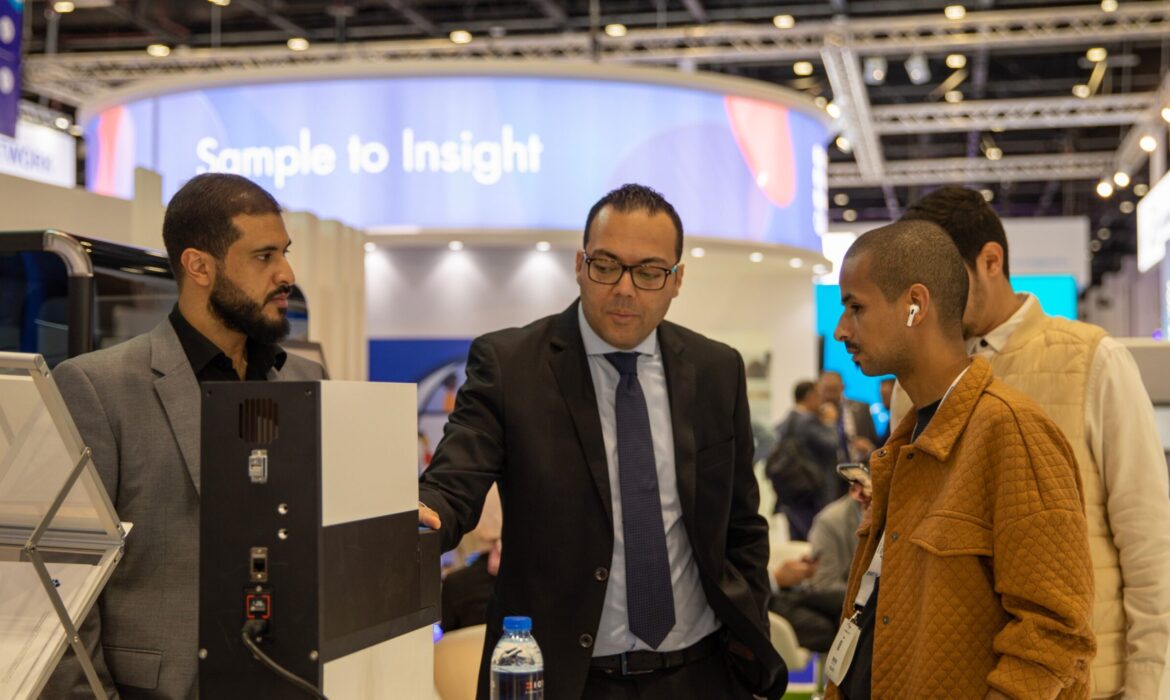
Field teams execute flawlessly. Regional activations, roadshows, and local programs run on time, booths engage, and attendance targets are met. Yet, when leadership asks about ROI, conversations become defensive. The problem is not execution. It is observability. Field events generate influence through conversations, context, and behavioral signals that rarely survive the journey from the floor to CRM systems.
By the time pipeline reviews happen, this influence is diluted, timing gaps obscure relevance, and attribution appears weak. Leadership perceives value as optional because traditional dashboards and reporting systems fail to capture these subtle signals.
Understanding this distinction is critical. Great execution does not guarantee visible ROI. What matters is ensuring that field marketing event impact is measurable, traceable, and aligned with revenue motion. Without that, even the most professionally executed programs are constantly questioned.
This blog covers why measurement, not execution, determines credibility, how signal loss occurs, and what metrics high-performing teams track to connect field marketing events to revenue outcomes.
A natural assumption in field marketing is that better execution leads to better ROI. Intuitively, a polished booth, engaging presentations, and flawless logistics should boost results. In reality, execution quality primarily enhances experience, not revenue attribution. Leadership skepticism often persists even after well-reviewed events. Great events make attendees happy, but they do not inherently create observable pipeline movement.
Consider these factors:
High execution standards are essential, but they cannot compensate for weak measurement systems. Field marketing managers must recognize that even flawless delivery cannot “force” revenue attribution. The challenge is not what the teams do at the event; it is what happens after.
Strategic Insight: You cannot execute your way out of a measurement problem. Leadership credibility depends on capturing signals, aligning them with pipeline progression, and demonstrating influence over revenue motions.
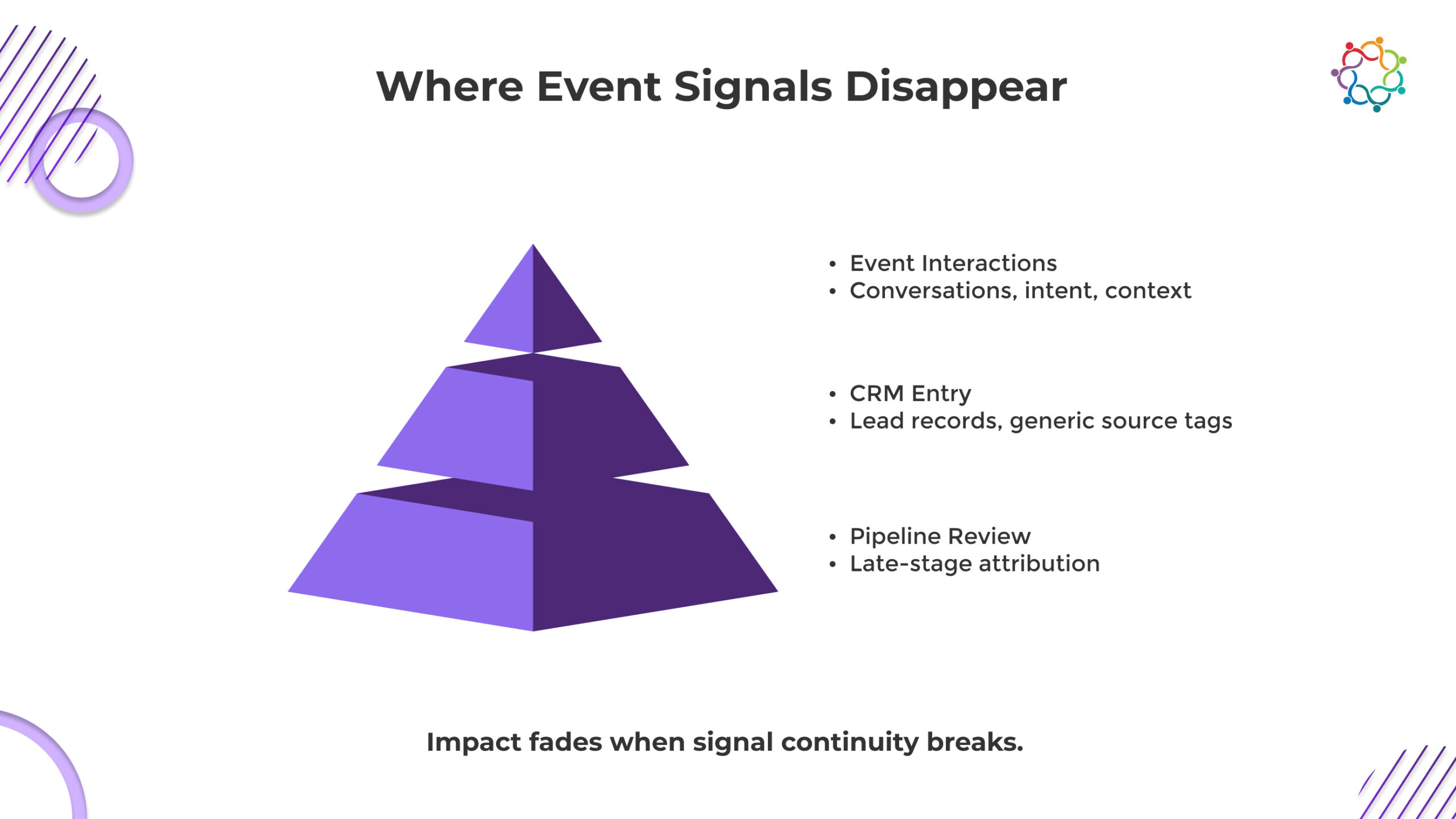
You’ve executed flawlessly, yet leadership still questions ROI. Why? Because the real impact of field events rarely travels intact from the event floor to the pipeline. Conversations, intent, and engagement, what actually drives deals, get flattened into generic leads or lost entirely.
Timing gaps, attribution delays, and signal dilution make your influence invisible. The more impressive the event, the more it risks appearing irrelevant if measurement systems cannot capture what truly matters.
Every conversation at an activation, every demo, and every engagement produces behavioral signals: intent, interest, context, and problem recognition. These signals indicate future opportunities but rarely manifest as immediately closed deals. Event influence is diffused across time and channels, creating an attribution challenge.
Without capturing these signals systematically, field events appear as isolated touchpoints with no measurable outcomes. Execution quality remains high, but influence remains invisible.
Once leads are entered into CRM systems, context is often lost. Notes become generic, urgency fades, and the richness of field interactions flattens into a numeric entry. Behavioral cues such as challenges expressed, urgency detected, and contextual priorities are not systematically tracked.
This disconnect explains why pipeline-focused reviews underestimate the true contribution of field marketing.
Revenue attribution often occurs at the point of deal closure or milestone progression, long after field influence occurred. Field events rarely appear directly responsible for pipeline creation in traditional attribution models. When influence is indirect or catalytic, traditional dashboards fail to show contribution.
Why it matters for ROI credibility:
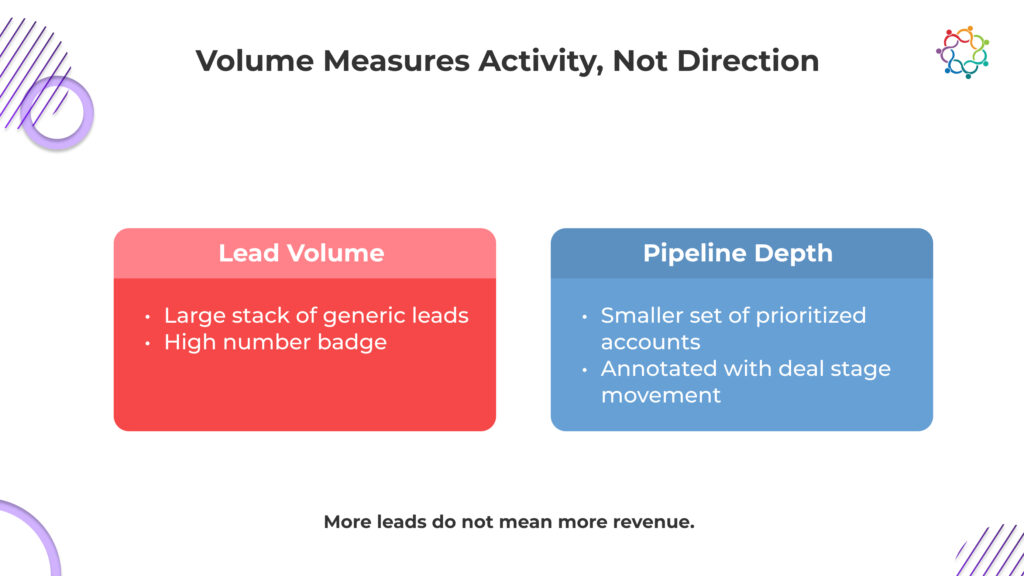
The most common metric for field marketing success, lead volume, frequently misrepresents value. While volume demonstrates reach, it says little about relevance or pipeline impact. High volumes may overwhelm sales with low-priority leads, eroding trust and visibility into the event’s real influence.
Volume-centric measurement inadvertently signals to leadership that field events are “tick-box” activities rather than revenue enablers. When volume dominates reporting, the subtle but critical influence of field events on deal acceleration and reactivation is overlooked.
Without observing the qualitative contribution of events to the buying journey, measurement collapses, and credibility is lost upstream.
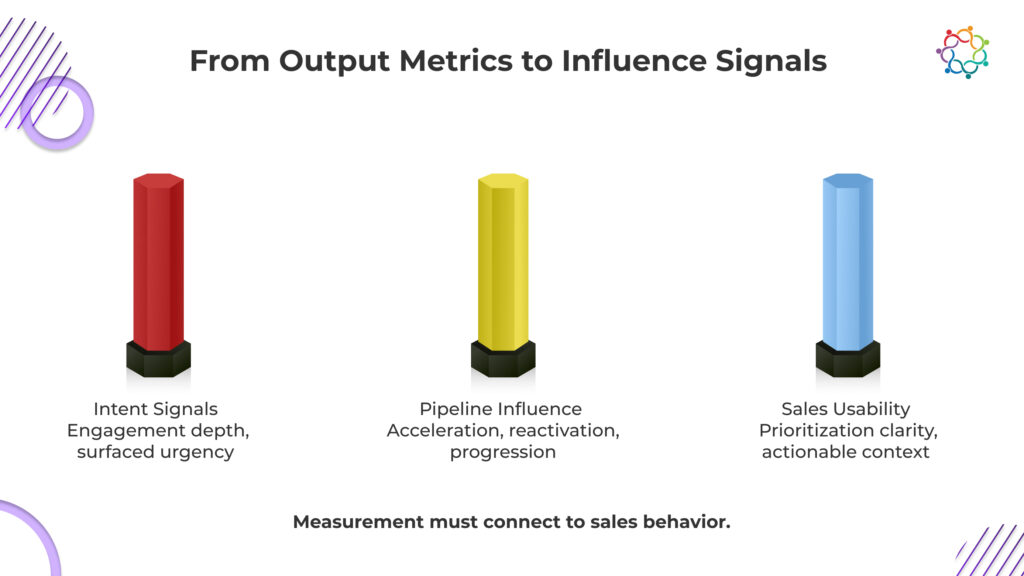
Many teams unintentionally weaken their credibility by reporting what is easiest to count rather than what influences revenue motion. Execution remains visible. Influence does not. The teams that earn leadership trust measure the signals that survive beyond the event and connect to pipeline progression.
It is not how many people scanned a badge or attended a session. True intent signals reveal who engaged deeply, what problems surfaced, and where urgency existed. If you cannot show that meaningful engagement occurred, your events are invisible to leadership. Generic lead counts hide the reality: engagement does not automatically translate into deal progression.
Field events do not close deals, yet most reports treat them like they should. High-performing teams measure acceleration, reactivation, and progression of opportunities influenced by the event. If you cannot show your programs nudging deals forward, you are selling yourself short. Leadership only cares about influence, not execution perfection. Your events are catalysts, not closers. Measurement should reflect that catalytic role.
If your outputs are not actionable for sales, your events are noise. True measurement asks whether post-event insights change prioritization, follow-up, or strategy. If sales ignores the intelligence you generate, you have failed before you even start reporting. Your influence exists only if it translates into behavior; otherwise, it disappears.
When reporting focuses on activity instead of influence, field marketing events will continue to be undervalued.
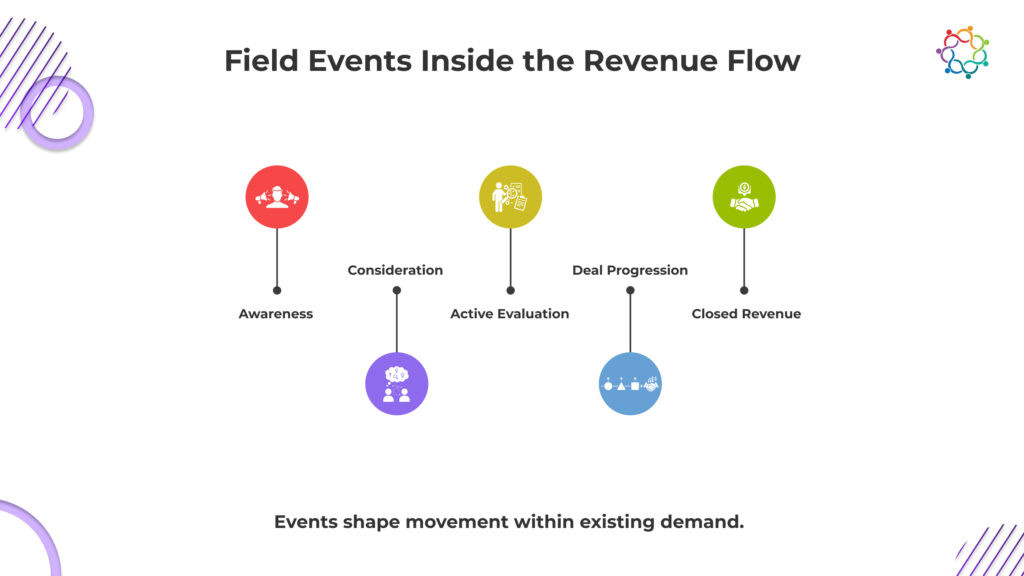
Most field events operate in a vacuum. They are planned, executed, and reported as if deals start at the booth. The reality is simple. Field events rarely create demand from zero. Events intersect with active buying journeys, influencing decisions that are already in motion.
If measurement ignores this, every dashboard will make your programs look optional.
Leadership sees cost without connection, activity without outcome, and influence without proof. The uncomfortable truth is that your events are only as credible as the signals they leave in the revenue flow.
Measurement must move beyond reach and volume to include relevance, acceleration, and actionable influence. Until field events are tied directly to where deals progress and decisions are made, you will keep losing the ROI argument, no matter how polished the execution feels.
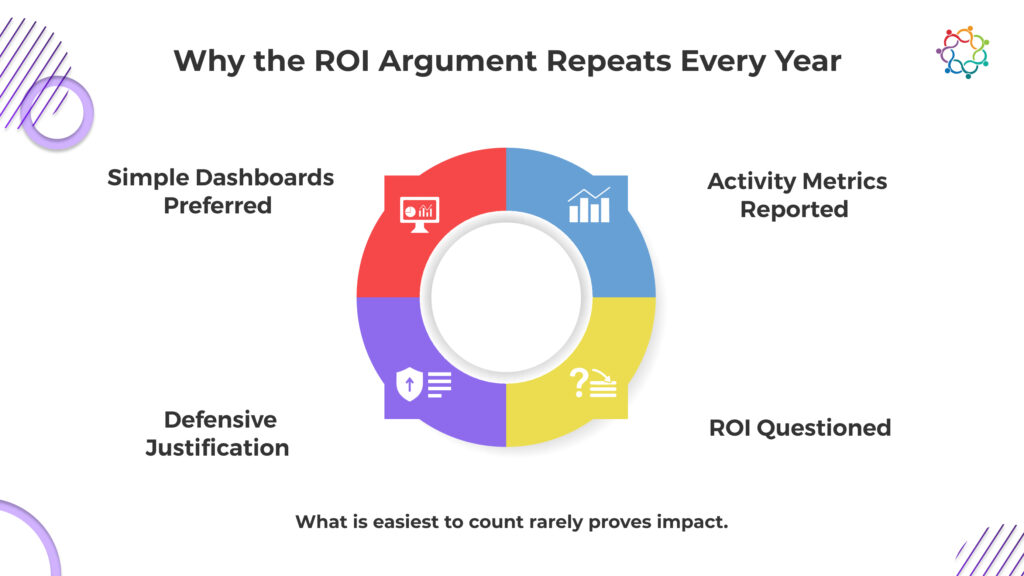
Field marketing teams execute flawlessly, yet their impact is constantly questioned. The reason is systemic. The structures, incentives, and reporting habits in most organizations actively work against capturing the true influence of field events. You are delivering value that leadership cannot see, and the systems are designed to make that invisible.
Reality check: Systems and incentives often prioritize what is easiest to measure, rather than what truly drives revenue. The field marketing team’s credibility suffers not due to poor execution, but due to misaligned metrics.
Execution alone will never resolve ROI questions. Your field events generate real influence, but if the signals do not survive the journey to sales and CRM systems, leadership will always see them as optional.
Volume, attendance, and flawless delivery cannot replace observable impact.
The teams that win the credibility battle track intent, behavioral signals, and pipeline influence, not just activity. Field marketing events become strategic revenue inputs only when measurement captures what truly matters.
Make field marketing influence visible inside the revenue motion. When impact is observable, credibility follows.