Samaaro + Your CRM: Zero Integration Fee for Annual Sign-Ups Until 30 June, 2025
- 00Days
- 00Hrs
- 00Min
Here’s the truth: LinkedIn users are there to work. They’re not scrolling mindlessly like on Instagram or TikTok.
When someone opens LinkedIn, they want to learn something useful for their job. They want to network with people in their industry. They want to find opportunities.
That’s why LinkedIn beats every other platform for B2B events.
LinkedIn users? They’re 6x more likely to engage with work-related content than anyone on Facebook or Twitter. That’s not a typo. Six times.
What makes this different:
You can target exactly who you want. CMOs? Done. Operations heads? Done. People in specific industries? Done.
People trust LinkedIn. They’re there with their professional brain turned on.
Your posts don’t just disappear. When someone shares your event, their entire network sees it. One person’s share becomes a network effect.
This guide walks you through the whole thing. How to set up your profile. What kind of posts actually work. How to use LinkedIn’s paid tools. How to measure what’s working.
Whether you’re running a huge conference, a small webinar, or a roundtable for 20 people, LinkedIn can work for you.
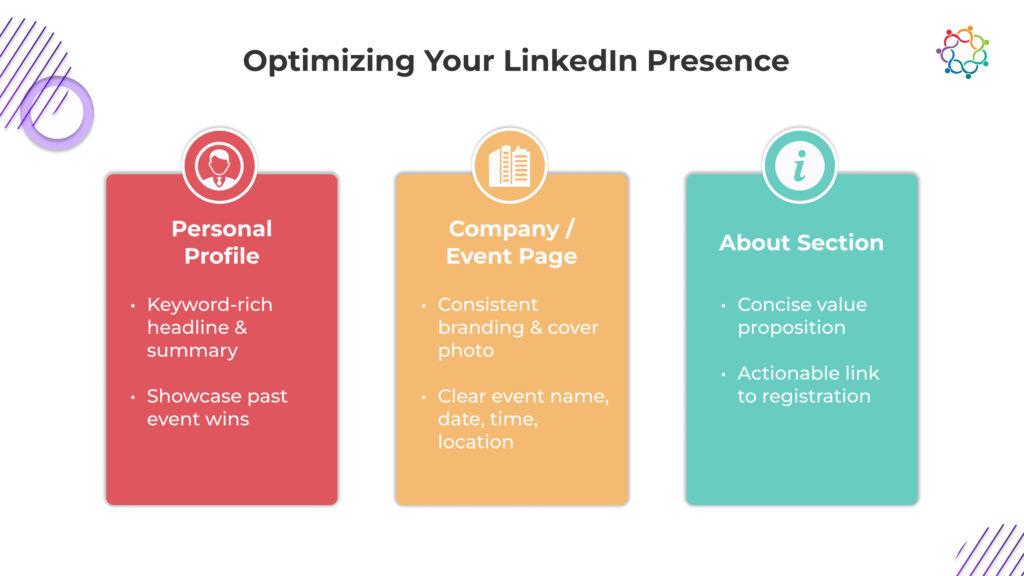
Before you ask anyone to come to your event, your LinkedIn profile and company page need to look professional.
First impressions matter. A lot.
Your Personal Profile Matters
If you’re the person organizing the event, or speaking at it, your personal profile is your credibility.
Here’s what to do:
Your Company Page or Event Page
Create a clear home for your event.
Use consistent colors and logos. Make it recognizable.
Put the event name, date, time, and location somewhere obvious. Don’t make people hunt for it.
Use a good cover image. Something that captures attention in 2 seconds.
Write an “About” section that explains what the event is, who it’s for, and why they should care. Keep it short.
Pin your registration link. Make it the first thing people see.
That’s it. You’re ready to start promoting.
LinkedIn’s algorithm rewards posts that spark conversation.
Your goal: show up regularly with stuff people actually want to read.
Building Hype Before the Event (Teasers)
Start early. Don’t wait until a week before.
Posts That Explain Why They Should Come (Information)
As the event gets closer, people need details.
Visual Content (Things People Actually Stop Scrolling For)
Every Post Needs a Clear Ask
Don’t just post for the sake of posting.
Every post should ask for something.
“Register here.”
“Save your seat.”
“Sign up link in the comments.”
Use language that sounds like a real person. Not corporate. Real.
You’ve posted content. Now amplify it.
LinkedIn Events
Create an official LinkedIn Event. People take it more seriously when it’s on the platform itself.
LinkedIn Articles
Write longer posts. 500-1000 words.
Tie them to your event’s topic. If your event is about B2B growth, write about what’s changing in B2B growth right now.
Spotlight your speakers. Share insights they’ll cover.
Copy stuff from your website or existing blog posts. Just reformat it for LinkedIn.
LinkedIn Groups
Find groups where your ideal attendees hang out.
Join. Participate. Build credibility. Then promote.
Don’t be the person who joins and immediately sells. That gets you ignored.
Genuinely help people. Answer questions. Then, when you post about your event, people actually listen.
Hashtags
LinkedIn Ads

Direct Messages (The Underrated Channel)
Respond to Comments
Run Polls and Questions
Go Live
Share What Attendees Post
This makes attendees feel seen. They become promoters.

Numbers tell you what’s working.
Track these:
Want to see how this would work for you?
30 minutes on how teams turn LinkedIn promotion into measurable event pipeline.
Book a tailored walkthroughLinkedIn work doesn’t stop when the event starts.
During the Event
Go live on LinkedIn. Show attendees hanging out. Quote speakers. Film the energy.
Keep posting. Real-time updates. Make people who aren’t there wish they were.
Answer comments and messages from people watching.
After the Event
Post thank you messages. Tag speakers and sponsors.
Share testimonials from people who came.
Post highlights reels. The best moments.
Follow up with attendees who didn’t make it. Offer recordings or resources.
This keeps momentum going for the next event.
LinkedIn isn’t just another social media site; it’s a professional stage where your event can stand out, connect with the right people, and get real business results. This platform gives you all the tools you need to promote your event effectively, from making your profile better and writing interesting content to using tools like LinkedIn Events, Live, and Ads.
Building a community around your event and keeping track of the right metrics will help you make LinkedIn a great marketing tool that you can use over and over again.
At Samaaro, we know intelligent promotion maximizes event ROI. Our platform is designed to integrate with your marketing activities to create leads, collect feedback, and monitor effectiveness in real time. Samaaro helps you measure performance from promotion to post-event for product showcases and huge summits.
Q: Which content actually works best on LinkedIn for event promotion?
A: Authentic stuff. Videos of speakers or behind-the-scenes content. Q&As. Polls asking what people want to learn. Testimonials from past events. Honest posts from real people beat polished corporate posts every time. Start 8-10 weeks before your event for a conference, 4-6 weeks for a webinar.
Q: How do I target the right people on LinkedIn?
A: Use LinkedIn’s targeting tools. Filter by job title, industry, company size, seniority level. If you want CMOs, search “Chief Marketing Officer.” If you want startups, filter by company size. LinkedIn lets you get really specific. For paid ads, you can even upload a list of people you want to reach.
Q: How do I get people to actually register, not just like the post?
A: Make registration stupid easy. Link directly from the post. Ask clearly: “Register here.” Create urgency when you can: “Spots filling up.” “Early bird ends Friday.” And here’s the thing most people miss: follow up with people who view your event page but don’t register. A personal message often closes the deal.
Q: Should I ask my team to share the event?
A: Yes. One company post reaches maybe 5,000 people. But if 10 employees each share it, you reach 50,000+. Give your team pre-written copy they can personalize. Ask speakers and sponsors to share too. This multiplies your reach for free.
Q: What’s the best time to post on LinkedIn?
A: Tuesday through Thursday, mid-morning. 8-10 AM is solid. People are at work, scrolling. Avoid Mondays (too hectic) and Fridays (people are checked out). But honestly, consistency matters more than perfect timing.
Q: How do I know if LinkedIn promotion is actually working?
A: Track registrations from LinkedIn. Use UTM parameters or Google Analytics to see traffic. But the real metric is: how many people who registered on LinkedIn actually showed up? And of those, how many became customers? Those numbers matter way more than how many likes you got.
Q: Can I really get enough registrations from LinkedIn for a B2B event?
A: Yes. For B2B events, LinkedIn often drives 40-60% of registrations. It’s where decision-makers hang out. They’re there specifically to learn about their industry and find solutions. If you’re marketing a B2B event and not using LinkedIn heavily, you’re leaving registrations on the table.
Q: What should I put on my event page to convince people to register?
A: Be clear: What’s the event? When? Where? Who’s speaking? What will people learn? What problems does it solve? Make it benefit-focused, not just feature-focused. Instead of “3-day conference,” say “Walk away with a 5-step go-to-market playbook.” End with a clear registration link. Don’t make people hunt.