Samaaro + Your CRM: Zero Integration Fee for Annual Sign-Ups Until 30 June, 2025
- 00Days
- 00Hrs
- 00Min

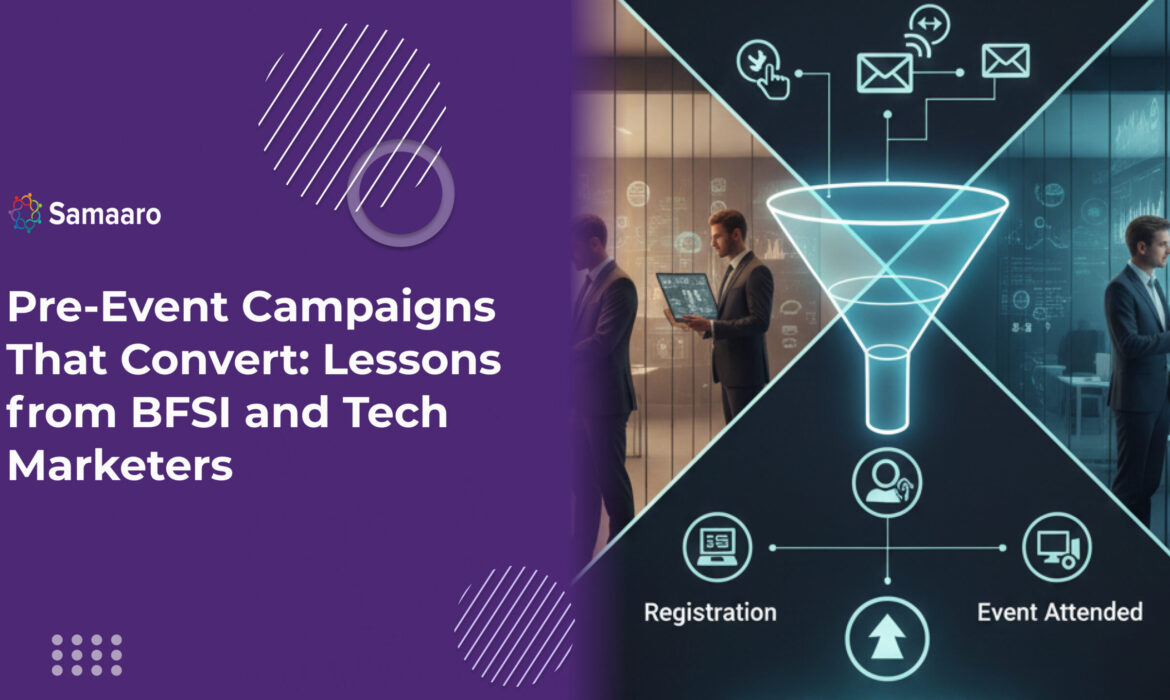
While marketers have traditionally looked at indicators such as the amount of RSVPs received or the number of people who attended a sponsored event to assess the success of an event, the truth is that a person’s attendance at an event does not necessarily mean that their attendance created positive business impacts.
It is important to focus on how good of a job the event does in moving a person from the moment that they express an interest in an event to when they become a customer or an ongoing loyal customer.
In today’s world, an event must be designed as a complete and continuous journey down the sales funnel, rather than simply a one-time activity. Once the RSVP-to-retention journey is developed based on behaviour data and customer segmentation, events are no longer viewed as just a cost centre; rather, they can be treated as a reliable engine of conversion.
This shift reflects a broader move toward treating events as continuous lifecycle programs rather than isolated campaigns, where every touchpoint compounds learning and performance over time.
This fundamental change is how innovative and forward-thinking brands will continue to run and evaluate their B2B events in the future.
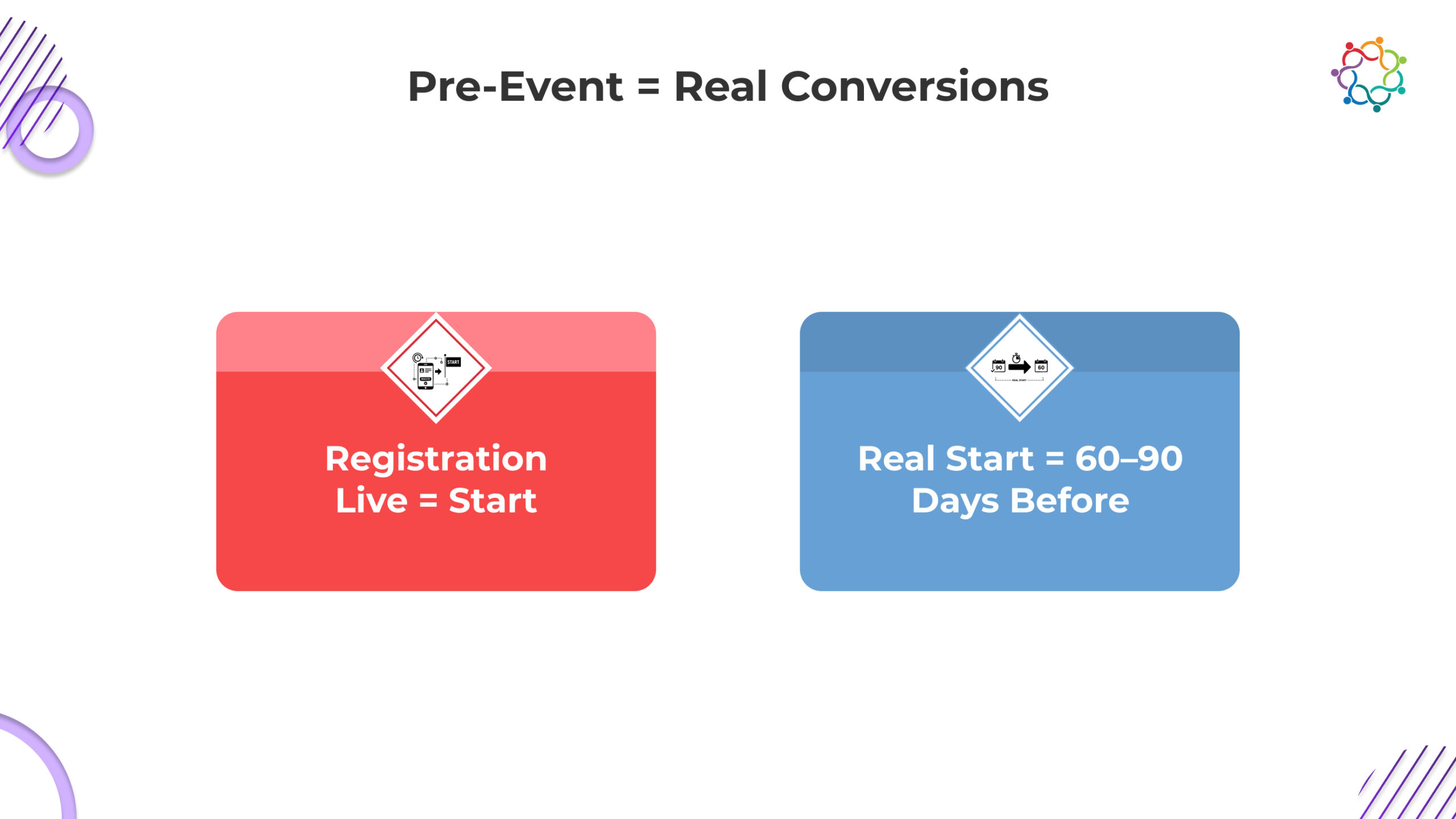
Though an RSVP typically reflects a simple yes/no response, in actuality, it is the first indicator of one’s intent to attend the event and is much more than this. Early RSVP’s are typically viewed as having higher levels of motivation and commitment to the event; for example, individuals who complete the form completely and engage with pre-event content demonstrate higher levels of motivation than last-minute RSVPs, who will require additional nurturing before the event.
Both Indian and international data related to events demonstrates that RSVP behaviour indicates an attendee’s likelihood of attending an event, as well as their potential to convert from attendee to buyer/customer. Knowing how to manage the nuances of RSVP behaviour will help teams activate the right segments of their audience before the event occurs.
Segmentation during the RSVP stage is the foundation of the entire lifecycle of events. Marketers can segment registrants by:
a. Persona/job role,
b. Industry/business size,
c. Product interest,
d. Past event engagement, and
e. Buying cycle stage.
When clusters are established, pre-event communication becomes relevant to the registrants. This includes personalised reminders, curated agendas, and registrants having a sense of expectation that an event has value before they arrive.
Strong pre-event signals help teams predict demand and prioritise effort. Key metrics include:
These insights turn RSVP lists into lead-intent maps.
The total number of attendees at your event does not provide an accurate picture of event success. To determine the success of your event and the conversion rates from your event, you need to determine the level of engagement for each attendee, meaning how engaged were the attendees when they attended your event. Checking in at your booth does not give you the full picture of how much interest the attendee had in your company and products.
In addition to knowing that the attendee was physically present at your booth, you need to collect additional data from the attendee during the event that will give you a more comprehensive picture of your attendee’s potential value to your company.
To gain a more complete insight into the value of each attendee to your business, the following things must be tracked: how long the attendee remained at your booth; the level of interaction the attendee had with your company; how many workshops or presentations were attended by the attendee; and how many content pieces were downloaded by the attendee from your booth.
There is a strong correlation between levels of deep engagement at an event and the level of activity in your post-event pipeline. Attendees who spend a significant amount of time in high-value zones will often convert into customers faster than attendees who do not spend time in these areas.
During an event, attendee behaviour becomes a treasure trove of buying signals. Some of the strongest indicators include:
These actions often reflect mid-funnel readiness.
Guided agendas, AI-powered recommendations, and personalized nudges all help to shape the experience of today’s events. When participants can clearly see what sessions and booths will bring them the greatest value, they are more likely to make efficient use of their time, leading to higher conversion rates.
Utilizing personalized push notifications, session reminders, and contextual recommendations ensures that participants have access to all of the key moments that matter.
Key onsite metrics include:
Together, these form the backbone of conversion-focused event intelligence.
Many organisations invest heavily in event execution but fall short when it matters most, immediately after the event. The common issues include:
When follow-up is slow or irrelevant, high-intent leads grow cold. Research shows that conversion opportunities drop sharply after 72 hours.
A high-performing post-event system includes:
These journeys turn engagement signals into meaningful actions.
Critical indicators at this stage include:
These metrics confirm whether the event successfully moved people down the funnel.
Events shouldn’t be treated as isolated campaigns. Guests who convert or show strong interest should be nurtured through:
Long-term engagement builds trust and increases customer lifetime value.
Retention indicators include:
These metrics reflect whether the event helped shape a long-term relationship.
When brands continuously learn from attendee behaviour, each event becomes smarter than the last. This creates a self-reinforcing loop where every stage- RSVP, attendance, engagement, follow-up, strengthens the next.
Most event platforms capture activity. Samaaro is built to connect activity to outcomes across the entire RSVP-to-retention lifecycle.
Instead of treating registrations, attendance, engagement, and follow-up as separate phases, Samaaro unifies them into a single behavioural journey for every attendee.
With Samaaro, teams can:
By operationalising the full event lifecycle, Samaaro helps brands design events as predictable conversion engines, not one-off experiences that reset after every show.
The industry is now focusing less on tracking people through attendance-based KPIs and more on producing results using outcome/growth-oriented strategies. Attendee experiences that direct them from RSVP through the conversion process and then into retention are significantly more productive than the traditional approach of providing a generic engagement strategy for all attendees.
By utilizing a lifecycle model for their events, companies can utilize events as predictable sources of revenue. On the other hand, companies that do not utilize the lifecycle model will continue to experience low ROI and poor sales funnel activity due to the lack of predictability associated with their marketing efforts.