Samaaro + Your CRM: Zero Integration Fee for Annual Sign-Ups Until 30 June, 2025
- 00Days
- 00Hrs
- 00Min


India’s corporate event market is entering a decisive shift; not driven by event scale, but by rising customer acquisition costs, stronger demands for attribution, and the growing expectation that every marketing activity must prove business impact. As noted in the Meta (India) Performance Report 2024, customer acquisition costs across digital channels are climbing steadily, forcing leadership teams to scrutinize how events contribute to pipeline and revenue. As a result, corporate events are no longer viewed merely as experiential touchpoints, but as high-intent data engines that must deliver measurable outcomes.
For years, corporate events in India have been planned and executed through logistics-heavy models, large teams coordinating vendors, registrations, schedules, and on-ground operations manually. This approach worked when events were smaller, expectations were limited, and success was measured largely by execution rather than outcomes.
That model is now breaking down.
As Indian enterprises scale their event programs – across cities, audiences, and business objectives – the complexity of managing events has increased sharply.
This pressure is especially visible across industries. BFSI organizations require verifiable attendance records and auditable participant journeys due to regulatory scrutiny. Manufacturing enterprises need error-free execution for large-scale compliance training and internal programs. IT and SaaS companies run multiple, parallel events across regions and customer segments, where manual coordination simply does not scale.
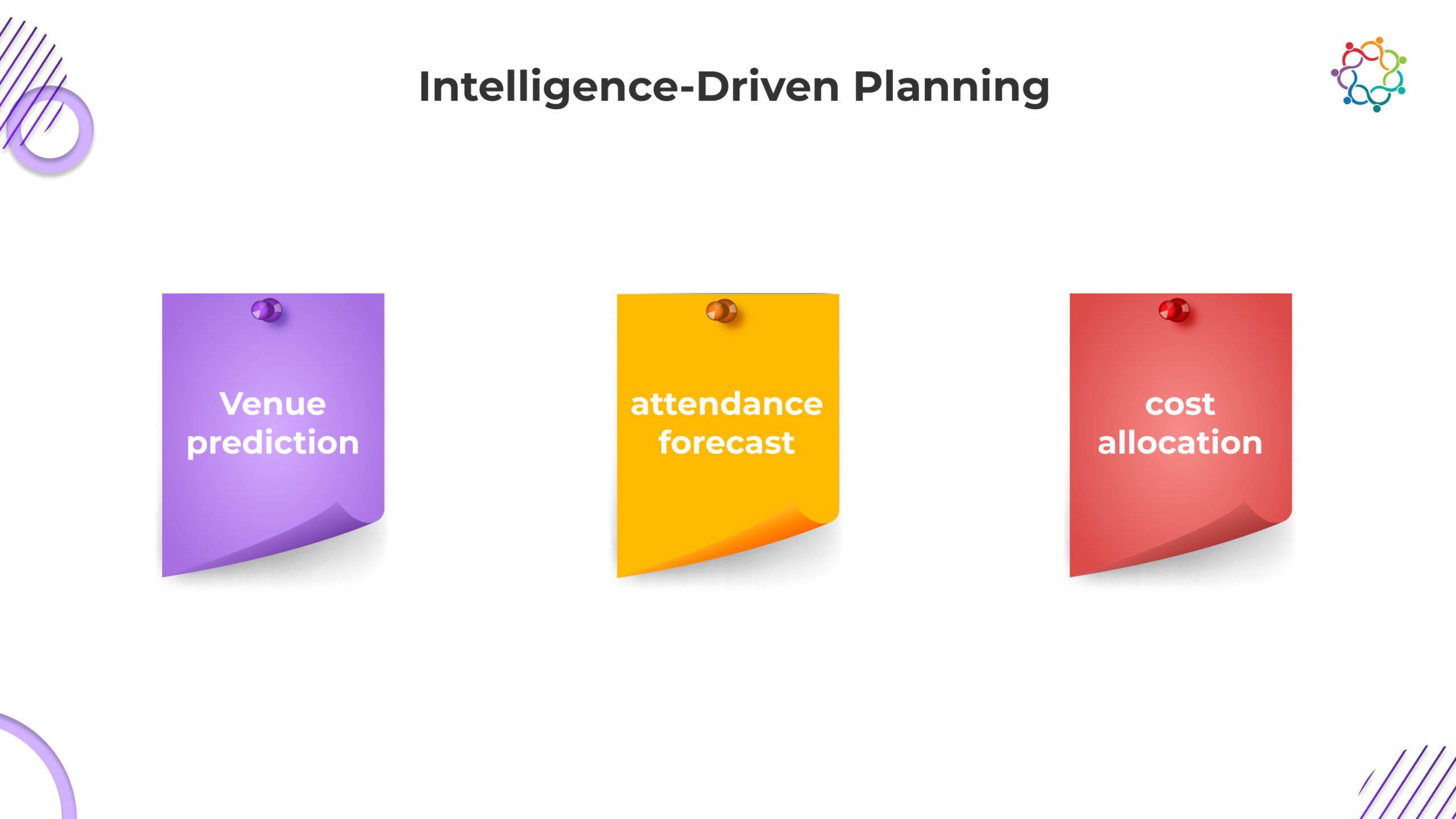
As a result, Indian enterprises are moving away from intuition-led planning toward intelligence-driven models. Instead of relying on gut instinct to estimate attendance, allocate budgets, or manage resources, organizations are adopting data-backed planning that uses historical attendance patterns, engagement signals, and predictive models to guide decisions before an event even begins.
This shift fundamentally changes how events are planned. Intelligence-driven planning reduces uncertainty, limits operational risk, and allows teams to focus less on coordination and more on delivering meaningful experiences. By 2026, this transition will define how mature Indian enterprises approach event strategy, moving from reactive logistics to proactive, data-led decision-making.
India’s corporate events operate in one of the most diverse audience environments globally. A single event may bring together participants across languages, regions, industries, and levels of digital maturity, making one-size-fits-all event journeys increasingly ineffective.
By 2026, personalization is no longer a competitive advantage but a baseline requirement. This shift is driven by India’s mobile-first digital behaviour and the dominance of regional-language consumption across the internet. According to the IAMAI–Kantar ICUBE 2024 report, 98% of Indian internet users consume content in regional languages, with over half of urban users preferring vernacular experiences.
For event teams, this changes how engagement must be designed. Vernacular-first registration flows, localized communication, and language-aware in-event content are now essential to reduce drop-offs and improve participation across fragmented audiences.
At the same time, enterprises face pressure to personalize experiences across roles and intent levels. BFSI events must serve senior decision-makers, agents, and compliance stakeholders differently within the same program. IT and SaaS companies run multi-city launches and customer events where relevance varies sharply by account, function, and maturity.
As Indian enterprises scale their event programs, personalization at scale becomes a structural necessity, not a design choice. The ability to adapt journeys by language, role, and intent will define how effectively events drive engagement and business outcomes in 2026.
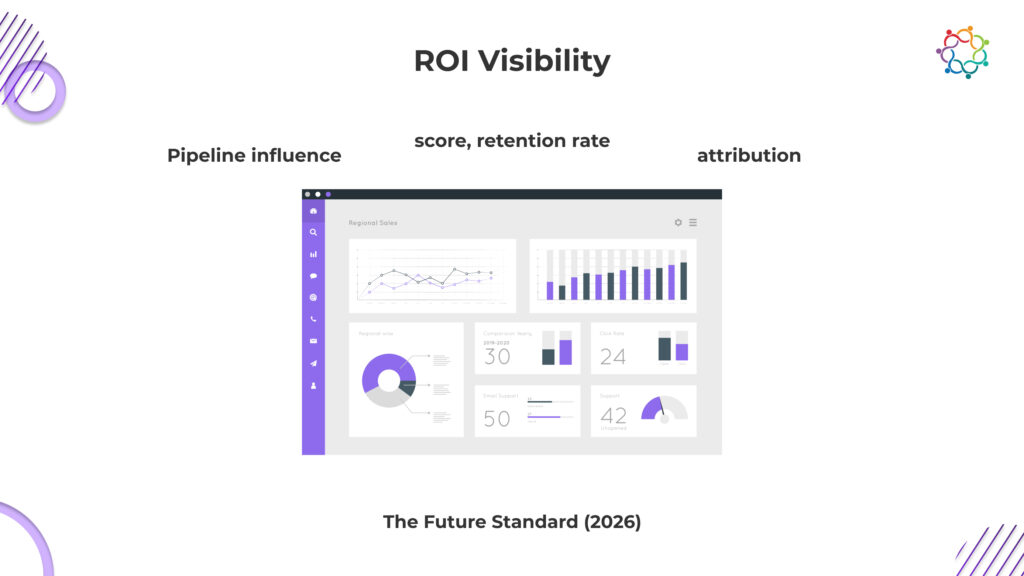
The corporate events sector in India has moved away from success measures based on traditional metrics toward an outcomes-driven model. Instead of evaluating events through superficial indicators such as registrations and footfall, organizations are increasingly focused on understanding the tangible business impact events create.
Organizations no longer measure event success by attendance numbers alone. While registrations indicate interest, they offer little insight into intent, influence, or commercial viability. As companies accelerate their sales cycles, corporate events are now expected to demonstrate how they contribute directly to revenue outcomes.
One of the most significant shifts in event evaluation is the mainstream adoption of pipeline attribution. Indian enterprises are increasingly measuring how events influence:
Rather than asking how many people attended, organizations are now evaluating how effectively events support pipeline growth and sales outcomes.
The quality of engagement has emerged as a stronger signal of intent than attendance alone. Metrics such as dwell time, session stickiness, booth interactions, demo participation, and repeat visits provide deeper insight into attendee interest. These signals allow event teams to identify high-value prospects and estimate the likelihood of post-event conversion with greater accuracy.
To support this shift, seamless integration with CRM platforms such as Salesforce, HubSpot, and Zoho has become non-negotiable. Without automated data flow from event systems into CRM pipelines, attribution breaks down and event influence becomes difficult to trace. Indian enterprises increasingly expect events to feed directly into the same intelligence layer that powers their sales and marketing engines.
Budget owners now demand defensible narratives backed by data rather than anecdotes. CFOs seek clarity on:
This level of scrutiny is pushing event teams to adopt deeper reporting frameworks that connect engagement data to business outcomes. As Indian enterprises continue their shift toward data-driven decision-making, events are evolving from brand-led initiatives into measurable growth levers.
ROI visibility is no longer a desirable outcome, it is a mandatory expectation. By 2026, organizations that ground their event strategies in attribution, behavioral intelligence, and financial accountability will be best positioned to succeed.
As corporate events evolve into measurable, data-driven growth channels, enterprises need more than tools to execute events, they need systems that connect planning, engagement, and outcomes into a single intelligence layer. Samaaro is built to support this shift by enabling enterprises to operate events with predictability, scale, and accountability.
Rather than being designed for a specific geography, Samaaro is built around modern enterprise event realities: multi-city programs, diverse audience segments, high volumes of attendee interactions, and the need for consistent execution across teams. Its mobile-first architecture and configurable workflows allow organizations to manage complex event operations without relying on manual coordination or fragmented systems.
What differentiates Samaaro is its intelligence layer. Predictive attendance models help teams plan capacity and resource allocation with greater accuracy. Engagement analytics surface high-intent signals, such as session participation, booth interactions, and repeat touchpoints, allowing teams to understand not just who attended, but who meaningfully engaged.
Crucially, Samaaro connects event engagement directly to business outcomes. With deep CRM integration, enterprises can track pipeline influence, lead progression, and revenue impact across individual events and entire event calendars. This enables organizations to evaluate events with the same rigor as other performance-driven marketing channels.
For enterprises running dozens of events across regions and functions each year, this unified intelligence becomes a strategic advantage. Instead of managing events as isolated executions, teams gain a consolidated view of performance, engagement quality, and ROI, turning events into a repeatable, insight-driven growth engine.
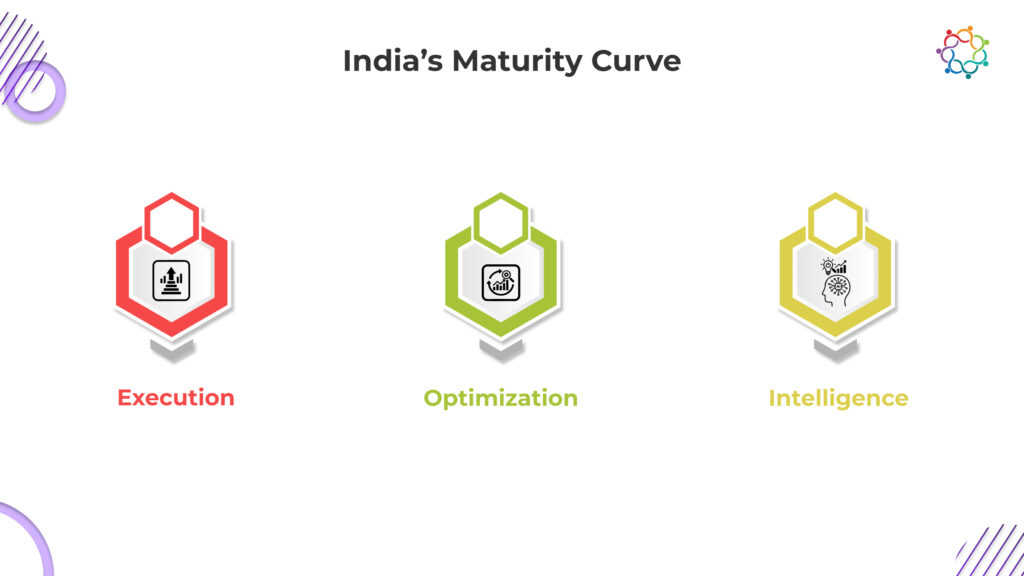
India’s event ecosystem is moving decisively from execution to intelligence. In this next phase of growth, enterprises that act fastest will gain a clear competitive advantage by treating events not as isolated activations, but as continuous sources of business data.
By 2026, success will depend on an organization’s ability to link engagement to revenue, personalize experiences at scale, and operationalize decisions through real-time intelligence rather than manual coordination. This shift demands three non-negotiables: a unified event data layer, deep CRM integration, and AI-driven personalization embedded across the event lifecycle.
These capabilities will clearly separate enterprises that merely run events from those that convert them into engines of insight, influence, and measurable business impact. In the year ahead, success won’t belong to the companies that host the most events, but to those that understand them best.