Samaaro + Your CRM: Zero Integration Fee for Annual Sign-Ups Until 30 June, 2025
- 00Days
- 00Hrs
- 00Min


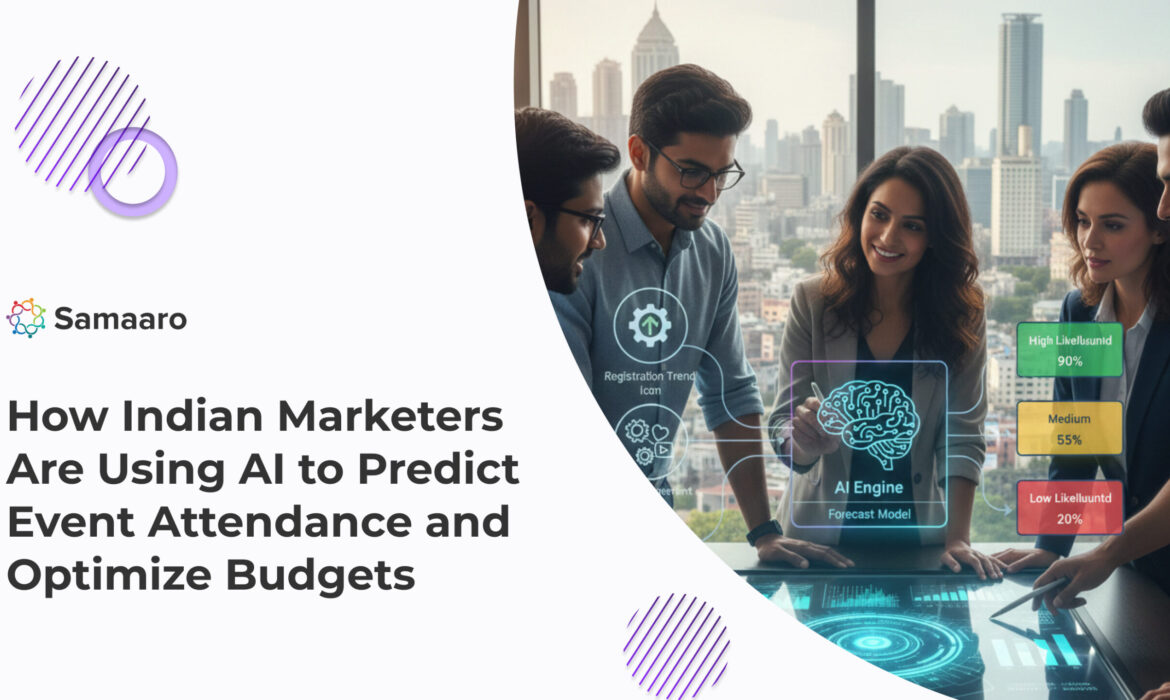
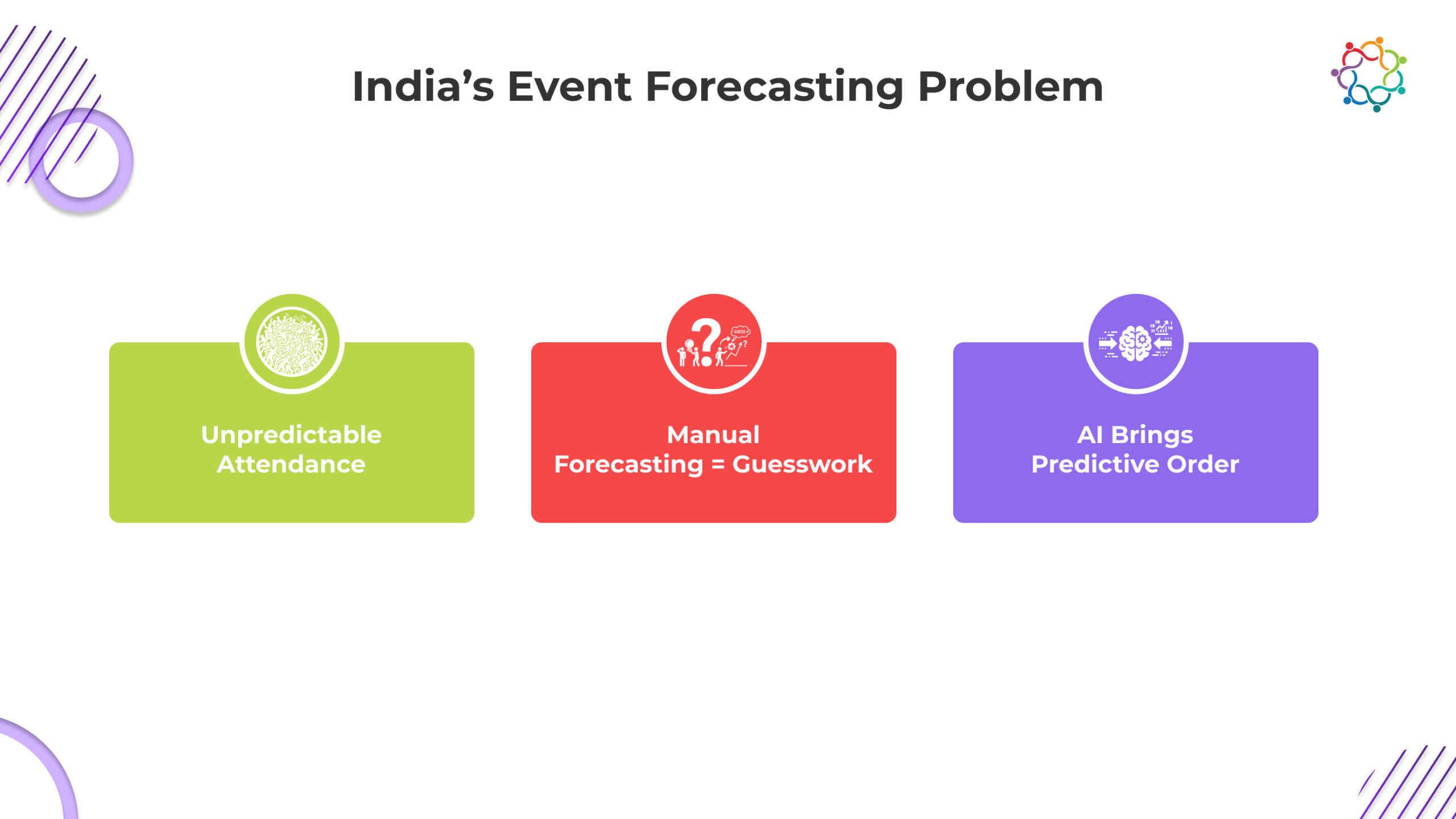
Predicting attendance has always been a challenge for marketers that create and implement events within India. Registration numbers can change dramatically up until the last minute; different regions have different behaviours; and people that primarily use mobile devices will often wait until the last minute to register, frequently change their plans and be inconsistent in responding to reminders about event dates. As B2B events become larger and more expensive to produce, many marketers can no longer accurately predict attendance without using AI technology.
AI is changing everything about how marketers work. By looking at behaviour indicators (what people do), engagement indications (who is engaging with them), and past attendance (how people have behaved), Indian marketers now know, with high degree of confidence, how many people will actually attend events and what they should spend. Attendance forecasting will now become a part of the strategic planning process, allowing marketers to make more accurate predictions about attendance and the best use of their resources, to minimise waste and maximise event ROI.

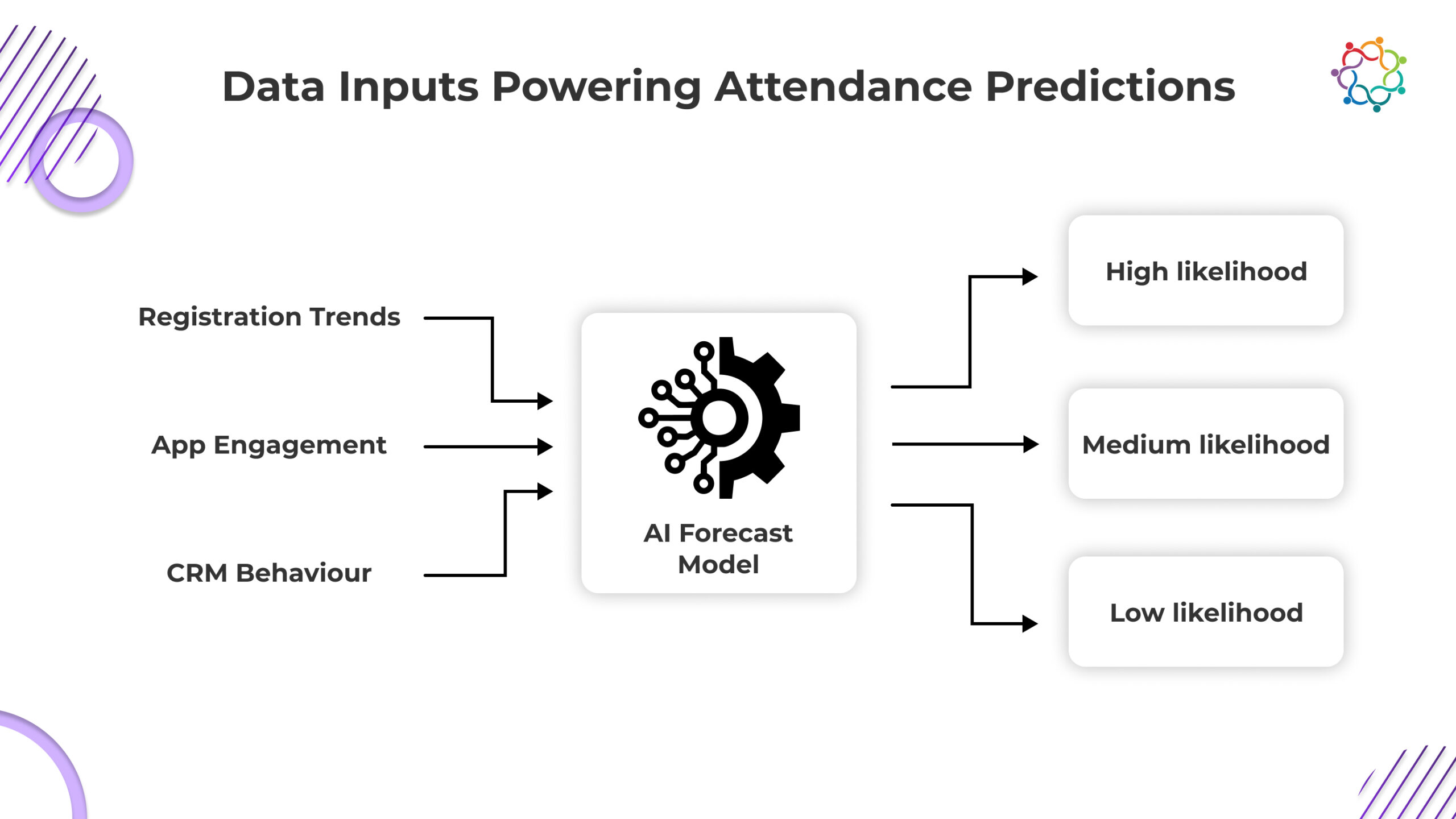
In order for a company to make accurate predictions, it must have a good quality and depth of behavioural data. Indian organisations are becoming increasingly aware that they can see a person’s intent to attend long before the day(s) of the actual occurrence. AI models can process a large number of different data points that humans cannot.
The following lists key data sources that inform Artificial Intelligence (AI) model forecasts.
In India, AI models also capture a variety of contextual behaviours:
Based on a combination of inputs, AI systems create a probability score for all registrants. In addition to providing registrants with the same weight, marketers are provided with additional cohort groups: Highly Likely to Attend, Somewhat Likely to Attend, and Unlikely to Attend. This provides clarity for marketers to make more informed decisions throughout the customer experience.
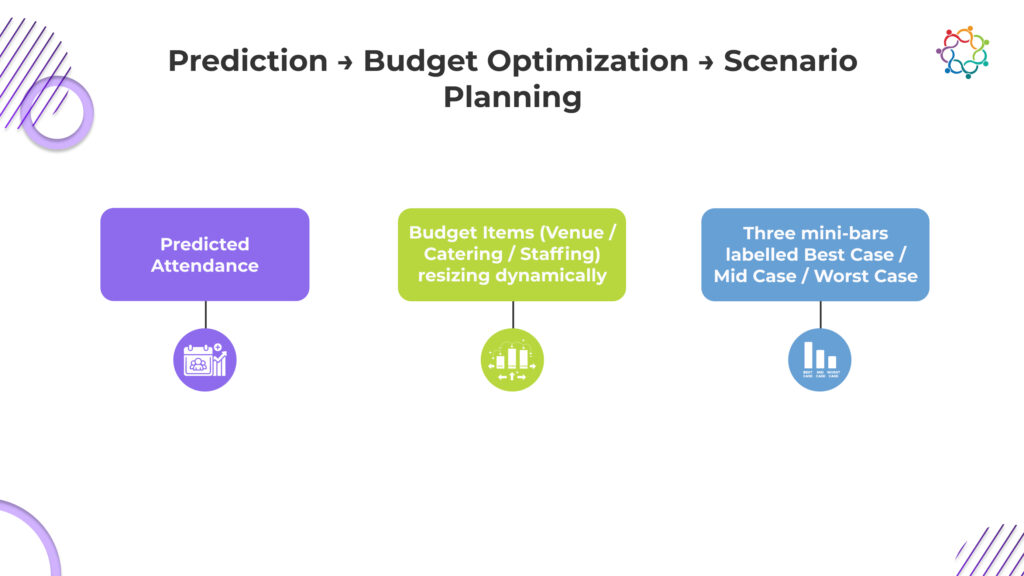
Financial planning is directly affected by attendance forecasting. Accurate forecasts change reactive budgets to optimised budgets.
Forecasting gives teams the opportunity to know if a venue needs additional resources or if it can cut back. They will be able to determine what type of catering will be reasonable and find the appropriate staff to avoid bottlenecks without over-spending.
When faced with uncertainty about the expected turnout to an event, many Indian marketers budget too much for expenses related to that uncertainty. By providing marketers with predictive insights, waste is eliminated and expense decisions can now be supported by data rather than the fear of running short.
Marketers are now able to allocate their budgets toward the segments of their audience that have a higher likelihood of attending the event rather than an overall generalised campaign approach. The more directed the marketing approach is, the more efficient marketers will be and the greater the number of attendees converted into buyers.
While prediction was formerly an analytical exercise, it now directly affects resource management, cost discipline and strategic planning.
Scenario Planning for High-Variance Indian Events

Behaviour of the audience in India will vary from city to city; by industry sector; by format of event. Thus, scenario planning provides a strong opportunity.
Teams can utilise models of AI to simulate three different types of audience attendance scenarios (best-, mid-, and worst-case) all, of which, connect directly back to actual audience behaviour. With these models, marketers can:
When looking at national events that take place across Tier 1; Tier 2; and Tier 3, the need for scenario planning is even more important, as through the use of AI, teams can plan for unpredictability without overspending or jeopardising attendee experiences.
Most forecasting tools stop at prediction. Samaaro goes a step further, it ties attendance probability directly to operational and budget decisions.
By combining registration velocity, engagement behaviour, and CRM history, Samaaro doesn’t just estimate how many people might attend. It shows who can attend, who needs nudging, and who is unlikely to show up at all, early enough to act on it.
Each registrant is dynamically scored and grouped into clear attendance cohorts. These cohorts then drive downstream decisions:
In Indian event environments, where last-minute registrations, mobile-first behavior, and regional variance are the norm, this linkage between prediction and action is what prevents over-spending and under-delivery.
Modern Business Events are changing in India, and they’re changing fast with the introduction of Prediction Intelligence and the power of Artificial Intelligence to eliminate guess work and establish clear and concise attendance data to allow companies’ budgets to be based upon actual behaviour instead of assumptions.
The requirement for accurate and efficient planning in an incredibly volatile and fluid Indian marketplace means that with if a business can fully leverage AI and Predictive Intelligence to forecast their events they will absolutely receive a financial return on their investment.

Built for modern marketing teams, Samaaro’s AI-powered event-tech platform helps you run events more efficiently, reduce manual work, engage attendees, capture qualified leads and gain real-time visibility into your events’ performance.
Location


© 2026 — Samaaro. All Rights Reserved.