Samaaro + Your CRM: Zero Integration Fee for Annual Sign-Ups Until 30 June, 2025
- 00Days
- 00Hrs
- 00Min

When thinking of field marketing, many think of brand ambassadors passing out samples and interacting from a booth for a duration of time. But in the current business environment, field marketing events are multiple steps ahead of the original meaning. Field marketing no longer just means physical presence in an ambient space or a large area, it means personalized, localized interaction intended to create a meaningful engagement to a specific audience.
Unlike online-, wide-net campaigns, field marketing is about targeting and proximity (whether it is at an Executive Dinner, a product demo, or a team kick-off). The point is to create impact in the fields of relationship, pipeline, and brand awareness.
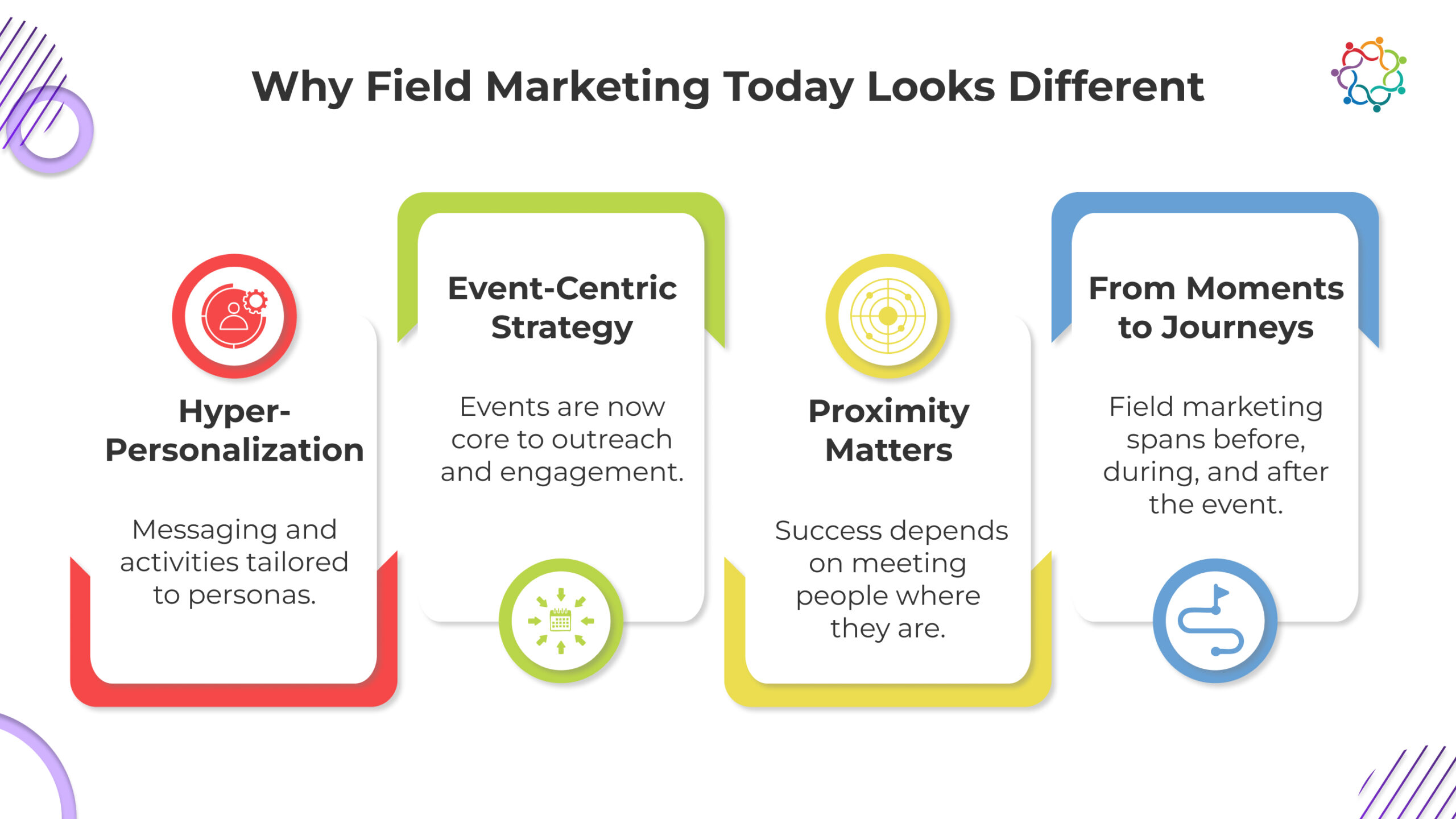
Digital automation and remote engagement have increased significantly, yet nothing replaces a handshake, a laugh in a workshop, or a question answered in person by a product expert. Brace marketing is the structure of field marketing because it creates three things:
1. Trust & Relationship: Face-to-Face (or live virtual experiences) provide humanization to your brand.
2. Memorable: Interactive experiences create sticky content.
3. Insights: Feedback in real time, facial feedback, and company reaction yield far more data than click-through-tracking.
There is so much digital noise nowadays, you can’t beat authentic engagement, and events offer it.
Whether you are bringing decision makers together in a closed-door session or getting distributed teams together over a virtual town hall, proximity matters. Field marketing events are unrivalled in getting your brand in the right connector location – right inside the right audience’s sphere. This could be a pop-up roadshow near the HQ of an important client or a virtual training one click away from every location of your workforce.
Events connect the brand message to brand meaning – brand intent to audience experience.
This guide is your roadmap to making the best of field marketing events: actionable ways to build events that relate to team and organizational goals, ways to identify and capture great events, provide exceptional event experiences, measure impact.
So, let’s examine ways to make field marketing the most impactful tool you have for connection that creates meaningful results.
As business models change and customer journeys become more disconnected, field marketing events give a powerful means of combining touch points and generating meaningful engagement. From fueling B2B growth to reinforcing internal culture – events can no longer be thought of as a “nice to have,” they are a strategic weapon.
In the world of B2B events, decision making is influenced over a period of time – trust, relevance and long-term value need to be established. Field marketing efforts can speed this permanent process in ways that an email or digital ad can’t.
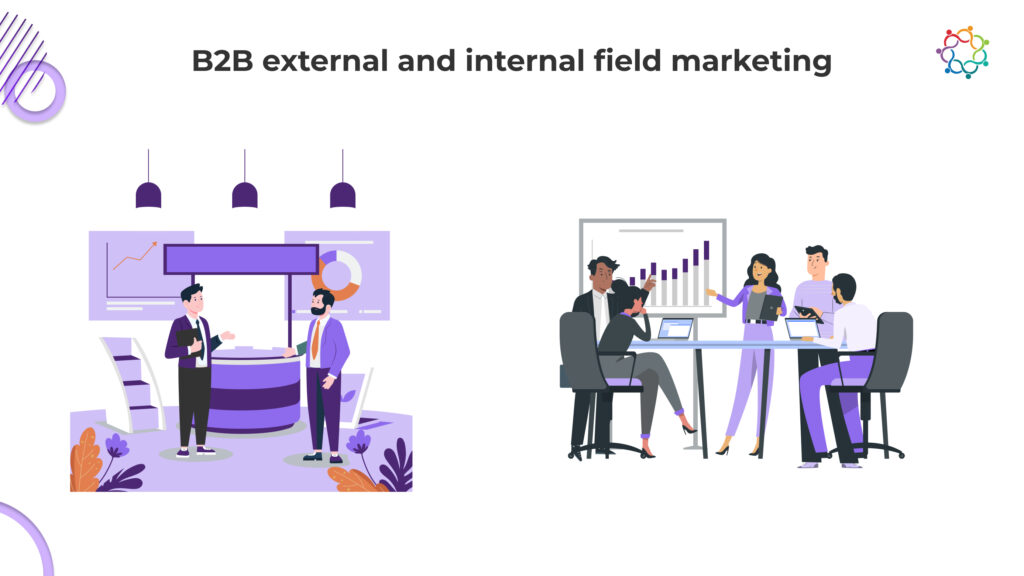
Field marketing is not just outward facing. Many of the most successful companies utilize internal events as a lever to develop a stronger team, share knowledge and build morale.
In short, field marketing events make a measurable impact on both external and internal audiences. They build pipeline, deepen relationships, and help to form more productive and connected organizations. Coming up, winning strategy — how to turn these opportunities into repeatable success.
A successful field marketing event begins with a strong event strategy. Whether you’re targeting external prospects or internal stakeholders, the recipe for success will depend on clarity, intent, and thoughtful execution. In this section we outline the core components that compose high-performing B2B and corporate event strategies.
Without clear goals, even the most well-executed event can miss the mark. The first step in any event strategy is to define what success looks like, and make it measurable.
Understanding your audience is nearly as significant as understanding your message. Audience targeting for events creates the best foundation to create experiences tailored for audience engagement.
There’s no one-size-fits-all when it comes to field marketing events. The format you choose should match your goals, audience, and message.

Even the best logistics fall flat without compelling content. The heart of any effective event strategy lies in designing moments that capture attention, spark interaction, and leave a lasting impression.
Even the most thoughtfully designed event won’t succeed without a solid promotion plan. Driving attendance, and buzz, requires smart, strategic outreach.
Remember: Once the event starts, promotion shouldn’t stop. Providing live social coverage and updates helps ensure participants’ momentum, then amplification post-event can extend your reach while reinforcing your messaging with your audience. All five areas; clear objectives, audience tailored, smart format decision, engaging content and promotion are essential pillars of an event strategy needed to have an impact. Shifting next to ground-level engagement of how we will execute this event strategy and impact to perfection.
Behind every successful field marketing event lies a foundation of rigorous planning, efficient operations, and a relentless focus on execution. Whether you’re running a high-stakes B2B roadshow or an internal company kickoff, operational excellence ensures your strategy is realized without friction.
Great event management begins long before the first guest walks through the door. It’s a discipline that blends structure, creativity, and collaboration.
Your event registration process is often the first real experience attendees have, and it sets the tone for the event to come.
The attendee experience is shaped by a thousand small details. Whether your event is physical, virtual, or hybrid, thoughtful logistics make the difference between operational chaos and a memorable, high-impact experience.
Pro Tip: Assign a dedicated “attendee experience lead” to monitor flow, respond to feedback, and coordinate adjustments on the fly.
Technology is no longer a support function, it’s central to event operations, attendee engagement, and post-event impact. But selecting the right tools depends on your goals, scale, and audience.
Quick Win: Post-event surveys embedded directly into your platform or attendee app help capture insights while they’re still fresh.

You’ve planned, executed, and engaged your audience — now it’s time to measure impact. Without a structured approach to event measurement, even the most well-run field marketing events risk being seen as a cost center rather than a growth engine. The key lies in aligning event KPIs with business objectives and leveraging data to tell a compelling story.
Start by setting measurable goals based on the type of event and its target audience. These metrics will form the foundation of your post-event evaluation.
Capturing data in real-time and consolidating it post-event is essential for calculating event success.
Pro Tip: Tag attendees by segments (job title, region, funnel stage) to reveal which groups delivered the highest ROI.
Events are often just the beginning of the conversation. Timely and personalized post-event actions are what truly drive results.
Field marketers must be able to showcase event ROI in a language that resonates with stakeholders — revenue, retention, engagement, and growth.
Field Marketing Takeaway: Events aren’t one-offs – they’re strategic growth levers. Use data to prove it.
In an increasingly digital world, the value of Field Marketing Events – both in-person or virtually is stronger than ever. Live is the greatest way to create authentic connections and help build trust and is delivered results. But the reality is: successful Field Marketing is not just defined because something happens on the event date; it is the totality of every stage, strategic planning, execution, engagement and post-event analysis.
An effective event strategy considers your entire lifecycle; therefore, every touchpoint is an opportunity to influence outcomes.
To remain competitive, brands will need to think beyond logistics and see how they can optimize events like field marketing events through scalable systems, integrated data and streamlined, ongoing audience insight.
It’s at this intersection when a powerful event management platform becomes necessary – not just for more organization, for your event management, but to elevate your event management. With the right systems in place, you’ll realize that field marketing is more than events but has become a strategic engine for growth.
Budgets vary by region and event mix, but mid-sized B2B companies often invest tens of thousands to a few hundred thousand dollars annually across roadshows, roundtables, and trade shows.
Field marketing brings targeted, regional experiences directly to specific accounts and territories. Trade show marketing rents presence at someone else’s event with less control over audience and experience.
Show pipeline influenced, deal acceleration, and account engagement from field events, then compare cost per qualified lead against your digital campaigns. In-person touchpoints usually win on lead quality.
The biggest failure points are targeting the wrong audience, unclear objectives, weak sales follow-up, and no measurement plan. Great execution cannot save an event aimed at the wrong people.
Field marketing gives ABM its human touchpoint. Regional events engage target account buying committees face to face, deepening relationships and accelerating deals that digital touches alone cannot close.