Samaaro + Your CRM: Zero Integration Fee for Annual Sign-Ups Until 30 June, 2025
- 00Days
- 00Hrs
- 00Min

Event Requests & Planning Workflow, Budget Planning & Financial Control, Task Planning & Team Collaboration, Event Websites & Registration Forms, Communication Automation, Reception Dashboard & Seamless On-Site Operations, Event App (Web, Android & iOS), Feedback Collection & Recognition Delivery (e-Certificates), Lead Generation & Sales Enablement, AI-Powered Reporting & Analytics
The client is a leading Indian pharmaceutical company with a nationwide presence and a strong focus on field-driven growth. The organisation runs a high volume of in-person events every year across sales, marketing, and medical teams, ranging from doctor engagement programs and product-focused meetings to distributor interactions and regional conferences.
Events play a critical role in the company’s go-to-market strategy, serving as a recurring channel for relationship building, education, and on-ground execution. With multiple teams operating in parallel and more than 125 events being conducted across regions throughout the year, the organisation places emphasis on operational consistency, data reliability, and the ability to understand the true business impact of its event investments.
In high-volume pharmaceutical organisations, manual event operations can consume over 20,000 working hours annually, with most of that time spent on coordination, follow-ups, reconciliation, and reporting, activities that add no direct strategic value. When multiplied across hundreds of events, even small inefficiencies quietly compound into million dollar-level operational costs.
As the organisation’s event footprint expanded across sales, marketing, medical affairs, training, and leadership teams, events became one of the company’s most frequent operational activities. Programs were being conducted continuously across regions, ranging from CME programs and product launches to distributor meets, trainings, offsites, and international conferences.
At this scale, the challenge was no longer about executing individual events successfully. It was about running hundreds of events consistently, predictably, and with measurable outcomes.
While each team optimised for its own execution, leadership lacked a single, reliable view of how events were performing as a program. Answering questions around efficiency, cost control, team effort, and return on investment required manual consolidation and assumptions rather than real-time data.
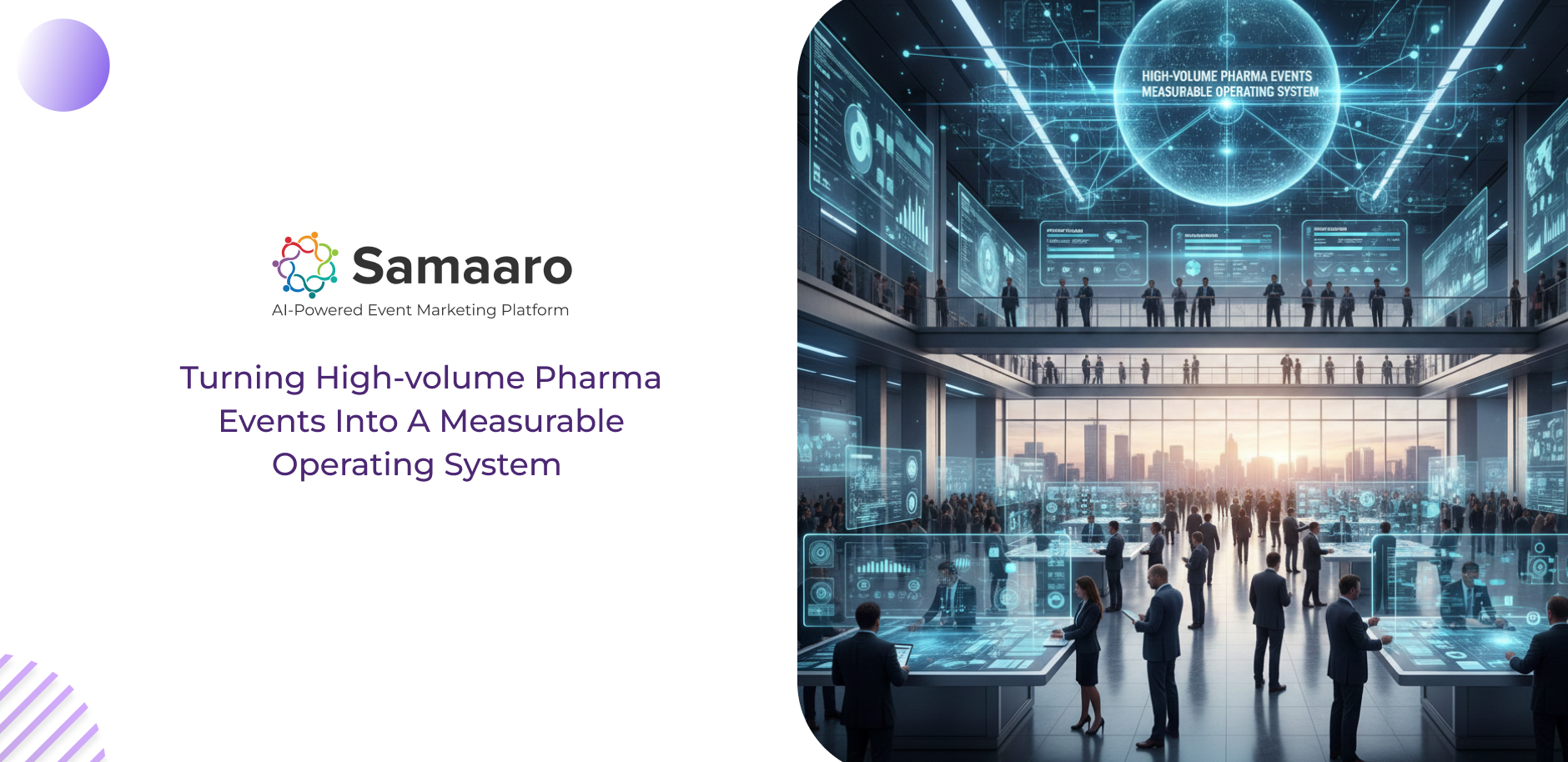
The organisation did not need more event activity. It needed a way to treat events as a scalable operating system, with standard planning, controlled execution, reliable data capture, and clear visibility into cost, effort, and impact across the year.
Samaaro was proposed as a single, enterprise-grade event marketing platform to manage the company’s entire event portfolio, across medical, marketing, training, leadership, and distributor programs. The objective was to replace fragmented, manual workflows with a structured system that could scale across hundreds of events while making cost, effort, and ROI measurable at a leadership level.
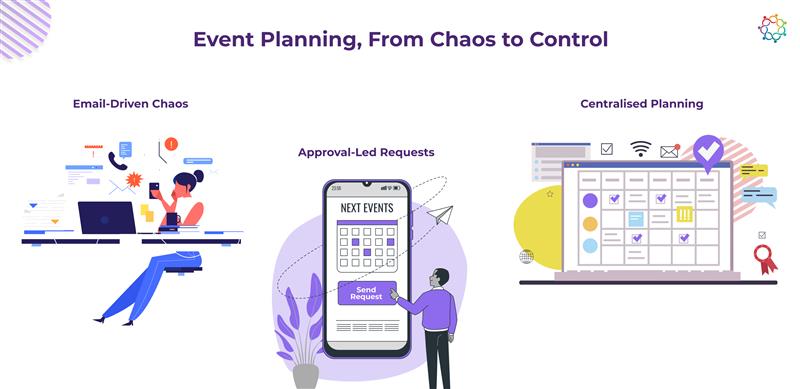
1. Event Requests & Planning Workflow
Result:
Event planning shifted from email-driven coordination to a transparent, approval-led process with full traceability.
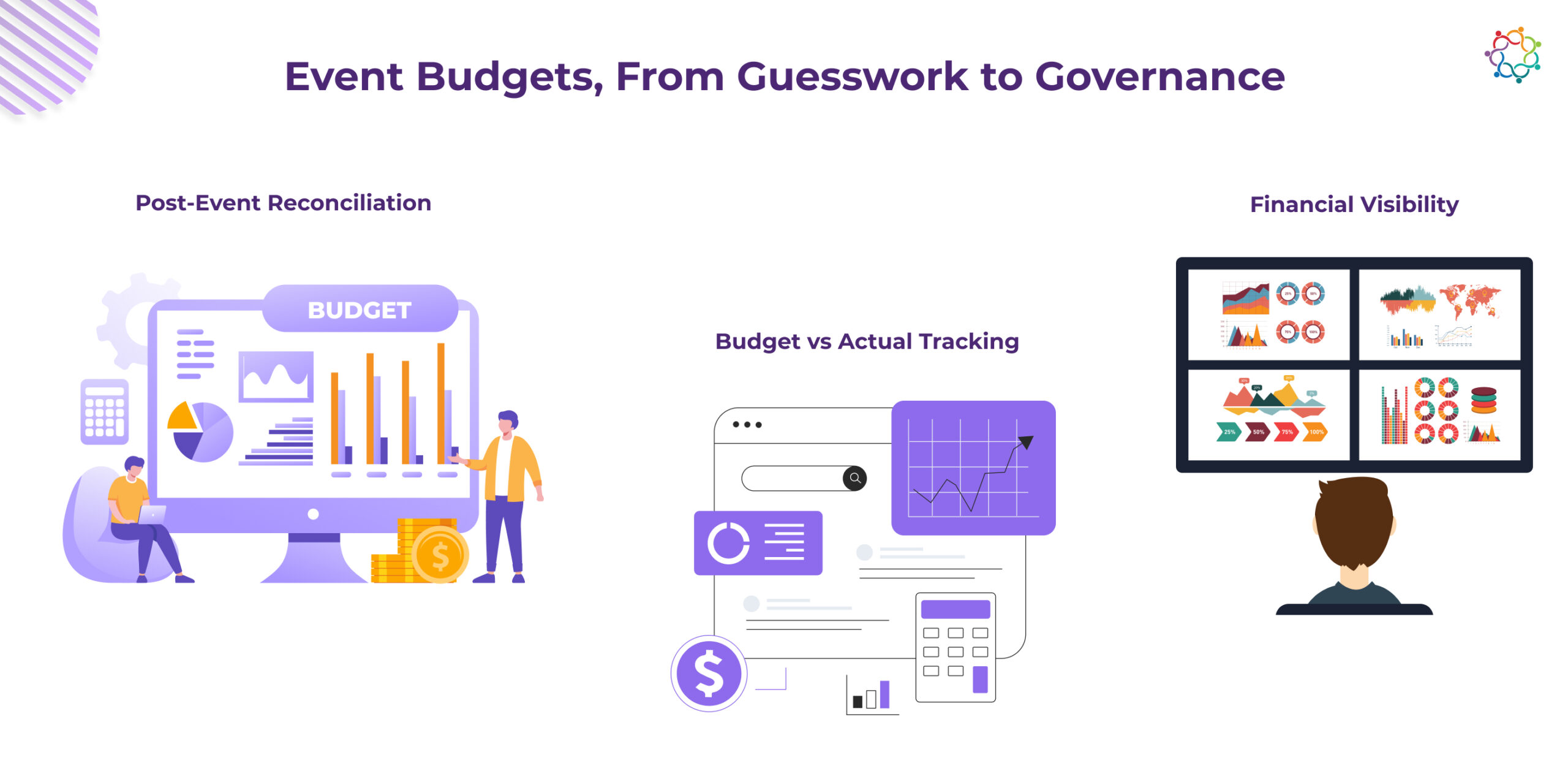
2. Budget Planning & Financial Control
Result:
Event spend became visible in real time, enabling early detection of overspends and better cost control.
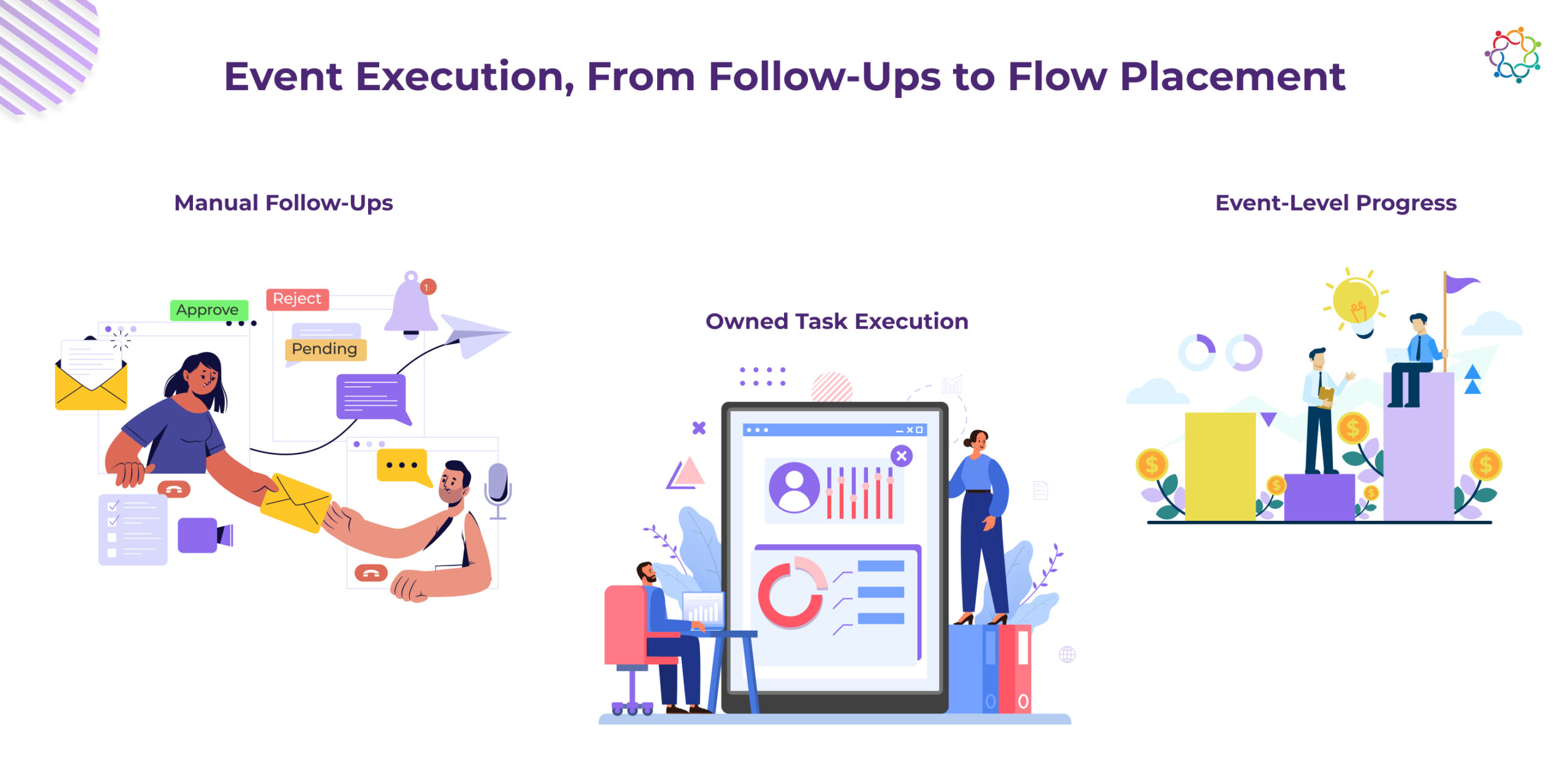
3. Task Planning & Team Collaboration
Result:
Execution discipline improved without adding management overhead.
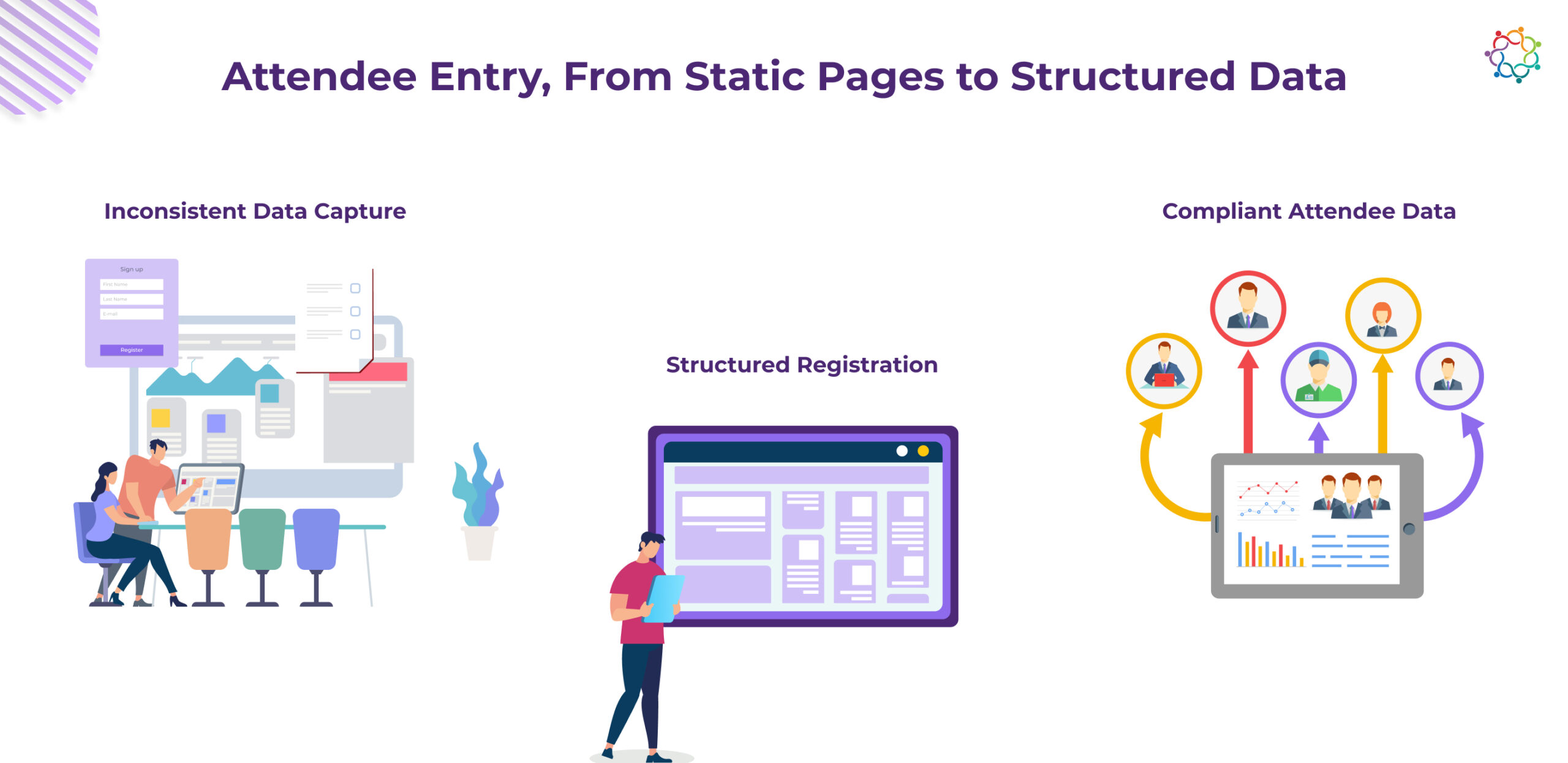
4. Event Websites & Registration Forms
Result:
Attendee data became structured and compliant from the first touchpoint.
5. Communication Automation
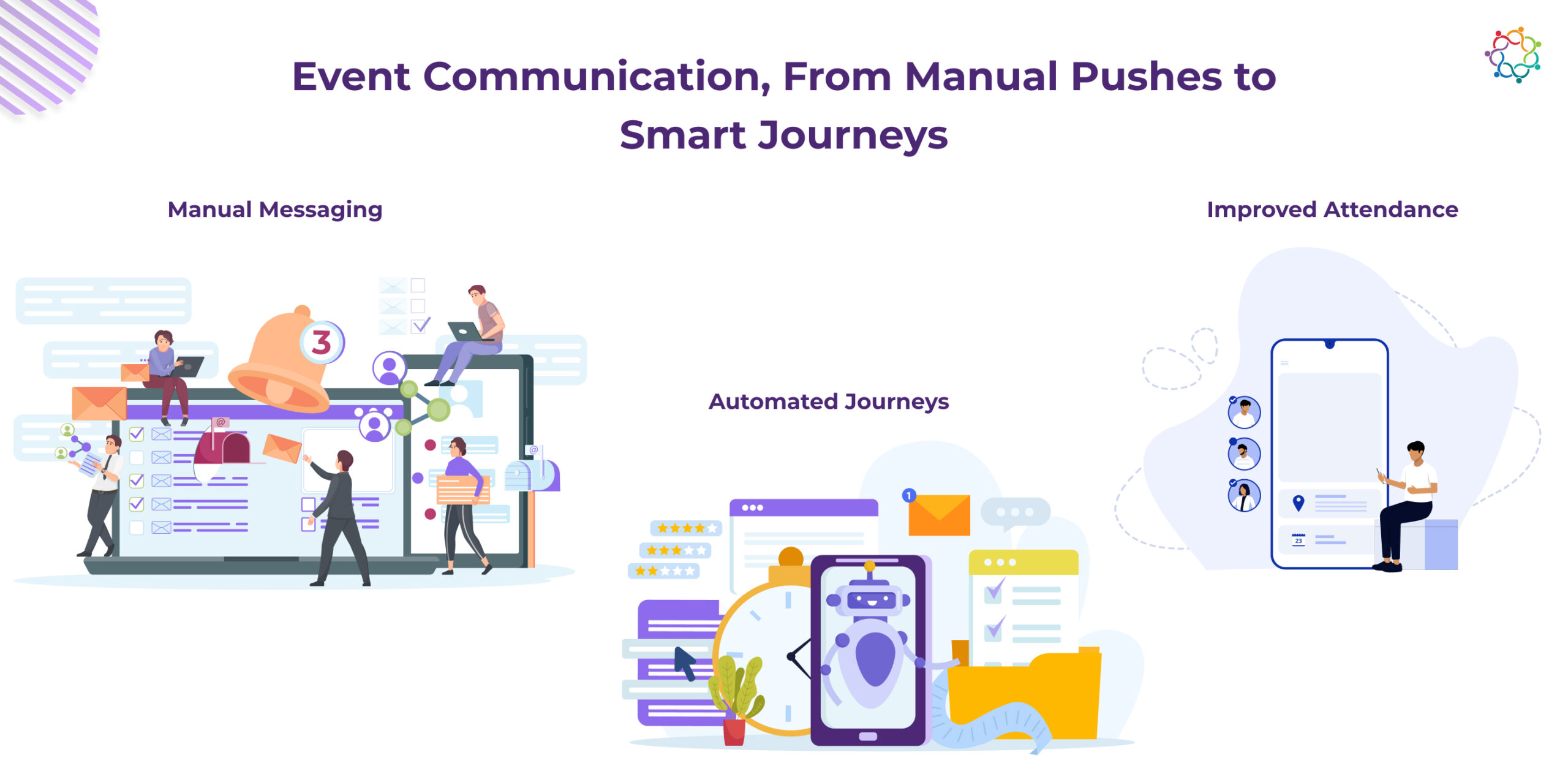
Result:
Registration and attendance improved without increasing coordination effort.
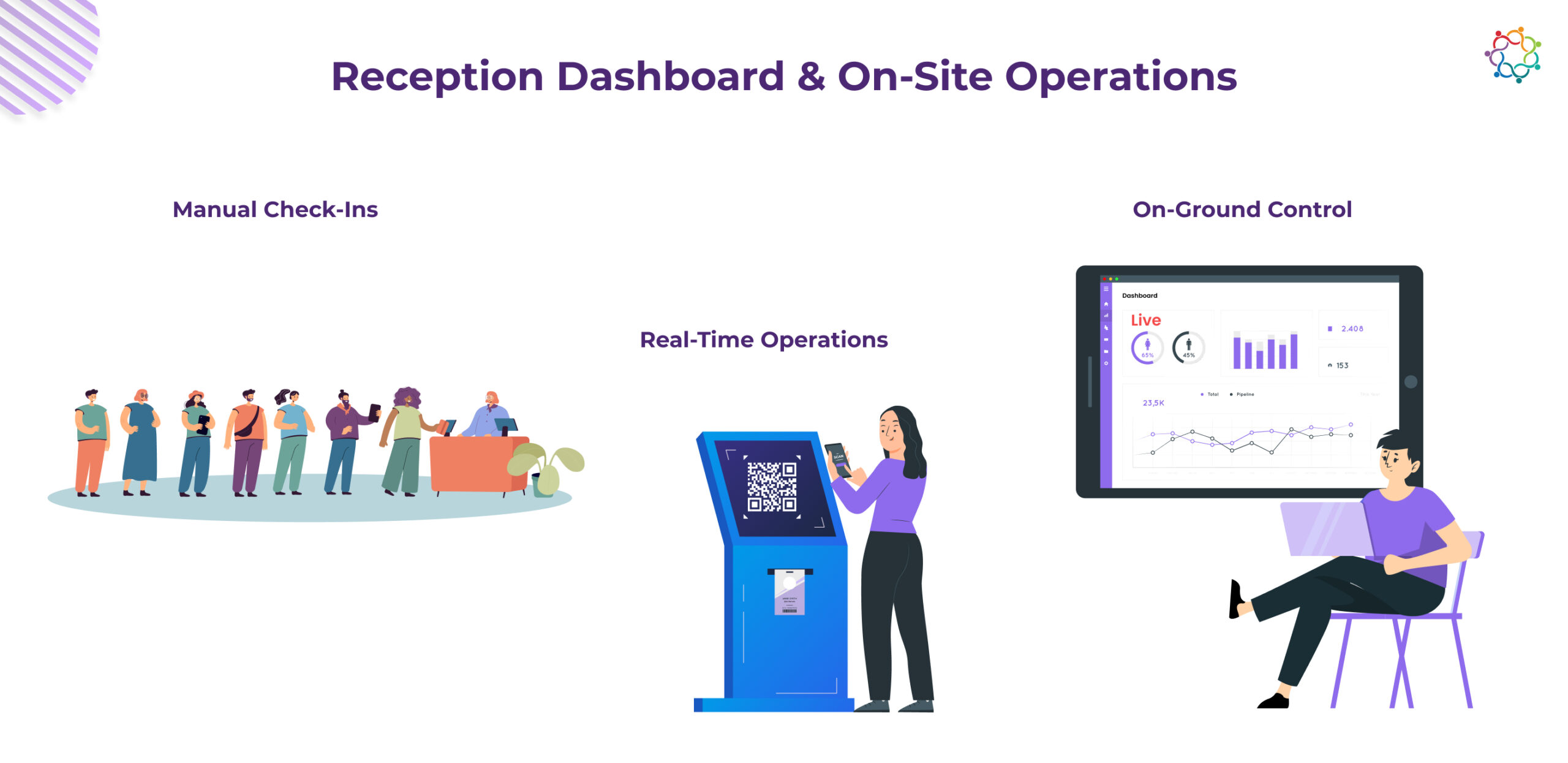
6. Reception Dashboard & On-Site Operations
Result:
On-ground operations became faster, more accurate, and free from manual errors.
7. Event App (Web, Android & iOS)
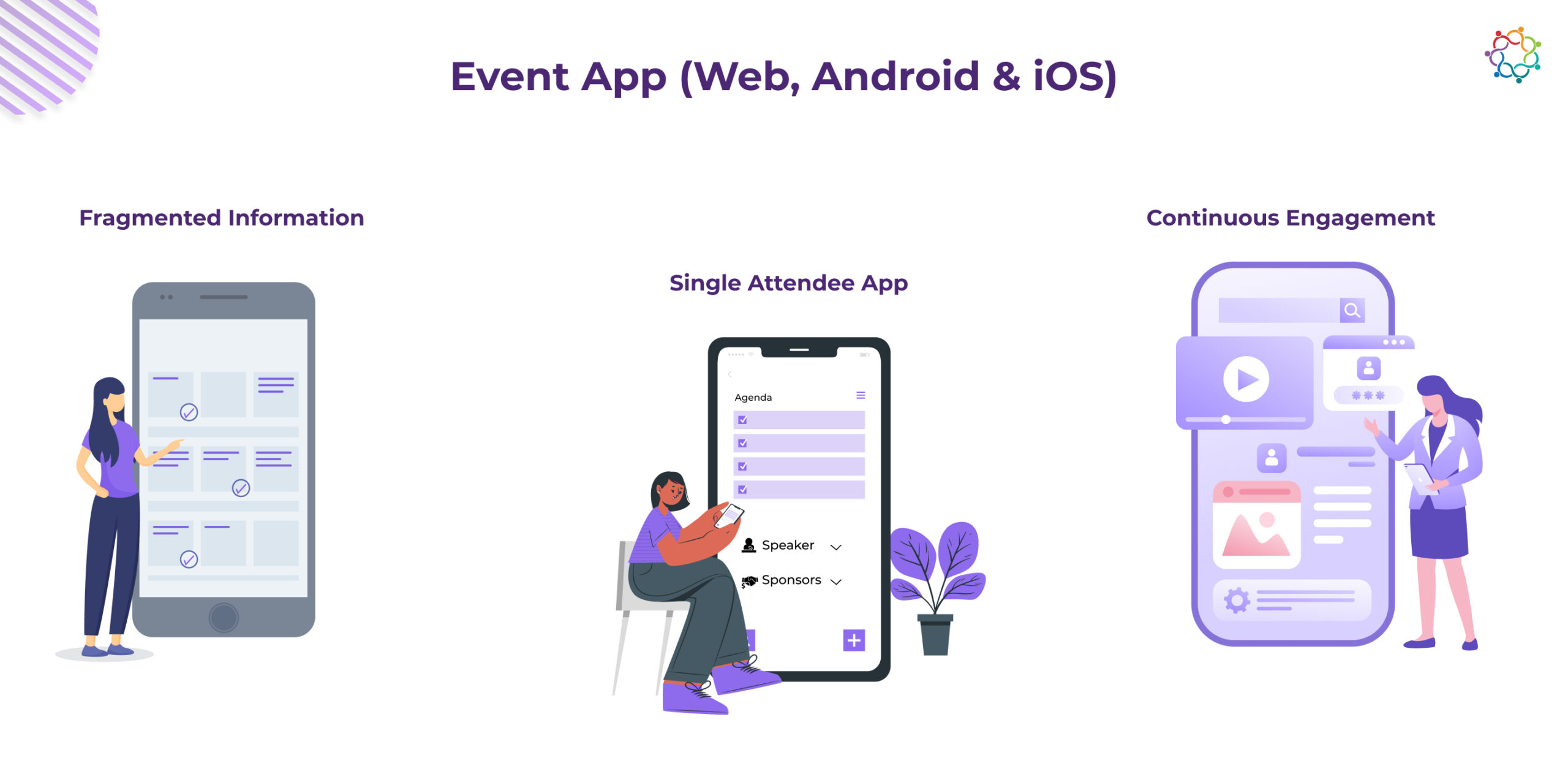
Result:
Attendee experience moved from fragmented communication to a single, controlled channel.
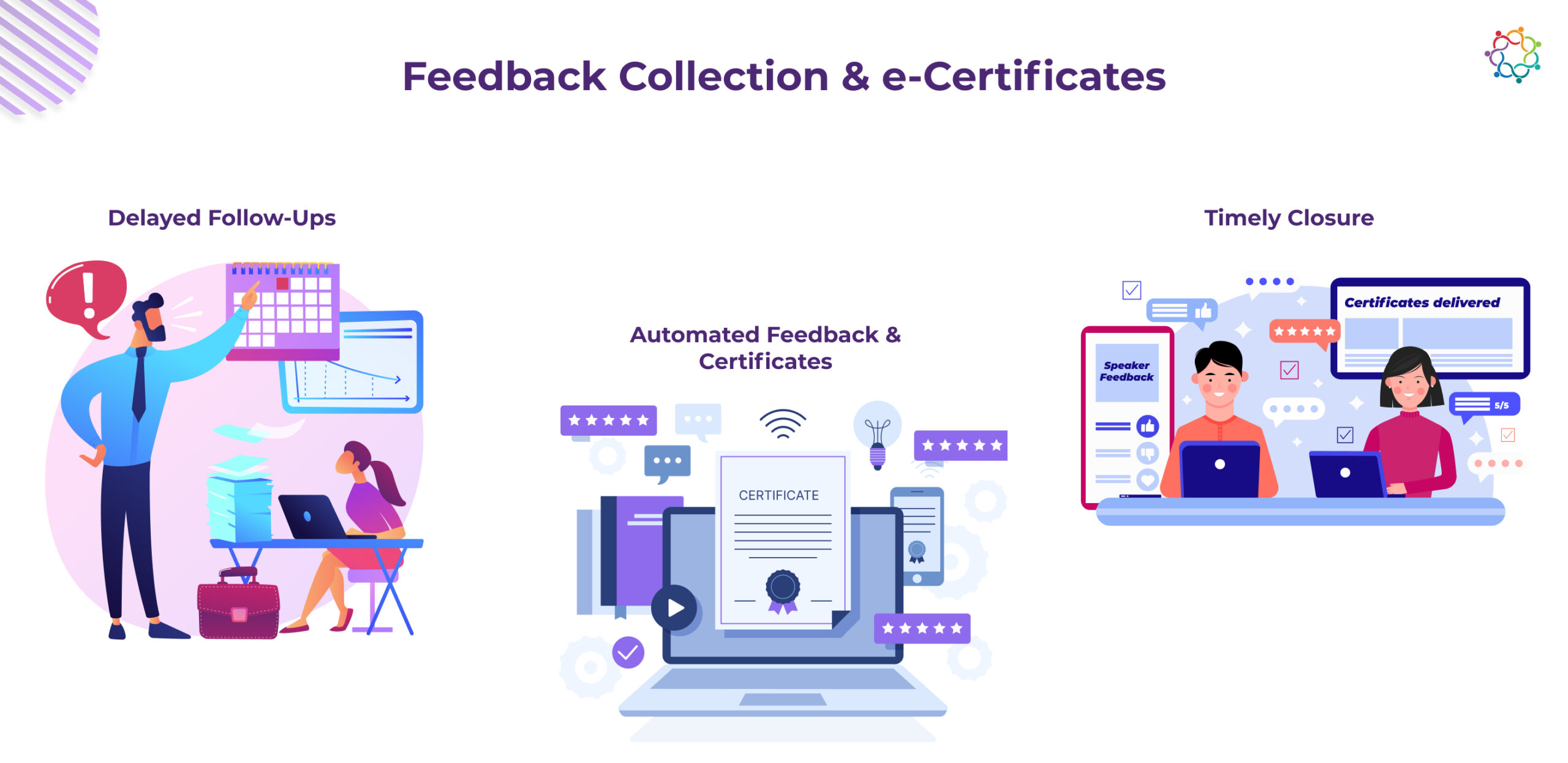
8. Feedback Collection & e-Certificates
Result:
Post-event feedback and recognition became timely and consistent.
9. Lead Generation & Sales Enablement
Result:
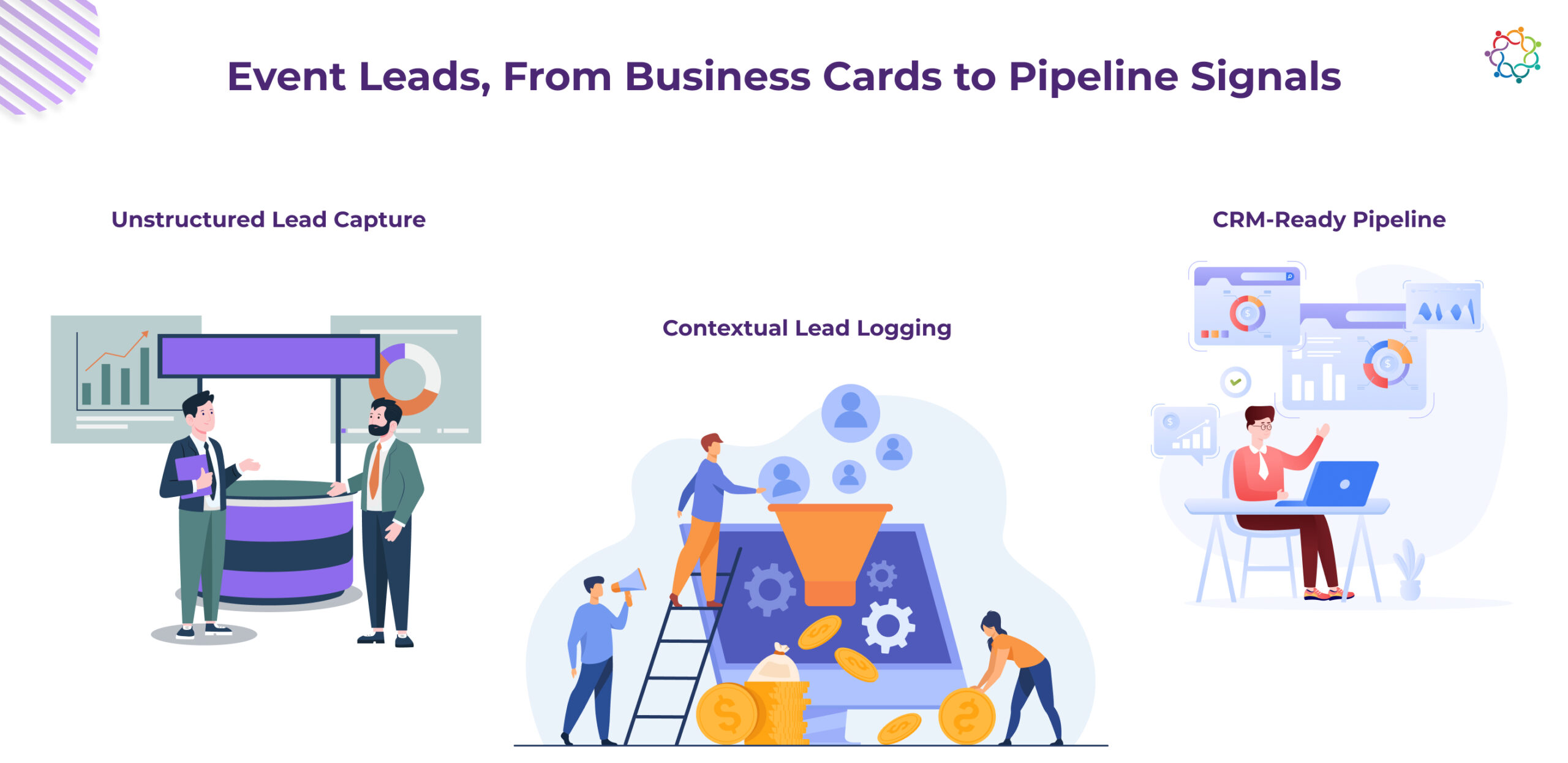
Events became measurable sales inputs rather than standalone activities. It became easier to capture sales team performance at such events.
10. AI-Powered Reporting & Analytics
Result:
Leadership gained a consolidated, data-backed view of event performance and ROI.
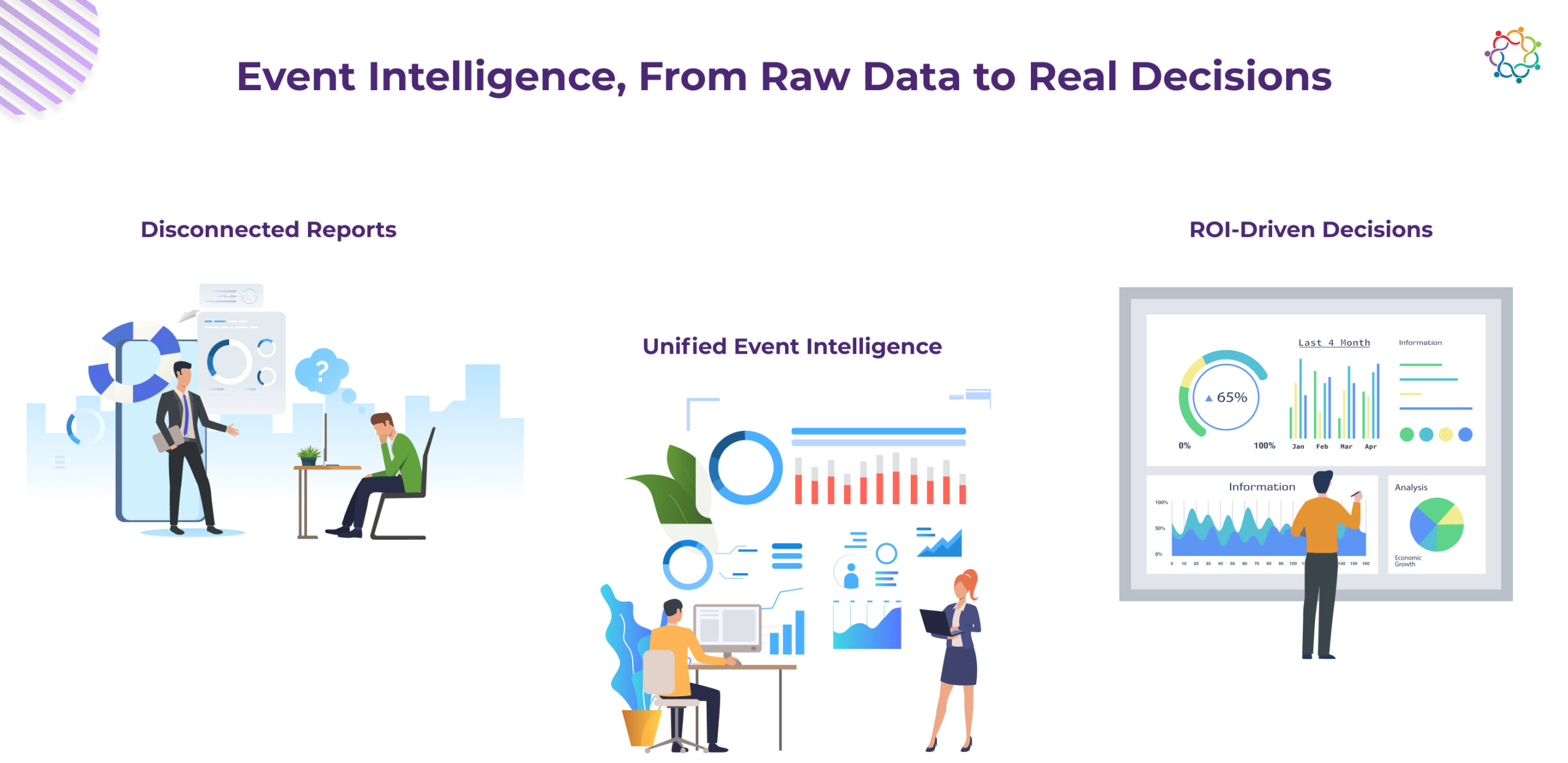

5.47× ROI on event operations with measurable savings exceeding platform investment.
80% reduction in event setup and management time cutting annual manual effort from 21,600 hours to a fraction of previous workloads.
95% reduction in operational errors by eliminating data duplication, miscommunication, and manual reconciliation.
Midway through a planning cycle, the leadership team reviewed a consolidated snapshot of the year’s event program, covering programs across medical, marketing, training, and sales. What stood out was not the number of events, but the accumulated effort behind them: thousands of coordination hours, repeated approval loops, duplicated communication, and post-event reconciliation happening independently across teams.
As they traced a single event end-to-end, from request and approval to budgeting, execution, and reporting, it became clear that the real cost of events wasn’t just venues or logistics, but time, rework, and invisible inefficiencies multiplied at scale. When the same workflow was projected across the full annual event volume, the operational cost surfaced clearly, along with how much of it could be avoided.
That conversation shifted how events were viewed internally. They were no longer treated as isolated programs that “just needed to happen,” but as a system that could either quietly drain resources or actively return value depending on how it was run.
In fast-scaling pharmaceutical organisations, events don’t fail because they are poorly executed, they fail because they are under-examined at scale. When dozens of teams run hundreds of programs across the year, even small inefficiencies compound into meaningful cost, effort, and decision blind spots.
This case highlights a broader shift the industry is beginning to confront: events can no longer be treated as isolated marketing or medical activities. They behave more like operational infrastructure, consuming time, budget, and organisational energy whether or not they are actively optimised. The difference between events being a necessary expense and a defensible investment lies in whether they are run as repeatable systems with measurable economics.
For pharma leaders, the question is no longer whether events work. It is whether the organisation can clearly explain what they cost, what they return, and what changes when they scale. The teams that answer this early gain not just efficiency, but control, and that control increasingly defines competitive advantage.

Built for modern marketing teams, Samaaro’s AI-powered event-tech platform helps you run events more efficiently, reduce manual work, engage attendees, capture qualified leads and gain real-time visibility into your events’ performance.
Location
© 2026 — Samaaro. All Rights Reserved.