Samaaro + Your CRM: Zero Integration Fee for Annual Sign-Ups Until 30 June, 2025
- 00Days
- 00Hrs
- 00Min

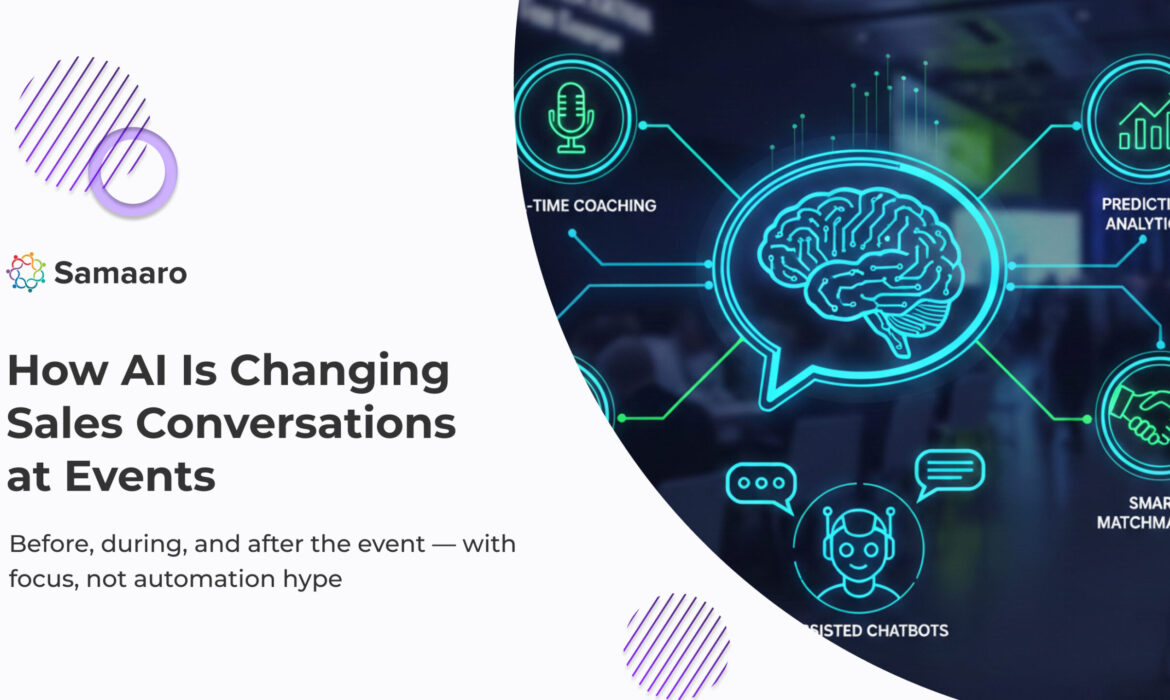
Even though B2B organizations invest a lot of money in events, sales discussions at these gatherings are still surprisingly poorly managed. Despite the fact that booths are crowded, calendars are full, and scans are taken, revenue teams frequently go without knowing which discussions were truly important. When choosing who to approach, sales representatives rely on intuition, location, and good fortune. Recall and disorganized notes are necessary for follow-up. Important context fades quickly once the event ends.
Events generate intense, high-signal interactions, but most teams treat those moments as temporary activity rather than durable sales intelligence. As a result, high-intent attendees are missed, strong buying signals are delayed, and follow-ups arrive too late or feel generic. None of this is due to poor effort. It is a structural gap in how conversations are identified, prioritized, and remembered.
This is where AI for event sales conversations begins to matter, not as automation or novelty, but as intelligence. The real opportunity is not replacing representatives. It is helping sales teams focus their time and attention on the conversations that are most likely to influence the pipeline. When used thoughtfully, AI can shift events from chaotic activity to intentional sales moments- before, during, and after the event.
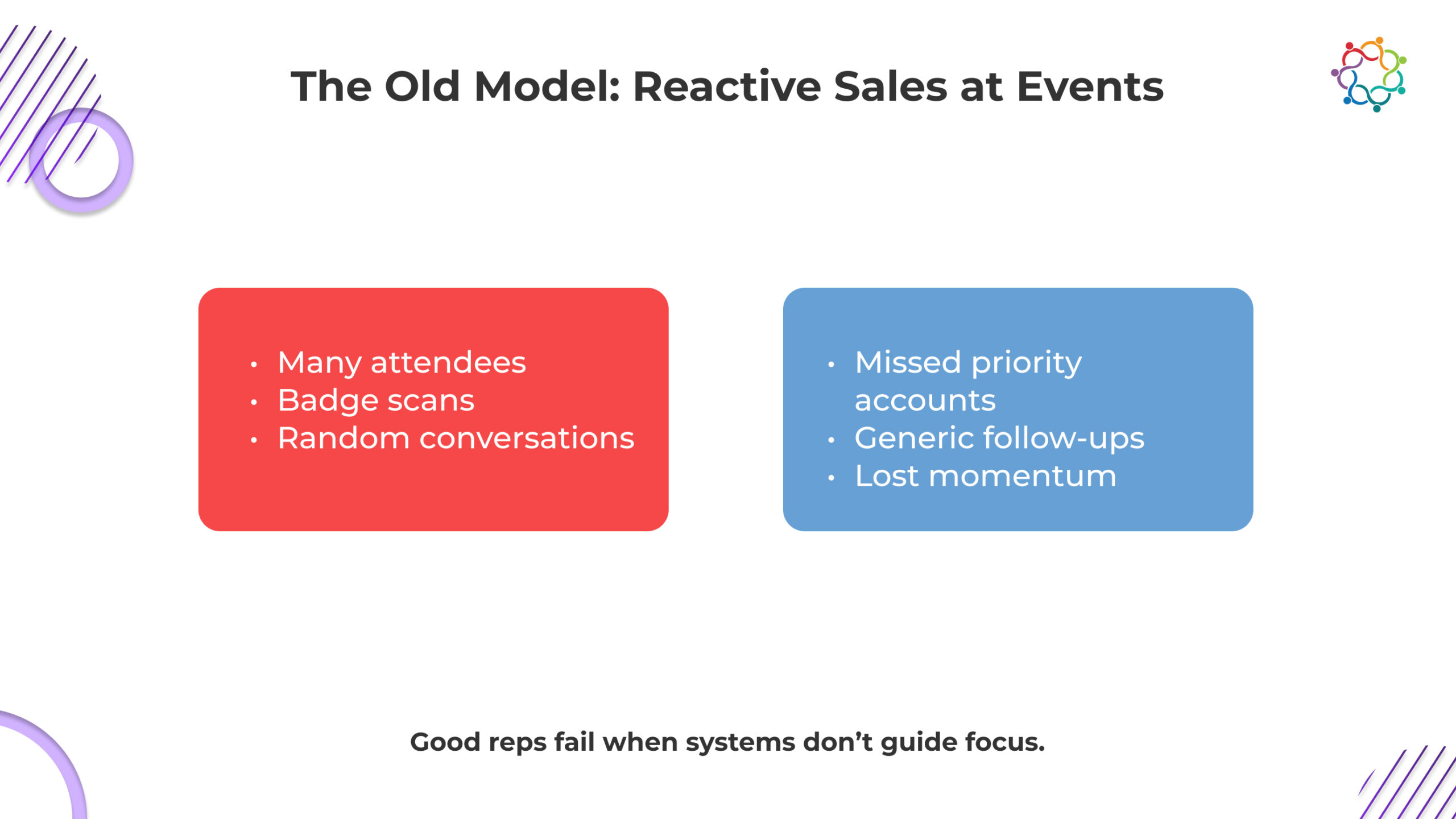
Most event sales motions are still reactive. Reps greet whoever is in front of them, scan badges, exchange pleasantries, and move on. At scale, this looks productive while hiding serious inefficiencies.
The old model follows familiar patterns:
Even strong salespeople struggle here. They cannot see which attendees are actively evaluating solutions, which accounts are already in the pipeline, or which conversations deserve deeper qualification. In the moment, everything feels equally urgent, so prioritization disappears.
After the event, the damage compounds. Reps return to full inboxes and open deals. Event leads become just another list. Context fades, timing slips, and promising conversations go cold. Leadership then questions event ROI, mistaking a reactive system for an ineffective event.
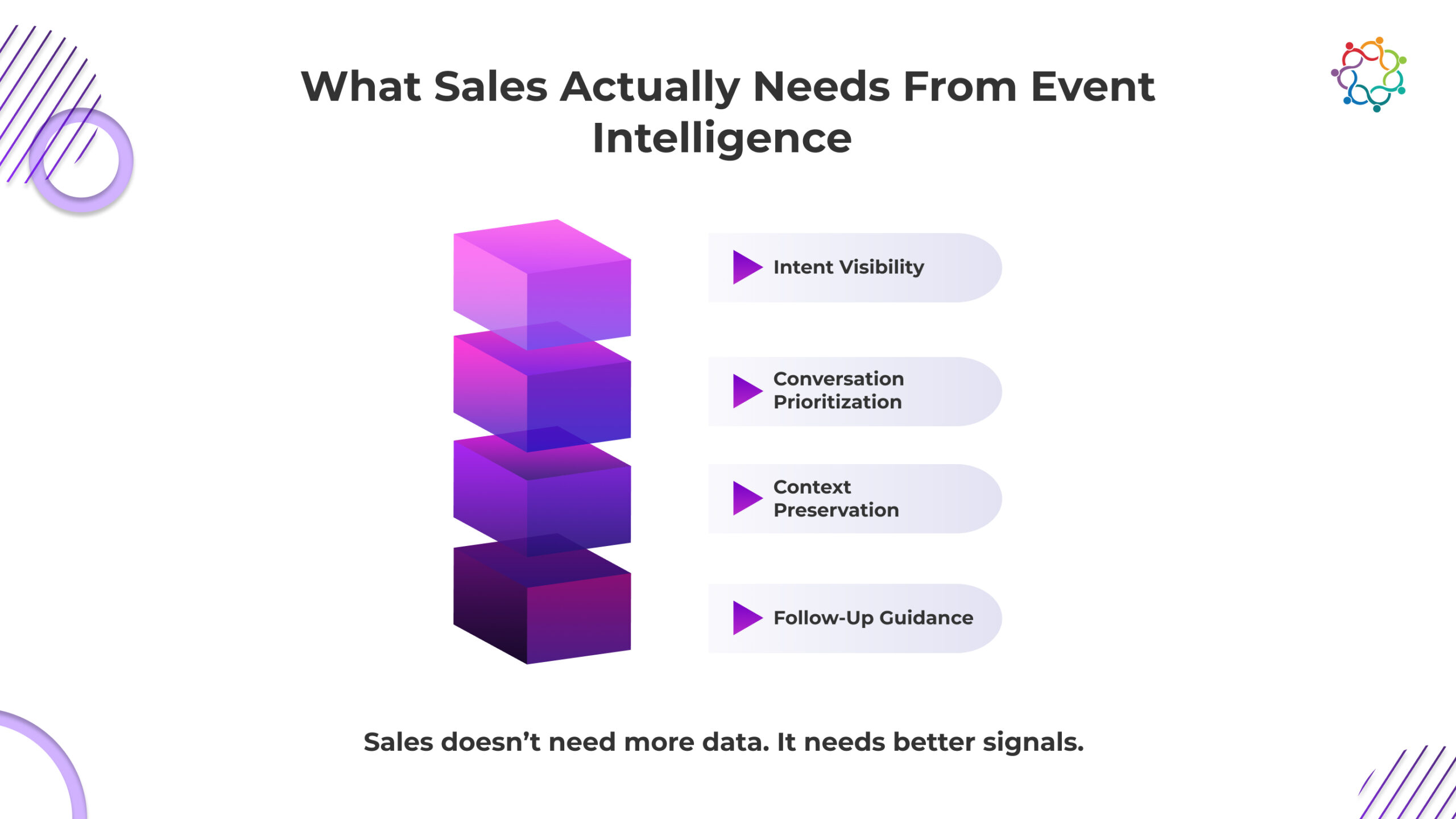
Sales teams don’t fail at events due to lack of effort or tools. They fail because they lack timely, usable intelligence. Before introducing AI, it’s worth defining what intelligence actually needs to do for sales.
First, sales needs visibility into intent. Signals around buying interest, account relevance, and role alignment help reps separate casual curiosity from active evaluation.
Second, sales needs real-time prioritization cues. During events, decisions are made quickly. Intelligence should surface simple signals that guide where time is spent without disrupting natural conversations.
Third, sales needs shared context. Key conversation details must be captured and accessible across teams so follow-up reflects what actually happened, not assumptions.
Finally, sales needs guidance on follow-up. Knowing who to contact first — and why — turns outreach from reactive to intentional.
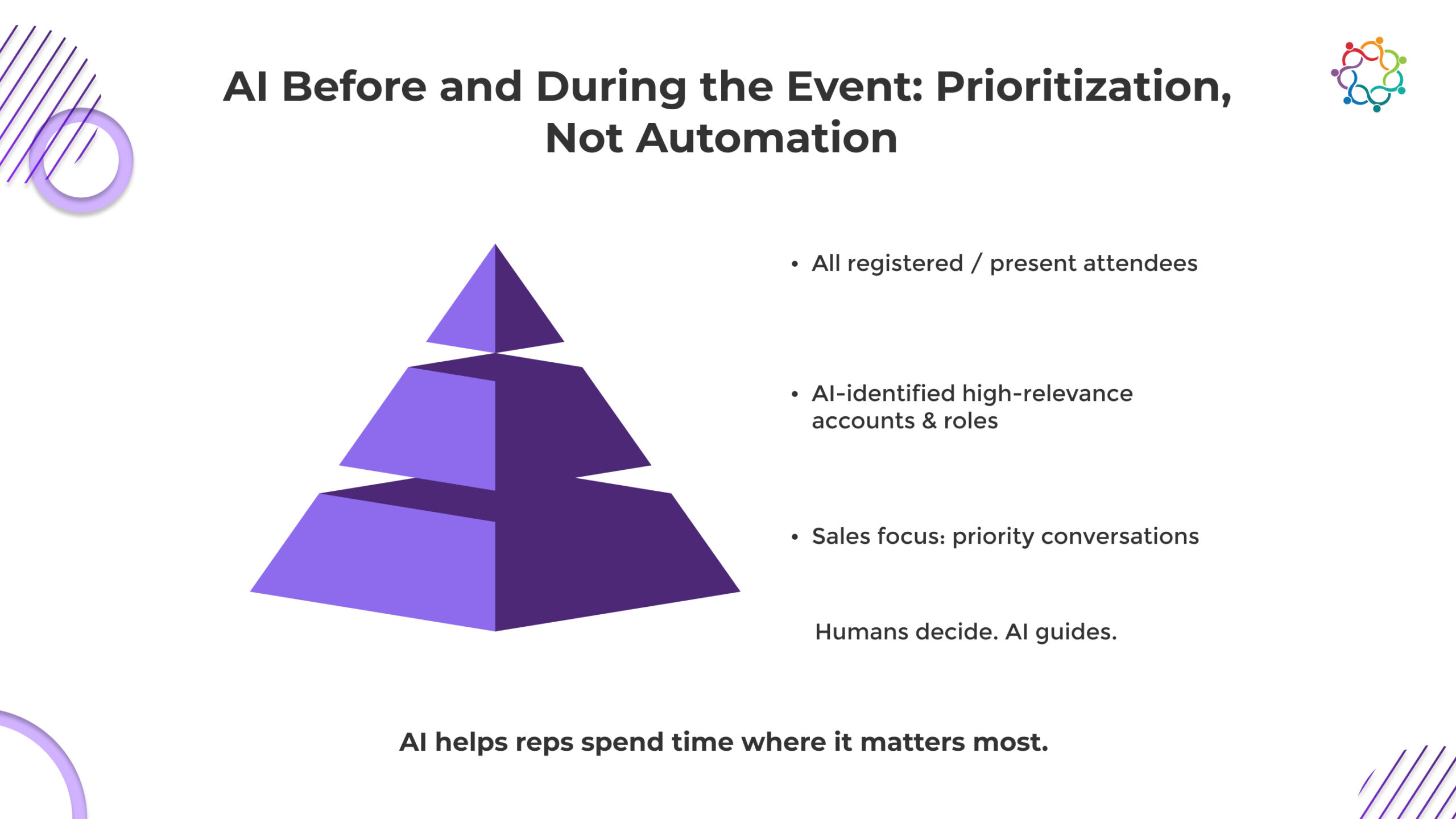
Preparation is where event outcomes are quietly decided. Yet most sales teams arrive with little more than a generic attendee list and a rough staffing plan. AI changes this by introducing intent-based preparation.
Before the event, AI can analyze registration behavior, session selections, past engagement, and account-level data to highlight attendees who are more likely to be in-market. It can also match roles and responsibilities to relevant offerings, helping reps understand why a conversation might matter before it starts.
Which accounts deserve proactive outreach?
How to allocate senior reps versus general coverage.
Which meetings should be scheduled in advance?
Where booth staffing should be concentrated.
By reducing randomness, AI for event sales conversations turns preparation into a competitive advantage. Reps arrive knowing which conversations to seek out and which questions to ask. Marketing and sales leaders gain confidence that coverage aligns with revenue priorities, not just foot traffic.
Importantly, this does not eliminate spontaneity. It simply ensures that high-intent opportunities are not left to chance. When preparation is guided by signals rather than assumptions, events begin with focus instead of hope.
Prioritization is most important and most difficult to uphold on the event floor. Reps have to decide quickly where to spend their time as several discussions vie for their attention. AI helps make these choices without taking over.
AI can display priority guests in real time throughout the event according to pre-identified purpose, account importance, or live interaction. This helps representatives in determining whether to engage in a more in-depth discussion, consult a professional, or immediately arrange for follow-up. The goal is not interruption, but informed choice.
Better allocation of senior sales time.
More intentional qualification conversations.
Reduced missed opportunities during peak moments.
Used correctly, AI for event sales conversations feels empowering. Reps remain fully in control of the interaction. AI simply provides context that would otherwise be invisible. This balance preserves the human nature of selling while improving focus.
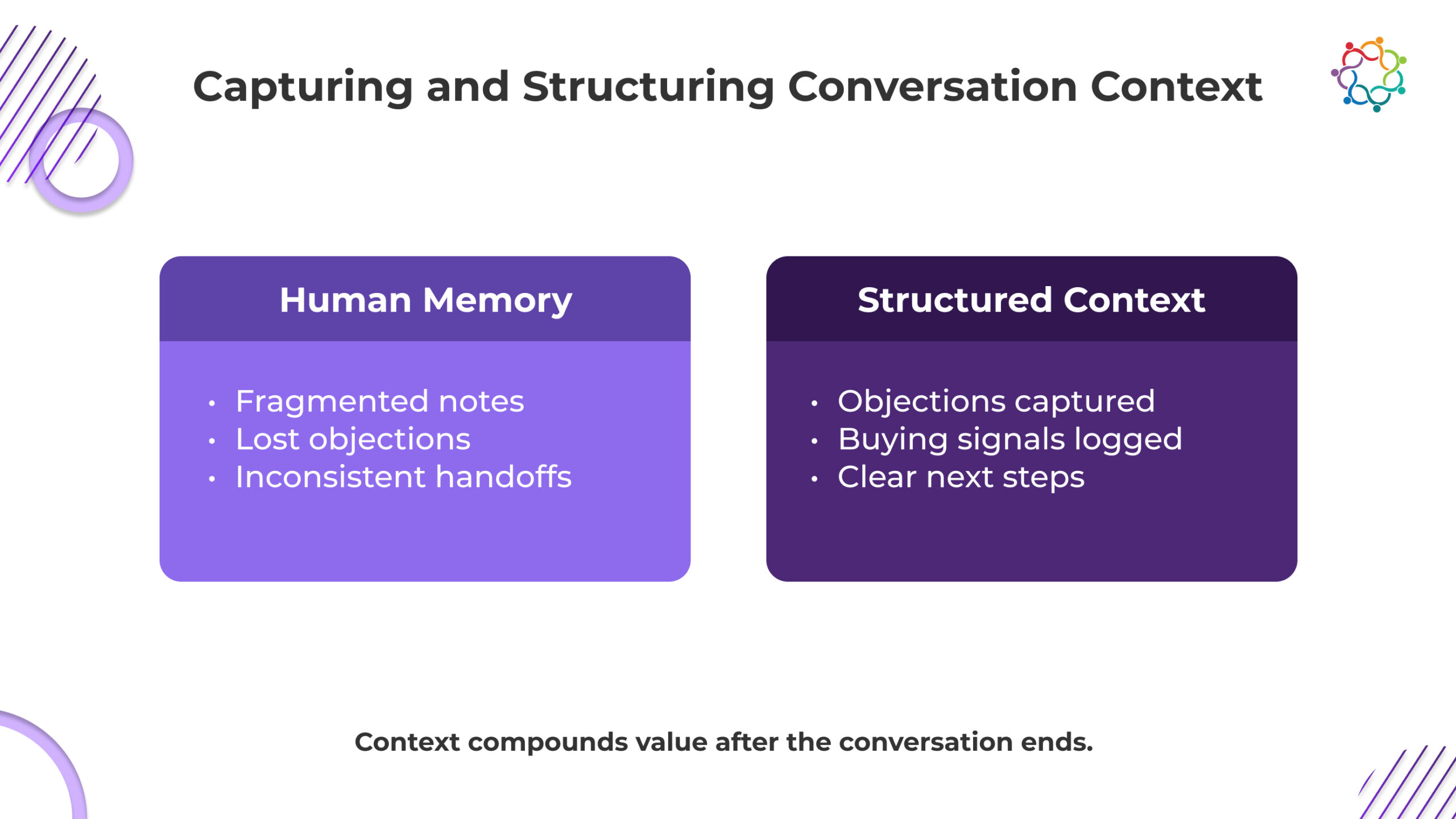
Conversations about events are frequently insightful yet memory-fragile. Representatives switch topics fast, and important details are soon forgotten after the encounter. Recording all that was said is not the goal of capturing context. In order for discussions to continue with clarity, relevance, and momentum, it is important to preserve what is essential. AI introduces a more reliable way to structure and retain this context without interrupting the human flow of selling.
Dependence on rushed post-event explanations or handwritten notes results in gaps and inconsistencies. AI assists in structuring important discussion components, such as needs, objections, and priorities, into a dependable framework that salespeople can refer to.
When the conversation context is structured, it does not stay locked with a single rep. AI enables intent, urgency, and next steps to be visible across sales, marketing, and account teams, reducing misalignment after the event.
Structured context allows follow-up messages to reference real discussions instead of generic themes. This improves relevance and timing without requiring reps to spend extra time reconstructing conversations.
A smaller number of well-documented conversations drives more revenue impact than a large volume of low-context leads. By prioritizing clarity over quantity, AI strengthens sales effectiveness and continuity beyond the event.
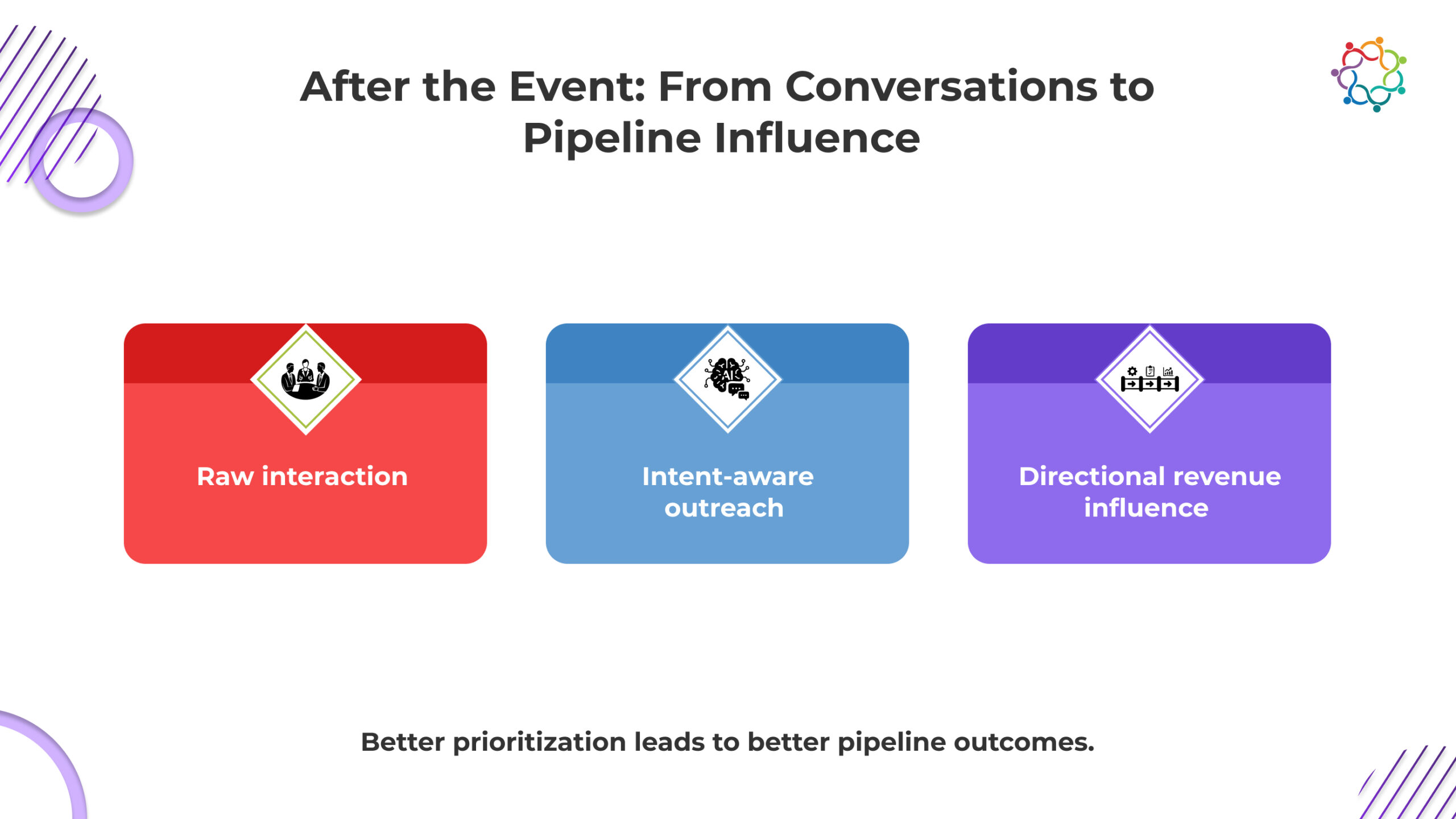
Post-event follow-up is where many teams lose momentum. Emails are delayed, messages are generic, and relevance fades. AI helps by aligning timing and content with actual intent.
After the event, AI can prioritize follow-ups based on conversation signals, engagement level, and account status. This makes sure that high-intent prospects are contacted first and with appropriate context. Personalization is grounded in what was discussed, not in templated phrases.
Intent-based sequencing rather than batch blasts.
Messaging tied to specific needs or questions.
Clear recommendations on when to re-engage.
When used responsibly, AI for event sales conversations supports reps without replacing them. The rep still writes the message, chooses the tone, and builds the relationship. AI simply ensures that effort is focused where it matters most.
The result is a follow-up that feels timely, relevant, and human. Prospects recognize that they were heard, not processed.
Events rarely create instant deals, which makes attribution misleading. AI helps clarify influence without overclaiming credit by connecting conversation signals to pipeline movement.
This includes identifying patterns such as:
This is not about ownership. It is about contribution. When sales leaders can see how event conversations support deal progression, confidence in event investment increases. Decisions become informed rather than defensive.
When influence is visible, events stop being judged by lead volume alone and start being evaluated by their role in revenue motion.
(Also Read: The Ultimate Guide to Integrating Sales Enablement and Event Marketing)
Cross-team alignment often breaks down around events. Sales questions lead quality, marketing questions follow-up, and RevOps struggles to reconcile data. AI insights can reduce this friction if shared thoughtfully.
Alignment starts with shared definitions of intent. When teams agree on what signals matter, AI outputs become trusted rather than debated. Visibility should empower, not police. The goal is clarity, not micromanagement.
Clear ownership of how insights are used.
Guardrails that prevent data overload.
Transparency into how signals are generated.
Importantly, this does not require new dashboards for every team. Sometimes the most effective alignment comes from simpler, shared views and consistent language.
When AI insights are framed as support rather than control, trust grows. Sales, marketing, and RevOps move from defending their metrics to collaborating on outcomes.
AI adds credibility to event sales strategies only when its boundaries are clearly understood. Algorithms cannot direct every aspect of a sales conversation. AI is useful when it complements judgment rather than when it takes its place. This section explains the situations in which human decision-making is still crucial and the ones in which AI actually improves event sales talks.
Prioritizing attention and time
AI excels at analyzing multiple signals at once to help reps decide which conversations deserve deeper focus, especially in busy event environments.
Identifying patterns humans miss
By connecting engagement behavior, account data, and historical outcomes, AI surfaces intent patterns that are difficult to spot manually.
Preserving and structuring context
AI helps retain key details from conversations so insights are not lost after the event, enabling more relevant and timely follow-up.
Improving consistency across teams
It creates a shared understanding of intent and conversation quality, reducing variation caused by individual memory or subjective interpretation.
Replacing human judgment in conversations
AI cannot read emotional cues, adapt tone in real time, or navigate complex interpersonal dynamics that define effective selling.
Handling ambiguity without guidance
When data is incomplete or situations shift unexpectedly, AI lacks the situational awareness that experienced reps bring.
Building trust and rapport
Relationships are formed through listening, empathy, and credibility, all of which remain distinctly human skills.
Making ethical or strategic trade-offs
Decisions involving sensitivity, long-term partnerships, or brand trust require human oversight and accountability.
Events have always been about conversations. Technology should serve that truth, not distract from it. The real promise of AI for event sales conversations is not efficiency for its own sake. It is focus, relevance, and continuity.
Sales teams have more clarity when AI is used strategically before, during, and after an event. They are aware of when to follow up, who to talk to, and how to set priorities. As attention improves, so do conversations.
When people apply greater intelligence, not when they give up their judgment, the best results are achieved. Things become more deliberate and less chaotic. Sales discussions become a strategic asset rather than a blind spot.
No automation replaces a great rep. But better intelligence helps great reps do their best work.
(If you’re thinking about how these ideas translate into real-world events, you can explore how teams use Samaaro to plan and run data-driven events.)