Samaaro + Your CRM: Zero Integration Fee for Annual Sign-Ups Until 30 June, 2025
- 00Days
- 00Hrs
- 00Min

1
2
3
4
5
The majority of conferences are advertised with a limited time frame. A few weeks prior to the event, promotion intensifies, peaks around registration deadlines, and then abruptly ends when the venue doors close. Instead of viewing conferences as strategic assets, this method views them as discrete calendar occurrences. The result is predictable: rushed campaigns, uneven attendance quality, and lost momentum immediately after the event.
The problem is not effort but framing. When teams see a conference as a short campaign, they optimize for visibility instead of value. They focus on filling seats rather than shaping the right audience. They concentrate their spending on late-stage promotion instead of building trust and anticipation over time. Most importantly, they fail to connect pre-event activity, on-site engagement, and post-event outcomes into a single system.
A more effective approach reframes the entire discipline of conference marketing. How to create a year-long marketing engine that culminates in a live experience and continues long after it ends is a better question to ask than how to advertise an event. Conferences have unique advantages that other channels do not have. They combine content, community, credibility, and conversation in one place. When marketed as a lifecycle, these elements compound rather than reset each year.
This blog challenges the short-cycle mindset and introduces a lifecycle-driven model. It explains why the most successful conferences begin creating value months before the first attendee arrives and continue doing so long after the last session ends.
The Conference Marketing Lifecycle: The Big Picture
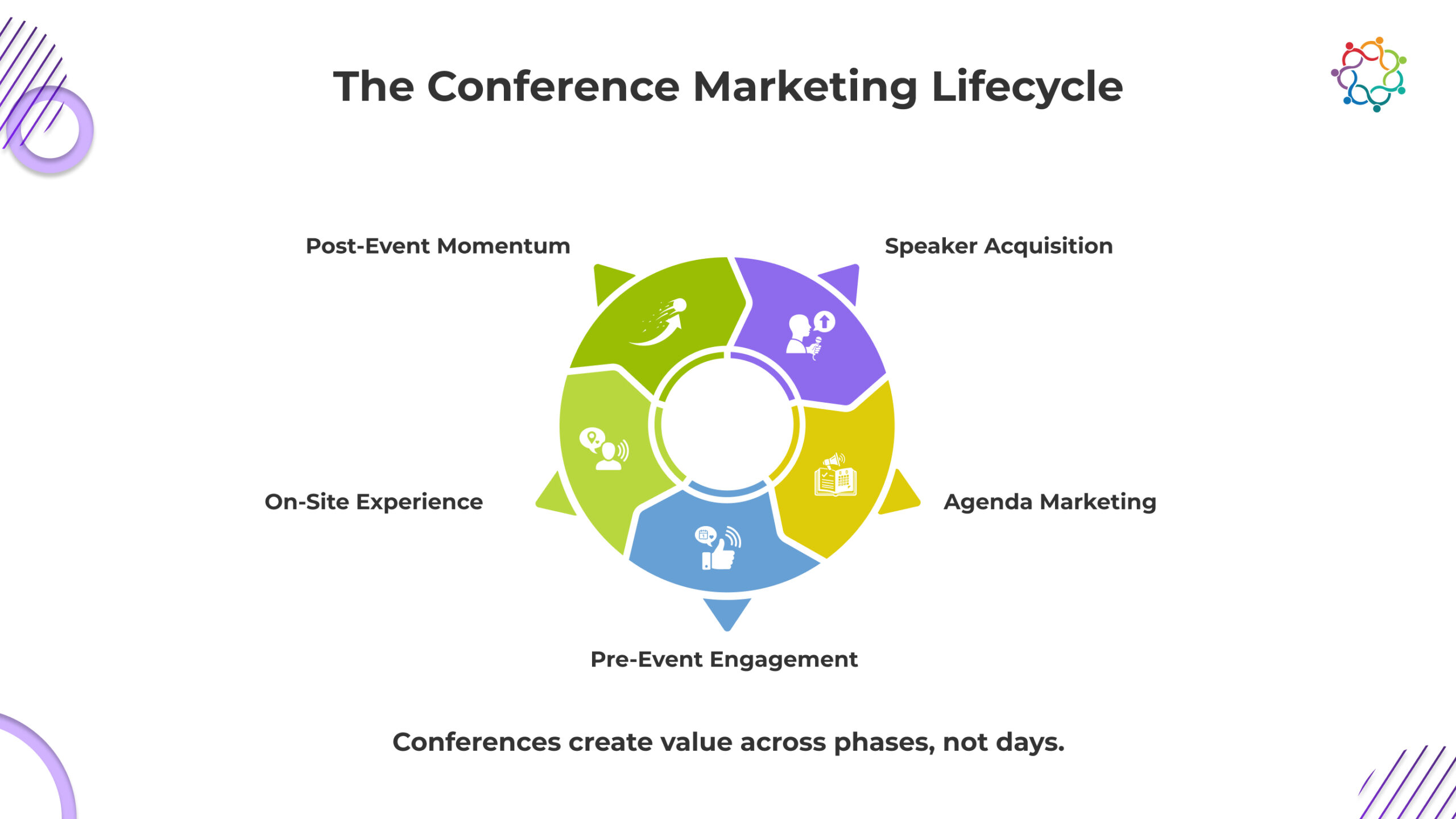
To move beyond fragmented execution, teams need a clear mental model. The conference marketing lifecycle provides that structure. It frames every activity as part of a continuous flow where each phase feeds the next. Instead of separate plans for promotion, engagement, and follow-up, the lifecycle aligns them into a single narrative.
The lifecycle has three connected arcs at a high level. The first is pre-event momentum, where visibility, credibility, and intent are built gradually. The second is during-event amplification, where energy, interaction, and shared experience peak. The third is post-event compounding, where content and relationships extend the value of what happened on-site.
This structure helps teams answer better questions. Rather than asking whether an activity drives registrations, they can ask whether it builds momentum. Rather than measuring success only on event days, they can evaluate how engagement evolves across months. The lifecycle also clarifies roles across teams. Content, community, field marketing, and demand functions all contribute at different stages, but toward a shared outcome.
The lifecycle model can be summarized as:
Once this big picture is clear, each phase can be designed intentionally instead of reactively.
Phase 1: Call for Speakers as the First Marketing Engine
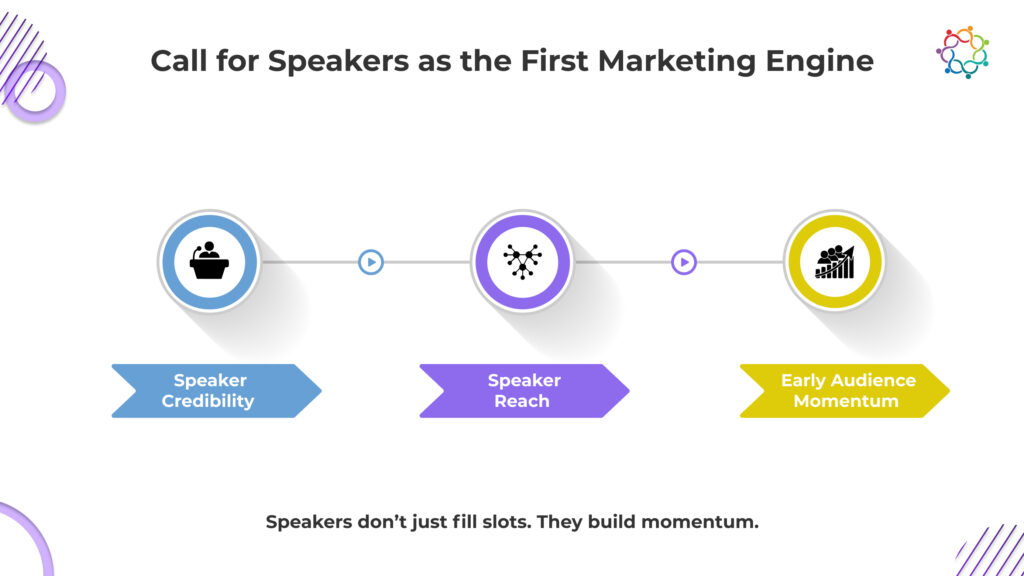
The call for speakers is often treated as an operational necessity. A form is published, submissions are collected, and selection happens behind closed doors. From a lifecycle perspective, this is a missed opportunity. Speaker outreach is one of the earliest and most powerful marketing levers available to conference teams.
Speakers bring more than expertise. They bring credibility, networks, and audiences that already trust them. When a call for speakers is positioned as an invitation to shape the conversation rather than fill slots, it signals ambition and openness. It also creates early visibility, often months before paid promotion begins.
Effective speaker programs treat contributors as partners. This means involving them early, communicating the conference vision clearly, and making it easy for them to advocate participation. The act of applying, sharing ideas, and engaging with the event narrative builds momentum long before tickets are sold.
From a strategic standpoint, speaker-led marketing also improves audience quality. When respected practitioners talk about a conference, they attract peers who care about substance, not just scale. This sets the tone for everything that follows, including agenda design and engagement expectations.
Key principles for leveraging speakers as a marketing engine include:
In a lifecycle-driven approach, the call for speakers marks the true beginning of conference marketing, not a background task.
Phase 2: Agenda Marketing That Signals Value, Not Volume

Agendas are often published as long lists of sessions and speakers, updated all at once close to the event. And these agenda dumps rarely help potential attendees understand why they should care. They focus on quantity over clarity and often attract the wrong audience.
Agenda marketing should be viewed as a means of communication. It conveys the purpose of the conference, the issues it addresses, and the caliber of thought that participants might anticipate. Prospects can self-qualify when agendas are structured around issues, phases, or roles. Better on-site involvement and deeper discussions result from this.
A staggered agenda helps keep interest and momentum going. Gradually exposing topics, keynote speakers, and flagship sessions creates ongoing touchpoints. Every revelation is a chance to improve the event’s placement and re-engage the audience.
This approach also aligns with lifecycle thinking in conference marketing. Agenda content feeds pre-event engagement, shapes on-site interaction, and determines what content will be most valuable to repurpose afterward. A well-structured agenda is a roadmap for the entire conference narrative.
Effective agenda marketing focuses on:
By treating the agenda as a strategic asset, teams move beyond promotion toward intentional audience building.
Phase 3: Pre-Event Audience Engagement Before Day One
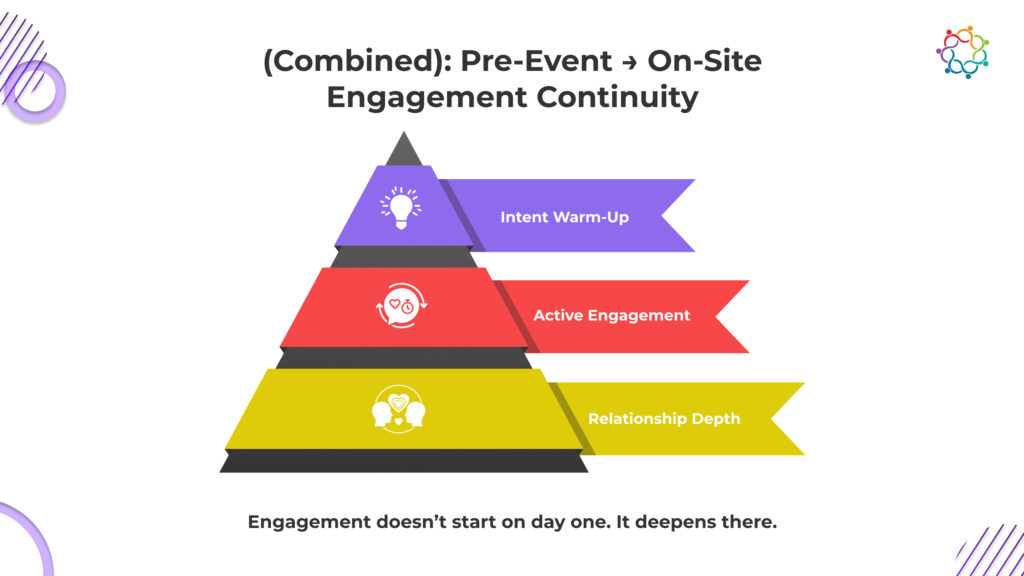
Once speakers and agenda themes are established, the next phase shifts from awareness to engagement. This stage is not about pushing reminders or discounts. It is about warming intent and setting expectations for participation.
The strongest results from pre-event engagement come when the conference discussions are extended onto online platforms. Short articles, interviews, or discussion starters are examples of content seeding that make participants more knowledgeable and engaged. Speaker-led previews build anticipation rather than repetition by introducing concepts that will be further discussed on-site.
Additionally, this stage is critical in forming behavior. Teams prepare participants for active participation by explaining how they can contribute, ask questions, or connect with peers. This raises the possibility of meaningful interaction during the event and decreases passive consumption.
Pre-event involvement guarantees continuity from a lifecycle standpoint. It fills in the void that frequently occurs between registration and attendance. Additionally, it generates information and insights that guide post-event follow-up and on-site facilitation.
What executives need is a distilled view of performance that aligns with business outcomes. This means fewer metrics, not more. It means reports that answer strategic questions directly instead of inviting interpretation.
Key engagement tactics in this phase include:
When executed well, this phase transforms registrants into participants and strengthens the long-term impact of conference marketing.
In a lifecycle model, on-site interaction is a continuation of what began months earlier, but it is frequently perceived as the major event. Participants come with preexisting relationships, expectations, and context. Instead of starting from scratch, the purpose of on-site design is to strengthen these linkages.
This objective is undermined by passive attendance. One-way presentations restrict interaction and lower retention throughout sessions. Rather, the experience should incorporate engagement. This includes formats that promote participation, organized networking, and mediated conversations.
Novelty is not as important as experience design logic. While they could generate excitement in the near term, gimmicks rarely lead to significant results. Good on-site interaction reinforces continuity and trust by aligning with the issues and topics previously discussed.
This phase also generates the raw material for post-event value. Conversations, questions, and shared insights become content and signals that guide follow-up. When on-site engagement is intentional, it strengthens the entire lifecycle.
Principles for sustaining engagement on-site include:
Viewed this way, the live experience becomes a pivotal midpoint in the broader conference marketing system.
This shift feels liberating because it reframes analytics as a support system rather than a burden. Instead of defending past spending, leaders can focus on shaping future investment. Outcome-oriented reporting restores trust in measurement by making it actionable.
Phase 5: Extending Conference Value Beyond the Venue
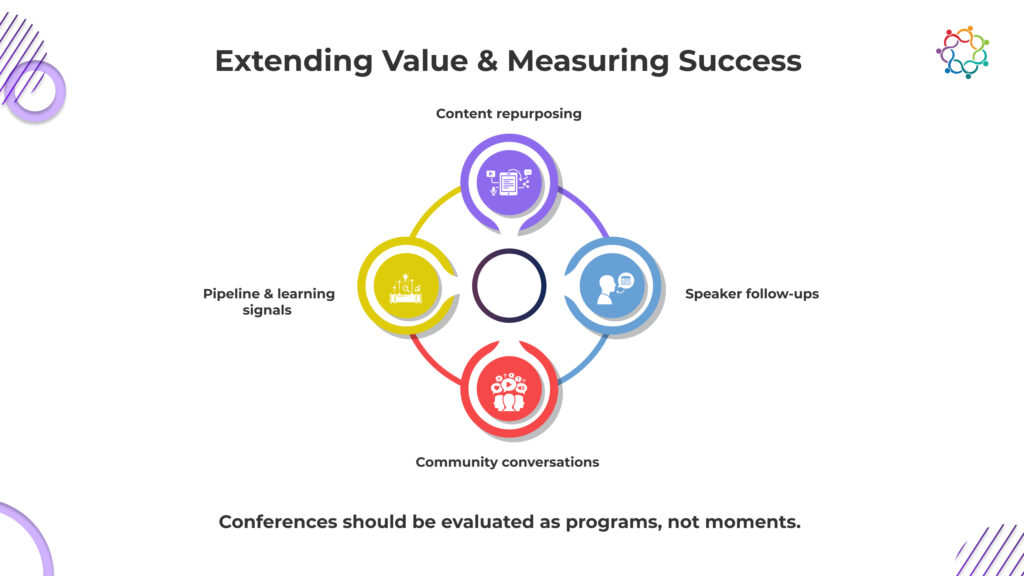
Many conferences lose momentum immediately after the final session. Content is uploaded, thank-you emails are sent, and teams move on to the next project. This abrupt ending wastes accumulated attention and trust.
Post-event activity should be positioned as amplification, not closure. Sessions can be repurposed into articles, videos, or discussion starters. Speaker and attendee follow-ups can continue conversations that began on-site. Community spaces can remain active, turning a single event into an ongoing forum.
This phase is where compounding happens. Content reaches audiences who could not attend. Relationships deepen through continued interaction. Insights gathered during the event inform future programming and marketing decisions.
From a lifecycle standpoint, post-event engagement also feeds the next iteration. It shortens the ramp-up for future conferences and strengthens the brand’s authority in its domain. This continuity is a defining feature of mature conference marketing strategies.
Effective post-event extension focuses on:
By extending value intentionally, teams ensure the conference lives far beyond its dates
Measuring Conference Success Across the Lifecycle
Measurement often lags strategy. Many teams still rely on day-of metrics such as attendance or satisfaction scores. While useful, these indicators capture only a fraction of the conference’s impact.
Lifecycle measurement evaluates momentum, engagement, and outcomes across phases. Pre-event indicators might include speaker reach or content engagement. During-event metrics can track participation and interaction quality. Post-event measures assess content performance, community activity, and downstream business outcomes.
This approach aligns with evaluating conferences as programs rather than occurrences. It also connects with broader discussions around event ROI and post-event evaluation. When metrics are mapped to lifecycle stages, teams gain clarity on what drives long-term value.
Importantly, lifecycle measurement supports better decisions. It helps leaders determine which elements to scale, refine, or retire. It also provides a more credible narrative for stakeholders who expect accountability.
Key measurement principles include:
In mature conference marketing operations, measurement reinforces strategy rather than reacting to it.
Conferences reward patience and structure because their real value is created over time, not compressed into a few days. When they are marketed as short campaigns, results are equally short-lived. Attention spikes briefly, engagement fades quickly, and whatever momentum was built disappears once the event ends. In contrast, when conferences are treated as lifecycle-driven assets, they produce sustained momentum, deeper participation, and returns that compound with each phase.
This shift begins with reframing how each element is used. Calls for speakers are no longer administrative steps but early marketing engines that build credibility and reach. Agendas stop being long lists and start acting as clear value signals that attract the right audience. On-site engagement is designed as a continuation of conversations that began months earlier, not a standalone experience. Post-event activity evolves from basic follow-up into amplification that extends learning, discussion, and connection.
Conferences become strategic assets within a broader marketing ecosystem when observed this way. They are not isolated moments on a calendar but interconnected systems that build community, authority, and continuity year after year. Teams that adopt this mindset move beyond promotion and execution toward long-term impact.
Ultimately, the real power of conference marketing lies in creating relationships and conversations that continue to deliver value after the event concludes.
(If you’re thinking about how these ideas translate into real-world events, you can explore how teams use Samaaro to plan and run data-driven events.)