Samaaro + Your CRM: Zero Integration Fee for Annual Sign-Ups Until 30 June, 2025
- 00Days
- 00Hrs
- 00Min


The effectiveness of AI continues to be questioned by most Event-oriented teams at large corporations as its ability to deliver quality products has not been proven; companies have discovered that there are far too many variables when it comes to the success of developing AI and, since AI is still evolving, it cannot yet be classified as a fully matured technology.
Many people are disappointed by the fact that AI doesn’t possess every expectation of it that has been placed upon it due to unrealistic expectations, discrepancies between processes within an organization, and the lack of proper preparation on the part of organizations for what AI represents. Many businesses treat AI as if it were simply another software program that would allow for enhanced productivity through the installation of an upgrade.
Unfortunately, to maximize the value of AI, there needs to be alignment with the culture of the organization, data must be cleaned (to create valuable data) and businesses must have clear strategic thinking related to AI, and businesses must also invest in continual improvement to maintain the value of AI as it develops over time.
This blog post will provide you with information related to the many misconceptions related to AI and how organizations can run with AI while using it to position their organization toward maturity.

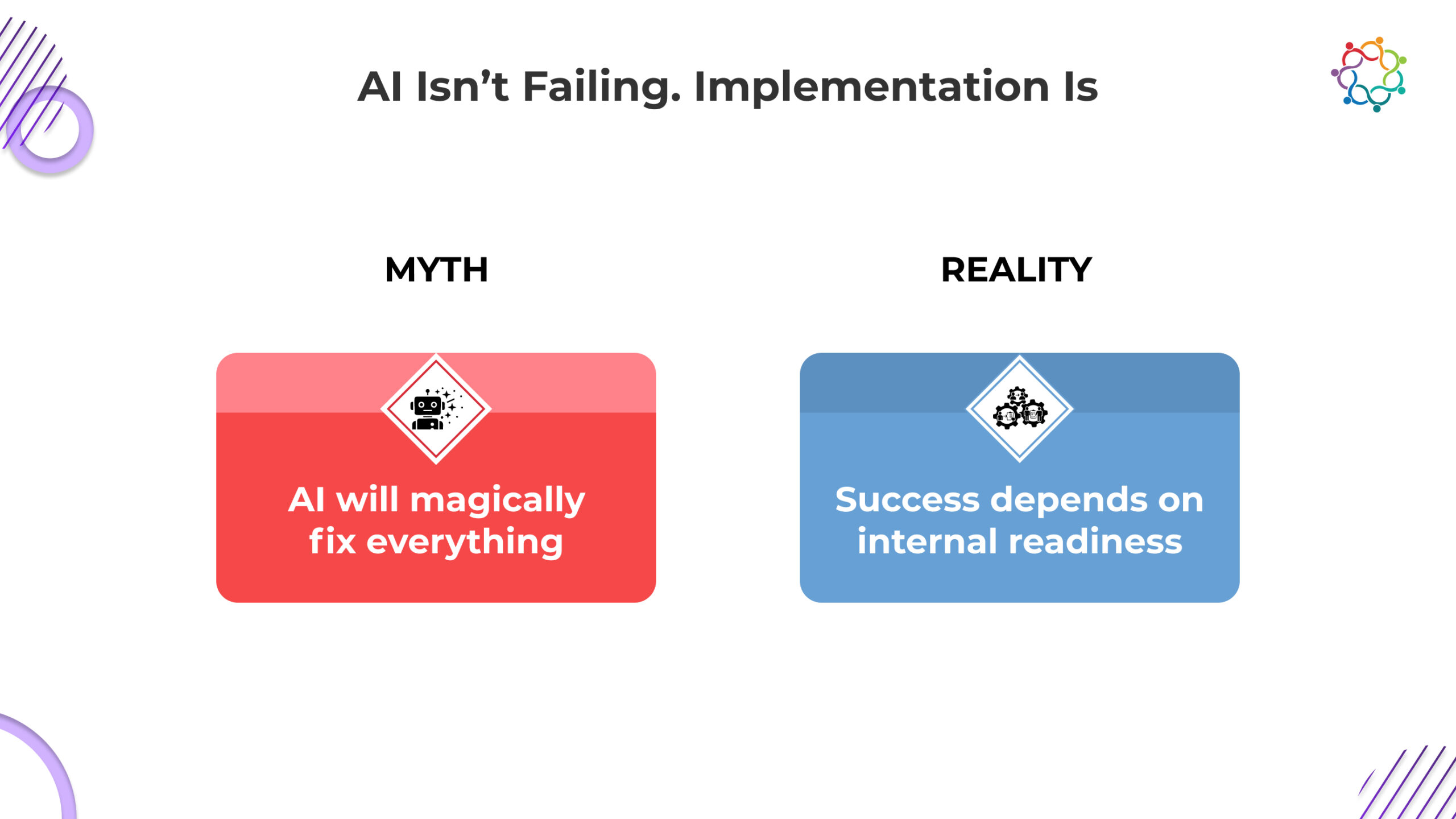
A prevalent myth in enterprise environments is that AI will fix all the inefficiencies inherent in an organization; however, this could not be further from the truth.
AI simply amends whatever process it touches; therefore, if the process being improved is flawed, the output of the AI-enhanced process will be flawed.
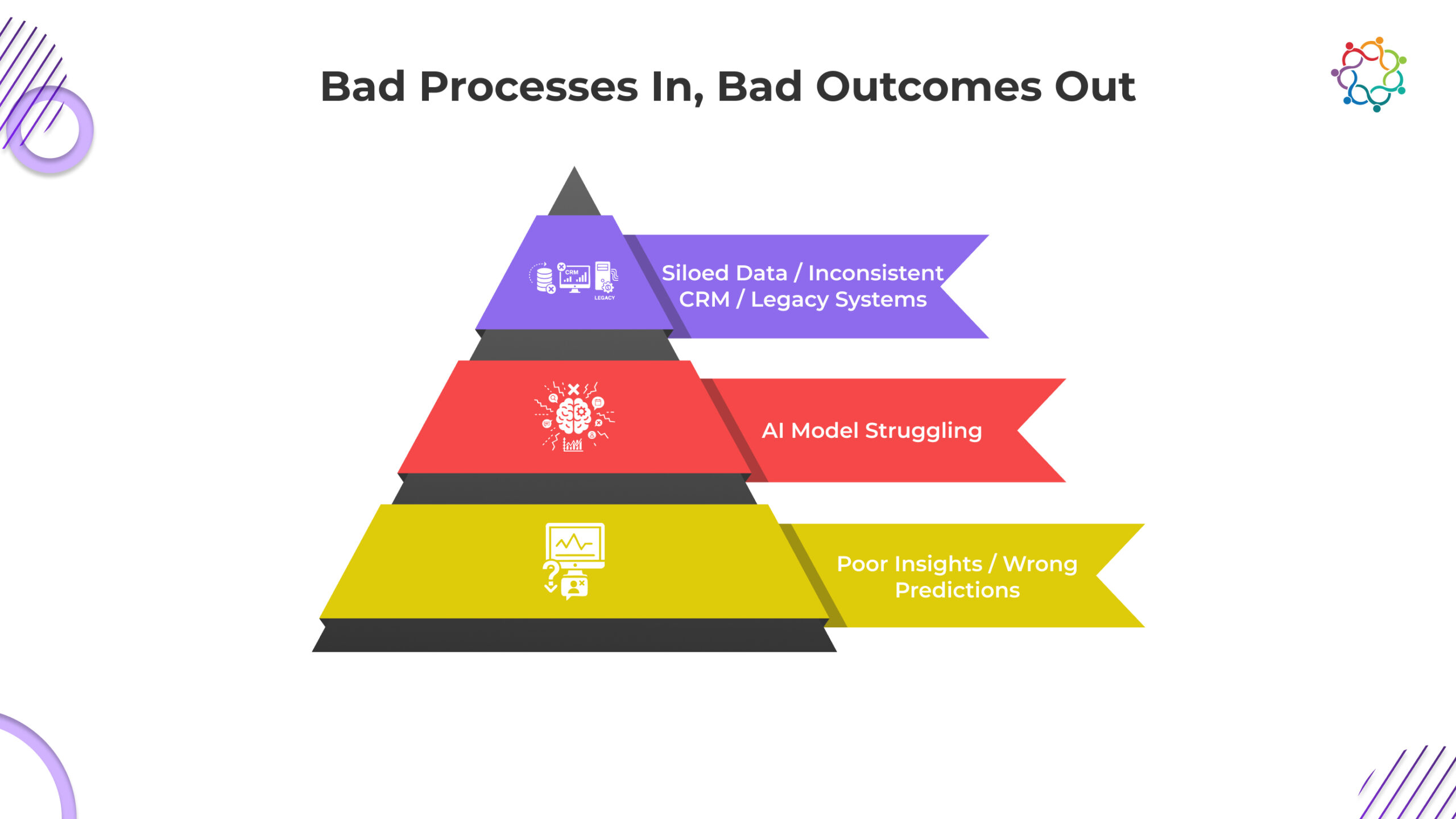
If an organization’s workflows are broken, if there is inconsistent input data, and/or if teams operate separately from each other (i.e., in silos), the AI models created by the organization must inherit all of these deficiencies and will not eliminate them – they will only produce outputs that replicate the same mistakes made prior to the introduction of AI into the organization.
Issues with legacy data hygiene. For example, an organization that uses bad or incomplete customer record management (CRM) systems will not obtain reliable future predictions from the AI model it creates from this data.
Siloed workflows. Marketing and sales and operations teams all utilize different tools to manage operations; as a result, all of the intelligence of these functions becomes fragmented within the organization.
Unclear key performance indicators (KPIs). Without defined outcomes, the AI model will not know how to align its predictions with business goals.
AI is an accelerator of processes; it does not fix processes. Thus, to achieve improved processes, it is essential that the underlying processes of an organization be clean, structured, and aligned.
People often think about AI replacing humans because they fear it or, in some cases, have unrealistic expectations for what AI can do. However, while AI has an important role in enterprise event marketing, its importance is not as valuable compared to the context created through human interaction.
AI aids in many aspects of strategic planning; however, it cannot replace judgement.
AI technology can assist with identifying, researching and analysing data through pattern recognition; however, it is unable to:
AI is able to ascertain the likelihood of attending from an audience of high intention, however, the marketer still needs to engage with and demonstrate value to individual high intent audience members and develop a human experience for high-intent attendees.
Therefore, AI is only a tool for input, and therefore requires further analysis, and, ultimately, judgment or strategic decisions for the marketer to maximise any value derived from the use of AI.
The primary objective of using AI for enterprise event marketing is to assist and add value, through augmentation, to the marketer.

Most teams at enterprises treat AI as a wholesale switch: Once flipped, immediate results can be expected. AI is not a product that will produce instant success, rather it is a long-term investment in an evolving capability that matures through ongoing development.
AI Must Have:
Most companies run into culture-related issues in their AI implementations, trustworthy output from AI(s), immediate executive expectation for return on investment (ROI), and lack of understanding regarding onboarding requirements (e.g., ongoing processes, integration steps), this equates to a lack of trust/immediate results on behalf of the teams involved in implementing AI, resulting in a much slower adoption rate than would normally occur because many organizations run into cultural issues rather than algorithmic issues.
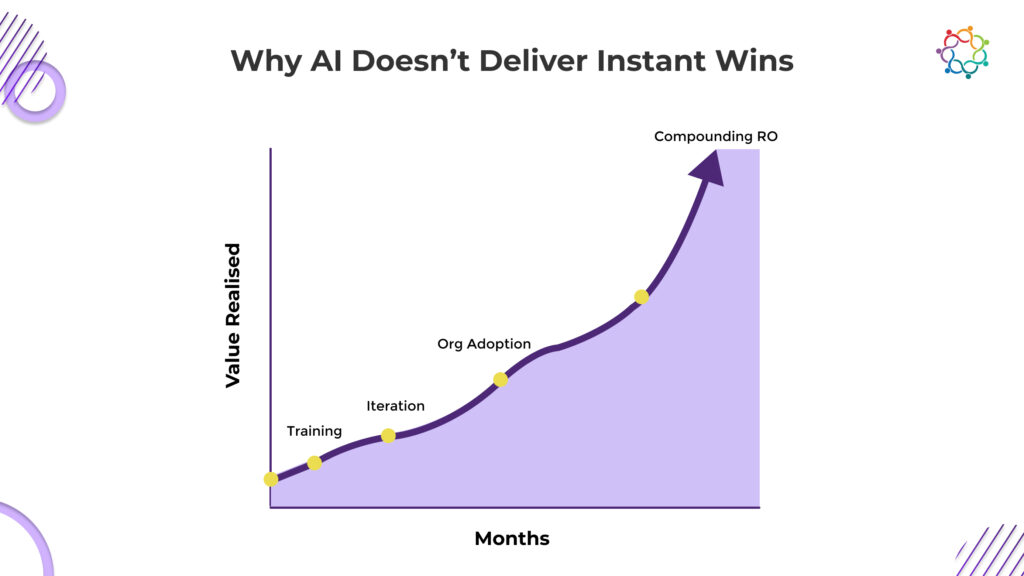
As long as organizations continue to input consistent data into AI(s), the longer the organization develops/use(s), the more accurate they will become exponentially – thus their value will continually build upon itself, not become apparent overnight.
The real ROI associated with AI will be cumulative, not immediate.
Samaaro approaches AI differently from most event platforms. Instead of positioning AI as a standalone capability, intelligence is embedded as an enablement layer across planning, engagement, and post-event workflows.
This approach reflects a broader AI-driven event operating model, where AI supports decision-making across the event lifecycle rather than attempting to automate isolated tasks.
In practice, this means:
Samaaro’s philosophy is simple: AI should strengthen human judgment and operational discipline, not attempt to replace them.
AI adoption’s greatest obstacle is not the tools; it’s the way people think about them. Artificial Intelligence has become synonymous with a lot of things that are not real. Misperceptions such as “AI can fix everything” or “I’ll never have to hire another marketer again” create false expectations and, therefore, slow down the pace of transformation within companies.
Companies that focus on AI’s real value through readiness, data quality, process alignment and incremental adoption will benefit from AI. On the other hand, companies that only chase after Artificial Intelligence’s trendy buzz will end up being disappointed.
Successful implementation of Artificial Intelligence depends on whether the company is ready to implement it. In addition, today’s successful organisations in event marketing would have to be the most prepped-up organisations in terms of AI.

Built for modern marketing teams, Samaaro’s AI-powered event-tech platform helps you run events more efficiently, reduce manual work, engage attendees, capture qualified leads and gain real-time visibility into your events’ performance.
Location


© 2026 — Samaaro. All Rights Reserved.