Samaaro + Your CRM: Zero Integration Fee for Annual Sign-Ups Until 30 June, 2025
- 00Days
- 00Hrs
- 00Min

Key Takeaways (TL;DR)
1
2
3
4
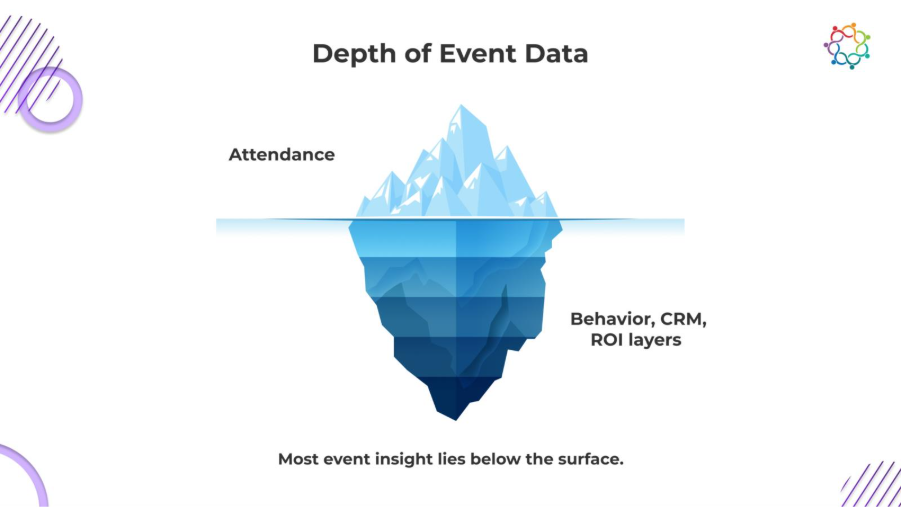
Most event teams at enterprises still lean on top-line metrics to determine success. They are enthusiastic about high registration numbers, a crowded venue, and other superficial benchmarks, like the number of unique badge scans at the door, but none of these numbers reflect what business leaders care about during the planning process and afterward. The question is not how many people were there, but did the event move prospects further along to purchasing, influence key accounts, or did the event create a deeper long-term affinity for the brand?
This is where the event ROI blind spot comes into play. By focusing exclusively on traditionally grounded key performance indicators (KPIs), teams feel good about the marketing metrics and how many people attended and experienced the event. However, their KPI focus shields them from determining what actually moves the business needles. As a result of selective audiences, rising costs, and closer scrutiny on event lift, teams need a modern ROI framework that goes beyond vanity metrics while capturing an aggregate impact.
For a long time, the success of an event has hinged on things that could be easily measured. We’ve celebrated total registrations, how many people walked by the booth, how many leads we collected, how many people we actively engaged in sessions, how many social impressions we had, etc. But measuring things like these provides too narrow of a view.
For example,
Limitations become obvious when we try to prove the impact of an event throughout the sales cycle. A campaign that generated thousands of leads could have otherwise had no impact on pipeline velocity. Conversely, an event that only had 10 people in the audience could open more quality conversations and yield counterparts that progress qualified accounts.
Traditional measures and context, such as registrations, foot traffic, and leads collected have never addressed the difference between engagement and true business value.
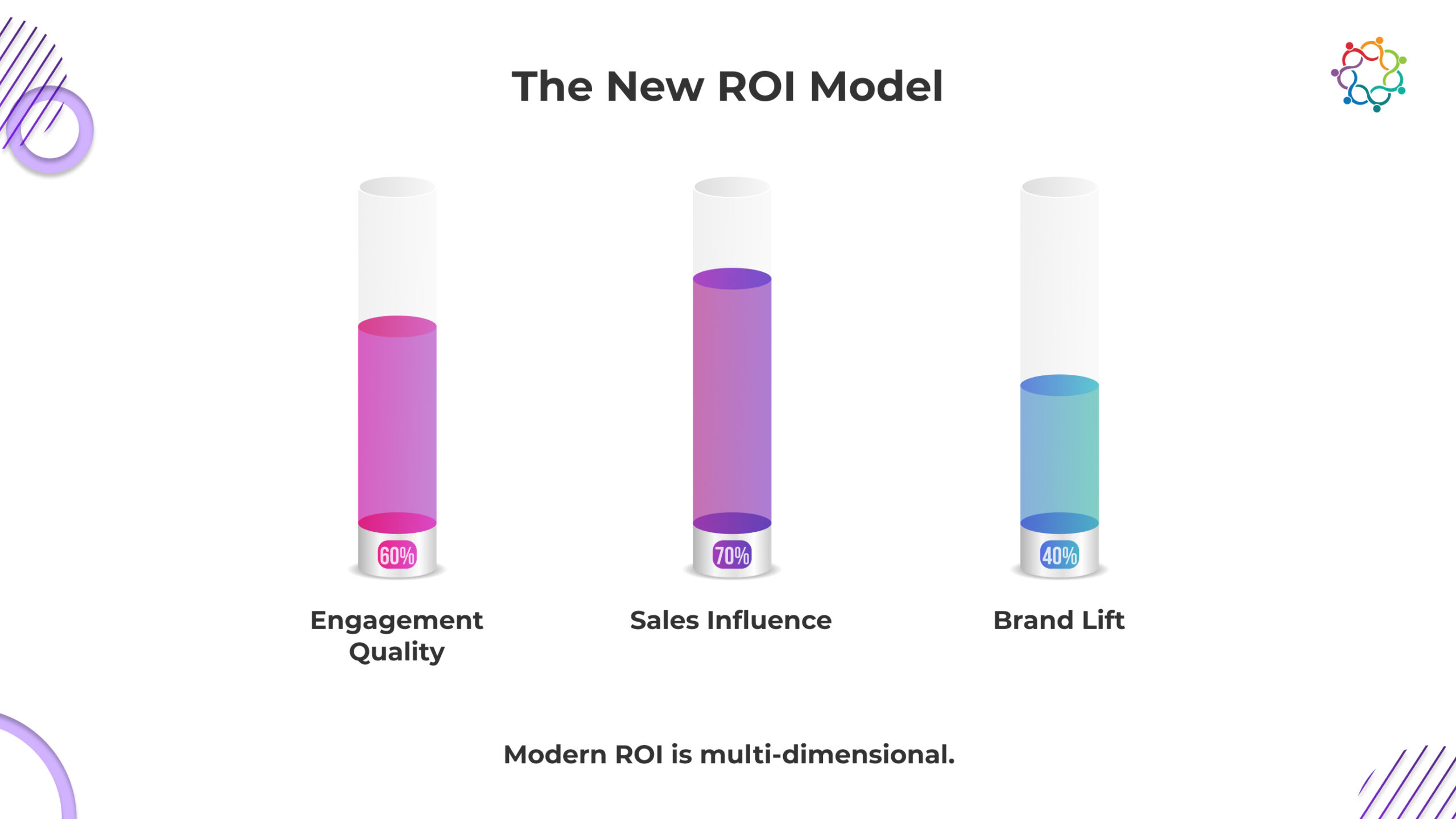
Modern event strategies require a measurement framework that captures depth, influence, and value over time. The new ROI equation is shifting away from tracking what happened to understanding why it mattered. It combines three primary dimensions.
Metrics that focus on depth quantify how much time and how much of the audience’s attention is spent with your content. These metrics include session dwell time, minutes spent interacting with a booth, repeated touchpoints, and consumption of content across digital channels. In-depth engagement suggests that there is a real interest and intent.
Metrics that represent sales influence indicate how events accelerate deals. The metrics include pipeline sourced, pipeline influenced, opportunity conversion and velocity, and account-based interaction scoring. Instead of tracking leads, this is tracking how well event touchpoints nurture momentum for sales.
Events also create impressions of the brand in a way that also ultimately impacts long-term revenue. The qualitative metrics include sentiment analysis, post-event NPS, message recall, and social advocates. All of these are representative of how the event builds trust and awareness.
Together these three dimensions create an overall measure of business impact. The new ROI equation recognizes that events impact customers on three levels: creating an emotional connection, creating educational value, and creating confidence for purchase. And it is a real representation of the role events play in enterprise growth.
A contemporary ROI framework is not feasible without a data connection across systems. Often event teams function in silos; marketing owns lead capture while sales own outcomes – limiting visibility. Meaningful insights into ROI only occur when event data is combined with records of CRM insights, behavioural analytics, and sales progress.
By tracking which accounts attended, what they engaged with and how those engagements impacted deal stages – teams can home in on which interactions truly promote motion and velocity in the pipeline.
Patterns across channels demonstrate buyer engagement and interest beyond the event venue. If attendees engage with post-event emails, resources, demos, etc. – this indicates a higher likelihood of conversion.
Sales teams can also measure whether accounts that experienced event activity progress more quickly than those that did not – which is a much stronger indicator of influence.
Changing the conversation on measuring data improves conversation over raw numbers to understand how an event or events contributed to conversions, renewals, or upsell opportunities.
When organizations adopt a new investment return equation, decisions are made quickly, and decisions become tactical and deliberate. Event strategies go from being intuition-driven to insight-determined.
Teams can determine what types of events create the most engagement depth or sales influence to determine the format to allocate the budget to that will deliver results time and again.
By determining what sessions, delivered content in what topics had the greatest business outcome, the marketing teams can shift strategies for messaging to their event and campaigns.
Depth of engagement is signalling to teams who to present their events this first who are worth even more or in a segment that should be explored due to high intent potential. Teams now have the ability to focus on high-intent, high-potential buyers with no concern to the headcount to attend.
Marketing and sales teams are more visible and coordinated with being able to plan follow up easier. The high intent attendees will take action right away increasing conversion rate.
These insights will elevate events from cost centres to predictable growing engines. Event leaders will gain the confidence to back spending, and defend a event decision with evidence, data formalities and details with context.
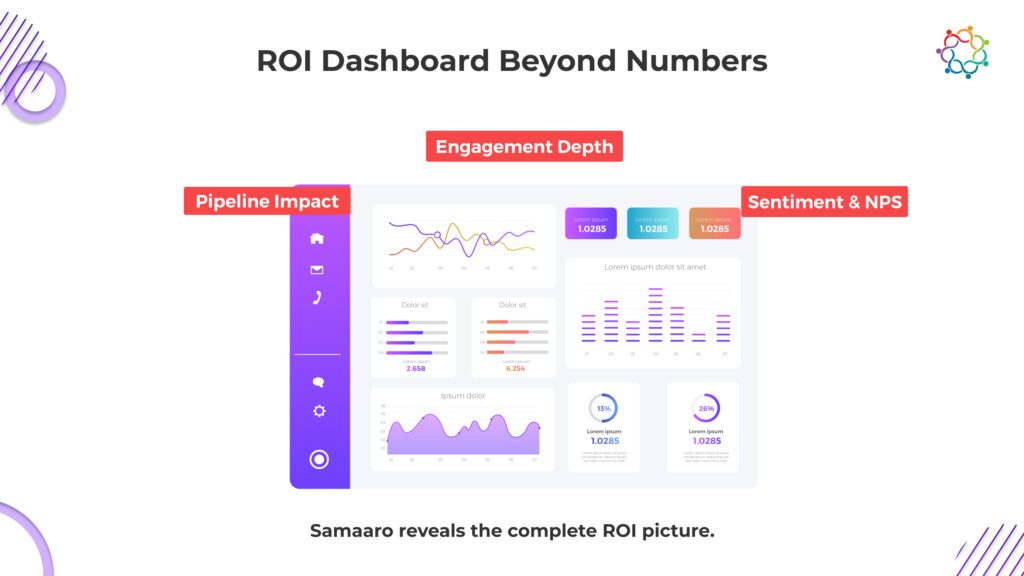
Most tools stop at attendance numbers. Samaaro is built to measure what actually moves revenue, aligning directly with the new ROI equation you’ve outlined.
Samaaro captures engagement depth at a granular level:
These signals differentiate passive attendance from real intent, the foundation of depth-based ROI.
It also tracks sales influence through direct CRM alignment. Every interaction feeds into the account record: who engaged with which session, how deeply, which assets they consumed, and how that behaviour affected opportunity stages, velocity, or deal size. Samaaro shows which touchpoints accelerated movement, and which didn’t matter.
For brand amplification, Samaaro layers qualitative intelligence on top of behavioural and CRM data. Sentiment trends, open-text insights, NPS drift, and message recall indicators sit alongside quantitative metrics so teams can understand how the event changed perception, not just activity.
The ROI dashboard does not present disconnected metrics. It produces a coherent influence map:
Instead of guessing what mattered, teams see precisely why an event drove revenue, or where value was lost. Samaaro turns ROI from a retrospective report into a forward-planning engine that guides investment, content, formats, and audience strategy.
Samaaro isn’t just reporting events; it’s measuring business impact.
Events have outgrown traditional KPIs. To understand their true impact, organisations need to measure depth, influence, and long-term value. Vanity metrics can show activity, but only modern ROI metrics can show meaningful progress toward enterprise goals.
The future of event measurement lies in smarter analytics that integrate sales, marketing, and behavioural data. By adopting the new ROI equation, leaders can finally answer the question that matters most: did the event move the business forward?
Unlock the complete ROI picture with Samaaro’s analytics suite.