Samaaro + Your CRM: Zero Integration Fee for Annual Sign-Ups Until 30 June, 2025
- 00Days
- 00Hrs
- 00Min


1
2
3
→
Bottom Line:
Conferences only drive revenue when engagement is designed to continue beyond the event, not end with it.
Conference floors create a dangerous kind of confidence.
Everything signals success. Booths stay crowded. Conversations flow without friction. Calendars are overbooked. Sales teams leave with pages of contacts and the clear impression that demand is strong and immediate.
This is where most teams get misled.
What looks like momentum is not pipeline movement. It is compressed attention. Conferences temporarily remove the friction that usually slows down buyer engagement. Decision-makers are available, curiosity is elevated, and interactions happen faster than they normally would.
This creates a spike in activity that feels like progress.
But that expectation is built on a flawed assumption. Activity during the event does not equal continuity after it. The environment disappears the moment the conference ends, leaving fragmented interactions with no guaranteed progression.
This is the Conference Conversion Gap. It explains why high engagement during conferences rarely translates into post-event pipeline movement.
If engagement does not extend beyond the event, it was never momentum to begin with.
This blog shows how to close the Conference Conversion Gap by turning event engagement into sustained pipeline movement.
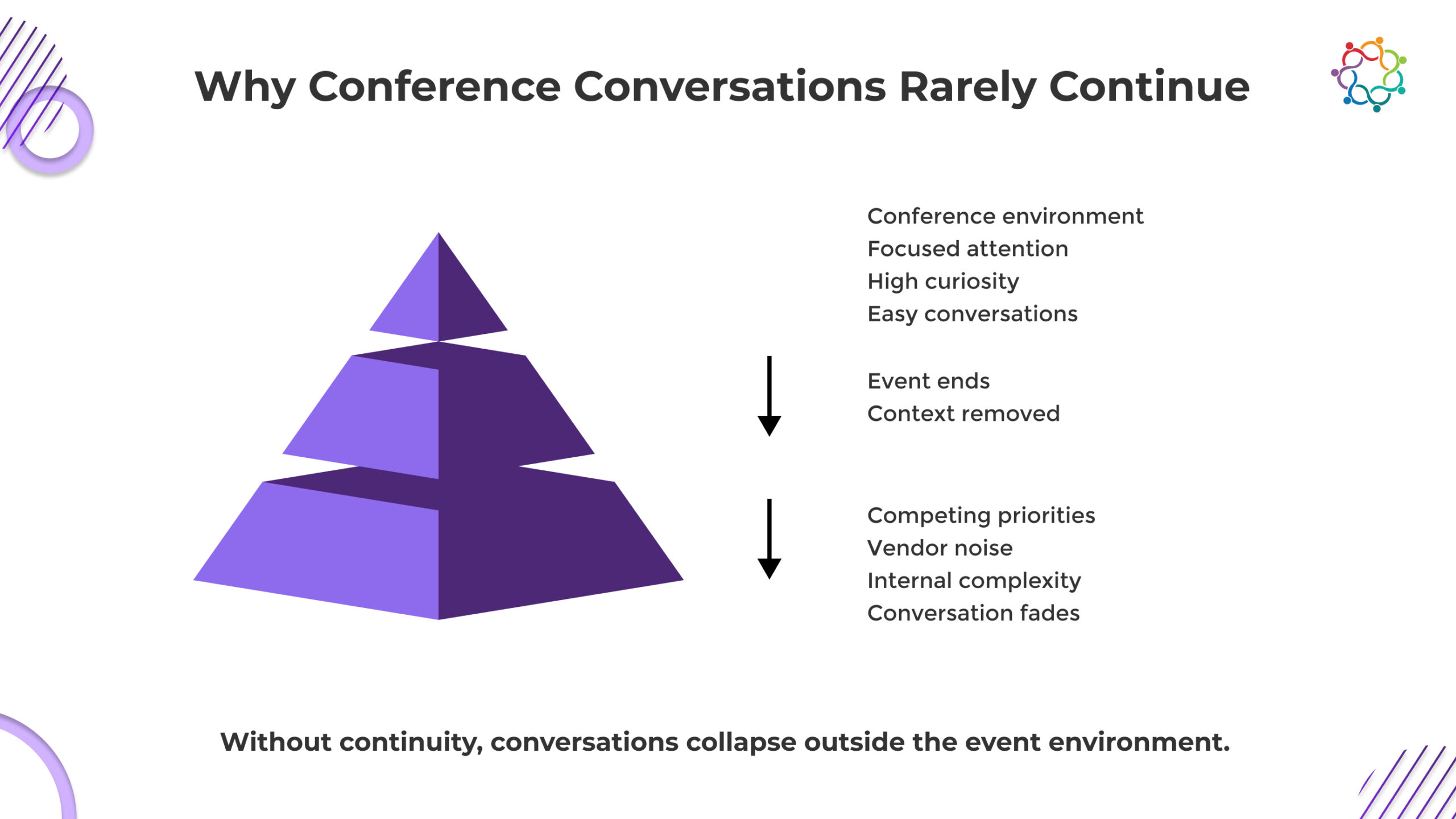
Conference conversations feel meaningful because the environment removes friction. Buyers are available, curious, and open. You are not earning attention. You are borrowing it.
That advantage disappears the moment the event ends.
Buyers return to real priorities, internal approvals, and competing demands. Your conversation is no longer contextual. It is just another follow-up in a crowded inbox. The urgency you relied on was temporary, and now it is gone.
This is where most teams miscalculate. They assume interest will carry forward. It does not.
If the conversation was not anchored in a real problem, a clear use case, and a defined next step, it has no reason to continue. Buyers do not reject you. They deprioritize you.
If your post-event strategy depends on re-engaging the buyer, you have already lost the advantage the event gave you.
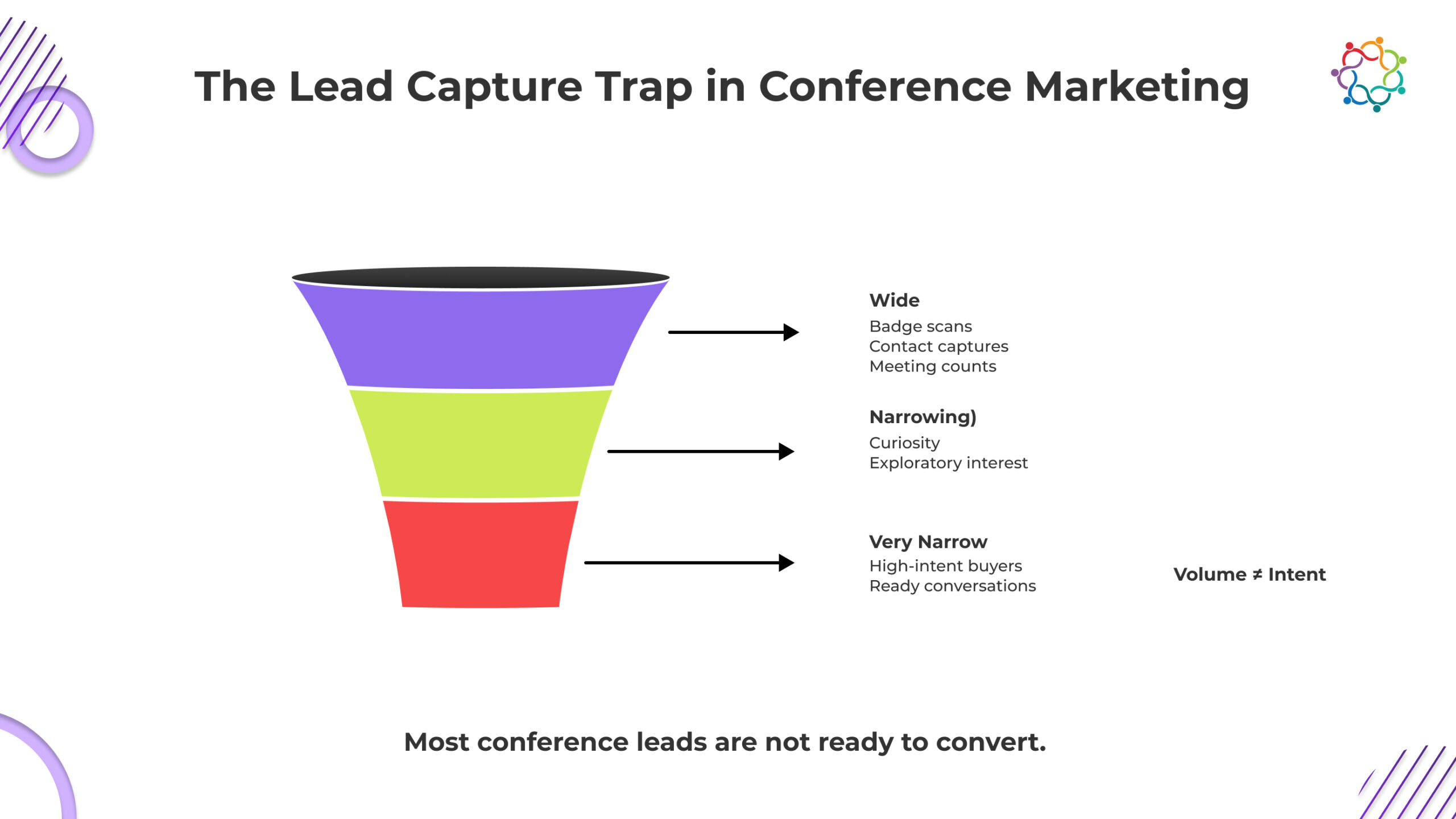
Most conference strategies are optimized for what is easiest to measure, which is lead capture.
Badge scans. Form fills. Meeting counts. Contact acquisition. These metrics are clean, immediate, and dashboard friendly. They provide instant visibility into event activity.
That is exactly why teams optimize for them.
Not because they are effective indicators of pipeline, but because they are easy to track, easy to report, and easy to justify internally.
This creates a structural bias.
Teams focus on maximizing the number of event marketing leads, assuming that volume will eventually translate into pipeline. It rarely does.
The problem is not just that these metrics lack depth. It is that they actively distort how success is defined.
Very few represent validated demand.
Yet internally, all leads are treated as potential pipeline contributors.
And then conversion stalls.
The issue is not poor follow-up. It is due to weak input quality.
Capturing a contact is not the same as capturing intent. Without understanding the buyer’s context, urgency, and decision stage, post-event conversion becomes guesswork.
The Conference Conversion Gap is reinforced here. Lead capture creates the appearance of demand, but it does not create the conditions required for pipeline progression.
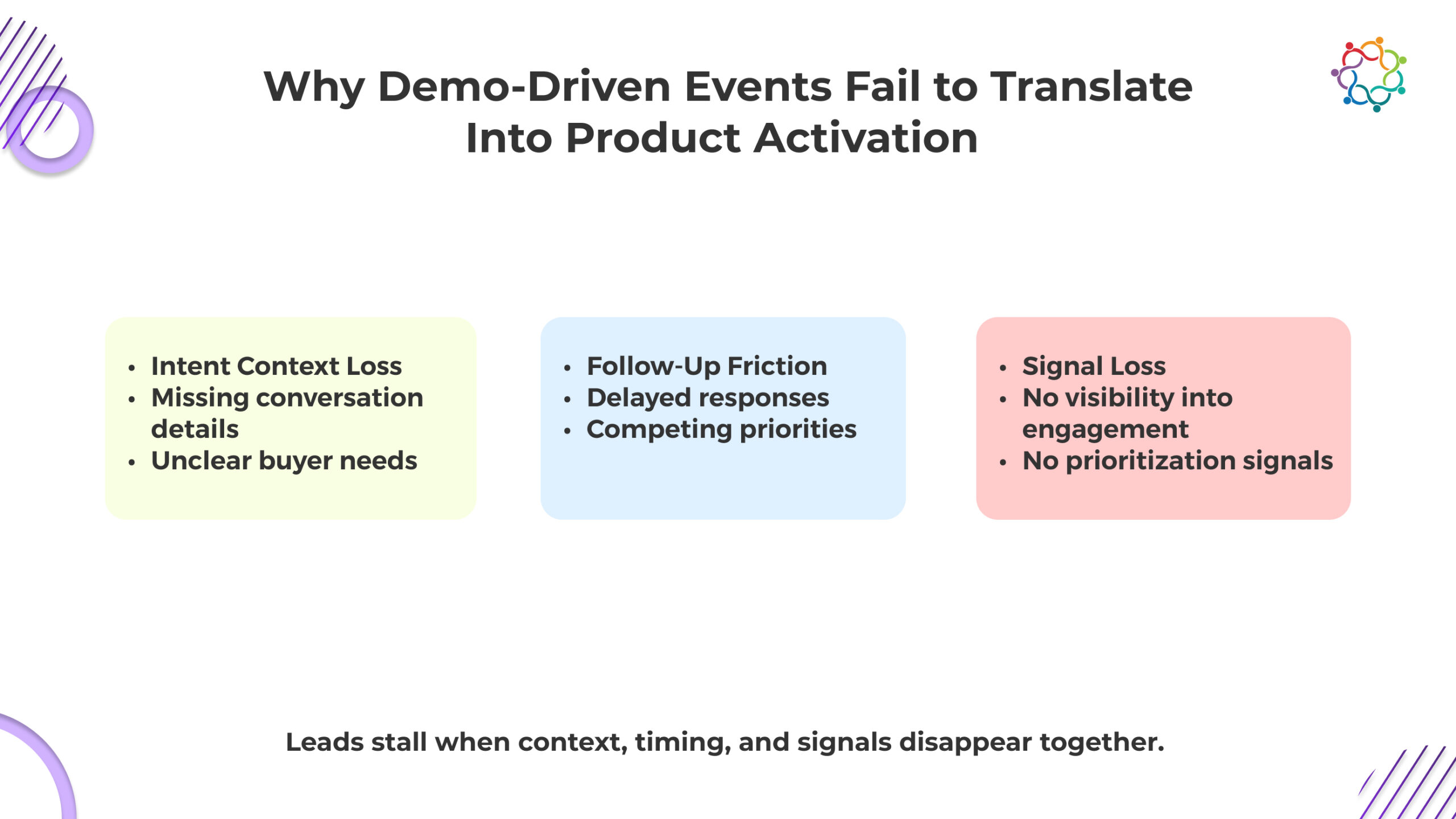
Lead stagnation does not happen at a single point. It unfolds as a sequence.
A predictable chain of breakdowns that begins the moment the event ends.
Event Ends → Context Disappears → Generic Follow-Up → Disengagement → Pipeline Stalls
This sequence explains why post-event leads fail to convert, even when initial engagement was strong.
Sales receives names without meaning. No problem, no urgency, no buying stage. Without context, follow-ups lose relevance instantly. You are not continuing a conversation. You are restarting blindly.
Without clarity, outreach defaults to templates. Nothing reflects the original discussion. Buyers recognize this immediately. What felt like a real conversation now looks like mass follow-up noise.
Buyer Attention Shifts
Post-event, your message competes with operational priorities and multiple vendors. The urgency is gone. If your conversation was not anchored deeply, it gets deprioritized without hesitation.
Rich interaction data stays trapped in the event. Sales only sees contacts. No visibility into interest or behavior. Without signals, prioritization fails, and high-intent buyers get treated like everyone else.
No context, weak follow-up, distracted buyers, missing signals. The outcome is inevitable. Conversations fade, opportunities never form, and what looked like momentum collapses before entering the pipeline.
This is not a breakdown in execution. It is a breakdown in continuity.
The conversion gap is not a single failure point. It is a chain reaction. And once it starts, recovery becomes difficult.
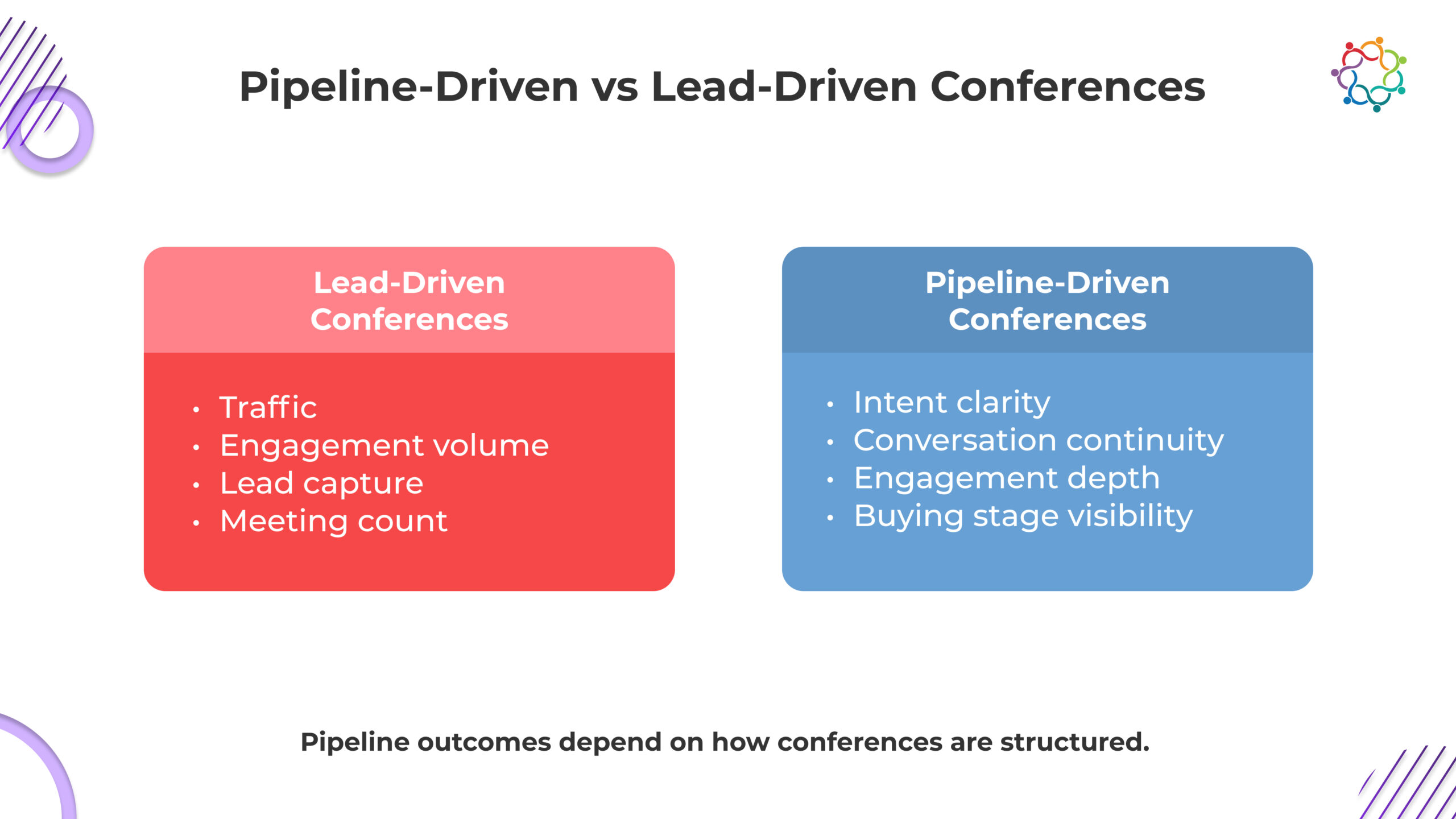
High-performing teams do not treat conferences as standalone marketing events. They treat them as active stages within an ongoing sales process. That shift forces a different standard. Every interaction is expected to move somewhere, not just happen.
They do not optimize for traffic, booth activity, or meeting volume. They prioritize clarity. Who is evaluating, what problem is being considered, and how close that conversation is to a buying decision. If that is not clear, the interaction is not valuable.
This is where most teams fall short. They leave the event with contacts, not direction.
Pipeline-driven teams leave with defined conversations that sales can act on immediately. There is no reset after the event because nothing was left incomplete.
If your conference strategy depends on restarting conversations after the event, you have already lost control of the outcome.
If your conference cannot influence what sales does the next day, it is not a pipeline system. It is a temporary engagement spike. Pipeline-driven conferences are designed to produce usable intelligence, not just interaction.
That changes what the event must deliver:
When this structure exists, sales do not guess. It acts with precision. Conversations move forward because they were never left incomplete.
If your event outputs cannot guide prioritization, they cannot drive progression. And if progression is not built into the design, the pipeline impact you expect will never materialize.
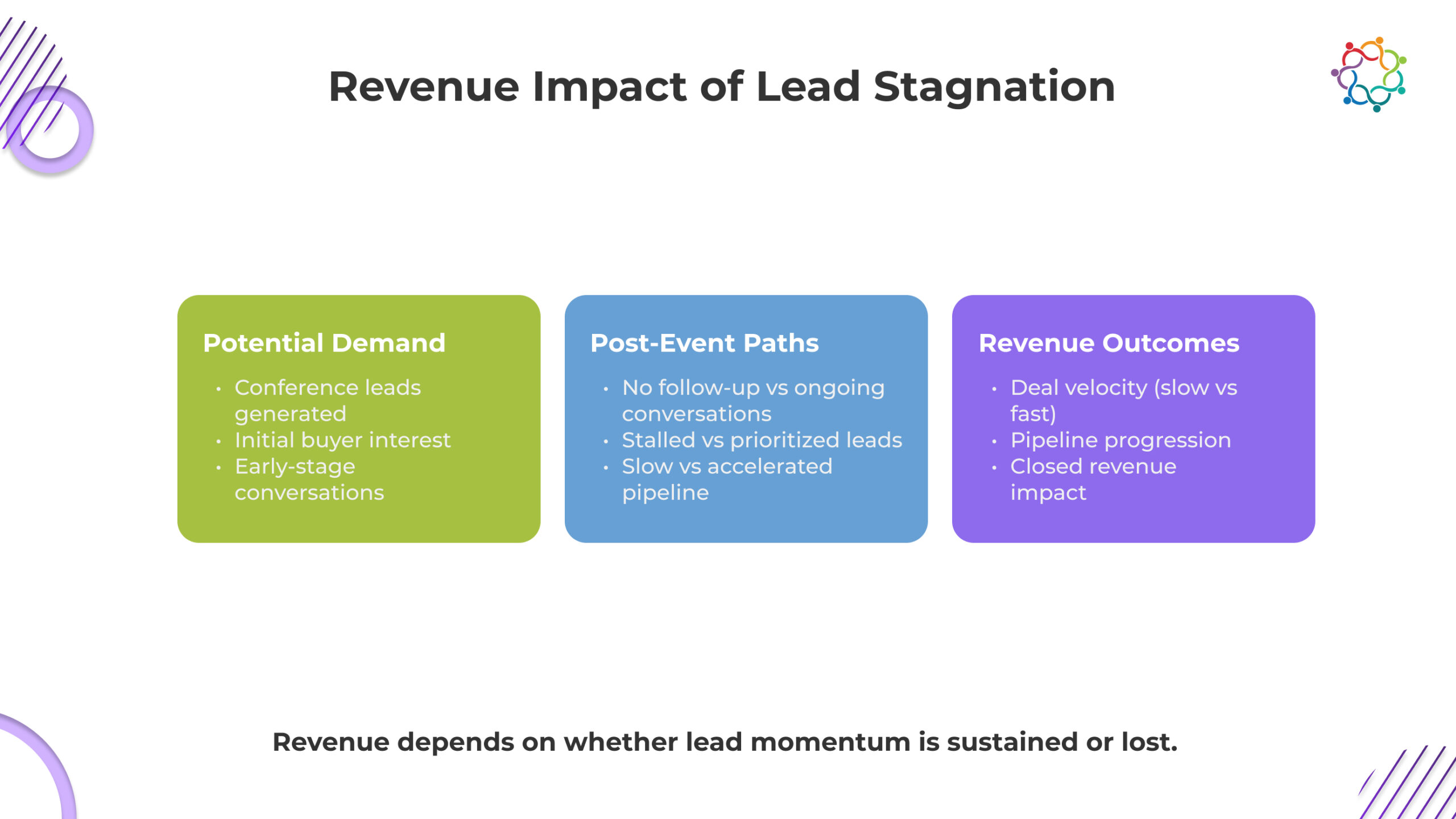
When post-event conversion fails, the damage is not limited to missed opportunities. It destabilizes your entire revenue model. The pipeline slows down at the top, which delays everything downstream. Forecasts become assumptions instead of projections.
Sales cycles stretch because early-stage conversations were never qualified properly. Teams waste time revalidating interest that should have been clear during the event. Meanwhile, genuinely interested buyers slip through because they were never identified correctly.
This is where most organizations lose control. They believe the event created demand, but they cannot translate that into pipeline movement or revenue timing.
The cost is hidden but significant. Poor conversion does not just reduce ROI. It introduces uncertainty into planning, weakens sales efficiency, and erodes confidence in event investments.
If your conference cannot produce predictable pipeline movement, it is not contributing to revenue. It is complicating it.
Most companies are not unaware of the problem. They are locked into it.
Lead volume persists as the primary success metric because it is immediate, visible, and easy to defend. Pipeline progression is slower, harder to attribute, and exposes gaps teams would rather not confront.
This creates a cycle of comfortable reporting and poor outcomes.
Marketing delivers numbers that look strong on dashboards. Sales receives inputs that do not convert. Leadership sees activity but cannot connect it to revenue. The system continues because no one is forced to challenge it.
The issue is not a lack of data. It is a refusal to prioritize the right data.
As long as conferences are measured by how much they produce instead of what progress they make, results will remain inconsistent.
If your metrics reward volume, your outcomes will reflect noise. And noise does not convert.
Conferences do not fail because they lack engagement. They fail because engagement is not carried forward into pipeline progression. What begins as a strong interaction collapses without continuity, leaving sales with contacts rather than conversations and marketing defending with activity instead of outcomes.
This gap is not accidental. It is the direct result of how events are structured and measured.
Conference leads do not stall because buyers lose interest. They stall because the system loses the conversation.
Until conferences are designed to sustain momentum beyond the event, pipeline impact will remain inconsistent and unreliable.
If you are rethinking how conference engagement translates into pipeline progression, the conversation should not be about capturing more leads. It should be about understanding intent signals, sustaining conversations, and building post-event momentum into your revenue system.
That is the shift platforms like Samaaro are designed to enable.