Samaaro + Your CRM: Zero Integration Fee for Annual Sign-Ups Until 30 June, 2025
- 00Days
- 00Hrs
- 00Min

Hybrid events are events that give the option for the event to take place in person and virtually. This means attendees can participate in person or virtually, and allows flexibility in hosting events and/or virtual attendance by participants.

Hybrid events are events that combine both in-person and virtual experiences. This allows attendees to attend either in-person or virtually, providing greater flexibility and convenience.
A recent poll of event planners indicated that 86% of event organizers received positive ROI from their hybrid event. Some of the benefits of hosting a hybrid event-
In conclusion, hybrid events have many advantages for attendees and the organizers. Hybrid events maximize both in-person and virtual benefits and produce a more immersive event experience that is cost-effective and flexible.
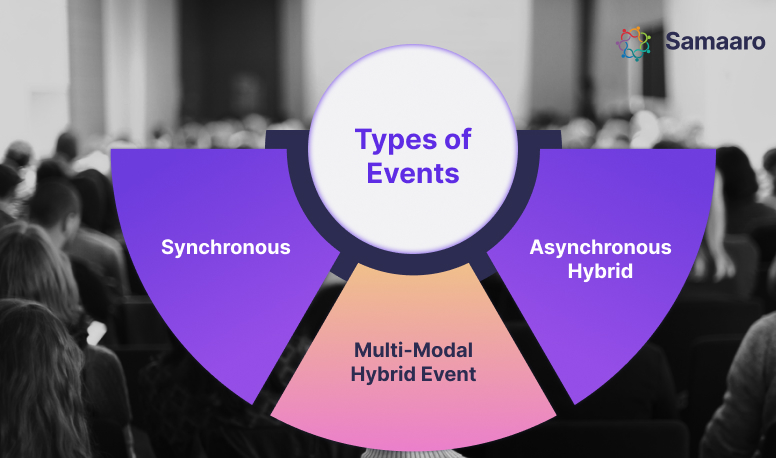
There is not just a single hybrid event format that is appropriate for all organizers. It is important for event organizers to consider the kind of event, the audience, the budget and the overall strategic objective/ultimate goal before settling on a hybrid event model. Once a hybrid event format has been decided, event planners will need to consider how interactive they wish to make the participation of virtual attendees. At the end of the day, the level of interactivity will depend on mixture of the nature of the event, and the preferences of the attendees.
There are many aspects to hybrid events, however, all event organizers need to think along a few different types of hybrid events –
A synchronous hybrid event is an event that has both a in-person event as well as a virtual event and the content will generally have a start invocation that will permitted both the in-person and the virtual attenders to undertake experiences all at the same time.
In general, synchronous hybrid events are becoming increasingly accepted because they enjoy the benefits of in-person and virtual content and provide the attendees an opportunity to engage in an event how they want.

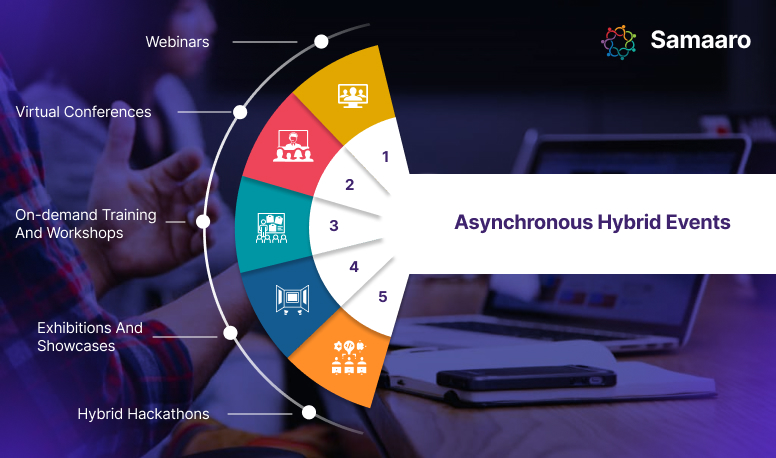
An asynchronous hybrid event is a hybrid event that has aspects of both in-person and virtual events but does not require that people undertake at the same time. Individuals can engage with and access the content and activities to the event when they wish.
In general, asynchronous hybrid events are best suited to participants that cannot engage in real time events as they can engage with and access the content when they wish. There is value in the participants not needing to undertake together creates a more holistic and subjective experience to the larger audience shares with the add clarity that all participants in hybrid events may not need to partake together.
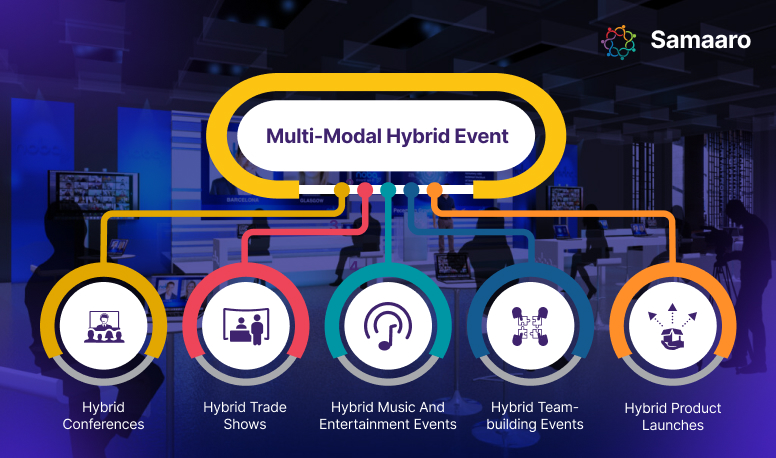
Multi-Modal Hybrid Event:
A hybrid combination event (also called a multi-modal hybrid event) is a combination of synchronous and asynchronous events in one hybrid event. A participant engaging in a hybrid experience to be more capable to segment the event participation based on their needs and preferences.
In general, combination hybrid events create a variety of possibilities for participants to interact with the events based on their preferences or needs. In a hybrid event format with synchronous and asynchronous events, event organizers can combine the benefits of synchronous and the benefits of asynchronous event formats to create a more interactive environment for all participants of hybrid events.

Planning a hybrid event involves its own set of issues and challenges, such as, How do you engage the virtual audience to reach the same level of remote engagement as the in-person audience. Below is step by step outline to assist you in the planning and will ultimately help in the successful execution and understanding key aspects to your planning process when planning a hybrid event.
All hybrid event planning starts with creating your event goals and objectives. Establishing clear goals is an important step in successful hybrid event planning.
The following are a few questions, event planners should work through in establishing the goals and objectives of their hybrid event:
Thinking about these questions will help establish the event’s objectives, which in turn will help support the plan to prepare and deliver a successful hybrid event.
2. Keep in mind the time zone & location for the event
Next you want to consider the target audience’s time zone, as well as the location of the event. With planning an event that is global in nature, look to use a venue that is easy to access and has a number of hotels, transit available to your participants. Look for ways to welcome virtual participation, whether that is because a participant cannot travel to the event venue or simply wishes to participate virtually (it is still participation). If you want to create equitable access for participants no matter their time zone, you should consider a hybrid event that provided both live stream and on-demand content. This allows value for participants who want to be involved live and value for participants that cannot or do not want to be involved live but can participate only by viewing on-demand content.
3. Creating personas (target audience)
Finding your audience is extremely important to assist with preparing for a hybrid, planned learning opportunity. The goal of creating personas is to help you visualize, think about, and try to develop an event for your participants.
4. Determine your budget
Budgeting is an important part of the planning process.We want to make sure you have enough resources and a enough budget to execute everything you want. When you are budgeting you will want to include venue, all food and beverages, audio visual, marketing, and staffing.
When considering making efforts to defer costs, please look for sponsors and/or exhibitors who can help either financially, and/or in-kind with their costs at a discounted rate for exposure. You may also have a hybrid event concept that could provide you the features and services that cost less than traditional event planning.
5. Analyze platform options
Finding the right hybrid event platform is very important consideration for your hybrid event. You want to find the one that facilitates for seamless engagement with in person and virtual attendees while being flexible to assist with online features such as live streaming, chatting, networking, breakout sessions, customer experience on an as needed basis.
6. Assemble a team
Assembling a team is an important step for the successful execution for your hybrid event. You are going to need people with a number of different skills and range of experience related to event planning, marketing, technology, customer service, etc. You will want each team member to understand their role and responsibilities but work seamlessly together as a team.
7. Book the right speakers
Speakers are an important part of the success of any event. You want to gather enough information about potential speakers and book speakers that are knowledgeable, engaging and relatable for committee members and participants whether in-person or virtual attendees because they are delivering their content via different channels (live, on demand, and content).
You could book the right speaker(s) by conducting background checks or references or previous engagements. You may also want to intentionally invite a few industry expert(s) and/or thought leader(s) who can provide levels of insight and views in their trends or topics they present.
8. Locate sponsors
Sponsorship is an effective option to achieve revenue and create interest and exposure for your hybrid event. For example, sponsors may provide your event with products, service(s) or financial contribution in exchange for gifts of appreciation or consideration can promote and market their association with our events.
You may want to consider creating a sponsorship prospectus outlining opportunities and perks in becoming a sponsor. You will also want to find sponsors who have similar values and objectives as your initiative and target audience.
9. Event agenda
Creating a strong agenda for the hybrid event is arguably the most important piece of being successful of your hybrid event. The agenda should consist of a healthy amount of keynote speakers, breakout sessions, networking, and some engaging activities to keep both in-person and virtual attendees attentive.
To create a strong agenda, you need to have identified what our target audience is and what their needs and wants has to do with the content being engaging and relevant. You may also want to consider how you find the right technology to help create engaging interactive and immersive experiences for our audience.
Hybrid events are quickly becoming the standard for connecting both face-to-face and virtual audiences at the same event. However, to have an integrated experience, the event planners will require creative ways to link the remote audience with live audience. This is where event technology will come in. Event planners will require pre-event technology, in-event technology and post-event technology to have a successful hybrid event that requires a results-oriented approach. Below are examples of types of event technology that will enhance the hybrid event experience as well as a variety of best practices using event technology to create a successful event.

There will be a range of key pre-event technologies to consider before a hybrid event, as the event will affect many audiences with respect to both and virtual settings face to face
Registration and Ticketing: The event planner will want to ensure that the registration process is simple/streamlined and easy. Using registration and ticketing tech platforms to attend the event will create an efficient registration experience by allowing attendees to sign up and pay online. The registration and ticketing platforms will help maximize the benefit of tracking attendance, monitoring payments, and real-time information with respect to how many attendees have shown up to the event.
Virtual Event Platforms: In a hybrid environment virtual attendees will need to have equal access to the in-person audience. There event technology available can be used to support the planning stages, help develop a customized website, manage the conference and the sessions, and have interactive tools like networking capabilities that will help keep virtual attendees engaged throughout the event.
Communication Tools: Event planners want to ensure that attendees have means to communicate with each other, as well as with event staff. There are a variety of communication tools available to event planners, such as email marketing platforms, chatbots, and different social media platforms, which provide event planners with ways to communicate with attendees before the event, give real time updates during the event, and gather feedback after the event.
Event Management Software: Event management software can help event planners with everything involved in executing an event, from the planning to event delivery. Event management software can help event planners with scheduling, budgets, vendor management, and attendee registration.
In Event Technology
In-event technology involves technology that planners can utilize in a way that enhances the experience for in-person and virtual attendees, and provides a seamless experience. In-event technology generally includes analytics, live streaming, virtual event platforms, mobile event apps, sponsor and exhibitor technology, digital signage and audio-visual technology.
In a hybrid event platform typically has elements of features including access live streaming, virtual networking, and engagement tools for in-person and virtual participants to provide a seamless and engaging experience for event participants. (Note: Be sure that you select a platform that meets your event planning requirements)
Live Streaming and Broadcasting: Live streaming technology allows broadcasting the in-person portion of the hybrid event to remote attendees. This includes cameras, microphones, and any A/V technology needed for quality streams as well as of a virtual event platform.
Digital Signage: Digital signage is the presentation of various formats such as displays, projectors, and screens in a way that conveys up-to-date event-related information to attendees. This may include the schedule for the event, notices, sponsorship advertising, etc.
Mobile Web Apps: Mobile web apps can also help in-person or virtual attendees find the necessary information to help navigate their way through the experience. Mobile web apps may include the schedule, speaker information, maps, etc. Mobile web apps can help attendees connect with each other; further communication and sharing of event information will also occur.
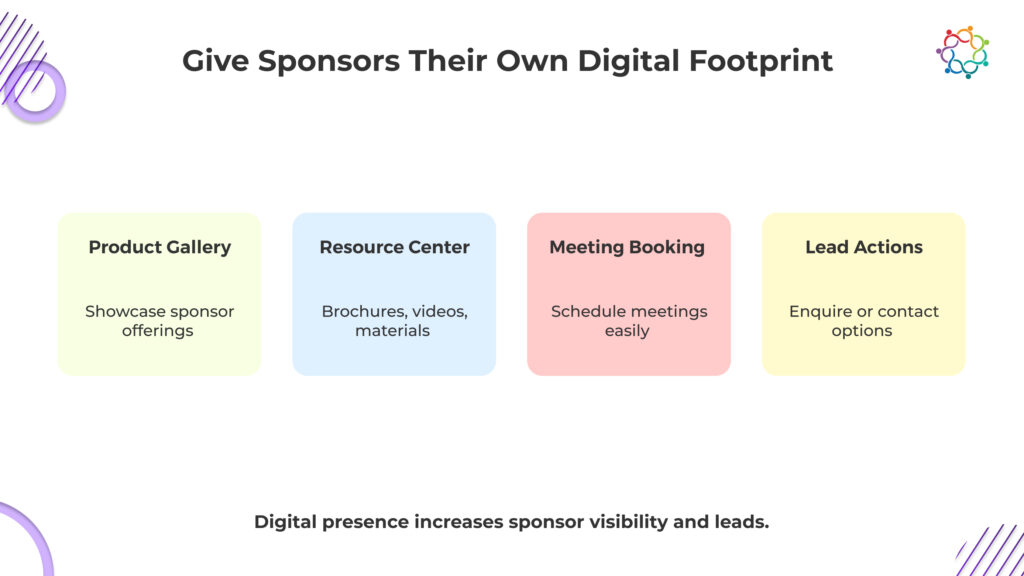
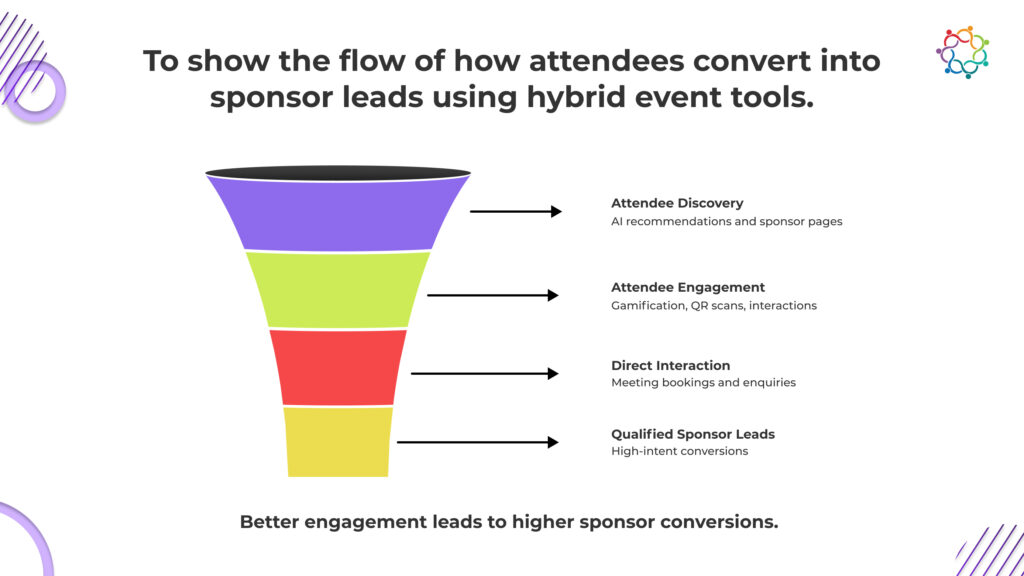
Technology for Sponsors and Exhibitors: Technology for sponsors and exhibitors at hybrid events includes many different and varied methods including virtual booths, lead capture software and other means of facilitating engagement and interaction amongst attendees.
Contactless Check-in & Badge Printing: Contactless check-in and badge printing systems can ensure a page check-in experience for any in-person attendees while minimizing wait times and face to face contact, for all.
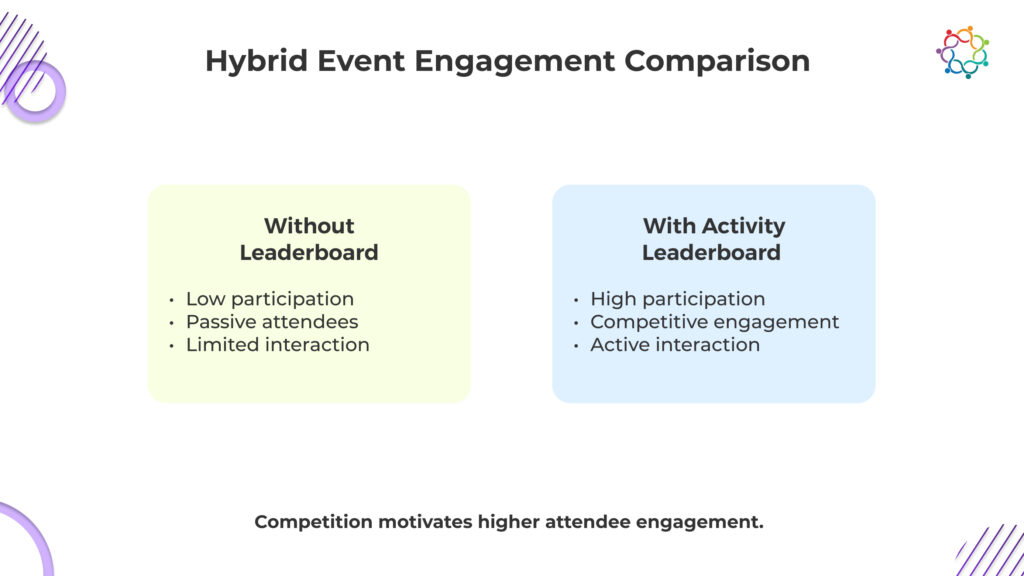
Engagement: Engagement options statistically show that this can include but are not limited to gamification, audience response systems, interactive displays, and a networking option for attendee engagement and interaction.
Analytics & Reporting: Analytics & Reporting can support attendees to discover and learn about its own attendee engagement and satisfaction and measure the outcome from the hybrid event. Using analytics, event developers can measure attendance, active engagement, and feedback surveys.
A/V Equipment: A/V Equipment such as sound systems, lighting systems, and projection systems can be critical elements of an immersive experience for in-person and virtual participants in a hybrid event.
There are many technology options available to help purposes maximize the value and experiences of a hybrid event for the attendees long after the event is completed. Below are some Post-Event Technologies for hybrid events:
Content Distribution Platforms: Use the content distribution Platforms to broadcast and share the event’s recordings, presentations, and associated materials with attendees.
Content Distribution Platforms include you guessed it- Video hosting services, content management systems (CMS), or stand-alone event Platforms that are specifically dedicated to providing recorded programming on-demand accessibility for participants.
Post Event Surveys & Feedback: Build and distribute post-event surveys and / or feedback forms for in-person, as well as virtual attendees. Post-event surveys can provide information, useful measures of satisfaction, and ways you can improve your event. You can use any in-market online survey instruments, plus event feedback solutions.
Data analytics and metrics: Use tracking software to analyse the data you collected during the event and to subsequently create reports by participant actions taken. Reports can have information regarding participation engagement, the number of participants in any session, engagement interaction in networking, and so on. Use the data you captured related to the progress of your event goals and criteria, when evaluating the overall results, and consider all the information to assess your overall impact.
Event analytics and ROI: Establishing ROI for your hybrid event might be based upon tracked collected metrics related to: attendee registration, engagement, the number of leads generated, – conversions etc. Event management software, or in-market event quality analysis metrics will assist in the aggregation process of the event.
Follow-Up Emails and communications: Next is for you to send follow up emails to all the attendees, and hopefully incorporate a personal aspect to a touch point with each of the attendees follow up email. You want to express thanks for attending and include other additional resources for attendees to review such as event presentation slides, access to session recordings, or exclusives mentioned during the event. This is a good way to wrap-up their experience, and keep attendees more engaged.
In summary the technologies mentioned above include pre-event, in-event, and post-event aspects that may be utilized within an all-inclusive event technology platform/service, such as Samaaro. Why is this a good example? Because Samaaro was purpose built for event professionals that conduct hybrid events in a broadly generalized sense. If you utilize Samaaro all of your event needs will be found through one solution to enable you to manage all of the needs of your events, motivate attendee engagement, provide hybrid-based virtual requirements, gain important data to use for any future iterations of your programming, and achieve integration of hybrid based events delivery.
Hybrid events provide an opportunity to create meaningful experiences that harness the best of in-person and virtual components – below find some tips on designing engaging virtual, and in-person experiences, and create an experience that consists of both:
Tips for designing engagement virtual experiences
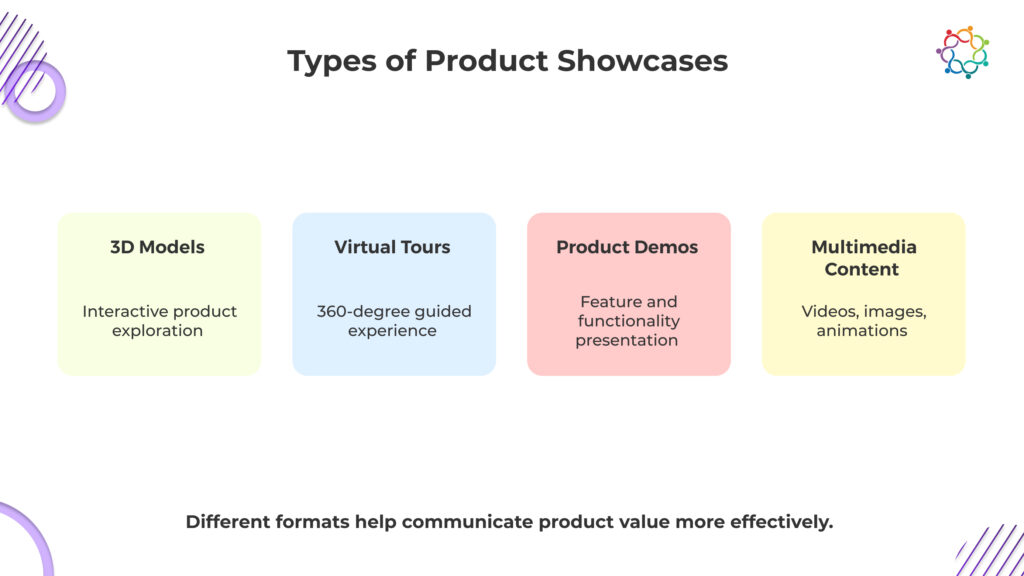
3D Platforms: 3D Platform increases a sense of immersion and interactivity and gives participants virtual booths, exhibition halls, and networking areas so participants will engage with sponsors and exhibitors and gives participants unique, immersive, and visually dynamic experiences.
On-site access: Livestream or record key on-site experiences (presentations, panels, product launches, performances) and offer quality video production with multiple angles, sound options (presenters and audience). If planned strategically, participants will feel more connected and engaged while truly experiencing the event in the moment, or with exclusive access to behind-the-scenes content.
Tips for designing engaging in-person experiences
Scannable QR codes: How easy are they to scan for registration, accessing conference materials, downloading event apps?
Accessing the agenda: Do attendees have one simple easy to use mobile app, or mobile friendly web app where they can see their sessions, bios about their speakers, and easily identify and access real-time updates? Does the app have search and filter capability?
Let them network: The right technology, digital business cards, and areas that are conducive (and appropriate) to networking allows participants to connect and share information.
Mobile: Assume all participants are attending solely via a mobile device, and make sure everything is mobile-friendly – screen, website/app (mobile friendly websites are designed to be used on any device, so check it for a smart phone).
Creating seamless connections between face-to-face and virtual experiences
Creating seamless connections between face-to-face and virtual experiences is critical to creating one cohesive hybrid event experience; however, it should be noted that when designing a hybrid experience, each audience group – face-to-face and virtual should not be treated the same based on their platform. Rather than treating the audiences the same, we need to acknowledge that each audience’s unique dynamics, needs, and wants will dictate way each audience (or group) crafts an experience for themselves.
Synchronous content delivery – Connecting the audiences: Simply stated the best way to connect the audiences, is to make certain that webcams or other forms of visual technology are on during the sessions/activities and the virtual participants receive whatever in-person participants have during the event. More specifically make all sessions live, allow for virtual breakout rooms as well as the consistent schedule, and provide on-demand recordings of all live streams to your virtual audience.
Engagement opportunities – Connecting the audiences: Make certain to have engagement opportunities for the virtual attendees to have a voice while physically engaging or participating with/among the face-to-face audience, and vice versa. Examples of engagement opportunities for the virtual audience include: remote attendance for Q & A, can have an exhibitor booth also; all audiences can use the event hashtags on Twitter and other social media during live interactive chats to involve both audiences in continuing a conversation.
Hybrid networking opportunities – Connecting the audiences: Provide participants with the opportunity for the face-to-face participants and virtual participants to network. The networking component can be as simple as those face-to-face participant groups being directed to an online network/platform – essentially sending them to a virtual/form page to fill out; networking times for participants; can facilitate something hybrid, allowing the face-to-face to network and reflect for further action.
Hopefully these tips will help event designers create effective, engaging virtual experiences, immersive and active face-to-face learning environments, and meaningful hybrid experiences that can link into one cohesive, active, engaging hybrid event experiences for face-to-face and virtual audiences.
Marketing and promoting your hybrid event are crucial for its success. A well-executed marketing plan can attract both in-person and virtual attendees, generate excitement, and maximize participation. In this section, we will explore the key components of marketing your hybrid event effectively.
To create a comprehensive marketing plan for your hybrid event, consider the following steps:
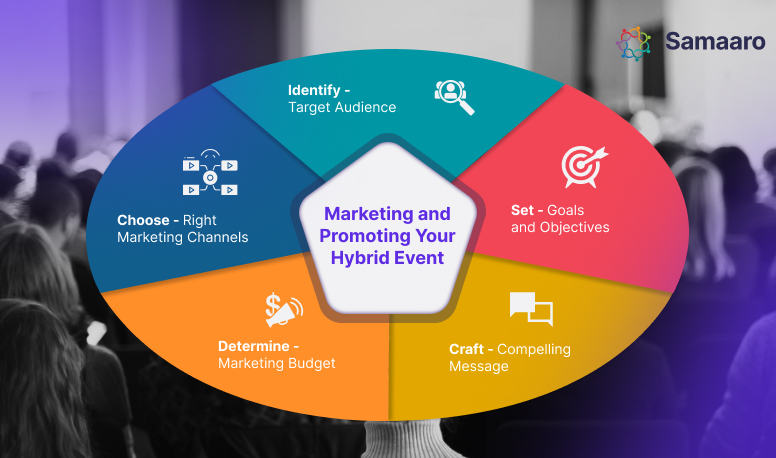
To effectively promote your hybrid event, consider the following platforms:

Creating anticipation before your hybrid event can generate excitement and boost attendance. Implement the following strategies:
There are a few key areas to be aware of when executing a hybrid event. When executing the physical area of your hybrid event the following are important areas to explore.
In-Person Event Logistics
When facilitating a hybrid event, below are essential points to keep in mind when executing the in-person component.
Venue Set Up: It is very important to layout your venue with the in-person attendees that are going to be there and the production equipment that will be at the venue. When planning the furniture arrangement for seating and staging, include your AV in the planning so both audiences will have the same event experience.
Registration and check-in Process: The registration and check-in process for in-person attendees should be as seamless as possible from a in-person basis. This may include using technology such as QR Codes, or possibly technology with mobile check-in that does not have lines for in-person registration or check-in.
Networking Opportunities: You can facilitate networking for in-person participants to engage, that may include planning a space for in-person attendees to network or be engaged in some activity. You may consider getting the virtual attendees engaged in some sort of online networking, or at least casual chatting.
Event Amenities: Lastly, please take into consideration the way your participants will be attending and determine the amenities you will provide, refreshment and charging for in-person attendees. And you will obviously wish to provide various comforts for all of your participants at various points throughout your event. Live Stream – and Hybrid Event Platform
When considering how to handle the virtual component of your hybrid event, there are a few things to account for:
Live Streaming Setup – Be sure to set-up a reliable and robust live streaming platform and infrastructure to let the virtual attendees follow along with your event. Also, work through your setup and test internet, video, and audio, to be sure to provide the best possible streaming experience.
Hybrid Event Platform – Finding a solid and easy to use hybrid event platform is an important component dealing with logistics of a hybrid event. Be sure to find a platform with good features, like: live-streaming, interactive chat, digital booths, and networking. Try to use a hybrid event platform that works with your registration and provide analytics you may need later.
Technical Assistance Team – Designate a team for tech support, manage use of the hybrid event platform, help troubleshoot items, and assist attendees’ (if needed) troubleshoot technical problems. The tech support team needs to be completely comfortable with the hybrid event platform, and available to help any attendees as quickly as possible.
Virtual Attendees & Engagement – Plan on including your virtual audience with some interactive components in the hybrid event platform. Examples include polling attendees live, plan for Q&A, assign chat moderators, and include virtual networking opportunities. It will be helpful to create dedicated moderators and assistants support events discussion and answer questions.
Managing Technical Issues & Back-Up Plan
You can prepare and plan for your hybrid event, but there is still a chance that technical issues will arise. To be able to face the unexpected here are few items to consider:
Back-Up Equipment/Redundancy – Have back-up equipment available, in case you have be able to use back-up equipment (like another microphone, or camera, or internet). Redundancy will help smooth transfer when you need to move to back-up equipment.
Tech Run-Through/ Rehearsals – Rehearse thoroughly to try to work through any tech issues. Test all your AV equipment, test your streaming, and your hybrid platforms.
Communication – Establish the communication channels and links to on-site team, and those manage hybrid event platform, and finally technical support team, so that there is limited lag time to coordination or troubleshoot any tech issues.
Contingency Plan – Having contingency plans for various contingencies (like internet outage, power outages, streaming interruptions), and what to do to minimize the impact on both in-person or virtual attendees. Let the appropriate teams know the back-up plans, and have it available during the live event.
Coordinating on-site logistics, hybrid platforms, and any technical issues that might arise will make your hybrid event successful and engaging for all of the attendees.
The end of one event marks the beginning of the next, and it’s important to maintain a connection with attendees. After the conclusion of a hybrid event, it is essential to engage in post-event activities that not only evaluate the event’s success but also set the stage for future improvements. Here are three crucial post-event activities to consider: follow-up communication and engagement, measuring success and evaluating performance, and improving future hybrid events.


By focusing on follow-up communication and engagement, measuring success and evaluating performance, and continuously improving future hybrid events, organizers can ensure that each event becomes better than the last, providing enhanced experiences and value to attendees, sponsors, and stakeholders.
Hybrid events have emerged as a powerful and dynamic format that combines the best of both virtual and in-person experiences. This section provides a recap of key takeaways, explores the future outlook for hybrid events, and offers final thoughts and recommendations.
Throughout this guide, we have explored various aspects of planning, executing, and maximizing the potential of hybrid events. Key takeaways include:

Predictions Regarding the Future of Hybrid Events
The future for hybrid events is bright as they rise in popularity, flexibility and impact in response to rapidly evolving circumstances more than most programming formats.
Here are a few possible predictions regarding hybrid events in the near future:
More Flexibility: Hybrid events can include or exclude any aspect, in either a virtual or in-person format. Additionally, given that the hybrid event can be both virtual and in-person, organizers can be flexible when circumstances change, surrounding health concerns, travel restrictions, or the size of the audience, for example.
More Accessibility: Hybrid events allow you to market to people from all over the world in a way that does not sacrifice in-person attendance for virtual attendees, and vice versa.
Better Personalization: More engagement, interactive platforms, AI-generated recommendations, and customized content delivery will improve your deliverer for hybrid events, as each will offer a unique experience for attendees.
New Technology: Look for new hybrid engagements that feature technologies like augmented reality (AR) and virtual reality (VR).These technologies will enhance immersion and interactivity to deepen participants’ experiences and allow them to feel connected to the event, regardless of where they are situated in relation to the event.
Hybrid Networking: Organizers can take advantage of dedicated networking platforms, the use of matchmaking algorithms, and real-time communication tools to create proper networking opportunities for your attendees, speakers, sponsors and exhibitors.
Hybrid Revenue Models: Organizers can easily implement options such as virtual sponsorships, digital advertising, premium access packages, and online marketplaces as revenue streams.
Data-Driven Decision Making: As hybrid events provide extensive data around the amount of engagement, attendee interactions, and the content they favour, we can expect more data-driven decision making in the future. Organizers will be able to turn to these types of analytics and insights to refine the experience, tailor content, and analyse where there may have been potential opportunities for improvement.
Final Thoughts and Recommendations
With hybrid experiences becoming more common, it is essential to change as organizers and to embrace research, reflection, and the opportunities that hybrid events can bring.
– Leverage technology: Keep an eye on new technologies and ways in which attendees engage. Continue to experiment with emerging tech, unlikely platforms or tools to develop a truly unique, memorable hybrid experiences.
– Promote collaboration: Help foster collaboration and knowledge sharing between event organizers, industry actors, and technology companies. If we work collaboratively, we can continue to breakthrough challenges and advance in hybrid event space.
– Consider inclusion: Both virtual and in-person experiences should be designed to be inclusive for everyone. Ensure both types of attendees have equal opportunities to engage, participate and network. Your thinking should also include providing for accessible experiences for individuals with disabilities and be aligned with the diversity of language and cultures.
When taking these recommendations into consideration and focusing on industry developments, organizers will maximize the potential hybrid events can reach; resulting in great experiences for attendees, sponsors, and those involved.
In conclusion, Hybrid events have incredible potential for disrupting the event industry and providing unique experiences for participants. If you want to access the full capabilities of hybrid events and manage the virtual and in-person aspects with ease, then it is recommended you check out superior event management platforms, like Samaaro.
If you are ready to shift the paradigm of your hybrid events, schedule a demo or see what Samaaro can offer. Now, let’s get to planning!
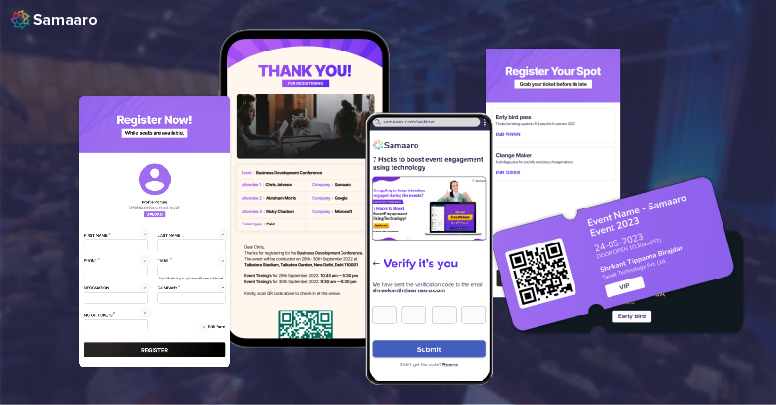
Event registration and ticketing are not merely administrative processes but integral components of creating exceptional event experiences. The way organizers communicate, streamline the registration process, engage attendees, and leverage data can significantly impact the overall success and satisfaction of an event. In fact, “a survey conducted among event marketers revealed that 49% of them see participant engagement as the most important factor for a successful event”. In this article, we will explore various aspects of event registration and ticketing software that contribute to crafting memorable experiences for both organizers and attendees.
Note – This article is broken down in 3 parts to explain the Use of Event Registration and Ticketing Software.
A successful event begins well before attendees arrive at the venue. Pre-event communication plays a crucial role in setting expectations, conveying important information, and creating a personalized experience for participants. By leveraging the power of event registration and ticketing software, organizers can go beyond the basics and maximize event experiences right from the start.
Below are some ways in which organizers can start enhancing the event experience through ticketing and registration software.
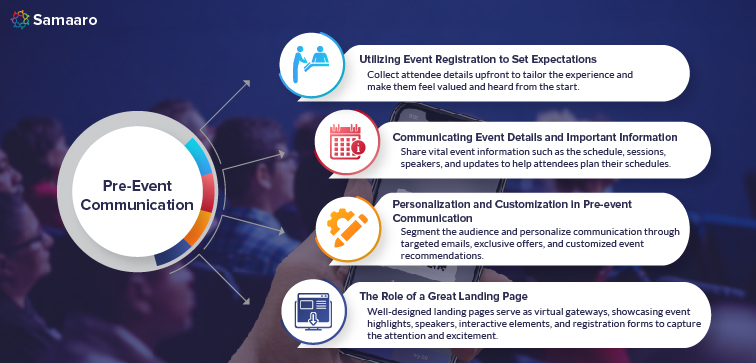
Once the essential aspects of pre-event communication have been established it is important to move on to creating a seamless registration process.
A seamless registration process is key to maximizing event participation and ensuring a positive attendee experience. In this section, we will explore various elements that contribute to a smooth registration process, from user-friendly forms and interfaces to integrating registration with CRM and marketing tools. Let’s dive in!
(Use Full Tip: Clear instructions, minimal fields, and logical flow contribute to a seamless experience, increasing the likelihood of successful registrations.)
A seamless registration process sets the stage for enhancing attendee engagement during an event. When attendees experience a smooth and hassle-free registration, they are more likely to approach the event with a positive mindset and enthusiasm.
Engaged attendees are at the heart of any successful event. Creating meaningful interactions and fostering a sense of connection contribute to a memorable attendee experience. From customizing confirmation emails and tickets to providing event updates and reminders, organizers can keep attendees informed and excited. Leveraging social media and online communities further amplifies engagement by creating a platform for interaction and networking. Additionally, promoting referrals and social sharing by attendees generates buzz and expands the event’s reach.
The image below explores the diverse avenues of enhancing attendee engagement and how it can lead to an immersive and rewarding event experience.
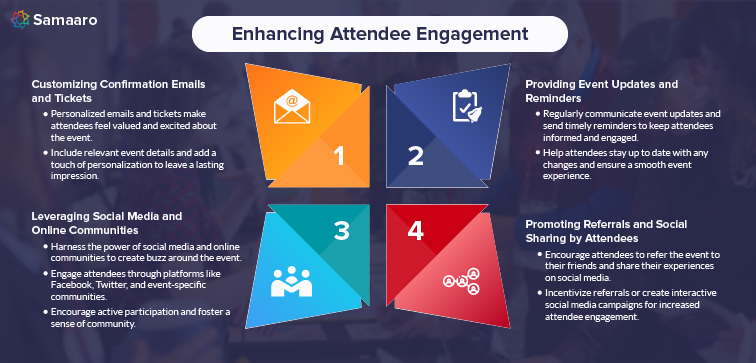
Delivering personalized experiences is a hallmark of exceptional events. By understanding attendees’ preferences and catering to their unique needs, organizers can create an unforgettable journey for each participant. Here are key strategies to provide customized experiences:
By paying attention to these small details, organizers can create tailored experiences by incorporating Ticketing and Registration in the event. Another crucial aspect of enhancing attendee engagement during an event is to focus on the on-site check-in experience.
Efficient check-in is essential to ensure attendee satisfaction and create a positive first impression. From streamlining the process to utilizing technology for fast and efficient check-ins, organizers can minimize wait times and enhance attendee satisfaction. By prioritizing these aspects, attendees can swiftly enter the event and immerse themselves in the activities without any unnecessary delays.
Below given are some key strategies to optimize the check-in process:
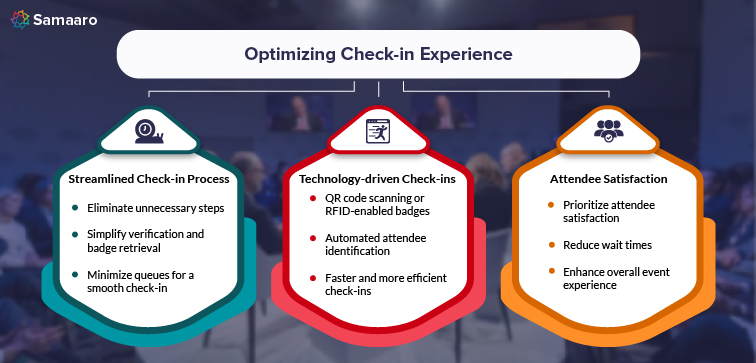
Efficient check-in is essential to ensure attendee satisfaction and create a positive first impression. However, the attendee engagement doesn’t end with the on-site check-in experience. Now, comes the last but an equally important step – Post Event use of Event Ticketing and Registration Software.
Even after the event concludes, the journey with attendees continues. Post-event follow-up and engagement play a crucial role in nurturing relationships and creating a lasting impact. In this section, we explore key strategies to keep attendees engaged and maintain their enthusiasm beyond the event itself. From expressing gratitude to gathering feedback and offering exclusive benefits, these practices contribute to a memorable post-event experience and set the stage for future interactions. Let’s delve into the essential elements of post-event follow-up and engagement to maximize attendee satisfaction and build a strong community around your events.
Wait! It does not end at post event follow up and engagement, through the vast amount of data collected by following all the above given parts, you now have an ocean of data to make your next event a huge success.
In today’s data-driven world, organizations have access to vast amounts of information that can be harnessed to drive continuous improvement. This is particularly relevant in the context of event management, where data analysis can provide valuable insights into registration and ticketing processes, enabling organizers to identify areas for improvement and make data-driven decisions for future events.
Some ways of leveraging this data :
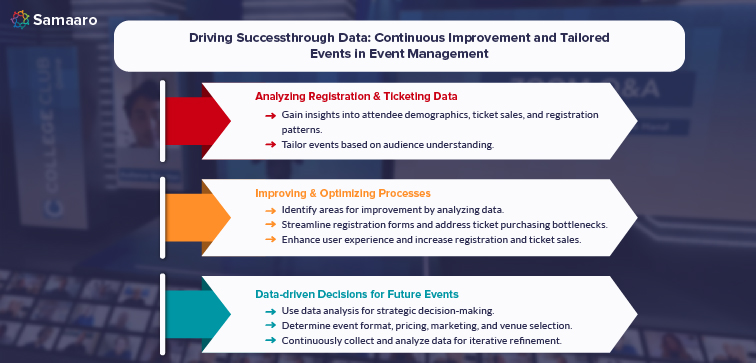
In conclusion, event registration and ticketing play a vital role in creating exceptional event experiences. From pre-event communication to on-site check-in, attendee engagement, and post-event follow-up, each aspect contributes to the overall success and satisfaction of an event. By leveraging the power of data and incorporating effective strategies, event organizers can continuously improve their processes, tailor events to audience preferences, and drive greater overall success.
To achieve these goals, Samaaro’s Ticketing and Registration Solution offers a comprehensive platform that streamlines the entire event management process. With Samaaro, you can effortlessly handle event registration, enhance attendee engagement, optimize the check-in experience, and gather valuable data for continuous improvement. Samaaro’s user-friendly interface, personalized communication options, and seamless integration with CRM and marketing tools provide organizers with the tools they need to create memorable event experiences.
Don’t settle for average events. Choose Samaaro’s Ticketing and Registration Solution and unlock the full potential of your events. Drive success, tailor experiences, and create unforgettable memories. Start using Samaaro today and take your event management to new heights.

“80% of B2B customers make decisions based on the experience they have with each other. This is a clear indicator of how important networking can be for business.”
Networking is essential at every event, whether it is a conference, trade exhibition, or corporate gathering. It fosters exchanges of knowledge and the discovery of prospective business opportunities by facilitating connections among attendees. It is vital to give abundant networking opportunities in addition to creating an immersive event experience with modern technology, captivating exhibits, and recognised keynote speakers.
While participants may go home with prizes and instructional guides, the key to having a memorable and talked-about event is to provide compelling networking opportunities. Fortunately, the development of innovative technologies has greatly benefited event planners in making networking opportunities more accessible, convenient, and efficient, consequently connecting like-minded participants throughout the event lifetime.
In this blog we will delve into the benefits of networking at any event and have a look at some of the features that make the networking aspect in events smooth.
Expand your professional network: Networking allows you to broaden your professional circle, boosting your chances of discovering new employment prospects, partnerships, and possible clients. It allows you to access a larger pool of resources, knowledge, and skills.
Build relationships and enable collaborations: Events provide a platform for networking with peers in the field, potential mentors, and thought leaders. These connections can lead to collaborations, joint ventures, and useful insights that can help you advance in your profession or business.
Enhance personal and professional growth: Attending events with diverse professionals exposes you to new perspectives, ideas, and experiences. This exposure promotes personal and professional development by extending vistas and questioning assumptions.
Keep up with industry trends: Certain events frequently draw industry experts and thought leaders who share valuable insights and knowledge. Attending these events allows you to stay abreast of the latest trends, emerging technologies, and industry best practices.
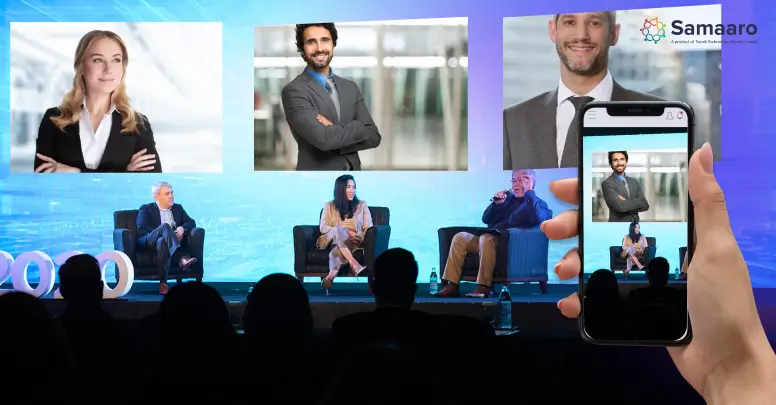
Matchmaking: Our matchmaking feature updates matches in real-time based on users’ previous connections and shared interests. For example, if you’re interested in machine learning, you’ll be shown a list of people who share that interest. Once you connect with individuals who are also marketers, the algorithm starts suggesting people who are interested in machine learning and are also marketers. This real-time updating ensures that you’re presented with more relevant connections, increasing the likelihood of finding meaningful matches.
Breakout Rooms: Breakout rooms allow for smaller, more concentrated talks among people who have common interests. Samaaro incorporates a breakout room feature, which allows attendees to join specific topic-based discussions. Event organizers can create and moderate these rooms, ensuring a conducive environment for networking and knowledge exchange.
Meeting Scheduler: Efficient scheduling is vital for maximizing networking opportunities. Build an easy-to-use meeting scheduler that allows attendees to schedule one-on-one meetings with other attendees. This feature is particularly useful in the pre-event phase, as it empowers users to plan their calendar effectively. Attendees can view the availability of other participants and identify potential time slots that align with their own schedule. Users can see each other’s availability and send meeting requests, which eliminates the need for back-and-forth communication and speeds up the networking process.
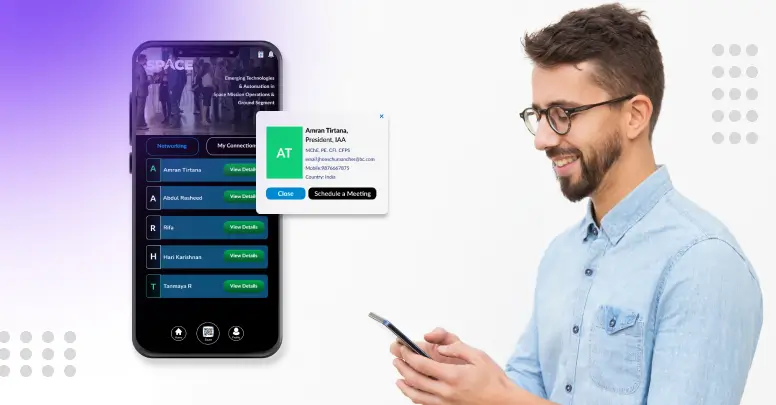
Business Card Exchange: The days of worrying about losing business cards are long gone. In a digital age, exchanging physical business cards may seem outdated. Instead, you can include a digital business card exchange feature that allows attendees to easily share their contact information. Users can scan one other’s QR codes or share information directly through the app, ensuring convenient and efficient information sharing.
Attendee Chat & Video Call: The inclusion of a chat and video call function within the event platform enhances networking by enabling real-time communication. This feature proves valuable before and after the event, allowing participants to connect and converse seamlessly. Prior to the event, it facilitates introductions, idea exchange, and relationship building. During the event, it enables immediate interactions, question asking, and deeper connections through face-to-face video calls. Post-event, it serves as a communication channel for ongoing engagement, resource sharing, and collaboration. Overall, this feature adds convenience, personalization, and effectiveness to networking experiences, fostering meaningful connections.
Group Activities and Games: Networking can go beyond the conventional formats. To foster engagement and collaboration, incorporate group activities and games. Attendees can take part in team competitions, virtual scavenger hunts, or icebreaker games, providing a fun and engaging environment that allows for comfortable networking and is a great icebreaker between attendees.
In conclusion, the value of networking during events cannot be emphasised. It acts as a catalyst for professional development, personal development, and the establishment of important connections that can have a tremendous impact on our lives. Individuals can manage events with confidence, establish discussions with ease, and build relationships that extend beyond the event itself by applying the approaches mentioned in this post. Networking, whether at a conference, seminar, or industry event, provides excellent opportunity to learn, collaborate, and create new possibilities. So, embrace the power of networking, get out of your comfort zone, and you’ll discover a world of limitless possibilities just waiting to be discovered. Always keep in mind that every connection you make can affect your future, both personally and professionally.

Sponsorship management is an essential part of any event. Sponsors do not just offer monetary assistance; they also enhance the experience and value provided to attendees. However, management of sponsorships can be a juggernaut for event organizers. Seriously! The complexity in identifying, negotiating, and fulfilling sponsorships adds to the challenges of event organizing. Event management software can solve many of these problems.
The best event management software is built to assist event organizers in developing and maximizing event planning and execution. Event management software is equipped with features and functions geared toward sponsorship management.
In the following sections, we will discuss the position of event management software with sponsorship management; we will discuss how event organizers are challenged by sponsorship management, how event management software resolves these challenges, and features that go toward resolving the sponsorship management process.
Sponsorship management consists of several key components that event organizers must be involved in with their sponsors for the collaboration to be successful. These include:

Event organizers need to identify sponsors whose organizational values are aligned the event’s purpose and target audience.
Event organizers need to perform research and analyse industry trends, while trying to understand the potential sponsor’s objectives.
Identifying and approaching sponsors without a process can be very cumbersome and consume a lot of time and resources.

Once potential sponsors have been identified, the negotiation takes place.
Event organizers and sponsors must come to agreements that are mutually beneficial, making sure to identify sponsorship price packages, Negotiations are not done in a vacuum; they consist of various participants, many contract terms, and many bespoke sponsorship options. A helpful tip is that if you are negotiating a sponsorship contract with your sponsors for an event, you should do so as a multi-year contract instead of just a single event by giving them more value.

Once the sponsorship contract is negotiated, it is time for the event organizer to fulfil the sponsorship deliverable agreements, which includes placing sponsor logos on the sponsorship material, providing space and booths, and executing promotional activities. This requires coordination, quick response times, and attention to detail.
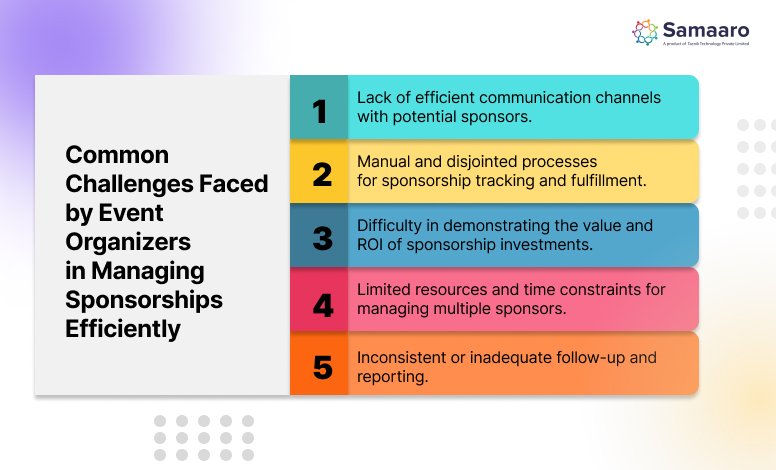
Event management software allows event organizers to address all these concerns with sponsorships by optimizing the efficiency of sponsorship management. Most event management software come with a one-stop shop platform that will simplify the sponsorship process for sponsors, which includes sponsor identification, negotiation, fulfilment, and tracking. This offers event organizers a more efficient and effective method of forging relationships with sponsors, while generating revenue (sponsors) and enhancing the overall experience for attendees.
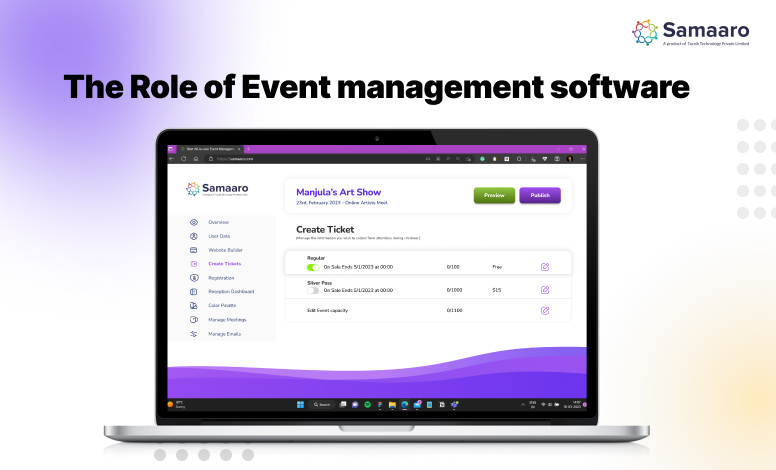
Event management software are comprehensive software platforms that are built to help simplify and optimize the various tasks involved in event planning and management. Event management software is useful for improving sponsorship management because they offer specific features and functions that have been developed to provide process and procedure efficiencies around sponsorship.
Simplifying event planning and execution
Event management software provides a central platform for everything event-related, including sponsorship management Centralization allows users to have an easier interface and simpler workflows overall, which contributes to a better planning experience.
Improved Sponsorship Management
Event management software offers modules or other functions dedicated to sponsorship management. These functions also allow users to prospect for sponsors, communicate with sponsors, and negotiate sponsorships more efficiently.
Customizable sponsorship tiers
Event management software allows event planners to customize sponsorship tiers based on different levels of sponsorship and the benefit to some level. Event planners can customize the tiers and benefit level and can assign those sponsorship levels and tiers with pricing levels to the event using software.
This level of flexibility allows event planners to customize sponsorships for registrants based on their own unique needs and outcomes.
Automated communication with sponsoring brands
Event management software offers communication tools that can make sponsors and planning committee members contact easier at the event. There are email template functions/builders, reminders, and then internal messaging functions built into the system for communication to avoid missing anything or communicating things late.
Automated reminders can help event planners to avoid unknown disappointments during events because they share/token things that will happen that sponsors can miss out on.
Sponsorship tracking/reporting
Sponsorship tracking and reporting capabilities are often in event management software. Most event management software offers some type of custom report/analytical function that can show sponsors value and sponsorship ROI for sponsorship functions later for both parties.
Integration with payment systems
Many events management software can integrate with Payment systems to track payments / to track payment invoices for sponsors. This allows for easier management in terms of payment processing, invoicing and budget-related tracking regarding sponsorships.
Overall these types of software provide many options to enhance events for both the event planner and sponsors by adding capacity functions, automatic functions and streamline processes. These solutions provide event organizations with the ability to effectively manage the acquisition of sponsorships, negotiations, fulfilment and reporting, improving relationships with sponsors and the overall impact of sponsored events.
Event management software can serve a critical function for event organizations by supporting the communication and engagement with sponsors. Event management solutions also feature functionalities that can allow event organizers to support the engagement of sponsors and provide a meaningful method to measure your return on investment (ROI).
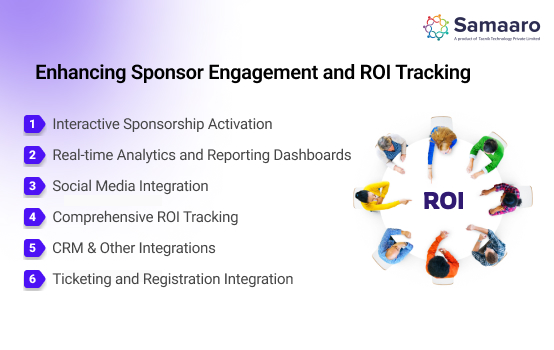
Social Media Integrations:
Event management software are integrated with social media functionality and allow sponsors the opportunity to leverage the reach ofThese integrations can take many forms, such as live social media walls, social media competitions, or hashtag-based campaigns. These types of activities encourage event participants to engage on social media and share their experiences, while giving sponsors a way to promote their reach, develop excitement, and effectively measure the impact of its sponsorships in relation to social media activities.
ROI Measurement :
You would be amazed at the power of event management software for measuring return on investment (ROI). They can encompass many forms of measuring, so that both the organiser and the sponsors can measure the success and impact of their sponsorships. Examples of ROI measuring include lead conversions, website traffic as a result of the event, social media engagement, and survey completions. Having this information in reports and analytics, an organiser can demonstrate to their sponsors the concrete outcomes of sponsorship expenditure.
CRM and other integrations :
The event management platform offers a great ecosystem for sponsors, where multiple tools contribute a unique capability for sponsors. Once incorporated with a CRM, the event management platform will seamlessly pull the attendee’s data into the sponsors CRM, therefore the leads and prospects will continue to provide one consistent place for storing their data. Generated leads and prospects will allow the sponsors to know where they had contact with potential clients and facilitate follow-up relationships post event as well as targeted follow-up campaigns. Furthermore, it might also wish to incorporate integrations for ECRM and marketing, to generate targeted lists for emails, personalized communications, automating their marketing, and providing insights through survey tools. With these tools integrated, all of these capabilities would empower list engagement, measure and data analyse ROI, grow sponsorship strategies, and improve overall investment decisions for future sponsors.
Ticketing and Registration Integration :
Many event management systems are ticketing systems. Therefore, sponsorship integration as part of the sponsors ticketing system will therefore not only trespasses to attendee registrations and ticket sales but provides insightful participant data too. This is particularly of value to a sponsor that is targeting a specific demographic of attendee.
Event management software is a streamlined process for sponsorship management capacity that minimizes duplication and offers an integrated process for planning, provision, and tracking through to sponsorship value enhancement that is beyond regular fulfilment and reporting for developing value for the sponsor and an ongoing relationship with that sponsor that maximizes the impact of the event.
Samaaro’s multi-dimensional event management software offers these possibilities through managing sponsorships in a streamlined way through integrated communications, planning and monitoring. Samaaro’s platform provides a fully immersed experience in real time with analytics, and sponsors social media, ROI, to engagement to sponsor, to maximizing overall event impact, we can ensure sponsorship management is effective, and impacts success within events
New studies show “B2B marketers are 31% likely to say event marketing is the most effective marketing channel.” Marketing through events is extremely useful for all businesses, such as technology businesses, educational institutions, non-profits, medical services, and retail products.
It was also reported, “52% of marketers believed event marketing has the most powerful return on investment.” Event marketing also promotes thought leadership and industry knowledge, brand recognition, and more.
Now that we understand how impactful event marketing can be, to get the most out of your participation in events and how to utilize the events, you need to build an effective strategy on the marketing effort covering the pre-event, during-event, and post-event activities.
Set goals: Understand why you are attending and what you hope to achieve with the event. Do you want to improve revenue, brand recognition, or lead generation? Your marketing efforts are fuelled by defined targets and can easily track progress.
Create compelling content: Content raises excitement about an event and informs value. This could be emails, videos, social media teasers, and blog postings. Use storytelling techniques to captivate your audience and give a teaser of what is coming.
Use social media: Social media platforms are effective tools for event marketing. Make a hash tag for the event, show behind the scenes images, and encourage attendees to share. Post contests, polls, and live Q&As to engage the audience and build
This article will discuss some effective event marketing tactics to generate excitement, boost attendance and connect with your attendees, everything from a snazzy landing page to social media ads. There are a lot of strategies to explore.
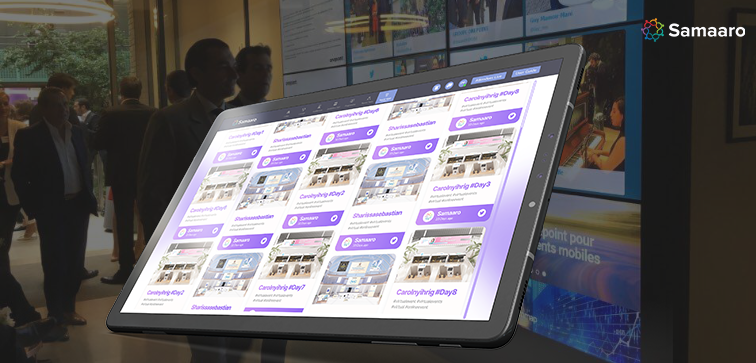
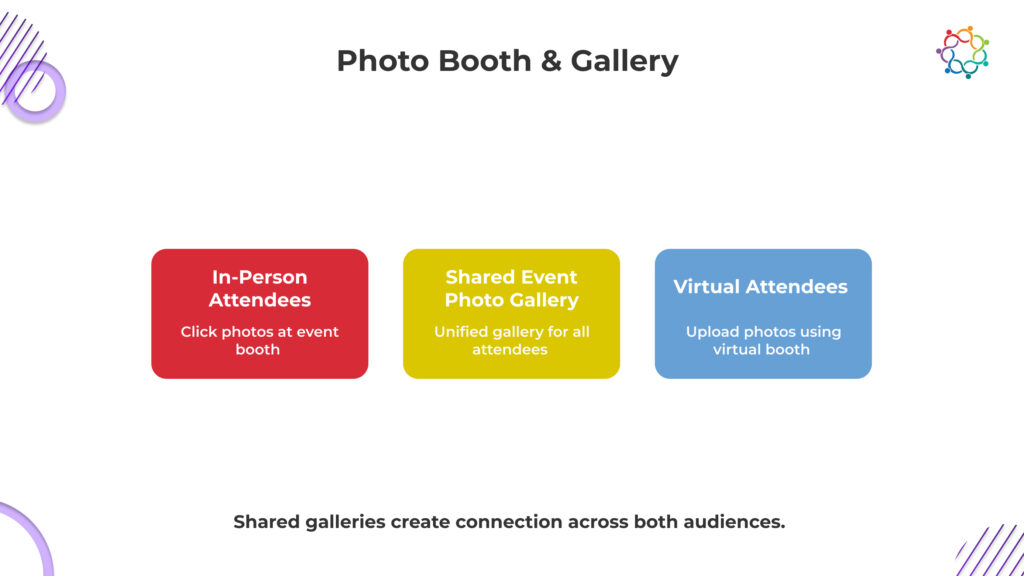
Develop interactive activities to connect with attendees: the idea of an event is to provide something worth experiencing for your attendees. Keep attendees engaged by adding some interactive activities to allow attendees to connect with other attendees on a deeper level; you can use live polls, Q&A, gamification, etc, to connect attendees. You might even have an Instagrammable moment for attendees to share a snapshot of their experience at the event, to help keep them engaged with the experience. Consider providing a photo booth where attendees can take pictures to keep them connected to the experience.
Live stream, and virtual attendees; in the age of hybrid events, use live streaming at your event to help enlarge your audience size. Tweet about it, use hashtags, and engage with your live chats during the event to elevate participation with your online attendees. Think about offering unique digital content to your audience, so they can also enjoy a level of experience.
User-Generated Content; be sure to inform attendees of the event hashtag, so they can take to social media, and share their experience at the event as it happens, with their friends, as the event is occurring. This also empowers attendees to reach a larger audience and adds true testimonials at your event. You might even create contests or incentives for the best user-generated content.
Summarize, and share highlights; after the event, summarize the event with blog posts, or video and social media updates that highlight a few key takeaways from the event and highlight memorable moments that the attendees can recall, as part of the experience. This extends the life of the event and hopefully promotes actions from those who didn’t attend the event.
Kick off with a dedicated Event Landing Page
Creating a page dedicated to the aesthetics and concept of your event is a simple but extremely effective tactic. This page will be a powerful tool because it will consistently generate the collection of those interested in attending your event, leading to an increased level of rsvp’s. Samaaro offers a large library of ready-to-use templates tailored to your event’s theme. Beyond design customization, it helps you engage diverse audiences, extend your reach, and maximize impact, with all content optimized for SEO.
To create a landing page that converts the visitor to attendee effectively, the platform should do the following things:
Create an Email Marketing CampaignEmail marketing is consistently regarded as one of the best forms of event marketing. Event organizers often leverage email as an effective tool to communicate with their targeted audience. Email marketing allows you to establish a relationship with potential registrants during the registration phase and nurture registrants right up leading to the event date. Conversely, you can send newsletters reminding attendees of the event with two distinct methodologies: you can send a more informational email to update registrants with things they need to know between registration and the actual event, or you can send a more fun and engaging email to stimulate interest and excitement leading into actual event. Try using a compelling subject line to prompt the user to click the open the email. Even simple subjects like “You won’t want to miss this” can create a ton of excitement and buzz leading to the event. Engage Attendees into Event with 360 notifications Increase the potential for engagement, regardless of the type of event you’re managing whether it is in-person, online or hybrid, it’s important to accommodate the fact that event participants have busy lives and times when they forget about certain sessions or information, they meant to engage in. While it may be helpful to provide each event attendee with their own customized schedule of events, it is also important to have an ability to push notifications via email or through a mobile event application to remind registrants when sessions start, and encourage participants to participate in wellness or gamification exercises that are scheduled outside of the traditional sessions.
Social media above all things is a solid way to make noise about the event. Today when there is more than 3.8 billion people are active on various social networks, it is apparent that it only makes sense to leverage the multiplied of channels where your targeted audience engages with their social media presence.
There are several ways to leverage social media to market your event. You can leverage Instagram with posts and captivating videos and clips, you can establish Facebook pages specific to your event, get a brand or event specific hashtag to start a compilation of all of your own social media content and establish a different lead driven marketing strategies to target some audiences on platforms, while also thinking about how to generate content.
This is your opportunity to build marketing strategies beyond just social media, while still utilizing your social media to engage social media followers. Leverage some of the AI models that the world is shifting towards to generate content for your event. You can engage your event collaborator including the co-hosts and speakers to create cross-promote for shared social media efforts.
Swag Bags
So finally, possibly one of the more important points might be rooting collaborating with branded swag providers to market your brand and present attendees with a gift for coming to your event, let’s be honest everyone likes free stuff! There are almost limitless options for making a great swag bag. The key is to include a plethora of cost effective free branded items at once, whether they are simply in plastic bags, tote bags, or whether you think outside the box and get creative with some alternative vessels for swag like baskets, bowls or crates! Who isn’t tempted by a quality branded mug or koozie?
Not long ago, we found ourselves completely involved in the fast-evolving world of events. But as technology advanced at an unprecedented pace, so did the realm of events. The rise of artificial intelligence (AI) has now taken center stage in the industry, revolutionizing the experience for organizers, speakers, and attendees alike. AI can manage every aspect of the event. It might begin with duties like as booking, ticketing, and determining a target audience. It can also manage a variety of activities throughout the event, such as participation and exit processes. Event organizers can use AI to provide a seamless and trouble-free experience for both guests and organizers.
Although when speaking of AI in events, the current buzz revolves around AI powered matchmaking, which connects event attendees with shared interests; nevertheless, it is necessary to recognize that AI offers much more than that. Open AI’s ChatGPT, a strong tool for generating event content, is one outstanding example. Chatbots have also emerged as game changers, revolutionizing attendee assistance. Chatbots automate the entire process rather than depending on a team of individuals to address repetitive inquiries. They not only answer frequently asked queries, but they also categorize users based on their roles.
In essence, artificial intelligence (AI) technology is set to turn events into more immersive and personalized experiences. In this blog, we will delve into ways in which AI may provide valuable support across the event lifecycle, including the planning phase, the ideation process, and post-event activities.
Through numerous functionalities such as call analysis, automatic follow-ups, data insights, and more, Artificial Intelligence (AI) can give essential support in project management at events. AI can extract key insights, identify action items, and capture important details stated during the discussion by analyzing these conversations.
Moving on, it can generate high-level summaries of fundamental points, decisions, and actions discussed during meetings or presentations, allowing project managers to quickly assess vital data without having to read through the entire content. AI algorithms can give actionable information, such as highlighting attendee sentiment, preferences, or areas for improvement, allowing project managers to make informed event planning decisions.
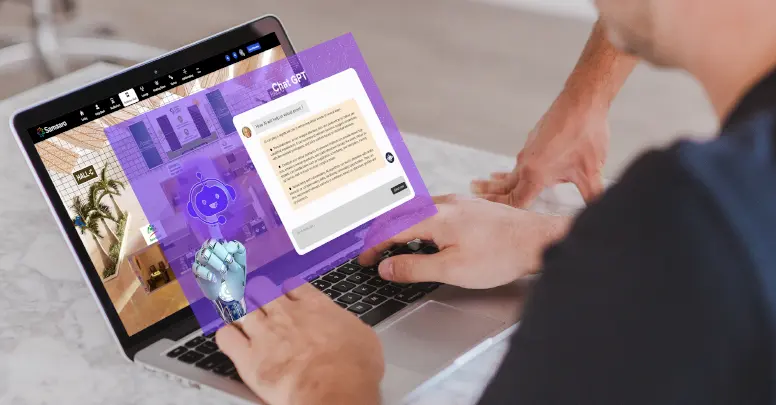
Hosting events on trendy and current issues that captivate everyone’s attention is a desirable goal for many. However, deciding on the best topic to write about might be difficult. This is where Artificial Intelligence (AI) can come in handy. AI can search social media networks like Twitter and LinkedIn for threads or debates that are generating a lot of participation and attention. The number of likes, comments, and shares on these threads, as well as their relation to the event’s theme, can be analyzed by AI algorithms.
Additionally, AI-powered technologies may analyze and collect input from a variety of sources, including surveys, social media platforms, online forums, and feedback forms. These comments can be collected and organized in spreadsheets for further examination. Relevant keywords, sentiment, and other data can be extracted allowing event organizers to gain valuable insights.
AI models, such as OpenAI, can be used to help in session ideation for any event by providing prompts for subjects, content goals, writing styles, and more. AI may assist in determining the goals and objectives for each session. It can, for example, benefit in choosing whether a session’s goal is to educate, entertain, inspire, or generate conversation. In terms of session structure, AI can help develop the format and organisation of the session. It can advise on the best duration, order of activities, and balance of presentations, discussions, and interactive aspects.
AI can help you determine the best writing style and tone for session materials including presentation slides, handouts, and promotional text. This combination between human expertise and AI aid allows for the design of interesting and effective sessions that resonate with participants and contribute to the event’s overall success.
AI may help with speaker selection for any event by extracting YouTube transcripts, analyzing speech coherence, summarising key topics, and determining the acceptability of speakers. For example, AI can obtain a written representation of the speaker’s presentation or discussion by analyzing the spoken content. AI can provide automatic summaries of the speaker’s important points, emphasizing the key takeaways from their lectures. This can let event organizers swiftly assess and compare the material of different speakers, easing the decision-making process.
AI can also analyze a possible speaker’s internet presence, social media involvement, and industry reputation, which speeds up the speaker selection process, ensures the selection of engaging and informed speakers, and contributes to a successful and impactful event.
Event companies frequently face the difficulty of making sense of the massive amounts of data generated by events. However, the incorporation of AI techniques makes collecting and analyzing feedback significantly easier. AI solutions can help automate the collection of feedback data and organize it in a spreadsheet-style for easy analysis. These solutions go beyond simple data collection by allowing event organizers to ask specific questions, refine data, and derive deeper insights.
Furthermore, AI-powered solutions such as ChatGPT may effectively summarise feedback data, providing the essential findings in a simple and simply digestible list. Event organizers may improve future events by integrating AI technology to streamline feedback collecting, improve data analysis, and obtain important insights.
In conclusion, AI may be a helpful ally in the event ideation process, whether it’s creating session ideas, setting content goals, recommending writing styles, or increasing audience engagement. Organisers may create memorable and impactful events by combining human creativity and skill with AI-powered support. With the integration of these tools and the flexibility and scalability of Saamaro, you can host events like never before!
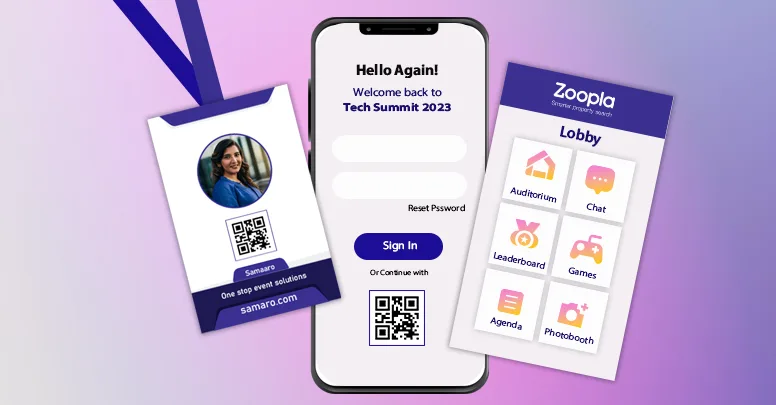
The best way to streamline the time-consuming registration and queue procedures outside event locations is by considering an all-in-one event ticketing solution to assist event registrations. Curious about the operational mechanics? It’s simple: the event technology platform reduces the burden of event planners and commercial entities while also providing attendees with a seamless and painless experience. Before we get into the practicalities of event ticketing, let’s first understand it.
When you go to a trade show, conference, or event, the main aim is to get people to meet, make new connections, and share ideas. This is done by giving out tickets or badges to people who register and provide their information. These tickets let them into the event.
Typical features of this type of system include online ticket sales, attendee check-in, payment processing, and reporting/analytics capabilities. Organisers may streamline their operations, improve the attendance experience, and raise the success of their events by utilising an event ticketing and registration solution.
As for an in-person event, an event landing page is initially built to generate hype and assist with registration. This method allows guests to pre-register for the event, with their information stored on the website. We, at Samaaro, understand how each event is unique and work closely with the clients to build custom landing page for each event.
The ticketing alternatives for an event differ depending on whether it is free or paid. Scan a QR code upon admittance to the event to track attendee presence and outreach. Using an optimum event registration platform, along with its associated event registration and ticketing solutions, avoids the difficulties of long wait periods and queues, as well as the possibility of technical and informational complications.
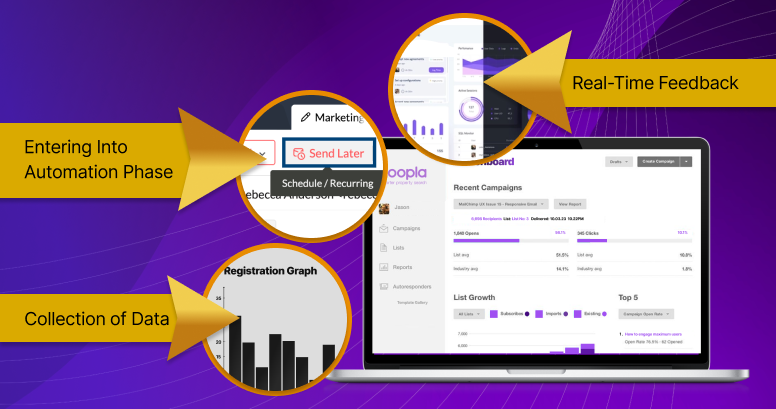
Event technology platforms provide a seamless experience, attendees can easily register for events, purchase tickets, and access event information anytime, anywhere, from any device. Attendees can enter their information, choose ticket types, and make secure online payments with a few clicks, increasing ease and accessibility. Guests can be given personalised registration forms that collect useful data, delivering a personalised experience from the start. For example, a color-coded ticket system could be used to distinguish between vegetarians (green ticket) and non-vegetarians (red ticket). Similarly, a silver pass may just allow admission to the exhibition and conference spaces, whereas a gold pass may allow access to all areas, including networking possibilities.
With the advent of event registration and ticketing systems, businesses and event organizers no longer need to collect data manually prone to human errors. With the help of event registration software, all event-related information can now be compiled in a single area that is easy to navigate. This includes information about registrations, attendance, number of check-ins, check-outs and time spend in the event, and areas navigated by the attendees.
Event registration platforms provide event organizers with expanded marketing capabilities such as targeted email campaigns, social media promotion, personalized landing pages, and analytics and reporting. These methods aid in raising event awareness, engaging participants, and driving attendance. Organizers can create a personalized and successful event experience by utilizing these elements.
Event registration and ticketing can significantly minimise the time and effort required to operate an event by removing the need for manual registration entry, bill and receipt printing, and phone or email communication. You may save time and money by utilising the power of an online solution instead of printing registration forms and event materials. Businesses can optimise resource allocation, eliminate human error, and reach higher productivity levels by substituting manual labour with automated operations.
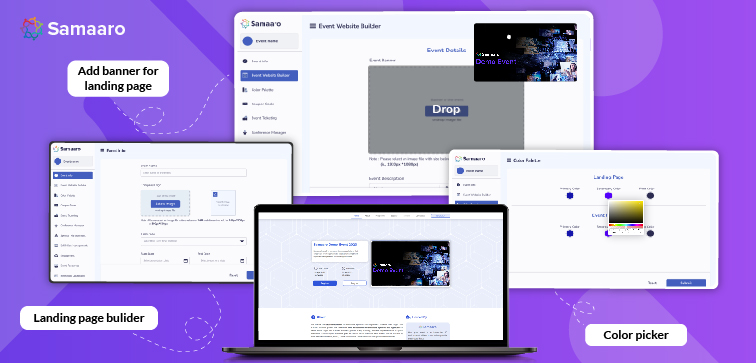
In conclusion, online registration and ticketing systems provide various benefits to event organizers, such as convenience, increased attendance, increased revenue, streamlined check-in, and enhanced marketing capabilities. Businesses and event organizers can produce more effective events that are easier to execute and more profitable by utilizing these solutions.
If you’re planning an event, consider using an online event registration and ticketing solution for your in-person, hybrid, or virtual events to help it succeed – Samaaro is an all-in-one event technology, user-friendly, and resilient platform that offers a variety of event registration and ticketing options, making it suitable for events of all sizes. The dependability and security features of the platform ensure that your event runs well, decreasing the potential of technical issues or security breaches. You can be confident that your event registration and ticketing needs will be addressed to the highest standards when you use Samaaro.