Samaaro + Your CRM: Zero Integration Fee for Annual Sign-Ups Until 30 June, 2025
- 00Days
- 00Hrs
- 00Min

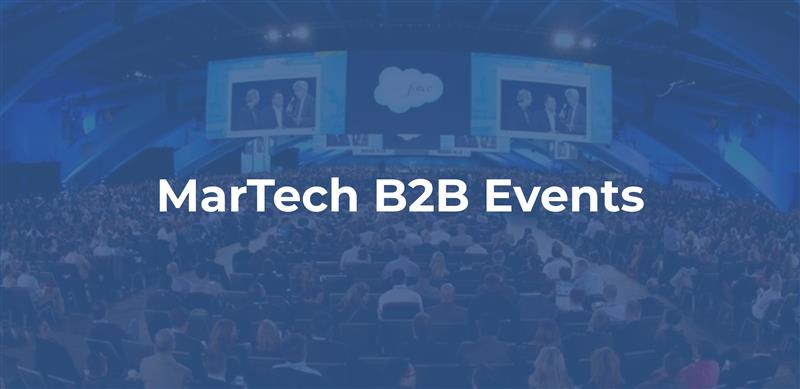
Bottom Line: For global MarTech organizations, Samaaro turns high-volume event programs into scalable GTM infrastructure - where clean data, qualified participation, and pipeline influence are built in by design.
The client is a global Marketing Technology (MarTech) leader with a strong focus on AI-powered customer engagement and retention. The organization runs a massive volume of persona-driven events every year across various global regions, ranging from high-touch C-suite roundtables and product-focused mixers to massive flagship conferences and industry awards.
Events play a critical role in the client’s go-to-market strategy, serving as a primary channel for pipeline acceleration, relationship building, and customer nurturing. With multiple regional teams operating in parallel and more than 150 events being conducted globally throughout the year, the organization places a heavy emphasis on standardizing workflows, data reliability, and the ability to seamlessly transition event intent into Salesforce for immediate sales follow-up.
Event Website Builder, RSVP Management with Approval Workflows, Omnichannel Communication, Onsite Check-In and Digital Lead Capture, Zoom Integration for Webinars, Salesforce CRM Integration, Budget Planner, Event Reporting
In B2B SaaS, over 70% of pipeline influenced by events is lost not due to poor attendance, but due to delayed follow-ups, unqualified attendees, and fragmented event data.
As event programs scale, teams often add more formats, more regions, and more stakeholders, without fixing the operational backbone that connects events to sales outcomes. The result is familiar: high activity, unclear impact, and overstretched teams.
This is the challenge many global MarTech organizations face as events move from occasional campaigns to always-on GTM engines.
In high-volume pharmaceutical organisations, manual event operations can consume over 20,000 working hours annually, with most of that time spent on coordination, follow-ups, reconciliation, and reporting, activities that add no direct strategic value. When multiplied across hundreds of events, even small inefficiencies quietly compound into million dollar-level operational costs.
The client’s event program was already delivering value. The challenge was not effectiveness; it was sustainability at scale.
As the number of events, regions, and internal stakeholders increased, the existing setup began to show signs of strain. Processes that worked well for individual events became harder to manage across a global, always-on program.
Key challenges included:
1. Managing multiple event formats with inconsistent workflows
The organization ran a diverse mix of events, including invite-only mixers, customer roundtables, mini conferences, webinars, and large flagship gatherings. Each format had different requirements, but execution often relied on fragmented tools and manual coordination. This made it difficult to standardize workflows without over-centralizing control.
2. Maintaining attendee quality in invite-only events
Most events were persona-driven and invitation-based. However, forwarded invites and open registrations made it harder to consistently ensure the right profiles were attending. Manual checks added operational overhead and increased the risk of misaligned audiences.
3. Fragmented attendee and engagement data
Registrations, attendance, webinar participation, and on-ground interactions were captured across multiple systems. While data eventually reached Salesforce, the lack of a unified event layer slowed consolidation and reduced real-time visibility into attendee engagement and intent.
4. Delayed sales follow-ups at high-intent moments
Sales teams participated actively in both hosted and industry events. However, capturing notes, identifying engaged prospects, and triggering CRM updates often happened after the event, reducing the immediacy and effectiveness of follow-up conversations.
5. Limited visibility into event spend and pipeline influence
With multiple teams running events across regions, tracking budgets and understanding how different event types influenced pipeline required manual reporting. Leadership needed clearer answers on how investments translated into sales momentum, without increasing reporting complexity
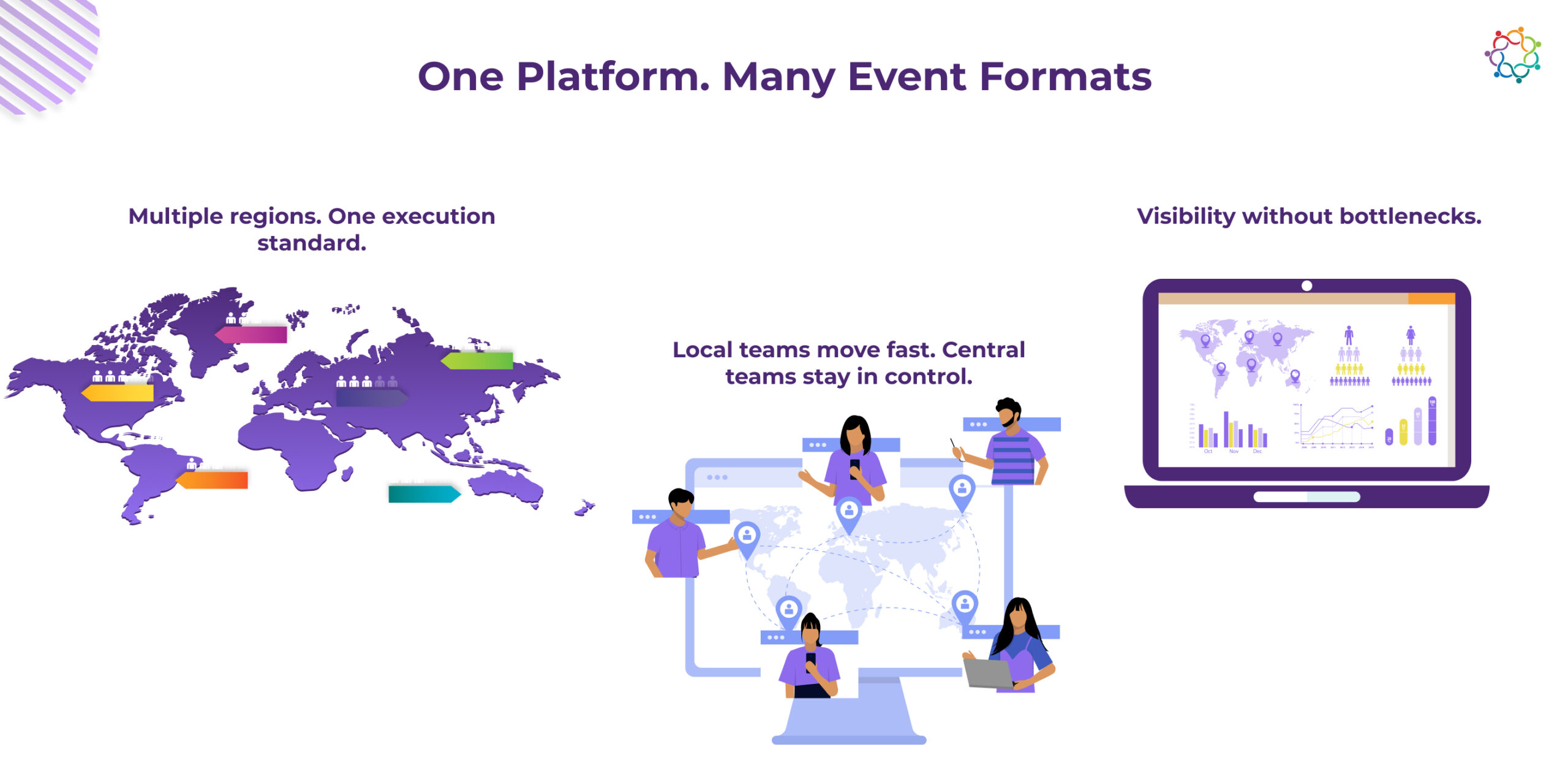
Standardized event execution across formats and regions
Samaaro enabled the client to manage mixers, customer roundtables, mini conferences, flagship events, and webinars within a single platform. Regional teams could create and run events independently while operating within standardized workflows. This reduced execution variance across regions and allowed the central team to maintain visibility and control without slowing down local teams.
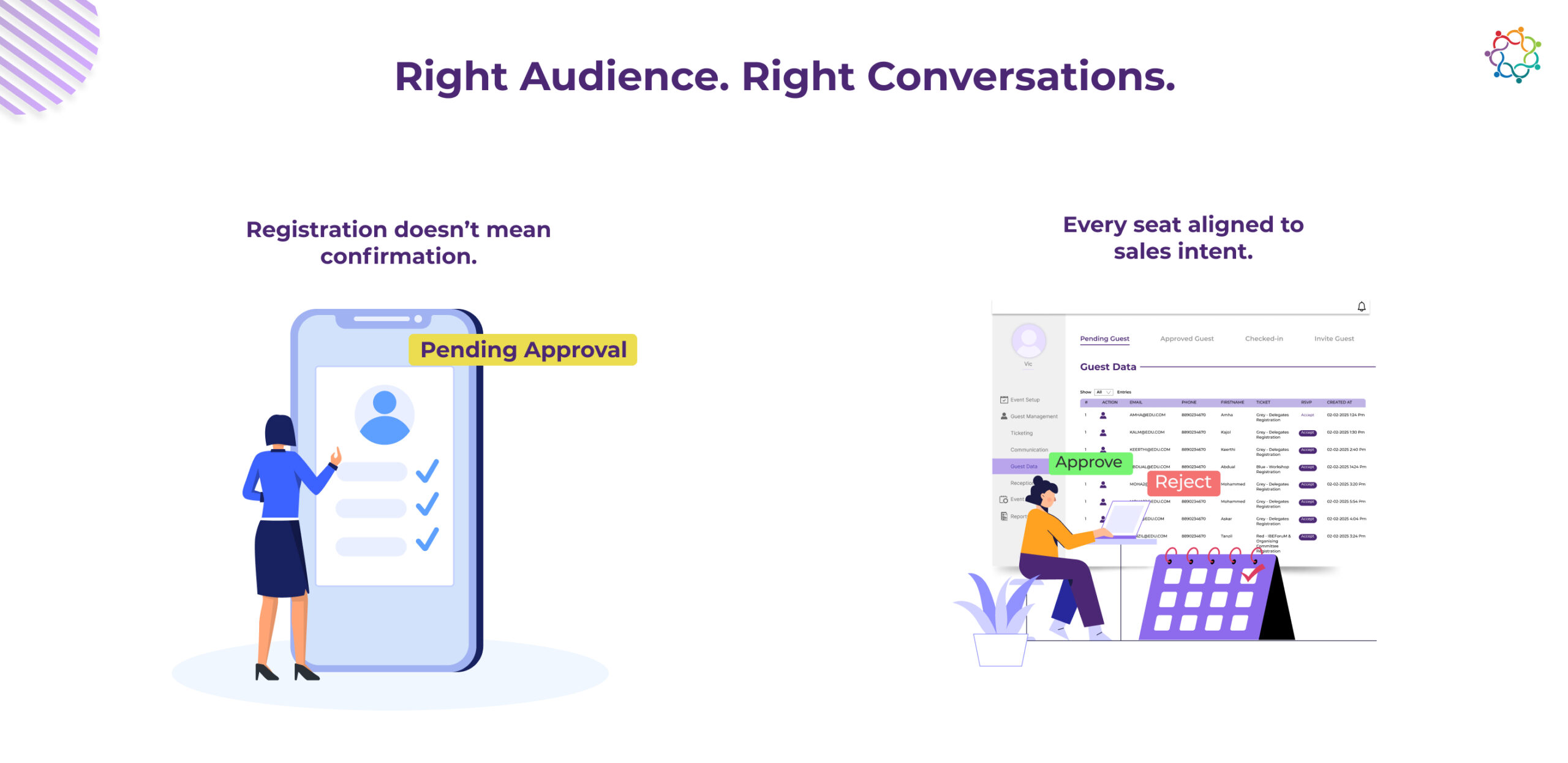
Invite-only and approval-based registration workflows
Samaaro introduced controlled registration flows that allowed the client to qualify attendees before confirmation. Approval-based workflows helped enforce persona-specific participation, reduced the impact of forwarded invites, and ensured that high-touch events consistently reached the intended audience. As a result, event conversations became more relevant and aligned with sales objectives.
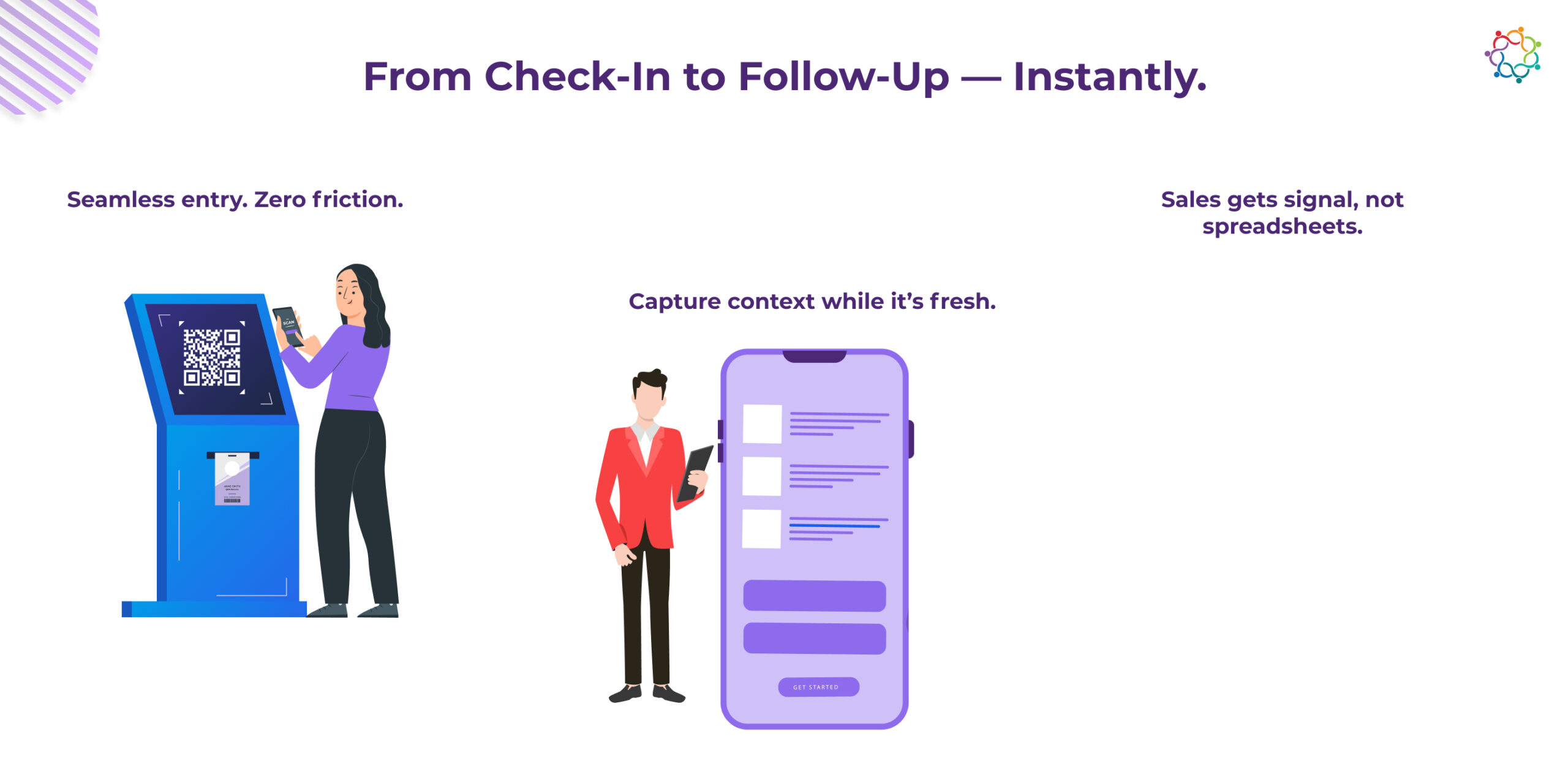
On-site check-ins with real-time sales notifications
For in-person events, Samaaro enabled seamless check-ins and digital lead capture for sales teams. Sales representatives could log interactions on-site, with attendee activity and notes immediately reflected in the system. This allowed sales teams to follow up faster while context was still fresh, improving the quality and timing of post-event conversations.
Native Zoom integration for webinar execution
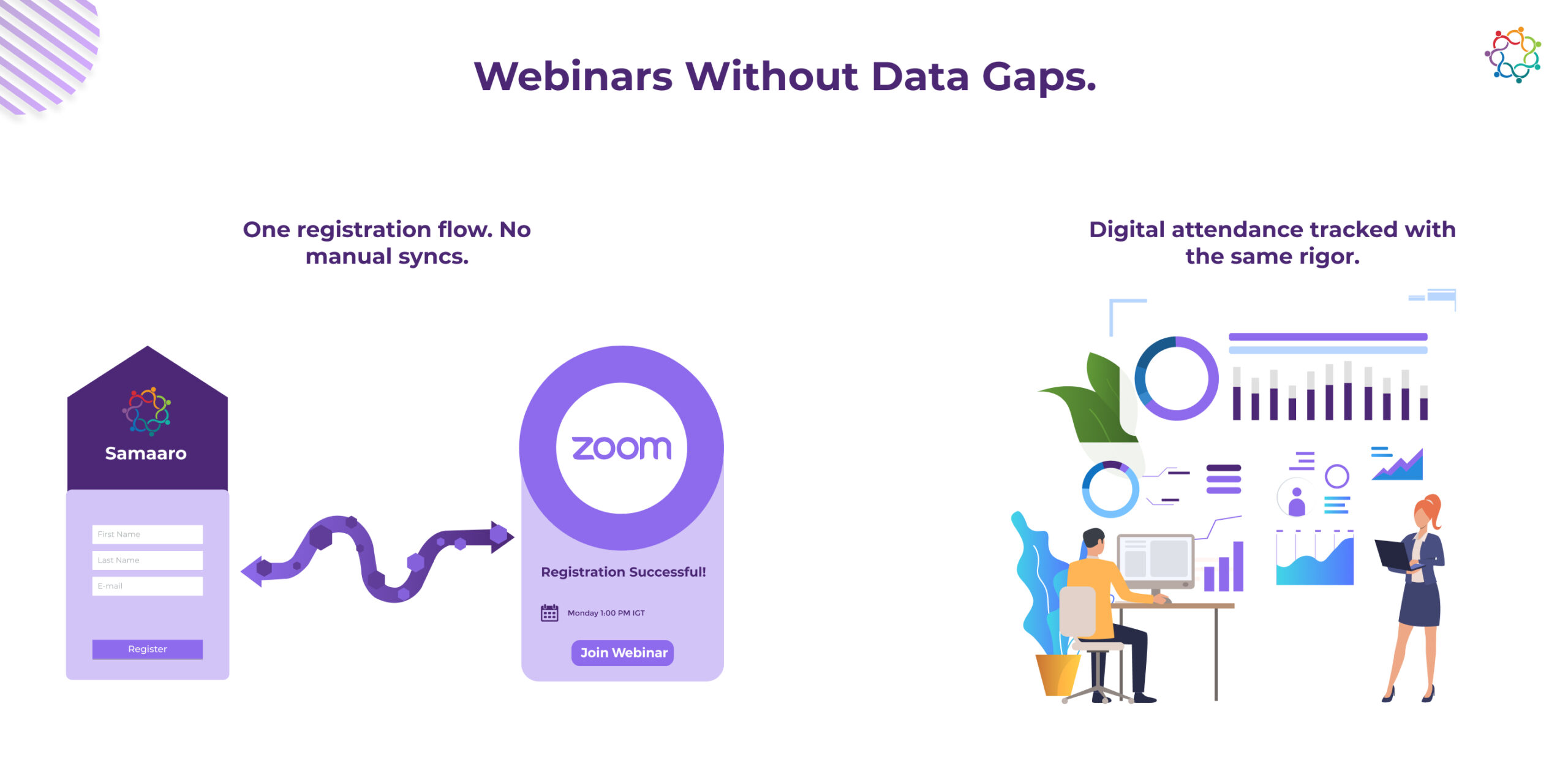
Webinars were executed through a direct Zoom integration, allowing registrations, attendance data, and engagement signals to flow automatically into Samaaro. This eliminated manual reconciliation between webinar platforms and event records, and ensured that digital event participation was captured with the same rigor as in-person events.
Salesforce CRM integration for unified data management
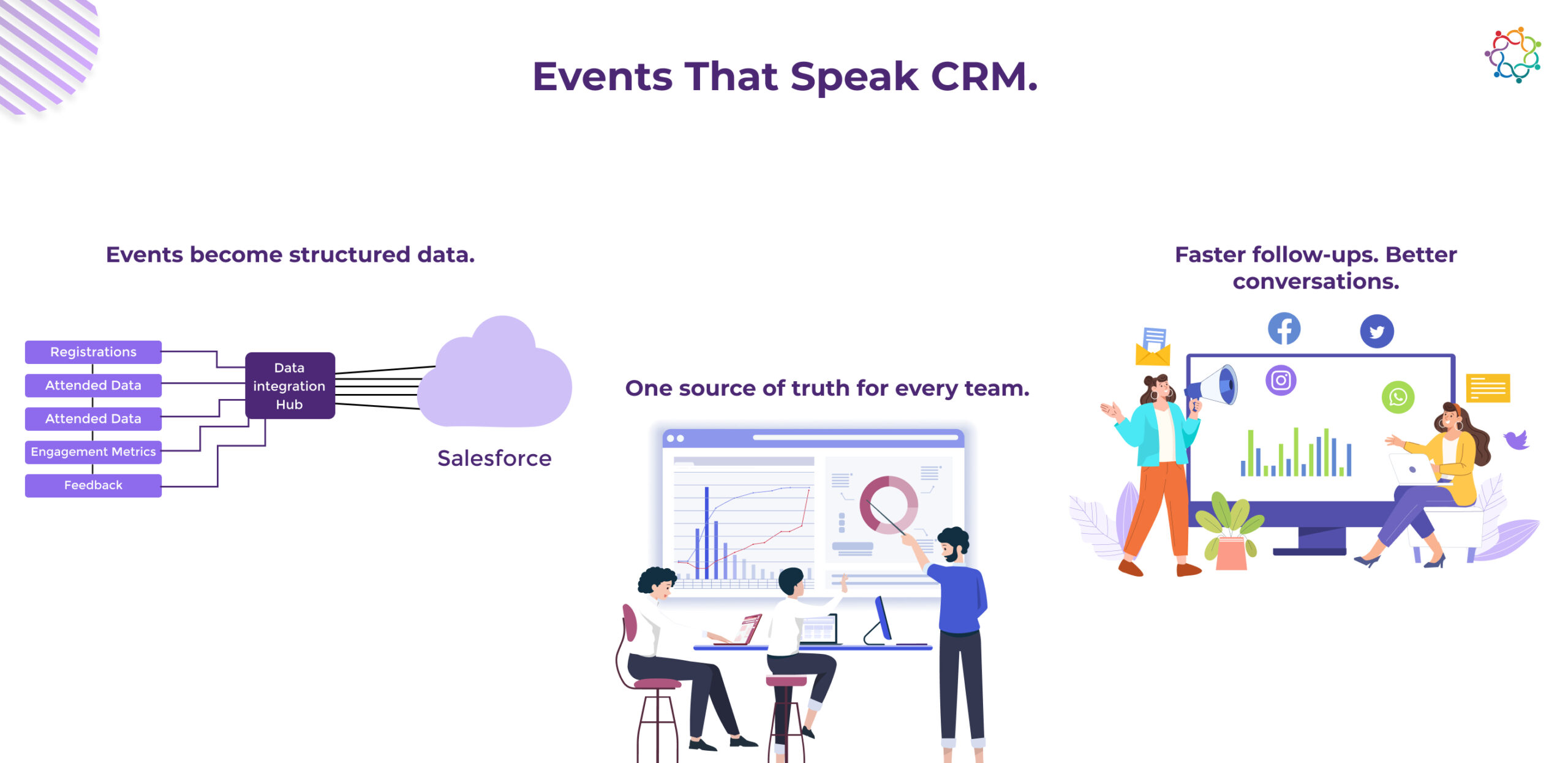
Samaaro acted as a single event data layer feeding into Salesforce. Registration details, attendance status, engagement activity, and sales notes were synced automatically. This gave both marketing and sales teams a shared, reliable view of event influence and reduced delays caused by manual data entry.
Budget planning and spend tracking at the event level
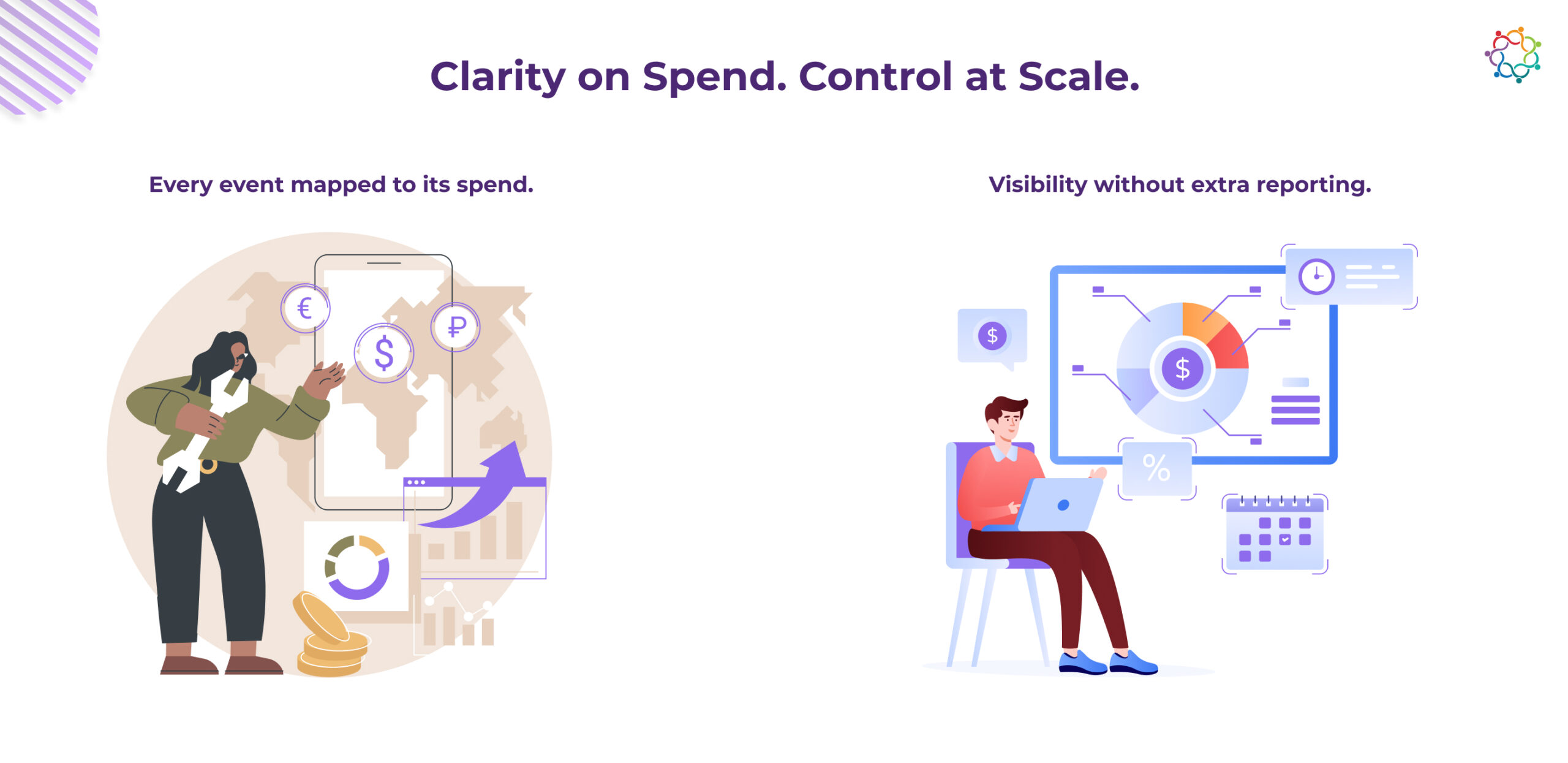
The platform allowed teams to plan and track event budgets centrally while maintaining regional flexibility. Marketing leaders gained clearer visibility into how spend was distributed across event types and regions, enabling more informed decisions without increasing reporting overhead.
Reporting on event impact and pipeline influence
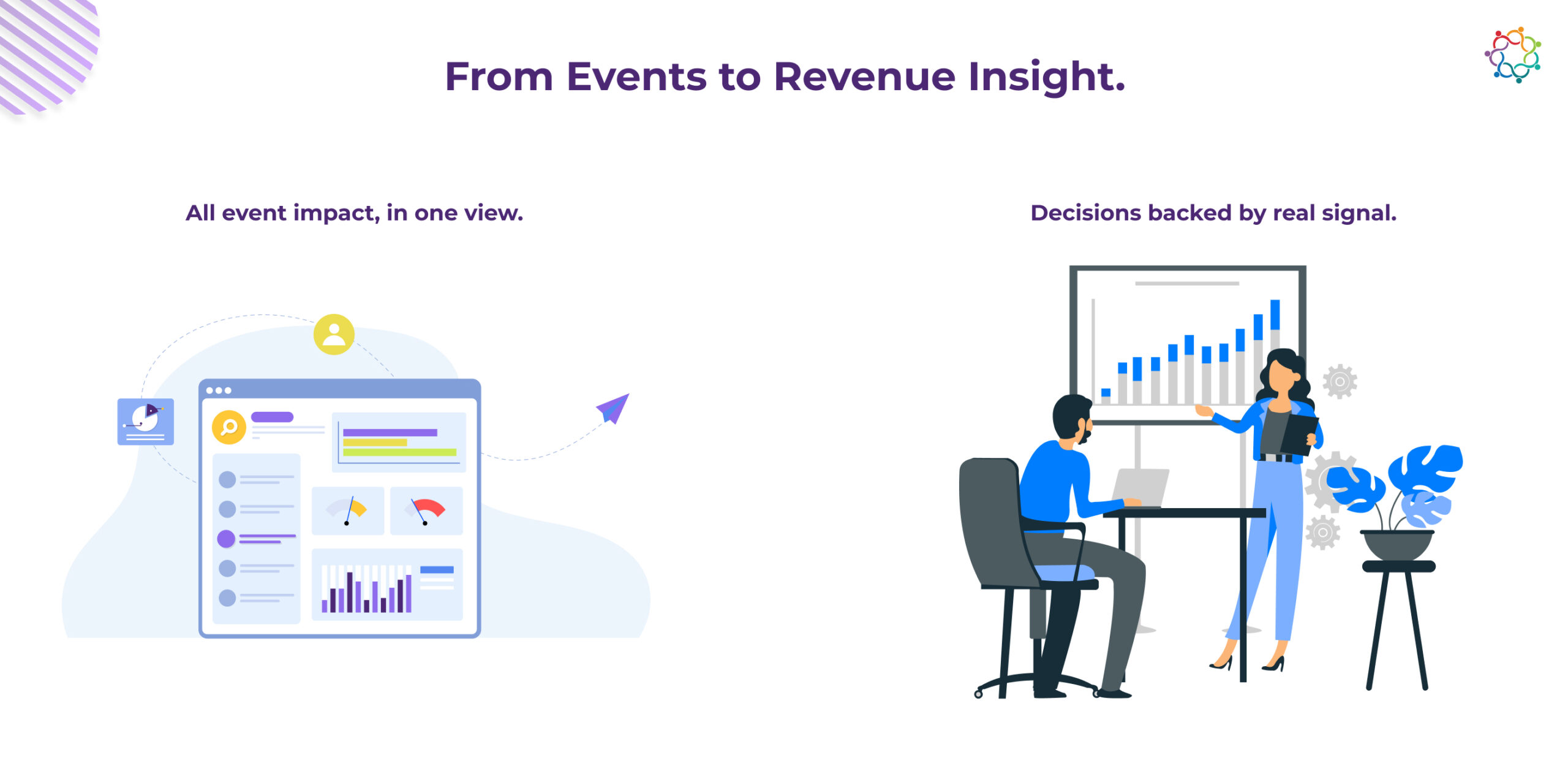
Samaaro provided consolidated reporting across events, formats, and regions. Teams could evaluate how different event investments influenced pipeline movement and sales follow-ups, creating a clearer link between event activity and business outcomes. This improved leadership confidence in the event program and supported more structured planning at scale.
30–40% faster sales follow-ups enabled by real-time check-ins and automatic CRM updates.
100% persona-qualified attendance across invite-only mixers, roundtables, and leadership events.
3× improvement in event data readinesswith unified registration, engagement, and sales inputs in Salesforce.
Full visibility into event spend and pipeline influence across 150+ global events.
During a regional customer roundtable, the sales team received real-time notifications as attendees checked in and engaged during the session. Notes were captured digitally while conversations were still ongoing, and key follow-ups were triggered the same day inside Salesforce.
Instead of post-event coordination calls and spreadsheet cleanups, the team moved directly into contextual sales conversations within hours of the event closing. For the first time, event momentum carried forward without operational lag.
As B2B event programs scale, the competitive advantage no longer comes from hosting more events. It comes from operating them better.
Modern field marketing is shifting from isolated campaigns to continuous, always-on engagement engines. In this model, events are no longer brand moments. They are data systems, sales enablement channels, and pipeline infrastructure.
Organizations that treat events as disconnected activities will continue to see high volume with low clarity. Organizations that treat events as integrated GTM systems will gain speed, control, and compounding impact.
The future of B2B events is not about bigger stages or larger audiences.
It is about clean data flows, qualified participation, fast sales activation, and measurable pipeline influence.
That is where event programs stop being cost centers and start becoming growth engines.

Samaaro is an AI-powered event marketing platform that enables marketing teams to turn events into a measurable growth channel by planning, promoting, executing, and measuring their business impact.
Location
© 2026 — Samaaro. All Rights Reserved.